UNIT OPERATIONS &
PROCESSES IN WASTE WATER
TREATMENT
UNIT OPERATIONS AND
PROCESSES
 Waste water treatment is any operation / process or
combinations of operations and processes that can reduce
the objectionable properties of waste water and render it
less dangerous.
 Waste water treatment is a combination of physical,
chemical and biological processes.
 Methods of treatment in which application of physical
forces predominate, are known as unit operations.
 Methods of treatment in which chemical or biological
activities are involved , known as unit processes.
 The unit operations approach in water and
waste water treatment has following
advantages:
 Gives better understanding of the processes and
the capabilities of theses processes in attaining the
objectives.
 Helps in developing mathematical and physical
models of treatment mechanisms and the
consequent design of treatment plants.
 Helps in coordination of effective treatment
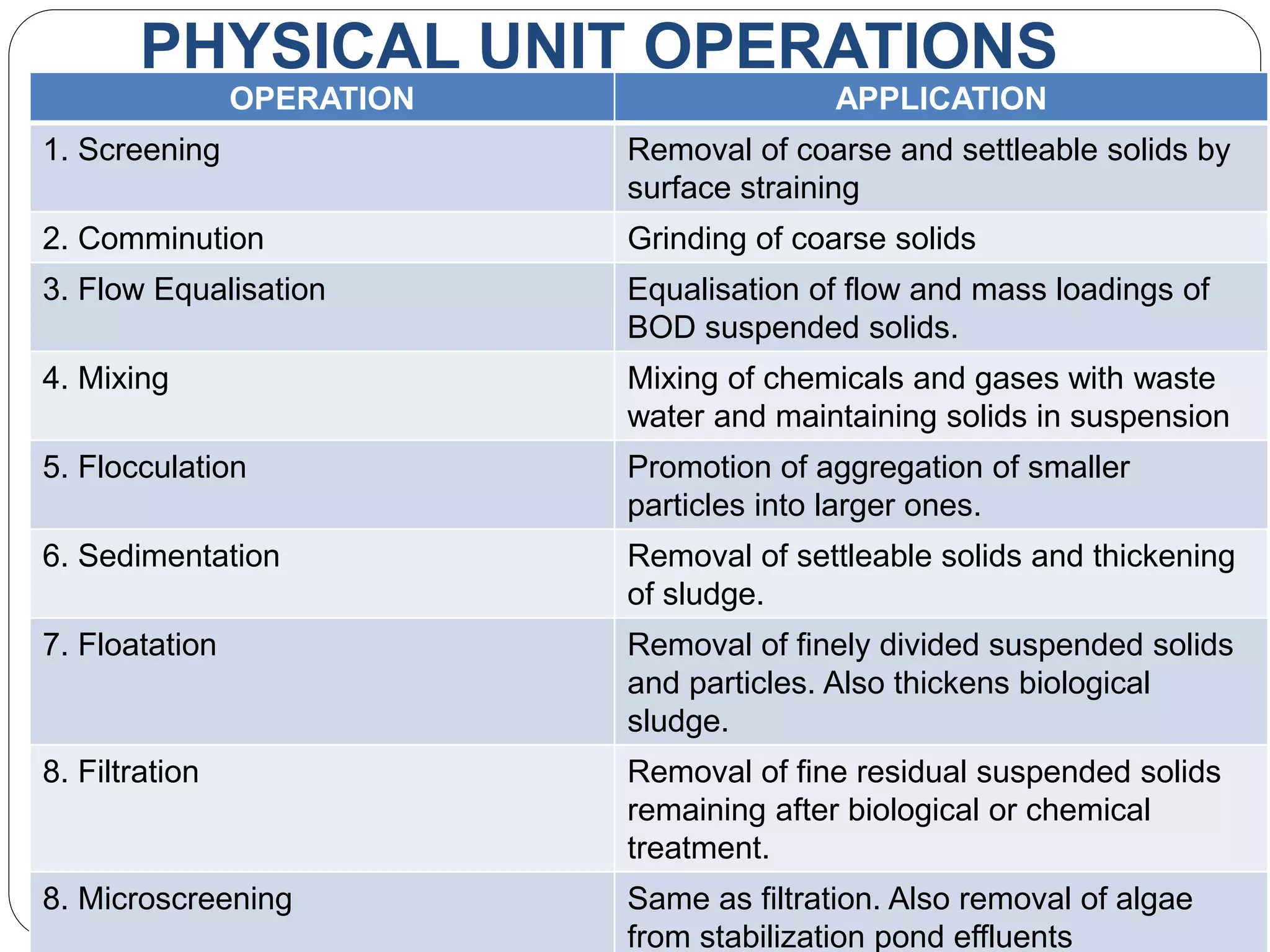
PHYSICAL UNIT OPERATIONS
OPERATION APPLICATION
1. Screening Removal of coarse and settleable solids by
surface straining
2. Comminution Grinding of coarse solids
3. Flow Equalisation Equalisation of flow and mass loadings of
BOD suspended solids.
4. Mixing Mixing of chemicals and gases with waste
water and maintaining solids in suspension
5. Flocculation Promotion of aggregation of smaller
particles into larger ones.
6. Sedimentation Removal of settleable solids and thickening
of sludge.
7. Floatation Removal of finely divided suspended solids
and particles. Also thickens biological
sludge.
8. Filtration Removal of fine residual suspended solids
remaining after biological or chemical
treatment.
8. Microscreening Same as filtration. Also removal of algae
from stabilization pond effluents
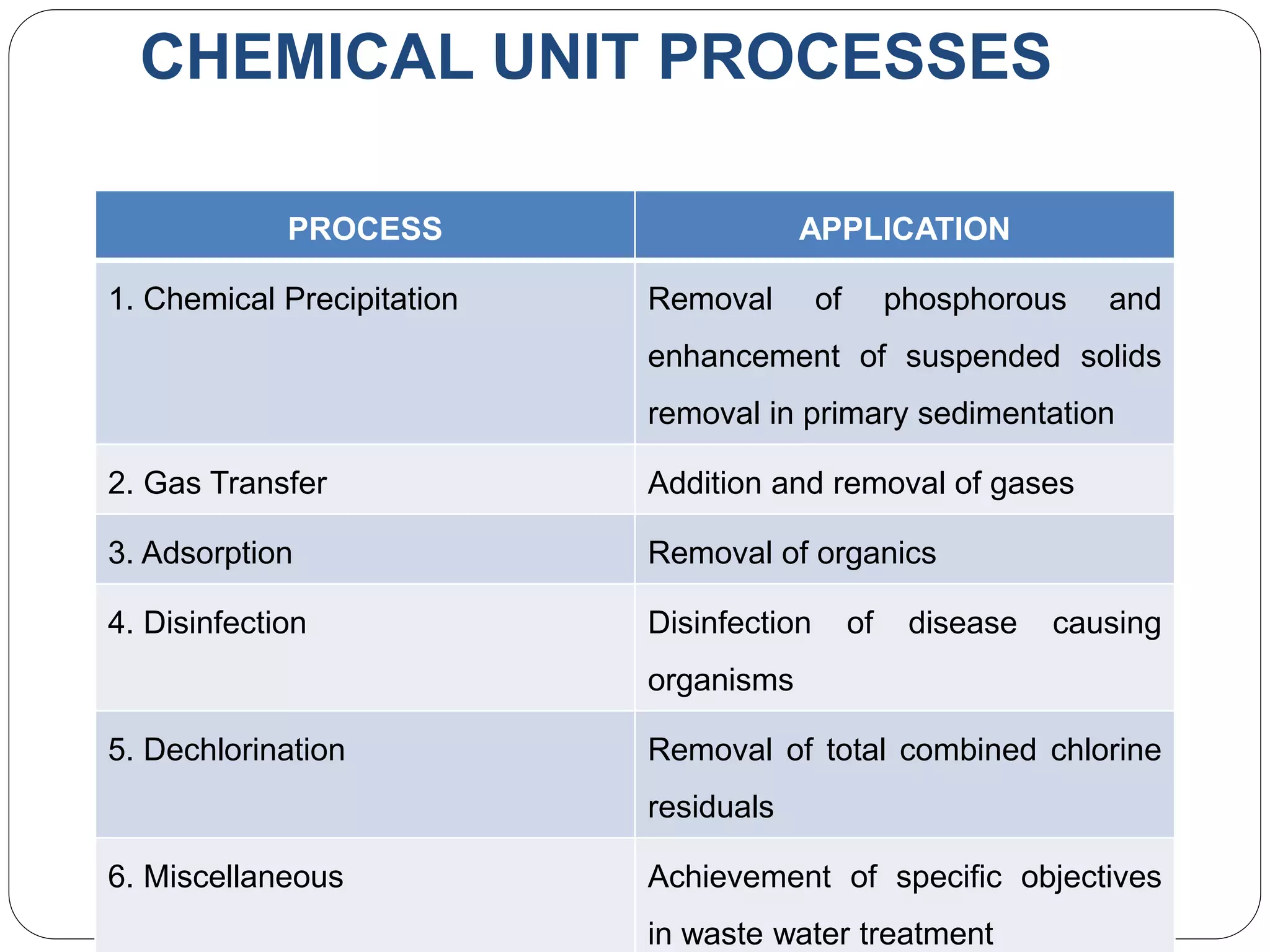
CHEMICAL UNIT PROCESSES
PROCESS APPLICATION
1. Chemical Precipitation Removal of phosphorous and
enhancement of suspended solids
removal in primary sedimentation
2. Gas Transfer Addition and removal of gases
3. Adsorption Removal of organics
4. Disinfection Disinfection of disease causing
organisms
5. Dechlorination Removal of total combined chlorine
residuals
6. Miscellaneous Achievement of specific objectives
in waste water treatment
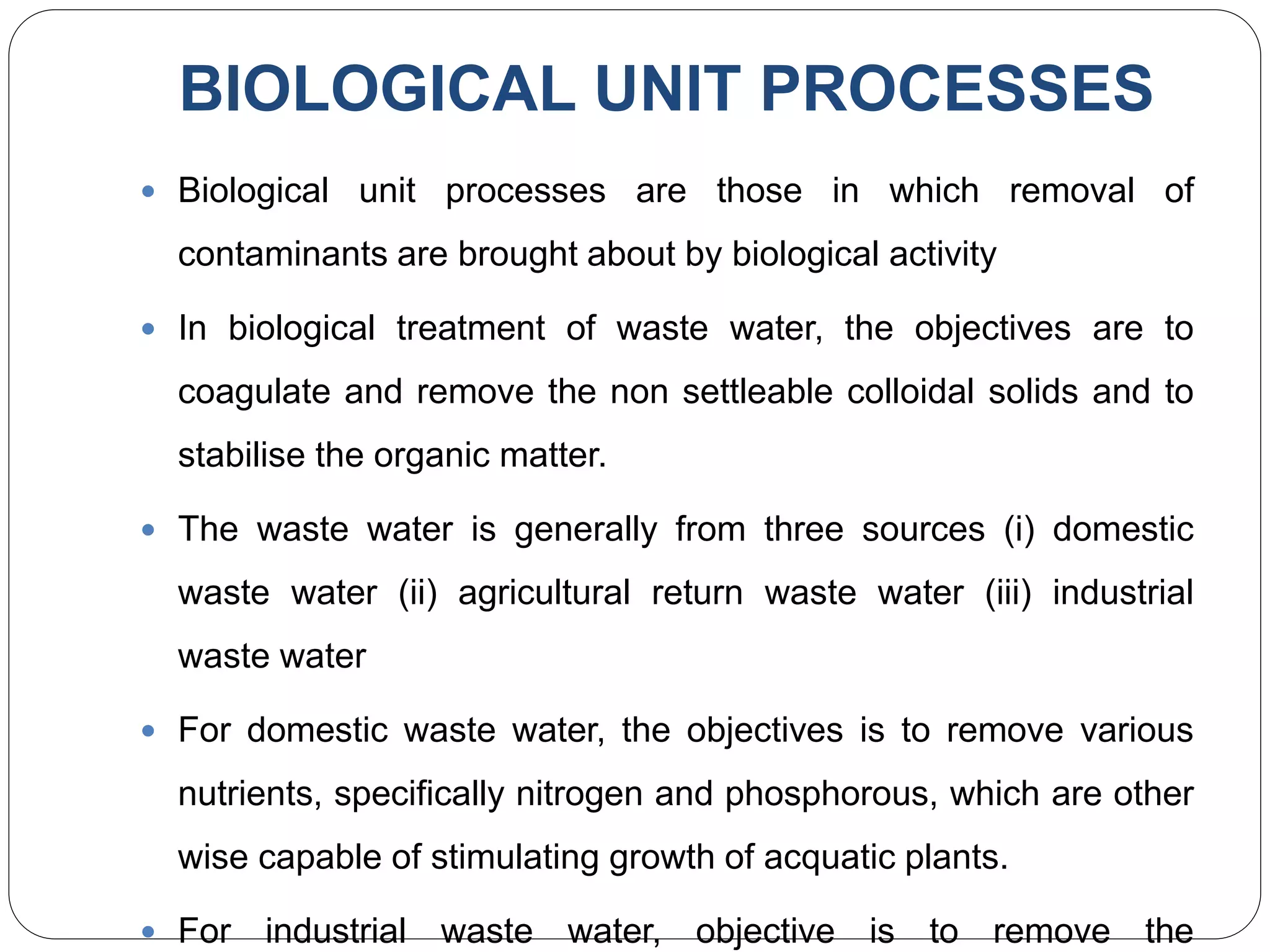
BIOLOGICAL UNIT PROCESSES
 Biological unit processes are those in which removal of
contaminants are brought about by biological activity
 In biological treatment of waste water, the objectives are to
coagulate and remove the non settleable colloidal solids and to
stabilise the organic matter.
 The waste water is generally from three sources (i) domestic
waste water (ii) agricultural return waste water (iii) industrial
waste water
 For domestic waste water, the objectives is to remove various
nutrients, specifically nitrogen and phosphorous, which are other
wise capable of stimulating growth of acquatic plants.
 For industrial waste water, objective is to remove the
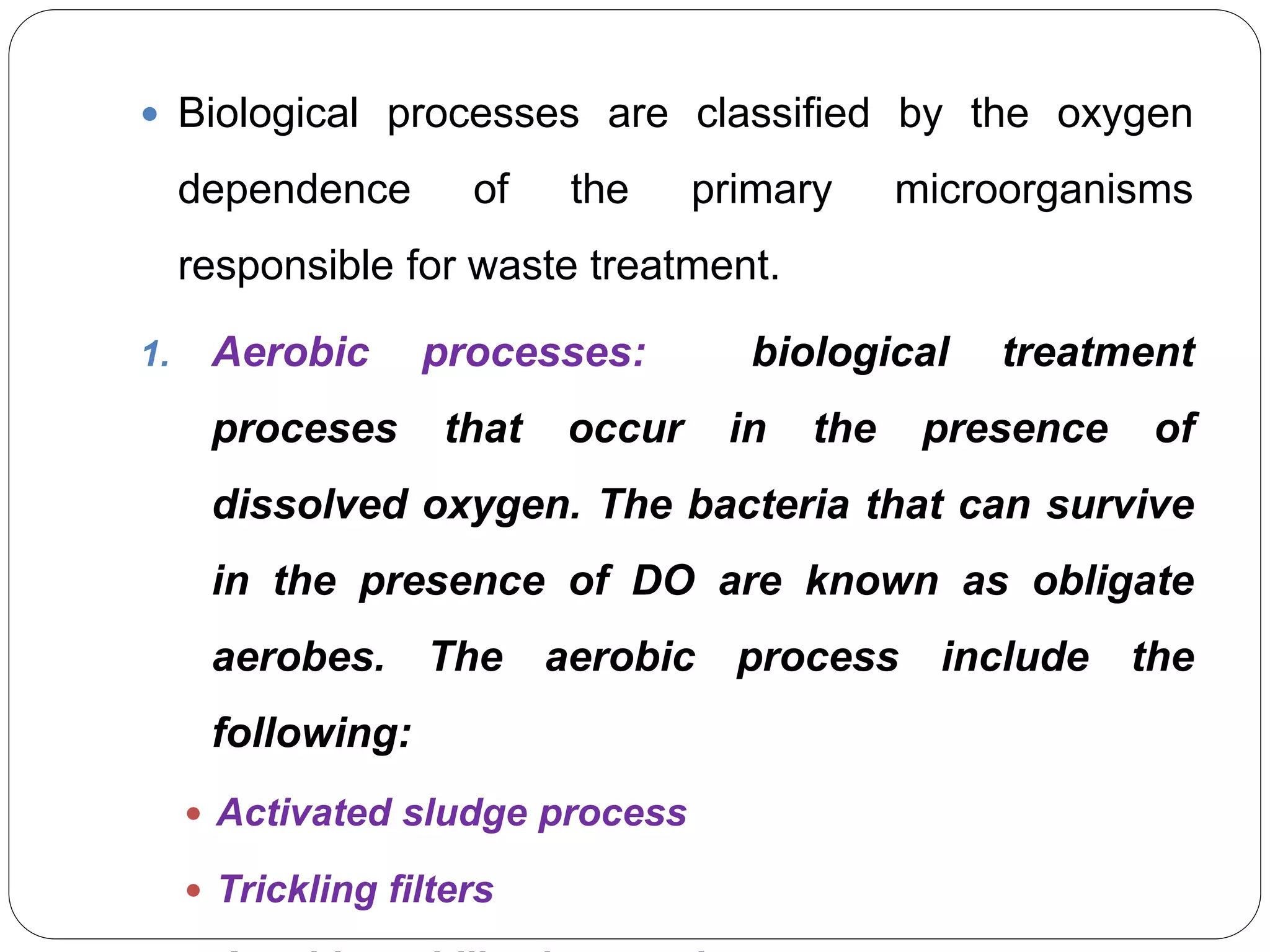
 Biological processes are classified by the oxygen
dependence of the primary microorganisms
responsible for waste treatment.
1. Aerobic processes: biological treatment
proceses that occur in the presence of
dissolved oxygen. The bacteria that can survive
in the presence of DO are known as obligate
aerobes. The aerobic process include the
following:
 Activated sludge process
 Trickling filters
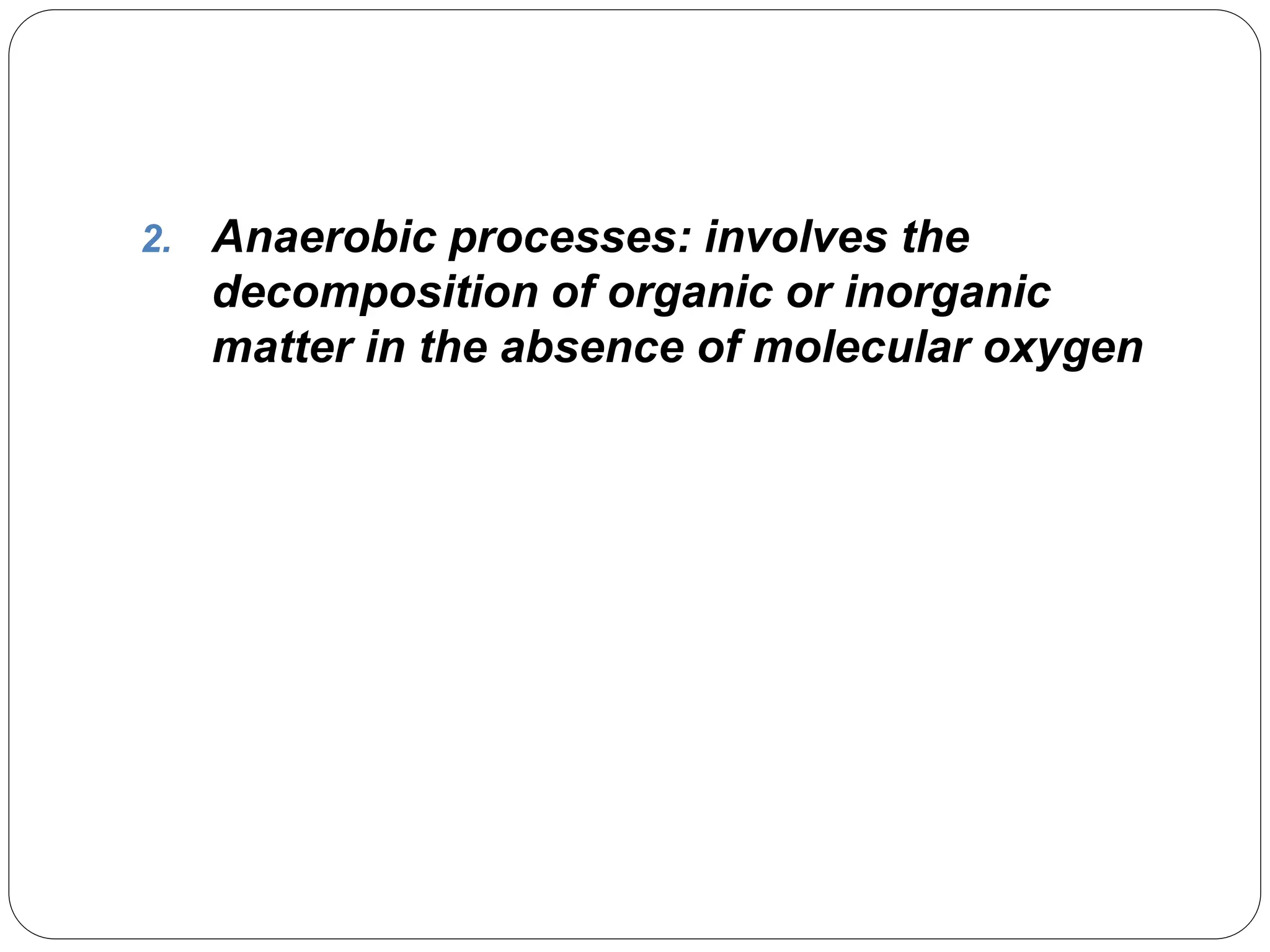
2. Anaerobic processes: involves the
decomposition of organic or inorganic
matter in the absence of molecular oxygen
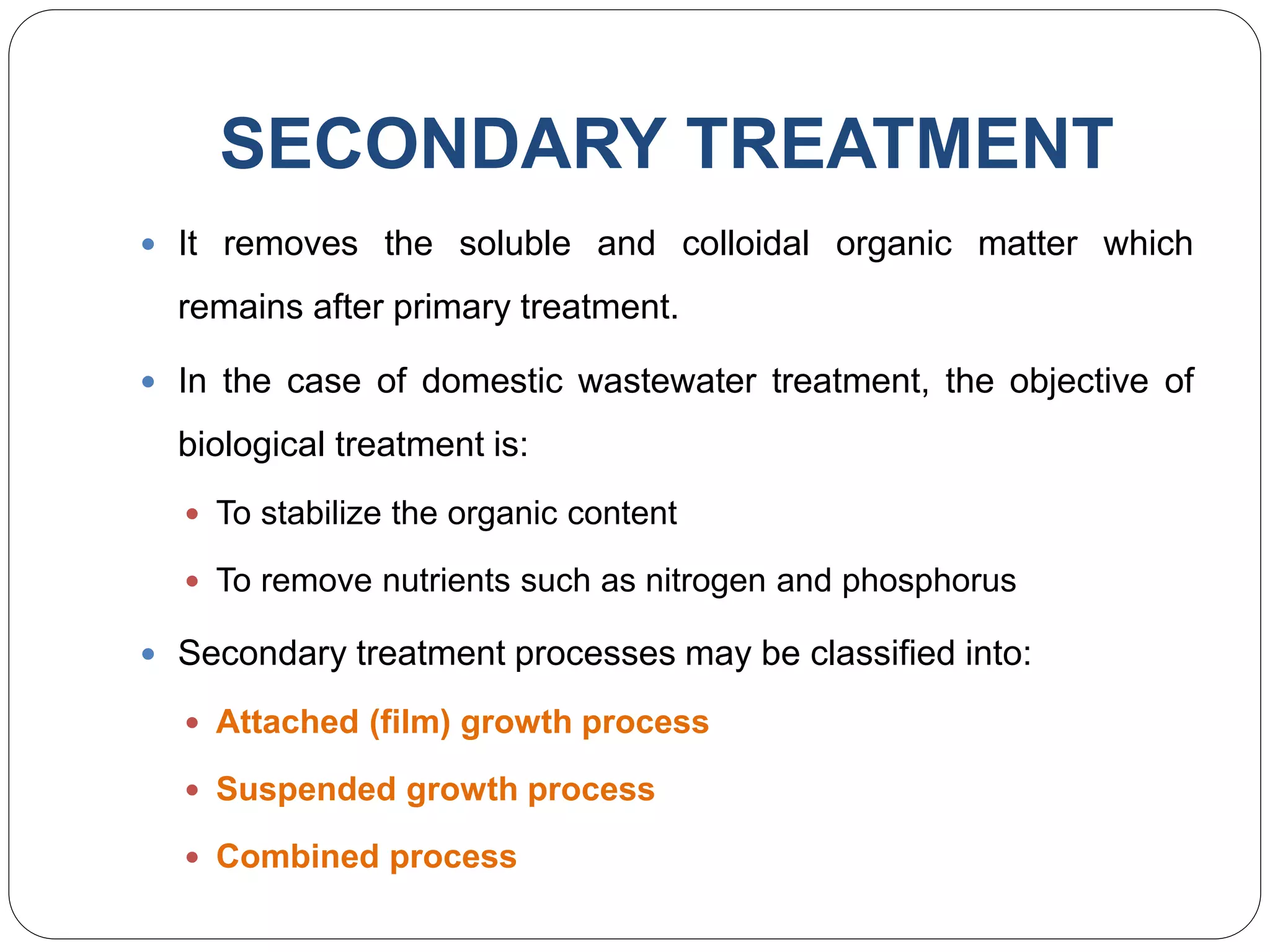
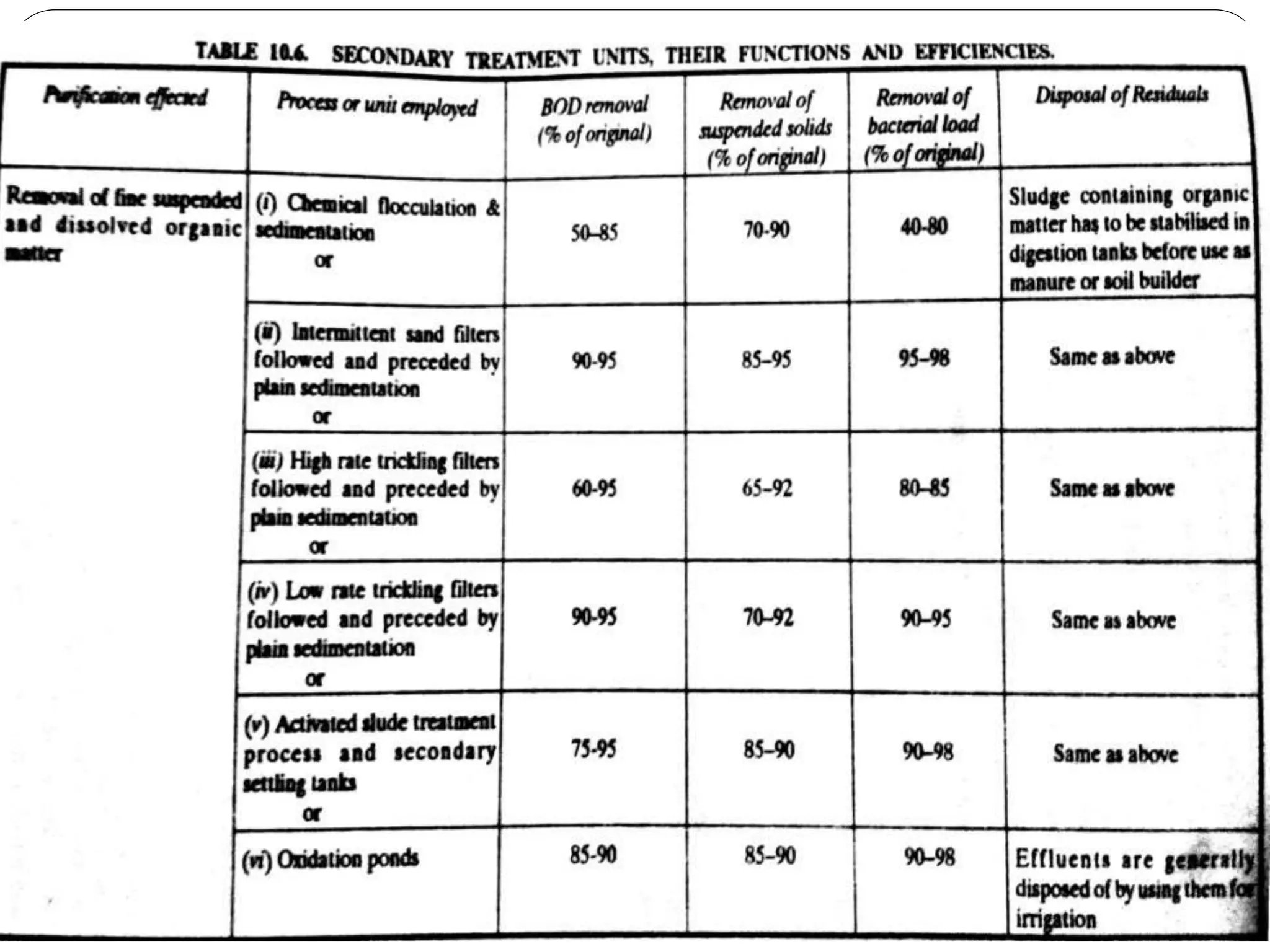
SECONDARY TREATMENT
 It removes the soluble and colloidal organic matter which
remains after primary treatment.
 In the case of domestic wastewater treatment, the objective of
biological treatment is:
 To stabilize the organic content
 To remove nutrients such as nitrogen and phosphorus
 Secondary treatment processes may be classified into:
 Attached (film) growth process
 Suspended growth process
 Combined process
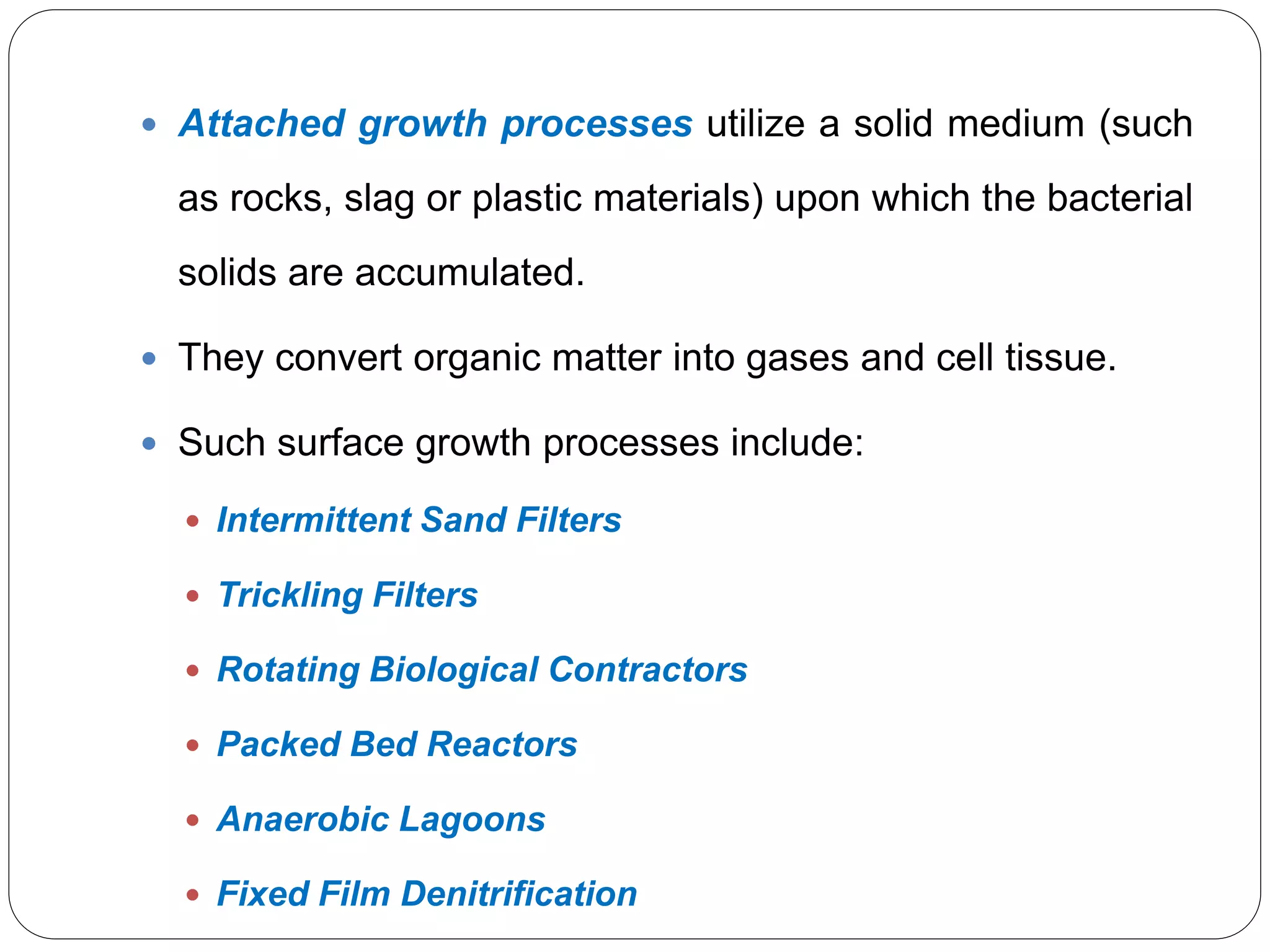
 Attached growth processes utilize a solid medium (such
as rocks, slag or plastic materials) upon which the bacterial
solids are accumulated.
 They convert organic matter into gases and cell tissue.
 Such surface growth processes include:
 Intermittent Sand Filters
 Trickling Filters
 Rotating Biological Contractors
 Packed Bed Reactors
 Anaerobic Lagoons
 Fixed Film Denitrification
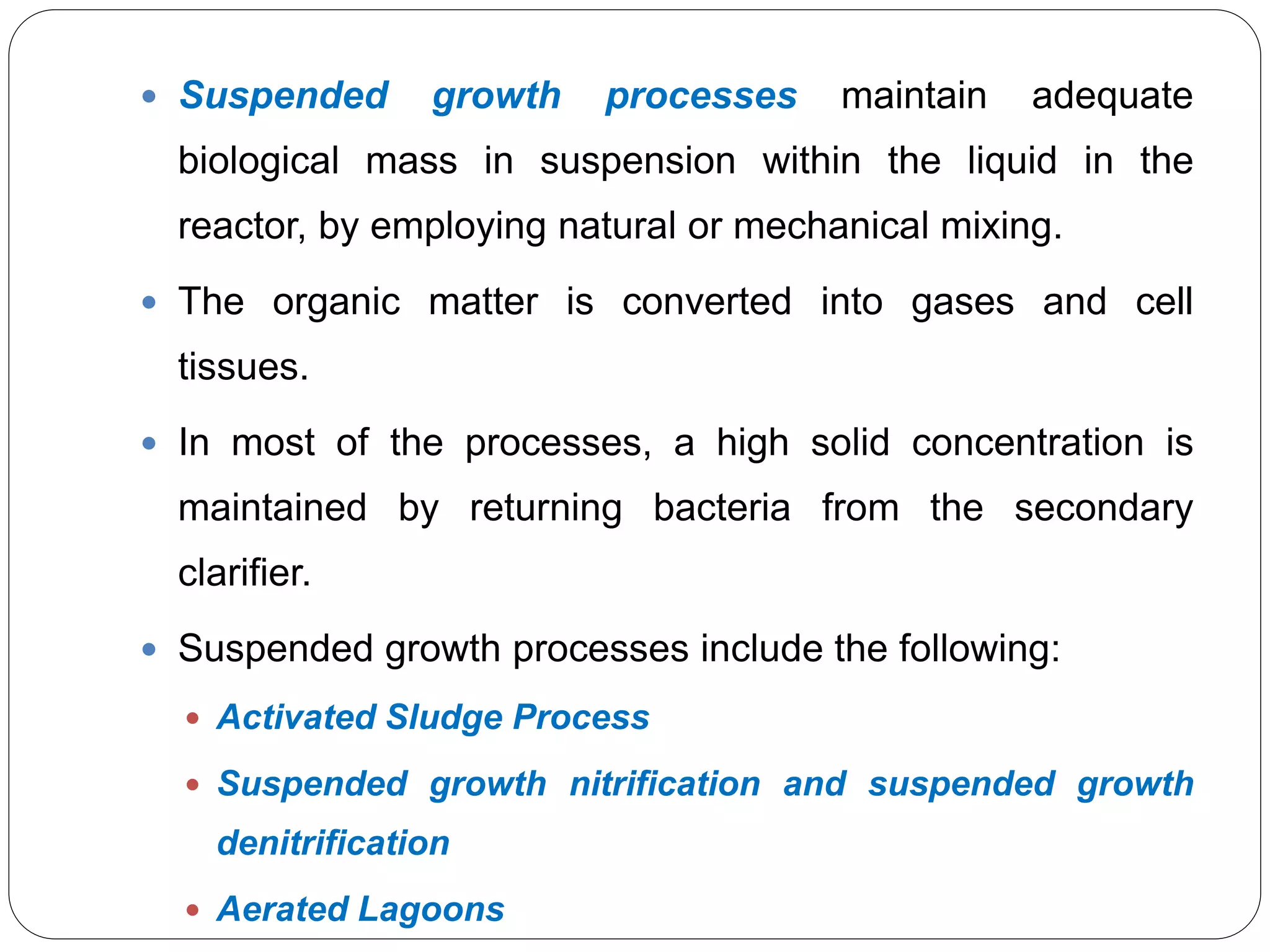
 Suspended growth processes maintain adequate
biological mass in suspension within the liquid in the
reactor, by employing natural or mechanical mixing.
 The organic matter is converted into gases and cell
tissues.
 In most of the processes, a high solid concentration is
maintained by returning bacteria from the secondary
clarifier.
 Suspended growth processes include the following:
 Activated Sludge Process
 Suspended growth nitrification and suspended growth
denitrification
 Aerated Lagoons
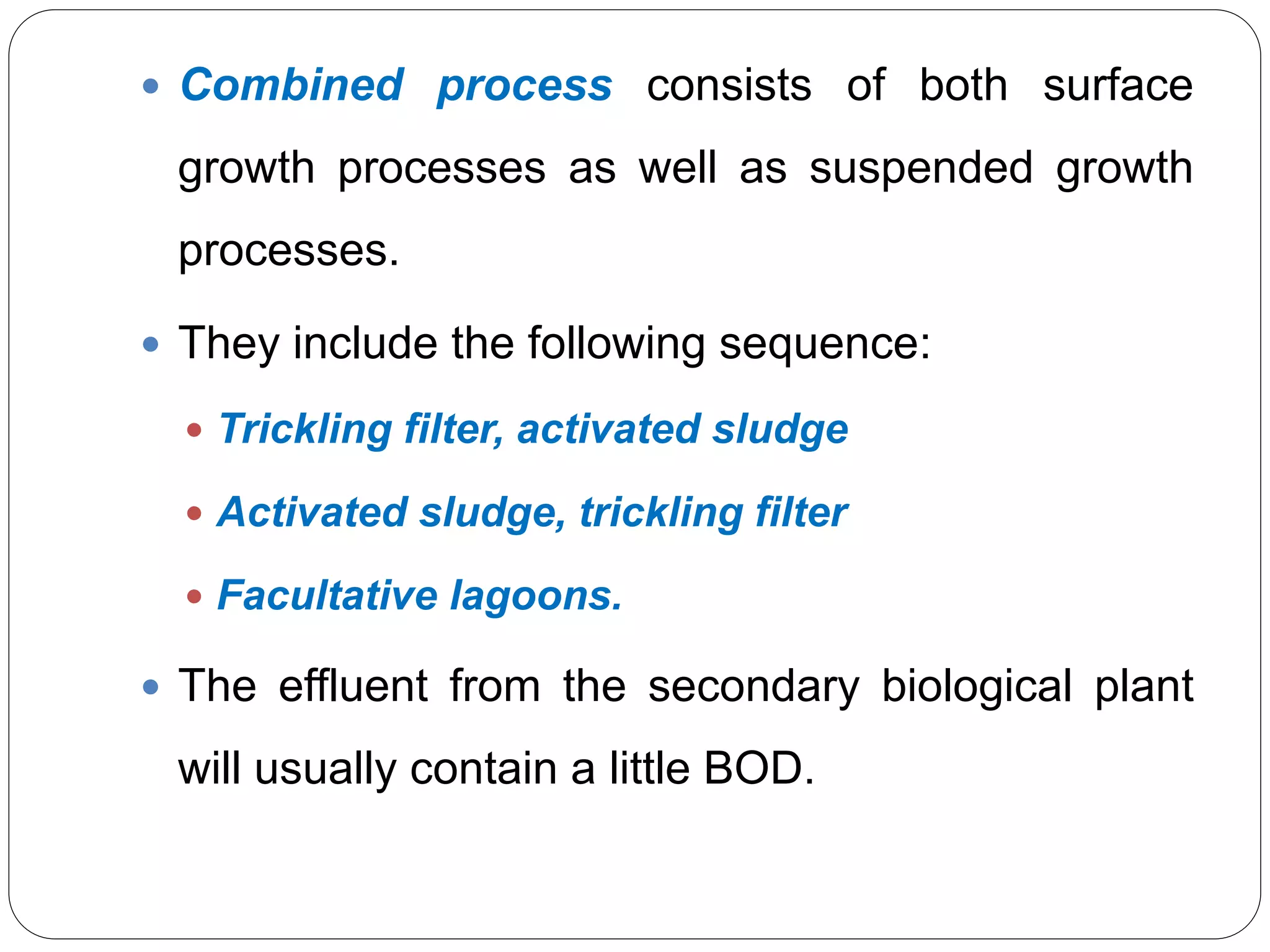
 Combined process consists of both surface
growth processes as well as suspended growth
processes.
 They include the following sequence:
 Trickling filter, activated sludge
 Activated sludge, trickling filter
 Facultative lagoons.
 The effluent from the secondary biological plant
will usually contain a little BOD.
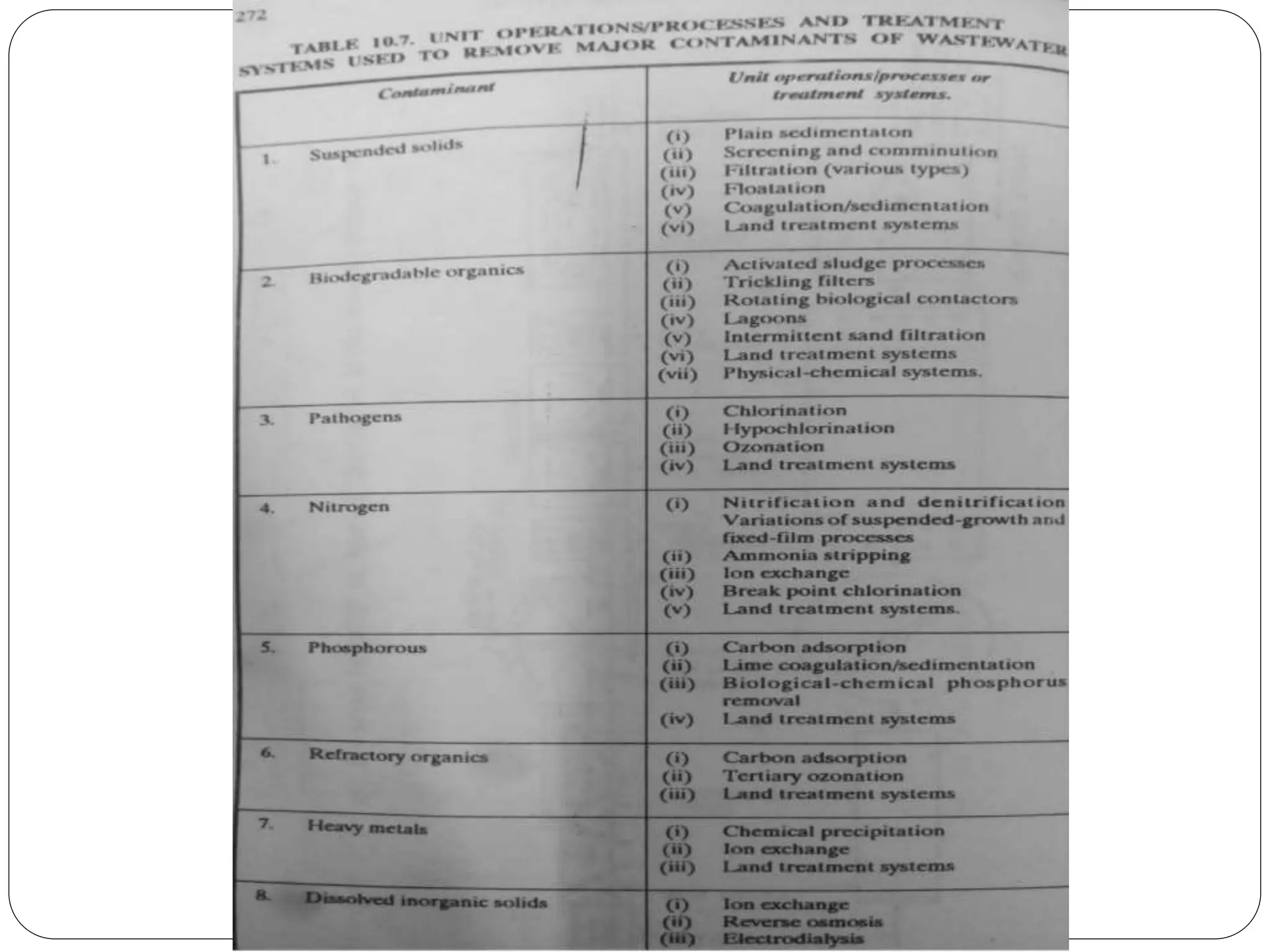
ADVANCED OR TERTIARY
TREATMENT
 Tertiary treatment or advance treatment includes all
operations and processes to remove the pollutants
not removed in preliminary, primary and secondary
treatment.
 These pollutants may include soluble organic
compounds like phosphorous or nitrogen, which may
support algal growth in receiving waters, organic
matter contributing BOD, COD, colour, taste, odour;
bacteria, viruses; colloidal solids contributing turbidity;
or soluble minerals which may interfere with
subsequent reuse of water.
 Common processes used in tertiary treatment are
as follows:
 Chemical clarification
 Recarbonation
 Filtration
 Activated carbon adsorption
 Disinfection
 Nitrogen removal
 Phosphorous removal
 Demineralisation
Unit operations; processes in waste water treatment

Unit operations; processes in waste water treatment

  • 1.
    UNIT OPERATIONS & PROCESSESIN WASTE WATER TREATMENT
  • 2.
    UNIT OPERATIONS AND PROCESSES Waste water treatment is any operation / process or combinations of operations and processes that can reduce the objectionable properties of waste water and render it less dangerous.  Waste water treatment is a combination of physical, chemical and biological processes.  Methods of treatment in which application of physical forces predominate, are known as unit operations.  Methods of treatment in which chemical or biological activities are involved , known as unit processes.
  • 3.
     The unitoperations approach in water and waste water treatment has following advantages:  Gives better understanding of the processes and the capabilities of theses processes in attaining the objectives.  Helps in developing mathematical and physical models of treatment mechanisms and the consequent design of treatment plants.  Helps in coordination of effective treatment
  • 4.
    PHYSICAL UNIT OPERATIONS OPERATIONAPPLICATION 1. Screening Removal of coarse and settleable solids by surface straining 2. Comminution Grinding of coarse solids 3. Flow Equalisation Equalisation of flow and mass loadings of BOD suspended solids. 4. Mixing Mixing of chemicals and gases with waste water and maintaining solids in suspension 5. Flocculation Promotion of aggregation of smaller particles into larger ones. 6. Sedimentation Removal of settleable solids and thickening of sludge. 7. Floatation Removal of finely divided suspended solids and particles. Also thickens biological sludge. 8. Filtration Removal of fine residual suspended solids remaining after biological or chemical treatment. 8. Microscreening Same as filtration. Also removal of algae from stabilization pond effluents
  • 5.
    CHEMICAL UNIT PROCESSES PROCESSAPPLICATION 1. Chemical Precipitation Removal of phosphorous and enhancement of suspended solids removal in primary sedimentation 2. Gas Transfer Addition and removal of gases 3. Adsorption Removal of organics 4. Disinfection Disinfection of disease causing organisms 5. Dechlorination Removal of total combined chlorine residuals 6. Miscellaneous Achievement of specific objectives in waste water treatment
  • 6.
    BIOLOGICAL UNIT PROCESSES Biological unit processes are those in which removal of contaminants are brought about by biological activity  In biological treatment of waste water, the objectives are to coagulate and remove the non settleable colloidal solids and to stabilise the organic matter.  The waste water is generally from three sources (i) domestic waste water (ii) agricultural return waste water (iii) industrial waste water  For domestic waste water, the objectives is to remove various nutrients, specifically nitrogen and phosphorous, which are other wise capable of stimulating growth of acquatic plants.  For industrial waste water, objective is to remove the
  • 7.
     Biological processesare classified by the oxygen dependence of the primary microorganisms responsible for waste treatment. 1. Aerobic processes: biological treatment proceses that occur in the presence of dissolved oxygen. The bacteria that can survive in the presence of DO are known as obligate aerobes. The aerobic process include the following:  Activated sludge process  Trickling filters
  • 8.
    2. Anaerobic processes:involves the decomposition of organic or inorganic matter in the absence of molecular oxygen
  • 9.
    SECONDARY TREATMENT  Itremoves the soluble and colloidal organic matter which remains after primary treatment.  In the case of domestic wastewater treatment, the objective of biological treatment is:  To stabilize the organic content  To remove nutrients such as nitrogen and phosphorus  Secondary treatment processes may be classified into:  Attached (film) growth process  Suspended growth process  Combined process
  • 10.
     Attached growthprocesses utilize a solid medium (such as rocks, slag or plastic materials) upon which the bacterial solids are accumulated.  They convert organic matter into gases and cell tissue.  Such surface growth processes include:  Intermittent Sand Filters  Trickling Filters  Rotating Biological Contractors  Packed Bed Reactors  Anaerobic Lagoons  Fixed Film Denitrification
  • 11.
     Suspended growthprocesses maintain adequate biological mass in suspension within the liquid in the reactor, by employing natural or mechanical mixing.  The organic matter is converted into gases and cell tissues.  In most of the processes, a high solid concentration is maintained by returning bacteria from the secondary clarifier.  Suspended growth processes include the following:  Activated Sludge Process  Suspended growth nitrification and suspended growth denitrification  Aerated Lagoons
  • 12.
     Combined processconsists of both surface growth processes as well as suspended growth processes.  They include the following sequence:  Trickling filter, activated sludge  Activated sludge, trickling filter  Facultative lagoons.  The effluent from the secondary biological plant will usually contain a little BOD.
  • 14.
    ADVANCED OR TERTIARY TREATMENT Tertiary treatment or advance treatment includes all operations and processes to remove the pollutants not removed in preliminary, primary and secondary treatment.  These pollutants may include soluble organic compounds like phosphorous or nitrogen, which may support algal growth in receiving waters, organic matter contributing BOD, COD, colour, taste, odour; bacteria, viruses; colloidal solids contributing turbidity; or soluble minerals which may interfere with subsequent reuse of water.
  • 15.
     Common processesused in tertiary treatment are as follows:  Chemical clarification  Recarbonation  Filtration  Activated carbon adsorption  Disinfection  Nitrogen removal  Phosphorous removal  Demineralisation