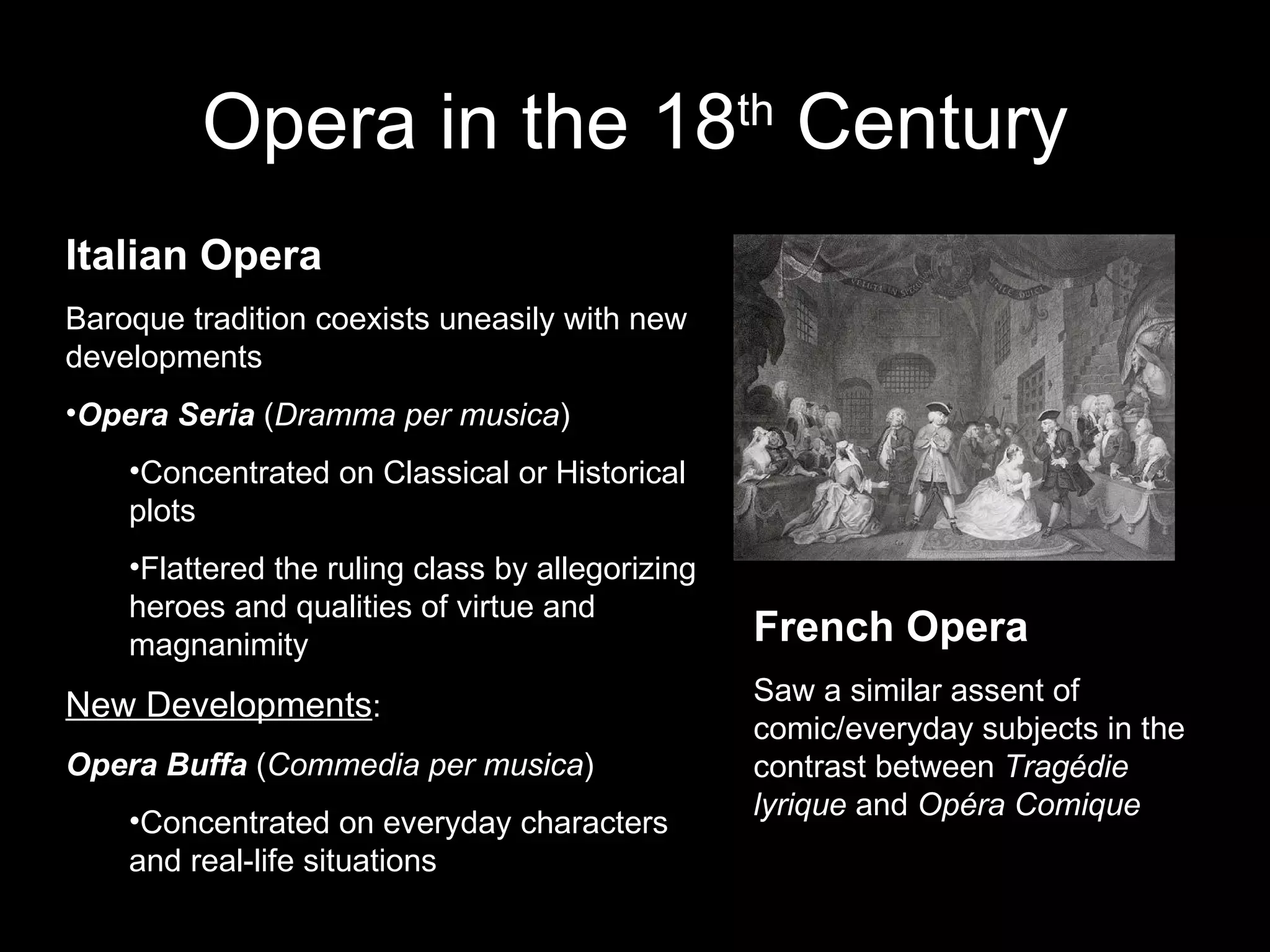
Opera in the 18 th  Century Italian Opera Baroque tradition coexists uneasily with new developments Opera Seria   ( Dramma per musica ) Concentrated on Classical or Historical plots Flattered the ruling class by allegorizing heroes and qualities of virtue and magnanimity New Developments : Opera Buffa   ( Commedia per musica ) Concentrated on everyday characters and real-life situations French Opera Saw a similar assent of comic/everyday subjects in the contrast between  Tragédie lyrique  and  Opéra Comique
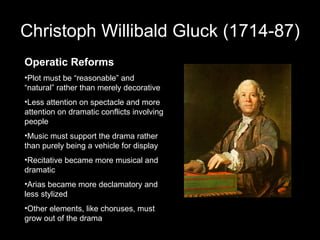
Christoph Willibald Gluck (1714-87) Operatic Reforms Plot must be “reasonable” and “natural” rather than merely decorative Less attention on spectacle and more attention on dramatic conflicts involving people Music must support the drama rather than purely being a vehicle for display Recitative became more musical and dramatic Arias became more declamatory and less stylized Other elements, like choruses, must grow out of the drama
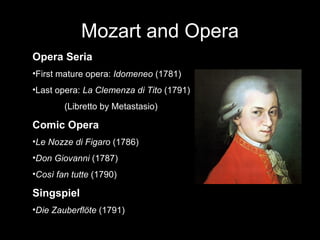
Mozart and Opera Opera Seria First mature opera:  Idomeneo  (1781) Last opera:  La Clemenza di Tito  (1791) (Libretto by Metastasio) Comic Opera Le Nozze di Figaro  (1786) Don Giovanni  (1787) Così fan tutte  (1790) Singspiel Die Zauberflöte  (1791)
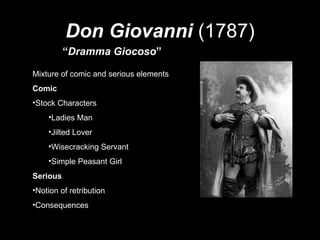
Don Giovanni   (1787) “ Dramma Giocoso ” Mixture of comic and serious elements Comic Stock Characters Ladies Man Jilted Lover Wisecracking Servant Simple Peasant Girl Serious Notion of retribution Consequences
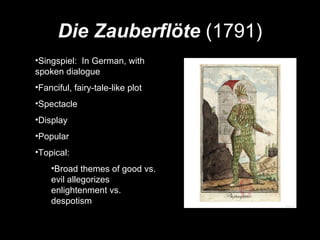
Die Zauberflöte  (1791) Singspiel:  In German, with spoken dialogue Fanciful, fairy-tale-like plot Spectacle Display Popular Topical: Broad themes of good vs. evil allegorizes enlightenment vs. despotism
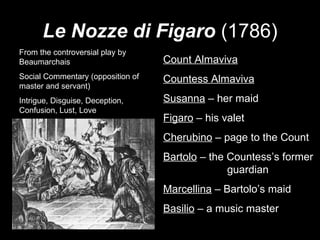
Le Nozze di Figaro  (1786) From the controversial play by Beaumarchais Social Commentary (opposition of master and servant) Intrigue, Disguise, Deception, Confusion, Lust, Love Count Almaviva Countess Almaviva Susanna  – her maid Figaro  – his valet Cherubino  – page to the Count Bartolo  – the Countess’s former  guardian Marcellina  – Bartolo’s maid Basilio  – a music master
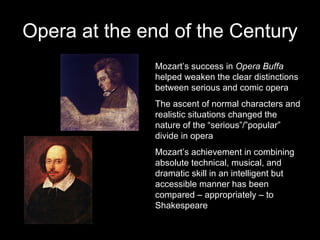
Opera at the end of the Century Mozart’s success in  Opera Buffa  helped weaken the clear distinctions between serious and comic opera The ascent of normal characters and realistic situations changed the nature of the “serious”/”popular” divide in opera Mozart’s achievement in combining absolute technical, musical, and dramatic skill in an intelligent but accessible manner has been compared – appropriately – to Shakespeare

UNIT III - Class 19

  • 1.
    Opera in the18 th Century Italian Opera Baroque tradition coexists uneasily with new developments Opera Seria ( Dramma per musica ) Concentrated on Classical or Historical plots Flattered the ruling class by allegorizing heroes and qualities of virtue and magnanimity New Developments : Opera Buffa ( Commedia per musica ) Concentrated on everyday characters and real-life situations French Opera Saw a similar assent of comic/everyday subjects in the contrast between Tragédie lyrique and Opéra Comique
  • 2.
    Christoph Willibald Gluck(1714-87) Operatic Reforms Plot must be “reasonable” and “natural” rather than merely decorative Less attention on spectacle and more attention on dramatic conflicts involving people Music must support the drama rather than purely being a vehicle for display Recitative became more musical and dramatic Arias became more declamatory and less stylized Other elements, like choruses, must grow out of the drama
  • 3.
    Mozart and OperaOpera Seria First mature opera: Idomeneo (1781) Last opera: La Clemenza di Tito (1791) (Libretto by Metastasio) Comic Opera Le Nozze di Figaro (1786) Don Giovanni (1787) Così fan tutte (1790) Singspiel Die Zauberflöte (1791)
  • 4.
    Don Giovanni (1787) “ Dramma Giocoso ” Mixture of comic and serious elements Comic Stock Characters Ladies Man Jilted Lover Wisecracking Servant Simple Peasant Girl Serious Notion of retribution Consequences
  • 5.
    Die Zauberflöte (1791) Singspiel: In German, with spoken dialogue Fanciful, fairy-tale-like plot Spectacle Display Popular Topical: Broad themes of good vs. evil allegorizes enlightenment vs. despotism
  • 6.
    Le Nozze diFigaro (1786) From the controversial play by Beaumarchais Social Commentary (opposition of master and servant) Intrigue, Disguise, Deception, Confusion, Lust, Love Count Almaviva Countess Almaviva Susanna – her maid Figaro – his valet Cherubino – page to the Count Bartolo – the Countess’s former guardian Marcellina – Bartolo’s maid Basilio – a music master
  • 7.
    Opera at theend of the Century Mozart’s success in Opera Buffa helped weaken the clear distinctions between serious and comic opera The ascent of normal characters and realistic situations changed the nature of the “serious”/”popular” divide in opera Mozart’s achievement in combining absolute technical, musical, and dramatic skill in an intelligent but accessible manner has been compared – appropriately – to Shakespeare