By Chelsie Brandrick Page 1
Unit 57 Blog Essay for Photograms
By Chelsie Brandrick
A photogram is a photographic image made without a camera by placing objects
directly onto the surface of a light sensitive material such as photographic paper and
then exposing it to light. The usual result is a negative shadow image that shows
variations in tone that depends upon the transparency of the objects used. Areas of the
paper that have received no light appear white; those exposed through transparent or
semi-transparent objects appear grey and the rest will appear black.
Some of the first photographic images made were photograms and William Henry
Fox Talbot called these ‘Photogenic Drawings’, which he made by placing leaves and
pieces of organic material onto sensitised paper and then left them outdoors on a
sunny day to expose.
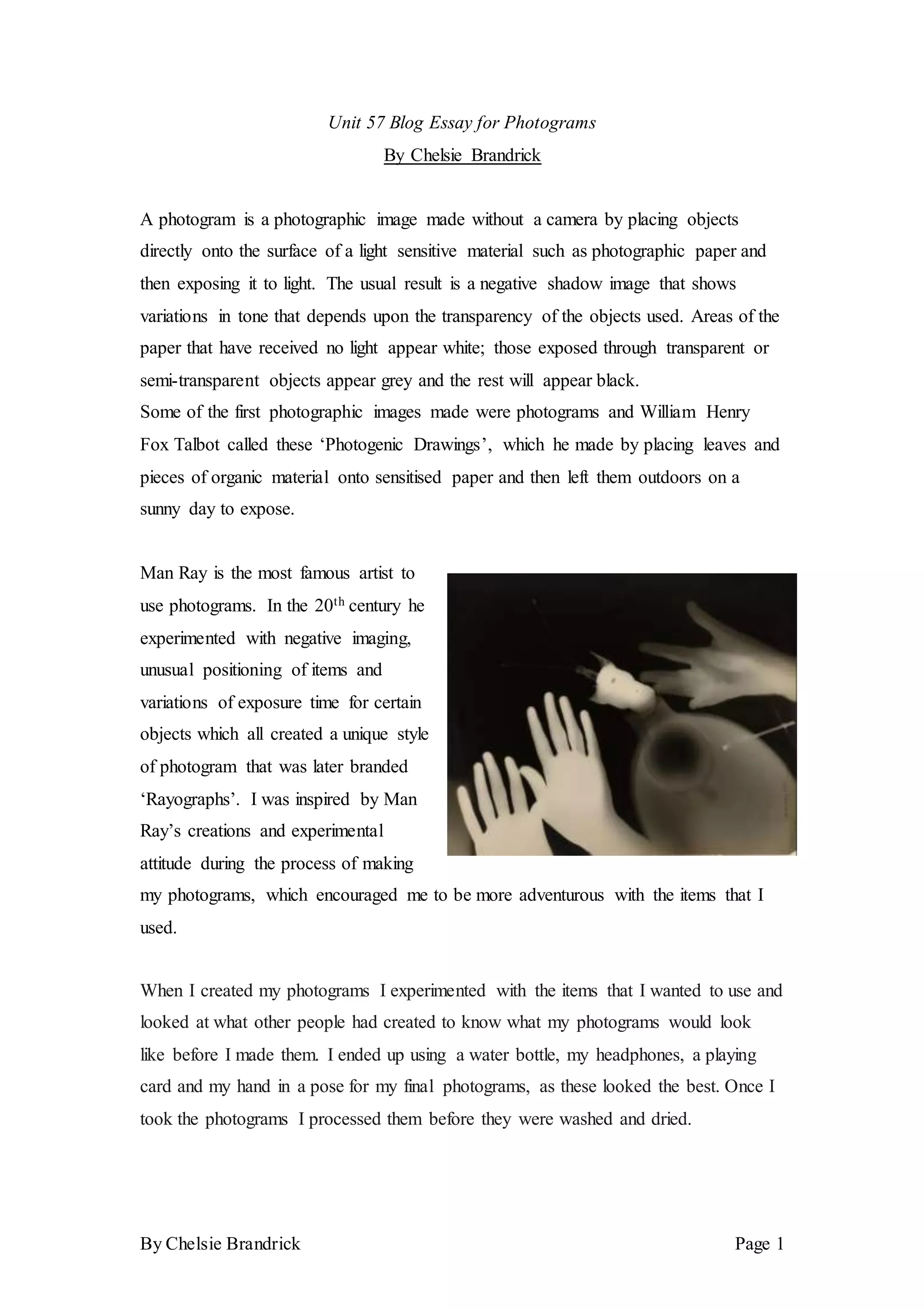
Man Ray is the most famous artist to
use photograms. In the 20th century he
experimented with negative imaging,
unusual positioning of items and
variations of exposure time for certain
objects which all created a unique style
of photogram that was later branded
‘Rayographs’. I was inspired by Man
Ray’s creations and experimental
attitude during the process of making
my photograms, which encouraged me to be more adventurous with the items that I
used.
When I created my photograms I experimented with the items that I wanted to use and
looked at what other people had created to know what my photograms would look
like before I made them. I ended up using a water bottle, my headphones, a playing
card and my hand in a pose for my final photograms, as these looked the best. Once I
took the photograms I processed them before they were washed and dried.

Unit 57 Blog Essay For Photograms

  • 1.
    By Chelsie BrandrickPage 1 Unit 57 Blog Essay for Photograms By Chelsie Brandrick A photogram is a photographic image made without a camera by placing objects directly onto the surface of a light sensitive material such as photographic paper and then exposing it to light. The usual result is a negative shadow image that shows variations in tone that depends upon the transparency of the objects used. Areas of the paper that have received no light appear white; those exposed through transparent or semi-transparent objects appear grey and the rest will appear black. Some of the first photographic images made were photograms and William Henry Fox Talbot called these ‘Photogenic Drawings’, which he made by placing leaves and pieces of organic material onto sensitised paper and then left them outdoors on a sunny day to expose. Man Ray is the most famous artist to use photograms. In the 20th century he experimented with negative imaging, unusual positioning of items and variations of exposure time for certain objects which all created a unique style of photogram that was later branded ‘Rayographs’. I was inspired by Man Ray’s creations and experimental attitude during the process of making my photograms, which encouraged me to be more adventurous with the items that I used. When I created my photograms I experimented with the items that I wanted to use and looked at what other people had created to know what my photograms would look like before I made them. I ended up using a water bottle, my headphones, a playing card and my hand in a pose for my final photograms, as these looked the best. Once I took the photograms I processed them before they were washed and dried.