Level 5: Management and
Leadership
Unit 509
Managing Stakeholder Relationships
Syllabus Coverage
1.1 Analyse the types of stakeholder relationships within organisations
1.2 Examine the benefits and challenges for organisations working with different
stakeholder groups
Understand the different types
and values of Stakeholder
relationships
Section 1.1
Analyse the types of stakeholder relationships
within organisations
What is a Stakeholder?
A shareholder is an owner of shares in a company.What is a Shareholder?
“Any person, or organisation, with a vested
interest in the successful operation of a
company, or organisation. A stakeholder may
be an employee, customer, supplier, partner,
or even the local community within which an
organisation operates. Although
differentiation is often made between
shareholders and stakeholders, shareholders
should also be included as stakeholders in an
organisation. – CMI
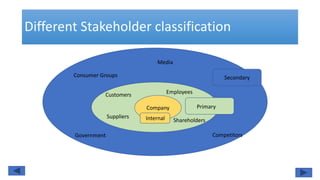
Different Stakeholder classification
CC
Company
Customers
Suppliers
Shareholders
Employees
Consumer Groups
Government Competitors
Media
Secondary
Primary
Internal
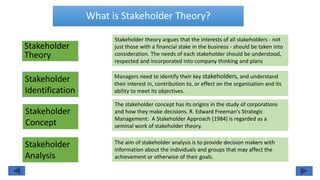
What is Stakeholder Theory?
Stakeholder
Theory
Stakeholder
Identification
Managers need to identify their key stakeholders, and understand
their interest in, contribution to, or effect on the organisation and its
ability to meet its objectives.
Stakeholder
Concept
The stakeholder concept has its origins in the study of corporations
and how they make decisions. R. Edward Freeman's Strategic
Management: A Stakeholder Approach (1984) is regarded as a
seminal work of stakeholder theory.
Stakeholder
Analysis
The aim of stakeholder analysis is to provide decision makers with
information about the individuals and groups that may affect the
achievement or otherwise of their goals.
Stakeholder theory argues that the interests of all stakeholders - not
just those with a financial stake in the business - should be taken into
consideration. The needs of each stakeholder should be understood,
respected and incorporated into company thinking and plans
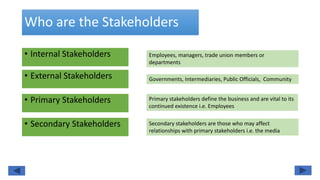
Who are the Stakeholders
• Internal Stakeholders
• External Stakeholders
• Primary Stakeholders
• Secondary Stakeholders
Employees, managers, trade union members or
departments
Governments, Intermediaries, Public Officials, Community
Primary stakeholders define the business and are vital to its
continued existence i.e. Employees
Secondary stakeholders are those who may affect
relationships with primary stakeholders i.e. the media
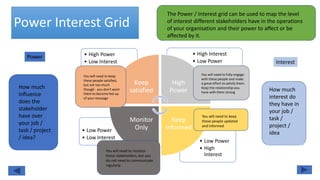
• Low Power
• High
Interest
• Low Power
• Low Interest
• High Interest
• Low Power
• High Power
• Low Interest
Keep
satisfied
High
Power
Keep
Informed
Monitor
Only
Power Interest Grid
The Power / Interest grid can be used to map the level
of interest different stakeholders have in the operations
of your organisation and their power to affect or be
affected by it.
How much
influence
does the
stakeholder
have over
your job /
task / project
/ idea?
Power
Interest
How much
interest do
they have in
your job /
task /
project /
idea
You will need to fully engage
with these people and make
a great effort to satisfy them.
Keep the relationship you
have with them strong
You will need to keep
these people updated
and informed
You will need to monitor
these stakeholders, but you
do not need to communicate
regularly.
You will need to keep
these people satisfied,
but not too much
though - you don’t want
them to become fed up
of your message
Examine the benefits and challenges
for organisations working with
different stakeholder groups
Section 1.2
Stakeholder Engagement
What is Stakeholder
Engagement?
Stakeholder engagement is the process
by which an organization involves people
who may be affected by the decisions it
makes or can influence the
implementation of its decisions. They
may support or oppose the decisions, be
influential in the organization or within
the community in which it operates,
hold relevant official positions or be
affected in the long term.
Stakeholder Engagement
Why engage
Stakeholders?
At a basic level the benefits of stakeholder engagement will help
identify opportunities and barriers, build trust and repair relationships
and limit misunderstandings, rumours, and anxiety.
Key Benefits
of a positive
culture
towards
stakeholders
Increased communication channels and networks that that will help with
organisational learning, innovation, and change
Improved levels of stakeholder feedback that will inform decision making
An increased focus on ethical practices that will improve corporate social
responsibility
A drive to improve and evolve processes and systems
Improvements in the levels of training and experience that will be valuable career
assets for your staff in helping them meet stakeholder requirements
Reduced resistance to change among staff, arising from a better understanding of
the pressures on your organisation
Challenges of Stakeholder Engagement
Why dealing with
Stakeholders can
be problematic?
Stakeholders have multiple priorities, resistance to share
information.
What are the
common errors
made with
stakeholder
engagement?
Assuming you know what your stakeholders are thinking
Stakeholders can misinterpret their needs and interests
It is often hard to find shared interests and common ground.
Communicating both virtually and face-to-face brings differing
demands and researching relevant stakeholder information can be
time consuming
Seeing stakeholder management as a one-way process
Trading the interests of one group off against those of another
Ignoring and failing to engage with stakeholder groups that are
critical to the organisation
Neglecting the interests of important stakeholders.

Unit 509 lo 1 master

  • 1.
    Level 5: Managementand Leadership Unit 509 Managing Stakeholder Relationships
  • 2.
    Syllabus Coverage 1.1 Analysethe types of stakeholder relationships within organisations 1.2 Examine the benefits and challenges for organisations working with different stakeholder groups
  • 3.
    Understand the differenttypes and values of Stakeholder relationships Section 1.1
  • 4.
    Analyse the typesof stakeholder relationships within organisations What is a Stakeholder? A shareholder is an owner of shares in a company.What is a Shareholder? “Any person, or organisation, with a vested interest in the successful operation of a company, or organisation. A stakeholder may be an employee, customer, supplier, partner, or even the local community within which an organisation operates. Although differentiation is often made between shareholders and stakeholders, shareholders should also be included as stakeholders in an organisation. – CMI
  • 5.
  • 6.
    What is StakeholderTheory? Stakeholder Theory Stakeholder Identification Managers need to identify their key stakeholders, and understand their interest in, contribution to, or effect on the organisation and its ability to meet its objectives. Stakeholder Concept The stakeholder concept has its origins in the study of corporations and how they make decisions. R. Edward Freeman's Strategic Management: A Stakeholder Approach (1984) is regarded as a seminal work of stakeholder theory. Stakeholder Analysis The aim of stakeholder analysis is to provide decision makers with information about the individuals and groups that may affect the achievement or otherwise of their goals. Stakeholder theory argues that the interests of all stakeholders - not just those with a financial stake in the business - should be taken into consideration. The needs of each stakeholder should be understood, respected and incorporated into company thinking and plans
  • 7.
    Who are theStakeholders • Internal Stakeholders • External Stakeholders • Primary Stakeholders • Secondary Stakeholders Employees, managers, trade union members or departments Governments, Intermediaries, Public Officials, Community Primary stakeholders define the business and are vital to its continued existence i.e. Employees Secondary stakeholders are those who may affect relationships with primary stakeholders i.e. the media
  • 8.
    • Low Power •High Interest • Low Power • Low Interest • High Interest • Low Power • High Power • Low Interest Keep satisfied High Power Keep Informed Monitor Only Power Interest Grid The Power / Interest grid can be used to map the level of interest different stakeholders have in the operations of your organisation and their power to affect or be affected by it. How much influence does the stakeholder have over your job / task / project / idea? Power Interest How much interest do they have in your job / task / project / idea You will need to fully engage with these people and make a great effort to satisfy them. Keep the relationship you have with them strong You will need to keep these people updated and informed You will need to monitor these stakeholders, but you do not need to communicate regularly. You will need to keep these people satisfied, but not too much though - you don’t want them to become fed up of your message
  • 9.
    Examine the benefitsand challenges for organisations working with different stakeholder groups Section 1.2
  • 10.
    Stakeholder Engagement What isStakeholder Engagement? Stakeholder engagement is the process by which an organization involves people who may be affected by the decisions it makes or can influence the implementation of its decisions. They may support or oppose the decisions, be influential in the organization or within the community in which it operates, hold relevant official positions or be affected in the long term.
  • 11.
    Stakeholder Engagement Why engage Stakeholders? Ata basic level the benefits of stakeholder engagement will help identify opportunities and barriers, build trust and repair relationships and limit misunderstandings, rumours, and anxiety. Key Benefits of a positive culture towards stakeholders Increased communication channels and networks that that will help with organisational learning, innovation, and change Improved levels of stakeholder feedback that will inform decision making An increased focus on ethical practices that will improve corporate social responsibility A drive to improve and evolve processes and systems Improvements in the levels of training and experience that will be valuable career assets for your staff in helping them meet stakeholder requirements Reduced resistance to change among staff, arising from a better understanding of the pressures on your organisation
  • 12.
    Challenges of StakeholderEngagement Why dealing with Stakeholders can be problematic? Stakeholders have multiple priorities, resistance to share information. What are the common errors made with stakeholder engagement? Assuming you know what your stakeholders are thinking Stakeholders can misinterpret their needs and interests It is often hard to find shared interests and common ground. Communicating both virtually and face-to-face brings differing demands and researching relevant stakeholder information can be time consuming Seeing stakeholder management as a one-way process Trading the interests of one group off against those of another Ignoring and failing to engage with stakeholder groups that are critical to the organisation Neglecting the interests of important stakeholders.