SOA Reference Architecture
Rajan Ramanujam
Agenda
• SOA Reference Architecture Overview
– SOA Stack – Consumer
– SOA Stack – BPM
– SOA Stack – ESB/Integration
– SOA Stack – Service
– SOA Stack – Service Component
– SOA Stack – Operational
– SOA Stack – Information Management
– SOA Stack – Governance
– SOA Stack – QoS
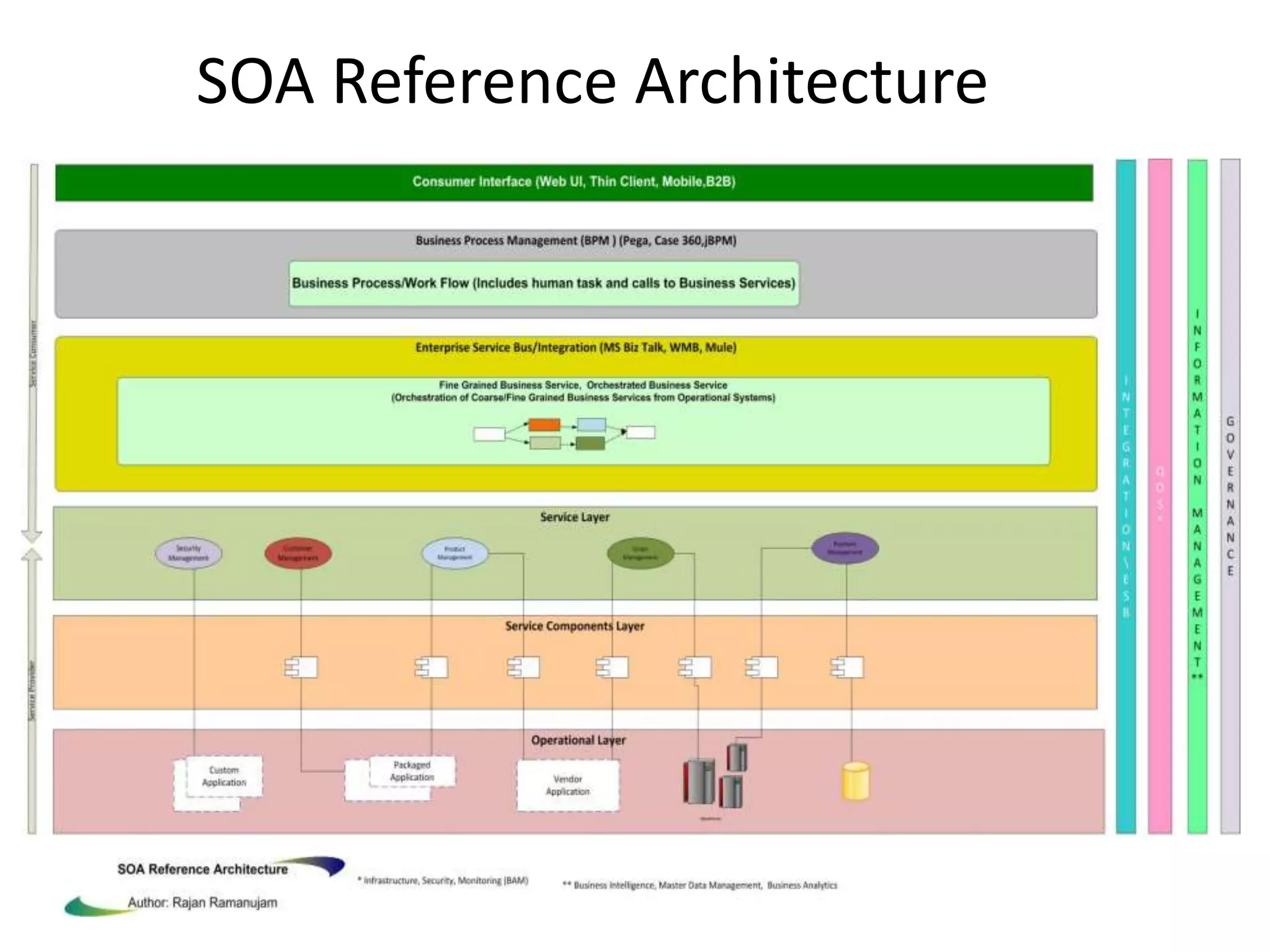
SOA Reference Architecture
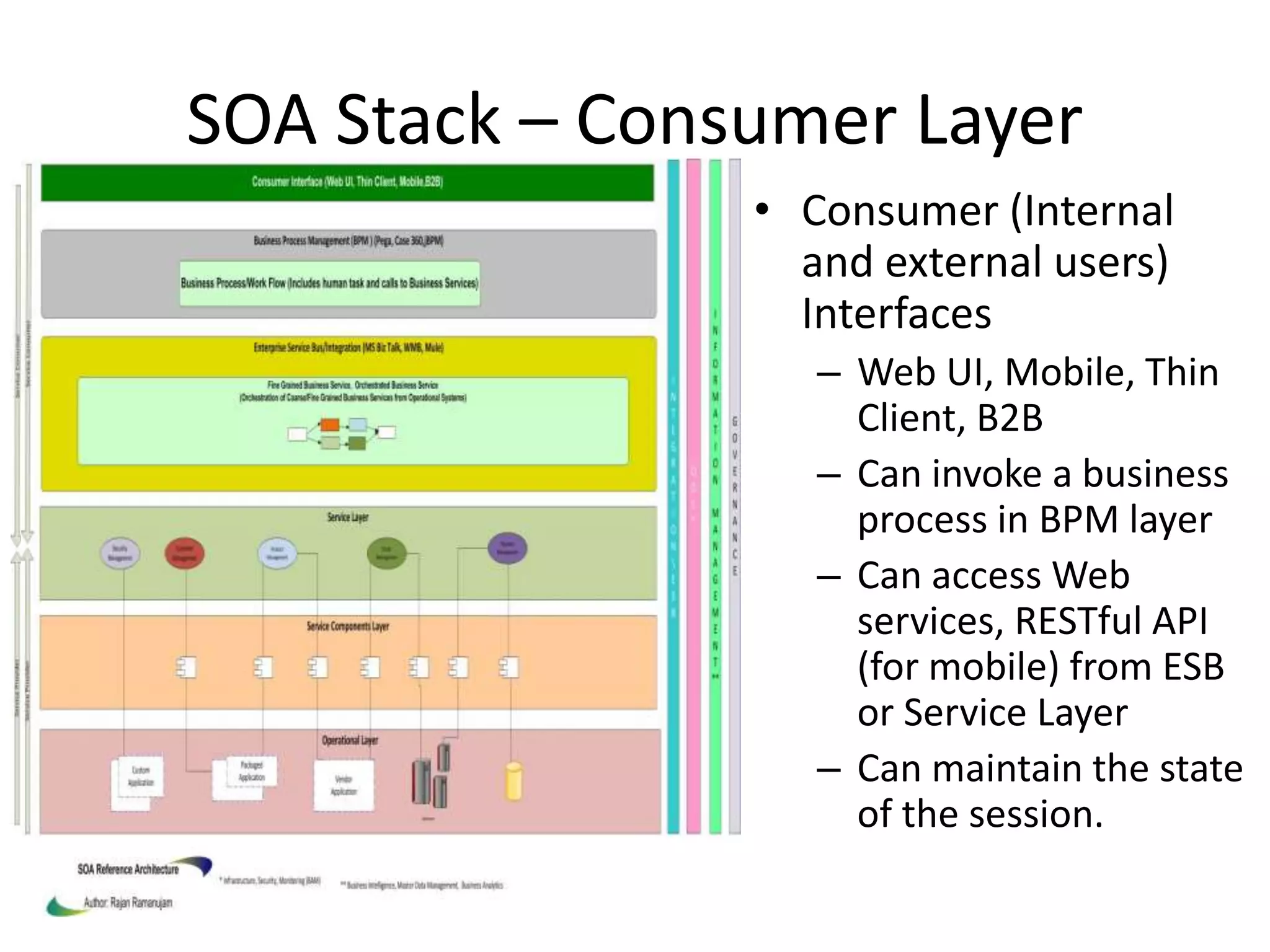
SOA Stack – Consumer Layer
• Consumer (Internal
and external users)
Interfaces
– Web UI, Mobile, Thin
Client, B2B
– Can invoke a business
process in BPM layer
– Can access Web
services, RESTful API
(for mobile) from ESB
or Service Layer
– Can maintain the state
of the session.
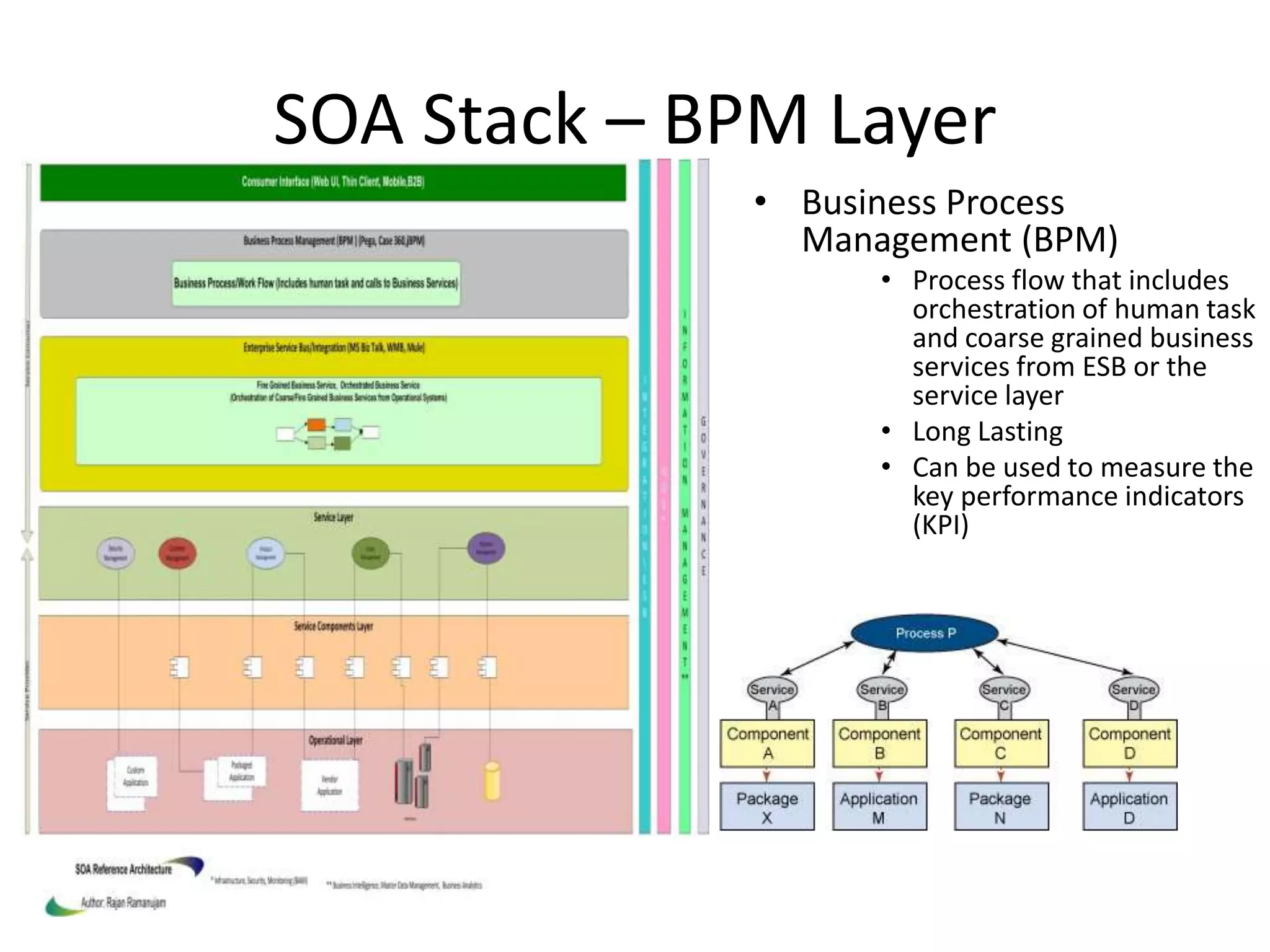
SOA Stack – BPM Layer
• Business Process
Management (BPM)
• Process flow that includes
orchestration of human task
and coarse grained business
services from ESB or the
service layer
• Long Lasting
• Can be used to measure the
key performance indicators
(KPI)
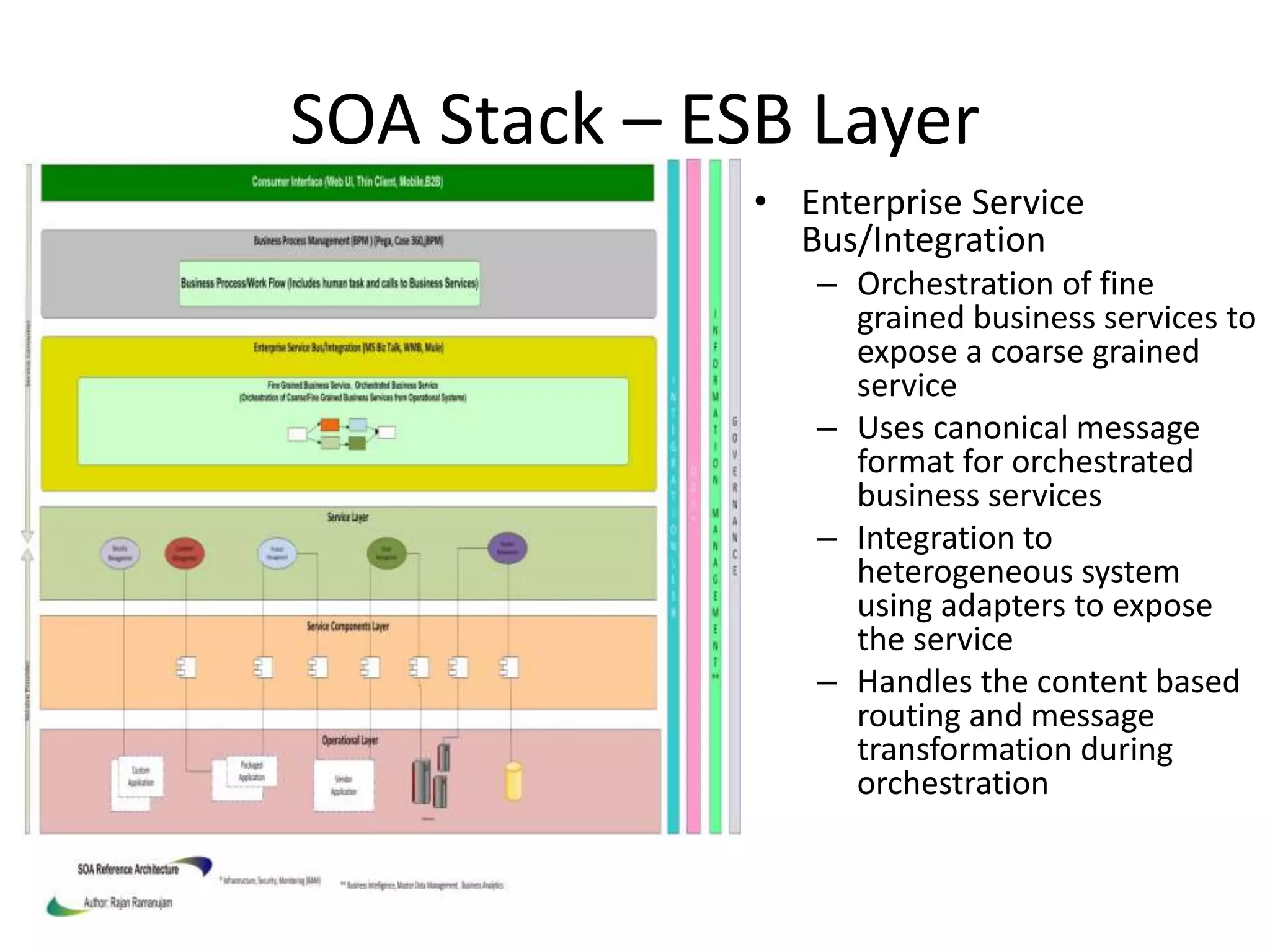
SOA Stack – ESB Layer
• Enterprise Service
Bus/Integration
– Orchestration of fine
grained business services to
expose a coarse grained
service
– Uses canonical message
format for orchestrated
business services
– Integration to
heterogeneous system
using adapters to expose
the service
– Handles the content based
routing and message
transformation during
orchestration
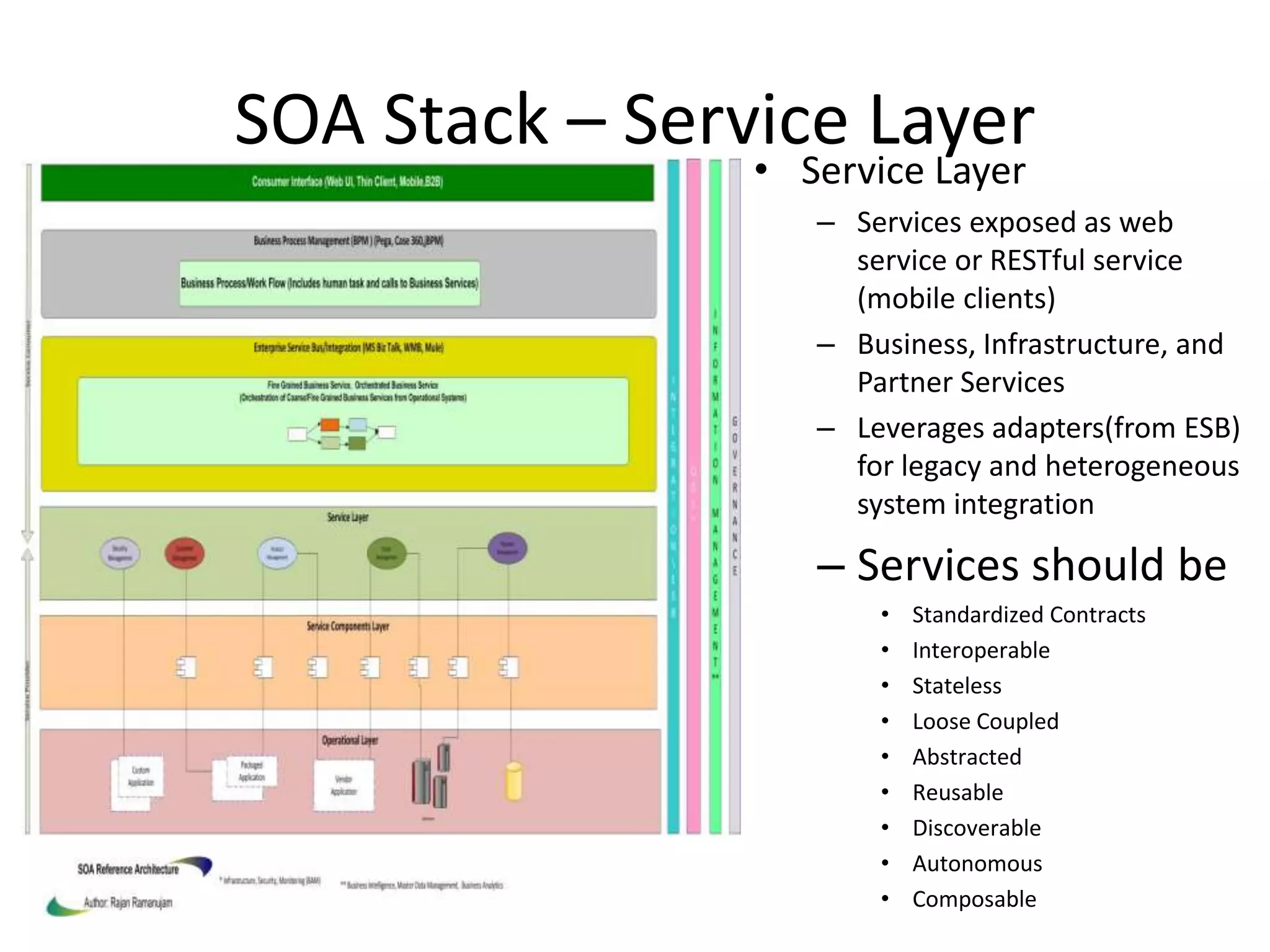
SOA Stack – Service Layer
• Service Layer
– Services exposed as web
service or RESTful service
(mobile clients)
– Business, Infrastructure, and
Partner Services
– Leverages adapters(from ESB)
for legacy and heterogeneous
system integration
– Services should be
• Standardized Contracts
• Interoperable
• Stateless
• Loose Coupled
• Abstracted
• Reusable
• Discoverable
• Autonomous
• Composable
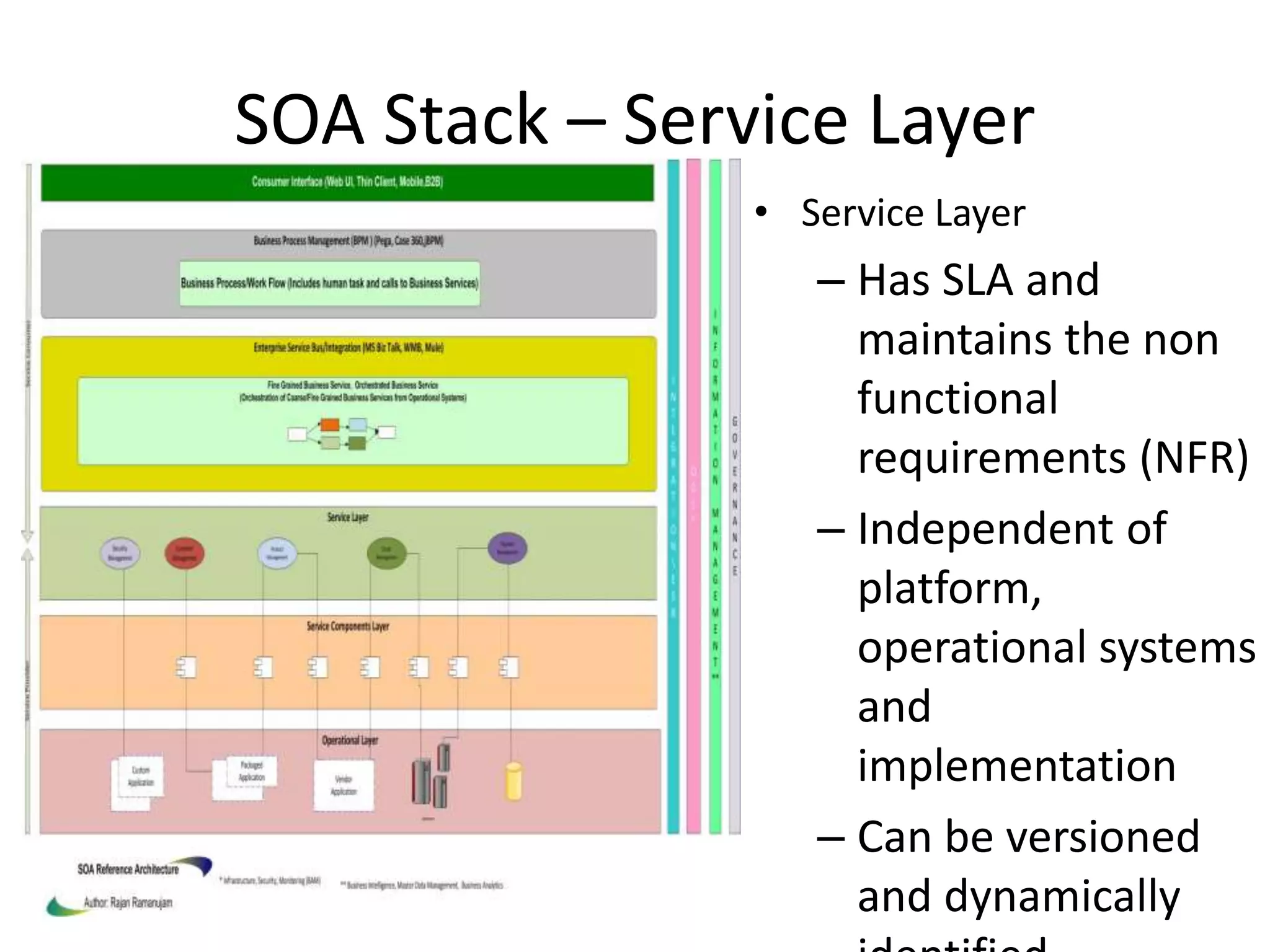
SOA Stack – Service Layer
• Service Layer
– Has SLA and
maintains the non
functional
requirements (NFR)
– Independent of
platform,
operational systems
and
implementation
– Can be versioned
and dynamically
SOA Stack – Service Component Layer
• Service Component
Layer
– Can be
transactional(EJB)
and
structural(ORM,DAO)
– Can talk to multiple
operational systems.
– Can participate in
distributed
transactions.
– Can leverage system
specific message
formats.
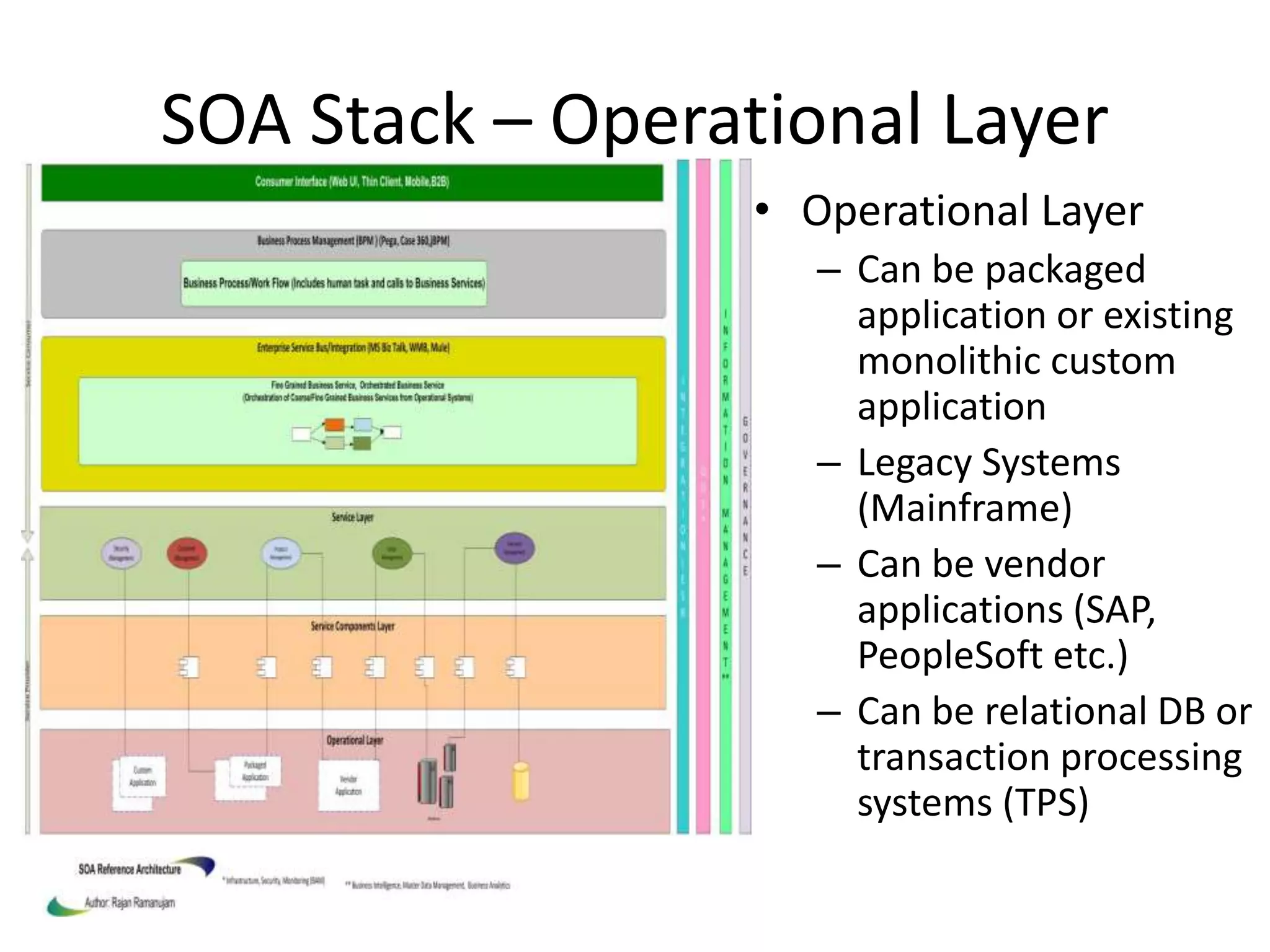
SOA Stack – Operational Layer
• Operational Layer
– Can be packaged
application or existing
monolithic custom
application
– Legacy Systems
(Mainframe)
– Can be vendor
applications (SAP,
PeopleSoft etc.)
– Can be relational DB or
transaction processing
systems (TPS)
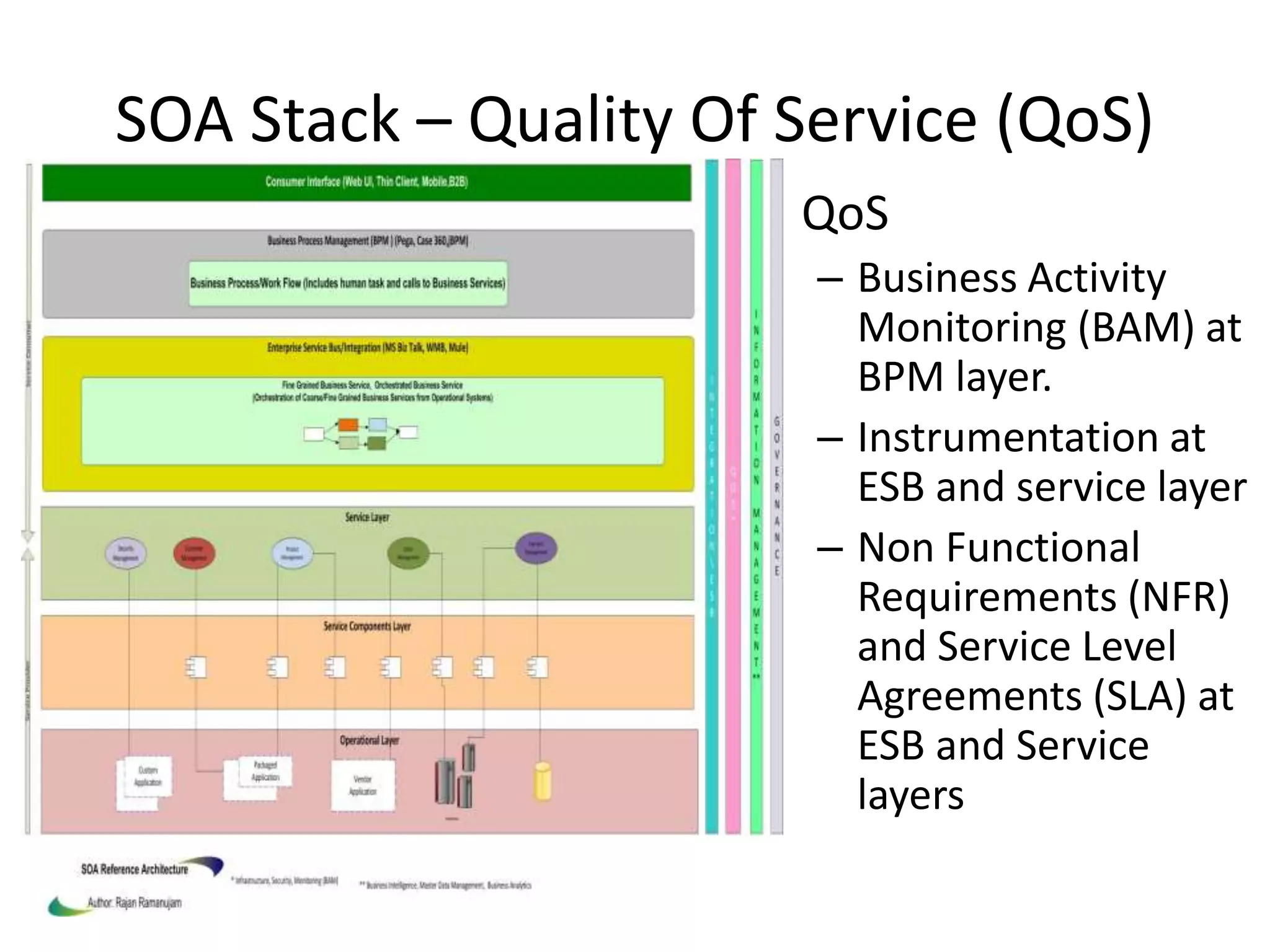
SOA Stack – Quality Of Service (QoS)
• QoS
– Business Activity
Monitoring (BAM) at
BPM layer.
– Instrumentation at
ESB and service layer
– Non Functional
Requirements (NFR)
and Service Level
Agreements (SLA) at
ESB and Service
layers
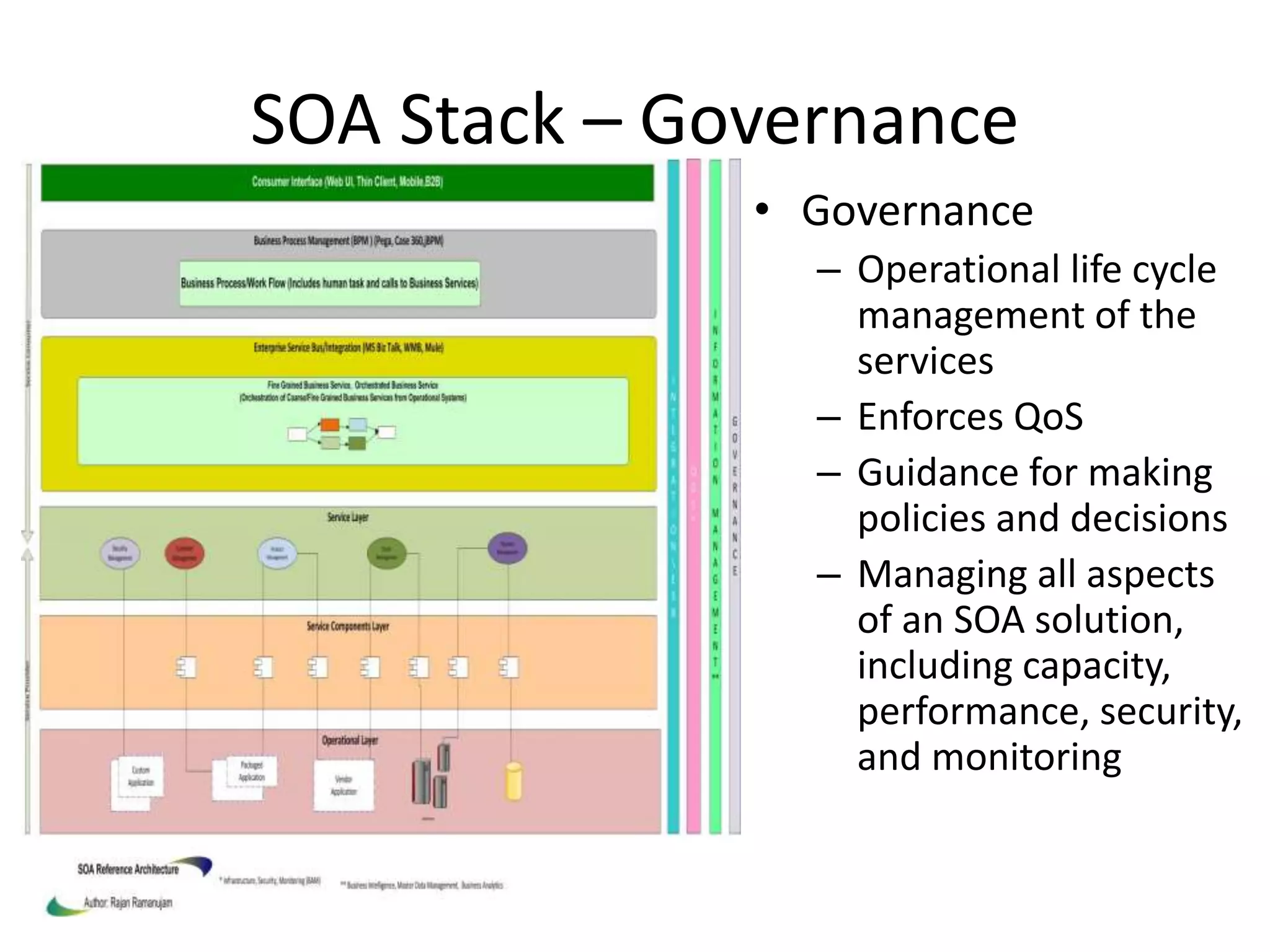
SOA Stack – Governance
• Governance
– Operational life cycle
management of the
services
– Enforces QoS
– Guidance for making
policies and decisions
– Managing all aspects
of an SOA solution,
including capacity,
performance, security,
and monitoring
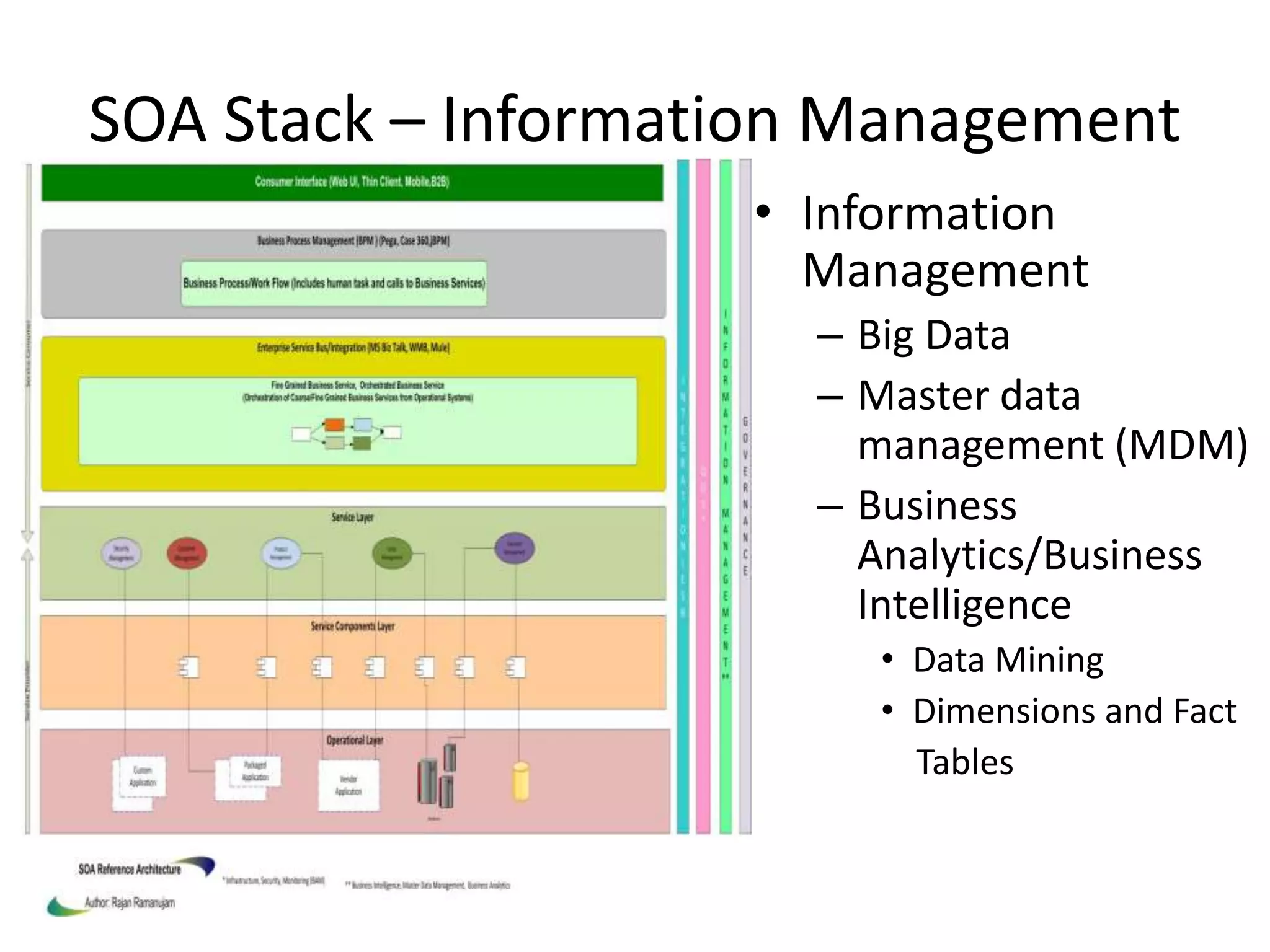
SOA Stack – Information Management
• Information
Management
– Big Data
– Master data
management (MDM)
– Business
Analytics/Business
Intelligence
• Data Mining
• Dimensions and Fact
Tables

SOA Reference Architecture

  • 1.
  • 2.
    Agenda • SOA ReferenceArchitecture Overview – SOA Stack – Consumer – SOA Stack – BPM – SOA Stack – ESB/Integration – SOA Stack – Service – SOA Stack – Service Component – SOA Stack – Operational – SOA Stack – Information Management – SOA Stack – Governance – SOA Stack – QoS
  • 3.
  • 4.
    SOA Stack –Consumer Layer • Consumer (Internal and external users) Interfaces – Web UI, Mobile, Thin Client, B2B – Can invoke a business process in BPM layer – Can access Web services, RESTful API (for mobile) from ESB or Service Layer – Can maintain the state of the session.
  • 5.
    SOA Stack –BPM Layer • Business Process Management (BPM) • Process flow that includes orchestration of human task and coarse grained business services from ESB or the service layer • Long Lasting • Can be used to measure the key performance indicators (KPI)
  • 6.
    SOA Stack –ESB Layer • Enterprise Service Bus/Integration – Orchestration of fine grained business services to expose a coarse grained service – Uses canonical message format for orchestrated business services – Integration to heterogeneous system using adapters to expose the service – Handles the content based routing and message transformation during orchestration
  • 7.
    SOA Stack –Service Layer • Service Layer – Services exposed as web service or RESTful service (mobile clients) – Business, Infrastructure, and Partner Services – Leverages adapters(from ESB) for legacy and heterogeneous system integration – Services should be • Standardized Contracts • Interoperable • Stateless • Loose Coupled • Abstracted • Reusable • Discoverable • Autonomous • Composable
  • 8.
    SOA Stack –Service Layer • Service Layer – Has SLA and maintains the non functional requirements (NFR) – Independent of platform, operational systems and implementation – Can be versioned and dynamically
  • 9.
    SOA Stack –Service Component Layer • Service Component Layer – Can be transactional(EJB) and structural(ORM,DAO) – Can talk to multiple operational systems. – Can participate in distributed transactions. – Can leverage system specific message formats.
  • 10.
    SOA Stack –Operational Layer • Operational Layer – Can be packaged application or existing monolithic custom application – Legacy Systems (Mainframe) – Can be vendor applications (SAP, PeopleSoft etc.) – Can be relational DB or transaction processing systems (TPS)
  • 11.
    SOA Stack –Quality Of Service (QoS) • QoS – Business Activity Monitoring (BAM) at BPM layer. – Instrumentation at ESB and service layer – Non Functional Requirements (NFR) and Service Level Agreements (SLA) at ESB and Service layers
  • 12.
    SOA Stack –Governance • Governance – Operational life cycle management of the services – Enforces QoS – Guidance for making policies and decisions – Managing all aspects of an SOA solution, including capacity, performance, security, and monitoring
  • 13.
    SOA Stack –Information Management • Information Management – Big Data – Master data management (MDM) – Business Analytics/Business Intelligence • Data Mining • Dimensions and Fact Tables