Teaching And Curriculum
Unit 3
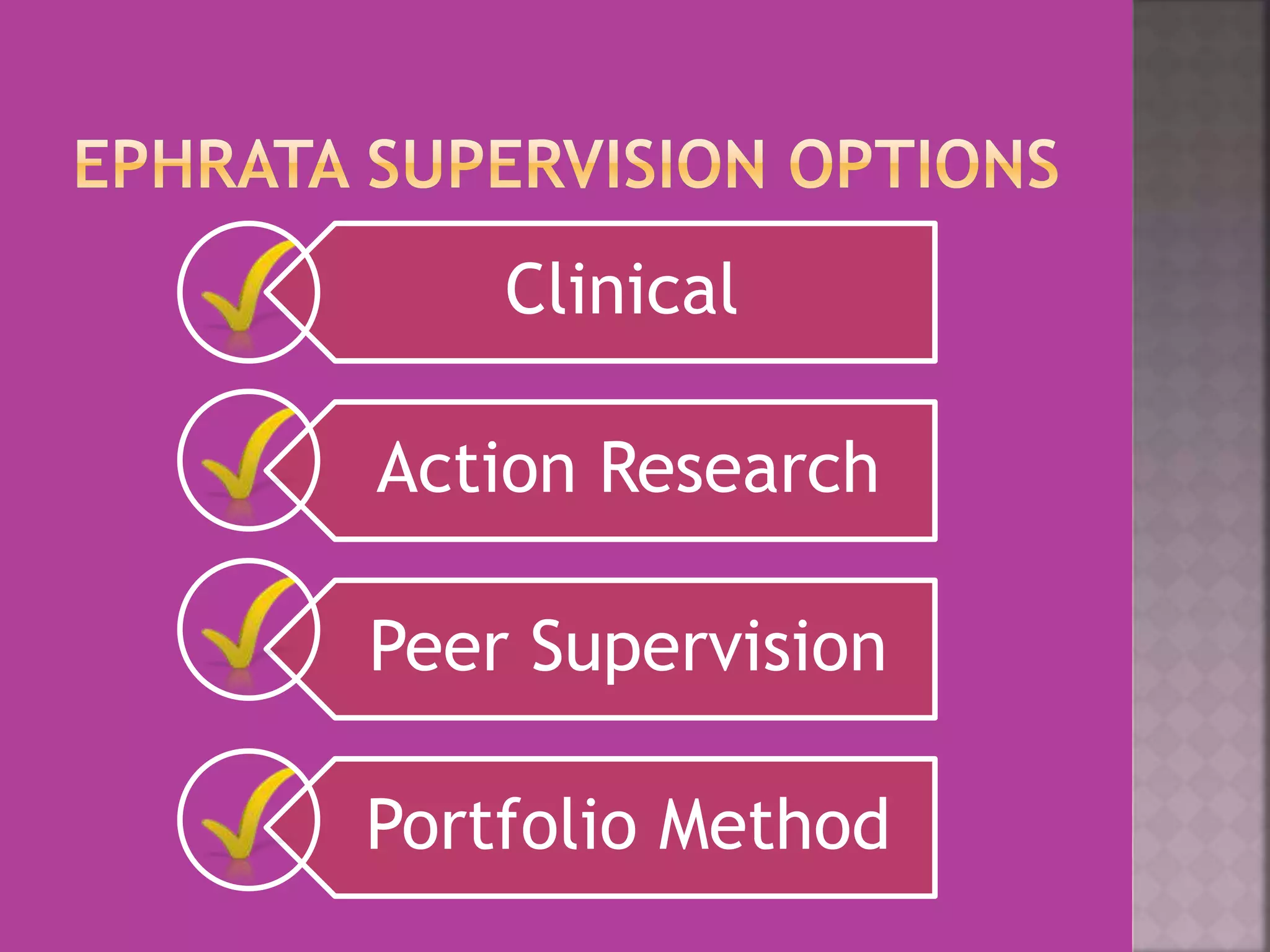
Clinical
Action Research
Peer Supervision
Portfolio Method
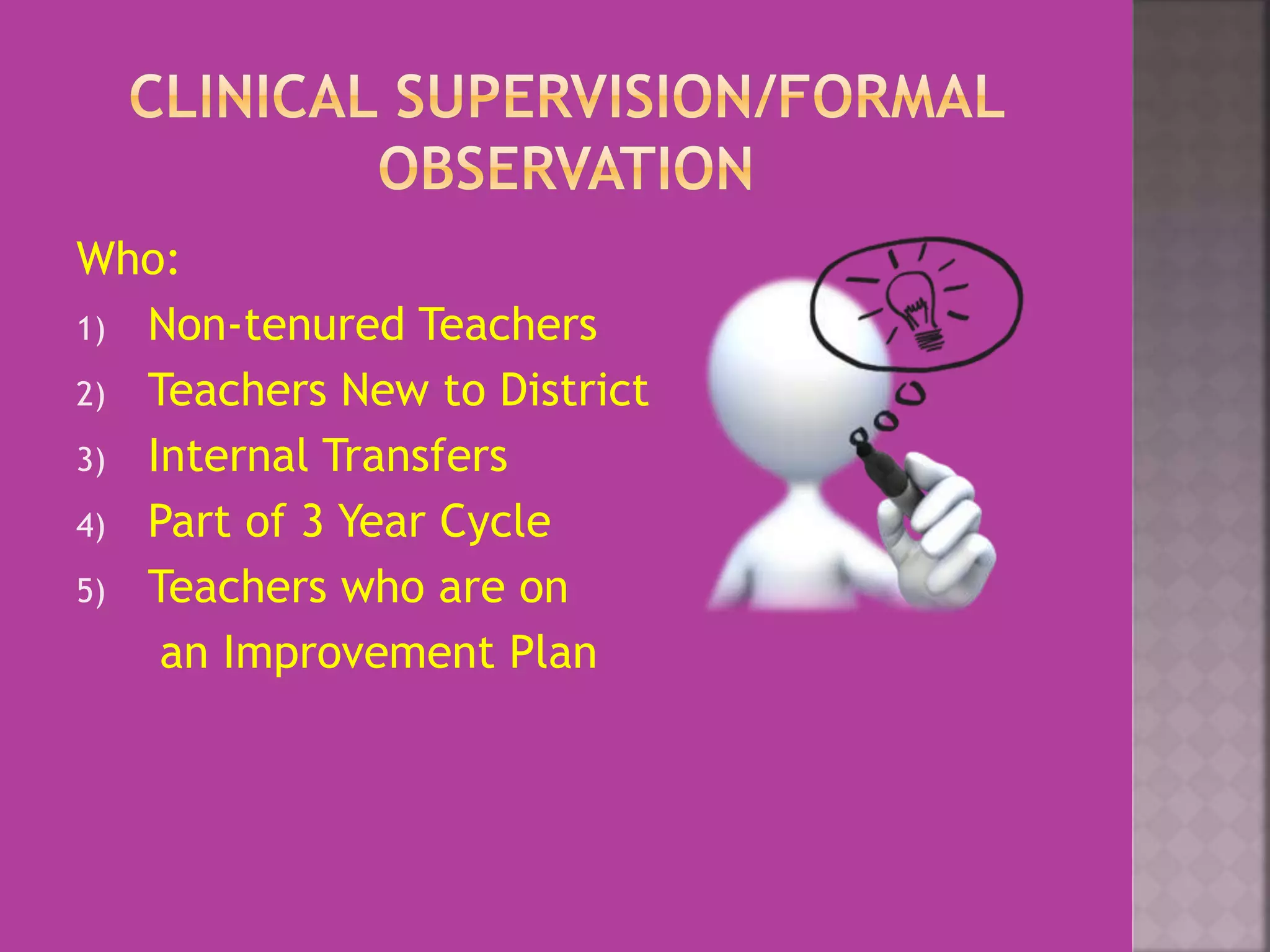
Who:
1) Non-tenured Teachers
2) Teachers New to District
3) Internal Transfers
4) Part of 3 Year Cycle
5) Teachers who are on
an Improvement Plan
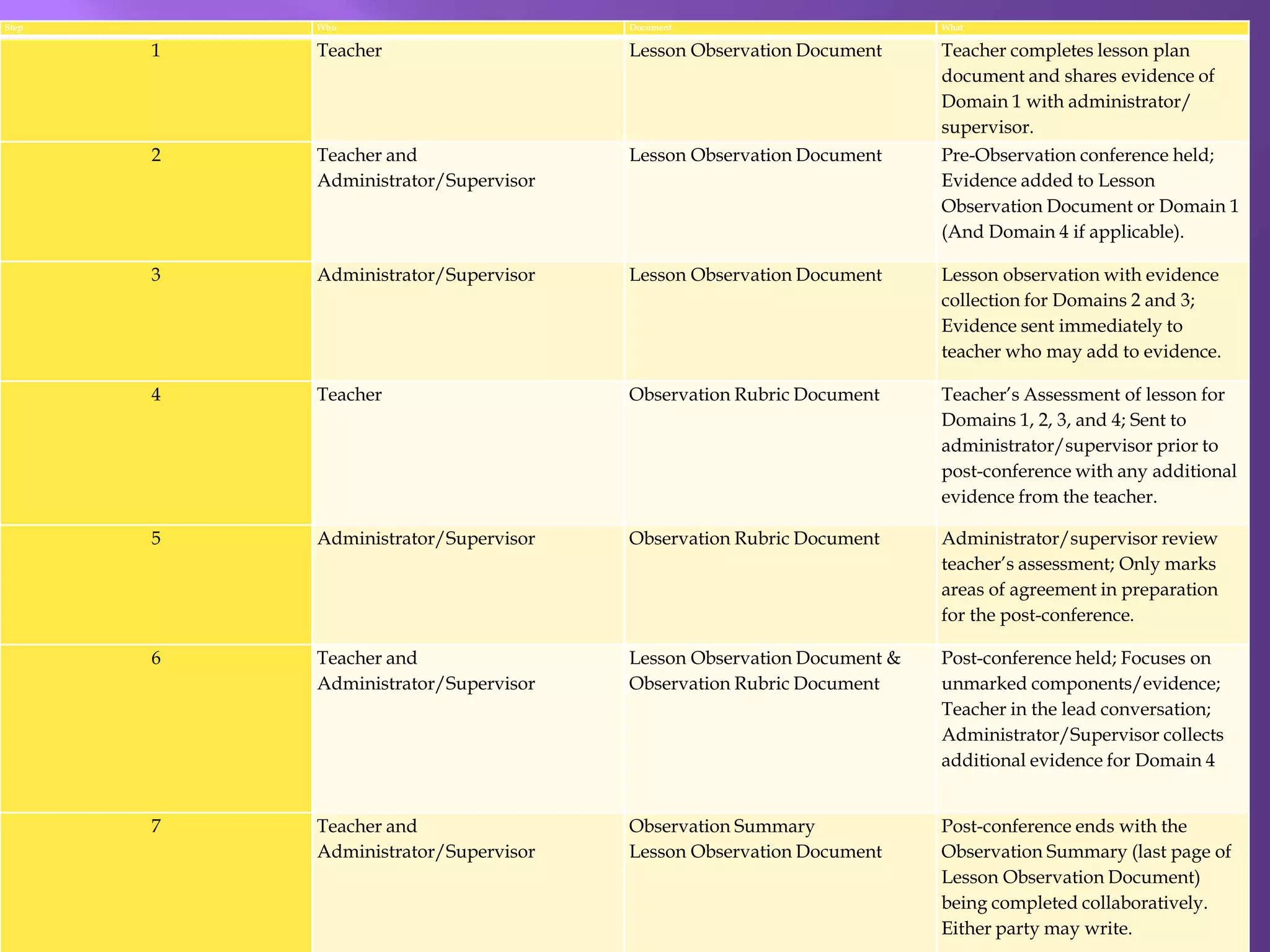
Step Who Document What
1 Teacher Lesson Observation Document Teacher completes lesson plan
document and shares evidence of
Domain 1 with administrator/
supervisor.
2 Teacher and
Administrator/Supervisor
Lesson Observation Document Pre-Observation conference held;
Evidence added to Lesson
Observation Document or Domain 1
(And Domain 4 if applicable).
3 Administrator/Supervisor Lesson Observation Document Lesson observation with evidence
collection for Domains 2 and 3;
Evidence sent immediately to
teacher who may add to evidence.
4 Teacher Observation Rubric Document Teacher’s Assessment of lesson for
Domains 1, 2, 3, and 4; Sent to
administrator/supervisor prior to
post-conference with any additional
evidence from the teacher.
5 Administrator/Supervisor Observation Rubric Document Administrator/supervisor review
teacher’s assessment; Only marks
areas of agreement in preparation
for the post-conference.
6 Teacher and
Administrator/Supervisor
Lesson Observation Document &
Observation Rubric Document
Post-conference held; Focuses on
unmarked components/evidence;
Teacher in the lead conversation;
Administrator/Supervisor collects
additional evidence for Domain 4
7 Teacher and
Administrator/Supervisor
Observation Summary
Lesson Observation Document
Post-conference ends with the
Observation Summary (last page of
Lesson Observation Document)
being completed collaboratively.
Either party may write.
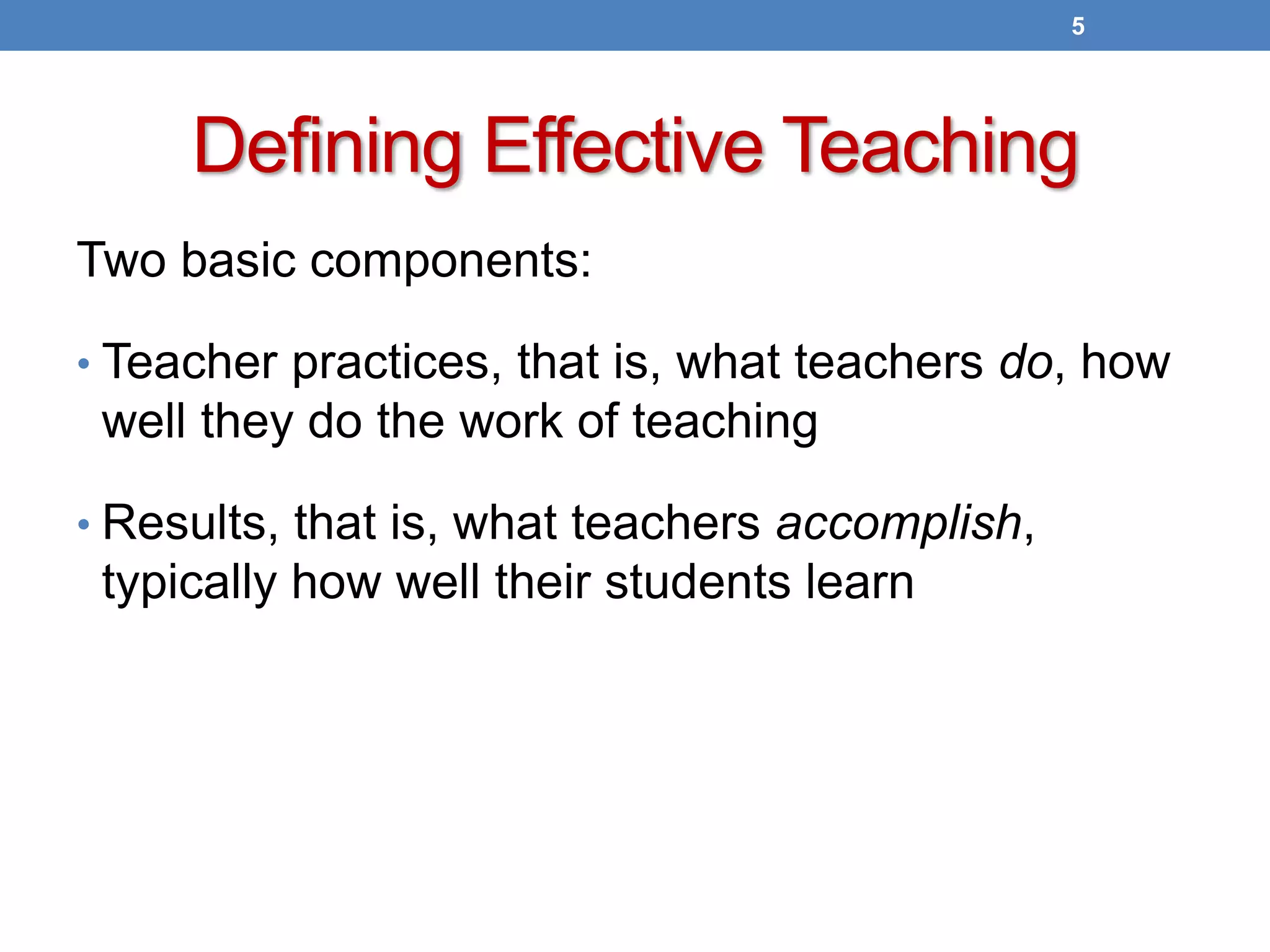
Defining Effective Teaching
Two basic components:
• Teacher practices, that is, what teachers do, how
well they do the work of teaching
• Results, that is, what teachers accomplish,
typically how well their students learn
5
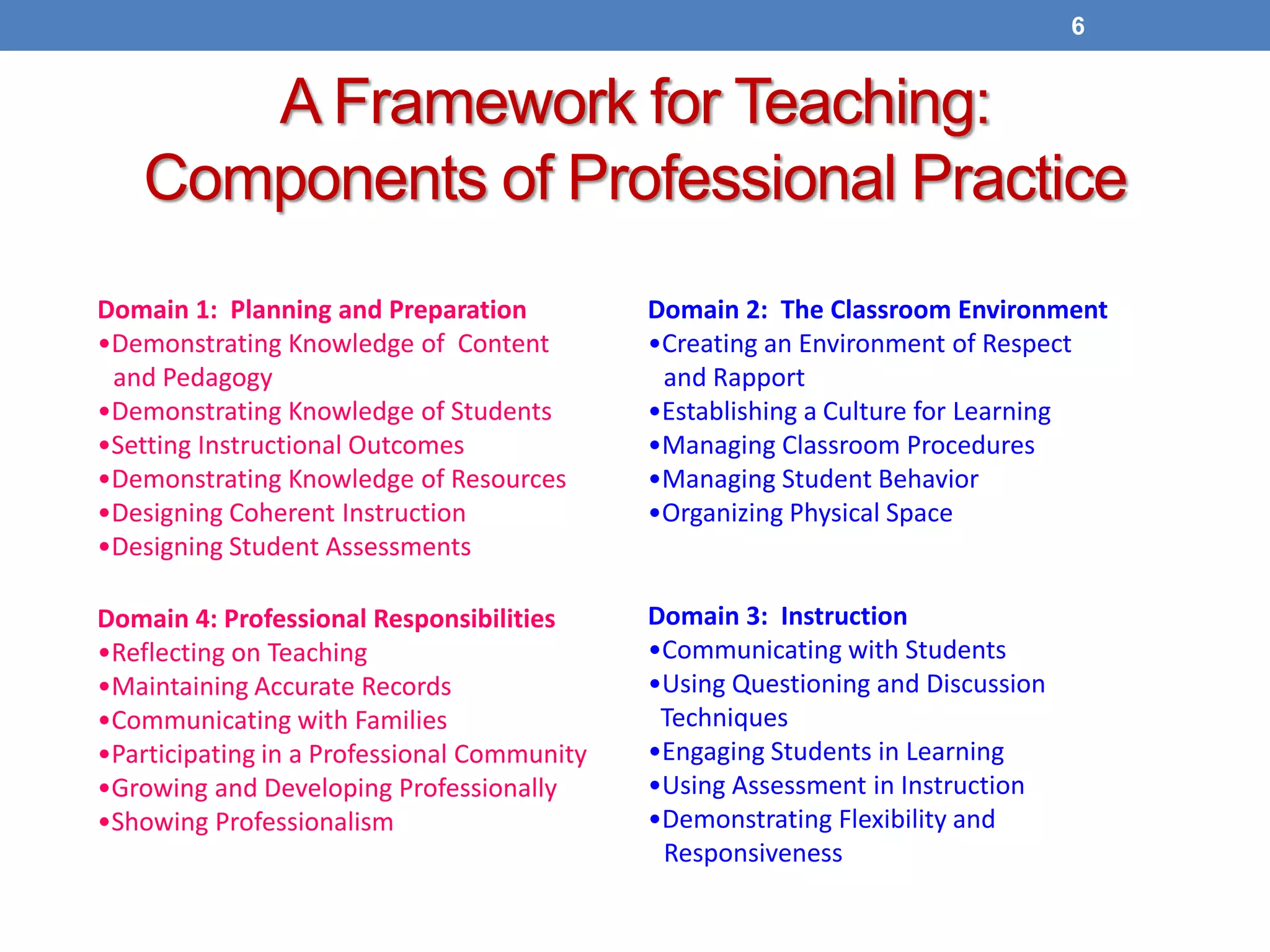
A Framework for Teaching:
Components of Professional Practice
6
Domain 4: Professional Responsibilities
•Reflecting on Teaching
•Maintaining Accurate Records
•Communicating with Families
•Participating in a Professional Community
•Growing and Developing Professionally
•Showing Professionalism
Domain 3: Instruction
•Communicating with Students
•Using Questioning and Discussion
Techniques
•Engaging Students in Learning
•Using Assessment in Instruction
•Demonstrating Flexibility and
Responsiveness
Domain 1: Planning and Preparation
•Demonstrating Knowledge of Content
and Pedagogy
•Demonstrating Knowledge of Students
•Setting Instructional Outcomes
•Demonstrating Knowledge of Resources
•Designing Coherent Instruction
•Designing Student Assessments
Domain 2: The Classroom Environment
•Creating an Environment of Respect
and Rapport
•Establishing a Culture for Learning
•Managing Classroom Procedures
•Managing Student Behavior
•Organizing Physical Space
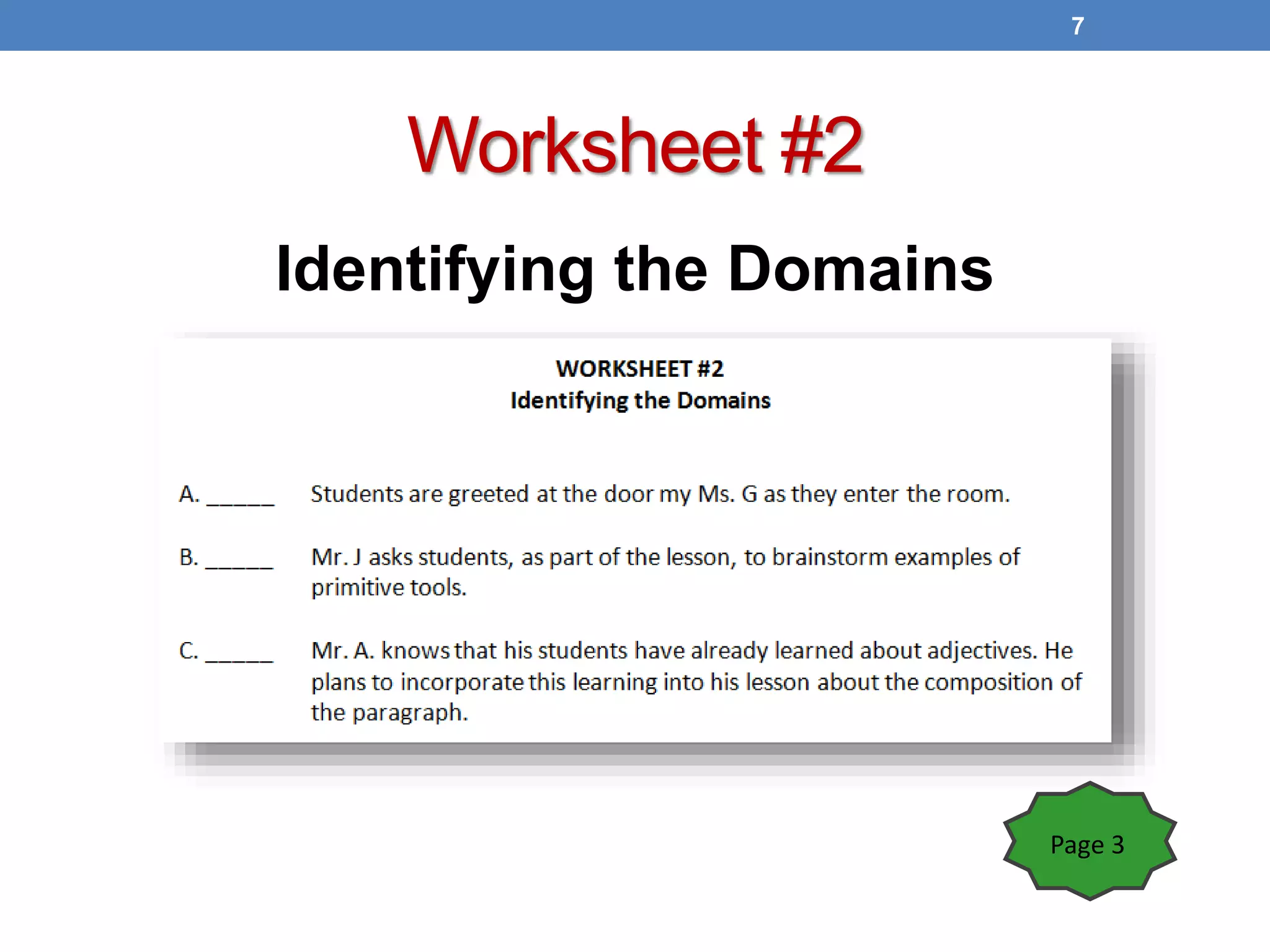
Worksheet #2
Identifying the Domains
7
Page 3
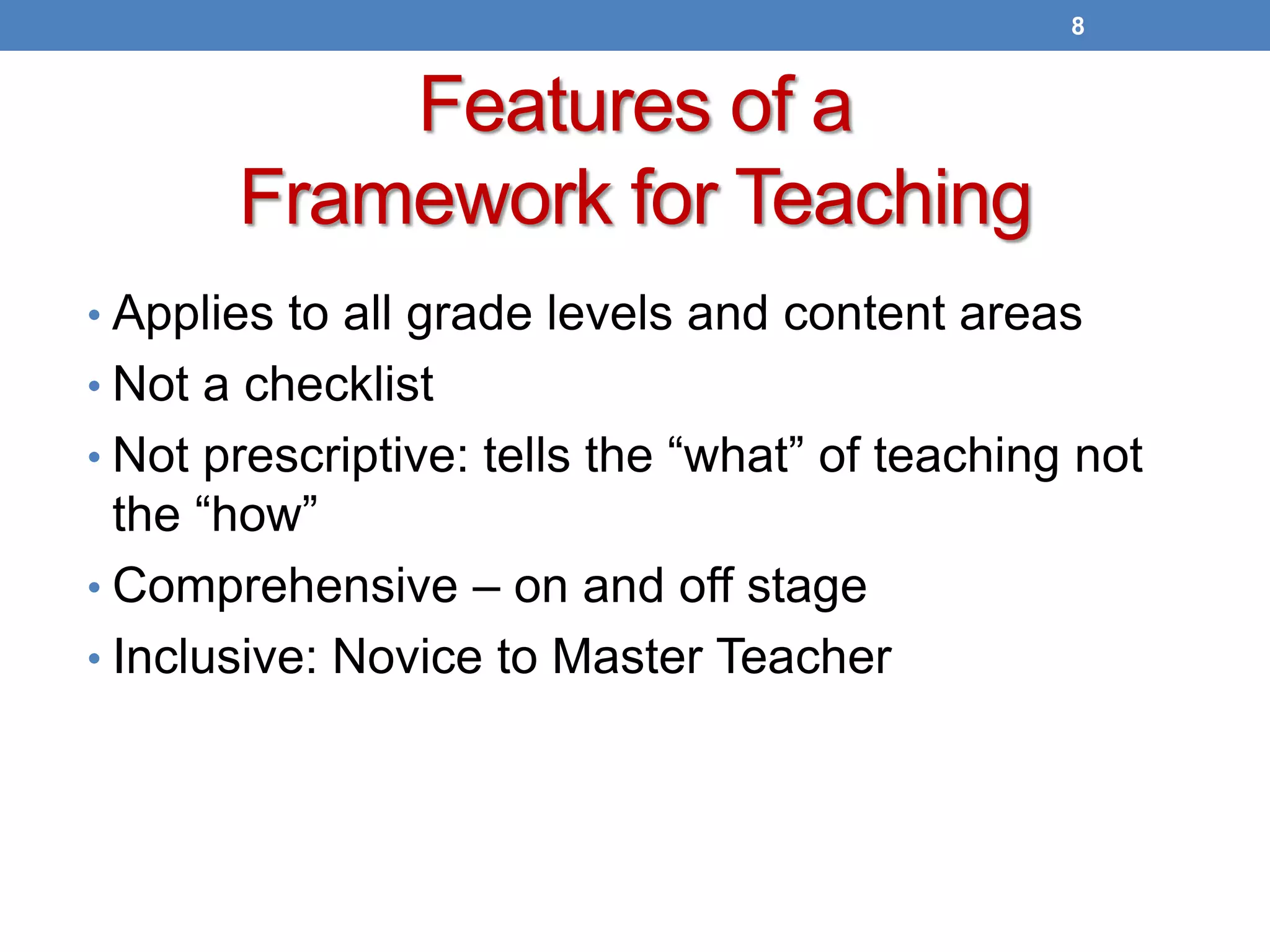
Features of a
Framework for Teaching
• Applies to all grade levels and content areas
• Not a checklist
• Not prescriptive: tells the “what” of teaching not
the “how”
• Comprehensive – on and off stage
• Inclusive: Novice to Master Teacher
8
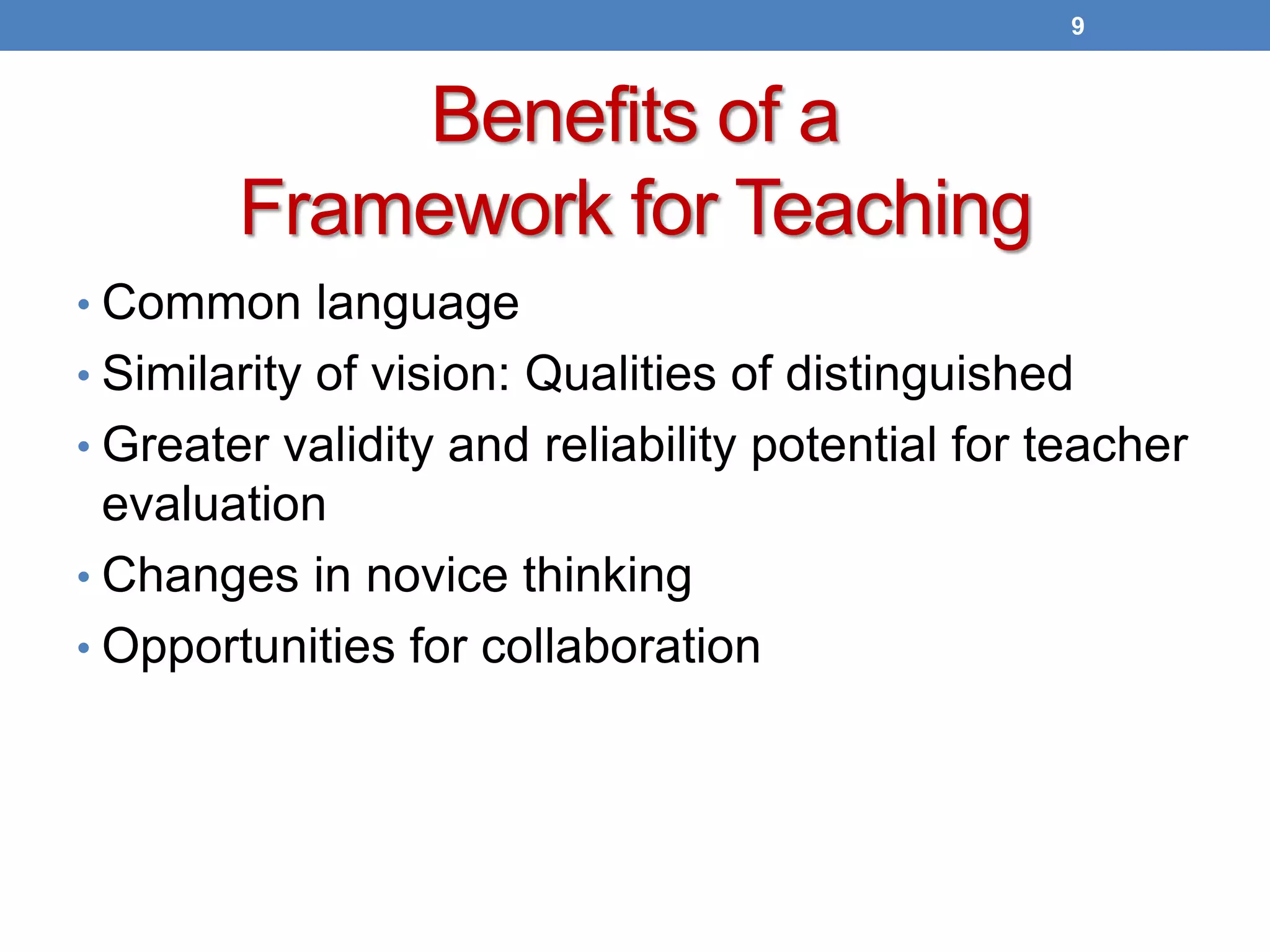
Benefits of a
Framework for Teaching
• Common language
• Similarity of vision: Qualities of distinguished
• Greater validity and reliability potential for teacher
evaluation
• Changes in novice thinking
• Opportunities for collaboration
9
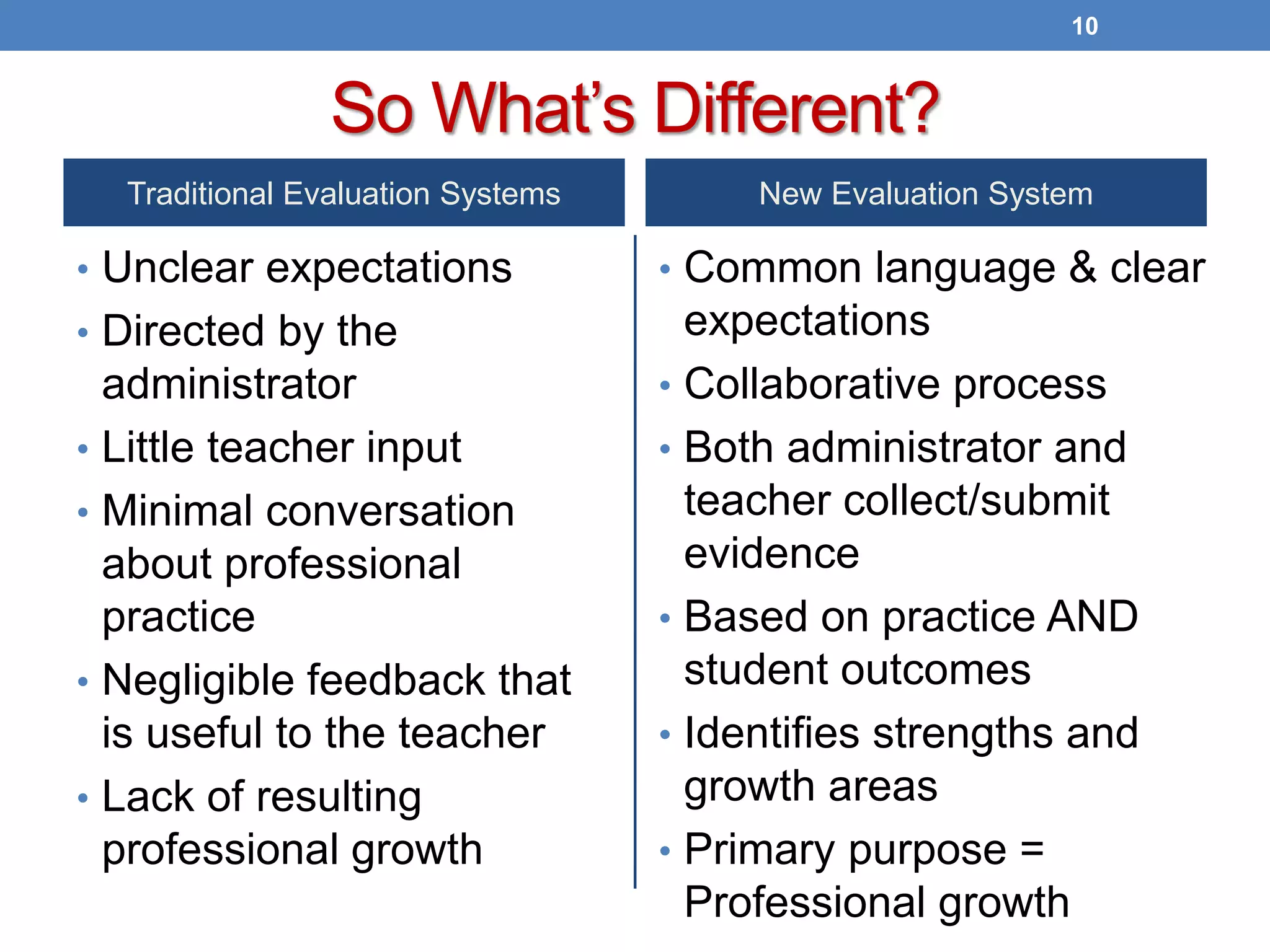
So What’s Different?
Traditional Evaluation Systems
• Unclear expectations
• Directed by the
administrator
• Little teacher input
• Minimal conversation
about professional
practice
• Negligible feedback that
is useful to the teacher
• Lack of resulting
professional growth
New Evaluation System
• Common language & clear
expectations
• Collaborative process
• Both administrator and
teacher collect/submit
evidence
• Based on practice AND
student outcomes
• Identifies strengths and
growth areas
• Primary purpose =
Professional growth
10
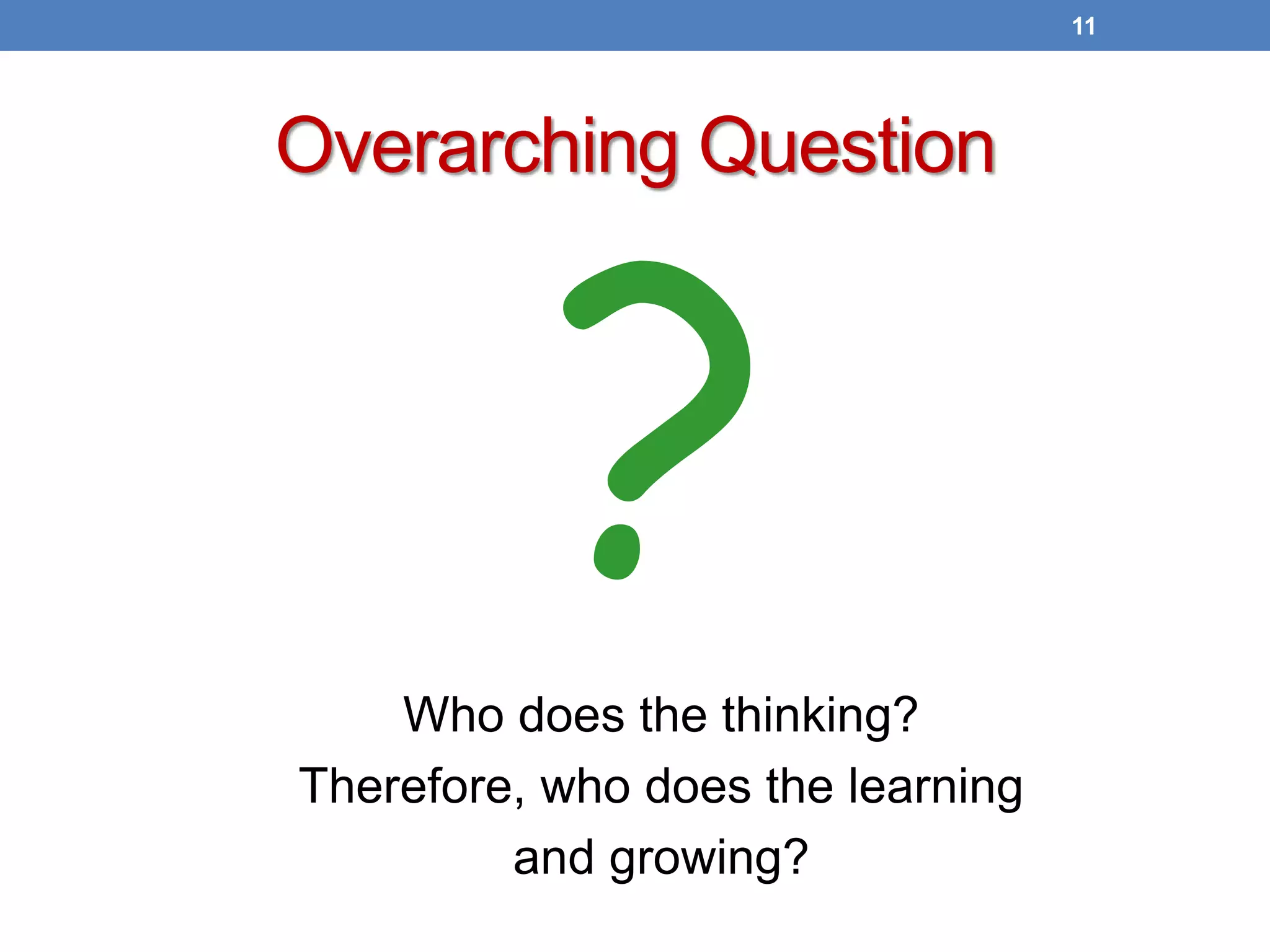
Overarching Question
11
Who does the thinking?
Therefore, who does the learning
and growing?

Unit 3 schoology_induction_teaching_instruction

  • 1.
  • 2.
  • 3.
    Who: 1) Non-tenured Teachers 2)Teachers New to District 3) Internal Transfers 4) Part of 3 Year Cycle 5) Teachers who are on an Improvement Plan
  • 4.
    Step Who DocumentWhat 1 Teacher Lesson Observation Document Teacher completes lesson plan document and shares evidence of Domain 1 with administrator/ supervisor. 2 Teacher and Administrator/Supervisor Lesson Observation Document Pre-Observation conference held; Evidence added to Lesson Observation Document or Domain 1 (And Domain 4 if applicable). 3 Administrator/Supervisor Lesson Observation Document Lesson observation with evidence collection for Domains 2 and 3; Evidence sent immediately to teacher who may add to evidence. 4 Teacher Observation Rubric Document Teacher’s Assessment of lesson for Domains 1, 2, 3, and 4; Sent to administrator/supervisor prior to post-conference with any additional evidence from the teacher. 5 Administrator/Supervisor Observation Rubric Document Administrator/supervisor review teacher’s assessment; Only marks areas of agreement in preparation for the post-conference. 6 Teacher and Administrator/Supervisor Lesson Observation Document & Observation Rubric Document Post-conference held; Focuses on unmarked components/evidence; Teacher in the lead conversation; Administrator/Supervisor collects additional evidence for Domain 4 7 Teacher and Administrator/Supervisor Observation Summary Lesson Observation Document Post-conference ends with the Observation Summary (last page of Lesson Observation Document) being completed collaboratively. Either party may write.
  • 5.
    Defining Effective Teaching Twobasic components: • Teacher practices, that is, what teachers do, how well they do the work of teaching • Results, that is, what teachers accomplish, typically how well their students learn 5
  • 6.
    A Framework forTeaching: Components of Professional Practice 6 Domain 4: Professional Responsibilities •Reflecting on Teaching •Maintaining Accurate Records •Communicating with Families •Participating in a Professional Community •Growing and Developing Professionally •Showing Professionalism Domain 3: Instruction •Communicating with Students •Using Questioning and Discussion Techniques •Engaging Students in Learning •Using Assessment in Instruction •Demonstrating Flexibility and Responsiveness Domain 1: Planning and Preparation •Demonstrating Knowledge of Content and Pedagogy •Demonstrating Knowledge of Students •Setting Instructional Outcomes •Demonstrating Knowledge of Resources •Designing Coherent Instruction •Designing Student Assessments Domain 2: The Classroom Environment •Creating an Environment of Respect and Rapport •Establishing a Culture for Learning •Managing Classroom Procedures •Managing Student Behavior •Organizing Physical Space
  • 7.
  • 8.
    Features of a Frameworkfor Teaching • Applies to all grade levels and content areas • Not a checklist • Not prescriptive: tells the “what” of teaching not the “how” • Comprehensive – on and off stage • Inclusive: Novice to Master Teacher 8
  • 9.
    Benefits of a Frameworkfor Teaching • Common language • Similarity of vision: Qualities of distinguished • Greater validity and reliability potential for teacher evaluation • Changes in novice thinking • Opportunities for collaboration 9
  • 10.
    So What’s Different? TraditionalEvaluation Systems • Unclear expectations • Directed by the administrator • Little teacher input • Minimal conversation about professional practice • Negligible feedback that is useful to the teacher • Lack of resulting professional growth New Evaluation System • Common language & clear expectations • Collaborative process • Both administrator and teacher collect/submit evidence • Based on practice AND student outcomes • Identifies strengths and growth areas • Primary purpose = Professional growth 10
  • 11.
    Overarching Question 11 Who doesthe thinking? Therefore, who does the learning and growing?

Editor's Notes

  • #7 Have participants refer to page 4 in the Teacher Training Materials. This slide and page 4 show the Framework for Teaching. This framework contains four domains and 22 components, all of which describe the qualities of teaching that are tied to student learning. The “pink” (from this slide) and “shaded” (from page 4) Domains (1 and 4) are the “off-stage” domains. That is, they domains do not happen during teaching, they happen before and after. The “blue” (from this slide) and “not-shaded” (from page 4) Domains (2 and 3) are the “on-stage” domains. These domains are directly experienced during the act of teaching. This is important because teaching is much more than what we can see during the teaching of the lesson. The Framework for Teaching also suggests that teacher evaluation is much more than just watching a lesson; it includes gathering information about a teacher’s planning, and also about the professional responsibilities that the teacher regularly performs. We will see how this concept of “on” and “off” stage is played out in the Pennsylvania Teacher Evaluation process.
  • #8 Direct teachers to Worksheet #2 (page 3) in their materials packet. The goal of this activity is to have teachers match scenarios to the correct Domain of the Framework. Work as a table group and place the number of the Domain in the space beside each statement, indicating which Domain is MOST closely related to that statement. Only one domain number per statement. Allow about 5 minutes to work. Answers to Worksheet #2: A. 2 B. 3 C. 1 D. 4 E. 1 F. 2 G. 4 H. 1 I. 3 J. 4 K. 2
  • #9 This slide contains the features of the Framework. Take time to explain each one as follows: Generic: It’s useful to a district to have ONE definition that applies to all teaching situations, all grade levels and all content areas. Not a checklist: Teaching is too complex to be captures in a checklist. We will see in a moment that the Framework has rubrics to describe it. Not prescriptive: The Framework does not tell teachers how to do their craft; rather, it tells what qualities of teaching are most likely to produce student learning. Comprehensive: As we just saw, the Framework contains both “off-stage” and “on-stage” aspects of teaching. Inclusive: Applies to all teachers, from the beginning to the most experienced. (Room to grow) ASK: Participants to turn and talk to an elbow partner and talk about why these qualities of the Framework are important and useful.
  • #10 Invite participants to consider the slide for about 30 seconds without discussion. Then invite volunteers to share any observations they have about the benefits of using the Framework within teaching and school practice.
  • #11 Talk about traditional teacher evaluation from your own experience and the lack of learning that occurred. Unclear expectations: Depending on the administrator, I was never sure what they were looking for. There was little place for teacher input and rarely did conversation about professional practice take place. Then introduce the new evaluation system bullets on the right.
  • #12 Tell participants that in the classroom we know that the “work” of learning needs to be done by the students themselves, not by the teacher. That is, we look to see who is doing the real “thinking” in classrooms, and we know that when students do it, real learning happens. Learning = Brain Sweat In teacher evaluation historically, the position of the teacher within the evaluation process has NOT been that of learner. Teachers have tended to be passive; the observer collects the information, analyzes it, and presents the conclusions to the teacher who primarily listens. If the teacher is to grow their already competent practices, then teachers must do some of that work: collecting, analyzing and concluding. This changed role of the teacher makes some of the traditional teacher evaluation practices look quite different, which we will see as we continue our learning.