UNIT 3
CONSUMER
BEHAVIOUR
BY
K PRUTHVI RAJ CHAVAN
MBA,PGDFM,PGDMM,[PHD]
CONSUMER
BEHAVIOUR
MEANING, DEFINITION, IMPORTANCE, NEED
MEANING
MEANING
Consumer behaviour refers to the purchasing behaviour of final customer
or individual or household who buys goods & services for personal use.
Customer behaviour is very important as it supports product positioning,
development of effective marketing strategy and enhancement of long-
term customer relationship.
Consumer Behaviour supports customer belief for performance,
determines product features, formulates pricing policy and appreciates
new product decision.
DEFINITION
According to Engel, Blackwell, and Mansard, ‘consumer behaviour is the actions
and decision processes of people who purchase goods and services for personal
consumption’.
According to Louden and Bitta, ‘consumer behaviour is the decision process and
physical activity, which individuals engage in when evaluating, acquiring, using or
disposing of goods and services’.
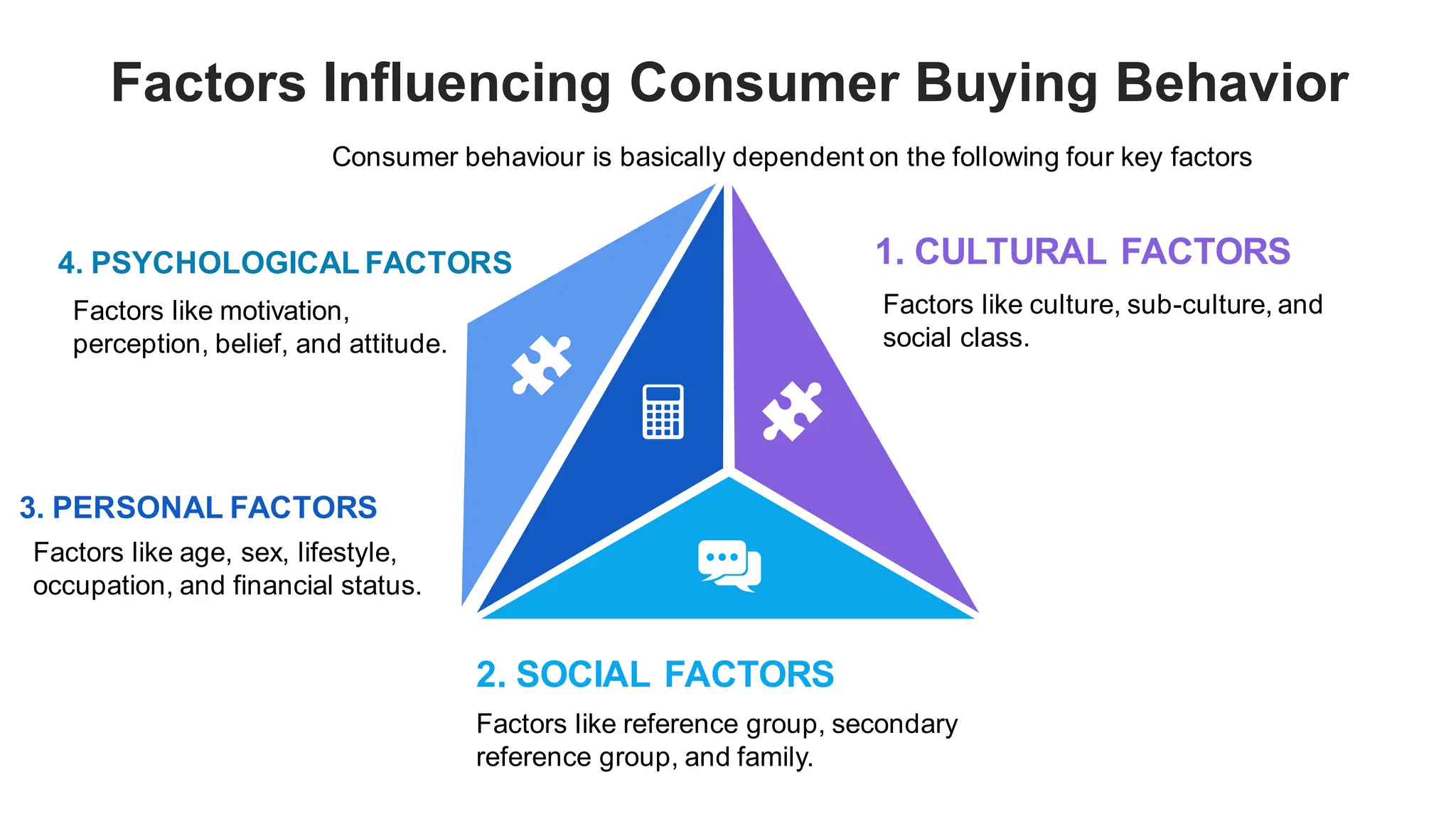
Factors Influencing Consumer Buying Behavior
2. SOCIAL FACTORS
1. CULTURAL FACTORS
3. PERSONAL FACTORS
Consumer behaviour is basically dependent on the following four key factors
Factors like culture, sub-culture, and
social class.
Factors like reference group, secondary
reference group, and family.
4. PSYCHOLOGICAL FACTORS
Factors like age, sex, lifestyle,
occupation, and financial status.
Factors like motivation,
perception, belief, and attitude.
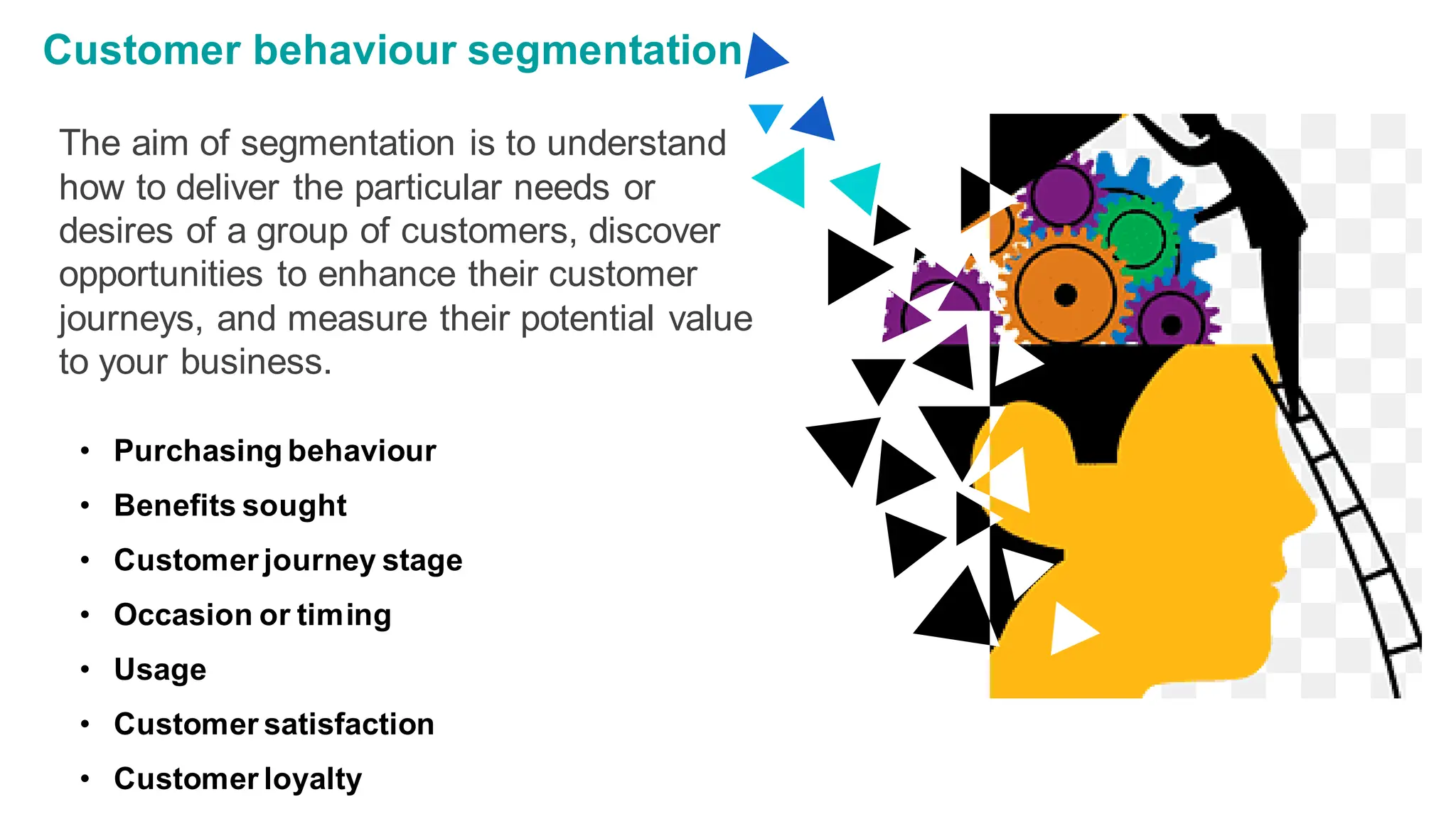
Customer behaviour segmentation
The aim of segmentation is to understand
how to deliver the particular needs or
desires of a group of customers, discover
opportunities to enhance their customer
journeys, and measure their potential value
to your business.
• Purchasing behaviour
• Benefits sought
• Customer journey stage
• Occasion or timing
• Usage
• Customer satisfaction
• Customer loyalty
Input, Process and Output Model
This is a simple model of consumer behaviour,
in which the input for the customer is the firm’s
marketing effort (the product, price, promotion
and place) and the social environment.
The social environment consists of the family,
reference groups, culture, social class, etc.
which influences the decision-making process.
Both these factors together constitute the input
in the mind of the consumer.
You can Resize without
losing quality
You can ChangeFill
Color &
Line Color
www.allppt.com
FREE
PPT
TEMPLATES
STAGES OF PRE PURCHASE BEHAVIOUR
• Need recognition
• Product awareness
• Evaluation
• Intention
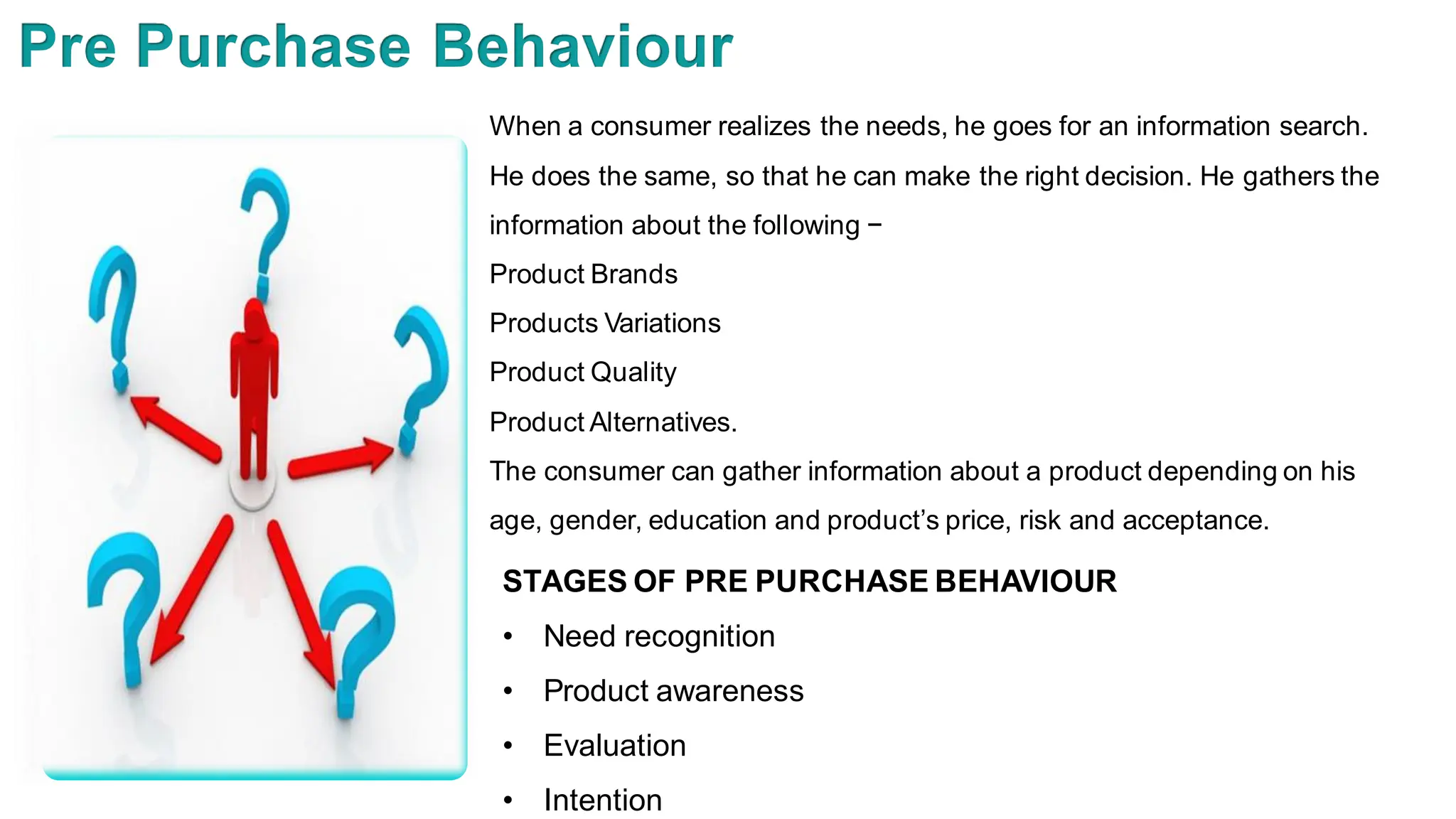
When a consumer realizes the needs, he goes for an information search.
He does the same, so that he can make the right decision. He gathers the
information about the following −
Product Brands
Products Variations
Product Quality
Product Alternatives.
The consumer can gather information about a product depending on his
age, gender, education and product’s price, risk and acceptance.
PRE-PURCHASE BEHAVIOUR MODELS
PSYCHOLOGICAL
MODELS
ECONOMIC
MODELS
SOCIOLOGICAL
MODELS
Consumer behavior models
are instrumental for
understanding how, when, and
why your customers buy. By
applying the models to
your customer acquisition
efforts, you can accurately
predict who will buy your
product and target the right
customers at the right time.
Pavlovian learning model of consumer behavior
The Pavlovian model was formed from an experiment
conducted by the Russian physiologist, Ivan Pavlov
between 1904 and 1910. Researchers at that time did not
know how to elicit behavioural responses in human
subjects, but rather trained dogs to indicate when they
received food by pulling a chain attached to their forepaws
or tails.
As the experiments progressed, Pavlov noticed that
subjects react more frequently with increased stimuli which
are associated with previous rewards. He also observed
how he could predict his dog’s actions after he had fed
them for fifteen consecutive sessions.
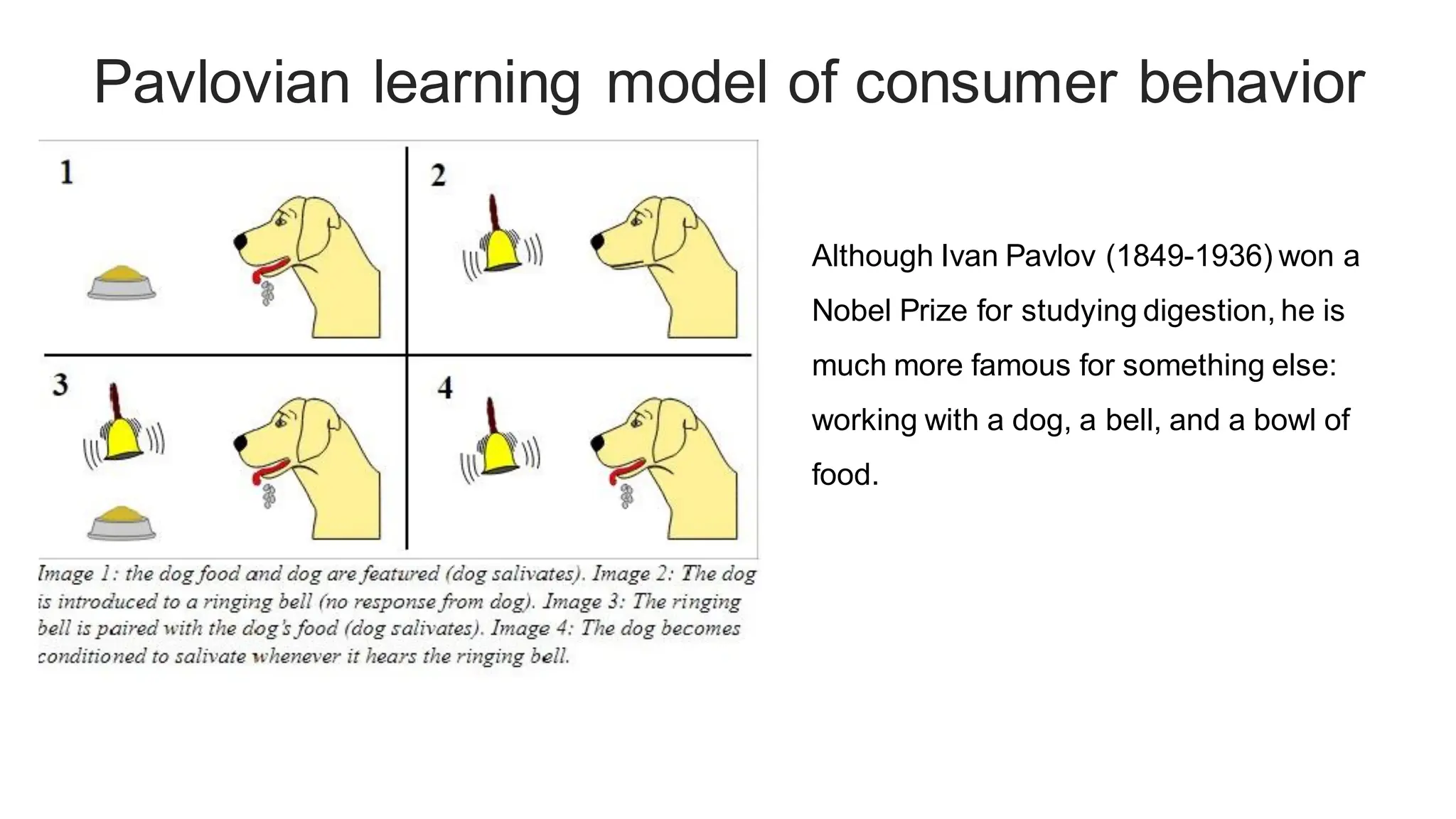
Pavlovian learning model of consumer behavior
Although Ivan Pavlov (1849-1936) won a
Nobel Prize for studying digestion, he is
much more famous for something else:
working with a dog, a bell, and a bowl of
food.
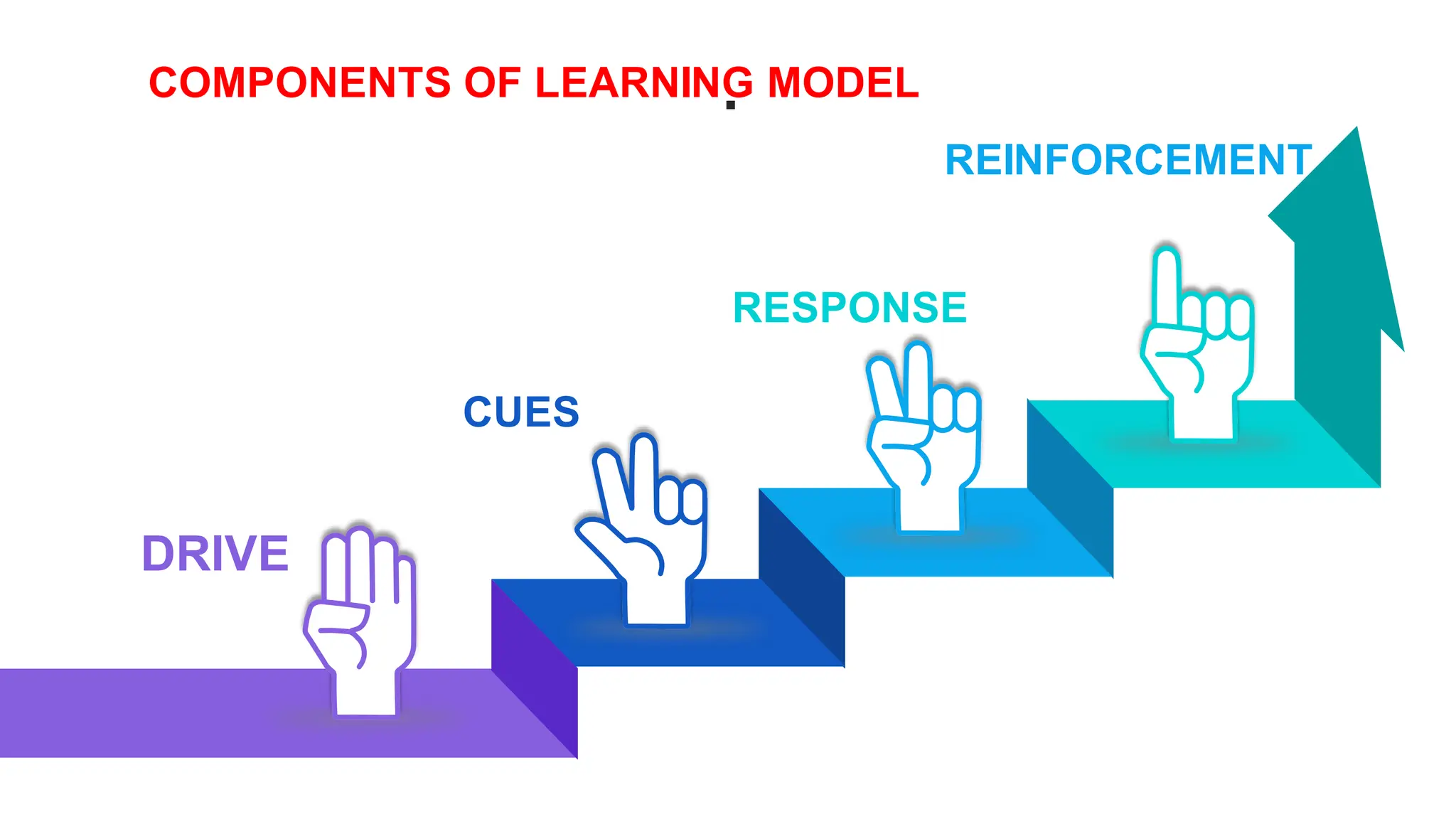
CUES
DRIVE
RESPONSE
REINFORCEMENT
.
COMPONENTS OF LEARNING MODEL
The Pavlovian learning model is a powerful tool that
can be used to understand how consumers make
purchasing decisions.
Companies try to get consumers to learn about their
products in different ways. Car dealerships offer test
drives. Pharmaceutical reps leave samples and
brochures at doctor’s offices. Other companies give
consumers free samples. To promote its new line of
coffees, McDonald’s offered customers free samples
to try.
INTRODUCTION
One of the most astonishing theories in psychology depicted by a simple
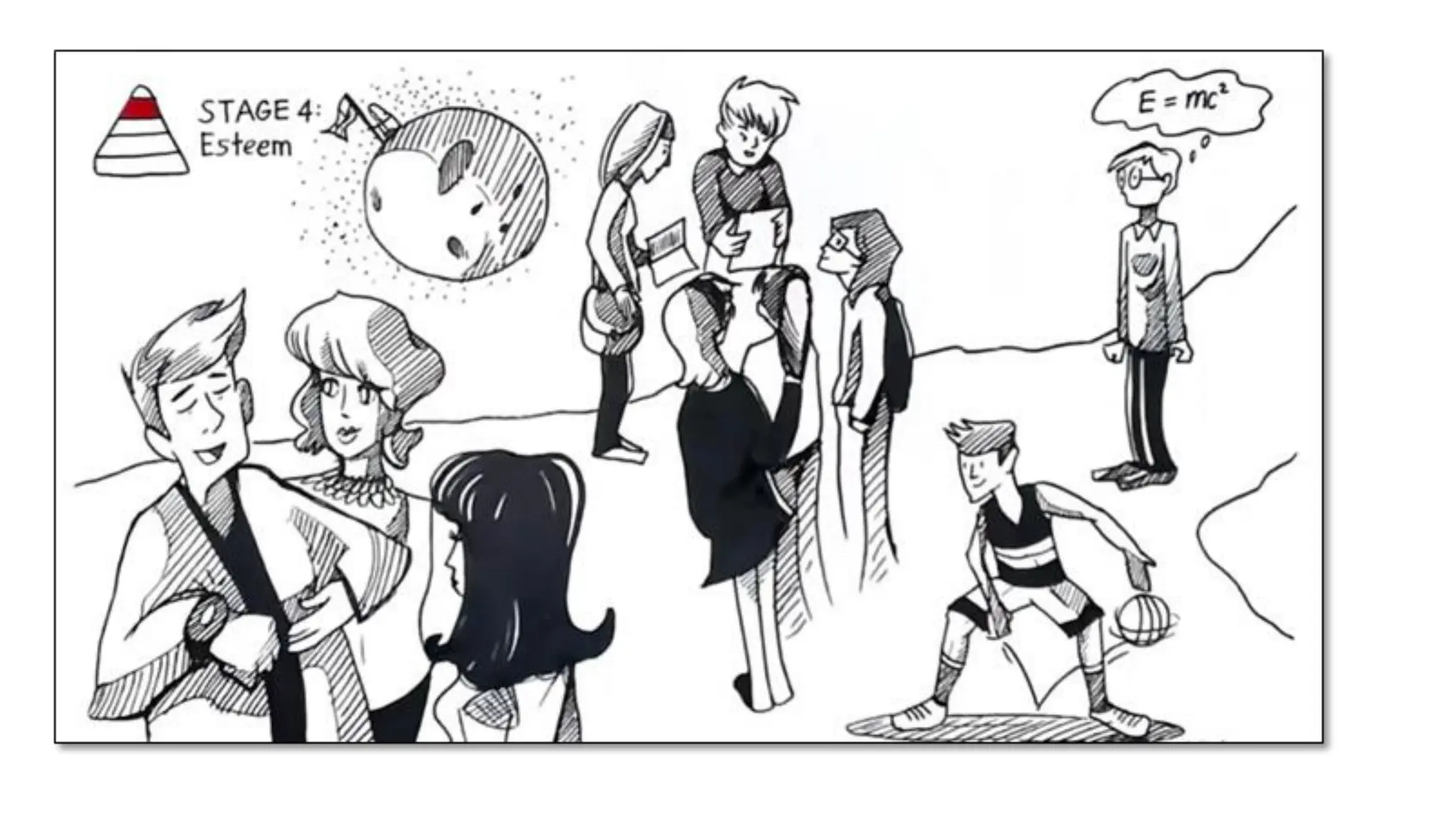
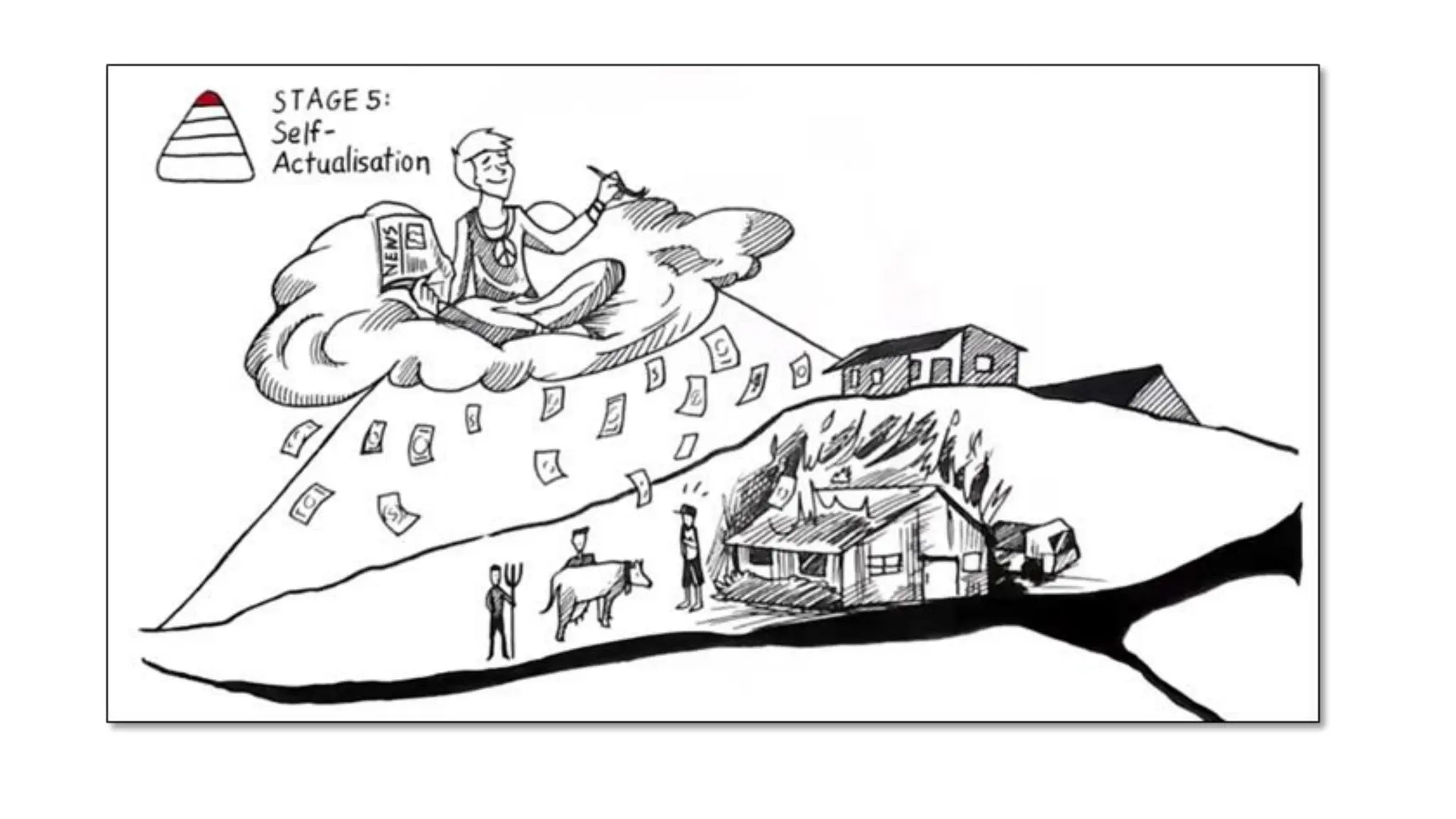
triangle with 5 layers is the Maslow Hierarchy of Needs Theory.
Developed in the 1940’s by a Jewish psychologist Abraham Maslow,
Maslow’s pyramid has been used by businesses across the world to
understand Consumer Behaviour.
The theory argues that a human being has a series of needs, some of
which have to be attended to at first and the others follow suit.
Certain needs are more pressing, they cannot be overlooked at any point
of time. The other needs have been acquired overtime living in the society.
.
.
.
.
.
SIGMUND FREUDIAN PSYCHO-
ANALYTICAL THEORY
Sigmund Freud (1856 to 1939) was the
founding father of psychoanalysis, a method for
treating mental illness and also a theory which
explains human behavior.
Freud believed that events in our childhood
have a great influence on our adult lives,
shaping our personality. For example, anxiety
originating from traumatic experiences in a
person's past is hidden from consciousness,
and may cause problems during adulthood.
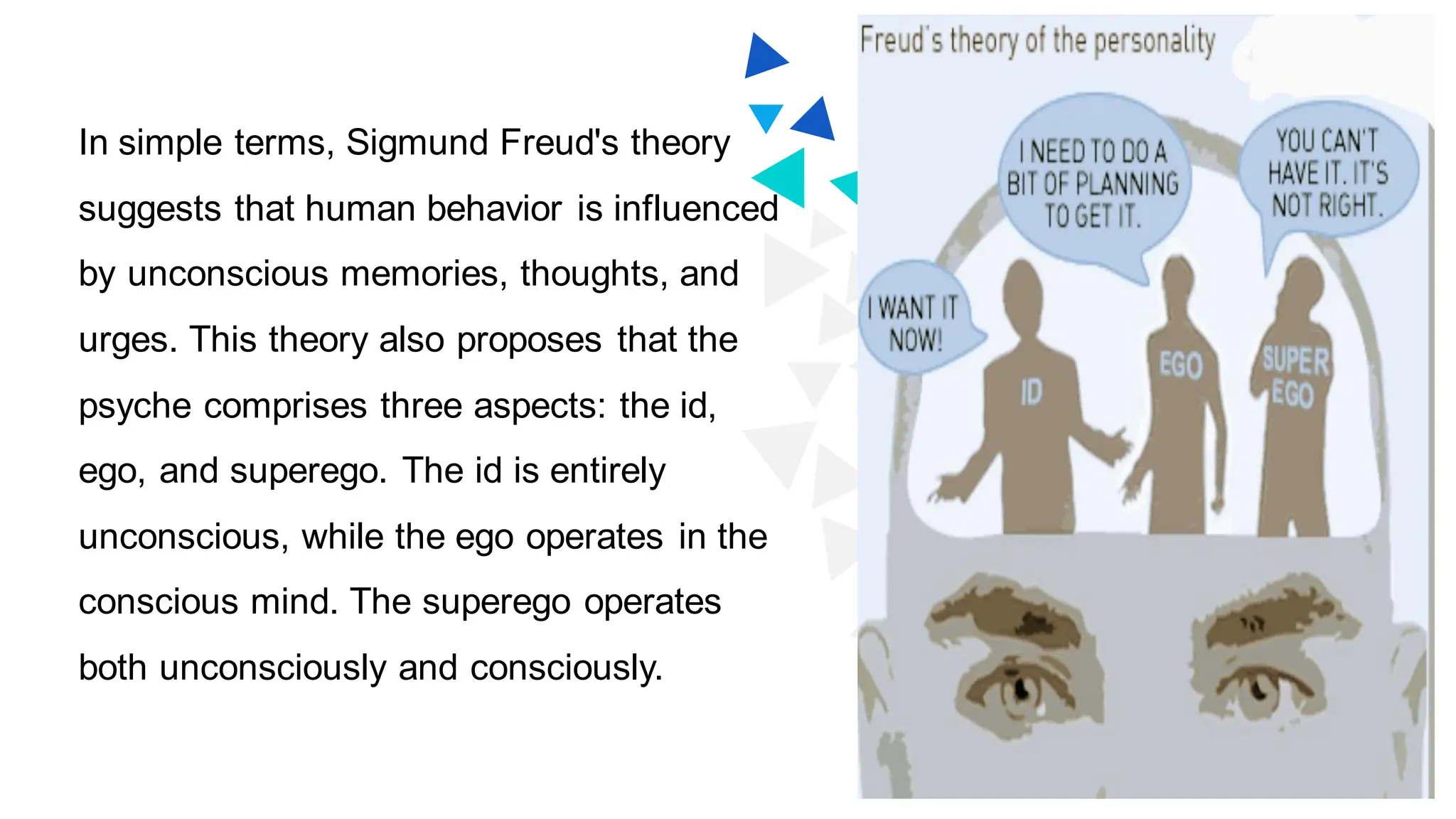
In simple terms, Sigmund Freud's theory
suggests that human behavior is influenced
by unconscious memories, thoughts, and
urges. This theory also proposes that the
psyche comprises three aspects: the id,
ego, and superego. The id is entirely
unconscious, while the ego operates in the
conscious mind. The superego operates
both unconsciously and consciously.
However, Freud was not
just advancing an
explanation of a particular
illness. Implicitly he was
proposing a revolutionary
new theory of the human
psyche itself.
This theory emerged “bit by
bit” as a result of Freud’s
clinical investigations, and it
led him to propose that
there were at least three
levels of the mind.
3 LEVELS OF MIND
• Freudian psychology compares the mind to an iceberg. The tip of the iceberg that is actually
visible above the water represents just a tiny portion of the mind, while the huge expanse of ice
hidden underneath the water represents the much larger unconscious.
• In addition to these two main components of the mind, Freudian theory also divides human
personality into three major components: the id, ego, and superego.
• The id is the most primitive part of the personality that is the source of all our most basic urges.
The id is entirely unconscious and serves as the source of all libidinal energy.
• The ego is the component of personality that deals with reality and helps ensure that the
demands of the id are satisfied in ways that are realistic, safe, and socially acceptable.
• The superego is the part of the personality that holds all of the internalized morals and
standards that we acquire from our parents, family, and society at large.
ECONOMIC MODEL OF
CONSUMER
BEHAVIOUR
INTRODUCTION
The Marshallian economics was forwarded by the eminent economist Alfred
Marshall who proposed that the marginal utility of money is constant. This means
customers prefer buying specific products or services exclusively based on the
level of personal satisfaction (Biswas, 2012).
The basic feature of the Marshallian Economic model is that it emphasizes that
customers are rational beings with their purchase behaviour. Consumer choice is
an important parameter that determines the effectiveness of an e-retailing
company. In such a scenario, Marshallian economics proves helpful in
understanding what factors determine their online purchase behaviour at a given
point of time.
Components of Marshallian economy
These components emerge from the perspectives that;
If the price of a product is lower, the consumers will buy it.
When the price of the product is lower than the income of
the consumers, it will also inspire them to buy it.
If the product price is higher than a substitute then
customers will show more preference for buying the
substitute.
Thus, as per the Marshallian theory when the expenditure
level of a customer remains affected by price changes, the
marginal utility remains unaltered. While the rate of
expenditure incurred by a customer may exceed over a
given period of time due to excitement or increased
buying, customers learn to control expenses beyond thier
capability (Biswas, 2012).
Using Marshallian economics
• Amazon uses an ‘algorithmic pricing strategy’that replaces the purchase-relateddecision-making
process in a manner that it automatically sets the price of products based on their buying
behaviour (Chen et al., 2016).
• It combines all three components price, customer and economics. Thus, different online customers
are presented with different products at different prices as per their purchasing behaviour. This
algorithmic pricing strategy is immensely beneficial for the seller too in the manner that they are
able to understand the competitor’s price.
• Further, the seller is able to detect potential buyers and then change prices automatically to
maximize profit. This option gives the customers the scope of finding out how many sellers in a
specific region are selling the same product at different prices. As an added feature, Amazon
relegates sellers who are not featured in a separate webpage
SOCIOLOGICAL MODELS
OF CONSUMER
BEHAVIOUR
INTRODUCTION
The Veblen ian social-psychological model of human behaviour is based on the
findings of Thorstein Veblen, who received his training as an orthodox economist
and evolved as a social thinker through the influence of the science of social
anthropology.
According to this model, man is perceived to be a so-called "social animal", where
man conforms to norms of its larger culture and to more specific standards of
subcultures and face-to-face groups in which humans operate. In essence this
implies that human behaviour and needs are moulded by present group
memberships.
MARKETING APPLICATIONS
The importance of the Veblen ian model, according to Kotler to the marketer is that,
in order to determine the demand for products, the most important social influences
impacting on such product demands should be determined. Important for the
marketer to consider is the impact of different social influences, which include
social class, subculture, reference groups and face-to-face groups.
Important Factors
The Veblenian socio-psychological model states that consumers’ social and cultural
backgrounds are important determinants of their buying behaviour. According to Veblen,
consumer purchases are driven primarily by their need to maintain a social class and
prestige rather than intrinsic needs. There are six important factors in this model:
• social class,
• level of income,
• culture,
• sub-culture,
• family and,
• the reference group.
EXAMPLE
Tesla is a global brand of electric car production which is famous for its attractive look and
performance (Tesla, 2018). The company had followed the Veblenian Social-Psychological
Model to identify buyers. Tesla takes customized order to manufacture a car which is
included as their unique selling proposition. It helps to attract the social class of celebrities,
ministers and industrialists. Recently, Tesla is planning to shut all of its physical outlets and
deliver car only through the digital medium.
Having a Tesla car enables a customer to show their class in their social circle. The
company does not need to spend on promotional campaigns due to having favourable
brand recognition. A reference group of the high profile customers also enables the brand
to gain more customers without promoting, which fits with the Veblenian model
Cognitive Dissonance Theory
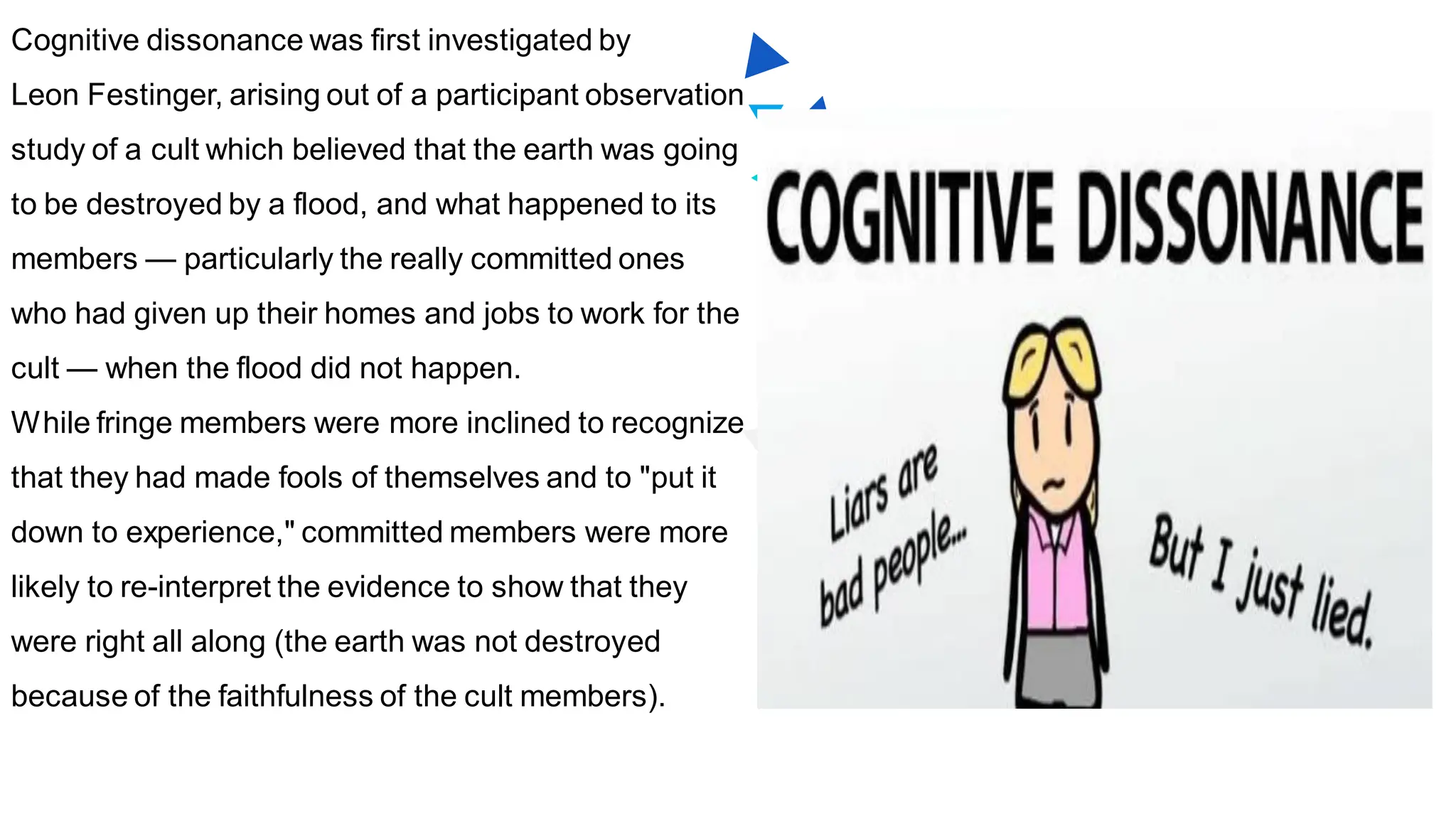
Cognitive dissonance was first investigated by
Leon Festinger, arising out of a participant observation
study of a cult which believed that the earth was going
to be destroyed by a flood, and what happened to its
members — particularly the really committed ones
who had given up their homes and jobs to work for the
cult — when the flood did not happen.
While fringe members were more inclined to recognize
that they had made fools of themselves and to "put it
down to experience," committed members were more
likely to re-interpret the evidence to show that they
were right all along (the earth was not destroyed
because of the faithfulness of the cult members).
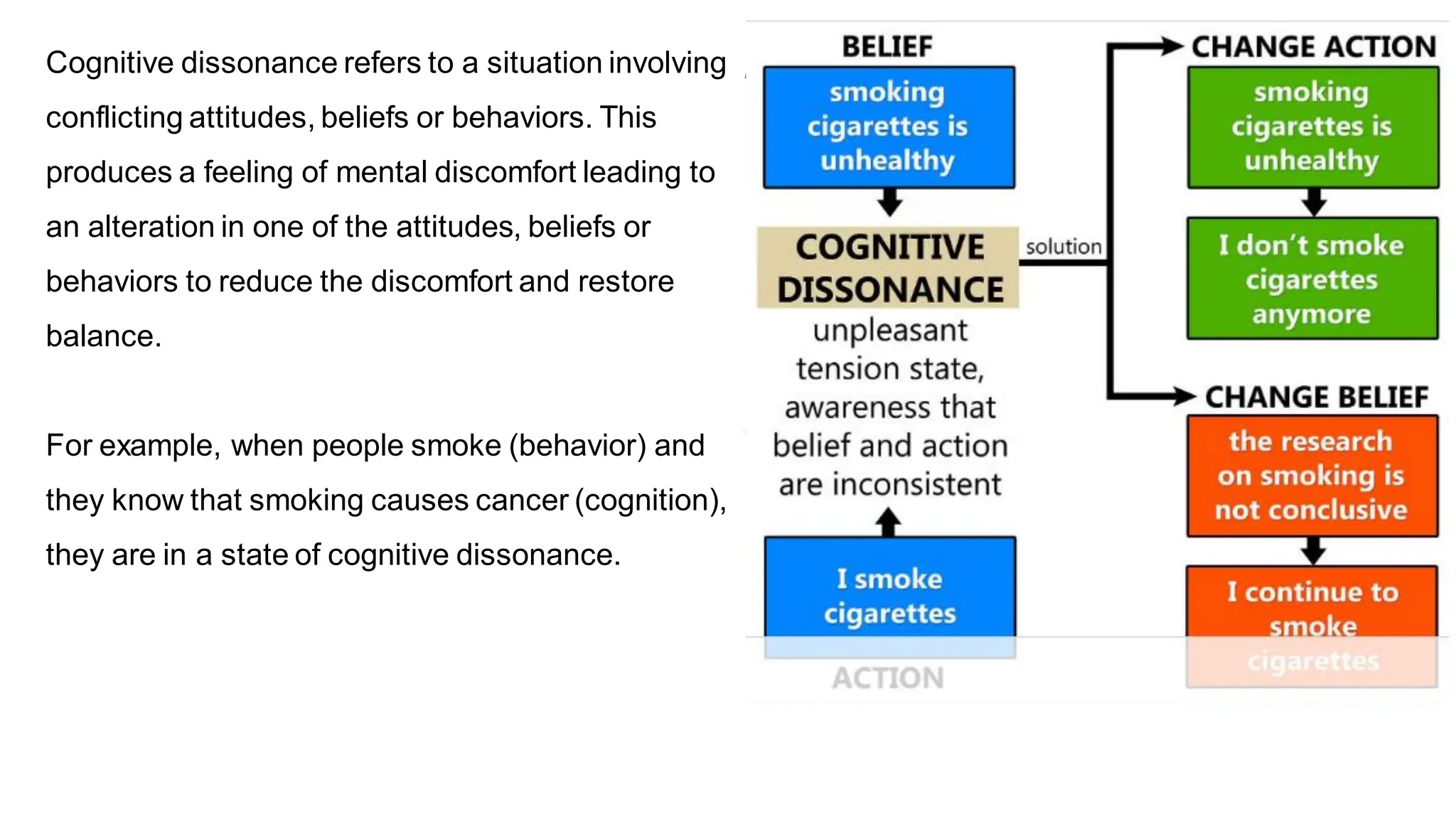
Cognitive dissonance refers to a situation involving
conflicting attitudes, beliefs or behaviors. This
produces a feeling of mental discomfort leading to
an alteration in one of the attitudes, beliefs or
behaviors to reduce the discomfort and restore
balance.
For example, when people smoke (behavior) and
they know that smoking causes cancer (cognition),
they are in a state of cognitive dissonance.
Observation
Festinger's (1957) cognitive dissonance theory suggests that we have an inner drive to hold all our
attitudes and behavior in harmony and avoid disharmony (or dissonance). This is known as the
principle of cognitive consistency.
When there is an inconsistency between attitudes or behaviors (dissonance), something must change
to eliminate the dissonance.
Notice that dissonance theory does not state that these modes of dissonance reduction will actually
work, only that individuals who are in a state of cognitive dissonance will take steps to reduce the
extent of their dissonance.
The theory of cognitive dissonance has been widely researched in a number of situations to develop
the basic idea in more detail, and various factors that have been identified
CAUSES OF
COGNITIVE DISSONANCE
• FORCED COMPLAINCE BEHAVIOUR
• DECISION MAKING
• EFFORTS
.

UNIT 3 (1).pdf

  • 1.
    UNIT 3 CONSUMER BEHAVIOUR BY K PRUTHVIRAJ CHAVAN MBA,PGDFM,PGDMM,[PHD]
  • 2.
  • 3.
  • 4.
    MEANING Consumer behaviour refersto the purchasing behaviour of final customer or individual or household who buys goods & services for personal use. Customer behaviour is very important as it supports product positioning, development of effective marketing strategy and enhancement of long- term customer relationship. Consumer Behaviour supports customer belief for performance, determines product features, formulates pricing policy and appreciates new product decision.
  • 5.
    DEFINITION According to Engel,Blackwell, and Mansard, ‘consumer behaviour is the actions and decision processes of people who purchase goods and services for personal consumption’. According to Louden and Bitta, ‘consumer behaviour is the decision process and physical activity, which individuals engage in when evaluating, acquiring, using or disposing of goods and services’.
  • 6.
    Factors Influencing ConsumerBuying Behavior 2. SOCIAL FACTORS 1. CULTURAL FACTORS 3. PERSONAL FACTORS Consumer behaviour is basically dependent on the following four key factors Factors like culture, sub-culture, and social class. Factors like reference group, secondary reference group, and family. 4. PSYCHOLOGICAL FACTORS Factors like age, sex, lifestyle, occupation, and financial status. Factors like motivation, perception, belief, and attitude.
  • 7.
    Customer behaviour segmentation Theaim of segmentation is to understand how to deliver the particular needs or desires of a group of customers, discover opportunities to enhance their customer journeys, and measure their potential value to your business. • Purchasing behaviour • Benefits sought • Customer journey stage • Occasion or timing • Usage • Customer satisfaction • Customer loyalty
  • 8.
    Input, Process andOutput Model This is a simple model of consumer behaviour, in which the input for the customer is the firm’s marketing effort (the product, price, promotion and place) and the social environment. The social environment consists of the family, reference groups, culture, social class, etc. which influences the decision-making process. Both these factors together constitute the input in the mind of the consumer.
  • 11.
    You can Resizewithout losing quality You can ChangeFill Color & Line Color www.allppt.com FREE PPT TEMPLATES STAGES OF PRE PURCHASE BEHAVIOUR • Need recognition • Product awareness • Evaluation • Intention When a consumer realizes the needs, he goes for an information search. He does the same, so that he can make the right decision. He gathers the information about the following − Product Brands Products Variations Product Quality Product Alternatives. The consumer can gather information about a product depending on his age, gender, education and product’s price, risk and acceptance.
  • 12.
    PRE-PURCHASE BEHAVIOUR MODELS PSYCHOLOGICAL MODELS ECONOMIC MODELS SOCIOLOGICAL MODELS Consumerbehavior models are instrumental for understanding how, when, and why your customers buy. By applying the models to your customer acquisition efforts, you can accurately predict who will buy your product and target the right customers at the right time.
  • 14.
    Pavlovian learning modelof consumer behavior The Pavlovian model was formed from an experiment conducted by the Russian physiologist, Ivan Pavlov between 1904 and 1910. Researchers at that time did not know how to elicit behavioural responses in human subjects, but rather trained dogs to indicate when they received food by pulling a chain attached to their forepaws or tails. As the experiments progressed, Pavlov noticed that subjects react more frequently with increased stimuli which are associated with previous rewards. He also observed how he could predict his dog’s actions after he had fed them for fifteen consecutive sessions.
  • 15.
    Pavlovian learning modelof consumer behavior Although Ivan Pavlov (1849-1936) won a Nobel Prize for studying digestion, he is much more famous for something else: working with a dog, a bell, and a bowl of food.
  • 17.
  • 18.
    The Pavlovian learningmodel is a powerful tool that can be used to understand how consumers make purchasing decisions. Companies try to get consumers to learn about their products in different ways. Car dealerships offer test drives. Pharmaceutical reps leave samples and brochures at doctor’s offices. Other companies give consumers free samples. To promote its new line of coffees, McDonald’s offered customers free samples to try.
  • 21.
    INTRODUCTION One of themost astonishing theories in psychology depicted by a simple triangle with 5 layers is the Maslow Hierarchy of Needs Theory. Developed in the 1940’s by a Jewish psychologist Abraham Maslow, Maslow’s pyramid has been used by businesses across the world to understand Consumer Behaviour. The theory argues that a human being has a series of needs, some of which have to be attended to at first and the others follow suit. Certain needs are more pressing, they cannot be overlooked at any point of time. The other needs have been acquired overtime living in the society.
  • 22.
  • 23.
  • 24.
  • 25.
  • 26.
  • 27.
    SIGMUND FREUDIAN PSYCHO- ANALYTICALTHEORY Sigmund Freud (1856 to 1939) was the founding father of psychoanalysis, a method for treating mental illness and also a theory which explains human behavior. Freud believed that events in our childhood have a great influence on our adult lives, shaping our personality. For example, anxiety originating from traumatic experiences in a person's past is hidden from consciousness, and may cause problems during adulthood.
  • 28.
    In simple terms,Sigmund Freud's theory suggests that human behavior is influenced by unconscious memories, thoughts, and urges. This theory also proposes that the psyche comprises three aspects: the id, ego, and superego. The id is entirely unconscious, while the ego operates in the conscious mind. The superego operates both unconsciously and consciously.
  • 29.
    However, Freud wasnot just advancing an explanation of a particular illness. Implicitly he was proposing a revolutionary new theory of the human psyche itself. This theory emerged “bit by bit” as a result of Freud’s clinical investigations, and it led him to propose that there were at least three levels of the mind.
  • 30.
    3 LEVELS OFMIND • Freudian psychology compares the mind to an iceberg. The tip of the iceberg that is actually visible above the water represents just a tiny portion of the mind, while the huge expanse of ice hidden underneath the water represents the much larger unconscious. • In addition to these two main components of the mind, Freudian theory also divides human personality into three major components: the id, ego, and superego. • The id is the most primitive part of the personality that is the source of all our most basic urges. The id is entirely unconscious and serves as the source of all libidinal energy. • The ego is the component of personality that deals with reality and helps ensure that the demands of the id are satisfied in ways that are realistic, safe, and socially acceptable. • The superego is the part of the personality that holds all of the internalized morals and standards that we acquire from our parents, family, and society at large.
  • 31.
  • 32.
    INTRODUCTION The Marshallian economicswas forwarded by the eminent economist Alfred Marshall who proposed that the marginal utility of money is constant. This means customers prefer buying specific products or services exclusively based on the level of personal satisfaction (Biswas, 2012). The basic feature of the Marshallian Economic model is that it emphasizes that customers are rational beings with their purchase behaviour. Consumer choice is an important parameter that determines the effectiveness of an e-retailing company. In such a scenario, Marshallian economics proves helpful in understanding what factors determine their online purchase behaviour at a given point of time.
  • 34.
    Components of Marshallianeconomy These components emerge from the perspectives that; If the price of a product is lower, the consumers will buy it. When the price of the product is lower than the income of the consumers, it will also inspire them to buy it. If the product price is higher than a substitute then customers will show more preference for buying the substitute. Thus, as per the Marshallian theory when the expenditure level of a customer remains affected by price changes, the marginal utility remains unaltered. While the rate of expenditure incurred by a customer may exceed over a given period of time due to excitement or increased buying, customers learn to control expenses beyond thier capability (Biswas, 2012).
  • 35.
    Using Marshallian economics •Amazon uses an ‘algorithmic pricing strategy’that replaces the purchase-relateddecision-making process in a manner that it automatically sets the price of products based on their buying behaviour (Chen et al., 2016). • It combines all three components price, customer and economics. Thus, different online customers are presented with different products at different prices as per their purchasing behaviour. This algorithmic pricing strategy is immensely beneficial for the seller too in the manner that they are able to understand the competitor’s price. • Further, the seller is able to detect potential buyers and then change prices automatically to maximize profit. This option gives the customers the scope of finding out how many sellers in a specific region are selling the same product at different prices. As an added feature, Amazon relegates sellers who are not featured in a separate webpage
  • 36.
  • 37.
    INTRODUCTION The Veblen iansocial-psychological model of human behaviour is based on the findings of Thorstein Veblen, who received his training as an orthodox economist and evolved as a social thinker through the influence of the science of social anthropology. According to this model, man is perceived to be a so-called "social animal", where man conforms to norms of its larger culture and to more specific standards of subcultures and face-to-face groups in which humans operate. In essence this implies that human behaviour and needs are moulded by present group memberships.
  • 38.
    MARKETING APPLICATIONS The importanceof the Veblen ian model, according to Kotler to the marketer is that, in order to determine the demand for products, the most important social influences impacting on such product demands should be determined. Important for the marketer to consider is the impact of different social influences, which include social class, subculture, reference groups and face-to-face groups.
  • 39.
    Important Factors The Vebleniansocio-psychological model states that consumers’ social and cultural backgrounds are important determinants of their buying behaviour. According to Veblen, consumer purchases are driven primarily by their need to maintain a social class and prestige rather than intrinsic needs. There are six important factors in this model: • social class, • level of income, • culture, • sub-culture, • family and, • the reference group.
  • 40.
    EXAMPLE Tesla is aglobal brand of electric car production which is famous for its attractive look and performance (Tesla, 2018). The company had followed the Veblenian Social-Psychological Model to identify buyers. Tesla takes customized order to manufacture a car which is included as their unique selling proposition. It helps to attract the social class of celebrities, ministers and industrialists. Recently, Tesla is planning to shut all of its physical outlets and deliver car only through the digital medium. Having a Tesla car enables a customer to show their class in their social circle. The company does not need to spend on promotional campaigns due to having favourable brand recognition. A reference group of the high profile customers also enables the brand to gain more customers without promoting, which fits with the Veblenian model
  • 41.
  • 42.
    Cognitive dissonance wasfirst investigated by Leon Festinger, arising out of a participant observation study of a cult which believed that the earth was going to be destroyed by a flood, and what happened to its members — particularly the really committed ones who had given up their homes and jobs to work for the cult — when the flood did not happen. While fringe members were more inclined to recognize that they had made fools of themselves and to "put it down to experience," committed members were more likely to re-interpret the evidence to show that they were right all along (the earth was not destroyed because of the faithfulness of the cult members).
  • 43.
    Cognitive dissonance refersto a situation involving conflicting attitudes, beliefs or behaviors. This produces a feeling of mental discomfort leading to an alteration in one of the attitudes, beliefs or behaviors to reduce the discomfort and restore balance. For example, when people smoke (behavior) and they know that smoking causes cancer (cognition), they are in a state of cognitive dissonance.
  • 44.
    Observation Festinger's (1957) cognitivedissonance theory suggests that we have an inner drive to hold all our attitudes and behavior in harmony and avoid disharmony (or dissonance). This is known as the principle of cognitive consistency. When there is an inconsistency between attitudes or behaviors (dissonance), something must change to eliminate the dissonance. Notice that dissonance theory does not state that these modes of dissonance reduction will actually work, only that individuals who are in a state of cognitive dissonance will take steps to reduce the extent of their dissonance. The theory of cognitive dissonance has been widely researched in a number of situations to develop the basic idea in more detail, and various factors that have been identified
  • 45.
    CAUSES OF COGNITIVE DISSONANCE •FORCED COMPLAINCE BEHAVIOUR • DECISION MAKING • EFFORTS
  • 46.