Unit – 2
Skeletal System
Axial And
Appendicular
Skeleton
Bone
 Bone is one third connective tissue.
 It is impregnated with calcium salt which
constitute two third part.
 Calcium salt makes it hard and rigid.
 Which can afford resistance to weight
bearing and jumping.
 Bone is living tissue it is highly vascular.
 It is subjected to disease and Heels after a
fracture.
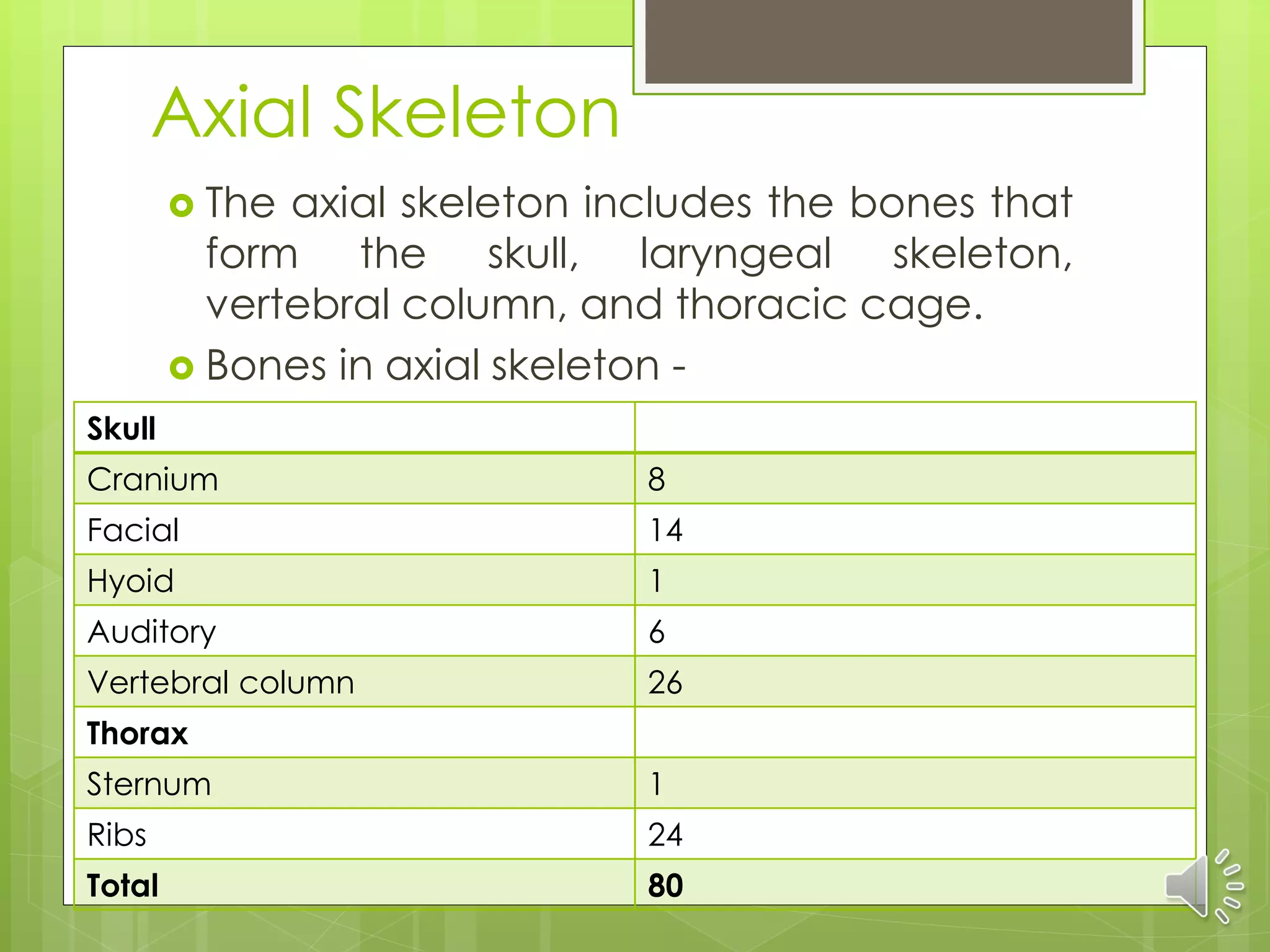
Axial Skeleton
 The axial skeleton includes the bones that
form the skull, laryngeal skeleton,
vertebral column, and thoracic cage.
 Bones in axial skeleton -
Skull
Cranium 8
Facial 14
Hyoid 1
Auditory 6
Vertebral column 26
Thorax
Sternum 1
Ribs 24
Total 80
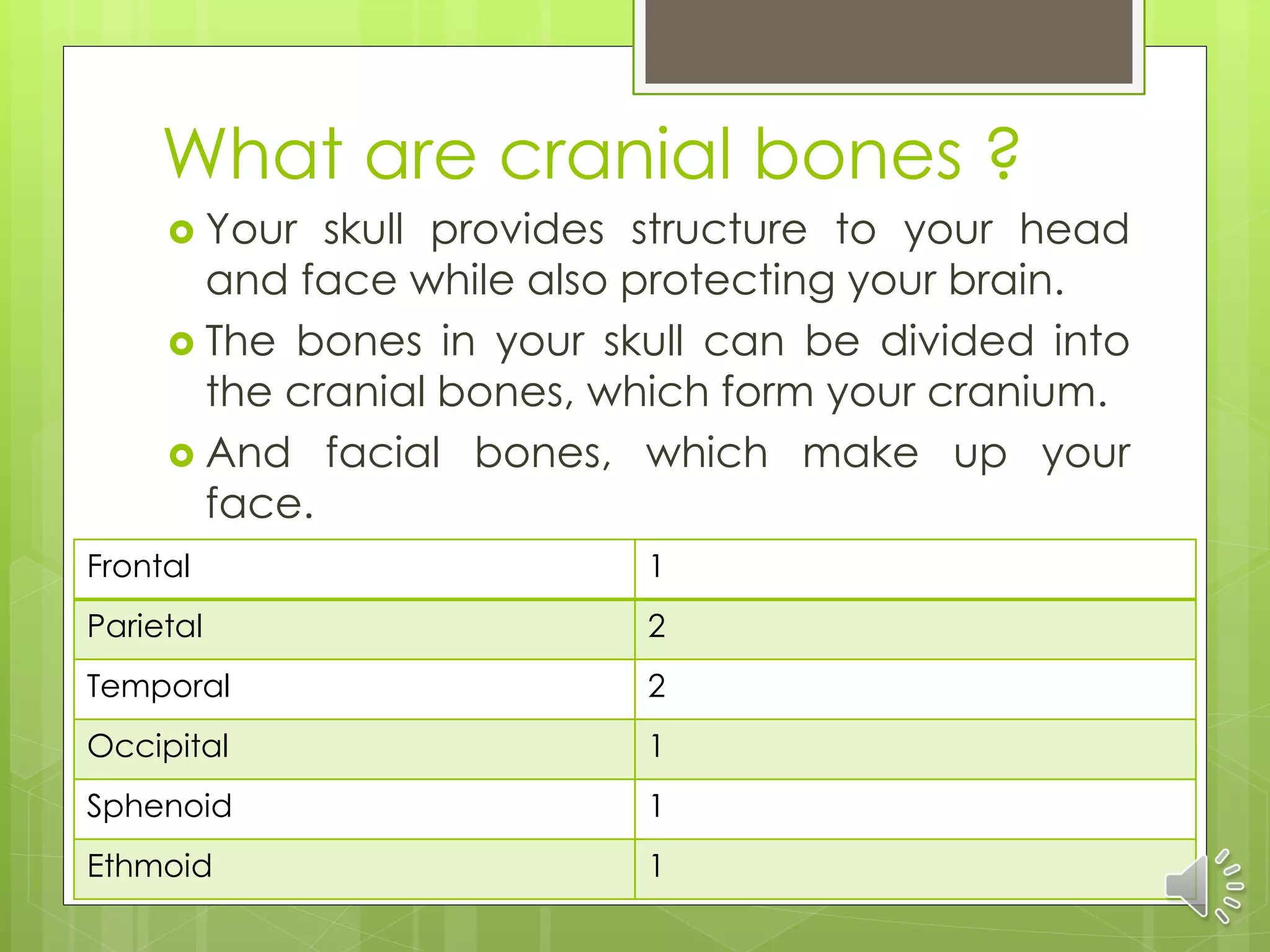
What are cranial bones ?
 Your skull provides structure to your head
and face while also protecting your brain.
 The bones in your skull can be divided into
the cranial bones, which form your cranium.
 And facial bones, which make up your
face.
Frontal 1
Parietal 2
Temporal 2
Occipital 1
Sphenoid 1
Ethmoid 1
Facial Bones
 Bones surrounding the mouth and nose
and contributing to the eye sockets.
 Total no. of facial bone - 14
Nasal 2
Lacrimal 2
Inferior nasal concha 2
Maxilla 2
Mandible 1
Palatine 2
Zygomatic 2
Vomer 1
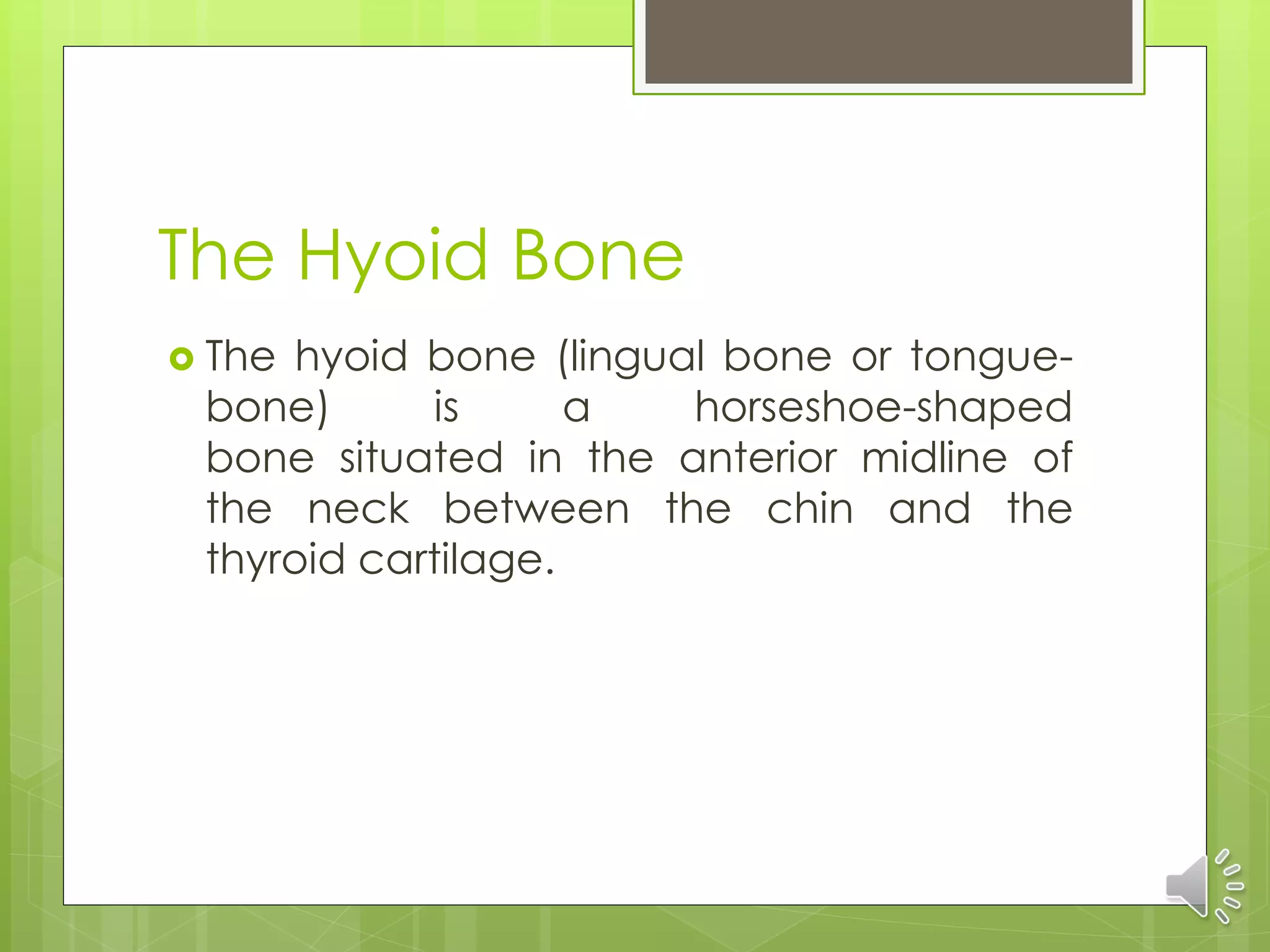
The Hyoid Bone
 The hyoid bone (lingual bone or tongue-
bone) is a horseshoe-shaped
bone situated in the anterior midline of
the neck between the chin and the
thyroid cartilage.
Auditory Ossicles
 The ossicles are three bones in middle ear
that are among the smallest bones in the
human body.
malleus 2
incus 2
Stapes (is smallest bone in the
body)
2
Vertebral Column
 The vertebral column, also known as the
spinal column, is the central axis of the
skeleton in all vertebrates.
 The vertebral column provides
attachments to muscles, supports the
trunk, protects the spinal cord and nerve
roots.
 Total vertebral column in adult - 26
Cervical 7
Thoracic 12
Lumber 5
Sacrum 1
Coccyx 1
Thorax
 The thorax is the region between the
abdomen inferiorly and the root of the
neck superiorly.
Sternum 1
Ribs 24
Appendicular Skeleton
 The appendicular skeleton includes the
skeletal elements within the limbs, as well
as supporting shoulder girdle and pelvic
girdle.
 There are 126 bones.
Pectoral (Shoulder) girdles
Clavicle 2
scapula 2
upper extremities
Humorous, ulna, radius 2+2+2
Carpals 8+8
metacarpals 5+5
phalanges 14+14
pelvic hip girdle
Pelvic or hip bone 2
lower extremities
Femur, fibula, Tibia 2+2+2
patella 1+1
tarsal 7+7
Metatarsal 5+5
phalanges 14+14
Clavicle
 The clavicle or collarbone, is S-shaped
long bone approximately 6 inches (15 cm)
long
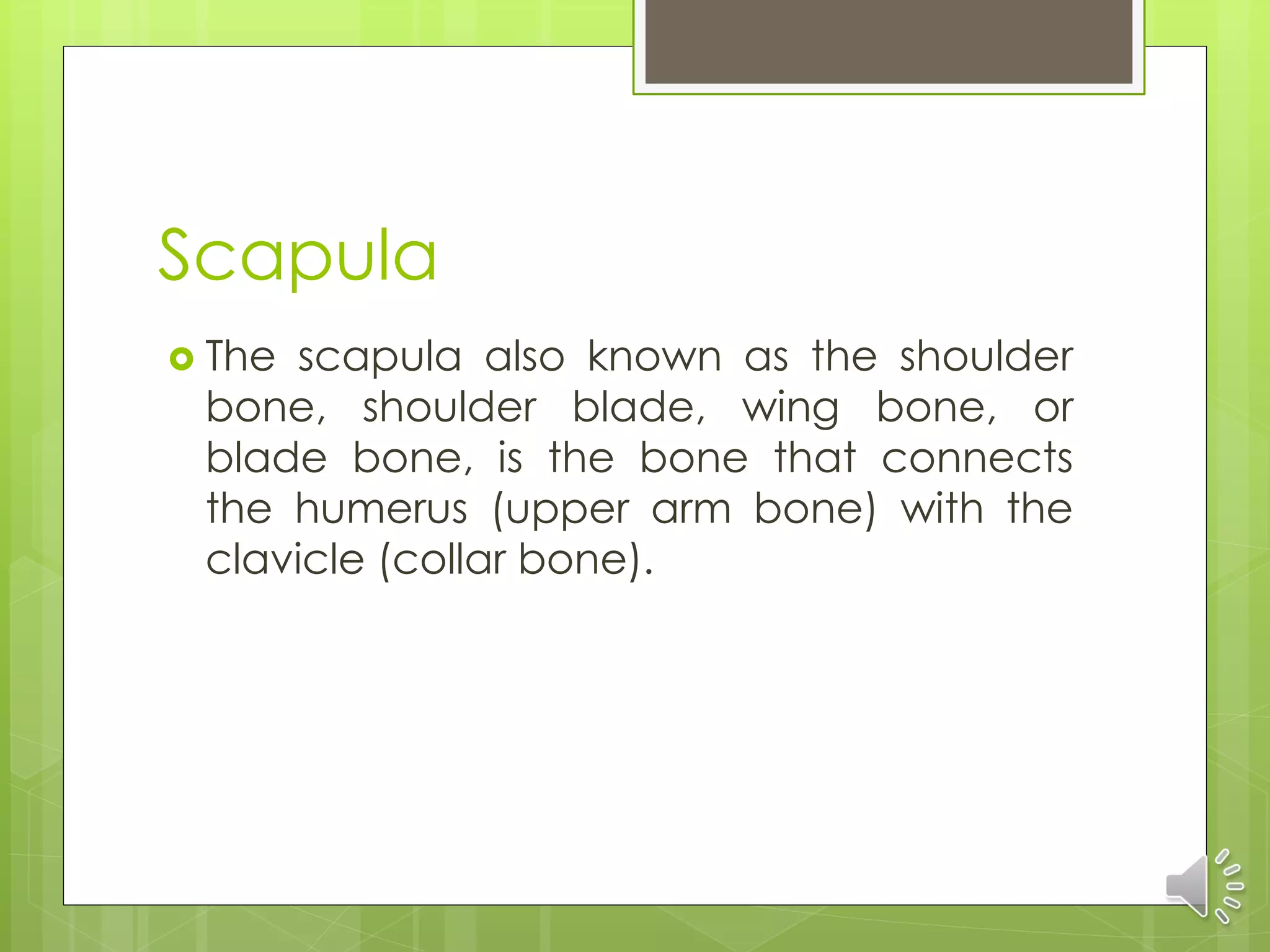
Scapula
 The scapula also known as the shoulder
bone, shoulder blade, wing bone, or
blade bone, is the bone that connects
the humerus (upper arm bone) with the
clavicle (collar bone).
Humerus
 Humerus is a long bone in the arm that
runs from the shoulder to the elbow.
 It connects the scapula and the two
bones of the lower arm, the radius and
ulna.
Ulna
 The ulna is one of two bones that make
up the forearm, other is radius. It forms the
elbow joint with the humerus and also
articulates with the radius both proximally
and distally.
 It is located in the medial forearm when
the arm is in the anatomical position. It is
the larger of the two forearm bones.
Radius
 The radius or radial bone is one of the two
bone of the forearm, the other being the
ulna.
 It extends from the lateral side of the
elbow to the thumb side of the wrist and
runs parallel to the ulna.
Carpal Bones
 The carpal bones are the eight small
bones that make up the wrist (or carpus)
that connects the hand to the forearm.
 The term "carpus" is derived from the Latin
carpus and the Greek καρπός (karpós),
meaning "wrist".
 The carpal bones allow the wrist to move
and rotate.
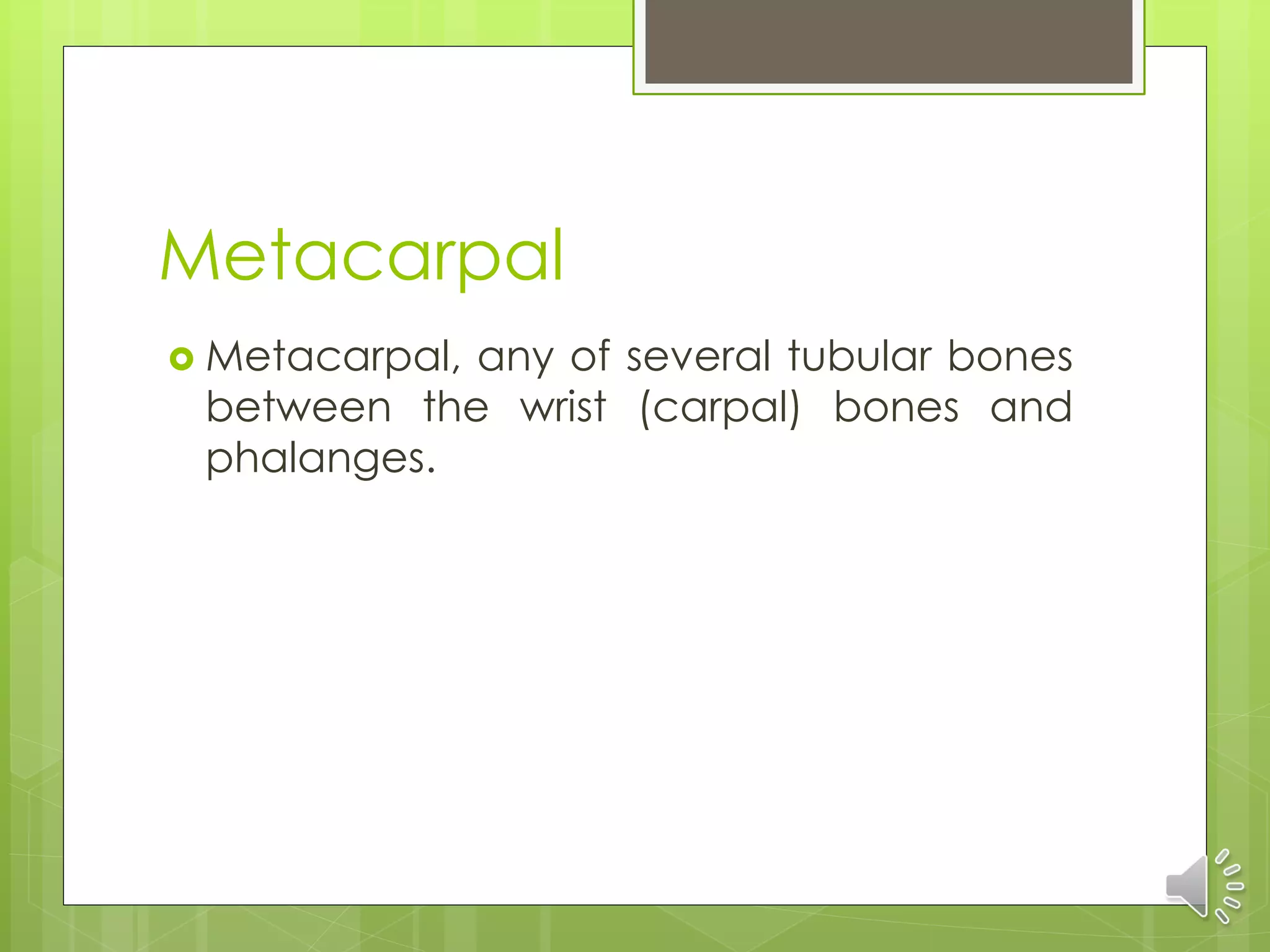
Metacarpal
 Metacarpal, any of several tubular bones
between the wrist (carpal) bones and
phalanges.
Phalanges
 The phalanges are the bones of the digits,
each finger has three phalanges, except
for the thumb, which has two.
Hip bone
 The hip bone is a large flat bone, it is
composed of three parts the ilium,
ischium, and the pubis.
Femur
 The femur is the largest bone in the
human body. It is commonly known as the
thigh bone and reaches from the hip to
the knee.
 A human male adult femur is about 19
inches long. The femur is extremely hard
and not easy to break.
Tibia
 The tibia is the larger of the two bones. It
supports most of your weight and is an
important part of both the knee joint and
ankle joint. The tibia is the larger bone in
your lower leg.
Fibula
 The fibula is a long bone in the lower
extremity that is positioned on the lateral
side of the tibia.
 The fibula is much smaller and thinner
than the tibia. It is located just behind the
tibial head at the knee joint and then runs
down the lateral aspect of the leg until it
reaches the ankle joint.
Patella
 The patella, also known as the kneecap,
is a flat, rounded triangular bone which
articulates with the femur (thigh bone)
and covers and protects the anterior
articular surface of the knee joint.
Tarsal
 The tarsal bones consist of seven short
bones located at the proximal region of
the foot.
Metatarsal
 The metatarsal bones are the bones of
the forefoot. There are five metatarsal
bones, numbered one to five from the
hallux (great toe) to the small toe.
Phalanges
 The phalanges are the bones in the toes.
The second to fifth toes each contain
three phalanges. The big toe or hallux
contains only two phalanges.
Next class -

Unit – 2.pdf

  • 1.
    Unit – 2 SkeletalSystem Axial And Appendicular Skeleton
  • 3.
    Bone  Bone isone third connective tissue.  It is impregnated with calcium salt which constitute two third part.  Calcium salt makes it hard and rigid.  Which can afford resistance to weight bearing and jumping.  Bone is living tissue it is highly vascular.  It is subjected to disease and Heels after a fracture.
  • 4.
    Axial Skeleton  Theaxial skeleton includes the bones that form the skull, laryngeal skeleton, vertebral column, and thoracic cage.  Bones in axial skeleton - Skull Cranium 8 Facial 14 Hyoid 1 Auditory 6 Vertebral column 26 Thorax Sternum 1 Ribs 24 Total 80
  • 5.
    What are cranialbones ?  Your skull provides structure to your head and face while also protecting your brain.  The bones in your skull can be divided into the cranial bones, which form your cranium.  And facial bones, which make up your face. Frontal 1 Parietal 2 Temporal 2 Occipital 1 Sphenoid 1 Ethmoid 1
  • 6.
    Facial Bones  Bonessurrounding the mouth and nose and contributing to the eye sockets.  Total no. of facial bone - 14 Nasal 2 Lacrimal 2 Inferior nasal concha 2 Maxilla 2 Mandible 1 Palatine 2 Zygomatic 2 Vomer 1
  • 7.
    The Hyoid Bone The hyoid bone (lingual bone or tongue- bone) is a horseshoe-shaped bone situated in the anterior midline of the neck between the chin and the thyroid cartilage.
  • 8.
    Auditory Ossicles  Theossicles are three bones in middle ear that are among the smallest bones in the human body. malleus 2 incus 2 Stapes (is smallest bone in the body) 2
  • 9.
    Vertebral Column  Thevertebral column, also known as the spinal column, is the central axis of the skeleton in all vertebrates.  The vertebral column provides attachments to muscles, supports the trunk, protects the spinal cord and nerve roots.  Total vertebral column in adult - 26 Cervical 7 Thoracic 12 Lumber 5 Sacrum 1 Coccyx 1
  • 10.
    Thorax  The thoraxis the region between the abdomen inferiorly and the root of the neck superiorly. Sternum 1 Ribs 24
  • 11.
    Appendicular Skeleton  Theappendicular skeleton includes the skeletal elements within the limbs, as well as supporting shoulder girdle and pelvic girdle.  There are 126 bones.
  • 12.
    Pectoral (Shoulder) girdles Clavicle2 scapula 2 upper extremities Humorous, ulna, radius 2+2+2 Carpals 8+8 metacarpals 5+5 phalanges 14+14 pelvic hip girdle Pelvic or hip bone 2 lower extremities Femur, fibula, Tibia 2+2+2 patella 1+1 tarsal 7+7 Metatarsal 5+5 phalanges 14+14
  • 13.
    Clavicle  The clavicleor collarbone, is S-shaped long bone approximately 6 inches (15 cm) long
  • 14.
    Scapula  The scapulaalso known as the shoulder bone, shoulder blade, wing bone, or blade bone, is the bone that connects the humerus (upper arm bone) with the clavicle (collar bone).
  • 15.
    Humerus  Humerus isa long bone in the arm that runs from the shoulder to the elbow.  It connects the scapula and the two bones of the lower arm, the radius and ulna.
  • 16.
    Ulna  The ulnais one of two bones that make up the forearm, other is radius. It forms the elbow joint with the humerus and also articulates with the radius both proximally and distally.  It is located in the medial forearm when the arm is in the anatomical position. It is the larger of the two forearm bones.
  • 17.
    Radius  The radiusor radial bone is one of the two bone of the forearm, the other being the ulna.  It extends from the lateral side of the elbow to the thumb side of the wrist and runs parallel to the ulna.
  • 18.
    Carpal Bones  Thecarpal bones are the eight small bones that make up the wrist (or carpus) that connects the hand to the forearm.  The term "carpus" is derived from the Latin carpus and the Greek καρπός (karpós), meaning "wrist".  The carpal bones allow the wrist to move and rotate.
  • 19.
    Metacarpal  Metacarpal, anyof several tubular bones between the wrist (carpal) bones and phalanges.
  • 20.
    Phalanges  The phalangesare the bones of the digits, each finger has three phalanges, except for the thumb, which has two.
  • 21.
    Hip bone  Thehip bone is a large flat bone, it is composed of three parts the ilium, ischium, and the pubis.
  • 22.
    Femur  The femuris the largest bone in the human body. It is commonly known as the thigh bone and reaches from the hip to the knee.  A human male adult femur is about 19 inches long. The femur is extremely hard and not easy to break.
  • 23.
    Tibia  The tibiais the larger of the two bones. It supports most of your weight and is an important part of both the knee joint and ankle joint. The tibia is the larger bone in your lower leg.
  • 24.
    Fibula  The fibulais a long bone in the lower extremity that is positioned on the lateral side of the tibia.  The fibula is much smaller and thinner than the tibia. It is located just behind the tibial head at the knee joint and then runs down the lateral aspect of the leg until it reaches the ankle joint.
  • 25.
    Patella  The patella,also known as the kneecap, is a flat, rounded triangular bone which articulates with the femur (thigh bone) and covers and protects the anterior articular surface of the knee joint.
  • 26.
    Tarsal  The tarsalbones consist of seven short bones located at the proximal region of the foot.
  • 27.
    Metatarsal  The metatarsalbones are the bones of the forefoot. There are five metatarsal bones, numbered one to five from the hallux (great toe) to the small toe.
  • 28.
    Phalanges  The phalangesare the bones in the toes. The second to fifth toes each contain three phalanges. The big toe or hallux contains only two phalanges.
  • 29.