Drosophila melanogaster
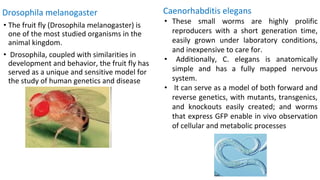
• The fruit fly (Drosophila melanogaster) is
one of the most studied organisms in the
animal kingdom.
• Drosophila, coupled with similarities in
development and behavior, the fruit fly has
served as a unique and sensitive model for
the study of human genetics and disease
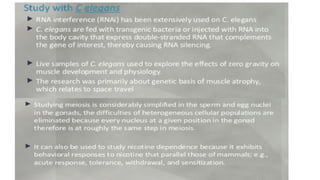
Caenorhabditis elegans
• These small worms are highly prolific
reproducers with a short generation time,
easily grown under laboratory conditions,
and inexpensive to care for.
• Additionally, C. elegans is anatomically
simple and has a fully mapped nervous
system.
• It can serve as a model of both forward and
reverse genetics, with mutants, transgenics,
and knockouts easily created; and worms
that express GFP enable in vivo observation
of cellular and metabolic processes
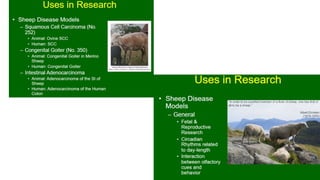
Sheep
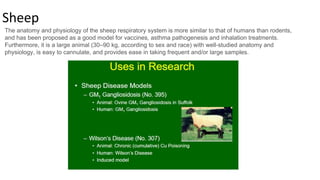
The anatomy and physiology of the sheep respiratory system is more similar to that of humans than rodents,
and has been proposed as a good model for vaccines, asthma pathogenesis and inhalation treatments.
Furthermore, it is a large animal (30–90 kg, according to sex and race) with well-studied anatomy and
physiology, is easy to cannulate, and provides ease in taking frequent and/or large samples.
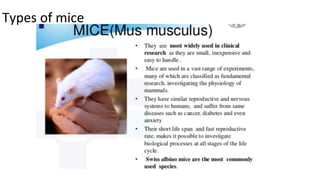
Types of mice
Aquatic
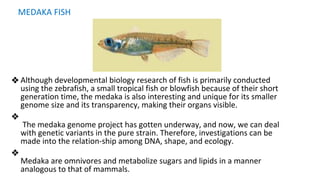
ā– Although developmental biology research of fish is primarily conducted
using the zebrafish, a small tropical fish or blowfish because of their short
generation time, the medaka is also interesting and unique for its smaller
genome size and its transparency, making their organs visible.
ā–
The medaka genome project has gotten underway, and now, we can deal
with genetic variants in the pure strain. Therefore, investigations can be
made into the relation-ship among DNA, shape, and ecology.
ā–
Medaka are omnivores and metabolize sugars and lipids in a manner
analogous to that of mammals.
MEDAKA FISH
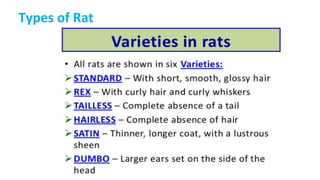
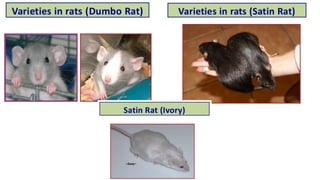
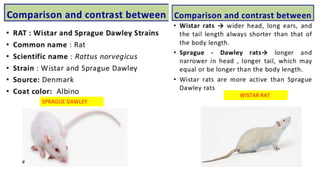
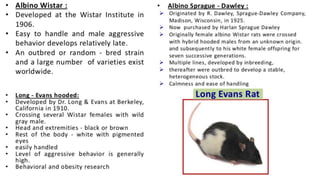
Types of Rat
SPRAGUE DAWLEY
WISTAR RAT
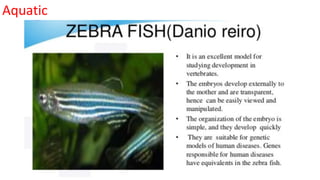
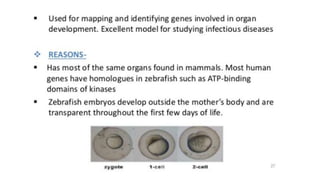
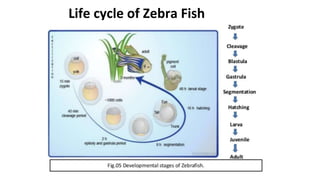
Life cycle of Zebra Fish
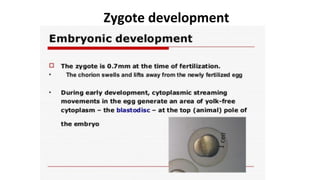
Zygote development
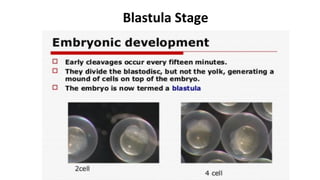
Blastula Stage
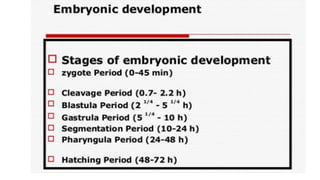
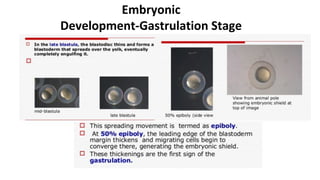
Embryonic
Development-Gastrulation Stage
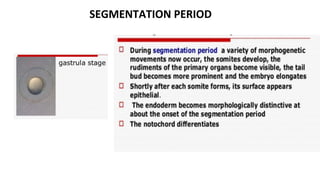
SEGMENTATION PERIOD
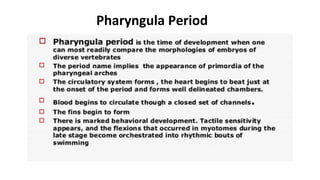
Pharyngula Period
Hatching Period
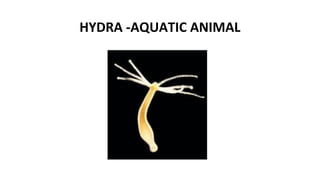
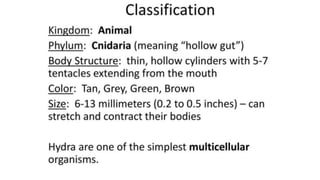
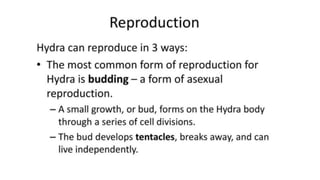
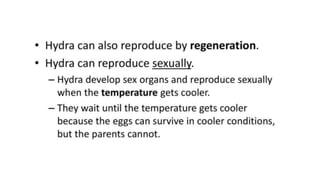
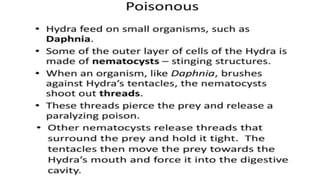
HYDRA -AQUATIC ANIMAL
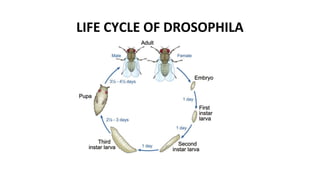
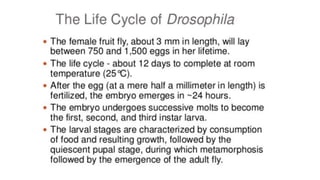
LIFE CYCLE OF DROSOPHILA
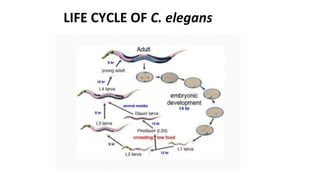
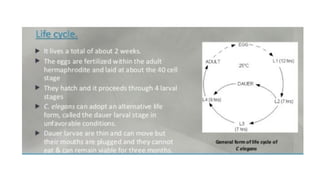
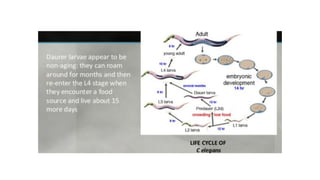
LIFE CYCLE OF C. elegans
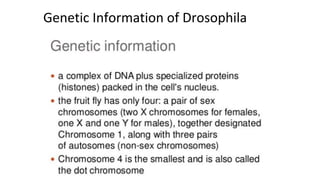
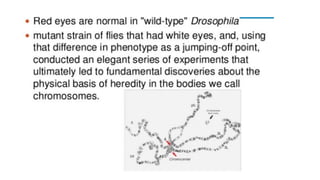
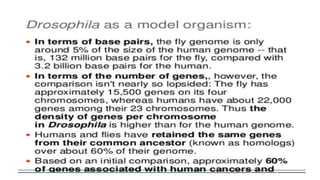
Genetic Information of Drosophila
Unit 2 is based on animal model on research

Unit 2 is based on animal model on research

  • 11.
    Drosophila melanogaster • Thefruit fly (Drosophila melanogaster) is one of the most studied organisms in the animal kingdom. • Drosophila, coupled with similarities in development and behavior, the fruit fly has served as a unique and sensitive model for the study of human genetics and disease Caenorhabditis elegans • These small worms are highly prolific reproducers with a short generation time, easily grown under laboratory conditions, and inexpensive to care for. • Additionally, C. elegans is anatomically simple and has a fully mapped nervous system. • It can serve as a model of both forward and reverse genetics, with mutants, transgenics, and knockouts easily created; and worms that express GFP enable in vivo observation of cellular and metabolic processes
  • 12.
    Sheep The anatomy andphysiology of the sheep respiratory system is more similar to that of humans than rodents, and has been proposed as a good model for vaccines, asthma pathogenesis and inhalation treatments. Furthermore, it is a large animal (30–90 kg, according to sex and race) with well-studied anatomy and physiology, is easy to cannulate, and provides ease in taking frequent and/or large samples.
  • 16.
  • 18.
  • 21.
    ā– Although developmentalbiology research of fish is primarily conducted using the zebrafish, a small tropical fish or blowfish because of their short generation time, the medaka is also interesting and unique for its smaller genome size and its transparency, making their organs visible. ā– The medaka genome project has gotten underway, and now, we can deal with genetic variants in the pure strain. Therefore, investigations can be made into the relation-ship among DNA, shape, and ecology. ā– Medaka are omnivores and metabolize sugars and lipids in a manner analogous to that of mammals. MEDAKA FISH
  • 25.
  • 31.
  • 33.
    Life cycle ofZebra Fish
  • 35.
  • 36.
  • 37.
  • 38.
  • 39.
  • 40.
  • 41.
  • 47.
    LIFE CYCLE OFDROSOPHILA
  • 49.
    LIFE CYCLE OFC. elegans
  • 53.