Introduction
To
Marketing Research
UNIT – 1 PART – 1
What do you mean by ‘Research’?
• In Common Language, research means ‘search
for knowledge’
• Research can also be defined as a scientific
and systematic search for information on any
topic. It is sometimes also called the ‘art of
scientific investigation’
• Research leads to formulation of theories
• Research is also a tool used for business
decision making
What is a ‘Marketing Research’?
• Marketing research is when research is applied
to the area of marketing
• Marketing research tries to find out the
solutions to the marketing related problems
• Marketing problems can belong to various
areas such as product development, promotion,
distribution, consumer research etc
What is a ‘Marketing Research’?
• Marketing research is the function that links an
organization to its market through the gathering of
information. This information allows for the
identification and definition of market-driven
opportunities and problems. The information
allows for the generation, refinement and
evaluation of marketing actions. It allows for the
monitoring of marketing performance and
improved understanding of marketing as a
business process. [American Marketing
Association]
What are the Objectives of Marketing
Research?
• To find out the feasibility of new products and
services in the marketing [customer needs]
• To find out customers’ attitude regarding a
product of service [+ve or -ve]
• To find out the impact of a promotional campaign
on the sales of the product
• To gather customer feedback regarding a product
or service and use the information for taking
marketing decisions
• To find out the effectiveness of an advertisements
campaign
What the Various Types of Marketing
Research?
There can be four distinct type of Marketing
research
Exploratory research – to gain familiarity with
a phenomenon or to achieve new insights into
it. It is also called formulative research
Descriptive research – to accurately find out
the characteristics of an individual, group or a
situation.
What the Various Types of Marketing
Research?
Diagnostic research – to determine the
frequency with which something occurs or to
another variable with which it is associated.
Hypothesis testing research – to test the
hypothesis regarding a variable.
Some Emerging Issues in marketing
Research
Artificial Intelligence in Marketing
Digital Marketing
Green Marketing / Sustainable Marketing
Relationship Marketing
Customer Engagement – how to engage the
customer more and more with a brand
Marketing gaming
Research Process
&
Research Design
UNIT – 1 PART – 2
Research Process
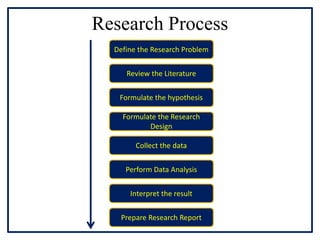
Define the Research Problem
Review the Literature
Formulate the hypothesis
Formulate the Research
Design
Collect the data
Perform Data Analysis
Interpret the result
Prepare Research Report
The Research Process
Defining Research problem: The researcher
must clearly state the problem he wants to
study. Initially the research problem may be
stated in a broad sense and then it can be made
specific. A research problem should be as
specific as possible.
 Literature Review: Once the problem is
defined, a researcher must go through related
concepts, theories and previous research.
The Research Process [Contd.]
Formulation of hypothesis: after doing the review
of the literature, a working hypothesis should be
formed, it is an assumption which has to be tested
using appropriate statistical test. The hypothesis
must be very specific and limited. [exploratory
studies do not need hypothesis]
 Formulating Research Design: It is the structure
within which the research has to be conducted.
Research design makes the research more
efficient. It includes – information sources,
sample design, statistical methods that will be
used, time and cost available for research etc.
The Research Process [Contd.]
Collection of the data: data can be primary
[first hand] or secondary [published or used
data]. Depending upon several factors, a
researcher has to decide what type of data is
needed and how it must be collected.
 Analysis of the data: it involves coding,
editing, tabulation, doing descriptive analysis
or applying various statistical procedures for
hypothesis testing [formulated earlier].
The Research Process [Contd.]
Interpretation of the results: data analysis or
hypothesis testing often yields some results.
The results are generally in numerical terms.
These results have to be correctly interpreted.
 Preparation of research report: Finally the
researcher has to prepare a report of the work
done by him. The report has to be prepared in
a definite format. It has three parts – the
preliminary part, main part and the conclusion.
The Research Design
Research Design: research design is the
conceptual structure within which the research
is conducted. It is the blueprint for collection,
measurement and analysis of data.
Research design tries to answer important
questions related to the research – What, how,
when, where, how much etc
Research design brings efficiency into research
process
The Research Design [Contd.]
• Research Design answers the following questions:
What is the research about?
Why is the research being made?
Where will the research be carried out?
What type of data is required for research?
What time & cost will the research take?
What sampling technique will be used in the
research?
How will the data be collected?
How will the data be analyzed?
In which format will report be prepared?
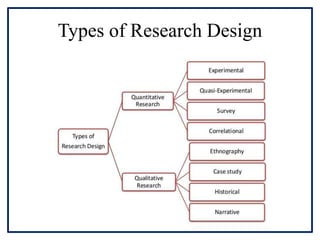
Types of Research Design
The Research Design
Quantitative Research: quantitative research is
that research which is done on quantitative
data such as income, age, height, no. of
purchases done by any consumer etc.
Qualitative Research: qualitative research is
that research which is done on qualitative data
such as gender, place of residence,

Unit 1 introduction_to_marketing_research - copy

  • 1.
  • 2.
    What do youmean by ‘Research’? • In Common Language, research means ‘search for knowledge’ • Research can also be defined as a scientific and systematic search for information on any topic. It is sometimes also called the ‘art of scientific investigation’ • Research leads to formulation of theories • Research is also a tool used for business decision making
  • 3.
    What is a‘Marketing Research’? • Marketing research is when research is applied to the area of marketing • Marketing research tries to find out the solutions to the marketing related problems • Marketing problems can belong to various areas such as product development, promotion, distribution, consumer research etc
  • 4.
    What is a‘Marketing Research’? • Marketing research is the function that links an organization to its market through the gathering of information. This information allows for the identification and definition of market-driven opportunities and problems. The information allows for the generation, refinement and evaluation of marketing actions. It allows for the monitoring of marketing performance and improved understanding of marketing as a business process. [American Marketing Association]
  • 5.
    What are theObjectives of Marketing Research? • To find out the feasibility of new products and services in the marketing [customer needs] • To find out customers’ attitude regarding a product of service [+ve or -ve] • To find out the impact of a promotional campaign on the sales of the product • To gather customer feedback regarding a product or service and use the information for taking marketing decisions • To find out the effectiveness of an advertisements campaign
  • 6.
    What the VariousTypes of Marketing Research? There can be four distinct type of Marketing research Exploratory research – to gain familiarity with a phenomenon or to achieve new insights into it. It is also called formulative research Descriptive research – to accurately find out the characteristics of an individual, group or a situation.
  • 7.
    What the VariousTypes of Marketing Research? Diagnostic research – to determine the frequency with which something occurs or to another variable with which it is associated. Hypothesis testing research – to test the hypothesis regarding a variable.
  • 8.
    Some Emerging Issuesin marketing Research Artificial Intelligence in Marketing Digital Marketing Green Marketing / Sustainable Marketing Relationship Marketing Customer Engagement – how to engage the customer more and more with a brand Marketing gaming
  • 9.
  • 10.
    Research Process Define theResearch Problem Review the Literature Formulate the hypothesis Formulate the Research Design Collect the data Perform Data Analysis Interpret the result Prepare Research Report
  • 11.
    The Research Process DefiningResearch problem: The researcher must clearly state the problem he wants to study. Initially the research problem may be stated in a broad sense and then it can be made specific. A research problem should be as specific as possible.  Literature Review: Once the problem is defined, a researcher must go through related concepts, theories and previous research.
  • 12.
    The Research Process[Contd.] Formulation of hypothesis: after doing the review of the literature, a working hypothesis should be formed, it is an assumption which has to be tested using appropriate statistical test. The hypothesis must be very specific and limited. [exploratory studies do not need hypothesis]  Formulating Research Design: It is the structure within which the research has to be conducted. Research design makes the research more efficient. It includes – information sources, sample design, statistical methods that will be used, time and cost available for research etc.
  • 13.
    The Research Process[Contd.] Collection of the data: data can be primary [first hand] or secondary [published or used data]. Depending upon several factors, a researcher has to decide what type of data is needed and how it must be collected.  Analysis of the data: it involves coding, editing, tabulation, doing descriptive analysis or applying various statistical procedures for hypothesis testing [formulated earlier].
  • 14.
    The Research Process[Contd.] Interpretation of the results: data analysis or hypothesis testing often yields some results. The results are generally in numerical terms. These results have to be correctly interpreted.  Preparation of research report: Finally the researcher has to prepare a report of the work done by him. The report has to be prepared in a definite format. It has three parts – the preliminary part, main part and the conclusion.
  • 15.
    The Research Design ResearchDesign: research design is the conceptual structure within which the research is conducted. It is the blueprint for collection, measurement and analysis of data. Research design tries to answer important questions related to the research – What, how, when, where, how much etc Research design brings efficiency into research process
  • 16.
    The Research Design[Contd.] • Research Design answers the following questions: What is the research about? Why is the research being made? Where will the research be carried out? What type of data is required for research? What time & cost will the research take? What sampling technique will be used in the research? How will the data be collected? How will the data be analyzed? In which format will report be prepared?
  • 17.
  • 18.
    The Research Design QuantitativeResearch: quantitative research is that research which is done on quantitative data such as income, age, height, no. of purchases done by any consumer etc. Qualitative Research: qualitative research is that research which is done on qualitative data such as gender, place of residence,