I. INTRODUCTION
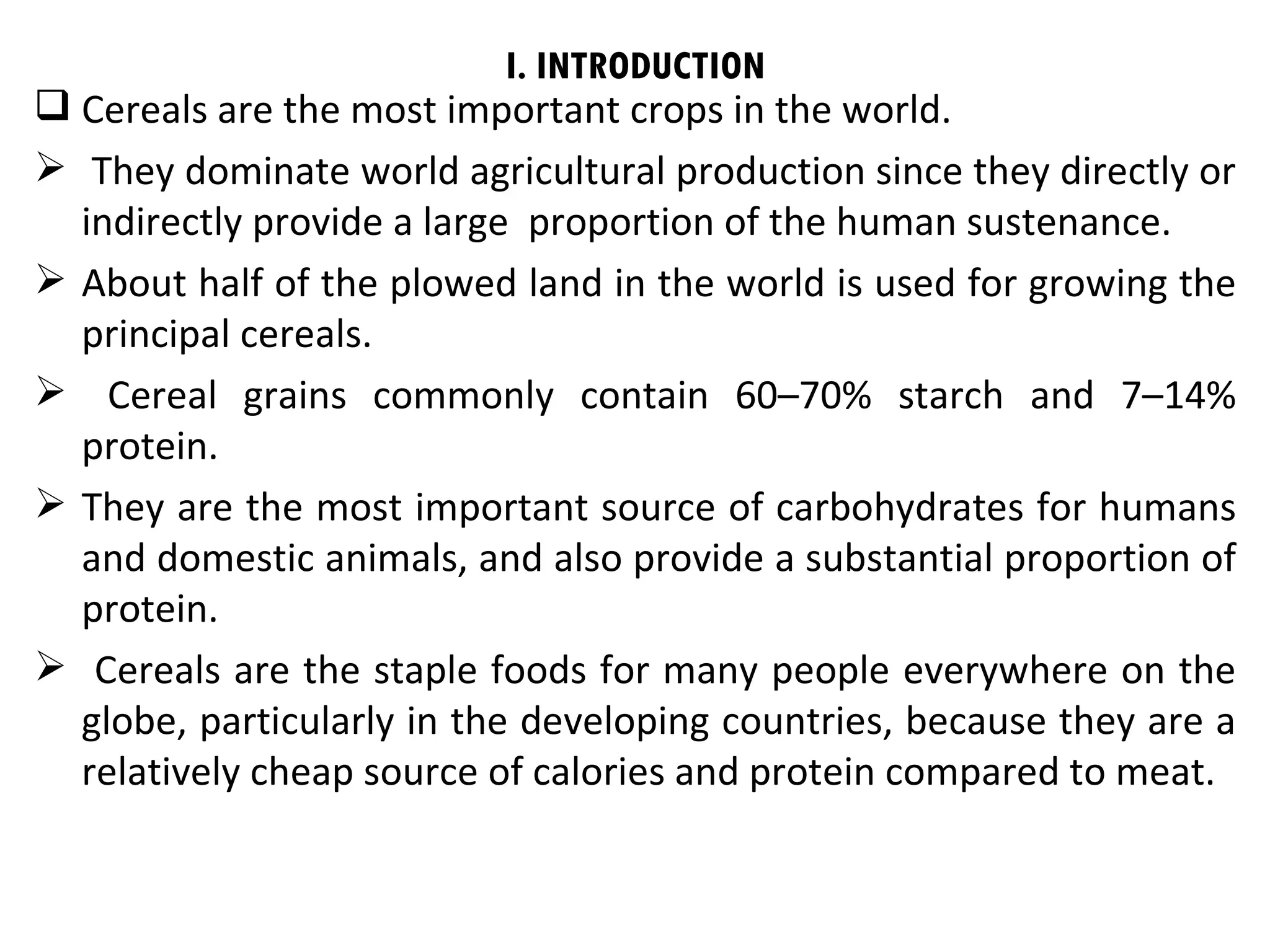
 Cereals are the most important crops in the world.
 They dominate world agricultural production since they directly or
  indirectly provide a large proportion of the human sustenance.
 About half of the plowed land in the world is used for growing the
  principal cereals.
 Cereal grains commonly contain 60–70% starch and 7–14%
  protein.
 They are the most important source of carbohydrates for humans
  and domestic animals, and also provide a substantial proportion of
  protein.
 Cereals are the staple foods for many people everywhere on the
  globe, particularly in the developing countries, because they are a
  relatively cheap source of calories and protein compared to meat.
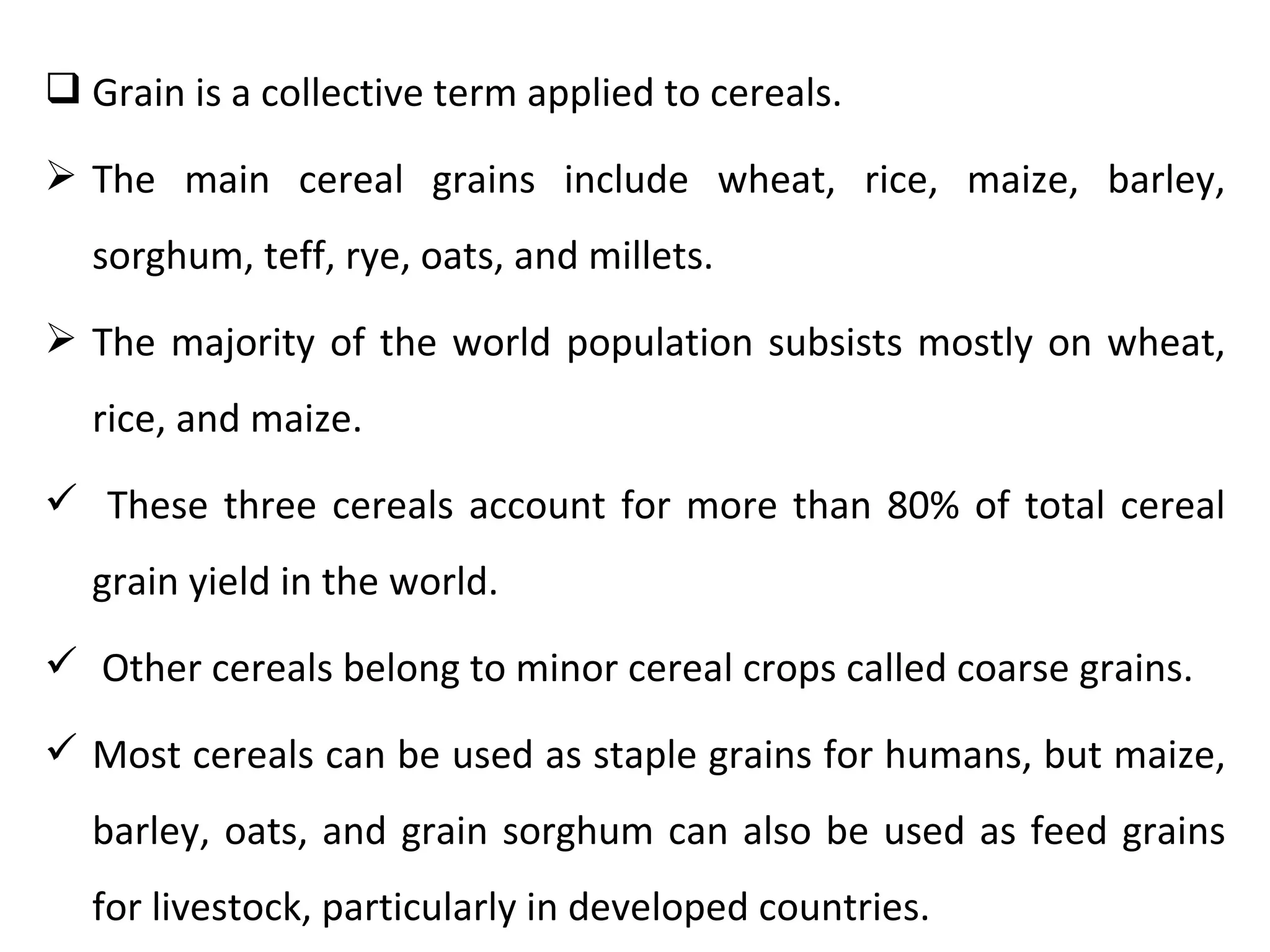
 Grain is a collective term applied to cereals.

 The main cereal grains include wheat, rice, maize, barley,
  sorghum, teff, rye, oats, and millets.
 The majority of the world population subsists mostly on wheat,
  rice, and maize.
 These three cereals account for more than 80% of total cereal
  grain yield in the world.
 Other cereals belong to minor cereal crops called coarse grains.

 Most cereals can be used as staple grains for humans, but maize,
  barley, oats, and grain sorghum can also be used as feed grains
  for livestock, particularly in developed countries.
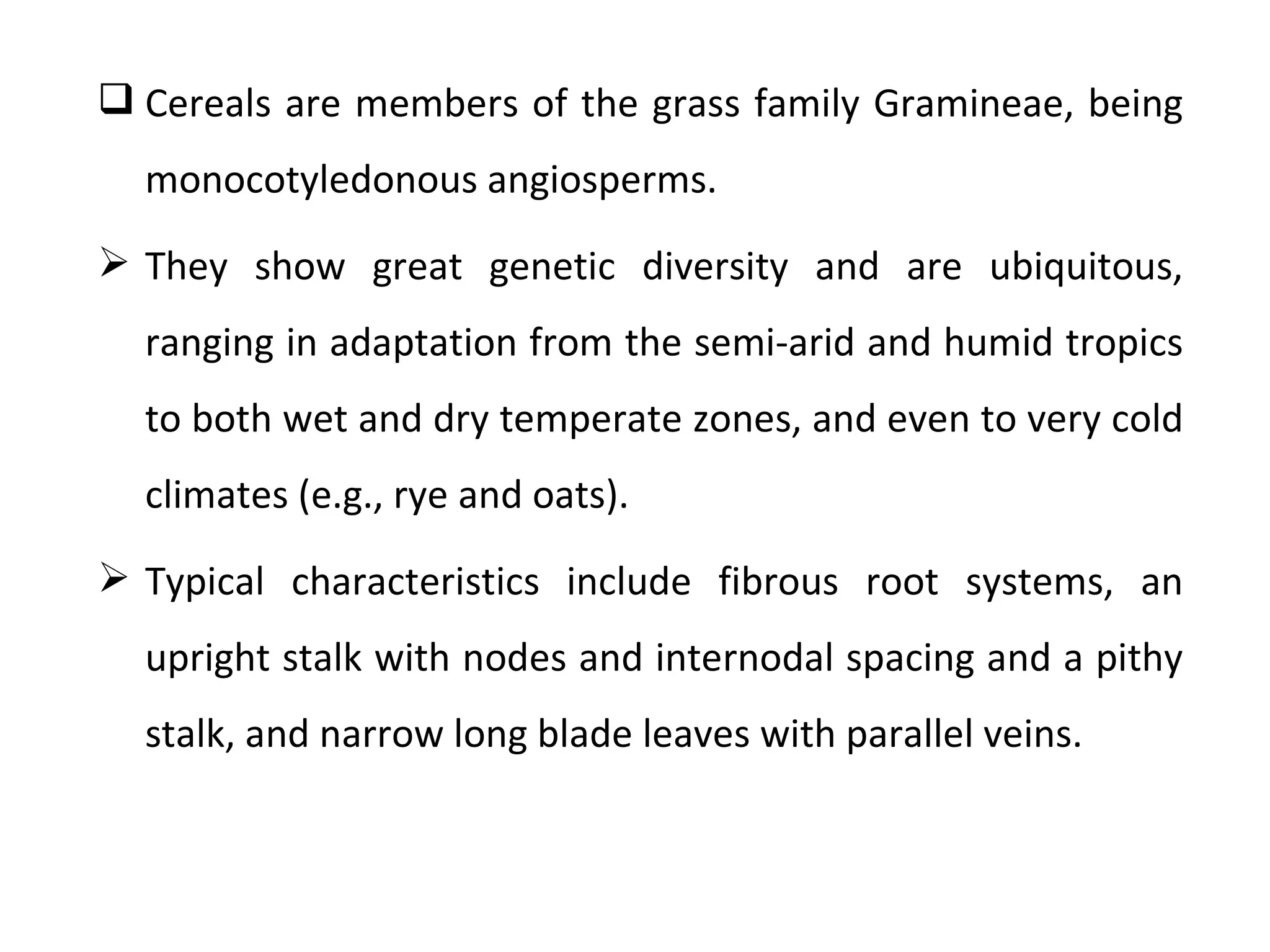
 Cereals are members of the grass family Gramineae, being
  monocotyledonous angiosperms.
 They show great genetic diversity and are ubiquitous,
  ranging in adaptation from the semi-arid and humid tropics
  to both wet and dry temperate zones, and even to very cold
  climates (e.g., rye and oats).
 Typical characteristics include fibrous root systems, an
  upright stalk with nodes and internodal spacing and a pithy
  stalk, and narrow long blade leaves with parallel veins.
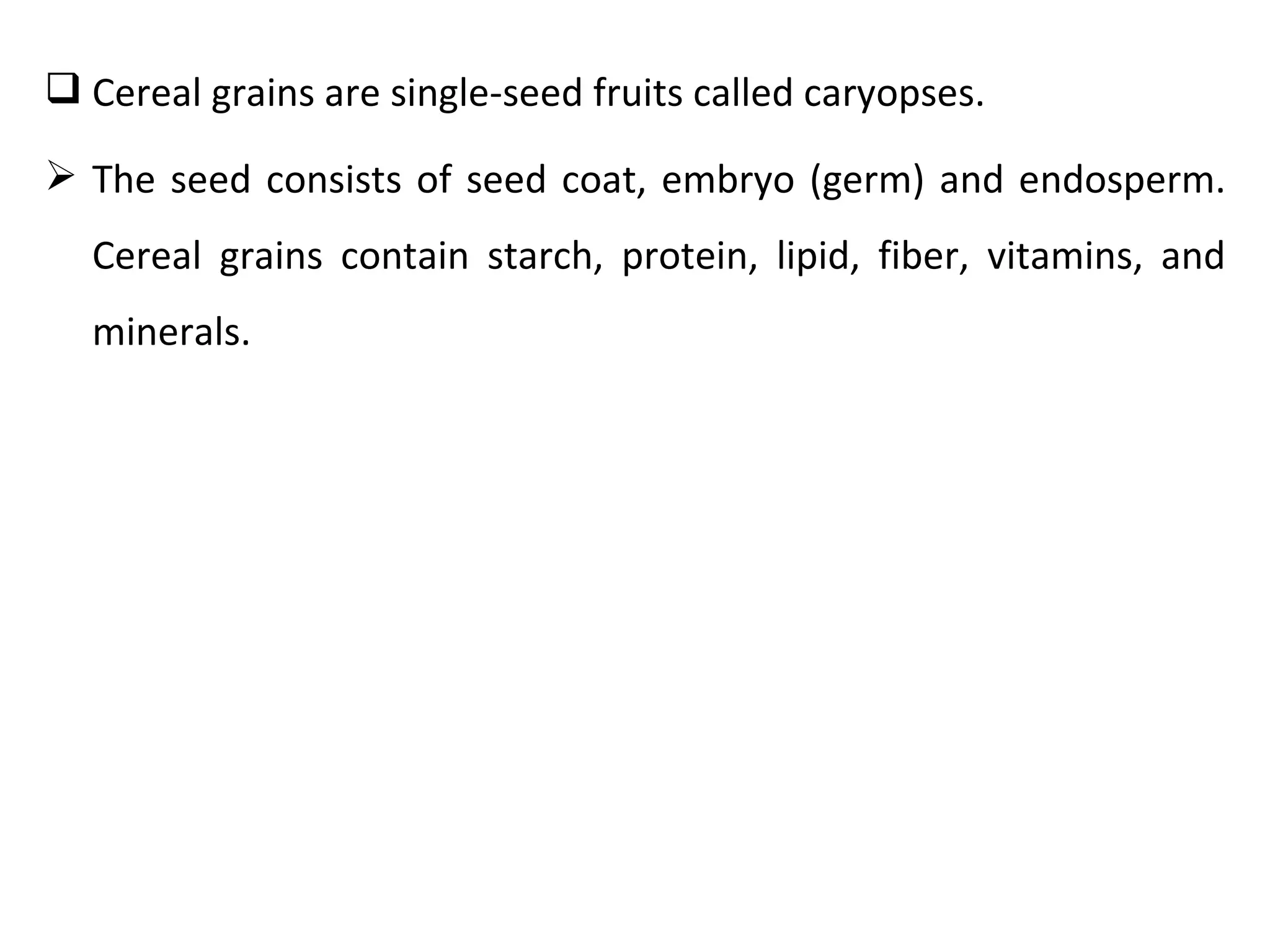
 Cereal grains are single-seed fruits called caryopses.

 The seed consists of seed coat, embryo (germ) and endosperm.
  Cereal grains contain starch, protein, lipid, fiber, vitamins, and
  minerals.
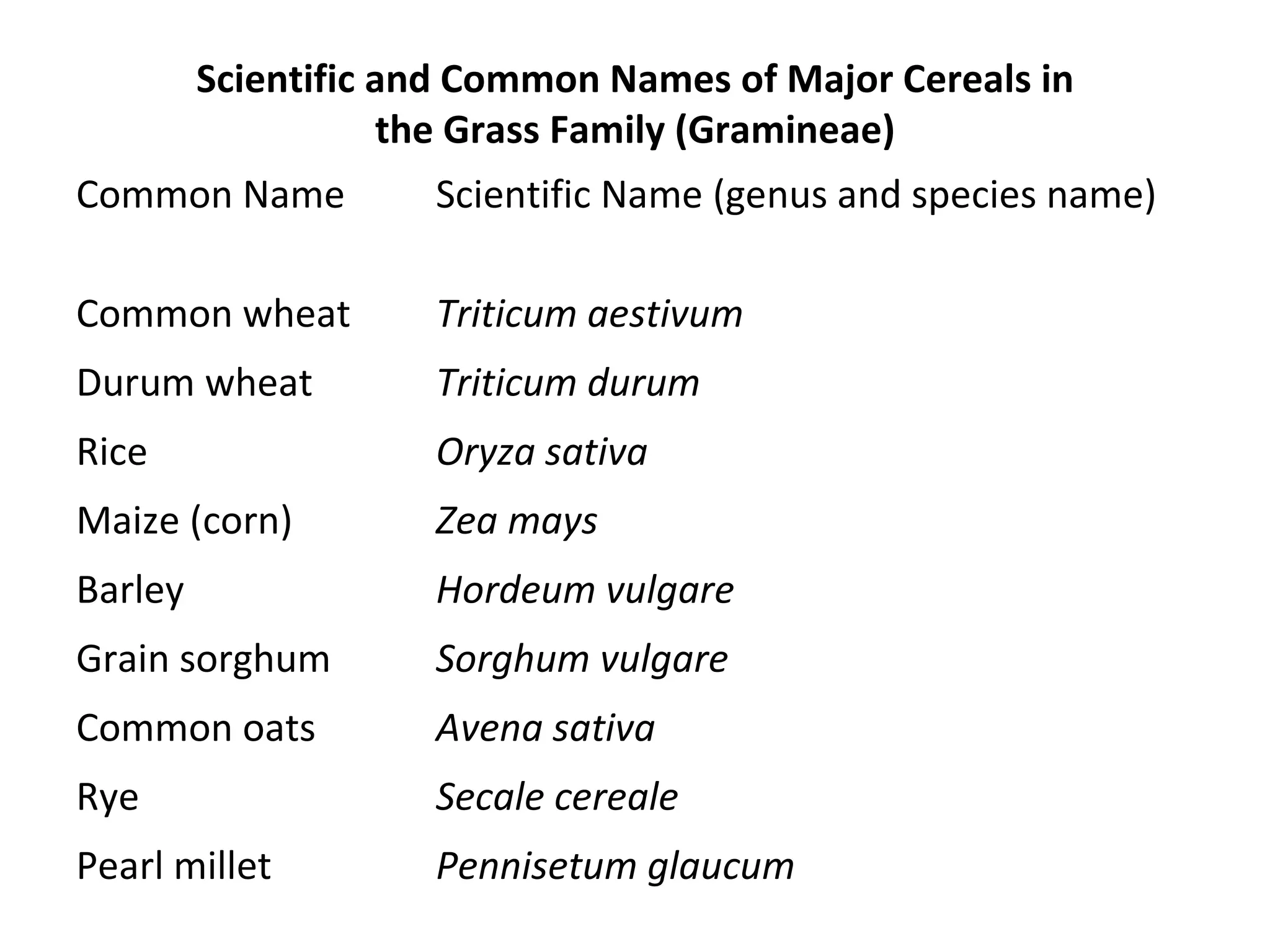
Scientific and Common Names of Major Cereals in
                    the Grass Family (Gramineae)
Common Name          Scientific Name (genus and species name)

Common wheat         Triticum aestivum
Durum wheat          Triticum durum
Rice                 Oryza sativa
Maize (corn)         Zea mays
Barley               Hordeum vulgare
Grain sorghum        Sorghum vulgare
Common oats          Avena sativa
Rye                  Secale cereale
Pearl millet         Pennisetum glaucum

Unit 1

  • 1.
    I. INTRODUCTION  Cerealsare the most important crops in the world.  They dominate world agricultural production since they directly or indirectly provide a large proportion of the human sustenance.  About half of the plowed land in the world is used for growing the principal cereals.  Cereal grains commonly contain 60–70% starch and 7–14% protein.  They are the most important source of carbohydrates for humans and domestic animals, and also provide a substantial proportion of protein.  Cereals are the staple foods for many people everywhere on the globe, particularly in the developing countries, because they are a relatively cheap source of calories and protein compared to meat.
  • 2.
     Grain isa collective term applied to cereals.  The main cereal grains include wheat, rice, maize, barley, sorghum, teff, rye, oats, and millets.  The majority of the world population subsists mostly on wheat, rice, and maize.  These three cereals account for more than 80% of total cereal grain yield in the world.  Other cereals belong to minor cereal crops called coarse grains.  Most cereals can be used as staple grains for humans, but maize, barley, oats, and grain sorghum can also be used as feed grains for livestock, particularly in developed countries.
  • 3.
     Cereals aremembers of the grass family Gramineae, being monocotyledonous angiosperms.  They show great genetic diversity and are ubiquitous, ranging in adaptation from the semi-arid and humid tropics to both wet and dry temperate zones, and even to very cold climates (e.g., rye and oats).  Typical characteristics include fibrous root systems, an upright stalk with nodes and internodal spacing and a pithy stalk, and narrow long blade leaves with parallel veins.
  • 4.
     Cereal grainsare single-seed fruits called caryopses.  The seed consists of seed coat, embryo (germ) and endosperm. Cereal grains contain starch, protein, lipid, fiber, vitamins, and minerals.
  • 5.
    Scientific and CommonNames of Major Cereals in the Grass Family (Gramineae) Common Name Scientific Name (genus and species name) Common wheat Triticum aestivum Durum wheat Triticum durum Rice Oryza sativa Maize (corn) Zea mays Barley Hordeum vulgare Grain sorghum Sorghum vulgare Common oats Avena sativa Rye Secale cereale Pearl millet Pennisetum glaucum