TYPES OF ENVIRONMENT
 Internal Environment
 External Environment
 Micro environment
 Macro environment
Economic
Non Economic
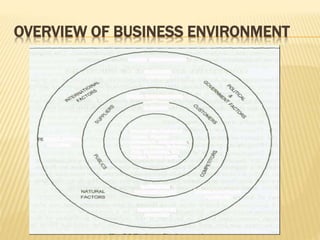
OVERVIEW OF BUSINESS ENVIRONMENT
INTERNAL ENVIRONMENT
 Refers to all the factors that are within an organization
which impart strengths or cause weaknesses of
strategic nature.
 Controllable factors. These include:
 Value system
 Mission and Objectives
 Management Structure and Nature
COMPONENTS OF INTERNAL ENVIRONMENT
 Human Resources
 Company Image and Brand Equity
 Other Factors
 Physical Assets and Facilities
 R & D and Technological Capabilities
 Marketing Resources
 Financial Resources
EXTERNAL ENVIRONMENT
“It consists of the factors in the company’s
immediate environment that affect the
performance of the company”.
MICRO ENVIRONMENT FACTORS
 Suppliers
 Customers
 Marketing Intermediaries
 Competitors
 Publics
 Financial Community
MACRO ENVIRONMENT
It comprises general trends and forces that
may not immediately affect the
organization but sooner or later will alter
the way organization operates.
Macro Environment :-
 Economic
 Non Economic
ECONOMIC ENVIRONMENT
 Economic stages that exists at a given time in a country
 Economic system that is adopted by a country for example.
Capitalistic, Socialistic or Mixed Economy
 Economic planning, such as five year plans, budgets, etc.
 Economic policies for example, monetary, industrial and
fiscal policies
 Economic Indices such as National Income, Per Capital
Income, Disposable Income, Rate of growth of GNP,
Distribution of Income, Rate of savings, Balance of
Payments etc.
 Economic Problems
 Functioning of economy
NON ECONOMIC ENVIRONMENT
 Regulatory Environment
 Socio- Cultural Environment
 Demographic Environment
 Technological Environment
 Political Environment
NON- ECONOMIC ENVIRONMENT
 Demographic Environment
 Growth of population
 Age Composition
 Life Expectancy
 Sex Ratio
 Fertility and Mortality rates
 Inter-state migration
NON- ECONOMIC ENVIRONMENT
 Cultural Environment
 Social Customs & Rituals and practices
 Lifestyle patterns
 Family structure
 Role & position of men, women, children and aged in
family & society
MACRO ENVIRONMENT
 Technological Environment
 Sources of technology
 Technological development
 Impact of technology
 Political Environment
 Political parties in power
 Political Philosophy
MACRO ENVIRONMENT
 Regulatory Environment
 Constitutional framework
 Policies relating to pricing and foreign investment
 Policies related to the public sector, SSIs, development
of backward areas and control of environmental pollution
INTERNATIONAL ENVIRONMENT
Important factors that operate at global level which have an impact
on organization are:
 Growth of world economy
 Distribution of world GDP
 International institutions IMF,WTO ILO
 Economic relations between nations
 Global human resource-nature and quality of skills, mobility of
labor
 Global technology and quality standards
 Global demographic patterns
WTO AND ITS RELEVANCE FOR INDIAN
COMPANIES
The main guidelines of WTO are: -
 Trade without discrimination
 Growing market access
 Promotion of fair competition
The response of Indian government to WTO
constitutes the following actions:-
 Reduction of tariffs
 Opening Indian markets for Global Players
 Rationalizing industrial licensing and removal of
controls on the size of operations
Thank You

Unit 1

  • 9.
    TYPES OF ENVIRONMENT Internal Environment  External Environment  Micro environment  Macro environment Economic Non Economic
  • 10.
  • 11.
    INTERNAL ENVIRONMENT  Refersto all the factors that are within an organization which impart strengths or cause weaknesses of strategic nature.  Controllable factors. These include:  Value system  Mission and Objectives  Management Structure and Nature
  • 12.
    COMPONENTS OF INTERNALENVIRONMENT  Human Resources  Company Image and Brand Equity  Other Factors  Physical Assets and Facilities  R & D and Technological Capabilities  Marketing Resources  Financial Resources
  • 13.
    EXTERNAL ENVIRONMENT “It consistsof the factors in the company’s immediate environment that affect the performance of the company”.
  • 14.
    MICRO ENVIRONMENT FACTORS Suppliers  Customers  Marketing Intermediaries  Competitors  Publics  Financial Community
  • 15.
    MACRO ENVIRONMENT It comprisesgeneral trends and forces that may not immediately affect the organization but sooner or later will alter the way organization operates. Macro Environment :-  Economic  Non Economic
  • 16.
    ECONOMIC ENVIRONMENT  Economicstages that exists at a given time in a country  Economic system that is adopted by a country for example. Capitalistic, Socialistic or Mixed Economy  Economic planning, such as five year plans, budgets, etc.  Economic policies for example, monetary, industrial and fiscal policies  Economic Indices such as National Income, Per Capital Income, Disposable Income, Rate of growth of GNP, Distribution of Income, Rate of savings, Balance of Payments etc.  Economic Problems  Functioning of economy
  • 17.
    NON ECONOMIC ENVIRONMENT Regulatory Environment  Socio- Cultural Environment  Demographic Environment  Technological Environment  Political Environment
  • 18.
    NON- ECONOMIC ENVIRONMENT Demographic Environment  Growth of population  Age Composition  Life Expectancy  Sex Ratio  Fertility and Mortality rates  Inter-state migration
  • 19.
    NON- ECONOMIC ENVIRONMENT Cultural Environment  Social Customs & Rituals and practices  Lifestyle patterns  Family structure  Role & position of men, women, children and aged in family & society
  • 20.
    MACRO ENVIRONMENT  TechnologicalEnvironment  Sources of technology  Technological development  Impact of technology  Political Environment  Political parties in power  Political Philosophy
  • 21.
    MACRO ENVIRONMENT  RegulatoryEnvironment  Constitutional framework  Policies relating to pricing and foreign investment  Policies related to the public sector, SSIs, development of backward areas and control of environmental pollution
  • 22.
    INTERNATIONAL ENVIRONMENT Important factorsthat operate at global level which have an impact on organization are:  Growth of world economy  Distribution of world GDP  International institutions IMF,WTO ILO  Economic relations between nations  Global human resource-nature and quality of skills, mobility of labor  Global technology and quality standards  Global demographic patterns
  • 23.
    WTO AND ITSRELEVANCE FOR INDIAN COMPANIES The main guidelines of WTO are: -  Trade without discrimination  Growing market access  Promotion of fair competition The response of Indian government to WTO constitutes the following actions:-  Reduction of tariffs  Opening Indian markets for Global Players  Rationalizing industrial licensing and removal of controls on the size of operations
  • 24.