Assessment of Elderly Clients
By
Hidayat Khan
INS-KMU
INTRODUCTION
 “Geriatrics” is the science that deals with
study of disease and their treatment
peculiar to old age.
 United Nations (1980) considered 60
years as the age of transition to the
elderly age group
• “Early old age - up to 75 years (elderly)
• “Late old age – above 75 years (very elderly)
Introduction
 “Gerontology” is the study of the physical
and psychological changes which are
incident to old age.
 Clinical Gerontology
 Social Gerontology
 Experimental Gerontology
 Geritrics Gerontology
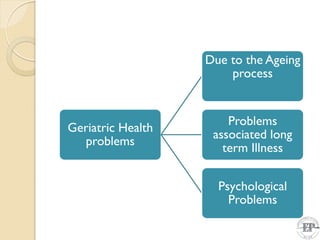
Geriatric Health
problems
Due to the Ageing
process
Problems
associated long
term Illness
Psychological
Problems
Geriatric Health Problems
Problems due to the Ageing process
a) Senile cataract
b) Glaucoma
c) Nerve deafness
d) Osteoporosis
e) Emphysema
f) Failure of special sense
g) Change in Mental outlook
Geriatric Health Problems
 Problems associated with Long-Term
Illness
a) Degenerative disease of heart and blood
vessel
b) Cancer
c) Accidents
d) Diabetes
e) Disease of locomotors System
f) Respiratory Illness
g) Genitourinary system
Geriatric Health Problems
 Psychological problems
a) Mental changes
b) Sexual Adjustments
c) Emotional disorders
Geriatric Assessment-Definition
 “A Multidimensional interdisciplinary
diagnostic process focused on
determining a frail older person’s medical,
psychological and functional capability in
order to develop a coordinated and
integrated plan for treatment and long
term follow up”
Geriatric Assessment-Use
 Used to-
Develop treatment and long-term follow-up
plans,
Arrange for primary care and rehabilitative
services,
Organize and facilitate the intricate process
of case management,
Determine long-term care requirements
Make the best use of health care resources
Implications of Geriatric Assessment
Improve the assessment of the medical
and the psychological problems
To provide Therapy and Rehabilitation
services
To determine optimal post therapy
placement for an independent functioning
To provide healthcare both by Healthcare
professionals and care tekers
Geriatric Assessment-Importance
 Focus on elderly individuals with complex
problems,
 Emphasize functional status and quality of life, and
 Frequently takes advantage of an interdisciplinary
team of providers
 Effectively addresseeThe “Five I’s of Geriatrics”
i.e.,
1. Intellectual impairment,
2. Immobility,
3. Instability,
4. Incontinence and
5. Iatrogenic disorders.
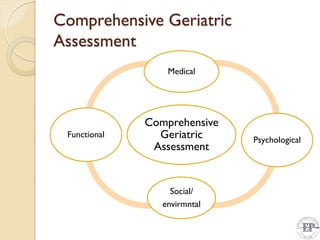
Comprehensive Geriatric
Assessment
Comprehensive
Geriatric
Assessment
Medical
Psychological
Social/
envirmntal
Functional
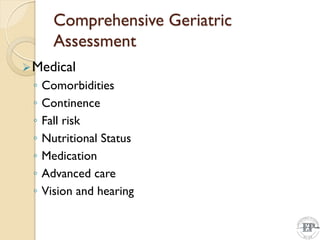
Comprehensive Geriatric
Assessment
Medical
◦ Comorbidities
◦ Continence
◦ Fall risk
◦ Nutritional Status
◦ Medication
◦ Advanced care
◦ Vision and hearing
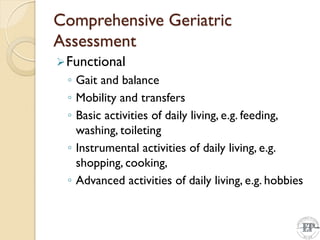
Comprehensive Geriatric
Assessment
Functional
◦ Gait and balance
◦ Mobility and transfers
◦ Basic activities of daily living, e.g. feeding,
washing, toileting
◦ Instrumental activities of daily living, e.g.
shopping, cooking,
◦ Advanced activities of daily living, e.g. hobbies
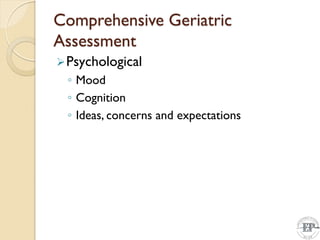
Comprehensive Geriatric
Assessment
Psychological
◦ Mood
◦ Cognition
◦ Ideas, concerns and expectations
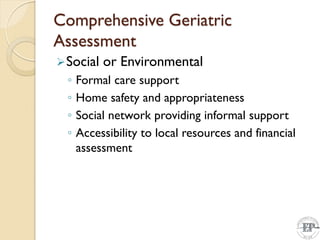
Comprehensive Geriatric
Assessment
Social or Environmental
◦ Formal care support
◦ Home safety and appropriateness
◦ Social network providing informal support
◦ Accessibility to local resources and financial
assessment
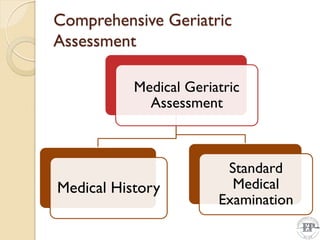
Comprehensive Geriatric
Assessment
Medical Geriatric
Assessment
Medical History
Standard
Medical
Examination
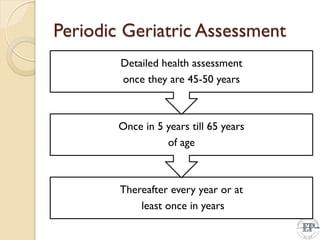
Periodic Geriatric Assessment
Thereafter every year or at
least once in years
Once in 5 years till 65 years
of age
Detailed health assessment
once they are 45-50 years
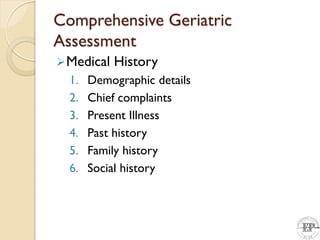
Comprehensive Geriatric
Assessment
Medical History
1. Demographic details
2. Chief complaints
3. Present Illness
4. Past history
5. Family history
6. Social history
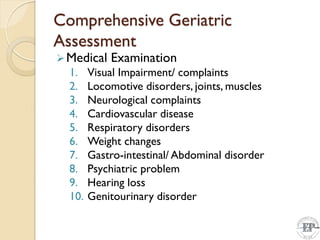
Comprehensive Geriatric
Assessment
Medical Examination
1. Visual Impairment/ complaints
2. Locomotive disorders, joints, muscles
3. Neurological complaints
4. Cardiovascular disease
5. Respiratory disorders
6. Weight changes
7. Gastro-intestinal/ Abdominal disorder
8. Psychiatric problem
9. Hearing loss
10. Genitourinary disorder
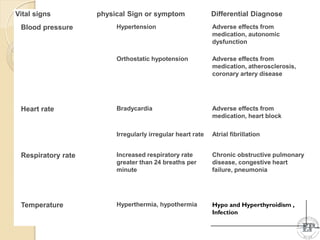
Vital signs physical Sign or symptom Differential Diagnose
Blood pressure Hypertension Adverse effects from
medication, autonomic
dysfunction
Orthostatic hypotension Adverse effects from
medication, atherosclerosis,
coronary artery disease
Heart rate Bradycardia Adverse effects from
medication, heart block
Irregularly irregular heart rate Atrial fibrillation
Respiratory rate Increased respiratory rate
greater than 24 breaths per
minute
Chronic obstructive pulmonary
disease, congestive heart
failure, pneumonia
Temperature Hyperthermia, hypothermia Hypo and Hyperthyroidism ,
Infection
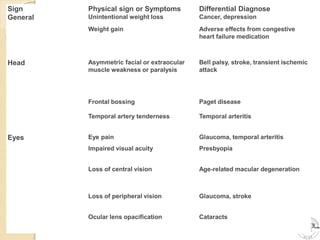
Sign
General
Physical sign or Symptoms
Unintentional weight loss
Differential Diagnose
Cancer, depression
Weight gain Adverse effects from congestive
heart failure medication
Head Asymmetric facial or extraocular
muscle weakness or paralysis
Bell palsy, stroke, transient ischemic
attack
Frontal bossing Paget disease
Temporal artery tenderness Temporal arteritis
Eyes Eye pain Glaucoma, temporal arteritis
Impaired visual acuity Presbyopia
Loss of central vision Age-related macular degeneration
Loss of peripheral vision Glaucoma, stroke
Ocular lens opacification Cataracts
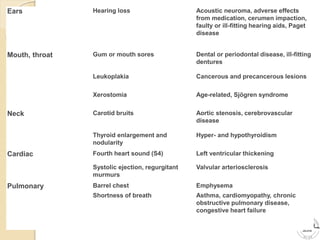
Ears Hearing loss Acoustic neuroma, adverse effects
from medication, cerumen impaction,
faulty or ill-fitting hearing aids, Paget
disease
Mouth, throat Gum or mouth sores Dental or periodontal disease, ill-fitting
dentures
Leukoplakia Cancerous and precancerous lesions
Xerostomia Age-related, Sjögren syndrome
Neck Carotid bruits Aortic stenosis, cerebrovascular
disease
Thyroid enlargement and
nodularity
Hyper- and hypothyroidism
Cardiac Fourth heart sound (S4) Left ventricular thickening
Systolic ejection, regurgitant
murmurs
Valvular arteriosclerosis
Pulmonary Barrel chest Emphysema
Shortness of breath Asthma, cardiomyopathy, chronic
obstructive pulmonary disease,
congestive heart failure
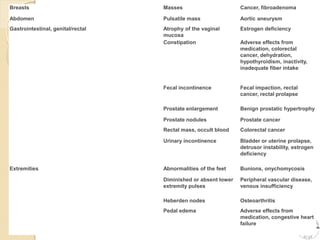
Breasts Masses Cancer, fibroadenoma
Abdomen Pulsatile mass Aortic aneurysm
Gastrointestinal, genital/rectal Atrophy of the vaginal
mucosa
Estrogen deficiency
Constipation Adverse effects from
medication, colorectal
cancer, dehydration,
hypothyroidism, inactivity,
inadequate fiber intake
Fecal incontinence Fecal impaction, rectal
cancer, rectal prolapse
Prostate enlargement Benign prostatic hypertrophy
Prostate nodules Prostate cancer
Rectal mass, occult blood Colorectal cancer
Urinary incontinence Bladder or uterine prolapse,
detrusor instability, estrogen
deficiency
Extremities Abnormalities of the feet Bunions, onychomycosis
Diminished or absent lower
extremity pulses
Peripheral vascular disease,
venous insufficiency
Heberden nodes Osteoarthritis
Pedal edema Adverse effects from
medication, congestive heart
failure
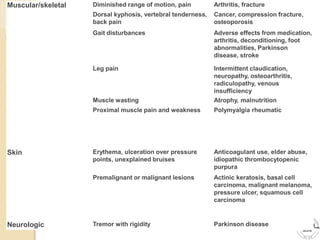
Muscular/skeletal Diminished range of motion, pain Arthritis, fracture
Dorsal kyphosis, vertebral tenderness,
back pain
Cancer, compression fracture,
osteoporosis
Gait disturbances Adverse effects from medication,
arthritis, deconditioning, foot
abnormalities, Parkinson
disease, stroke
Leg pain Intermittent claudication,
neuropathy, osteoarthritis,
radiculopathy, venous
insufficiency
Muscle wasting Atrophy, malnutrition
Proximal muscle pain and weakness Polymyalgia rheumatic
Skin Erythema, ulceration over pressure
points, unexplained bruises
Anticoagulant use, elder abuse,
idiopathic thrombocytopenic
purpura
Premalignant or malignant lesions Actinic keratosis, basal cell
carcinoma, malignant melanoma,
pressure ulcer, squamous cell
carcinoma
Neurologic Tremor with rigidity Parkinson disease
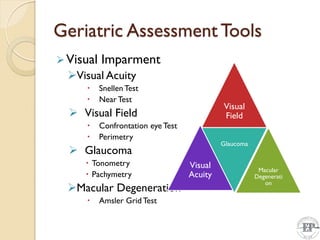
Geriatric Assessment Tools
Visual Imparment
Visual Acuity
 Snellen Test
 Near Test
 Visual Field
 Confrontation eye Test
 Perimetry
 Glaucoma
 Tonometry
 Pachymetry
Macular Degeneration
 Amsler GridTest
Visual
Field
Visual
Acuity
Glaucoma
Macular
Degenerati
on
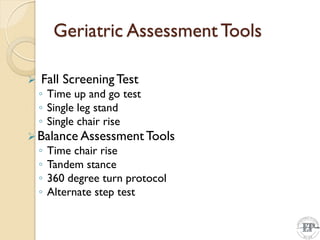
Geriatric Assessment Tools
 Fall ScreeningTest
◦ Time up and go test
◦ Single leg stand
◦ Single chair rise
Balance AssessmentTools
◦ Time chair rise
◦ Tandem stance
◦ 360 degree turn protocol
◦ Alternate step test
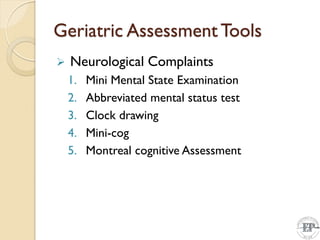
Geriatric Assessment Tools
 Neurological Complaints
1. Mini Mental State Examination
2. Abbreviated mental status test
3. Clock drawing
4. Mini-cog
5. Montreal cognitive Assessment
Geriatric Assessment Tools
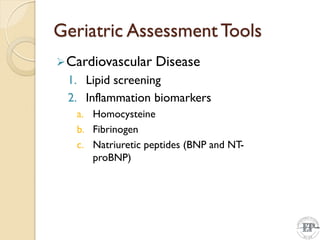
Cardiovascular Disease
1. Lipid screening
2. Inflammation biomarkers
a. Homocysteine
b. Fibrinogen
c. Natriuretic peptides (BNP and NT-
proBNP)9 of 41
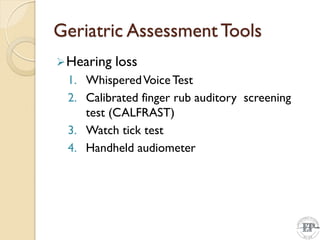
Geriatric Assessment Tools
Hearing loss
1. WhisperedVoiceTest
2. Calibrated finger rub auditory screening
test (CALFRAST)
3. Watch tick test
4. Handheld audiometer
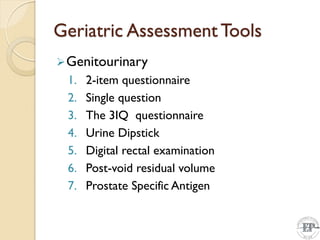
Geriatric Assessment Tools
Genitourinary
1. 2-item questionnaire
2. Single question
3. The 3IQ questionnaire
4. Urine Dipstick
5. Digital rectal examination
6. Post-void residual volume
7. Prostate Specific Antigen
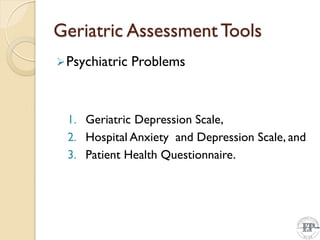
Geriatric Assessment Tools
Psychiatric Problems
1. Geriatric Depression Scale,
2. Hospital Anxiety and Depression Scale, and
3. Patient Health Questionnaire.
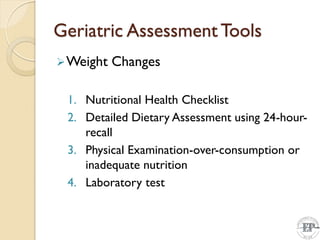
Geriatric Assessment Tools
Weight Changes
1. Nutritional Health Checklist
2. Detailed Dietary Assessment using 24-hour-
recall
3. Physical Examination-over-consumption or
inadequate nutrition
4. Laboratory test
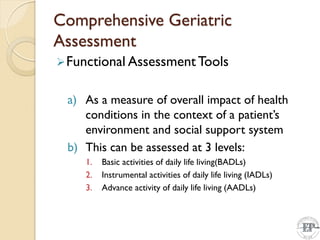
Comprehensive Geriatric
Assessment
Functional AssessmentTools
a) As a measure of overall impact of health
conditions in the context of a patient’s
environment and social support system
b) This can be assessed at 3 levels:
1. Basic activities of daily life living(BADLs)
2. Instrumental activities of daily life living (IADLs)
3. Advance activity of daily life living (AADLs)
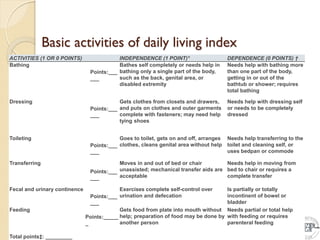
Basic activities of daily living index
ACTIVITIES (1 OR 0 POINTS) INDEPENDENCE (1 POINT)* DEPENDENCE (0 POINTS) †
Bathing Bathes self completely or needs help in
bathing only a single part of the body,
such as the back, genital area, or
disabled extremity
Needs help with bathing more
than one part of the body,
getting in or out of the
bathtub or shower; requires
total bathing
Points:___
___
Dressing Gets clothes from closets and drawers,
and puts on clothes and outer garments
complete with fasteners; may need help
tying shoes
Needs help with dressing self
or needs to be completely
dressed
Points:___
___
Toileting Goes to toilet, gets on and off, arranges
clothes, cleans genital area without help
Needs help transferring to the
toilet and cleaning self, or
uses bedpan or commode
Points:___
___
Transferring Moves in and out of bed or chair
unassisted; mechanical transfer aids are
acceptable
Needs help in moving from
bed to chair or requires a
complete transfer
Points:___
___
Fecal and urinary continence Exercises complete self-control over
urination and defecation
Is partially or totally
incontinent of bowel or
bladder
Points:___
___
Feeding Gets food from plate into mouth without
help; preparation of food may be done by
another person
Needs partial or total help
with feeding or requires
parenteral feeding
Points:_____
_
Total points‡: _________
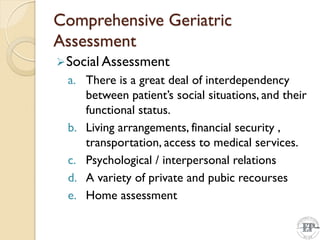
Comprehensive Geriatric
Assessment
Social Assessment
a. There is a great deal of interdependency
between patient’s social situations, and their
functional status.
b. Living arrangements, financial security ,
transportation, access to medical services.
c. Psychological / interpersonal relations
d. A variety of private and pubic recourses
e. Home assessment
Comprehensive Geriatric
Assessment
Polypharmacy
 This is a notable source of harm in older
people.
 Increased susceptibility to adverse drug
reaction.
 Comprehensive geriatric assessment should
always
 Process of drug rationalisation
 Adequate monitoring following any change to medication
Comprehensive Geriatric
Assessment
Advance care planning
 Comprehensive geriatric assessment should
aim to elicit health-care preferences and
engage in discussion around advance care
planning
 Discussion must be sensitive, relevant, open,
centred on the individual’s wishes.
 The process may result in a number of
formalized outcome
Comprehensive Geriatric
Assessment
Challenges
• Unfamiliar concept
• It is often incompletely executed, therefore
negating its benefits.
• Lack of relevant staff training
• Insufficient time and resources
• Lack of continuity of assessment
• Absence of a consistent team leader
Unit 06 Elderly Asssessment presentation.pdf

Unit 06 Elderly Asssessment presentation.pdf

  • 1.
    Assessment of ElderlyClients By Hidayat Khan INS-KMU
  • 2.
    INTRODUCTION  “Geriatrics” isthe science that deals with study of disease and their treatment peculiar to old age.  United Nations (1980) considered 60 years as the age of transition to the elderly age group • “Early old age - up to 75 years (elderly) • “Late old age – above 75 years (very elderly)
  • 3.
    Introduction  “Gerontology” isthe study of the physical and psychological changes which are incident to old age.  Clinical Gerontology  Social Gerontology  Experimental Gerontology  Geritrics Gerontology
  • 4.
    Geriatric Health problems Due tothe Ageing process Problems associated long term Illness Psychological Problems
  • 5.
    Geriatric Health Problems Problemsdue to the Ageing process a) Senile cataract b) Glaucoma c) Nerve deafness d) Osteoporosis e) Emphysema f) Failure of special sense g) Change in Mental outlook
  • 6.
    Geriatric Health Problems Problems associated with Long-Term Illness a) Degenerative disease of heart and blood vessel b) Cancer c) Accidents d) Diabetes e) Disease of locomotors System f) Respiratory Illness g) Genitourinary system
  • 7.
    Geriatric Health Problems Psychological problems a) Mental changes b) Sexual Adjustments c) Emotional disorders
  • 8.
    Geriatric Assessment-Definition  “AMultidimensional interdisciplinary diagnostic process focused on determining a frail older person’s medical, psychological and functional capability in order to develop a coordinated and integrated plan for treatment and long term follow up”
  • 9.
    Geriatric Assessment-Use  Usedto- Develop treatment and long-term follow-up plans, Arrange for primary care and rehabilitative services, Organize and facilitate the intricate process of case management, Determine long-term care requirements Make the best use of health care resources
  • 10.
    Implications of GeriatricAssessment Improve the assessment of the medical and the psychological problems To provide Therapy and Rehabilitation services To determine optimal post therapy placement for an independent functioning To provide healthcare both by Healthcare professionals and care tekers
  • 11.
    Geriatric Assessment-Importance  Focuson elderly individuals with complex problems,  Emphasize functional status and quality of life, and  Frequently takes advantage of an interdisciplinary team of providers  Effectively addresseeThe “Five I’s of Geriatrics” i.e., 1. Intellectual impairment, 2. Immobility, 3. Instability, 4. Incontinence and 5. Iatrogenic disorders.
  • 12.
  • 13.
    Comprehensive Geriatric Assessment Medical ◦ Comorbidities ◦Continence ◦ Fall risk ◦ Nutritional Status ◦ Medication ◦ Advanced care ◦ Vision and hearing
  • 14.
    Comprehensive Geriatric Assessment Functional ◦ Gaitand balance ◦ Mobility and transfers ◦ Basic activities of daily living, e.g. feeding, washing, toileting ◦ Instrumental activities of daily living, e.g. shopping, cooking, ◦ Advanced activities of daily living, e.g. hobbies
  • 15.
    Comprehensive Geriatric Assessment Psychological ◦ Mood ◦Cognition ◦ Ideas, concerns and expectations
  • 16.
    Comprehensive Geriatric Assessment Social orEnvironmental ◦ Formal care support ◦ Home safety and appropriateness ◦ Social network providing informal support ◦ Accessibility to local resources and financial assessment
  • 17.
  • 18.
    Periodic Geriatric Assessment Thereafterevery year or at least once in years Once in 5 years till 65 years of age Detailed health assessment once they are 45-50 years
  • 19.
    Comprehensive Geriatric Assessment Medical History 1.Demographic details 2. Chief complaints 3. Present Illness 4. Past history 5. Family history 6. Social history
  • 20.
    Comprehensive Geriatric Assessment Medical Examination 1.Visual Impairment/ complaints 2. Locomotive disorders, joints, muscles 3. Neurological complaints 4. Cardiovascular disease 5. Respiratory disorders 6. Weight changes 7. Gastro-intestinal/ Abdominal disorder 8. Psychiatric problem 9. Hearing loss 10. Genitourinary disorder
  • 21.
    Vital signs physicalSign or symptom Differential Diagnose Blood pressure Hypertension Adverse effects from medication, autonomic dysfunction Orthostatic hypotension Adverse effects from medication, atherosclerosis, coronary artery disease Heart rate Bradycardia Adverse effects from medication, heart block Irregularly irregular heart rate Atrial fibrillation Respiratory rate Increased respiratory rate greater than 24 breaths per minute Chronic obstructive pulmonary disease, congestive heart failure, pneumonia Temperature Hyperthermia, hypothermia Hypo and Hyperthyroidism , Infection
  • 22.
    Sign General Physical sign orSymptoms Unintentional weight loss Differential Diagnose Cancer, depression Weight gain Adverse effects from congestive heart failure medication Head Asymmetric facial or extraocular muscle weakness or paralysis Bell palsy, stroke, transient ischemic attack Frontal bossing Paget disease Temporal artery tenderness Temporal arteritis Eyes Eye pain Glaucoma, temporal arteritis Impaired visual acuity Presbyopia Loss of central vision Age-related macular degeneration Loss of peripheral vision Glaucoma, stroke Ocular lens opacification Cataracts
  • 23.
    Ears Hearing lossAcoustic neuroma, adverse effects from medication, cerumen impaction, faulty or ill-fitting hearing aids, Paget disease Mouth, throat Gum or mouth sores Dental or periodontal disease, ill-fitting dentures Leukoplakia Cancerous and precancerous lesions Xerostomia Age-related, Sjögren syndrome Neck Carotid bruits Aortic stenosis, cerebrovascular disease Thyroid enlargement and nodularity Hyper- and hypothyroidism Cardiac Fourth heart sound (S4) Left ventricular thickening Systolic ejection, regurgitant murmurs Valvular arteriosclerosis Pulmonary Barrel chest Emphysema Shortness of breath Asthma, cardiomyopathy, chronic obstructive pulmonary disease, congestive heart failure
  • 24.
    Breasts Masses Cancer,fibroadenoma Abdomen Pulsatile mass Aortic aneurysm Gastrointestinal, genital/rectal Atrophy of the vaginal mucosa Estrogen deficiency Constipation Adverse effects from medication, colorectal cancer, dehydration, hypothyroidism, inactivity, inadequate fiber intake Fecal incontinence Fecal impaction, rectal cancer, rectal prolapse Prostate enlargement Benign prostatic hypertrophy Prostate nodules Prostate cancer Rectal mass, occult blood Colorectal cancer Urinary incontinence Bladder or uterine prolapse, detrusor instability, estrogen deficiency Extremities Abnormalities of the feet Bunions, onychomycosis Diminished or absent lower extremity pulses Peripheral vascular disease, venous insufficiency Heberden nodes Osteoarthritis Pedal edema Adverse effects from medication, congestive heart failure
  • 25.
    Muscular/skeletal Diminished rangeof motion, pain Arthritis, fracture Dorsal kyphosis, vertebral tenderness, back pain Cancer, compression fracture, osteoporosis Gait disturbances Adverse effects from medication, arthritis, deconditioning, foot abnormalities, Parkinson disease, stroke Leg pain Intermittent claudication, neuropathy, osteoarthritis, radiculopathy, venous insufficiency Muscle wasting Atrophy, malnutrition Proximal muscle pain and weakness Polymyalgia rheumatic Skin Erythema, ulceration over pressure points, unexplained bruises Anticoagulant use, elder abuse, idiopathic thrombocytopenic purpura Premalignant or malignant lesions Actinic keratosis, basal cell carcinoma, malignant melanoma, pressure ulcer, squamous cell carcinoma Neurologic Tremor with rigidity Parkinson disease
  • 26.
    Geriatric Assessment Tools VisualImparment Visual Acuity  Snellen Test  Near Test  Visual Field  Confrontation eye Test  Perimetry  Glaucoma  Tonometry  Pachymetry Macular Degeneration  Amsler GridTest Visual Field Visual Acuity Glaucoma Macular Degenerati on
  • 27.
    Geriatric Assessment Tools Fall ScreeningTest ◦ Time up and go test ◦ Single leg stand ◦ Single chair rise Balance AssessmentTools ◦ Time chair rise ◦ Tandem stance ◦ 360 degree turn protocol ◦ Alternate step test
  • 28.
    Geriatric Assessment Tools Neurological Complaints 1. Mini Mental State Examination 2. Abbreviated mental status test 3. Clock drawing 4. Mini-cog 5. Montreal cognitive Assessment
  • 29.
    Geriatric Assessment Tools CardiovascularDisease 1. Lipid screening 2. Inflammation biomarkers a. Homocysteine b. Fibrinogen c. Natriuretic peptides (BNP and NT- proBNP)9 of 41
  • 30.
    Geriatric Assessment Tools Hearingloss 1. WhisperedVoiceTest 2. Calibrated finger rub auditory screening test (CALFRAST) 3. Watch tick test 4. Handheld audiometer
  • 31.
    Geriatric Assessment Tools Genitourinary 1.2-item questionnaire 2. Single question 3. The 3IQ questionnaire 4. Urine Dipstick 5. Digital rectal examination 6. Post-void residual volume 7. Prostate Specific Antigen
  • 32.
    Geriatric Assessment Tools PsychiatricProblems 1. Geriatric Depression Scale, 2. Hospital Anxiety and Depression Scale, and 3. Patient Health Questionnaire.
  • 33.
    Geriatric Assessment Tools WeightChanges 1. Nutritional Health Checklist 2. Detailed Dietary Assessment using 24-hour- recall 3. Physical Examination-over-consumption or inadequate nutrition 4. Laboratory test
  • 34.
    Comprehensive Geriatric Assessment Functional AssessmentTools a)As a measure of overall impact of health conditions in the context of a patient’s environment and social support system b) This can be assessed at 3 levels: 1. Basic activities of daily life living(BADLs) 2. Instrumental activities of daily life living (IADLs) 3. Advance activity of daily life living (AADLs)
  • 35.
    Basic activities ofdaily living index ACTIVITIES (1 OR 0 POINTS) INDEPENDENCE (1 POINT)* DEPENDENCE (0 POINTS) † Bathing Bathes self completely or needs help in bathing only a single part of the body, such as the back, genital area, or disabled extremity Needs help with bathing more than one part of the body, getting in or out of the bathtub or shower; requires total bathing Points:___ ___ Dressing Gets clothes from closets and drawers, and puts on clothes and outer garments complete with fasteners; may need help tying shoes Needs help with dressing self or needs to be completely dressed Points:___ ___ Toileting Goes to toilet, gets on and off, arranges clothes, cleans genital area without help Needs help transferring to the toilet and cleaning self, or uses bedpan or commode Points:___ ___ Transferring Moves in and out of bed or chair unassisted; mechanical transfer aids are acceptable Needs help in moving from bed to chair or requires a complete transfer Points:___ ___ Fecal and urinary continence Exercises complete self-control over urination and defecation Is partially or totally incontinent of bowel or bladder Points:___ ___ Feeding Gets food from plate into mouth without help; preparation of food may be done by another person Needs partial or total help with feeding or requires parenteral feeding Points:_____ _ Total points‡: _________
  • 36.
    Comprehensive Geriatric Assessment Social Assessment a.There is a great deal of interdependency between patient’s social situations, and their functional status. b. Living arrangements, financial security , transportation, access to medical services. c. Psychological / interpersonal relations d. A variety of private and pubic recourses e. Home assessment
  • 37.
    Comprehensive Geriatric Assessment Polypharmacy  Thisis a notable source of harm in older people.  Increased susceptibility to adverse drug reaction.  Comprehensive geriatric assessment should always  Process of drug rationalisation  Adequate monitoring following any change to medication
  • 38.
    Comprehensive Geriatric Assessment Advance careplanning  Comprehensive geriatric assessment should aim to elicit health-care preferences and engage in discussion around advance care planning  Discussion must be sensitive, relevant, open, centred on the individual’s wishes.  The process may result in a number of formalized outcome
  • 39.
    Comprehensive Geriatric Assessment Challenges • Unfamiliarconcept • It is often incompletely executed, therefore negating its benefits. • Lack of relevant staff training • Insufficient time and resources • Lack of continuity of assessment • Absence of a consistent team leader