Sunday, September 22, 2024 JAMAL 1
WORM INFESTATION
Sunday, September 22, 2024 JAMAL 2
Worm and Helminthes Infestation
• Definition of Worms:
• Worms are parasitic organisms that live in or on the human body, deriving
nutrition from the host and causing a range of health issues.
• Definition of Helminthes Infestation:
• Helminthes are a group of parasitic worms that can infect the human
intestines, tissues, or other organs, leading to various health problems.
Sunday, September 22, 2024 JAMAL 3
Classification or Types of Worms
• Types of Helminthes:
1. Nematodes (Roundworms)
2. Cestodes (Tapeworms)
3. Trematodes (Flukes)
• Focus on Key Types:
• Pinworms (Enterobius vermicularis)
• Roundworms (Ascaris lumbricoides)
• Hookworms (Ancylostoma duodenale, Necator americanus)
• Tapeworms (Taenia spp., Echinococcus spp.)
Sunday, September 22, 2024 JAMAL 4
Epidemiology of Worm Infestation Worldwide
• Global Prevalence:
• Over 1.5 billion people worldwide are infected with soil-transmitted helminths.
• Regions Affected:
• Sub-Saharan Africa Southeast Asia Latin America
• Contributing Factors:
• Poverty, poor sanitation, and lack of access to clean water significantly contribute to
high rates of infestation.
• WHO prioritizes mass deworming programs, particularly for children in endemic areas.
• Global Statistics:
• Ascariasis: 800 million infections worldwide.
• Hookworm: 500-600 million infected individuals globally.
• Pinworms: Primarily seen in children, with an estimated 20-40% prevalence in endemic
regions
Sunday, September 22, 2024 JAMAL 5
Epidemiology in Pakistan
• Prevalence in Pakistan:
• Soil-transmitted helminthes (STH) are a major public health issue in Pakistan,
particularly in rural and peri-urban areas.
• National Statistics:
• Approximately 16-20% of school-aged children are affected by intestinal worms.
• In certain regions, up to 52% of children are infected with one or more types of
intestinal parasites.
• High-Risk Areas in Pakistan:
• Sindh, Khyber Pakhtunkhwa, and Baluchistan report the highest infection rates
due to inadequate sanitation and access to clean water.
• National Deworming Program: Launched to target school-aged children and
reduce the burden of helminthes infections.
Sunday, September 22, 2024 JAMAL 6
Pinworms (Enterobius vermicularis)
• Pinworms: are small, white, thread-like worms that infect the intestines,
particularly common in children.
• Environment: Crowded living conditions, schools, and daycares.
• Transmission: occurs through ingestion of pinworm eggs, often by touching
contaminated surfaces and then touching the mouth.
• Symptoms: include anal itching, especially at night, and occasionally,
abdominal pain.
Sunday, September 22, 2024 JAMAL 7
Cont.
• Diagnosis: is typically done through the "Scotch tape test," where clear tape is
applied to the anal area to collect eggs for microscopic examination.
• Treatment: involves oral medications like mebendazole or albendazole, along
with hygiene measures to prevent reinfection
• Repeated treatment after two weeks to eliminate reinfection.
Sunday, September 22, 2024 JAMAL 8
Roundworms (Ascaris lumbricoides)
• Roundworms: are one of the most common intestinal parasites in humans,
especially in tropical and subtropical regions commonly in children.
• Environment: Warm, moist climates; areas with poor sanitation.
• Transmission: occurs through ingestion of contaminated food or water
containing roundworm eggs.
Sunday, September 22, 2024 JAMAL 9
Cont.
• Symptoms: can range from mild abdominal discomfort to severe intestinal
obstruction , bloating, coughing (if larvae migrate to lungs), malnutrition.
• Diagnosis: is through stool examination for eggs or sometimes through
imaging techniques.
• Treatment: involves medications like albendazole or mebendazole to kill the
worms , Piperazine for intestinal obstruction.
Sunday, September 22, 2024 JAMAL 10
Hookworms (Ancylostoma duodenale, Necator americanus)
• Hookworms: small parasitic worms, are blood-feeding parasites that infect the
small intestine.
• Infection occurs through skin penetration by larvae found in contaminated soil,
especially in areas with poor sanitation.
• Environment: Tropical and subtropical regions; soil contaminated with human
feces
Sunday, September 22, 2024 JAMAL 11
Cont.
• Symptoms: can include anemia, abdominal pain, diarrhea, and fatigue.
• Diagnosis: is through stool examination for eggs or larvae.
• Treatment: involves anthelmintic medications like albendazole or
mebendazole to eliminate the worms and address anemia if present iron
supplements for anemia.
Sunday, September 22, 2024 JAMAL 12
Tapeworms (Taenia saginata, Taenia solium)
• Tapeworms: are flat, segmented parasites that can grow inside the human
intestine.
• Environment: Areas with livestock farming, poor meat inspection practices.
• Transmission: occurs through ingestion of undercooked meat containing
tapeworm larvae.
Sunday, September 22, 2024 JAMAL 13
Cont.
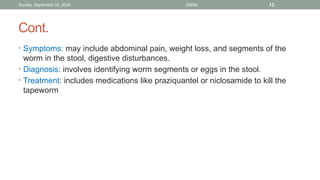
• Symptoms: may include abdominal pain, weight loss, and segments of the
worm in the stool, digestive disturbances.
• Diagnosis: involves identifying worm segments or eggs in the stool.
• Treatment: includes medications like praziquantel or niclosamide to kill the
tapeworm
Sunday, September 22, 2024 JAMAL 14
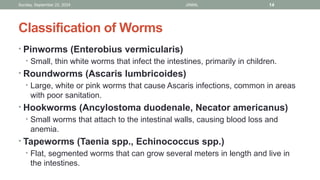
Classification of Worms
• Pinworms (Enterobius vermicularis)
• Small, thin white worms that infect the intestines, primarily in children.
• Roundworms (Ascaris lumbricoides)
• Large, white or pink worms that cause Ascaris infections, common in areas
with poor sanitation.
• Hookworms (Ancylostoma duodenale, Necator americanus)
• Small worms that attach to the intestinal walls, causing blood loss and
anemia.
• Tapeworms (Taenia spp., Echinococcus spp.)
• Flat, segmented worms that can grow several meters in length and live in
the intestines.
Sunday, September 22, 2024 JAMAL 15
Epidemiological Triad for Worm Infestation*
• Agent:
• Pinworms: Enterobius vermicularis
• Roundworms: Ascaris lumbricoides
• Hookworms: Ancylostoma duodenale, Necator americanus
• Tapeworms: Taenia spp. (beef and pork tapeworms), Echinococcus spp.
(hydatid tapeworm)
• Host:
• Humans, especially children, those living in poor sanitary conditions, and
individuals in close contact with infected persons or animals.
• Environment:
• Warm, humid climates, areas with poor sanitation, overcrowded living conditions.
Sunday, September 22, 2024 JAMAL 16
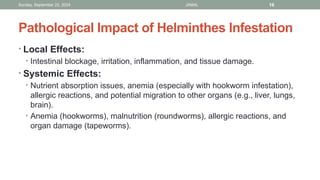
Pathological Impact of Helminthes Infestation
• Local Effects:
• Intestinal blockage, irritation, inflammation, and tissue damage.
• Systemic Effects:
• Nutrient absorption issues, anemia (especially with hookworm infestation),
allergic reactions, and potential migration to other organs (e.g., liver, lungs,
brain).
• Anemia (hookworms), malnutrition (roundworms), allergic reactions, and
organ damage (tapeworms).
Sunday, September 22, 2024 JAMAL 17
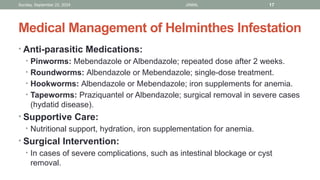
Medical Management of Helminthes Infestation
• Anti-parasitic Medications:
• Pinworms: Mebendazole or Albendazole; repeated dose after 2 weeks.
• Roundworms: Albendazole or Mebendazole; single-dose treatment.
• Hookworms: Albendazole or Mebendazole; iron supplements for anemia.
• Tapeworms: Praziquantel or Albendazole; surgical removal in severe cases
(hydatid disease).
• Supportive Care:
• Nutritional support, hydration, iron supplementation for anemia.
• Surgical Intervention:
• In cases of severe complications, such as intestinal blockage or cyst
removal.
Sunday, September 22, 2024 JAMAL 18
Complications of Helminthes Infestation
• Intestinal Blockage:
• Severe cases may lead to bowel obstruction requiring surgical intervention.
• Malnutrition and Anemia:
• Chronic infestation can cause significant weight loss, anemia, and stunted
growth in children.
• Organ Damage:
• Migration of worms or cysts can cause damage to organs like the liver,
lungs, or brain.
• Secondary Infections:
• Open sores and wounds caused by scratching can lead to bacterial
infections.
Sunday, September 22, 2024 JAMAL 19
Prevention and Control of Helminthes Infestation
• Personal Hygiene:
• Hand washing with soap, avoiding nail-biting, maintaining short and clean
nails.
• Food Safety:
• Properly cook meat, wash vegetables and fruits thoroughly.
• Environmental Measures:
• Use of toilets, proper disposal of human waste, clean water supply.
• Public Health Interventions:
• Regular deworming programs in schools, community education on hygiene.

Worm Infestation presentation for nursing .pptx

  • 1.
    Sunday, September 22,2024 JAMAL 1 WORM INFESTATION
  • 2.
    Sunday, September 22,2024 JAMAL 2 Worm and Helminthes Infestation • Definition of Worms: • Worms are parasitic organisms that live in or on the human body, deriving nutrition from the host and causing a range of health issues. • Definition of Helminthes Infestation: • Helminthes are a group of parasitic worms that can infect the human intestines, tissues, or other organs, leading to various health problems.
  • 3.
    Sunday, September 22,2024 JAMAL 3 Classification or Types of Worms • Types of Helminthes: 1. Nematodes (Roundworms) 2. Cestodes (Tapeworms) 3. Trematodes (Flukes) • Focus on Key Types: • Pinworms (Enterobius vermicularis) • Roundworms (Ascaris lumbricoides) • Hookworms (Ancylostoma duodenale, Necator americanus) • Tapeworms (Taenia spp., Echinococcus spp.)
  • 4.
    Sunday, September 22,2024 JAMAL 4 Epidemiology of Worm Infestation Worldwide • Global Prevalence: • Over 1.5 billion people worldwide are infected with soil-transmitted helminths. • Regions Affected: • Sub-Saharan Africa Southeast Asia Latin America • Contributing Factors: • Poverty, poor sanitation, and lack of access to clean water significantly contribute to high rates of infestation. • WHO prioritizes mass deworming programs, particularly for children in endemic areas. • Global Statistics: • Ascariasis: 800 million infections worldwide. • Hookworm: 500-600 million infected individuals globally. • Pinworms: Primarily seen in children, with an estimated 20-40% prevalence in endemic regions
  • 5.
    Sunday, September 22,2024 JAMAL 5 Epidemiology in Pakistan • Prevalence in Pakistan: • Soil-transmitted helminthes (STH) are a major public health issue in Pakistan, particularly in rural and peri-urban areas. • National Statistics: • Approximately 16-20% of school-aged children are affected by intestinal worms. • In certain regions, up to 52% of children are infected with one or more types of intestinal parasites. • High-Risk Areas in Pakistan: • Sindh, Khyber Pakhtunkhwa, and Baluchistan report the highest infection rates due to inadequate sanitation and access to clean water. • National Deworming Program: Launched to target school-aged children and reduce the burden of helminthes infections.
  • 6.
    Sunday, September 22,2024 JAMAL 6 Pinworms (Enterobius vermicularis) • Pinworms: are small, white, thread-like worms that infect the intestines, particularly common in children. • Environment: Crowded living conditions, schools, and daycares. • Transmission: occurs through ingestion of pinworm eggs, often by touching contaminated surfaces and then touching the mouth. • Symptoms: include anal itching, especially at night, and occasionally, abdominal pain.
  • 7.
    Sunday, September 22,2024 JAMAL 7 Cont. • Diagnosis: is typically done through the "Scotch tape test," where clear tape is applied to the anal area to collect eggs for microscopic examination. • Treatment: involves oral medications like mebendazole or albendazole, along with hygiene measures to prevent reinfection • Repeated treatment after two weeks to eliminate reinfection.
  • 8.
    Sunday, September 22,2024 JAMAL 8 Roundworms (Ascaris lumbricoides) • Roundworms: are one of the most common intestinal parasites in humans, especially in tropical and subtropical regions commonly in children. • Environment: Warm, moist climates; areas with poor sanitation. • Transmission: occurs through ingestion of contaminated food or water containing roundworm eggs.
  • 9.
    Sunday, September 22,2024 JAMAL 9 Cont. • Symptoms: can range from mild abdominal discomfort to severe intestinal obstruction , bloating, coughing (if larvae migrate to lungs), malnutrition. • Diagnosis: is through stool examination for eggs or sometimes through imaging techniques. • Treatment: involves medications like albendazole or mebendazole to kill the worms , Piperazine for intestinal obstruction.
  • 10.
    Sunday, September 22,2024 JAMAL 10 Hookworms (Ancylostoma duodenale, Necator americanus) • Hookworms: small parasitic worms, are blood-feeding parasites that infect the small intestine. • Infection occurs through skin penetration by larvae found in contaminated soil, especially in areas with poor sanitation. • Environment: Tropical and subtropical regions; soil contaminated with human feces
  • 11.
    Sunday, September 22,2024 JAMAL 11 Cont. • Symptoms: can include anemia, abdominal pain, diarrhea, and fatigue. • Diagnosis: is through stool examination for eggs or larvae. • Treatment: involves anthelmintic medications like albendazole or mebendazole to eliminate the worms and address anemia if present iron supplements for anemia.
  • 12.
    Sunday, September 22,2024 JAMAL 12 Tapeworms (Taenia saginata, Taenia solium) • Tapeworms: are flat, segmented parasites that can grow inside the human intestine. • Environment: Areas with livestock farming, poor meat inspection practices. • Transmission: occurs through ingestion of undercooked meat containing tapeworm larvae.
  • 13.
    Sunday, September 22,2024 JAMAL 13 Cont. • Symptoms: may include abdominal pain, weight loss, and segments of the worm in the stool, digestive disturbances. • Diagnosis: involves identifying worm segments or eggs in the stool. • Treatment: includes medications like praziquantel or niclosamide to kill the tapeworm
  • 14.
    Sunday, September 22,2024 JAMAL 14 Classification of Worms • Pinworms (Enterobius vermicularis) • Small, thin white worms that infect the intestines, primarily in children. • Roundworms (Ascaris lumbricoides) • Large, white or pink worms that cause Ascaris infections, common in areas with poor sanitation. • Hookworms (Ancylostoma duodenale, Necator americanus) • Small worms that attach to the intestinal walls, causing blood loss and anemia. • Tapeworms (Taenia spp., Echinococcus spp.) • Flat, segmented worms that can grow several meters in length and live in the intestines.
  • 15.
    Sunday, September 22,2024 JAMAL 15 Epidemiological Triad for Worm Infestation* • Agent: • Pinworms: Enterobius vermicularis • Roundworms: Ascaris lumbricoides • Hookworms: Ancylostoma duodenale, Necator americanus • Tapeworms: Taenia spp. (beef and pork tapeworms), Echinococcus spp. (hydatid tapeworm) • Host: • Humans, especially children, those living in poor sanitary conditions, and individuals in close contact with infected persons or animals. • Environment: • Warm, humid climates, areas with poor sanitation, overcrowded living conditions.
  • 16.
    Sunday, September 22,2024 JAMAL 16 Pathological Impact of Helminthes Infestation • Local Effects: • Intestinal blockage, irritation, inflammation, and tissue damage. • Systemic Effects: • Nutrient absorption issues, anemia (especially with hookworm infestation), allergic reactions, and potential migration to other organs (e.g., liver, lungs, brain). • Anemia (hookworms), malnutrition (roundworms), allergic reactions, and organ damage (tapeworms).
  • 17.
    Sunday, September 22,2024 JAMAL 17 Medical Management of Helminthes Infestation • Anti-parasitic Medications: • Pinworms: Mebendazole or Albendazole; repeated dose after 2 weeks. • Roundworms: Albendazole or Mebendazole; single-dose treatment. • Hookworms: Albendazole or Mebendazole; iron supplements for anemia. • Tapeworms: Praziquantel or Albendazole; surgical removal in severe cases (hydatid disease). • Supportive Care: • Nutritional support, hydration, iron supplementation for anemia. • Surgical Intervention: • In cases of severe complications, such as intestinal blockage or cyst removal.
  • 18.
    Sunday, September 22,2024 JAMAL 18 Complications of Helminthes Infestation • Intestinal Blockage: • Severe cases may lead to bowel obstruction requiring surgical intervention. • Malnutrition and Anemia: • Chronic infestation can cause significant weight loss, anemia, and stunted growth in children. • Organ Damage: • Migration of worms or cysts can cause damage to organs like the liver, lungs, or brain. • Secondary Infections: • Open sores and wounds caused by scratching can lead to bacterial infections.
  • 19.
    Sunday, September 22,2024 JAMAL 19 Prevention and Control of Helminthes Infestation • Personal Hygiene: • Hand washing with soap, avoiding nail-biting, maintaining short and clean nails. • Food Safety: • Properly cook meat, wash vegetables and fruits thoroughly. • Environmental Measures: • Use of toilets, proper disposal of human waste, clean water supply. • Public Health Interventions: • Regular deworming programs in schools, community education on hygiene.

Editor's Notes

  • #2 - Diagram or illustration of different types of parasitic worms.
  • #3 Illustrations of each worm type with labeled parts.
  • #14  - Illustrations of each type of worm with labeled body parts
  • #15  - Diagram of the epidemiological triad illustrating the agent, host, and environment.
  • #16 Diagram showing the pathological effects of worms in different body parts (intestine, liver, lungs)
  • #17 - Images of medications, nutritional supplements, and surgery illustrations.
  • #18  - Visual representation of complications, such as blocked intestines, cysts in organs, and anemic symptoms
  • #19  - Infographics on handwashing, cooking, and public health campaigns