Strategic Experiential Branding David Vinjamuri July 2008
What We Will Cover Building customer experience Brand experience building exercise The Branded Lifestyle Building experiences with the five senses Engaging customers -  customer-created experiences Design a customer-run community Technology in Experiential Marketing Online community exercise Engaging employees in delivering the brand promise Design an employee-branded program for your brand Six brand lessons from Accidental Brands Day I Day II
What is Experiential Branding? Engaging experiences created by marketers for your brand Ralph Lauren Flagship Store, NYC The World of Coke Massage Chairs in Brookstone Extending your brand into the customers’ life Martha Stewart Houses Branny Academy Engaging all the senses – choreograph the brand experience Getting customers to build experiences Brand building through employees
Building Customer Experiences
Questions How do I build branded experiences for my customers? How does brand engagement translate to increased brand loyalty? How do I ensure these experiences are consistent with my brand strategy? How do I measure the marketing ROI? What are examples if successful brands using brand experiences?
Goal of Experiential Branding?    INCREASE BRAND EQUITY
What is Brand Equity?
Questions Reduced Marketing Costs Trade Leverage  Attracting New Customers Create Awareness  Reassurance Time to Respond to Competitive Threats Anchor to Which Other Associations can be Attached Familiarity - Liking Signal of Substance / Commitment Brand to be Considered Reason to Buy Differentiation / Position Price  Channel Member Interest Extensions Help Process / Retrieve Information  Reason-to-Buy Create Positive Attitude / Feelings Extensions Competitive Advantage Brand Loyalty Brand Awareness Perceived Quality  Brand Associations Other Propriety Brand Assets BRAND  EQUITY Provides Value to Customer by Enhancing Customer’s:  Interpretation / Processing of Information  Confidence in Purchase Decision Use Satisfaction Provides Value to Firm by Enhancing: Efficiency and Effectiveness of Marketing Programs  Brand Loyalty Prices / Margins  Brand Extensions Trade Leverage  Competitive Advantage Credit: David A. Aaker,  Managing Brand Equity
Brand Equity: McDonalds
Brand  Attributes PRODUCT  ATTRIBUTES FUNCTIONAL  BENEFITS EMOTIONAL BENEFITS PERSONALITY ICONS
1. Product Attributes Quick Serve Consistent Eat-in / Take-out Counter / Drive-thru Popular, basic items  ( burgers, fries ) Inexpensive Lots of locations
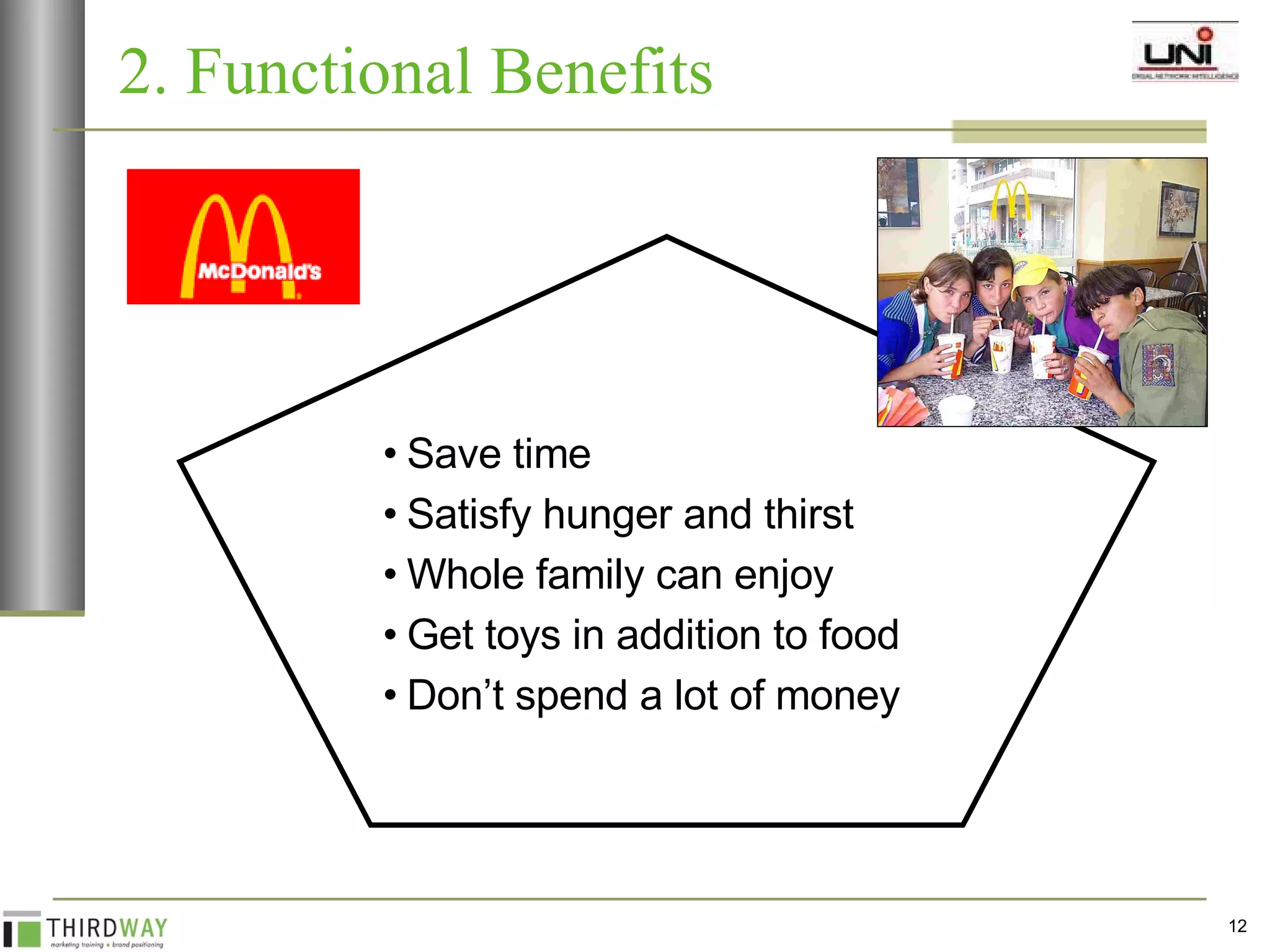
2. Functional Benefits Save time Satisfy hunger and thirst Whole family can enjoy Get toys in addition to food Don’t spend a lot of money
3. Emotional Benefits No hassles No surprises Safe haven Treat / break from busy day Kids have fun “ Hero” with my kids
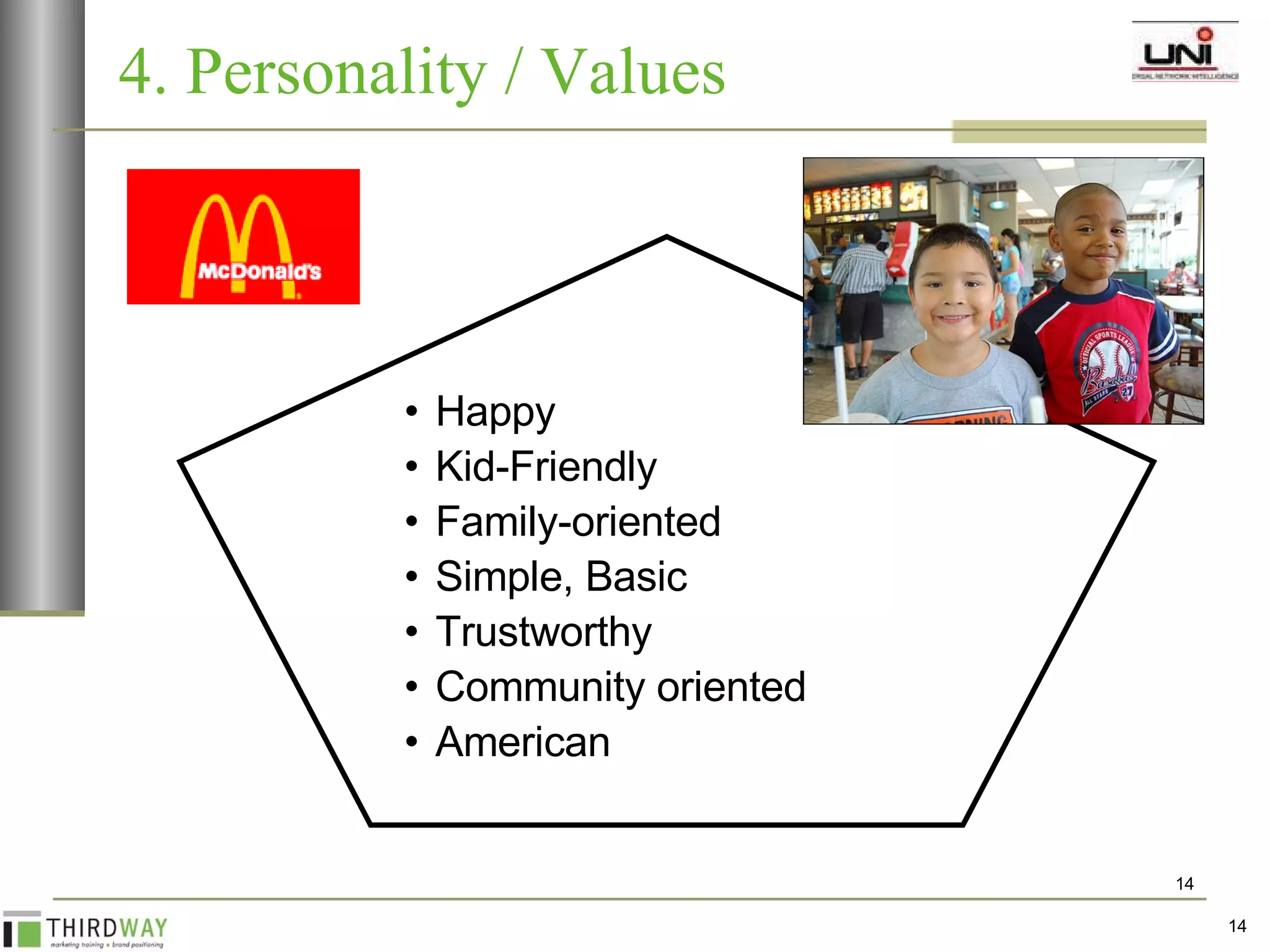
4. Personality / Values Happy Kid-Friendly Family-oriented Simple, Basic Trustworthy Community oriented American
5. Icons Golden arches Red and Yellow colors Ronald McDonald Playgrounds Happy Meals Big Mac
Case Study:  Red Bull
“ The thin color is unappetizing” “ It tastes sticky in my mouth” “ Totally disgusting” What Consumers Said
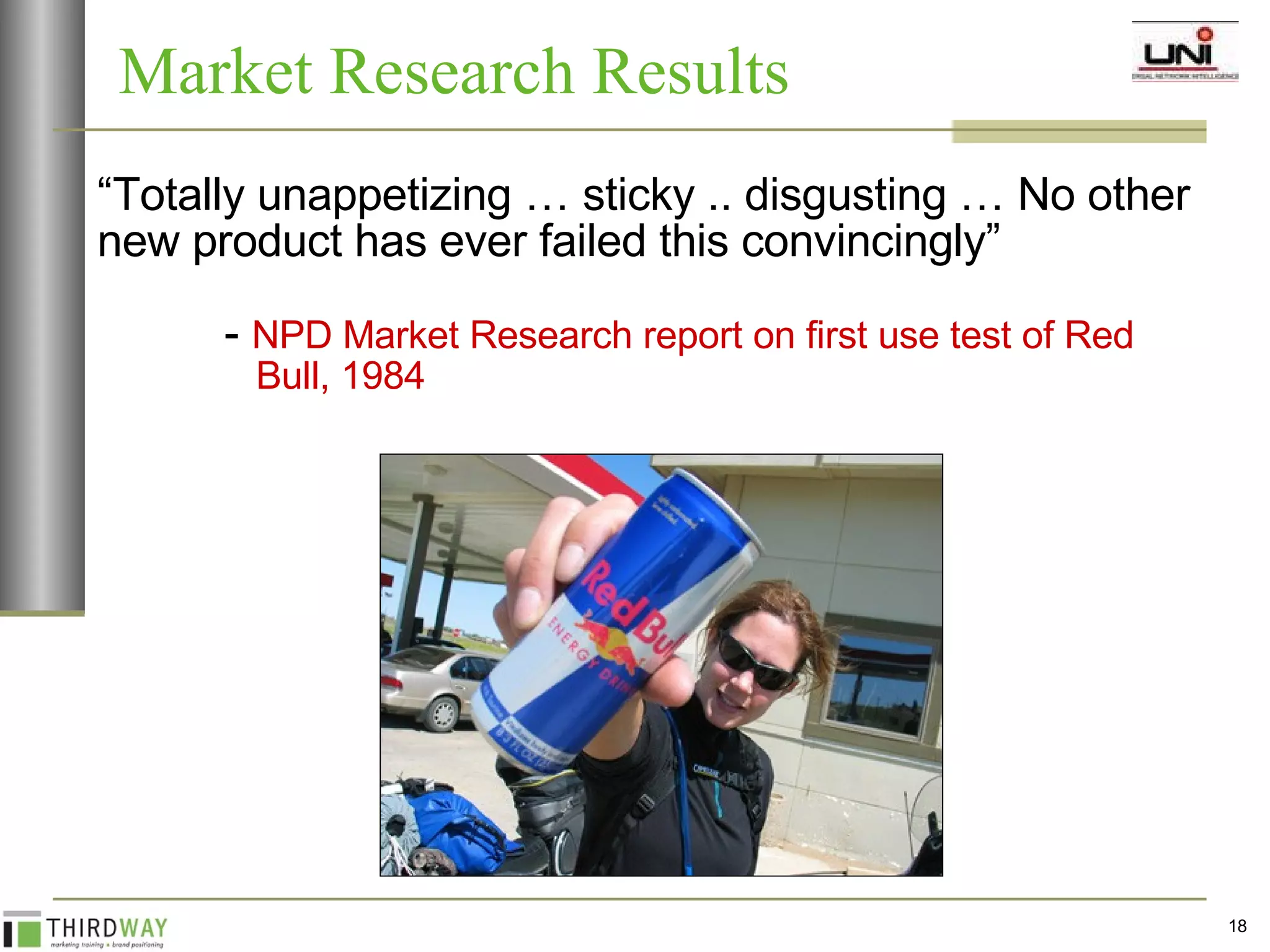
“ Totally unappetizing … sticky .. disgusting … No other new product has ever failed this convincingly”  -  NPD Market Research report on first use test of Red    Bull, 1984 Market Research Results
Dietrich Mateschitz founds company 1984 Bad research results Huge disputes with Austrian FDA Ad Agency cannot come up with a single good campaign idea    A GOOD TIME TO GIVE UP?? Getting the Bull Out
Launches in Austria in 1987 8x the price of Coke Positioned as a ‘cool’ stimulant (Viagra in a bottle) Used regulatory trouble to create a big myth Launch
“ It took five years to gain permission for export into Germany, Red Bull’s second market… Initially, Munich became a flourishing black market and speculation started why the drink was illegal in Germany: Was it speed-in-a-can, a legal drug?  Was its Taurine sourced from Bull’s testicles, making Red Bull an over-the-counter Viagra?” The Red Bull Myth
German moms united after Red Bull launched there in 1992 to get it banned again …   …  making it wildly popular with teenagers Red Bull sold out everywhere in first three months on market … …  Which made it even more popular Building the Myth
“ Here is a non-alcoholic product about as caffeinated as a cup of coffee – that’s managed to acquire a reputation as a surefire wild-times elixir … a party drink, a stimulant, an aphrodisiac, a raver’s ‘smart drink’ gone mainstream. The strategy is rumor by omission and, only when absolutely necessary, denial … the public has filled in the blanks with speculation and innuendo.” The Press and the Myth
The taste becomes a selling point. It tastes so strong – it must be working. Red Bull is always sold as a functional drink – it makes you work better. “ The Taste Doesn’t Matter” - Mateschitz What About That Taste?
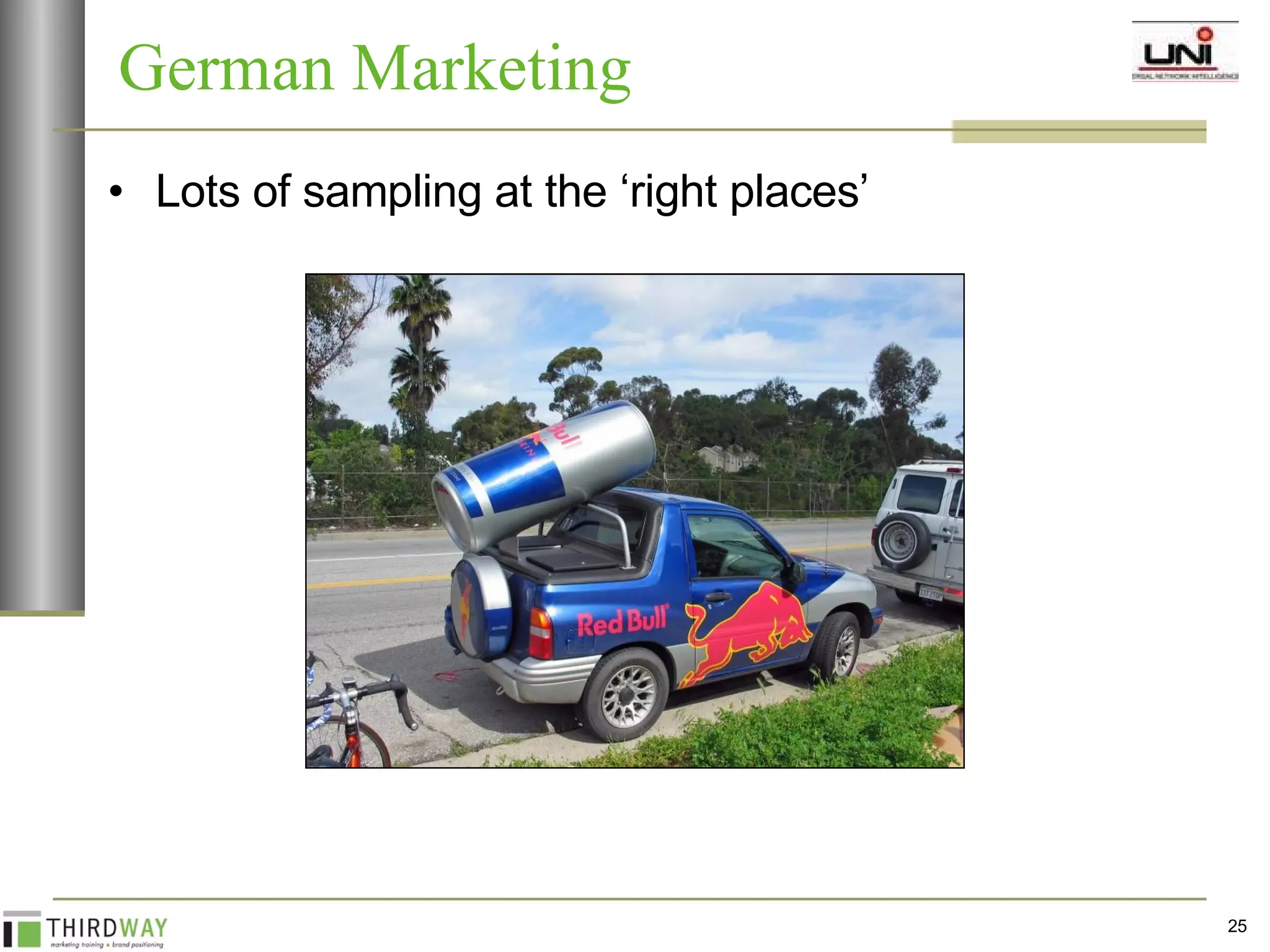
Lots of sampling at the ‘right places’ German Marketing
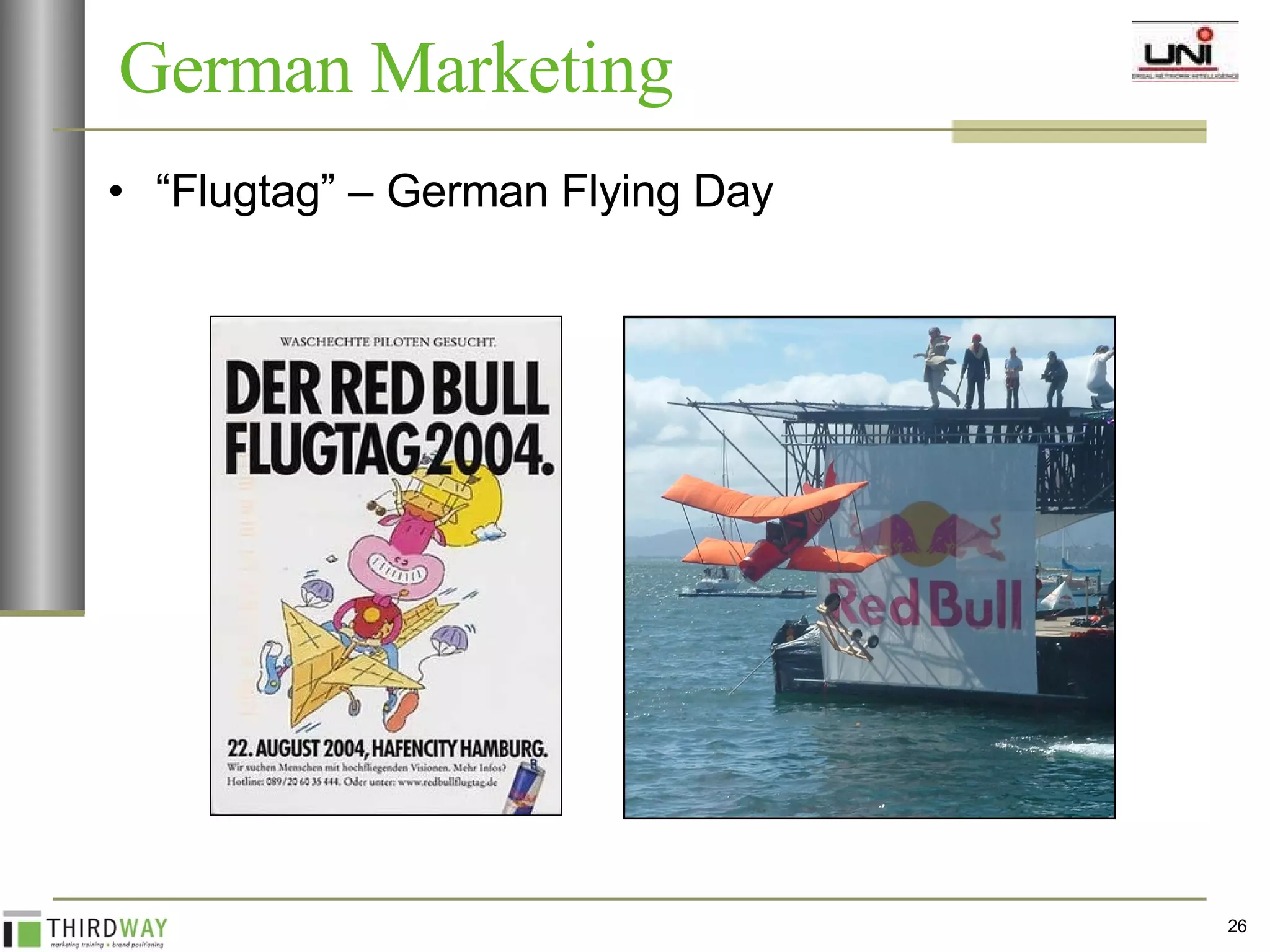
“ Flugtag” – German Flying Day  German Marketing
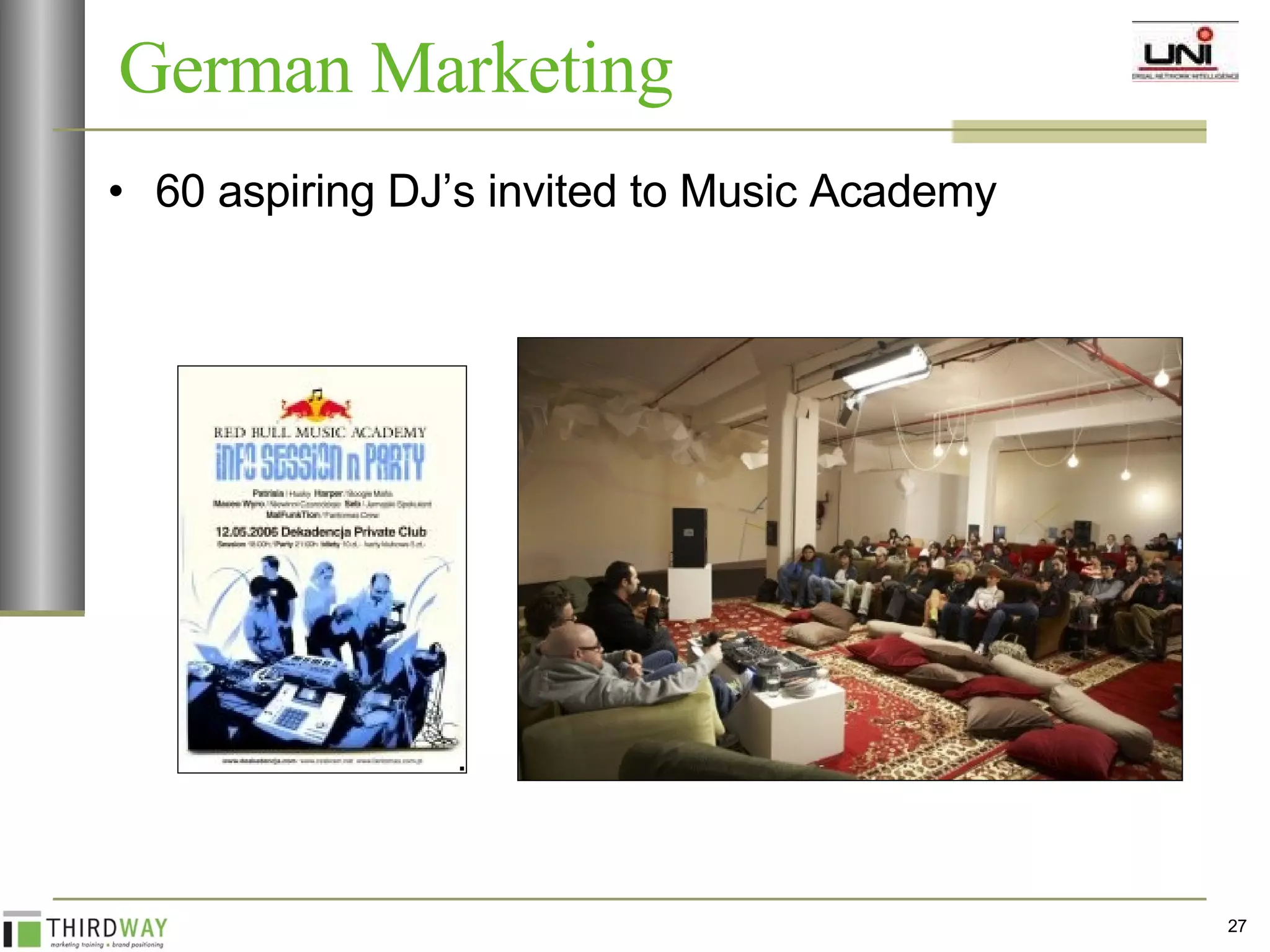
60 aspiring DJ’s invited to Music Academy German Marketing
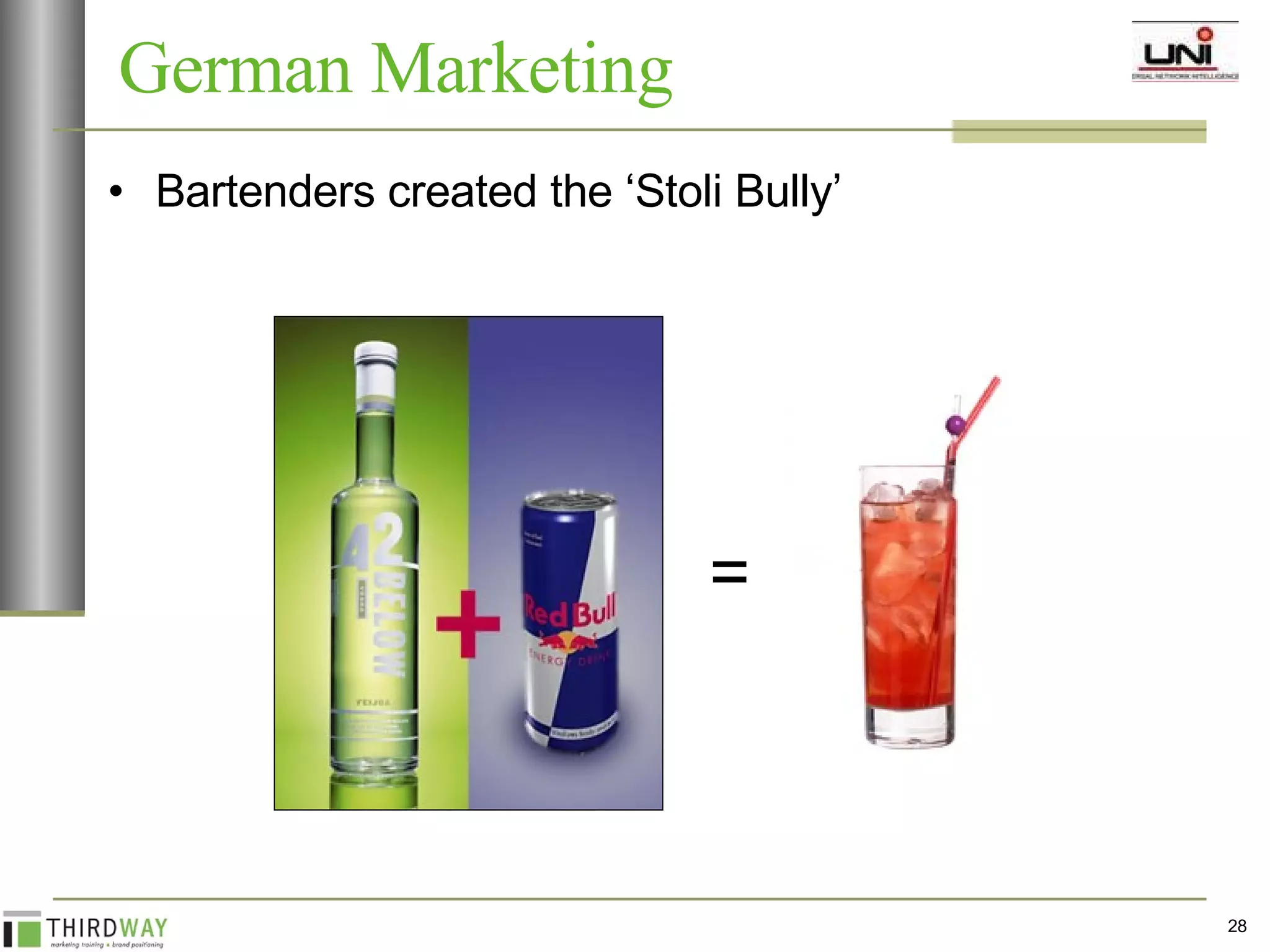
Bartenders created the ‘Stoli Bully’  German Marketing =
Every employee has to be an enthusiast Every vendor is a believer Don’t waste time on non-believers Believe that they are the underdog The  Red Bull  Culture
The  Red Bull  Rules Out of Reach Logos for All Merchandising Don’t Pay Them Pay for Celebs Celebrities High Quality Limited Widespread Sampling Limit Availability Broad Availability Distribution Want ‘Right’ People Want Everyone Targeting Support Role Only Launches Brand Advertising Functional Aspirational Positioning Red Bull Rules Marketing Rules Issue
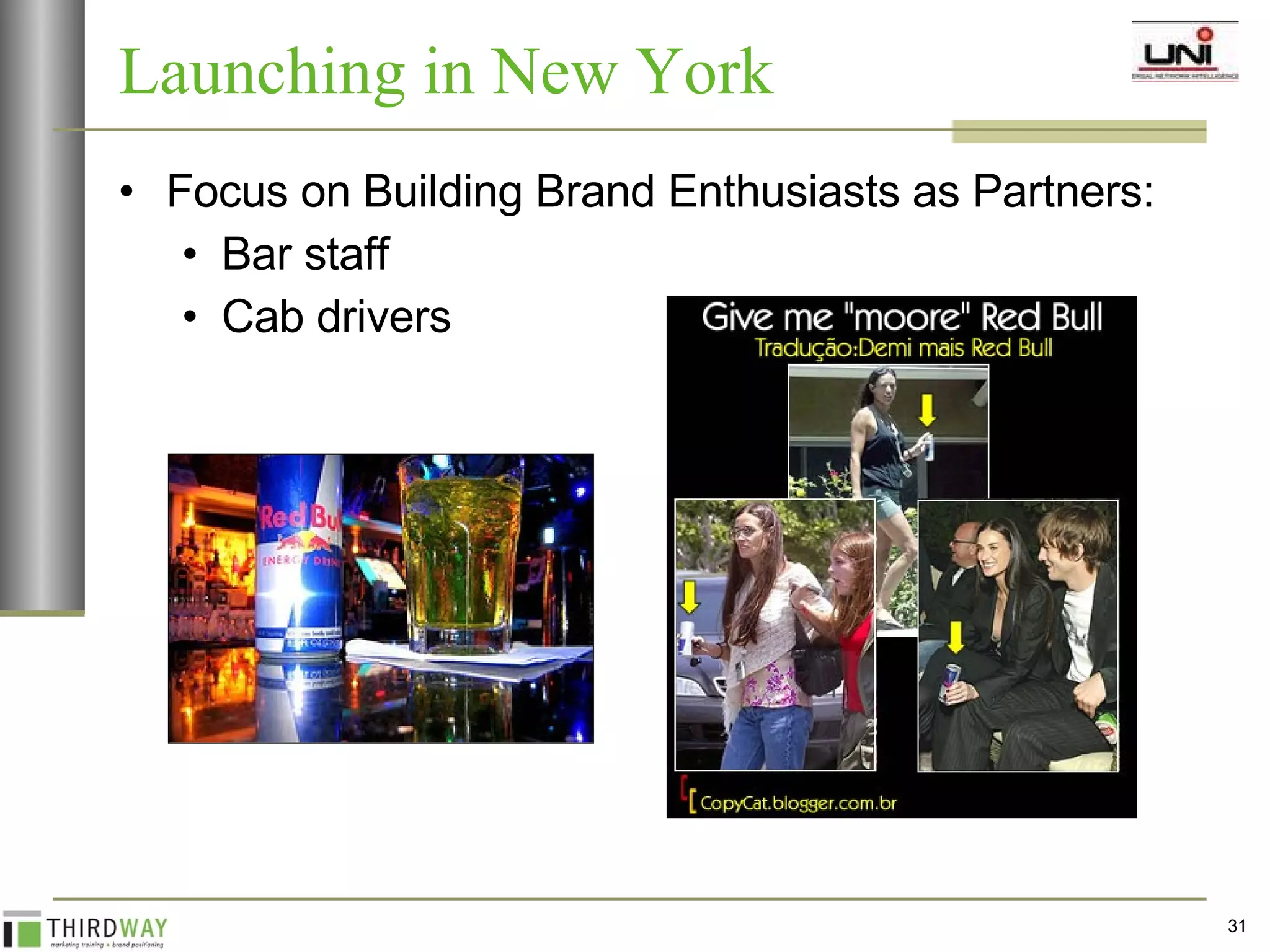
Focus on Building Brand Enthusiasts as Partners: Bar staff Cab drivers Launching in New York
Used exclusivity as a weapon On-premise sales followed sampling Limited Retail distribution for years Sampling  in situ  is the key tactic Always provide a full, sealed can for sampling Launching in New York
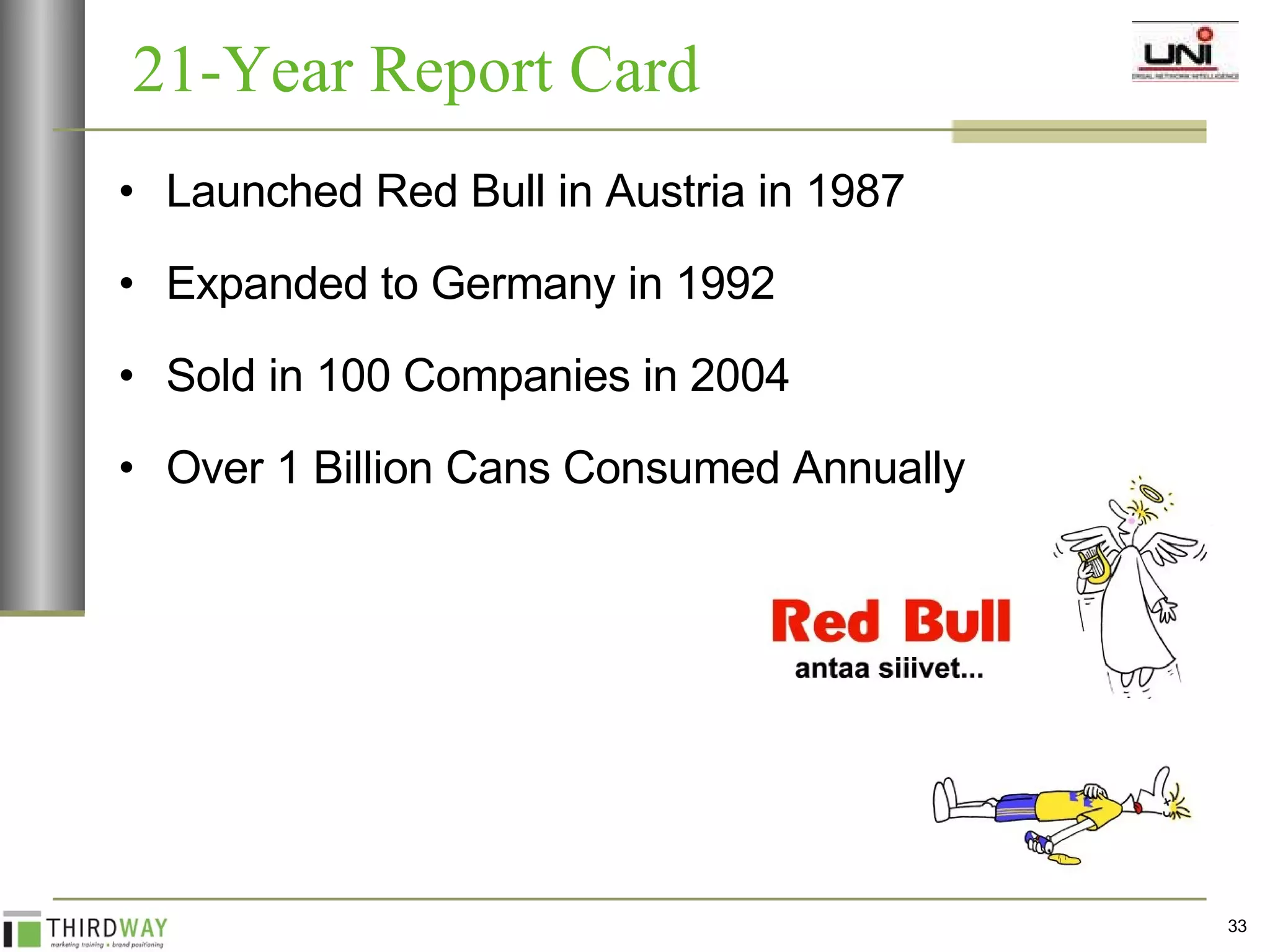
Launched Red Bull in Austria in 1987 Expanded to Germany in 1992 Sold in 100 Companies in 2004 Over 1 Billion Cans Consumed Annually 21-Year Report Card
5 Lessons from   Red Bull Size is a by-product of success, not success itself Build enthusiasts, not just brand users Unmet demand is not always bad Everyone, including suppliers, must personify the Brand Overnight success takes time
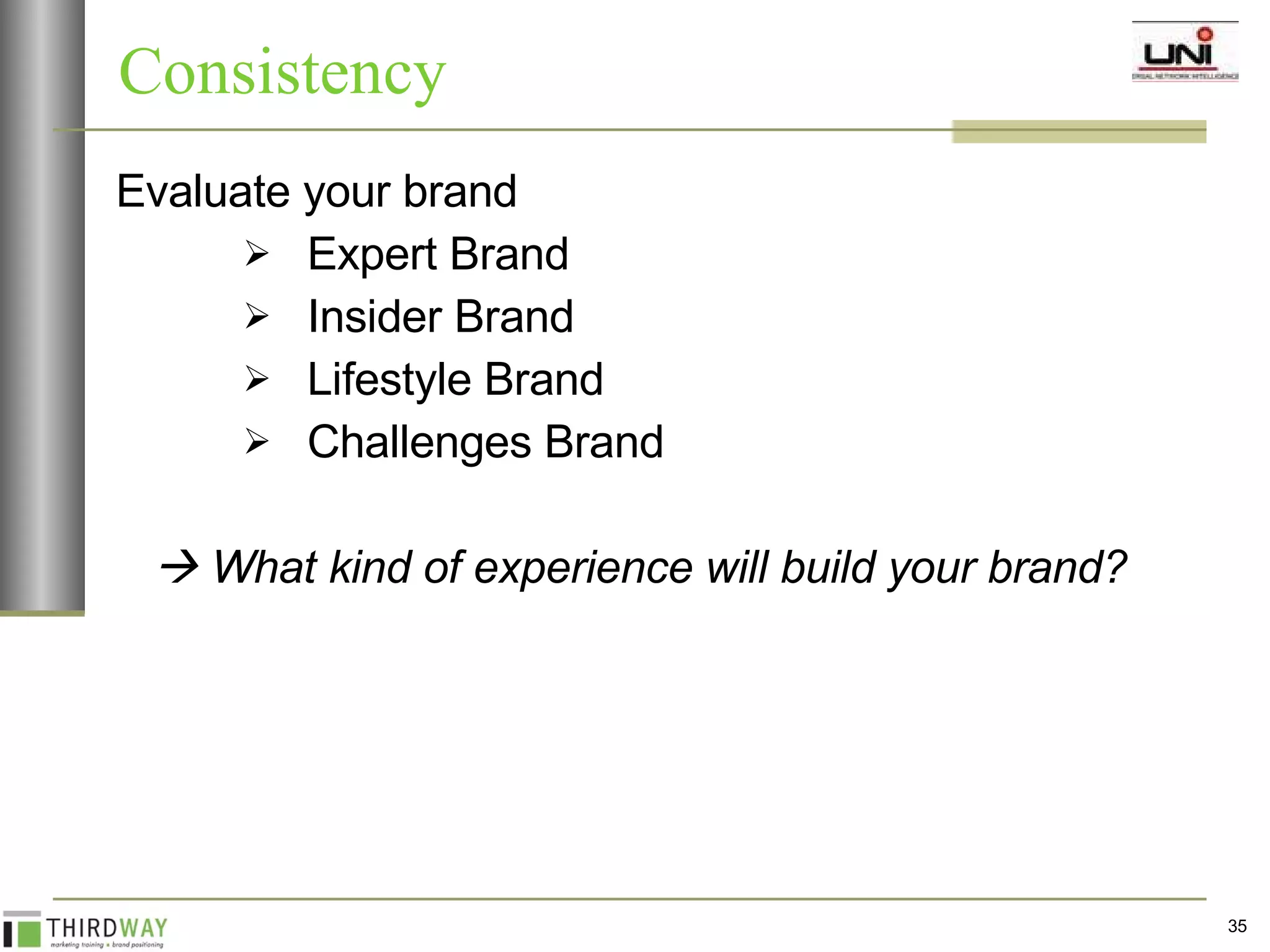
Consistency Evaluate your brand Expert Brand Insider Brand Lifestyle Brand Challenges Brand    What kind of experience will build your brand?
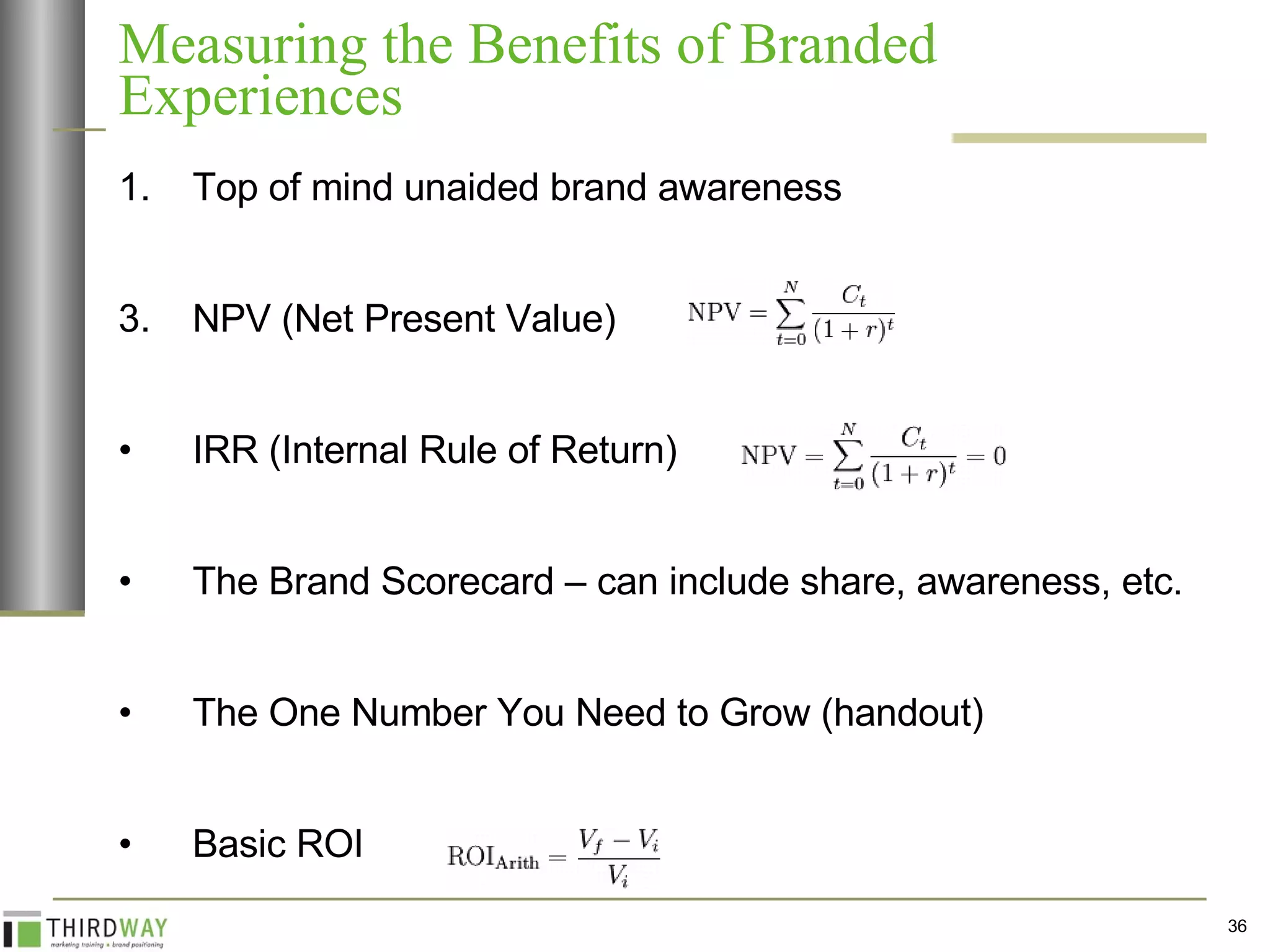
Measuring the Benefits of Branded Experiences Top of mind unaided brand awareness NPV (Net Present Value) IRR (Internal Rule of Return)  The Brand Scorecard – can include share, awareness, etc. The One Number You Need to Grow (handout) Basic ROI
Case Study:  American Express http://www.askmrcreditcard.com/americanexpressnyccard.html http://www.pollingcompany.com/cms/files/2005%20INNYC%20Survey%20Press%20Release.pdf
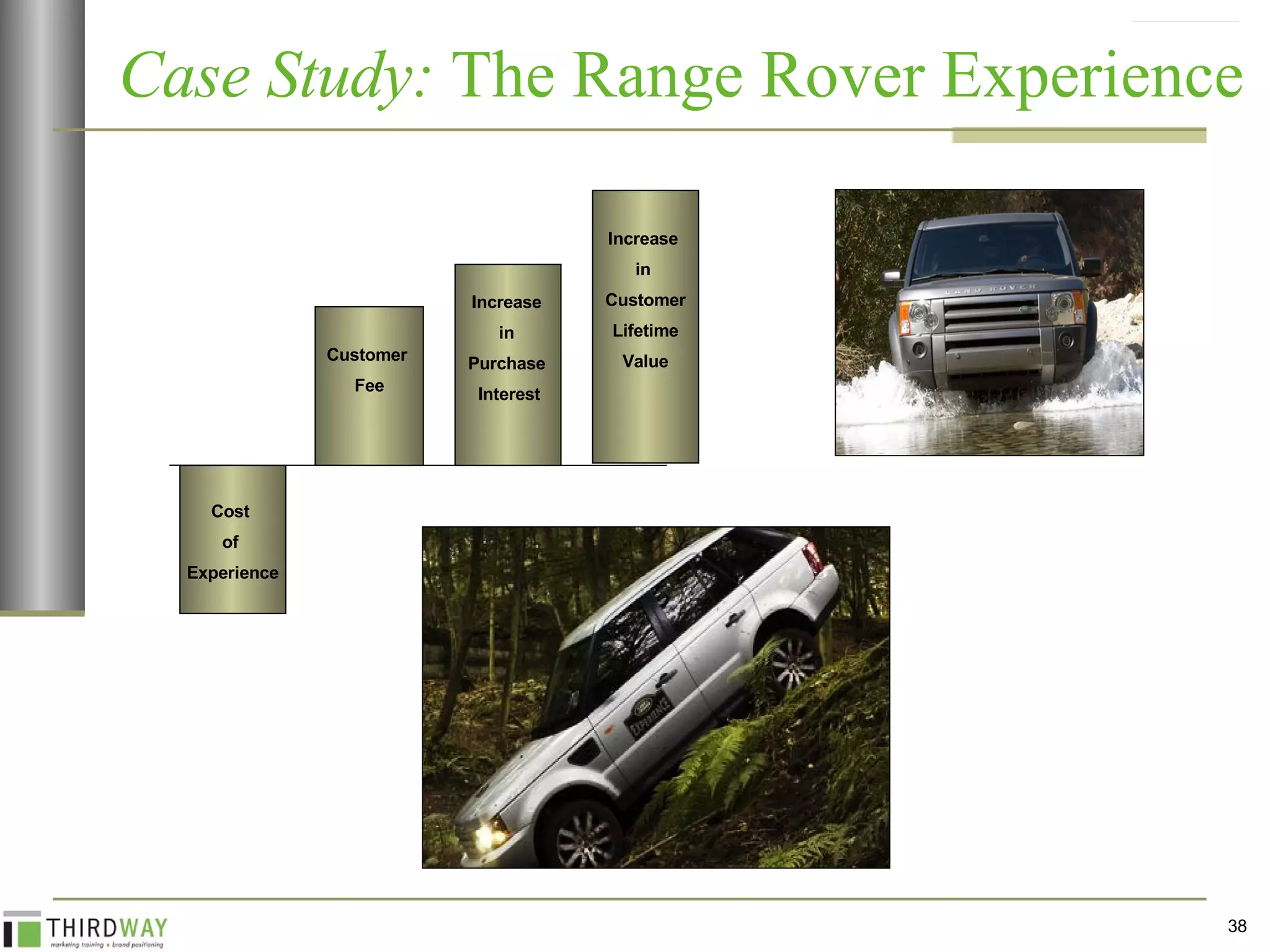
Case Study:  The Range Rover Experience Cost  of  Experience Customer  Fee Increase  in  Purchase  Interest Increase  in  Customer Lifetime Value
Case Study:  The Magic Kingdom Created by a movie studio Very early Brand Experience (1957) Idea from successful studio tour Idea was to immerse  consumers in the Disney  Brand – let the movies  come alive
Case Study:  Sony Style How do I showcase innovation? How do I get consumers to see my whole line? How can I make this an experience?
Brand Manager Tips Think small first – don’t set yourself up for failure Consider psychographic success measures – attitudes matter! Evaluate partners carefully Monitor costs closely Have a disaster plan
Team up in groups of 4 Pick an Asian  / Global Brand  Okay to use a brand you work on Design a brand experience Present Plan –Rationale, Plan, Resources Needed, Measurement 45 minutes Exercise: Brand Experience
The Branded Lifestyle
How can we increase consumer involvement with our brands? How can I extend brand awareness past traditional usage boundaries?   Create a branded lifestyle    Works for Lifestyle brands Challenge
How can you bring your brand to other parts of your customer’s life? Where will your brandy equity be strongest? When can this elevate the brand? The Branded Lifestyle
Martha Stewart American icon Domestic expert Seeks perfection Memorable experiences Martha Stewart Homes Design for everyday people  Sense of style in the suburbs Great brand awareness Martha Stewart Homes
Bulgari  Jewelry Fashionable Elegant Established Bulgari Hotels and Resorts Luxurious Elegant Design-driven Exclusive Bulgari Hotels and Resorts
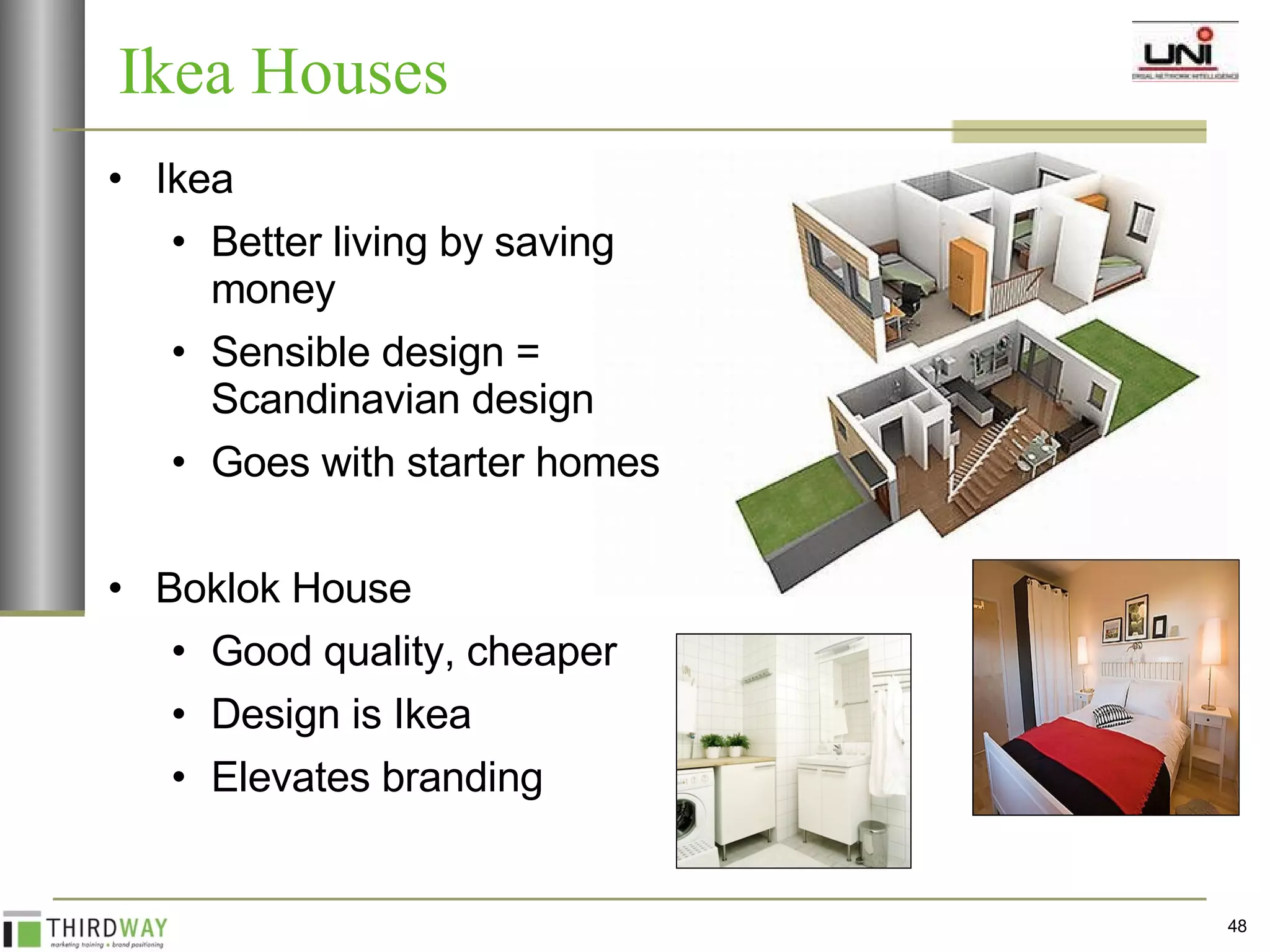
Ikea Better living by saving money Sensible design = Scandinavian design Goes with starter homes Boklok House Good quality, cheaper Design is Ikea Elevates branding Ikea Houses
Disney Kid-focused Family-friendly Traditional values Entertainment Celebration, FL Traditional values Family-oriented Walk, not drive 9000 residents Celebration, Florida
Building Experiences with  Five Senses
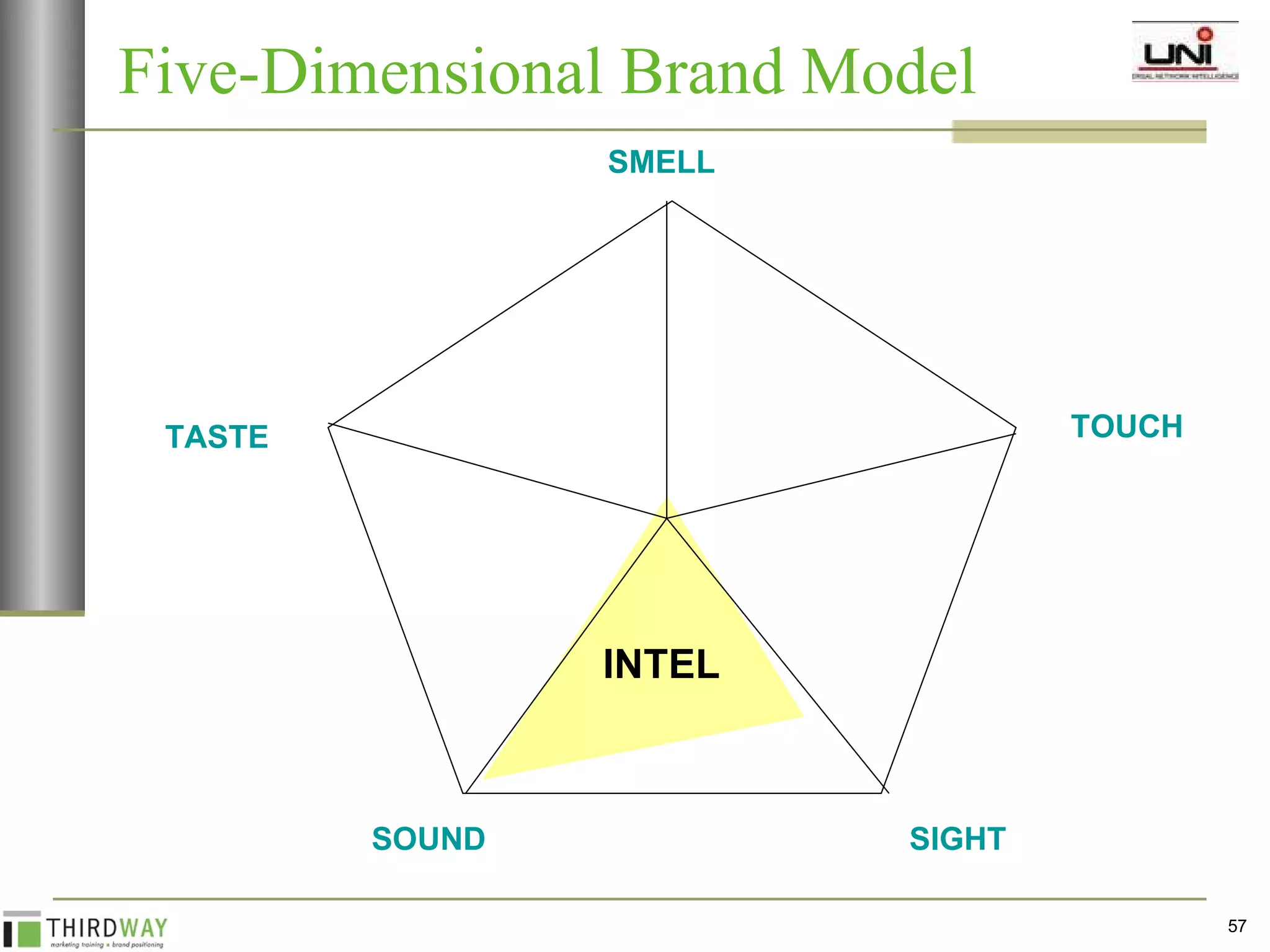
Much of today’s branding relies overwhelmingly on   SIGHT   Opportunities: Sound  - Is there a distinctive sound associated with your brand? ( Intel) Smell  – Do customers link a smell to your brand?  (Rolls Royce) Taste  –  Does your brand evoke a taste?  (Colgate, Listerine) Touch  –  Can you identify the brand with your fingers?  (Coca-Cola) Sensory Branding
Sensory Utilization Credit: Millward Brown 63.8 Coca-Cola 13 65.0 Absolut Vodka 12 67.5 Nike 11 68.8 Harley-Davidson 10 70.0 Nokia 9 71.3 Bang & Olufsen 8 72.5 Louis Vuitton 7 73.8 Tiffany 6 75.0 Marlboro 5 78.8 Mercedes-Benz 4 87.6 Disney 3 91.3 Apple  2 96.3 Singapore Airlines 1 58.8 Prada 17 60.0 Starbucks 16 61.3 Pepsi 15 62.5 Gilette  14 55.0 Rolls-Royce 20 56.3 Guinness 19 57.5 Caterpillar 18 Sensory Leverage (in %) Brand Rank
Sensory Potential Credit: Millward Brown 35.0 Nescafe 13 33.8 Barbie 12 33.8 Philips 11 33.8 Microsoft 10 32.5 Kleenex 9 32.5 McDonald’s  8 31.3 Burger King 7 31.3 Sony 6 31.3 Adidas 5 28.8 KFC 4 26.3 Virgin 3 25.0 Motorola 2 23.8 Ikea 1 42.5 Wrigley 17 41.3 AOL 16 40.0 Kodak 15 36.3 Nintendo 14 46.3 Ford 20 45.0 IBM 19 43.8 Colgate 18 Sensory Leverage (in %) Brand Rank
1973 – Singapore Girl Uniform Make-up Perfume 1990s – Hot Towel Sent (Stefan Floridian waters) 1990s – music in lounges Case Study : Singapore Airlines
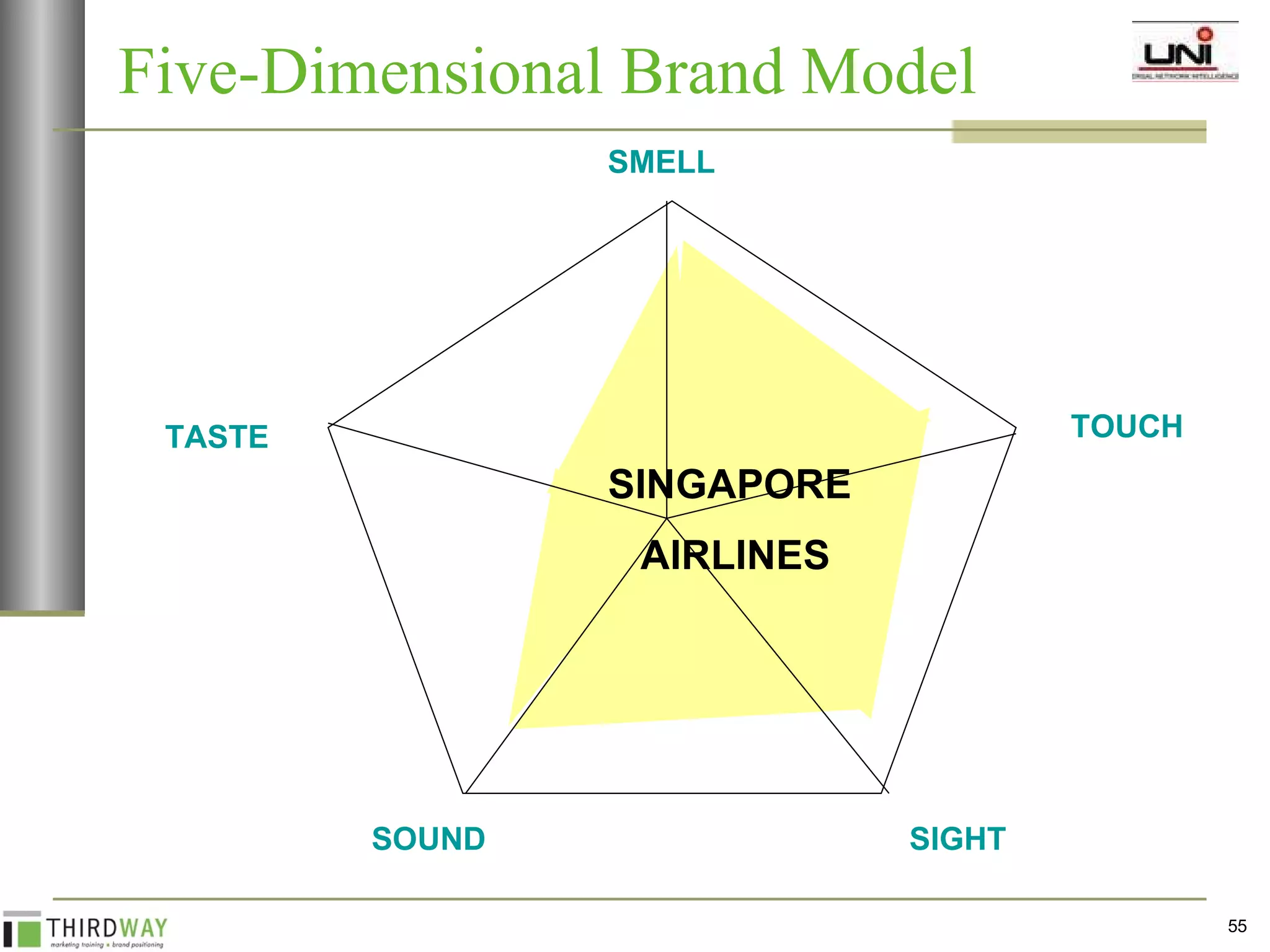
Five-Dimensional Brand Model  SMELL TOUCH SIGHT SOUND TASTE SINGAPORE  AIRLINES
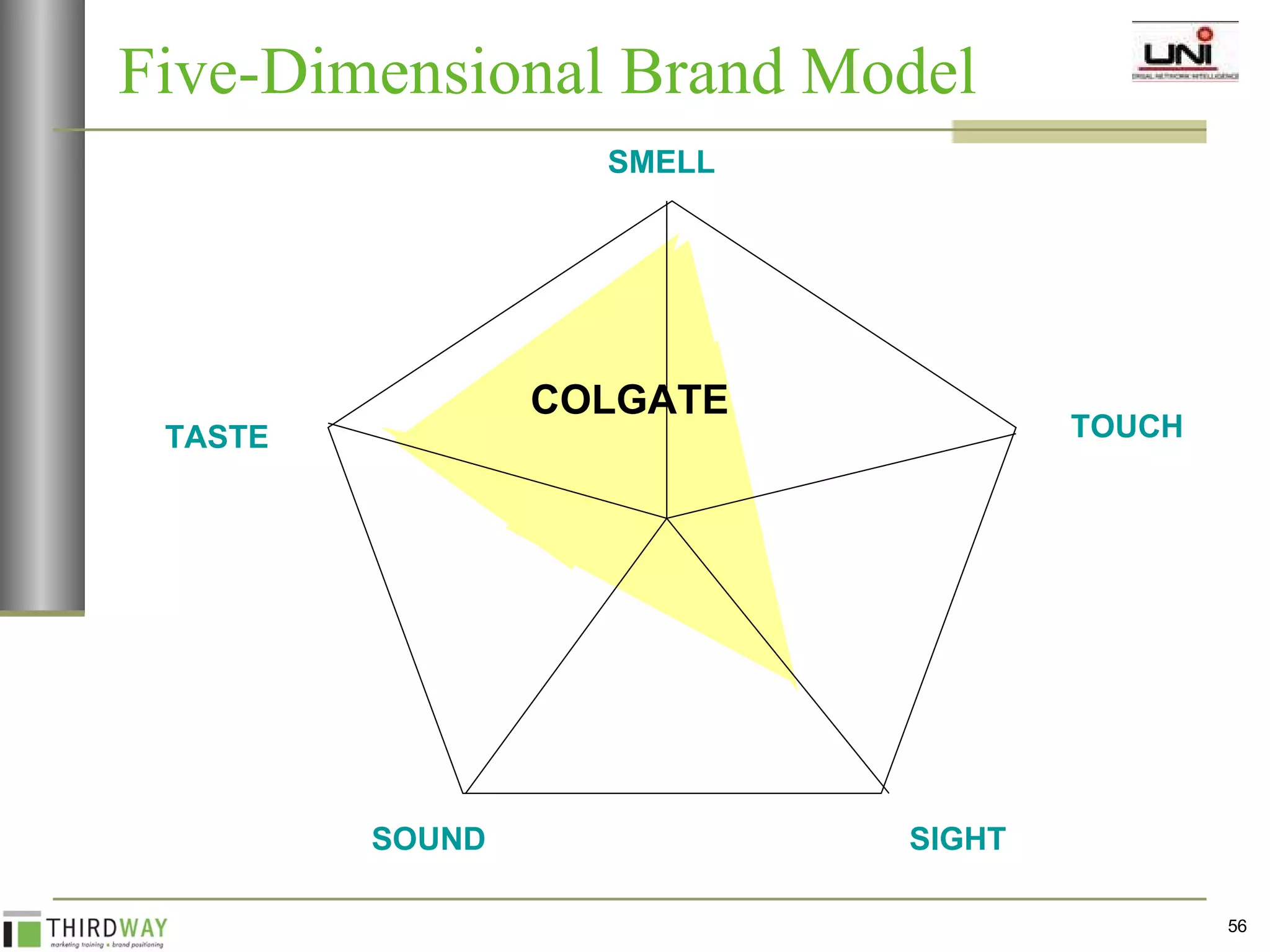
Five-Dimensional Brand Model  SMELL TOUCH SIGHT SOUND TASTE COLGATE
Five-Dimensional Brand Model  SMELL TOUCH SIGHT SOUND TASTE INTEL
The Sensory Brand Pyramid Stimulate:  Create interest or anticipation with senses – the smell of warm bread, the    sound of a can of Coke opening Enhance:   Use sense to intensify the brand experience – the smell of a Rolls Royce Bond:   Link a sensory input permanently to the brand – Singapore Airlines cabin    scent and music Stimulate Enhance Bond
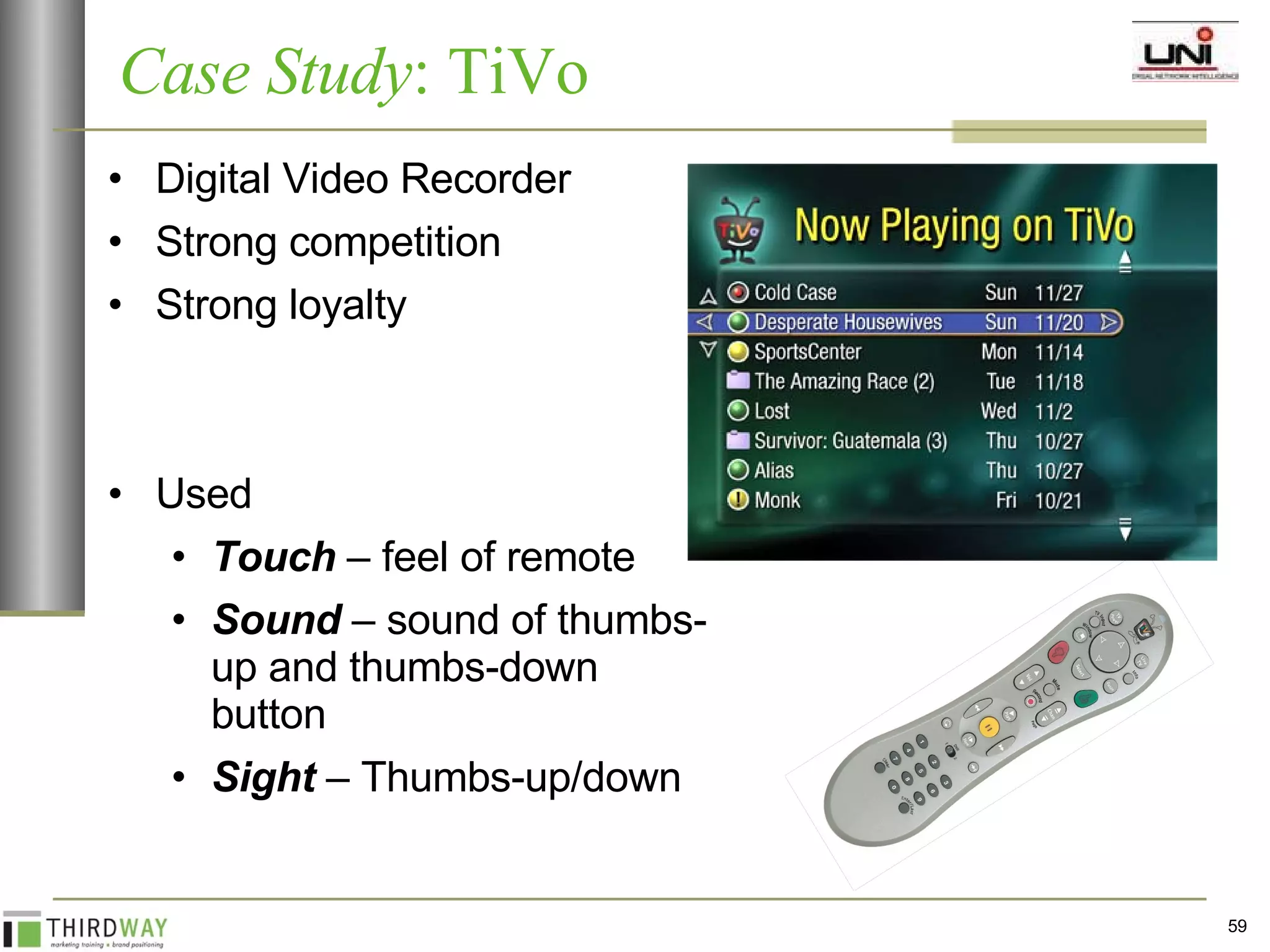
Digital Video Recorder Strong competition Strong loyalty Used Touch  – feel of remote Sound  – sound of thumbs-up and thumbs-down button Sight  – Thumbs-up/down Case Study : TiVo
What is  new car smell ? Every new Mercedes smells the same The smell is patented It lasts for 6 weeks on average Case Study : Mercedes Benz
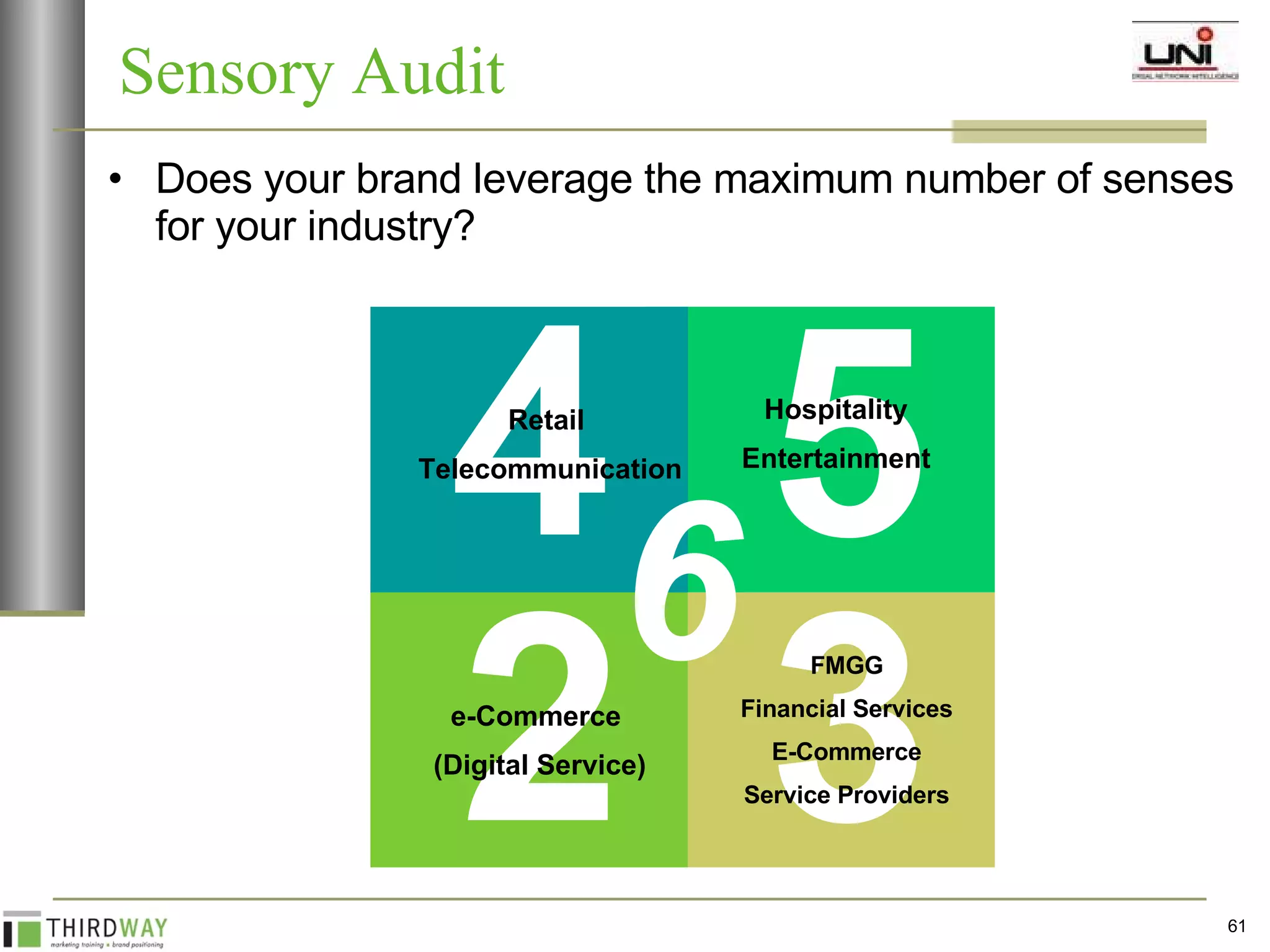
Does your brand leverage the maximum number of senses for your industry? Sensory Audit 3 FMGG Financial Services E-Commerce Service Providers 4 2 5 Hospitality Entertainment Retail  Telecommunication e-Commerce  (Digital Service) 6
Customer Engagement in  Brand Experience
1990s Subculture of Barbie-loving adults starts running Barbie Fashion Shows Artists and designers join this movement Subversive designs include “Trailer Trash Barbie” and “Big Dyke Barbie” Mattel sues fans Mattel loses Barbie loses cache, Mattel goes into slump and never recovers Case Study : Barbie
Early Target: Internet junkies Horror finatics Film buffs Message: Did the Blair Witch exist? Did 3 film students die in the woods trying to find her? Was “Blair Witch” a snuff film? Result: Consumers took over marketing Gossip spread message Case Study : The Blair Witch Project
Case Study : The Blair Witch Project Comic book, CD, and book released Limited distribution creating long lines and great PR Introduced at Sundance during midnight screening The rumor spreads  Breeding the Myth 90% of advertising budget spent during this phase Debuts at NYC’s Angelika Film Center Switching message from myth to movie Growing the Myth Wide-release in 2,000+ theaters Limited Release Seeding the Myth Mass Release Becoming the  “Next Big Thing” Building Momentum Trailers shown on Ain’t It Cool, MTV and after Star Wars movie Team spreads misinformation and drives traffic to website The rumor of the missing students was planted Media jumps on bandwagon, appear on cover of  Time  magazine Mentioned on Ain’t It Cool News website Blair Witch website goes live They show 8 minutes of footage claiming that it was found in the woods  Web site gets 650,000 hits a day Pre-screened at 40 colleges with students, but not with critics Pierson invites viewers to debate the rumor online Myrick and Sanchez appear on John Pierson’s  Split Screen Show Film racks up $224 million at the box office Advertising starts in phases: print, radio, and then TV Artisan buys distribution rights for $1 million Second clip is shown on  Split Screen Show   Rumor starts Add more “evidence” to the website – created fake fan sites Curse of the Blair Witch “mockumentary” airs on SciFi Channe;  LAUNCHING THE FILM ANTICIPATING THE FILM CREATING THE MYTH
H.O.G.s 400,000 members in 1,000 chapters Assisted, not controlled by Harley Organize rides and rallies Have a voice in the company Saved Harley in the 1980s during the Japanese Superbike invasion Case Study : Harley Owner’s Group
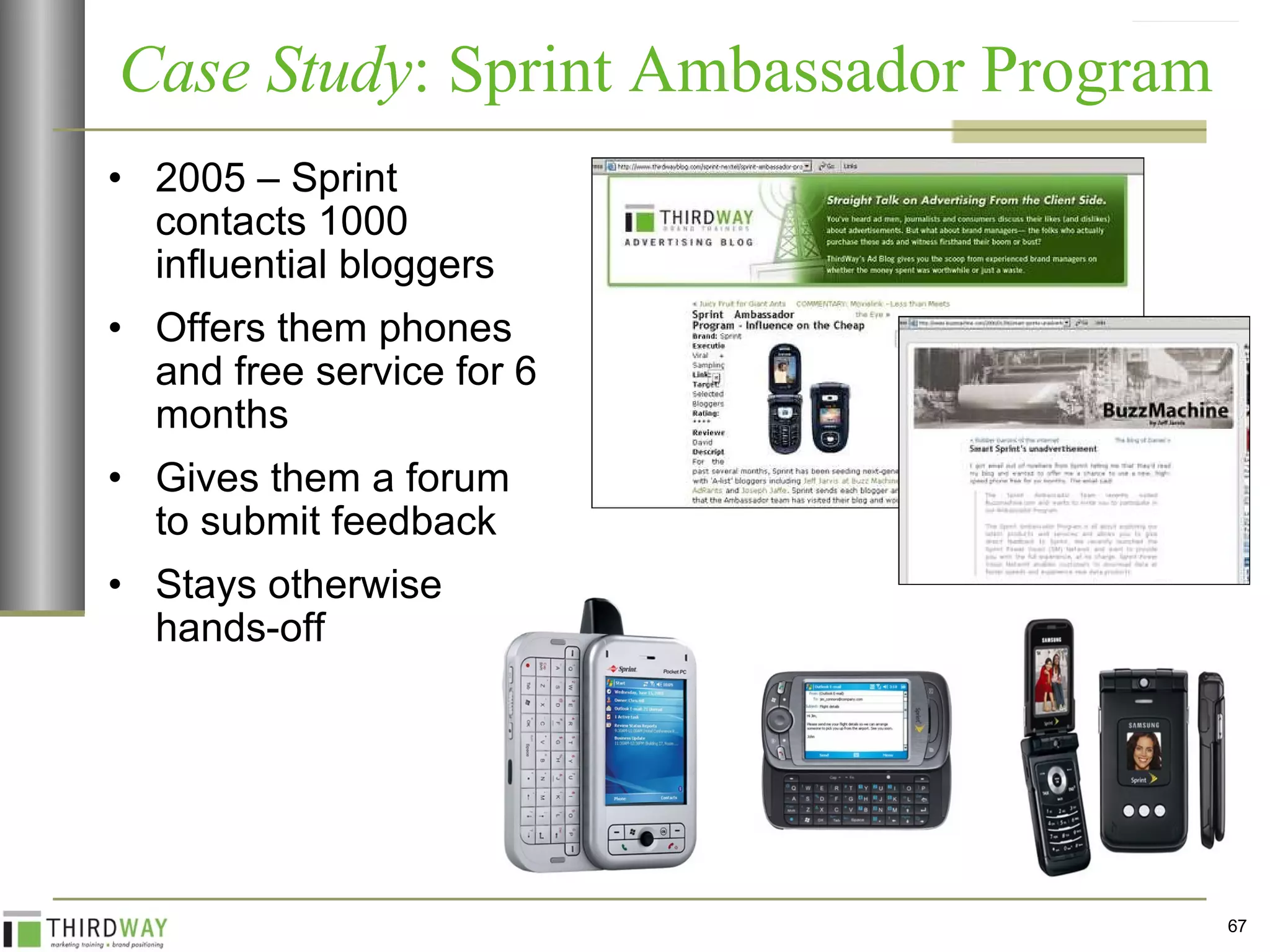
2005 – Sprint contacts 1000 influential bloggers Offers them phones and free service for 6 months  Gives them a forum to submit feedback Stays otherwise hands-off Case Study : Sprint Ambassador Program
Brand Loyalty Ladder Brand “Recruitment Process” to gain  loyal and involved  consumers. Adoption Trial Reconsideration Retrial Discovery Recommendation/ Raving Fan
Mindstorm is toy with computer controller Targeted at teen boys  Has adult geek-programmer fan base Reaches out to 3 fans Gets them to help design the next generation of products Case Study : Lego Mindstorm
A Brand to Last Forever
Groups of 4 Pick an Asian  / Global Brand (can be yours) Design a brand community Why will people participate? What makes it interesting? What makes it unique? Present Plan 45 minutes Exercise: Brand Community
Technology  in  Experimental Marketing
Changes in how consumers interact with brands on the internet Online – co-creation and co-marketing Online community Online customization What We Will Cover
Internet Penetration by Access Technology Source: eMarketer
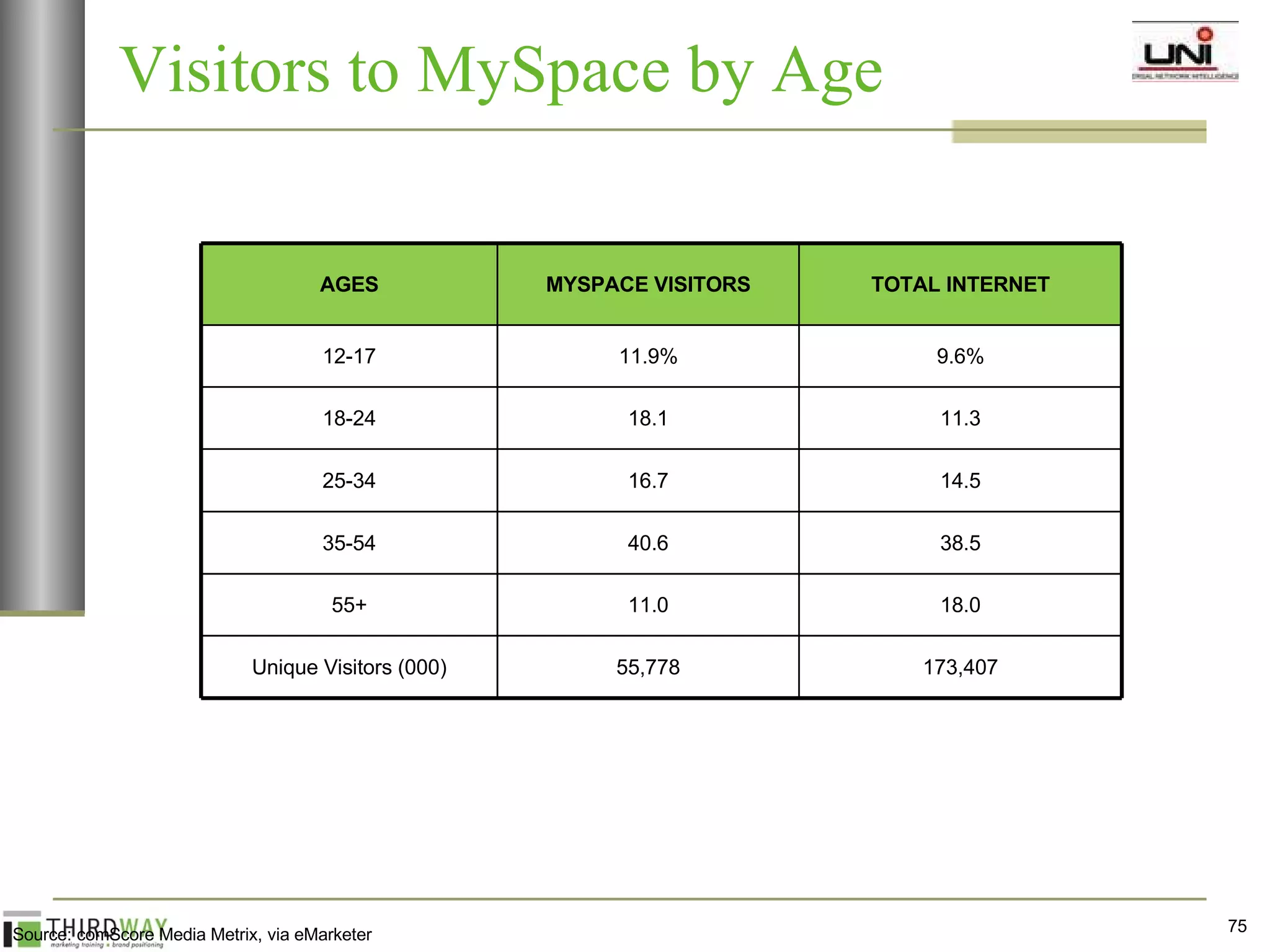
Visitors to MySpace by Age Source: comScore Media Metrix, via eMarketer AGES MYSPACE VISITORS TOTAL INTERNET 12-17 11.9% 9.6% 18-24 18.1 11.3 25-34 16.7 14.5 35-54 40.6 38.5 55+ 11.0 18.0 Unique Visitors (000) 55,778 173,407
Consumers and Brands  Online
Consumers are taking control
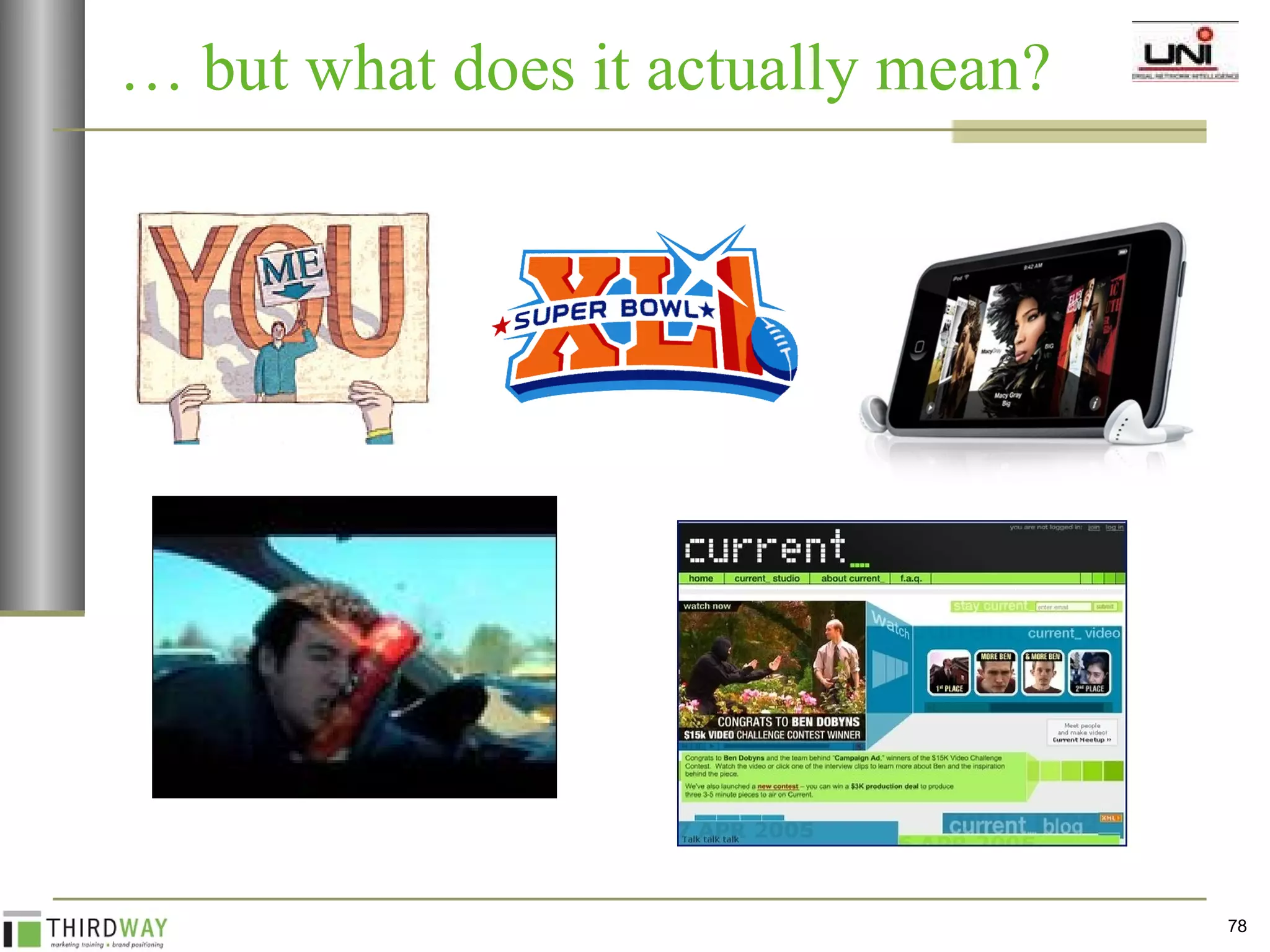
…  but what does it actually mean?
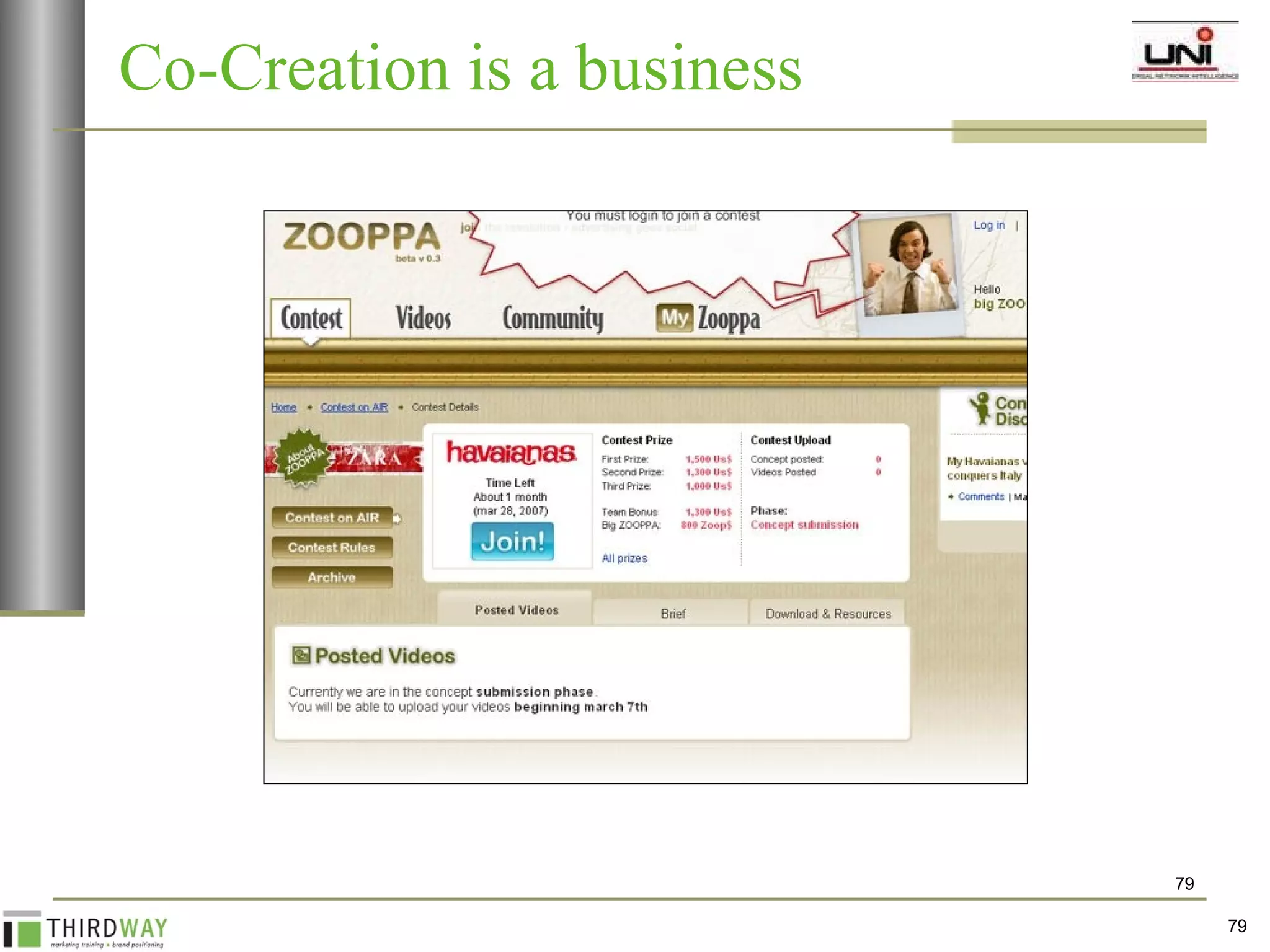
Co-Creation is a business
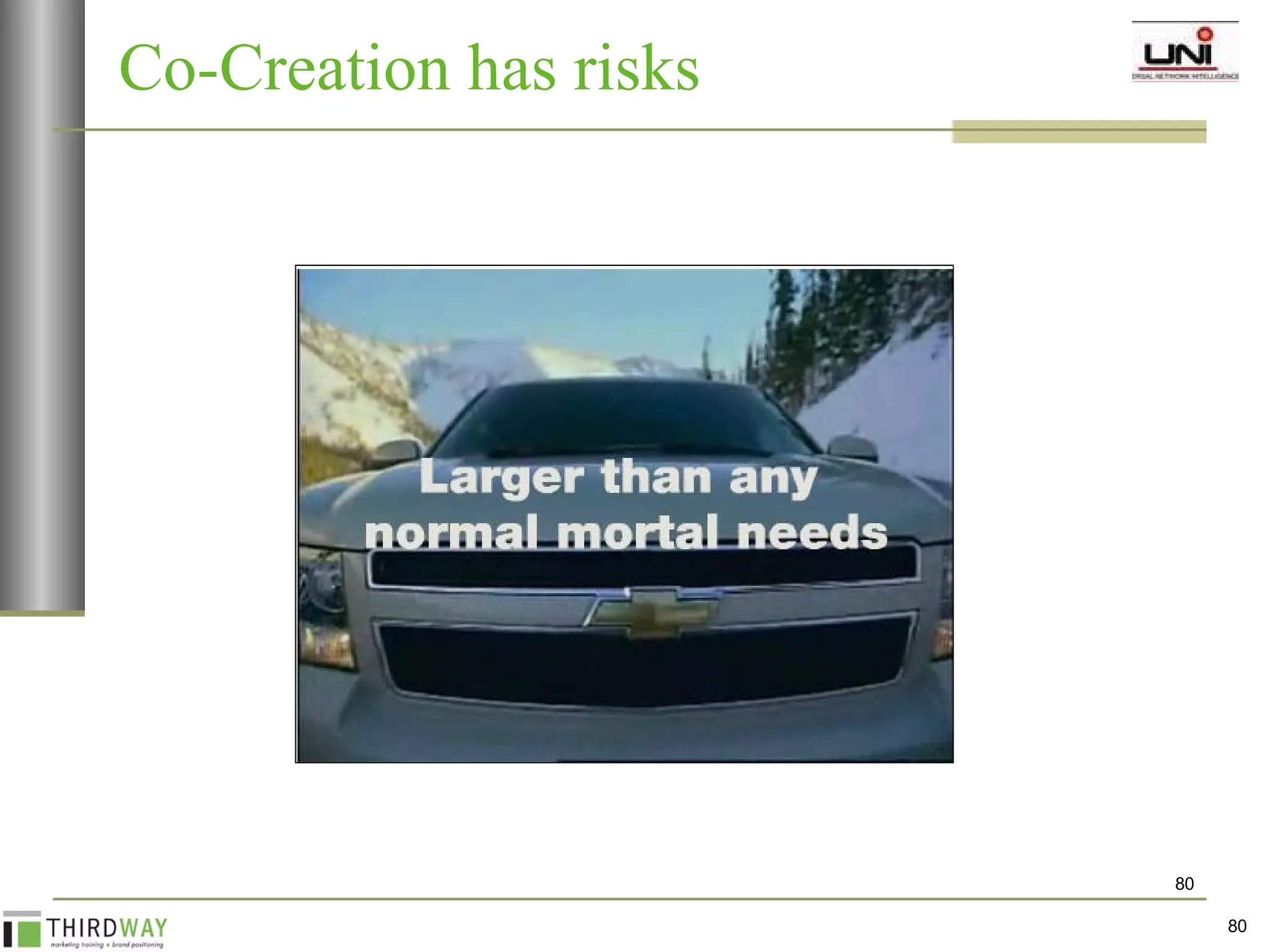
Co-Creation has risks
Rules of the Road for Co-Creation Don’t risk it for brands with high negatives Don’t try to squelch bad PR Watch closely and respond quickly Give consumers a chance to be creative  Mind the details
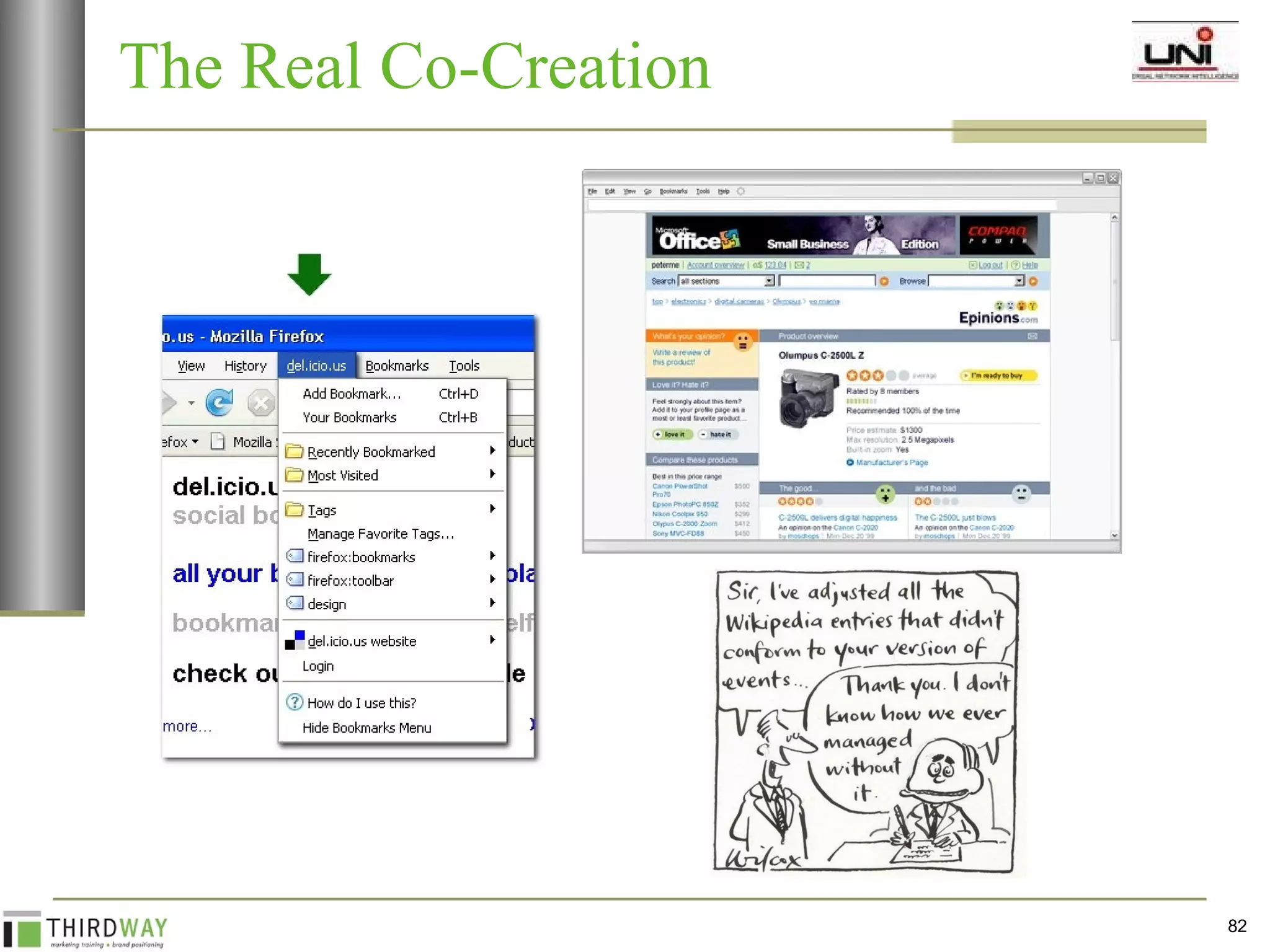
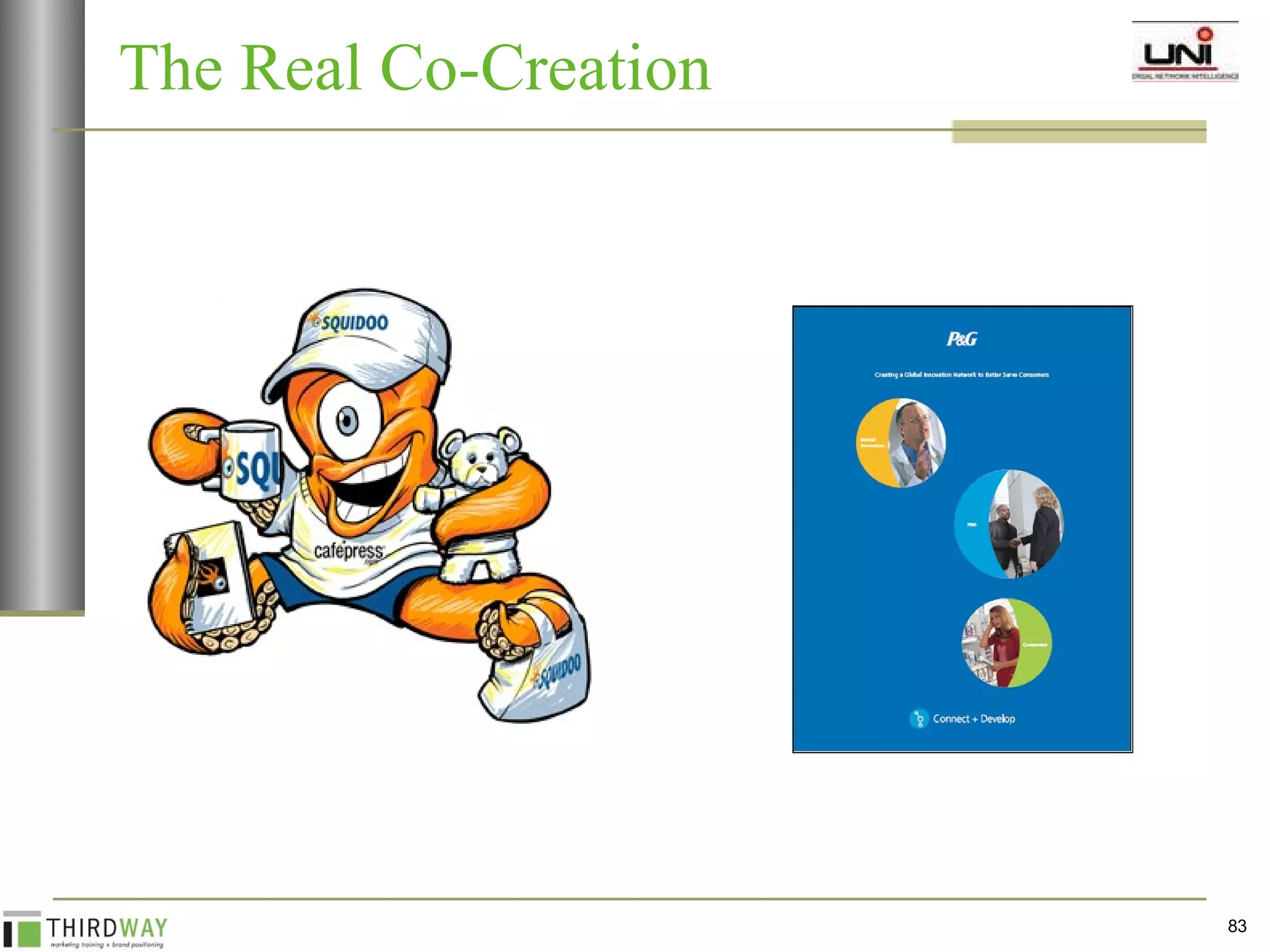
The Real Co-Creation
Online Communities
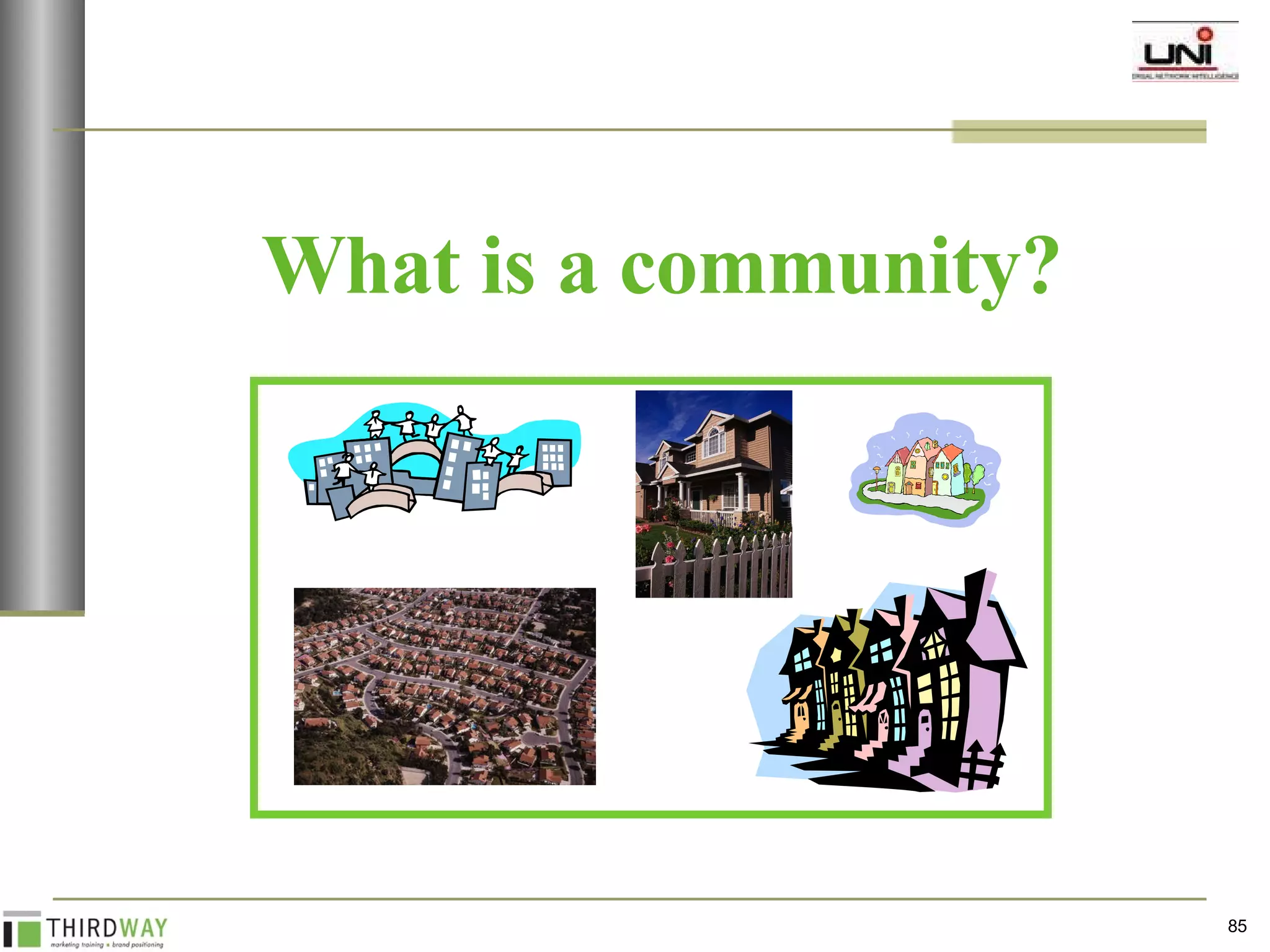
What is a community?
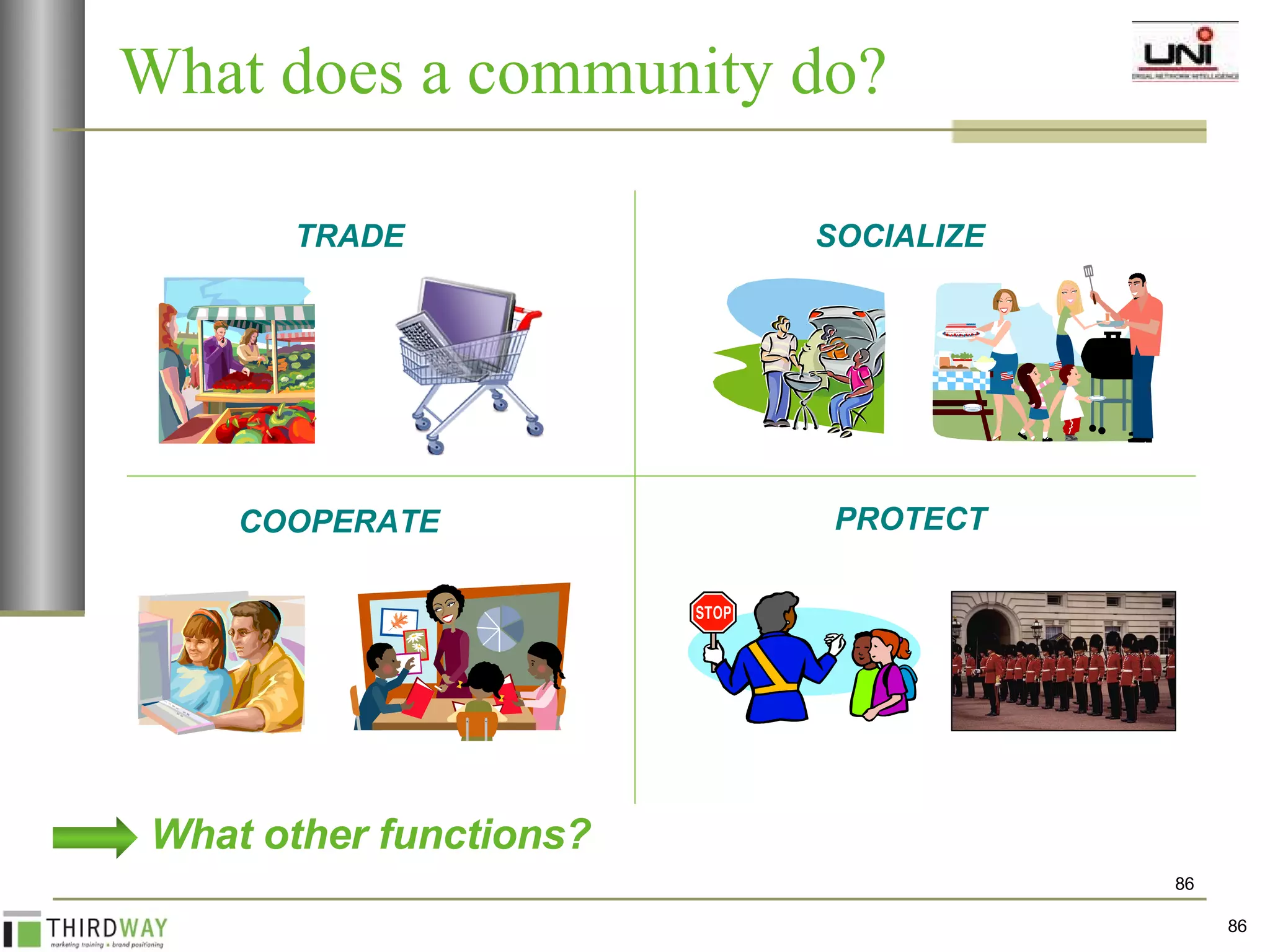
What does a community do? TRADE COOPERATE SOCIALIZE PROTECT What other functions?
Why Basic Economic Theory Kills Community Mobility of Labor These are the top 50 fastest-growing markets in the U.S., ranked in order of growth, according to the 2000 Census   Source: http://www1.move.com/Finance/Census/Top50MSAs.asp?poe=realtor
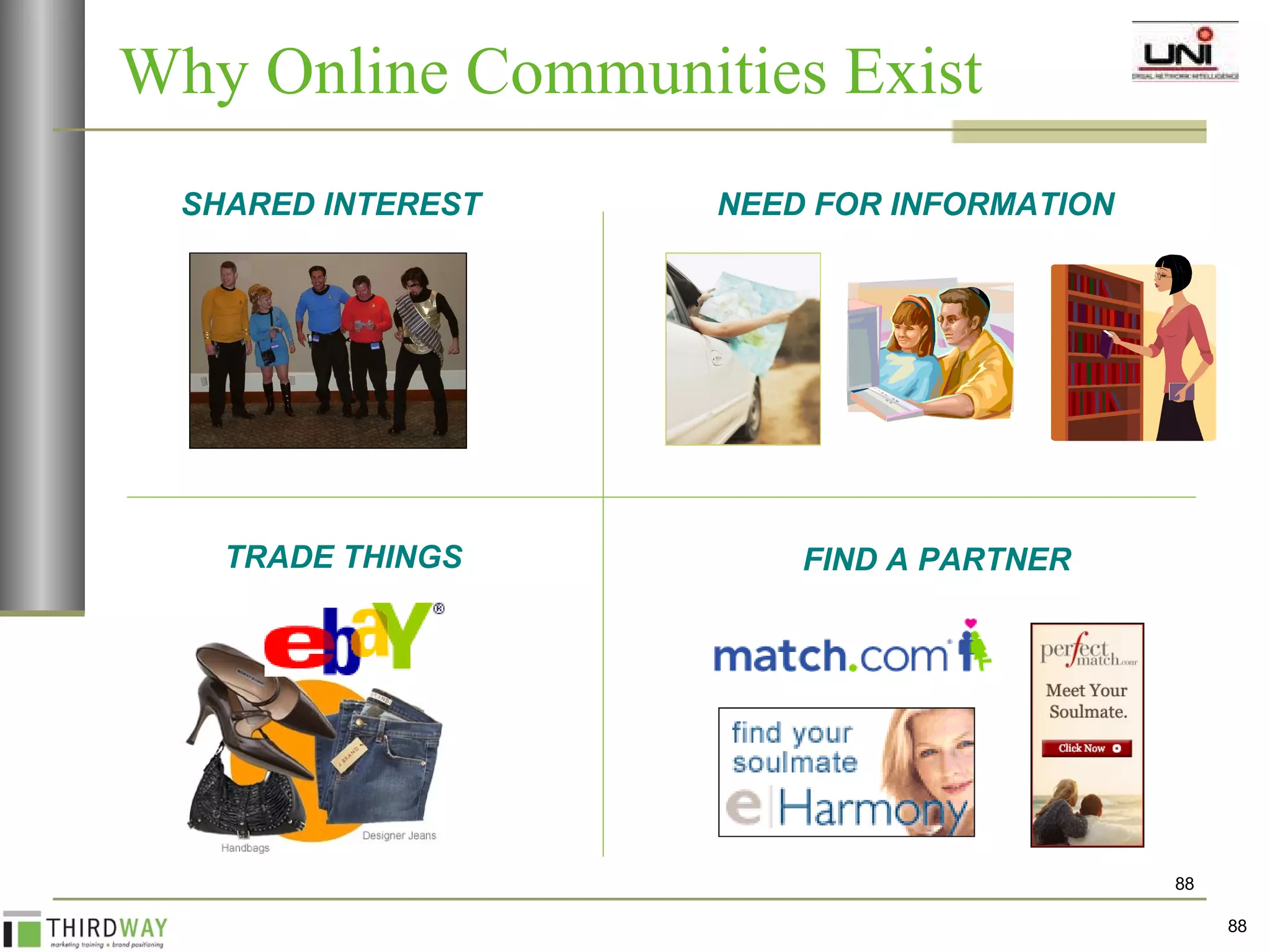
Why Online Communities Exist SHARED INTEREST TRADE THINGS NEED FOR INFORMATION FIND A PARTNER
Why Do Some Communities Succeed and Others Fail?
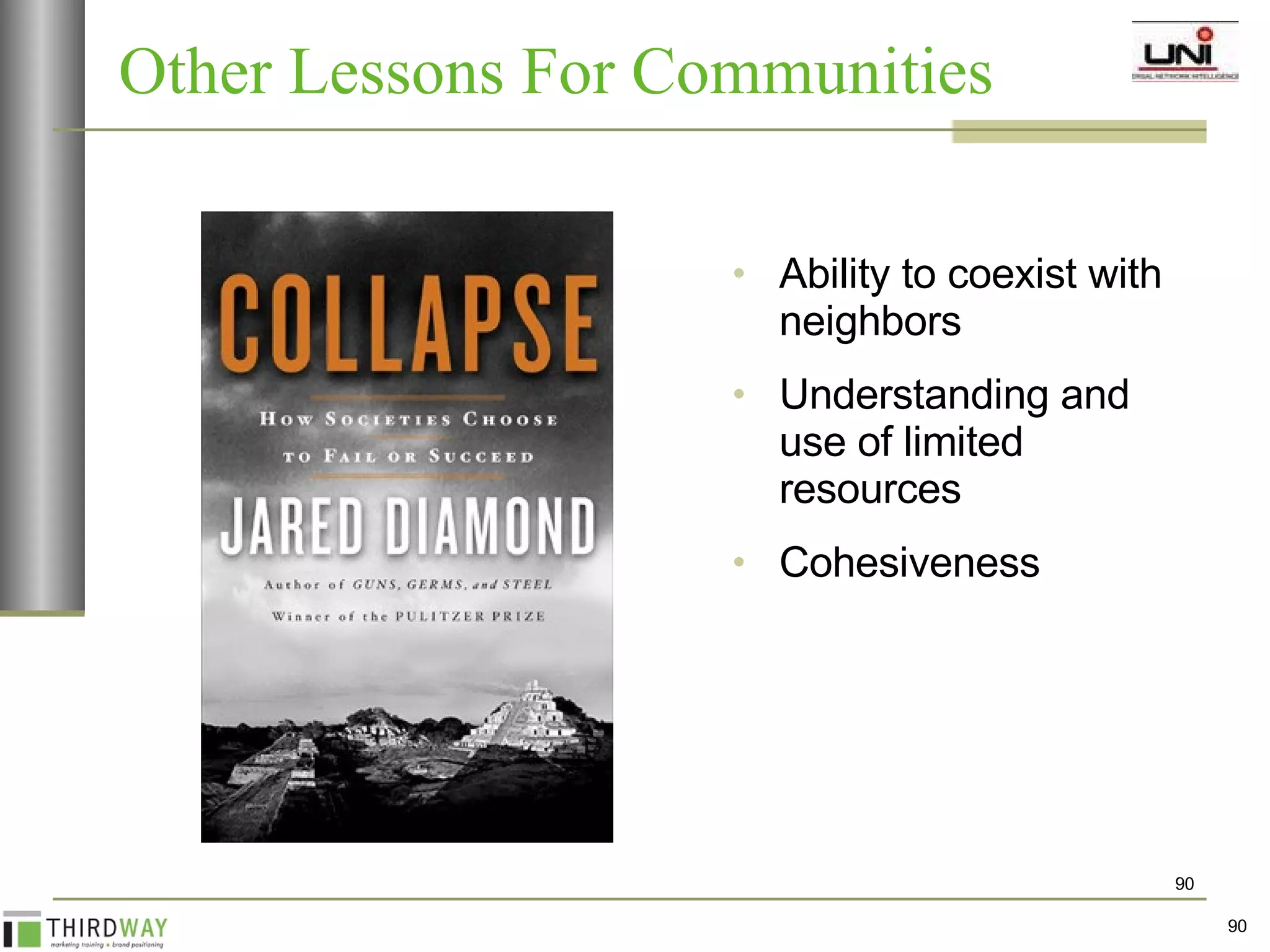
Other Lessons For Communities Ability to coexist with neighbors Understanding and use of limited resources Cohesiveness
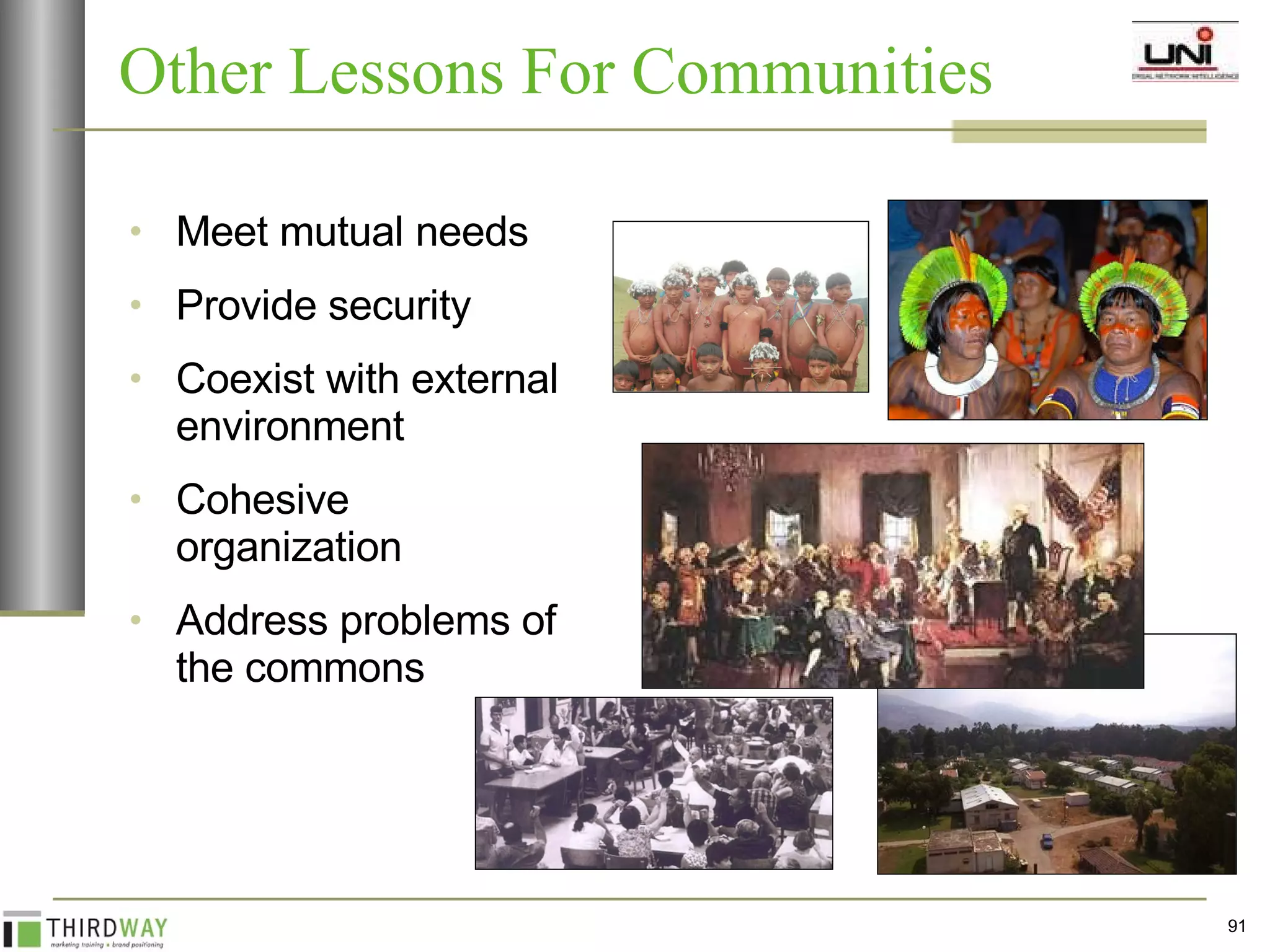
Other Lessons For Communities Meet mutual needs Provide security Coexist with external environment  Cohesive organization Address problems of the commons
Types of Online Communities
The Clique Small  Exclusive Anti-Establishment
The Network Large Move information quickly Loose Affiliation
The Cult Rituals Belief system Levels of Access Q: Do you belong to an online cult community?
The Nation Egalitarian Sovereign Driven by a cause
Exercise  Divide up by computers - 1 instruction card per person Go to this URL:  www.handcraft.ning.com Create an online profile (1 profile for each group) Note your: Area of expertise Information needs Desire(s) Try to get your information, needs and desires met No talking  - all communication must be through the social network
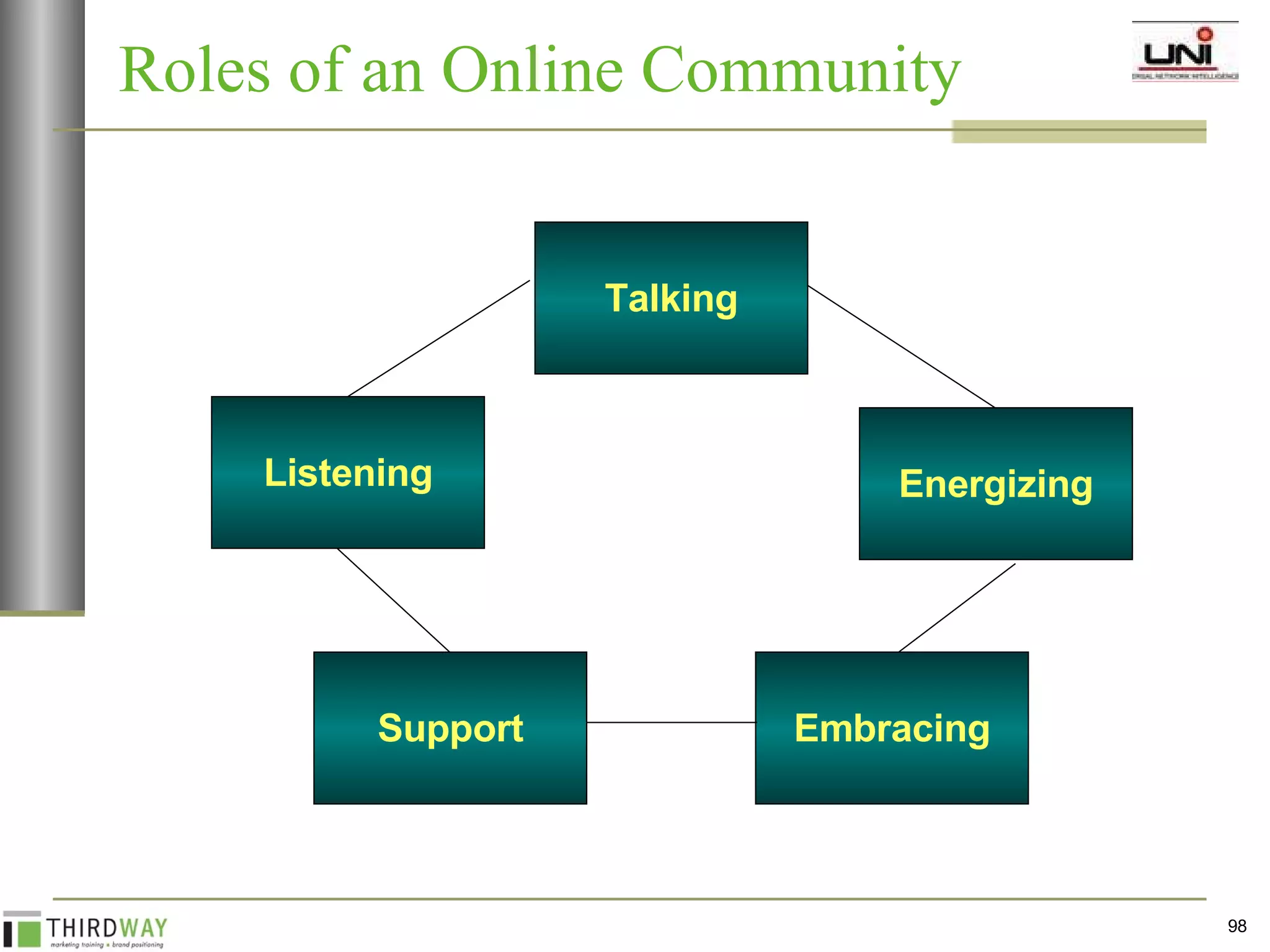
Roles of an Online Community Talking Energizing Embracing Support Listening
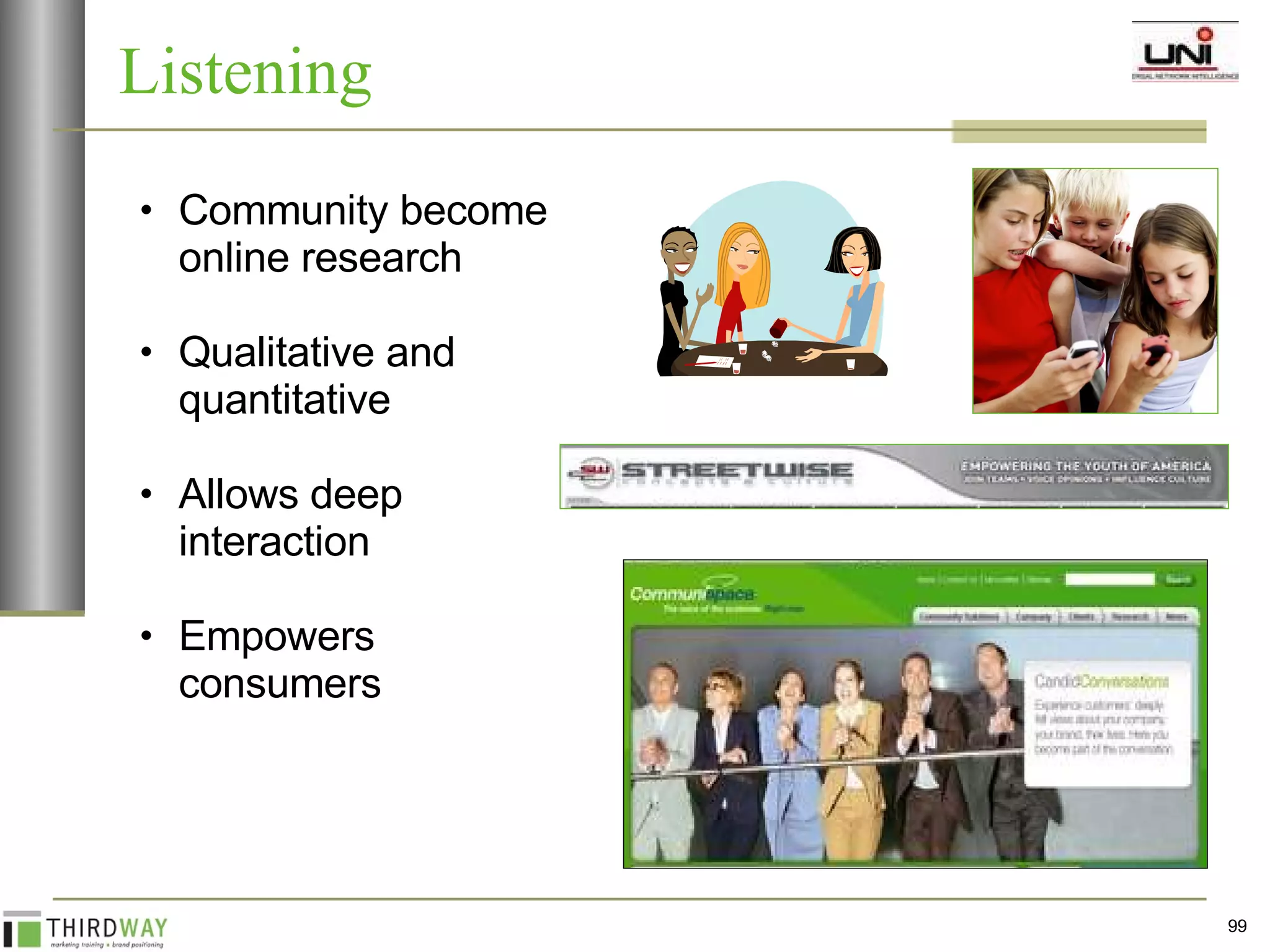
Listening Community become online research Qualitative and quantitative  Allows deep interaction Empowers consumers
Talking Active discussions around your product Initiation of “non-converts” Creating media for  community Lessons  Use Text Mining
Energizing Get members to stimulate word of mouth Seek member creativity Build excitement
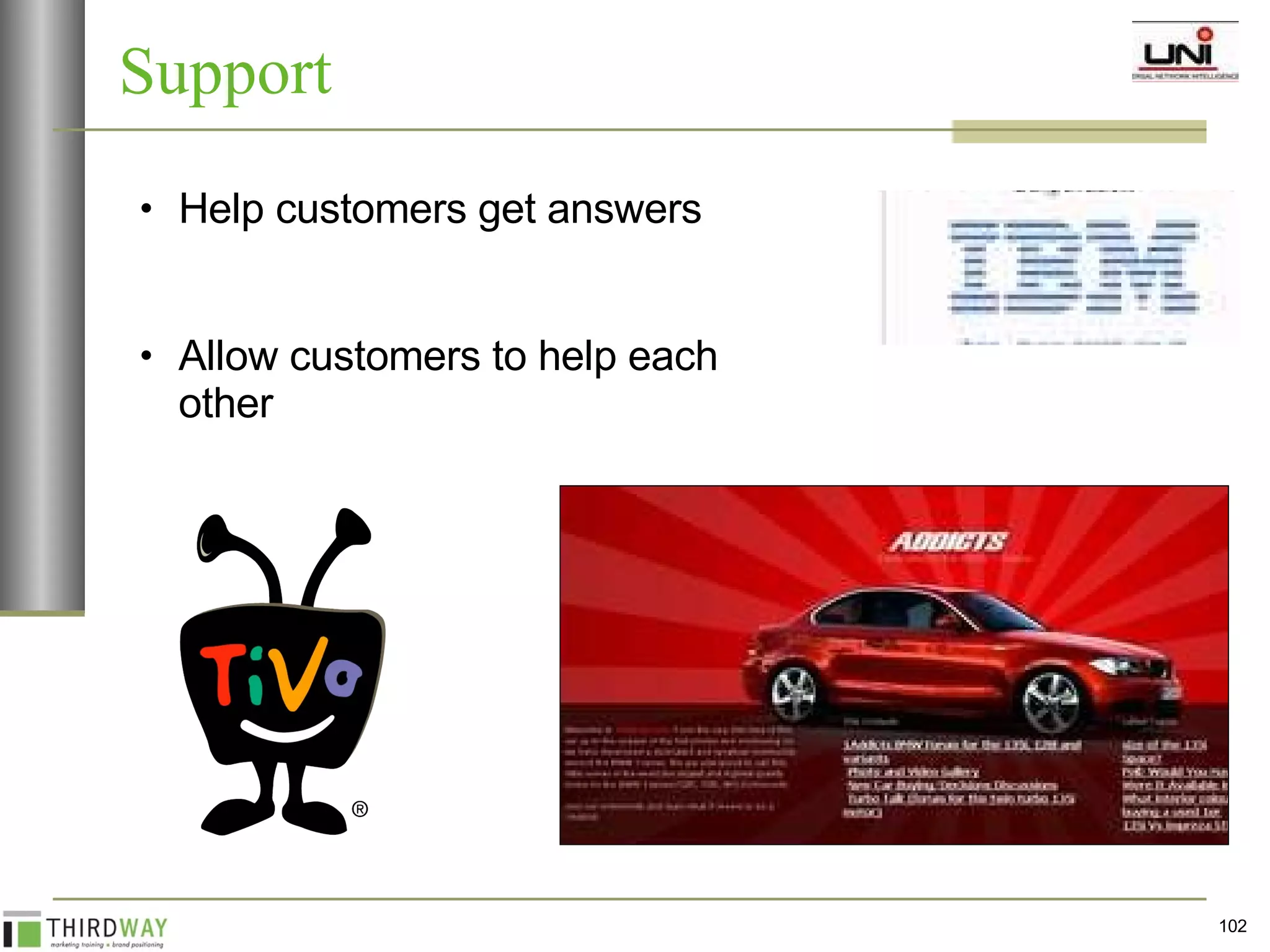
Support Help customers get answers Allow customers to help each other
Embracing  Bringing consumers in at the next level  Co-design Joint-planning
Starting an Online Community
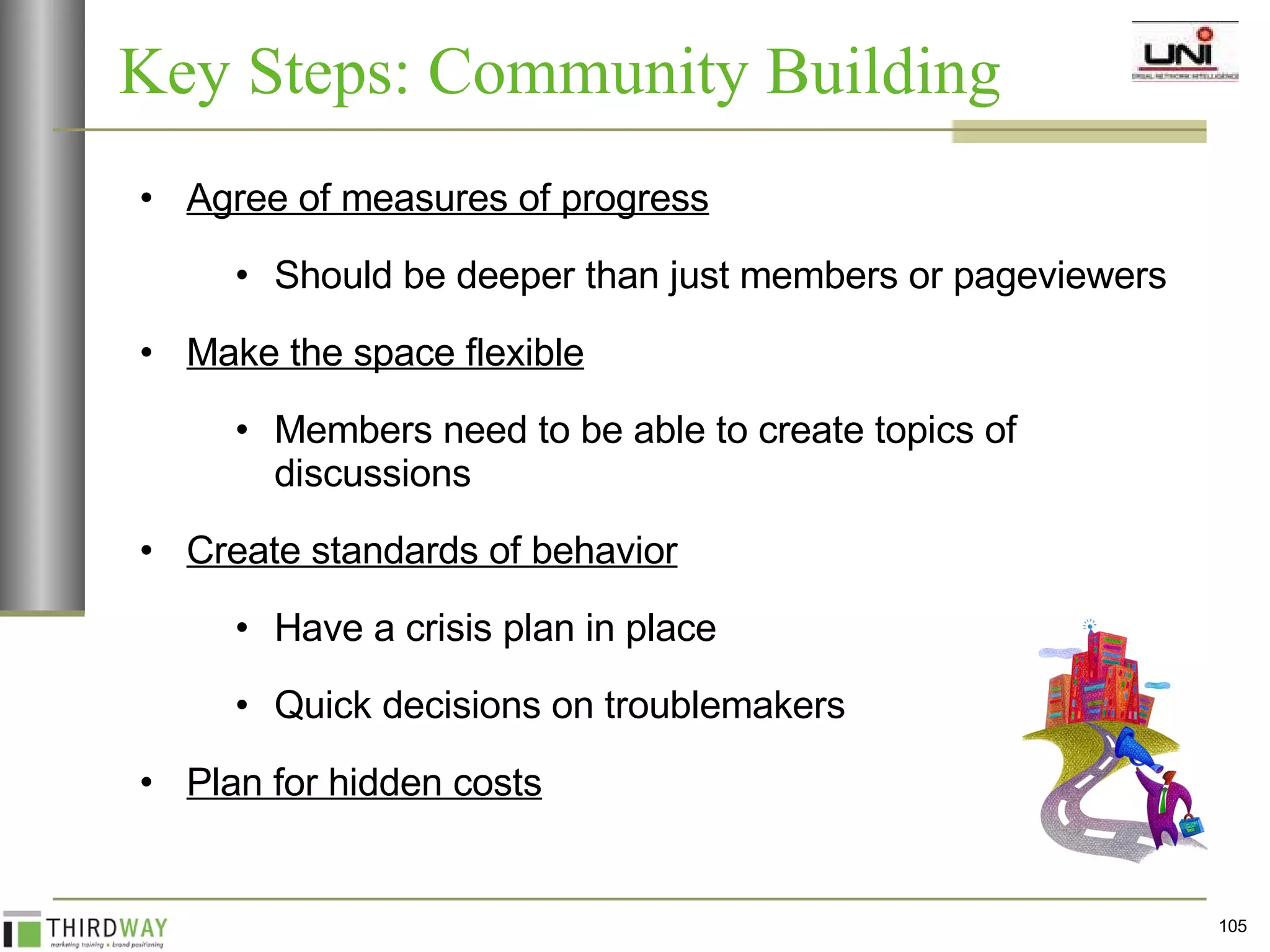
Key Steps: Community Building  Agree of measures of progress Should be deeper than just members or pageviewers Make the space flexible Members need to be able to create topics of discussions  Create standards of behavior Have a crisis plan in place Quick decisions on troublemakers Plan for hidden costs
Hidden Costs of a Community  Advertising and “kick start” Ongoing content creation Community management Crisis Management
Tips for growing online communities Start provocative conversations Monitor and stay engaged Identify: Influentials Hot topics Trouble Makers Create program for brand evangelists Extra access Training  Early information Create applications for existing social networks
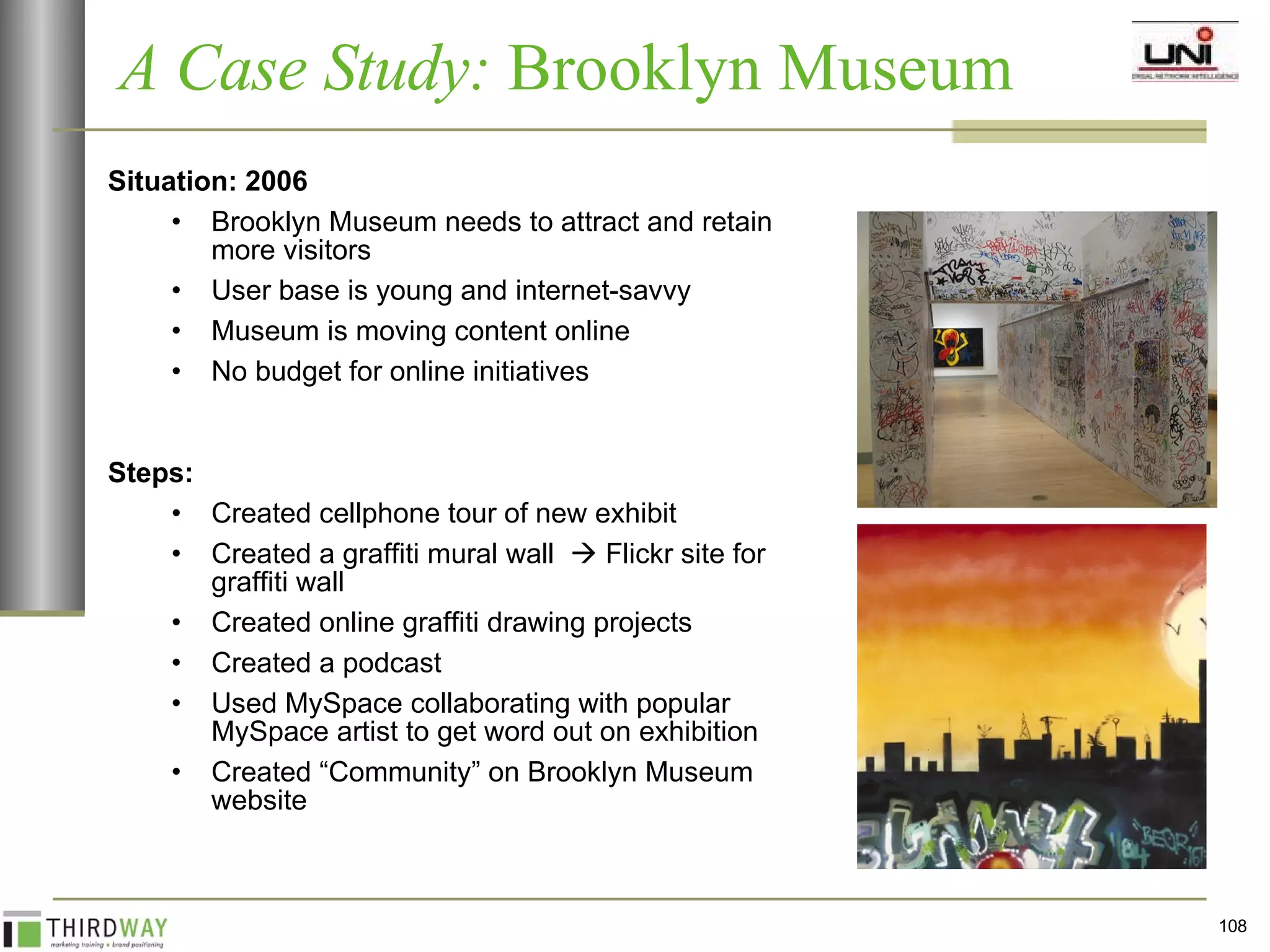
A Case Study:  Brooklyn Museum Situation: 2006 Brooklyn Museum needs to attract and retain more visitors  User base is young and internet-savvy Museum is moving content online  No budget for online initiatives Steps: Created cellphone tour of new exhibit Created a graffiti mural wall    Flickr site for graffiti wall Created online graffiti drawing projects Created a podcast Used MySpace collaborating with popular MySpace artist to get word out on exhibition Created “Community” on Brooklyn Museum website
Thoughts on Online Communities Community First, Marketing Second Don’t underestimate ongoing maintenance costs Be ready for detractors Stimulate the community Be flexible about where your community migrates
Online Customization
The Old Paradigm is WWW Comprehensive Brilliant Exhausting!!
New Paradigm - My Web
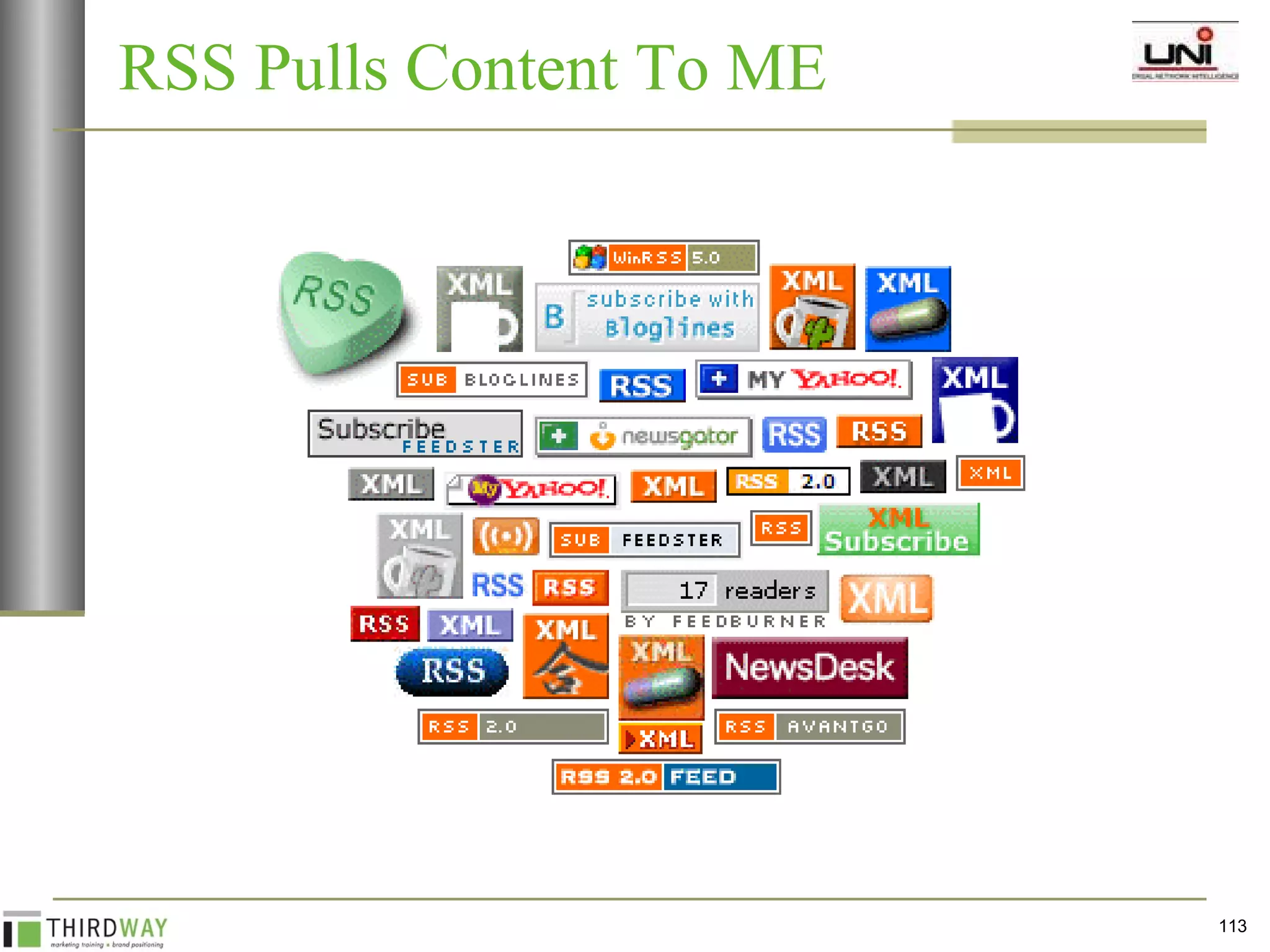
RSS Pulls Content To ME
Exercise: Create iGoogle, My Yahoo Page Divide into groups (1 group per computer) Go to  www.my.yahoo.com  or  www.google.com/ig   Set up a page that will: Track Merchant News Keep you up to date with marketing blogs Give you news Allow you to read other favorite sites or blogs Make sure you pull in at least 2 RSS feed sites
Widgets Customize My Desktop
I use IM for work …
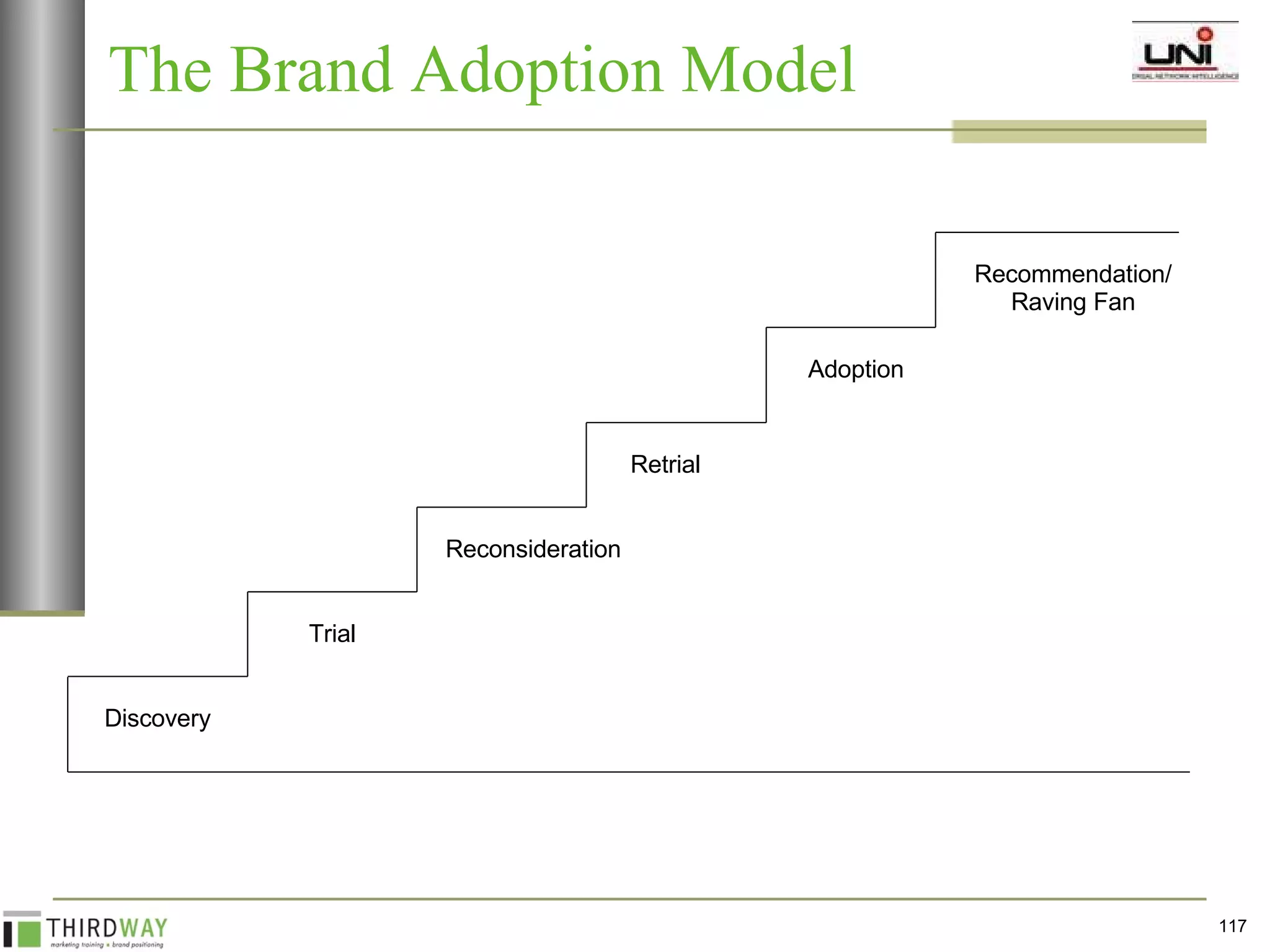
The Brand Adoption Model Adoption Trial Reconsideration Retrial Discovery Recommendation/ Raving Fan
Engaging Employees  in  Delivering the  Brand Promise
They know your brand best They are invested Their opinion can greatly damage you if negative Improving their opinion strengthens the brand They must understand the brand promise to deliver it Why Think About Employees?
Early News Discounts Tell-a-friend bonuses Exclusive access The Employee as Brand Insider
New Tagline in 1998? – “The Best Cancer Care Anywhere” Promise failed  Meaning of “care” Retained support staff The Janitor Incident Case Study : Memorial-Sloan Kettering
Train them in Brand Positioning  Entrust them with positioning statement Use professionals to train Focus on the lesson – everything affects the brand Build branding skills among  employees Training Employees
Focus on behavior, not attitude Describe specific examples Illustrate the negative impact on the brand Consider giving a PTO (paid time off) leave Ask for a new commitment Dealing with Negative Employees http://gothamist.com/2008/01/04/starbucks_baris.php http://www.cnn.com/2008/LIVING/wayoflife/03/27/heroes.andersen/index.html Vs.
Groups of 4 Design an employee marketing program Explain employee benefits and employee responsibility Explain costs and potential revenue/costs savings 45 minutes Exercise
Six Brand Lessons  from Entrepreneurs
 
X X X
 
What is an  Accidental Brand?
X Must be started by someone with no formal marketing training
2. Must solve their own problem
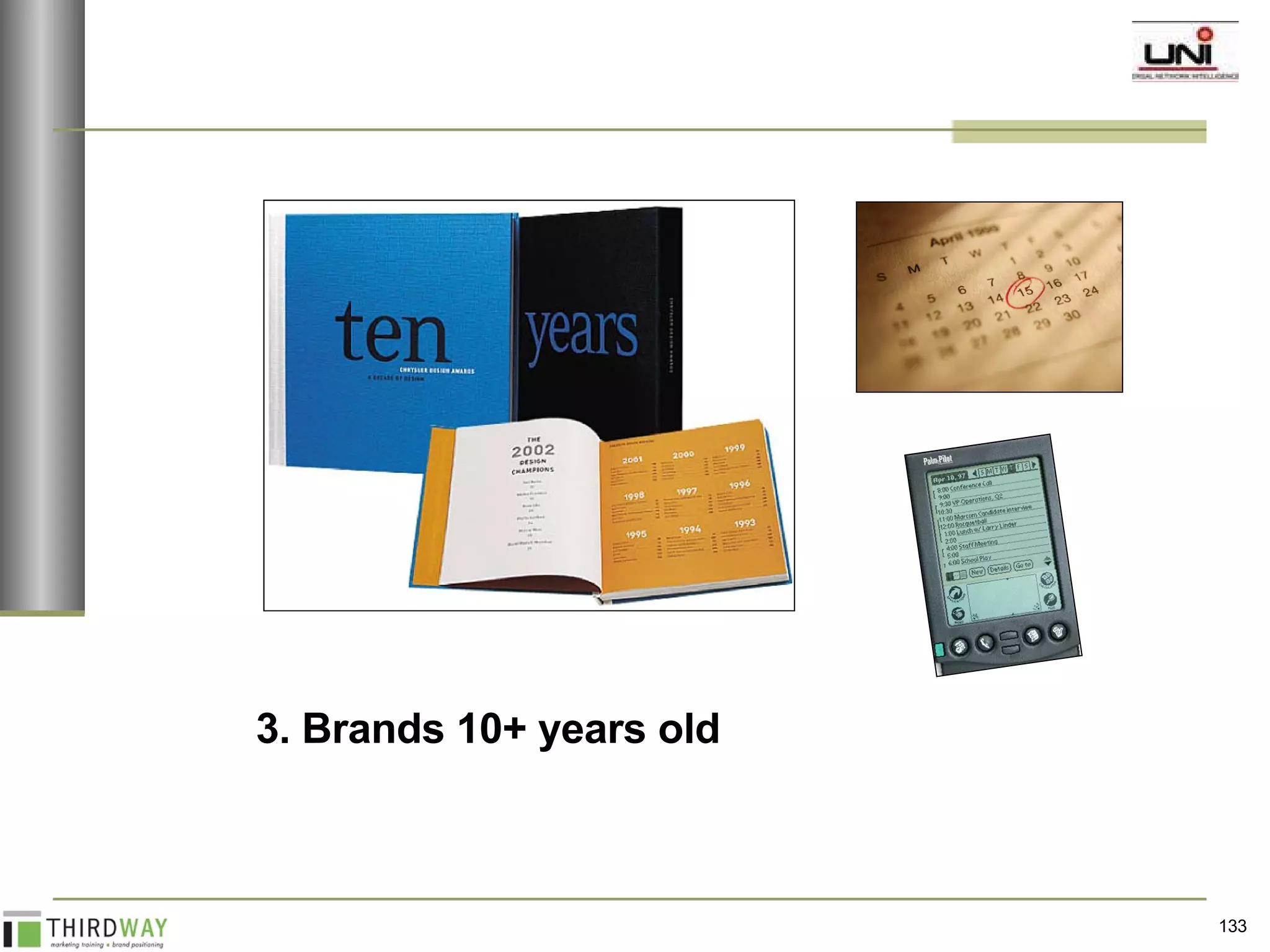
3. Brands 10+ years old


Six Lessons from Accidental Brands
Do Sweat  the Small Stuff #1
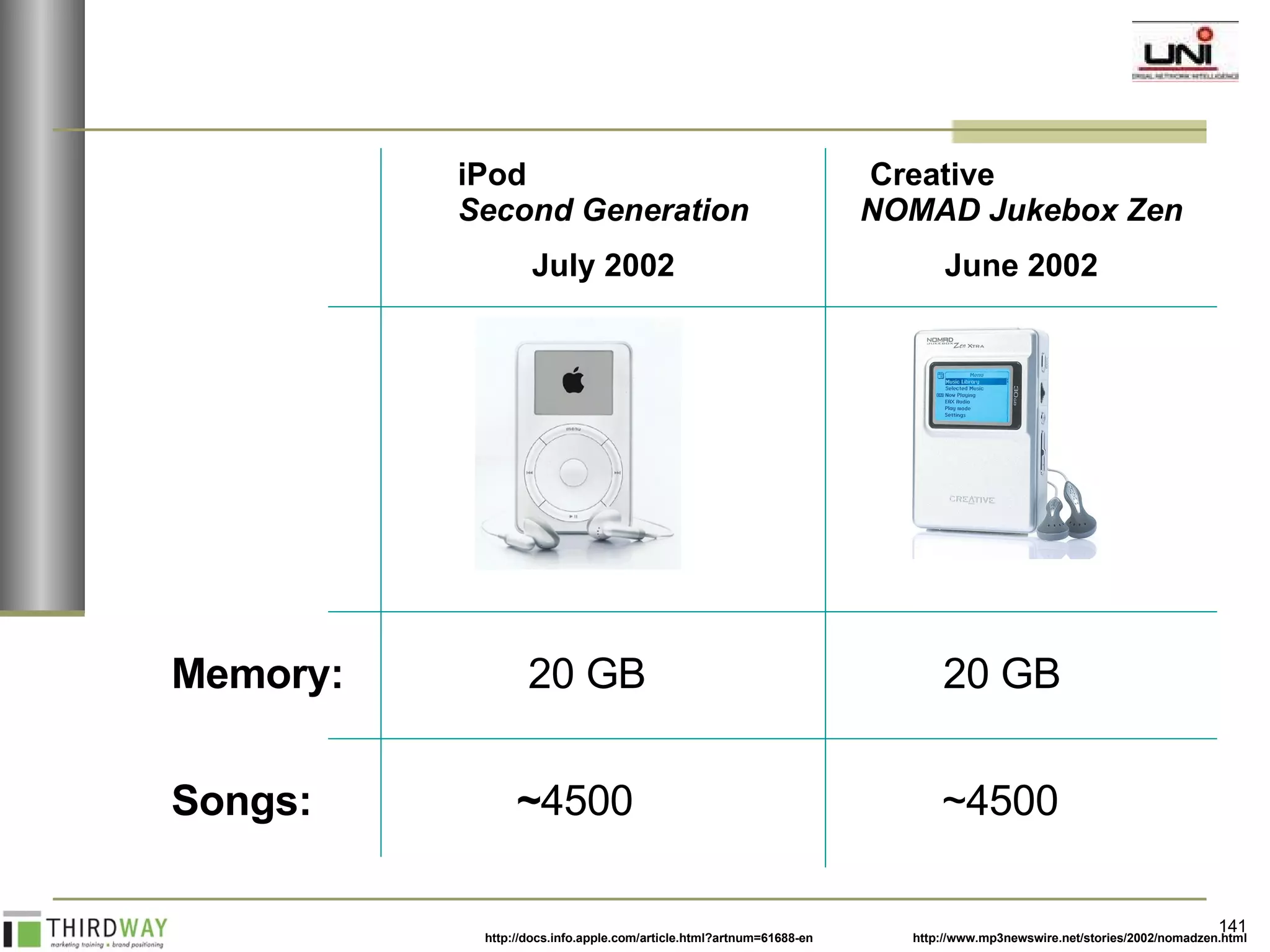
Memory:   20 GB  20 GB  Songs:    ~ 4500  ~4500 iPod  Second Generation July 2002 Creative  NOMAD Jukebox Zen June 2002 http://docs.info.apple.com/article.html?artnum=61688-en http://www.mp3newswire.net/stories/2002/nomadzen.html
 
 
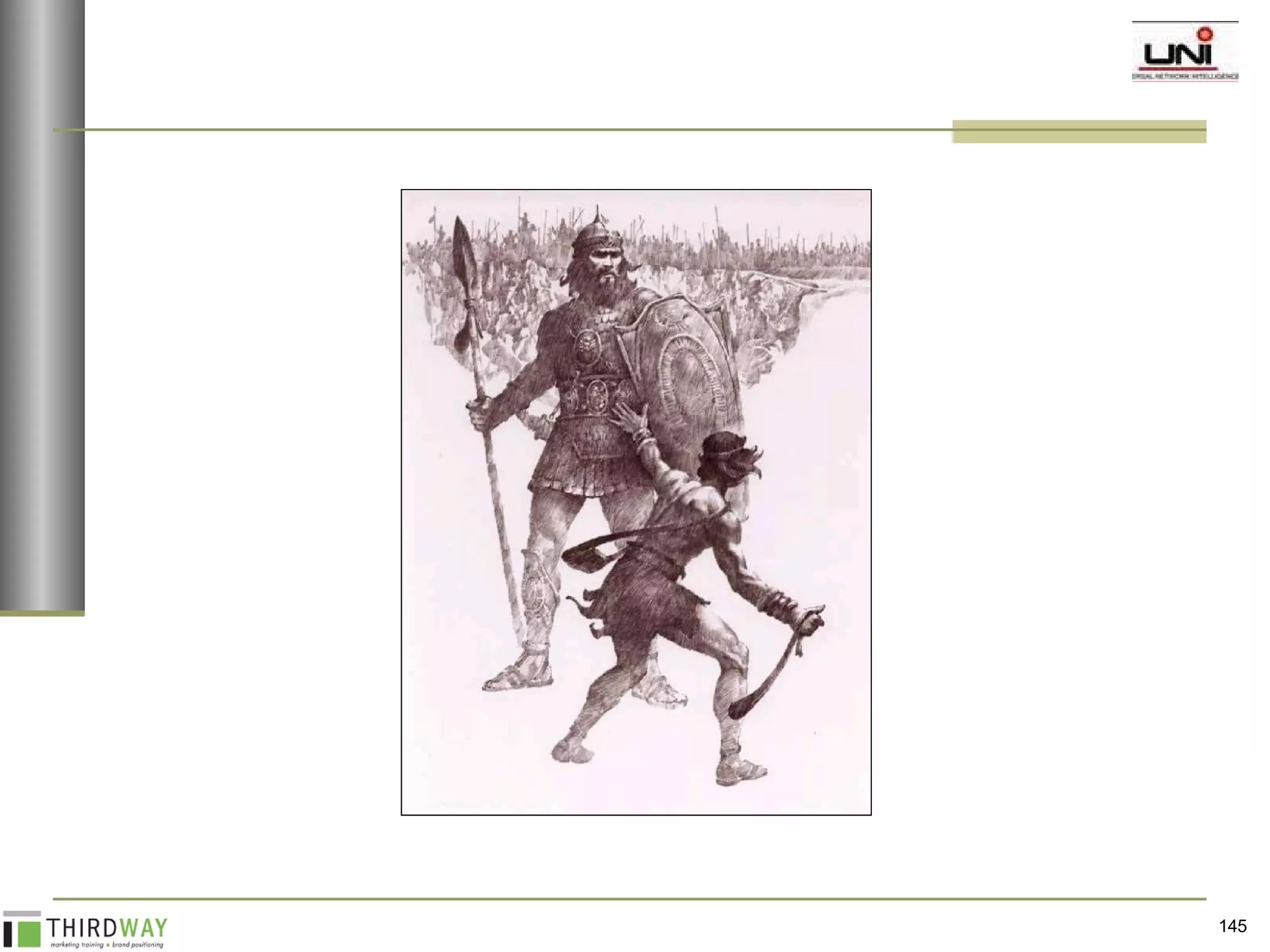
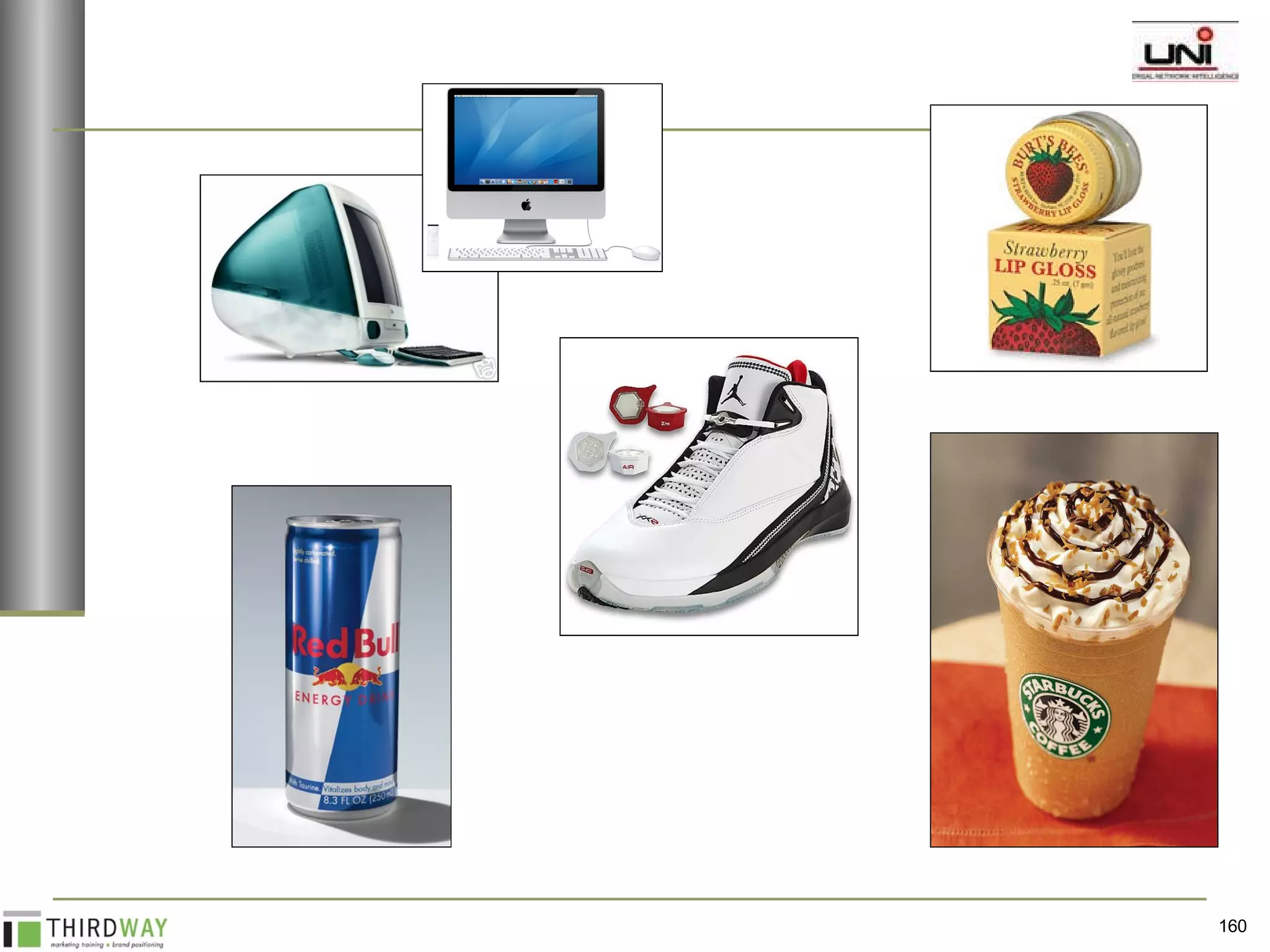
Pick a Fight #2


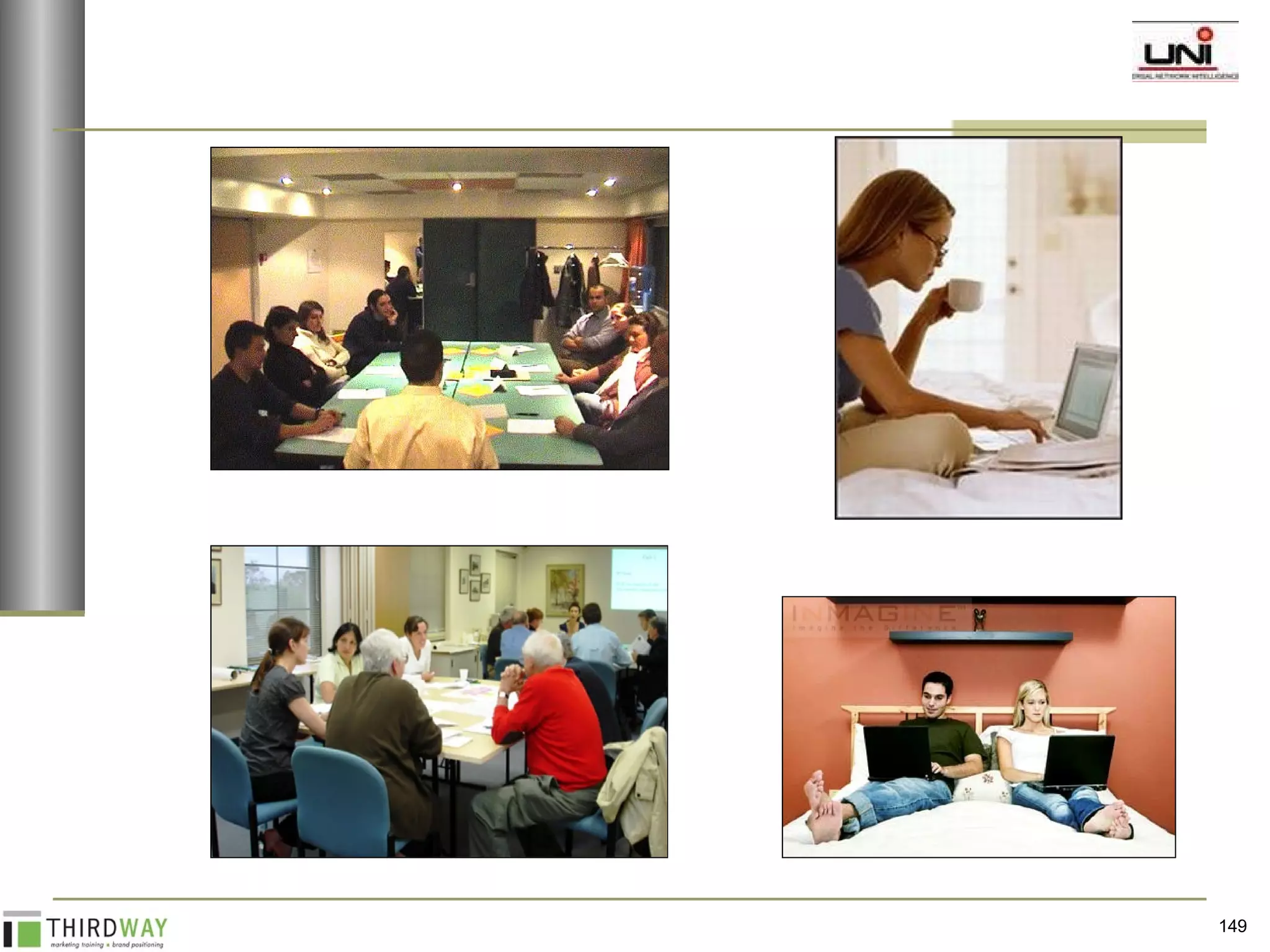
Be Your Own  Customer #3


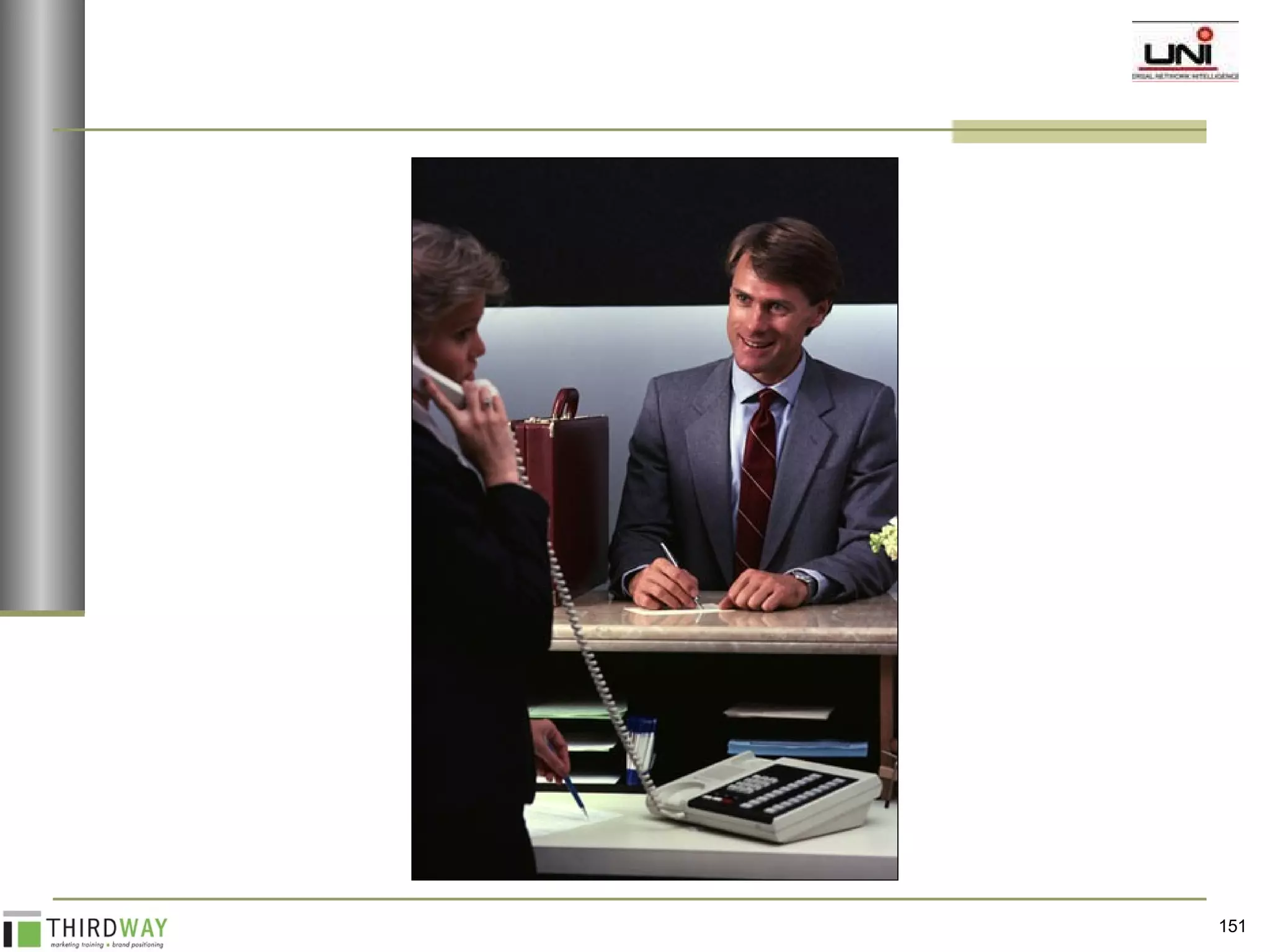
Am I being polite? Did I offer to carry her bags?
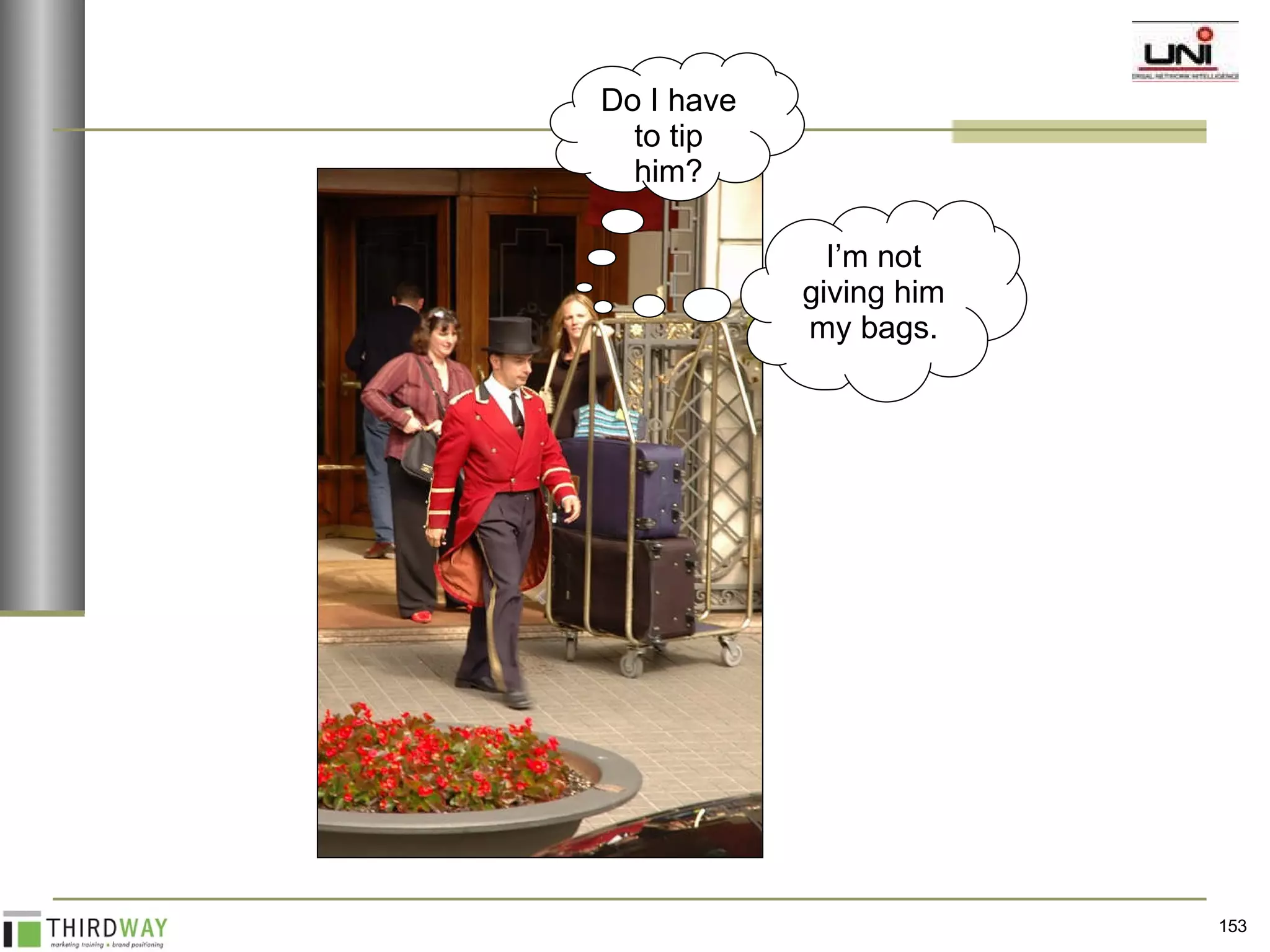
I’m not giving him my bags. Do I have to tip him?
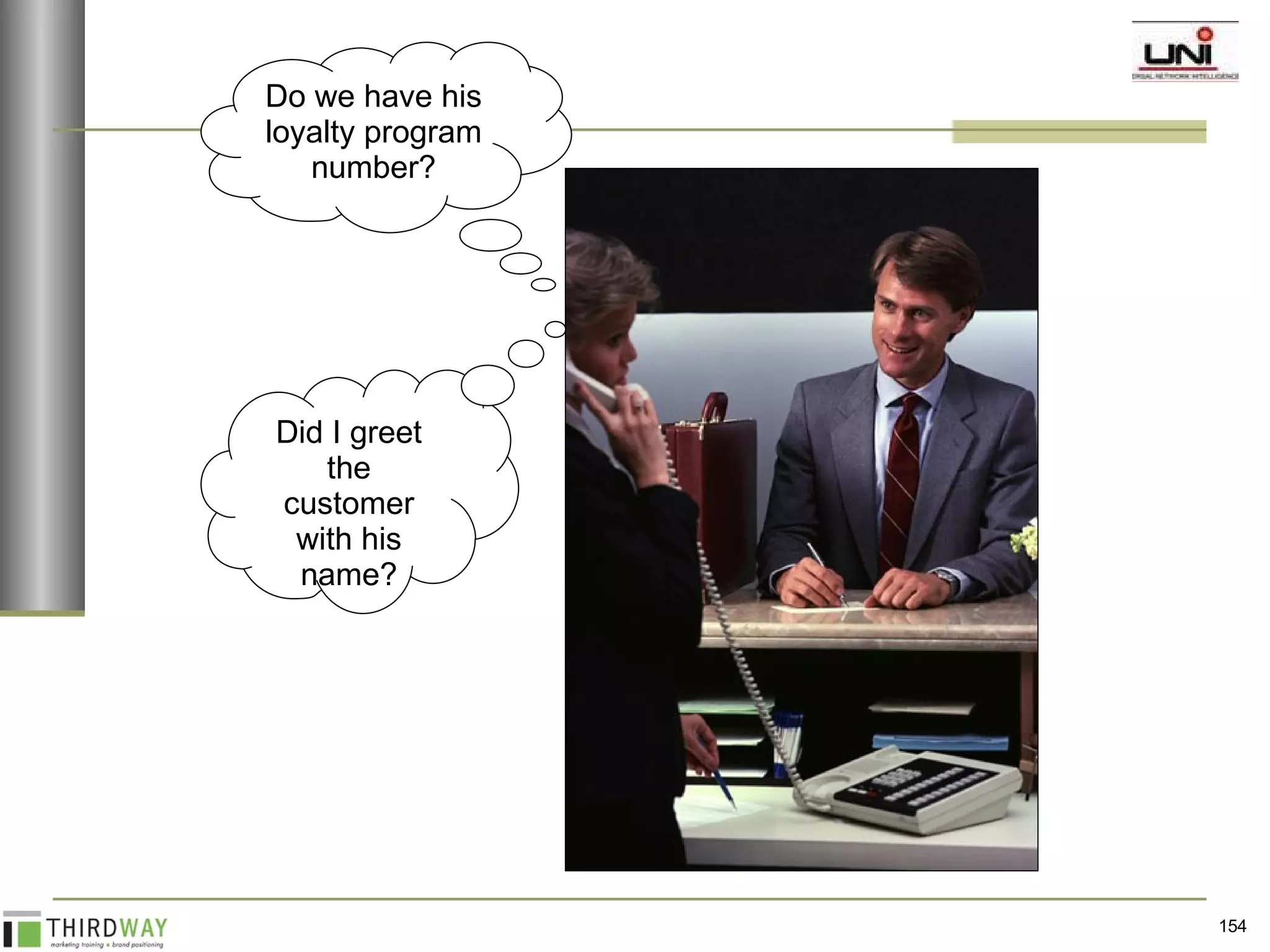
Did I greet the customer with his name? Do we have his loyalty program number?
Did I do something wrong? Why isn’t she making eye contact?
 
 
http://www.columbia.com/tv_ads/tv_ads.aspx
Be Unnaturally  Persistent #4
 
Time to $100 Million in Revenue 22 years 21 years 10 years 8 years 4 years
Build a Myth #5
Μύθος (míthos)   - Mythos *  From  μυθολογέω  "I tell tales,"  μυθολόγος  "legend,"  μῦθος  "story"  and  λέγω  "I say"  *  Definition : a usually traditional story of ostensibly historical events  that serves to unfold  part of the world view of a people or explain a practice, belief, or natural  phenomenon  λόγος   - Logos *  From  λέγω   - "I say"  *  Definition : the divine reason implicit in the cosmos, ordering it and giving it form and  meaning.   Mythology – a story with a lesson
 
 
Be Faithful #6
David Vinjamuri [email_address] 212-543-3200

Uni Training Singapore 07 08 V3

  • 1.
    Strategic Experiential BrandingDavid Vinjamuri July 2008
  • 2.
    What We WillCover Building customer experience Brand experience building exercise The Branded Lifestyle Building experiences with the five senses Engaging customers - customer-created experiences Design a customer-run community Technology in Experiential Marketing Online community exercise Engaging employees in delivering the brand promise Design an employee-branded program for your brand Six brand lessons from Accidental Brands Day I Day II
  • 3.
    What is ExperientialBranding? Engaging experiences created by marketers for your brand Ralph Lauren Flagship Store, NYC The World of Coke Massage Chairs in Brookstone Extending your brand into the customers’ life Martha Stewart Houses Branny Academy Engaging all the senses – choreograph the brand experience Getting customers to build experiences Brand building through employees
  • 4.
  • 5.
    Questions How doI build branded experiences for my customers? How does brand engagement translate to increased brand loyalty? How do I ensure these experiences are consistent with my brand strategy? How do I measure the marketing ROI? What are examples if successful brands using brand experiences?
  • 6.
    Goal of ExperientialBranding?  INCREASE BRAND EQUITY
  • 7.
  • 8.
    Questions Reduced MarketingCosts Trade Leverage Attracting New Customers Create Awareness Reassurance Time to Respond to Competitive Threats Anchor to Which Other Associations can be Attached Familiarity - Liking Signal of Substance / Commitment Brand to be Considered Reason to Buy Differentiation / Position Price Channel Member Interest Extensions Help Process / Retrieve Information Reason-to-Buy Create Positive Attitude / Feelings Extensions Competitive Advantage Brand Loyalty Brand Awareness Perceived Quality Brand Associations Other Propriety Brand Assets BRAND EQUITY Provides Value to Customer by Enhancing Customer’s: Interpretation / Processing of Information Confidence in Purchase Decision Use Satisfaction Provides Value to Firm by Enhancing: Efficiency and Effectiveness of Marketing Programs Brand Loyalty Prices / Margins Brand Extensions Trade Leverage Competitive Advantage Credit: David A. Aaker, Managing Brand Equity
  • 9.
  • 10.
    Brand AttributesPRODUCT ATTRIBUTES FUNCTIONAL BENEFITS EMOTIONAL BENEFITS PERSONALITY ICONS
  • 11.
    1. Product AttributesQuick Serve Consistent Eat-in / Take-out Counter / Drive-thru Popular, basic items ( burgers, fries ) Inexpensive Lots of locations
  • 12.
    2. Functional BenefitsSave time Satisfy hunger and thirst Whole family can enjoy Get toys in addition to food Don’t spend a lot of money
  • 13.
    3. Emotional BenefitsNo hassles No surprises Safe haven Treat / break from busy day Kids have fun “ Hero” with my kids
  • 14.
    4. Personality /Values Happy Kid-Friendly Family-oriented Simple, Basic Trustworthy Community oriented American
  • 15.
    5. Icons Goldenarches Red and Yellow colors Ronald McDonald Playgrounds Happy Meals Big Mac
  • 16.
    Case Study: Red Bull
  • 17.
    “ The thincolor is unappetizing” “ It tastes sticky in my mouth” “ Totally disgusting” What Consumers Said
  • 18.
    “ Totally unappetizing… sticky .. disgusting … No other new product has ever failed this convincingly” - NPD Market Research report on first use test of Red Bull, 1984 Market Research Results
  • 19.
    Dietrich Mateschitz foundscompany 1984 Bad research results Huge disputes with Austrian FDA Ad Agency cannot come up with a single good campaign idea  A GOOD TIME TO GIVE UP?? Getting the Bull Out
  • 20.
    Launches in Austriain 1987 8x the price of Coke Positioned as a ‘cool’ stimulant (Viagra in a bottle) Used regulatory trouble to create a big myth Launch
  • 21.
    “ It tookfive years to gain permission for export into Germany, Red Bull’s second market… Initially, Munich became a flourishing black market and speculation started why the drink was illegal in Germany: Was it speed-in-a-can, a legal drug? Was its Taurine sourced from Bull’s testicles, making Red Bull an over-the-counter Viagra?” The Red Bull Myth
  • 22.
    German moms unitedafter Red Bull launched there in 1992 to get it banned again … … making it wildly popular with teenagers Red Bull sold out everywhere in first three months on market … … Which made it even more popular Building the Myth
  • 23.
    “ Here isa non-alcoholic product about as caffeinated as a cup of coffee – that’s managed to acquire a reputation as a surefire wild-times elixir … a party drink, a stimulant, an aphrodisiac, a raver’s ‘smart drink’ gone mainstream. The strategy is rumor by omission and, only when absolutely necessary, denial … the public has filled in the blanks with speculation and innuendo.” The Press and the Myth
  • 24.
    The taste becomesa selling point. It tastes so strong – it must be working. Red Bull is always sold as a functional drink – it makes you work better. “ The Taste Doesn’t Matter” - Mateschitz What About That Taste?
  • 25.
    Lots of samplingat the ‘right places’ German Marketing
  • 26.
    “ Flugtag” –German Flying Day German Marketing
  • 27.
    60 aspiring DJ’sinvited to Music Academy German Marketing
  • 28.
    Bartenders created the‘Stoli Bully’ German Marketing =
  • 29.
    Every employee hasto be an enthusiast Every vendor is a believer Don’t waste time on non-believers Believe that they are the underdog The Red Bull Culture
  • 30.
    The RedBull Rules Out of Reach Logos for All Merchandising Don’t Pay Them Pay for Celebs Celebrities High Quality Limited Widespread Sampling Limit Availability Broad Availability Distribution Want ‘Right’ People Want Everyone Targeting Support Role Only Launches Brand Advertising Functional Aspirational Positioning Red Bull Rules Marketing Rules Issue
  • 31.
    Focus on BuildingBrand Enthusiasts as Partners: Bar staff Cab drivers Launching in New York
  • 32.
    Used exclusivity asa weapon On-premise sales followed sampling Limited Retail distribution for years Sampling in situ is the key tactic Always provide a full, sealed can for sampling Launching in New York
  • 33.
    Launched Red Bullin Austria in 1987 Expanded to Germany in 1992 Sold in 100 Companies in 2004 Over 1 Billion Cans Consumed Annually 21-Year Report Card
  • 34.
    5 Lessons from Red Bull Size is a by-product of success, not success itself Build enthusiasts, not just brand users Unmet demand is not always bad Everyone, including suppliers, must personify the Brand Overnight success takes time
  • 35.
    Consistency Evaluate yourbrand Expert Brand Insider Brand Lifestyle Brand Challenges Brand  What kind of experience will build your brand?
  • 36.
    Measuring the Benefitsof Branded Experiences Top of mind unaided brand awareness NPV (Net Present Value) IRR (Internal Rule of Return) The Brand Scorecard – can include share, awareness, etc. The One Number You Need to Grow (handout) Basic ROI
  • 37.
    Case Study: American Express http://www.askmrcreditcard.com/americanexpressnyccard.html http://www.pollingcompany.com/cms/files/2005%20INNYC%20Survey%20Press%20Release.pdf
  • 38.
    Case Study: The Range Rover Experience Cost of Experience Customer Fee Increase in Purchase Interest Increase in Customer Lifetime Value
  • 39.
    Case Study: The Magic Kingdom Created by a movie studio Very early Brand Experience (1957) Idea from successful studio tour Idea was to immerse consumers in the Disney Brand – let the movies come alive
  • 40.
    Case Study: Sony Style How do I showcase innovation? How do I get consumers to see my whole line? How can I make this an experience?
  • 41.
    Brand Manager TipsThink small first – don’t set yourself up for failure Consider psychographic success measures – attitudes matter! Evaluate partners carefully Monitor costs closely Have a disaster plan
  • 42.
    Team up ingroups of 4 Pick an Asian / Global Brand Okay to use a brand you work on Design a brand experience Present Plan –Rationale, Plan, Resources Needed, Measurement 45 minutes Exercise: Brand Experience
  • 43.
  • 44.
    How can weincrease consumer involvement with our brands? How can I extend brand awareness past traditional usage boundaries? Create a branded lifestyle  Works for Lifestyle brands Challenge
  • 45.
    How can youbring your brand to other parts of your customer’s life? Where will your brandy equity be strongest? When can this elevate the brand? The Branded Lifestyle
  • 46.
    Martha Stewart Americanicon Domestic expert Seeks perfection Memorable experiences Martha Stewart Homes Design for everyday people Sense of style in the suburbs Great brand awareness Martha Stewart Homes
  • 47.
    Bulgari JewelryFashionable Elegant Established Bulgari Hotels and Resorts Luxurious Elegant Design-driven Exclusive Bulgari Hotels and Resorts
  • 48.
    Ikea Better livingby saving money Sensible design = Scandinavian design Goes with starter homes Boklok House Good quality, cheaper Design is Ikea Elevates branding Ikea Houses
  • 49.
    Disney Kid-focused Family-friendlyTraditional values Entertainment Celebration, FL Traditional values Family-oriented Walk, not drive 9000 residents Celebration, Florida
  • 50.
  • 51.
    Much of today’sbranding relies overwhelmingly on SIGHT Opportunities: Sound - Is there a distinctive sound associated with your brand? ( Intel) Smell – Do customers link a smell to your brand? (Rolls Royce) Taste – Does your brand evoke a taste? (Colgate, Listerine) Touch – Can you identify the brand with your fingers? (Coca-Cola) Sensory Branding
  • 52.
    Sensory Utilization Credit:Millward Brown 63.8 Coca-Cola 13 65.0 Absolut Vodka 12 67.5 Nike 11 68.8 Harley-Davidson 10 70.0 Nokia 9 71.3 Bang & Olufsen 8 72.5 Louis Vuitton 7 73.8 Tiffany 6 75.0 Marlboro 5 78.8 Mercedes-Benz 4 87.6 Disney 3 91.3 Apple 2 96.3 Singapore Airlines 1 58.8 Prada 17 60.0 Starbucks 16 61.3 Pepsi 15 62.5 Gilette 14 55.0 Rolls-Royce 20 56.3 Guinness 19 57.5 Caterpillar 18 Sensory Leverage (in %) Brand Rank
  • 53.
    Sensory Potential Credit:Millward Brown 35.0 Nescafe 13 33.8 Barbie 12 33.8 Philips 11 33.8 Microsoft 10 32.5 Kleenex 9 32.5 McDonald’s 8 31.3 Burger King 7 31.3 Sony 6 31.3 Adidas 5 28.8 KFC 4 26.3 Virgin 3 25.0 Motorola 2 23.8 Ikea 1 42.5 Wrigley 17 41.3 AOL 16 40.0 Kodak 15 36.3 Nintendo 14 46.3 Ford 20 45.0 IBM 19 43.8 Colgate 18 Sensory Leverage (in %) Brand Rank
  • 54.
    1973 – SingaporeGirl Uniform Make-up Perfume 1990s – Hot Towel Sent (Stefan Floridian waters) 1990s – music in lounges Case Study : Singapore Airlines
  • 55.
    Five-Dimensional Brand Model SMELL TOUCH SIGHT SOUND TASTE SINGAPORE AIRLINES
  • 56.
    Five-Dimensional Brand Model SMELL TOUCH SIGHT SOUND TASTE COLGATE
  • 57.
    Five-Dimensional Brand Model SMELL TOUCH SIGHT SOUND TASTE INTEL
  • 58.
    The Sensory BrandPyramid Stimulate: Create interest or anticipation with senses – the smell of warm bread, the sound of a can of Coke opening Enhance: Use sense to intensify the brand experience – the smell of a Rolls Royce Bond: Link a sensory input permanently to the brand – Singapore Airlines cabin scent and music Stimulate Enhance Bond
  • 59.
    Digital Video RecorderStrong competition Strong loyalty Used Touch – feel of remote Sound – sound of thumbs-up and thumbs-down button Sight – Thumbs-up/down Case Study : TiVo
  • 60.
    What is new car smell ? Every new Mercedes smells the same The smell is patented It lasts for 6 weeks on average Case Study : Mercedes Benz
  • 61.
    Does your brandleverage the maximum number of senses for your industry? Sensory Audit 3 FMGG Financial Services E-Commerce Service Providers 4 2 5 Hospitality Entertainment Retail Telecommunication e-Commerce (Digital Service) 6
  • 62.
    Customer Engagement in Brand Experience
  • 63.
    1990s Subculture ofBarbie-loving adults starts running Barbie Fashion Shows Artists and designers join this movement Subversive designs include “Trailer Trash Barbie” and “Big Dyke Barbie” Mattel sues fans Mattel loses Barbie loses cache, Mattel goes into slump and never recovers Case Study : Barbie
  • 64.
    Early Target: Internetjunkies Horror finatics Film buffs Message: Did the Blair Witch exist? Did 3 film students die in the woods trying to find her? Was “Blair Witch” a snuff film? Result: Consumers took over marketing Gossip spread message Case Study : The Blair Witch Project
  • 65.
    Case Study :The Blair Witch Project Comic book, CD, and book released Limited distribution creating long lines and great PR Introduced at Sundance during midnight screening The rumor spreads Breeding the Myth 90% of advertising budget spent during this phase Debuts at NYC’s Angelika Film Center Switching message from myth to movie Growing the Myth Wide-release in 2,000+ theaters Limited Release Seeding the Myth Mass Release Becoming the “Next Big Thing” Building Momentum Trailers shown on Ain’t It Cool, MTV and after Star Wars movie Team spreads misinformation and drives traffic to website The rumor of the missing students was planted Media jumps on bandwagon, appear on cover of Time magazine Mentioned on Ain’t It Cool News website Blair Witch website goes live They show 8 minutes of footage claiming that it was found in the woods Web site gets 650,000 hits a day Pre-screened at 40 colleges with students, but not with critics Pierson invites viewers to debate the rumor online Myrick and Sanchez appear on John Pierson’s Split Screen Show Film racks up $224 million at the box office Advertising starts in phases: print, radio, and then TV Artisan buys distribution rights for $1 million Second clip is shown on Split Screen Show Rumor starts Add more “evidence” to the website – created fake fan sites Curse of the Blair Witch “mockumentary” airs on SciFi Channe; LAUNCHING THE FILM ANTICIPATING THE FILM CREATING THE MYTH
  • 66.
    H.O.G.s 400,000 membersin 1,000 chapters Assisted, not controlled by Harley Organize rides and rallies Have a voice in the company Saved Harley in the 1980s during the Japanese Superbike invasion Case Study : Harley Owner’s Group
  • 67.
    2005 – Sprintcontacts 1000 influential bloggers Offers them phones and free service for 6 months Gives them a forum to submit feedback Stays otherwise hands-off Case Study : Sprint Ambassador Program
  • 68.
    Brand Loyalty LadderBrand “Recruitment Process” to gain loyal and involved consumers. Adoption Trial Reconsideration Retrial Discovery Recommendation/ Raving Fan
  • 69.
    Mindstorm is toywith computer controller Targeted at teen boys Has adult geek-programmer fan base Reaches out to 3 fans Gets them to help design the next generation of products Case Study : Lego Mindstorm
  • 70.
    A Brand toLast Forever
  • 71.
    Groups of 4Pick an Asian / Global Brand (can be yours) Design a brand community Why will people participate? What makes it interesting? What makes it unique? Present Plan 45 minutes Exercise: Brand Community
  • 72.
    Technology in Experimental Marketing
  • 73.
    Changes in howconsumers interact with brands on the internet Online – co-creation and co-marketing Online community Online customization What We Will Cover
  • 74.
    Internet Penetration byAccess Technology Source: eMarketer
  • 75.
    Visitors to MySpaceby Age Source: comScore Media Metrix, via eMarketer AGES MYSPACE VISITORS TOTAL INTERNET 12-17 11.9% 9.6% 18-24 18.1 11.3 25-34 16.7 14.5 35-54 40.6 38.5 55+ 11.0 18.0 Unique Visitors (000) 55,778 173,407
  • 76.
  • 77.
  • 78.
    … butwhat does it actually mean?
  • 79.
  • 80.
  • 81.
    Rules of theRoad for Co-Creation Don’t risk it for brands with high negatives Don’t try to squelch bad PR Watch closely and respond quickly Give consumers a chance to be creative Mind the details
  • 82.
  • 83.
  • 84.
  • 85.
    What is acommunity?
  • 86.
    What does acommunity do? TRADE COOPERATE SOCIALIZE PROTECT What other functions?
  • 87.
    Why Basic EconomicTheory Kills Community Mobility of Labor These are the top 50 fastest-growing markets in the U.S., ranked in order of growth, according to the 2000 Census Source: http://www1.move.com/Finance/Census/Top50MSAs.asp?poe=realtor
  • 88.
    Why Online CommunitiesExist SHARED INTEREST TRADE THINGS NEED FOR INFORMATION FIND A PARTNER
  • 89.
    Why Do SomeCommunities Succeed and Others Fail?
  • 90.
    Other Lessons ForCommunities Ability to coexist with neighbors Understanding and use of limited resources Cohesiveness
  • 91.
    Other Lessons ForCommunities Meet mutual needs Provide security Coexist with external environment Cohesive organization Address problems of the commons
  • 92.
    Types of OnlineCommunities
  • 93.
    The Clique Small Exclusive Anti-Establishment
  • 94.
    The Network LargeMove information quickly Loose Affiliation
  • 95.
    The Cult RitualsBelief system Levels of Access Q: Do you belong to an online cult community?
  • 96.
    The Nation EgalitarianSovereign Driven by a cause
  • 97.
    Exercise Divideup by computers - 1 instruction card per person Go to this URL: www.handcraft.ning.com Create an online profile (1 profile for each group) Note your: Area of expertise Information needs Desire(s) Try to get your information, needs and desires met No talking - all communication must be through the social network
  • 98.
    Roles of anOnline Community Talking Energizing Embracing Support Listening
  • 99.
    Listening Community becomeonline research Qualitative and quantitative Allows deep interaction Empowers consumers
  • 100.
    Talking Active discussionsaround your product Initiation of “non-converts” Creating media for community Lessons Use Text Mining
  • 101.
    Energizing Get membersto stimulate word of mouth Seek member creativity Build excitement
  • 102.
    Support Help customersget answers Allow customers to help each other
  • 103.
    Embracing Bringingconsumers in at the next level Co-design Joint-planning
  • 104.
  • 105.
    Key Steps: CommunityBuilding Agree of measures of progress Should be deeper than just members or pageviewers Make the space flexible Members need to be able to create topics of discussions Create standards of behavior Have a crisis plan in place Quick decisions on troublemakers Plan for hidden costs
  • 106.
    Hidden Costs ofa Community Advertising and “kick start” Ongoing content creation Community management Crisis Management
  • 107.
    Tips for growingonline communities Start provocative conversations Monitor and stay engaged Identify: Influentials Hot topics Trouble Makers Create program for brand evangelists Extra access Training Early information Create applications for existing social networks
  • 108.
    A Case Study: Brooklyn Museum Situation: 2006 Brooklyn Museum needs to attract and retain more visitors User base is young and internet-savvy Museum is moving content online No budget for online initiatives Steps: Created cellphone tour of new exhibit Created a graffiti mural wall  Flickr site for graffiti wall Created online graffiti drawing projects Created a podcast Used MySpace collaborating with popular MySpace artist to get word out on exhibition Created “Community” on Brooklyn Museum website
  • 109.
    Thoughts on OnlineCommunities Community First, Marketing Second Don’t underestimate ongoing maintenance costs Be ready for detractors Stimulate the community Be flexible about where your community migrates
  • 110.
  • 111.
    The Old Paradigmis WWW Comprehensive Brilliant Exhausting!!
  • 112.
  • 113.
  • 114.
    Exercise: Create iGoogle,My Yahoo Page Divide into groups (1 group per computer) Go to www.my.yahoo.com or www.google.com/ig Set up a page that will: Track Merchant News Keep you up to date with marketing blogs Give you news Allow you to read other favorite sites or blogs Make sure you pull in at least 2 RSS feed sites
  • 115.
  • 116.
    I use IMfor work …
  • 117.
    The Brand AdoptionModel Adoption Trial Reconsideration Retrial Discovery Recommendation/ Raving Fan
  • 118.
    Engaging Employees in Delivering the Brand Promise
  • 119.
    They know yourbrand best They are invested Their opinion can greatly damage you if negative Improving their opinion strengthens the brand They must understand the brand promise to deliver it Why Think About Employees?
  • 120.
    They know yourbrand best They are invested Their opinion can greatly damage you if negative Improving their opinion strengthens the brand They must understand the brand promise to deliver it Why Think About Employees?
  • 121.
    Early News DiscountsTell-a-friend bonuses Exclusive access The Employee as Brand Insider
  • 122.
    New Tagline in1998? – “The Best Cancer Care Anywhere” Promise failed Meaning of “care” Retained support staff The Janitor Incident Case Study : Memorial-Sloan Kettering
  • 123.
    Train them inBrand Positioning Entrust them with positioning statement Use professionals to train Focus on the lesson – everything affects the brand Build branding skills among employees Training Employees
  • 124.
    Focus on behavior,not attitude Describe specific examples Illustrate the negative impact on the brand Consider giving a PTO (paid time off) leave Ask for a new commitment Dealing with Negative Employees http://gothamist.com/2008/01/04/starbucks_baris.php http://www.cnn.com/2008/LIVING/wayoflife/03/27/heroes.andersen/index.html Vs.
  • 125.
    Groups of 4Design an employee marketing program Explain employee benefits and employee responsibility Explain costs and potential revenue/costs savings 45 minutes Exercise
  • 126.
    Six Brand Lessons from Entrepreneurs
  • 127.
  • 128.
  • 129.
  • 130.
    What is an Accidental Brand?
  • 131.
    X Must bestarted by someone with no formal marketing training
  • 132.
    2. Must solvetheir own problem
  • 133.
    3. Brands 10+years old
  • 134.
  • 135.
  • 136.
  • 137.
  • 138.
  • 139.
    Six Lessons fromAccidental Brands
  • 140.
    Do Sweat the Small Stuff #1
  • 141.
    Memory: 20 GB 20 GB Songs: ~ 4500 ~4500 iPod Second Generation July 2002 Creative NOMAD Jukebox Zen June 2002 http://docs.info.apple.com/article.html?artnum=61688-en http://www.mp3newswire.net/stories/2002/nomadzen.html
  • 142.
  • 143.
  • 144.
  • 145.
  • 146.
  • 147.
  • 148.
    Be Your Own Customer #3
  • 149.
  • 150.
  • 151.
  • 152.
    Am I beingpolite? Did I offer to carry her bags?
  • 153.
    I’m not givinghim my bags. Do I have to tip him?
  • 154.
    Did I greetthe customer with his name? Do we have his loyalty program number?
  • 155.
    Did I dosomething wrong? Why isn’t she making eye contact?
  • 156.
  • 157.
  • 158.
  • 159.
    Be Unnaturally Persistent #4
  • 160.
  • 161.
    Time to $100Million in Revenue 22 years 21 years 10 years 8 years 4 years
  • 162.
  • 163.
    Μύθος (míthos) - Mythos * From μυθολογέω "I tell tales," μυθολόγος "legend," μῦθος "story" and λέγω "I say" * Definition : a usually traditional story of ostensibly historical events that serves to unfold part of the world view of a people or explain a practice, belief, or natural phenomenon λόγος - Logos * From λέγω - "I say" * Definition : the divine reason implicit in the cosmos, ordering it and giving it form and meaning. Mythology – a story with a lesson
  • 164.
  • 165.
  • 166.
  • 167.