Getting Reference Levels and MRV Right for
               Organic Soils

              Panama, 3 October 2011
        Susanna Tol, Wetlands International
     Hans Joosten, Greifswald University / IMCG
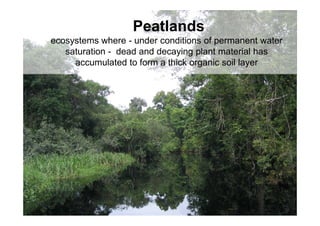
Peatlands                             2
ecosystems where - under conditions of permanent water
   saturation - dead and decaying plant material has
     accumulated to form a thick organic soil layer
Mitigation hotspots                         3
                                                            3


Key role in global climate regulation:

•   The most concentrated and most important
    reservoirs of terrestrial carbon: 550 Gton C.

•   2 Gton CO2 /year from drained peatland

•   From only 50 million ha = 0.3% of world land area


High value biodiversity & environmental services

                 HOTSPOTS FOR REDD AND NAMA’S
In which countries?                                         4

 Very large                                                   Belarus:
                    Finland: 67 Mt/CO2/yr                   41 Mt/CO2/yr
 stocks in
Canada and                                                                 Russia: 160
                                   Germany: 32 Mt/CO2/yr
  Alaska                                                                    Mt/CO2/yr


    US:                        Poland:               China:
                                                  77 Mt/CO2/yr              Mongolia:
67 Mt/CO2/yr                 24 Mt/CO2/yr
                                                                               45
                                                                            Mt/CO2/yr
                                                      SE Asia:
  Large stocks in                                     peat CO2
  South America,                                       = 70%
     e.g. Peru         Brazil:                         of all its
                    12 Mt/CO2/yr                        fossil
                                                      fuel CO2
                                  Sub-Sahara Africa:
                                peat CO2 = 25% of all its
                                     fossil fuel CO2

Find stocks and emissions from all countries at www.wetlands.org/peatco2
Reference levels                           5


• After clearing and draining, emissions from peatland
continue for decades, or even centuries
• To be reported for all these years


  Consequences for recording progress towards
meeting emission reduction targets
Reference levels                                                    6 6


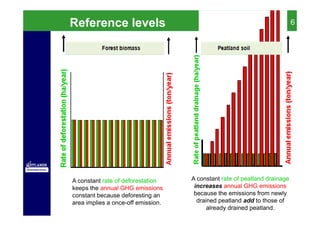
A constant rate of deforestation    A constant rate of peatland drainage
keeps the annual GHG emissions       increases annual GHG emissions
constant because deforesting an      because the emissions from newly
area implies a once-off emission.     drained peatland add to those of
                                          already drained peatland.
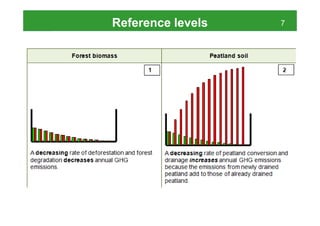
Reference levels   7
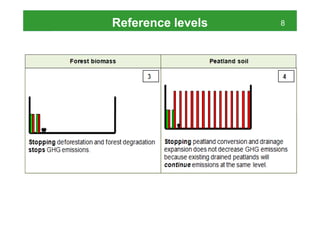
Reference levels   8
Reference levels   9


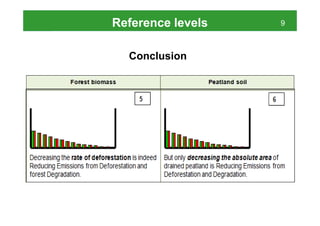
  Conclusion
10
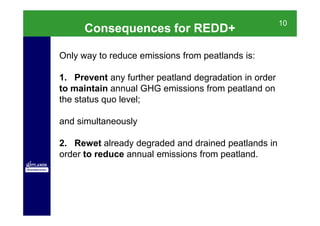
      Consequences for REDD+

Only way to reduce emissions from peatlands is:

1. Prevent any further peatland degradation in order
to maintain annual GHG emissions from peatland on
the status quo level;

and simultaneously

2. Rewet already degraded and drained peatlands in
order to reduce annual emissions from peatland.
11
       Consequences for REDD+

Reasons for preventing new drainage:

• Emissions from new drainage come on top of
  ongoing emissions from already drained areas

•   Not all wetlands can be restored and not all
    emissions can be stopped at all times from rewetting.
      Rewetting can not 1:1 compensate for drainage.

•   The amount of peatlands that need to be rewetted to
    compensate emissions from new drainage is
    not realistic

    Peatlands should become NO-GO Zones
12
Priorities for achieving reduction targets

  1. Preventing further peatland degradation:
  •   No more conversion: undisturbed peatlands must
      become NO GO ZONES
  •   Existing concessions must be revoked and shift to
      already degraded mineral soils
  •   Supply chains must exclude products from drained
      peatlands


  2. Rewetting drained peatlands:
  •   Restore peat soils where possible
  •   Paludicultures for severely degraded soils
Peatland MRV

• Peatlands: complex and different from other
  ecosystems
  Develop sophisticated MRV methodologies?

• Peatland emissions increase rapidly when
  conversion and degradation proceeds
  Stop radically  NO GO!

   Make rapidly a practical MRV system.
   Don’t let the perfect be the enemy of the good.
Peatland MRV

• Monitoring a peat swamp moratorium is simple:

• In peatlands, the interdependency between
  vegetation, peat and water is very tight

  Deterioration of any of these components leads to
  degradation and to increased emissions

  Each component can be used as an indicator for
  the condition of the entire system
Peatland MRV

• Emissions increase by:
   – removing (substantial) tree biomass
   – increasing drainage and subsequent peat
     oxidation
   – fire

   Monitor changes in crown structure/cover
  and drainage infrastructure
Peatland MRV

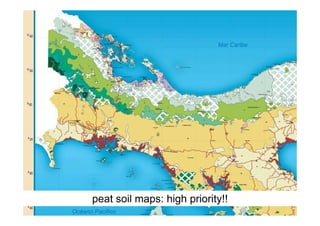
• Simple monitoring can be based on

   – peat soil maps: high priority!!
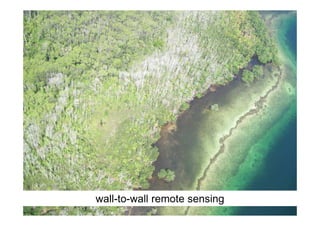
   – wall-to-wall remote sensing of land use/cover
     using high-resolution satellite imagery
   – simple conservative algorithms for assessing
     emission effects of land use change, and
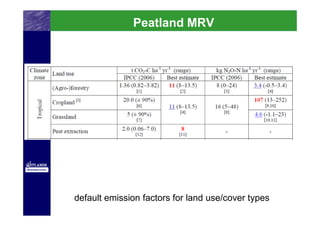
   – default emission factors for the identified types
     of land use/cover (cf. new literature, IPCC
     2013 revision)

• This would be sufficient to guard the current
  peatswamp emission situation.
peat soil maps: high priority!!
wall-to-wall remote sensing
Peatland MRV


default emission factors for land use/cover types
Peatland MRV


• Refine on district/project level:

• use water level and subsidence to assess
  emission reductions from rewetting/reforestation.

• Further knowledge will refine the monitoring
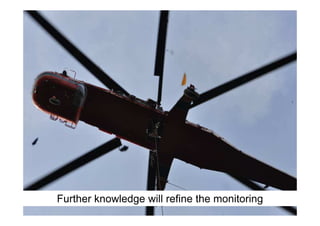
Further knowledge will refine the monitoring
Peatland MRV

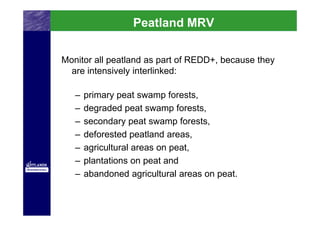
Monitor all peatland as part of REDD+, because they
  are intensively interlinked:

   –   primary peat swamp forests,
   –   degraded peat swamp forests,
   –   secondary peat swamp forests,
   –   deforested peatland areas,
   –   agricultural areas on peat,
   –   plantations on peat and
   –   abandoned agricultural areas on peat.
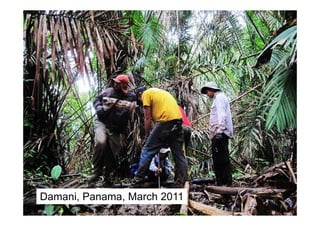
Damani, Panama, March 2011
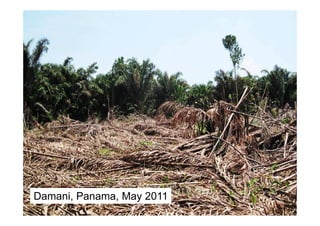
Damani, Panama, May 2011
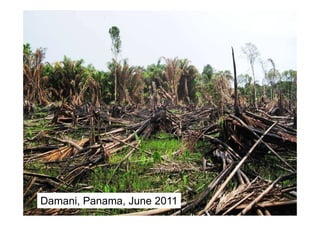
Damani, Panama, June 2011
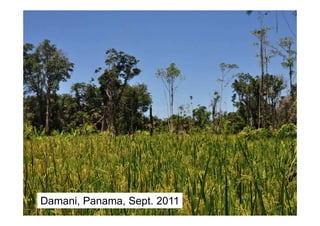
Damani, Panama, Sept. 2011
PeatlandMRV
                Peatlad MRV

• Peatland conversion is extremely rapid and largely
  irreversible
• Peatland conversion leads to persistent and
  increasing emissions

  Peatlands NO GOs for further conversion
   Include all peatland in REDD+ monitoring
   Rapidly implement a simple and practical MRV
  system.

Don’t let the perfect become the enemy of the good!
THANK YOU                  More information:
                             www.wetlands.org/peatclimate
                                   www.imcg.net


                                       22 Oktober 1997


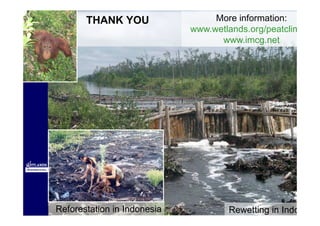
Reforestation in Indonesia           Rewetting in Indonesia

UNFCCC Getting Reference Levels and MRV Right for Organic Soils

  • 1.
    Getting Reference Levelsand MRV Right for Organic Soils Panama, 3 October 2011 Susanna Tol, Wetlands International Hans Joosten, Greifswald University / IMCG
  • 2.
    Peatlands 2 ecosystems where - under conditions of permanent water saturation - dead and decaying plant material has accumulated to form a thick organic soil layer
  • 3.
    Mitigation hotspots 3 3 Key role in global climate regulation: • The most concentrated and most important reservoirs of terrestrial carbon: 550 Gton C. • 2 Gton CO2 /year from drained peatland • From only 50 million ha = 0.3% of world land area High value biodiversity & environmental services HOTSPOTS FOR REDD AND NAMA’S
  • 4.
    In which countries? 4 Very large Belarus: Finland: 67 Mt/CO2/yr 41 Mt/CO2/yr stocks in Canada and Russia: 160 Germany: 32 Mt/CO2/yr Alaska Mt/CO2/yr US: Poland: China: 77 Mt/CO2/yr Mongolia: 67 Mt/CO2/yr 24 Mt/CO2/yr 45 Mt/CO2/yr SE Asia: Large stocks in peat CO2 South America, = 70% e.g. Peru Brazil: of all its 12 Mt/CO2/yr fossil fuel CO2 Sub-Sahara Africa: peat CO2 = 25% of all its fossil fuel CO2 Find stocks and emissions from all countries at www.wetlands.org/peatco2
  • 5.
    Reference levels 5 • After clearing and draining, emissions from peatland continue for decades, or even centuries • To be reported for all these years Consequences for recording progress towards meeting emission reduction targets
  • 6.
    Reference levels 6 6 A constant rate of deforestation A constant rate of peatland drainage keeps the annual GHG emissions increases annual GHG emissions constant because deforesting an because the emissions from newly area implies a once-off emission. drained peatland add to those of already drained peatland.
  • 7.
  • 8.
  • 9.
    Reference levels 9 Conclusion
  • 10.
    10 Consequences for REDD+ Only way to reduce emissions from peatlands is: 1. Prevent any further peatland degradation in order to maintain annual GHG emissions from peatland on the status quo level; and simultaneously 2. Rewet already degraded and drained peatlands in order to reduce annual emissions from peatland.
  • 11.
    11 Consequences for REDD+ Reasons for preventing new drainage: • Emissions from new drainage come on top of ongoing emissions from already drained areas • Not all wetlands can be restored and not all emissions can be stopped at all times from rewetting. Rewetting can not 1:1 compensate for drainage. • The amount of peatlands that need to be rewetted to compensate emissions from new drainage is not realistic Peatlands should become NO-GO Zones
  • 12.
    12 Priorities for achievingreduction targets 1. Preventing further peatland degradation: • No more conversion: undisturbed peatlands must become NO GO ZONES • Existing concessions must be revoked and shift to already degraded mineral soils • Supply chains must exclude products from drained peatlands 2. Rewetting drained peatlands: • Restore peat soils where possible • Paludicultures for severely degraded soils
  • 13.
    Peatland MRV • Peatlands:complex and different from other ecosystems Develop sophisticated MRV methodologies? • Peatland emissions increase rapidly when conversion and degradation proceeds Stop radically NO GO! Make rapidly a practical MRV system. Don’t let the perfect be the enemy of the good.
  • 14.
    Peatland MRV • Monitoringa peat swamp moratorium is simple: • In peatlands, the interdependency between vegetation, peat and water is very tight Deterioration of any of these components leads to degradation and to increased emissions Each component can be used as an indicator for the condition of the entire system
  • 15.
    Peatland MRV • Emissionsincrease by: – removing (substantial) tree biomass – increasing drainage and subsequent peat oxidation – fire Monitor changes in crown structure/cover and drainage infrastructure
  • 16.
    Peatland MRV • Simplemonitoring can be based on – peat soil maps: high priority!! – wall-to-wall remote sensing of land use/cover using high-resolution satellite imagery – simple conservative algorithms for assessing emission effects of land use change, and – default emission factors for the identified types of land use/cover (cf. new literature, IPCC 2013 revision) • This would be sufficient to guard the current peatswamp emission situation.
  • 17.
    peat soil maps:high priority!!
  • 18.
  • 19.
    Peatland MRV default emissionfactors for land use/cover types
  • 20.
    Peatland MRV • Refineon district/project level: • use water level and subsidence to assess emission reductions from rewetting/reforestation. • Further knowledge will refine the monitoring
  • 21.
    Further knowledge willrefine the monitoring
  • 22.
    Peatland MRV Monitor allpeatland as part of REDD+, because they are intensively interlinked: – primary peat swamp forests, – degraded peat swamp forests, – secondary peat swamp forests, – deforested peatland areas, – agricultural areas on peat, – plantations on peat and – abandoned agricultural areas on peat.
  • 23.
  • 24.
  • 25.
  • 26.
  • 27.
    PeatlandMRV Peatlad MRV • Peatland conversion is extremely rapid and largely irreversible • Peatland conversion leads to persistent and increasing emissions Peatlands NO GOs for further conversion Include all peatland in REDD+ monitoring Rapidly implement a simple and practical MRV system. Don’t let the perfect become the enemy of the good!
  • 28.
    THANK YOU More information: www.wetlands.org/peatclimate www.imcg.net 22 Oktober 1997 Reforestation in Indonesia Rewetting in Indonesia