1 December 2012, Crown Plaza Hotel, Doha
Marcel Silvius, Wetlands International

Marja-Liisa Tapio-Biström, FAO
Peatlands and Organic Soils Mitigation Initiative
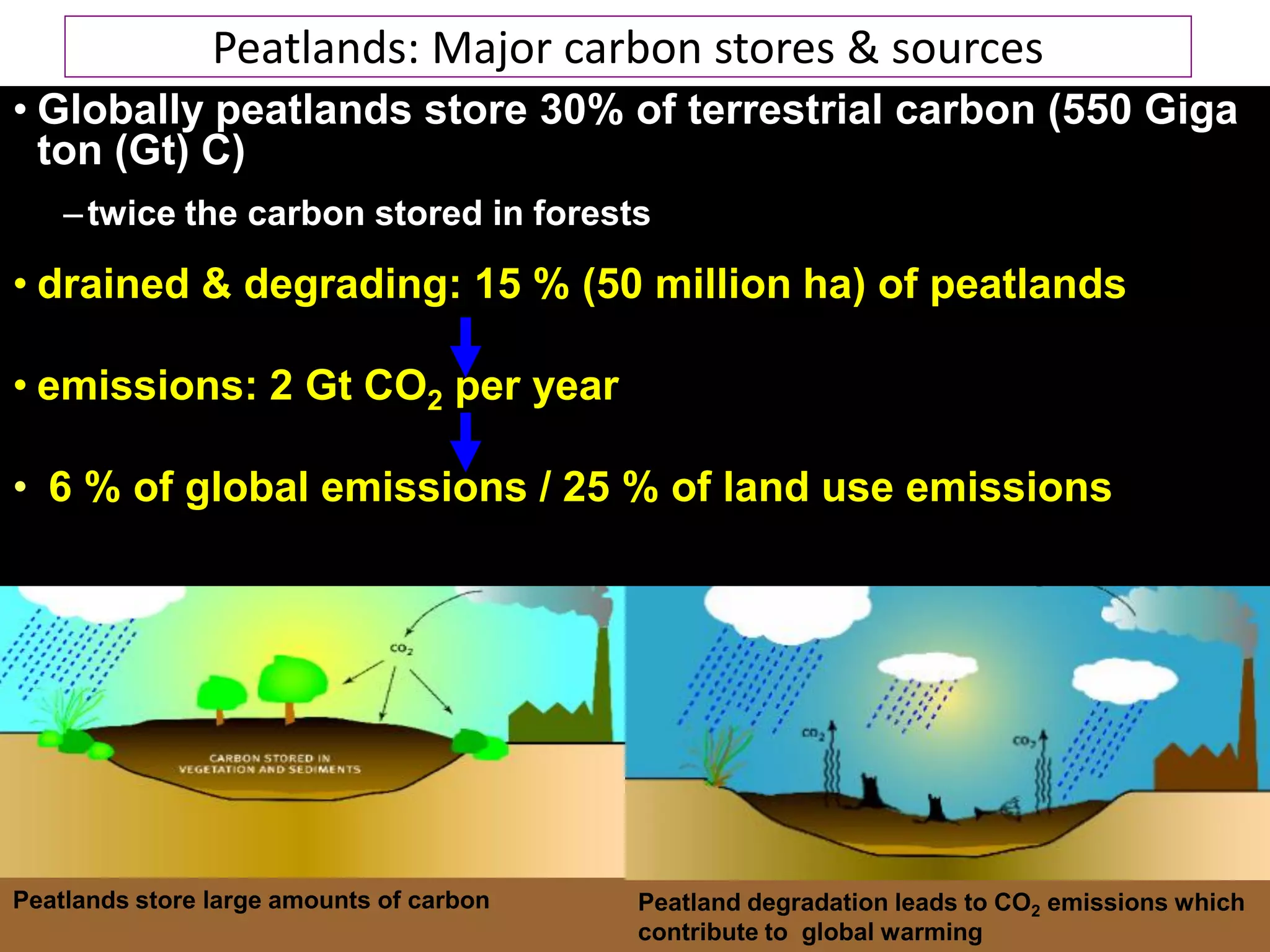
Peatlands: Major carbon stores & sources
• Globally peatlands store 30% of terrestrial carbon (550 Giga
  ton (Gt) C)
    – twice the carbon stored in forests

• drained & degrading: 15 % (50 million ha) of peatlands

• emissions: 2 Gt CO2 per year

• 6 % of global emissions / 25 % of land use emissions


Peatlands store large amounts of carbon   Peatland degradation leads to CO2 emissions which
                                          contribute to global warming
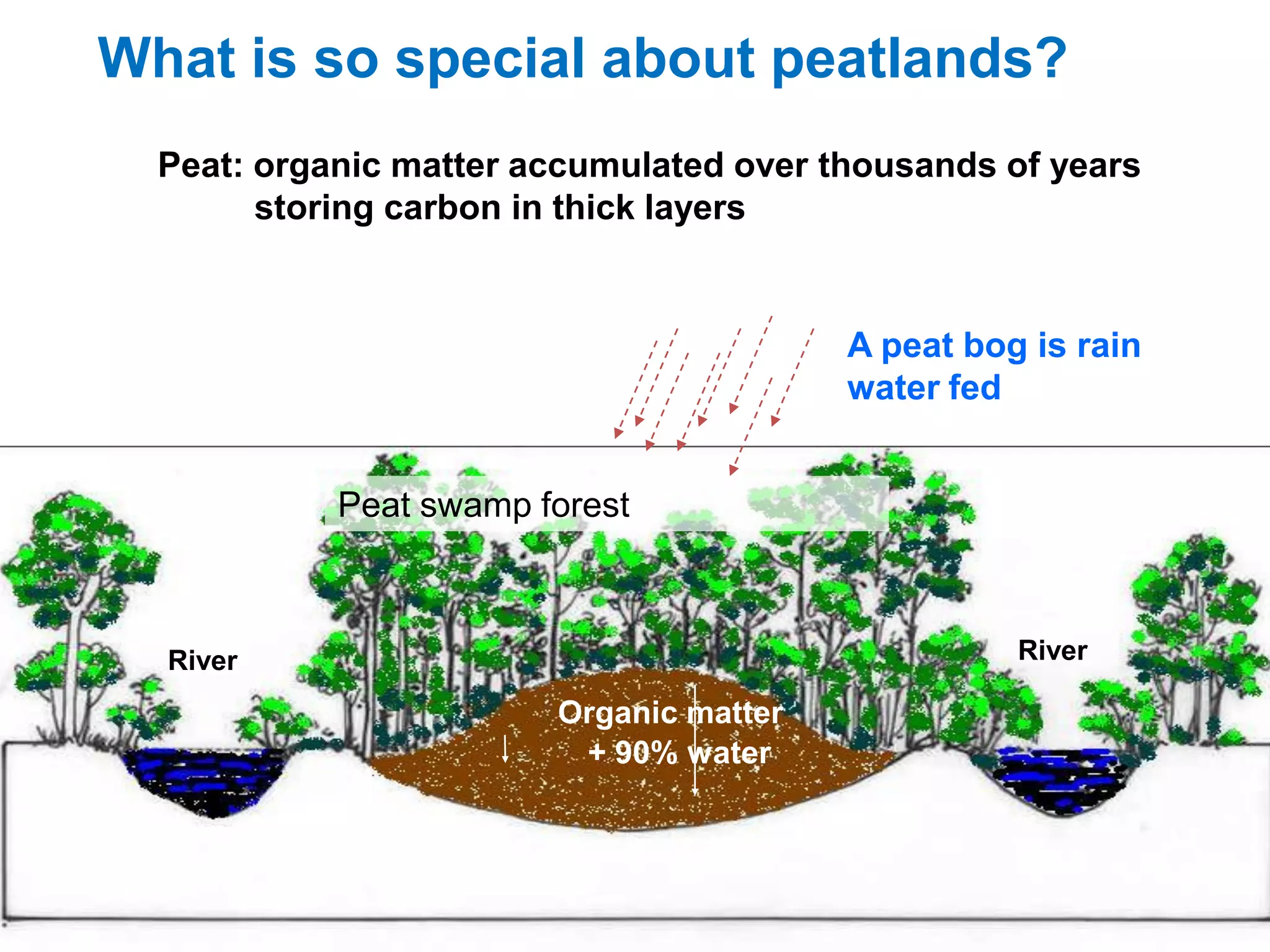
What is so special about peatlands?
  Peat: organic matter accumulated over thousands of years
        storing carbon in thick layers


                                          A peat bog is rain
                                          water fed


            Peat swamp forest


  River                                             River
                        Mineral Soil
                         Organic matter
                          + 90% water
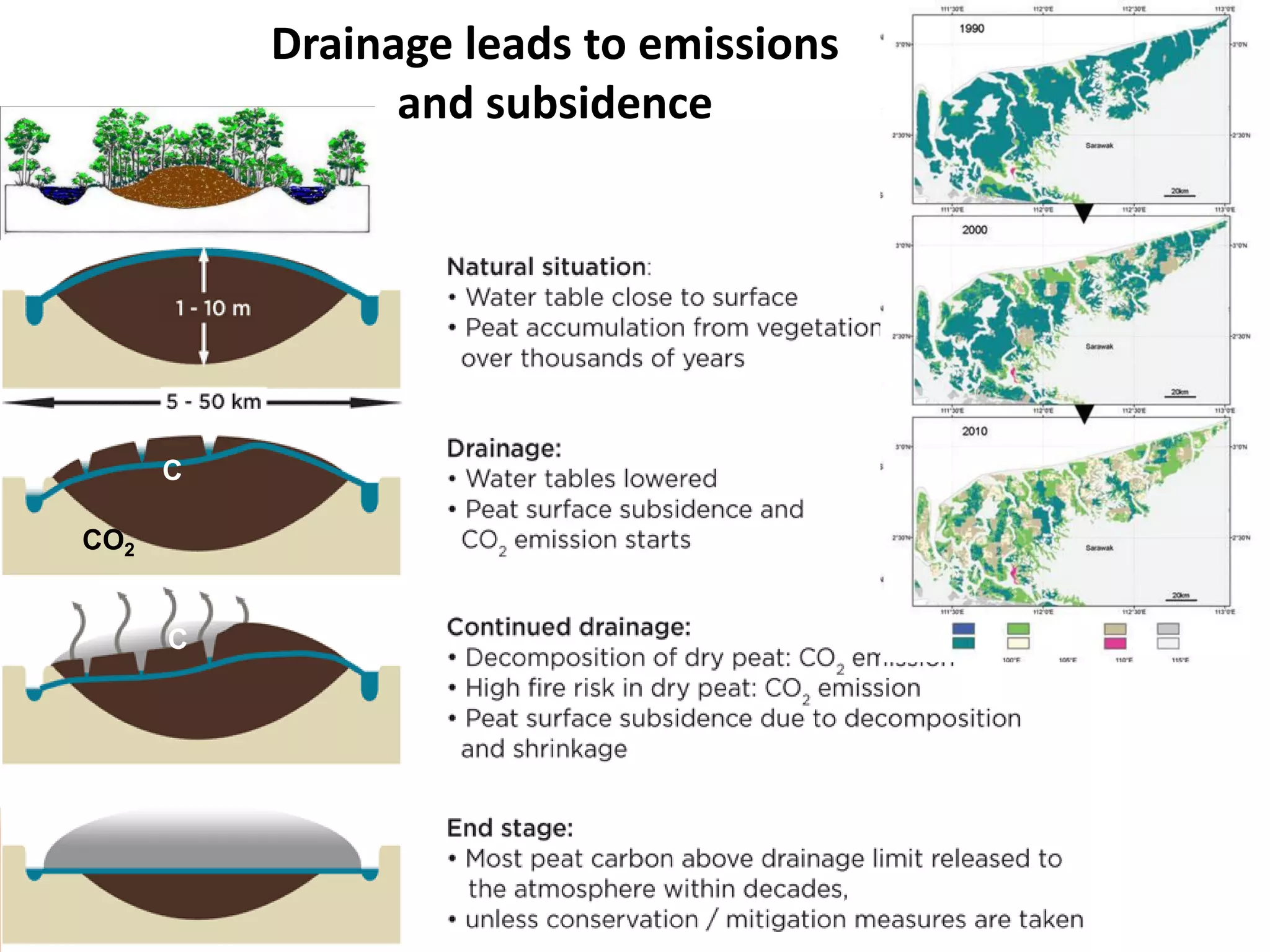
Drainage leads to emissions
                and subsidence


      C

CO2


      C
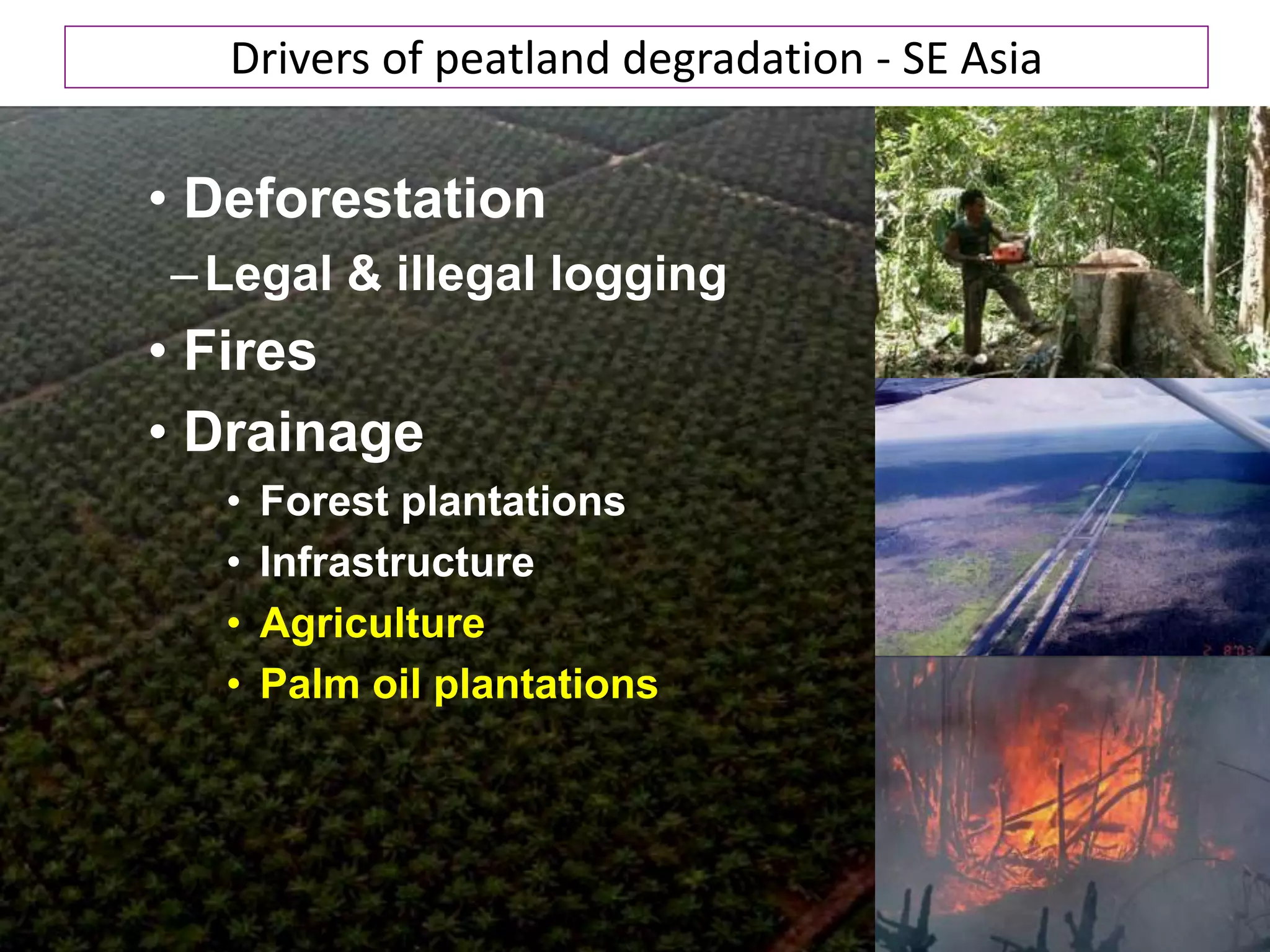
Drivers of peatland degradation - SE Asia

• Deforestation
– Legal & illegal logging
• Fires
• Drainage
  •   Forest plantations
  •   Infrastructure
  •   Agriculture
  •   Palm oil plantations
REDD+
Peat carbon pool mandatory under REDD+
– Inclusion of soil carbon in reference level.
  Methodological guidance by 2013
– Incentive to prevent or reverse drainage, rewet
  and revegetate drained peat forests
– Multilateral and bilateral funding
  •   for capacity building and technical assistance
  •   Long term finance is still under negotiation
– Private sector interest in REDD+
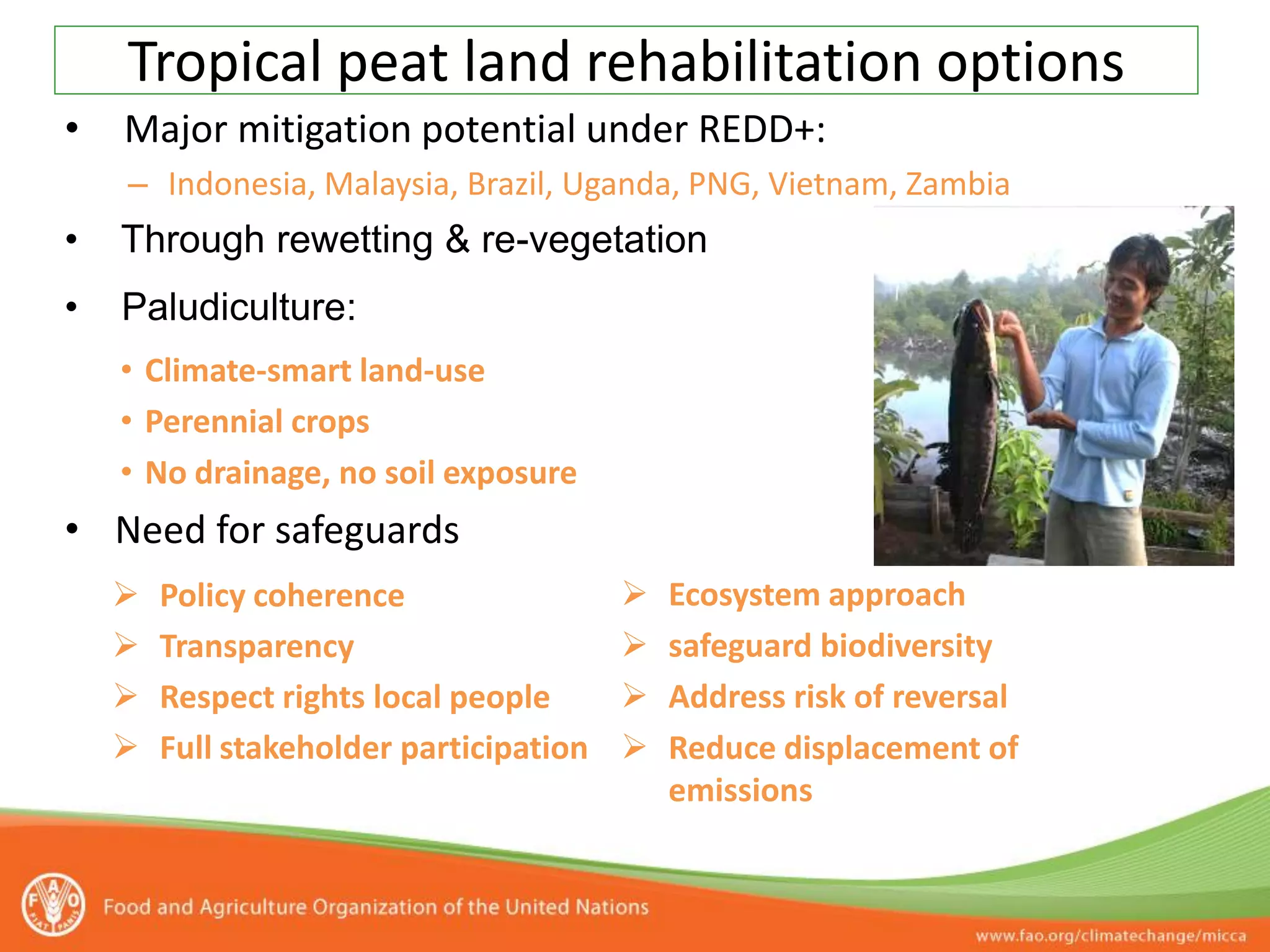
Tropical peat land rehabilitation options
•   Major mitigation potential under REDD+:
    – Indonesia, Malaysia, Brazil, Uganda, PNG, Vietnam, Zambia
•   Through rewetting & re-vegetation
•   Paludiculture:
    • Climate-smart land-use
    • Perennial crops
    • No drainage, no soil exposure
• Need for safeguards
       Policy coherence                    Ecosystem approach
       Transparency                        safeguard biodiversity
       Respect rights local people         Address risk of reversal
       Full stakeholder participation      Reduce displacement of
                                             emissions
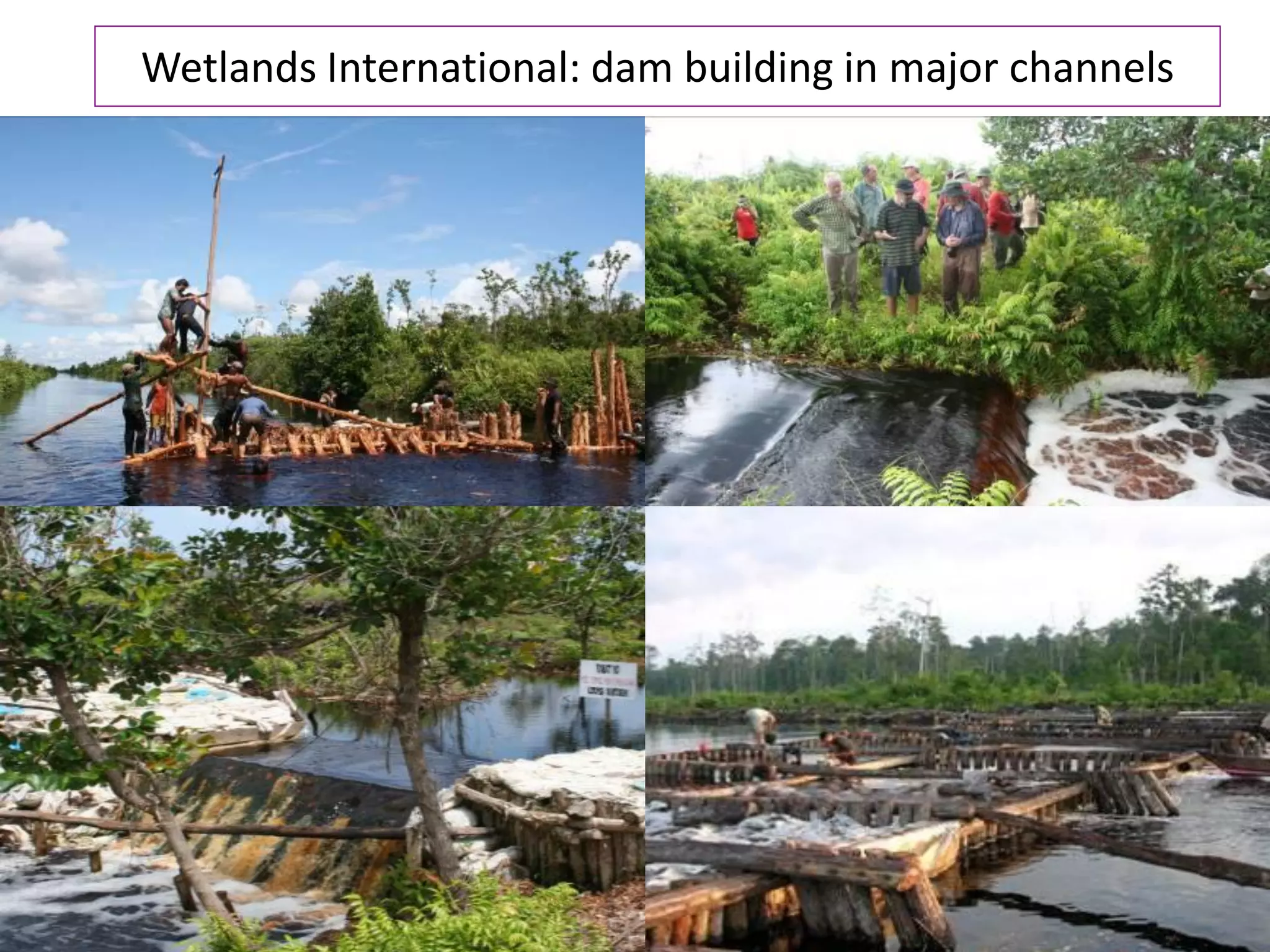
Wetlands International: dam building in major channels

• Rehabilitation projects in drained and degraded
  peatlands: aiming to bring water tables up to a level
  that peatswamp forest may be restored and carbon
  emissions stopped.
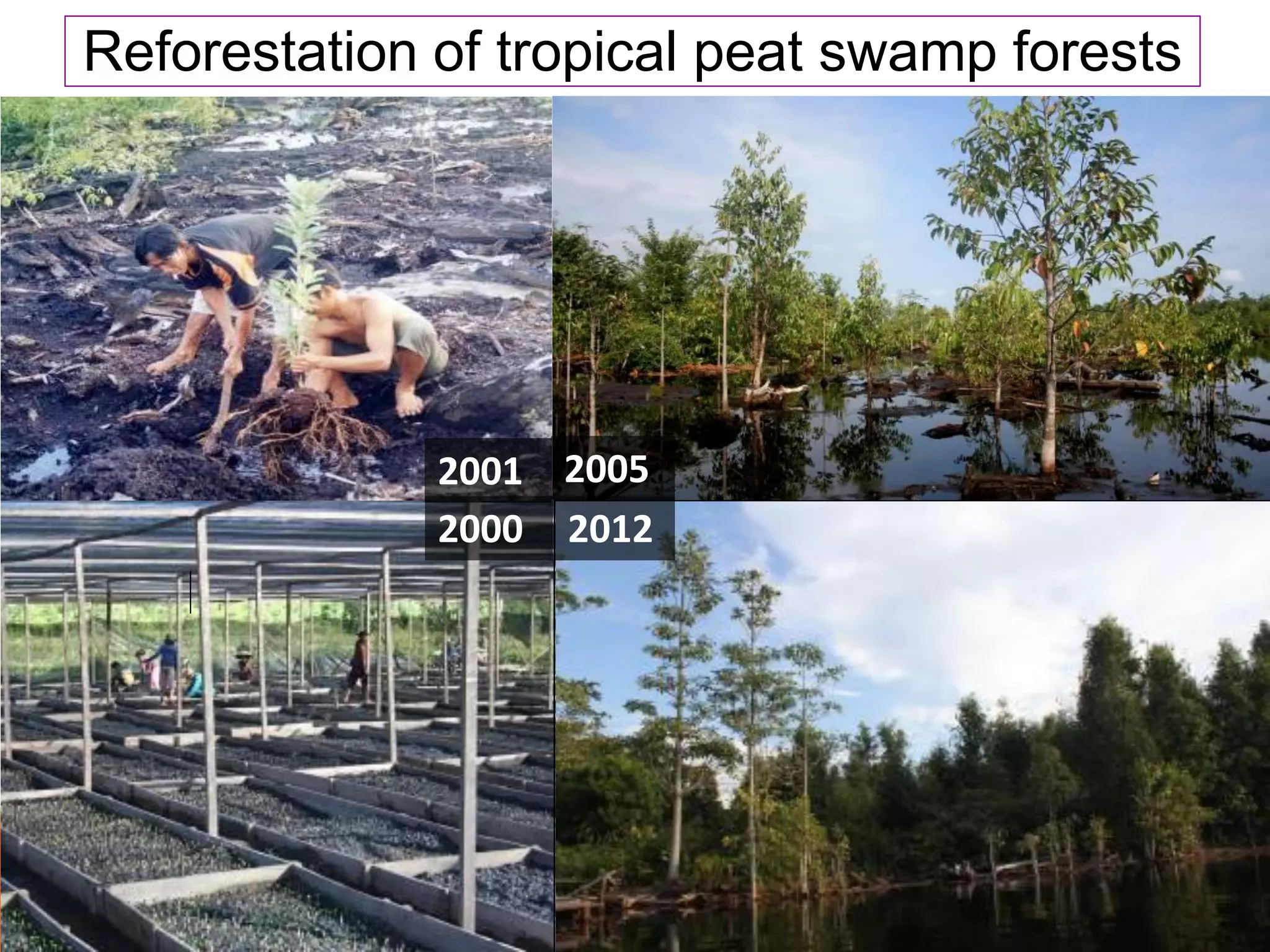
Reforestation of tropical peat swamp forests


              2001 2005
              2000 2012
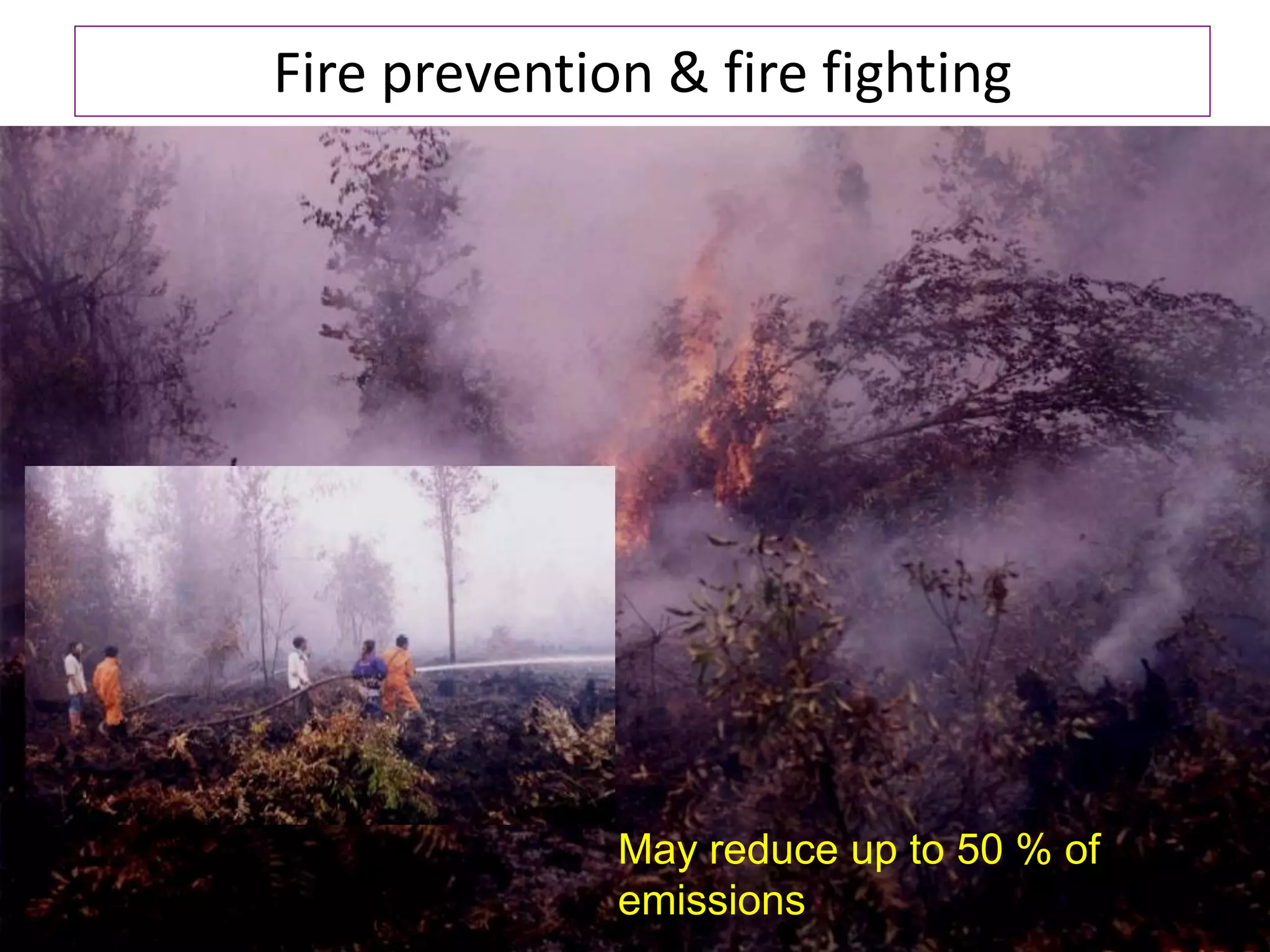
Fire prevention & fire fighting


              May reduce up to 50 % of
              emissions
Global 'Organic soils and peatlands climate
            change mitigation initiative'
•     Informal network started in Durban, 2011 by
      FAO & Wetlands International together with
      partners
•     Aims: reduce emissions from peatlands &
      safeguard the other vital ecosystem
      services peatlands provide.
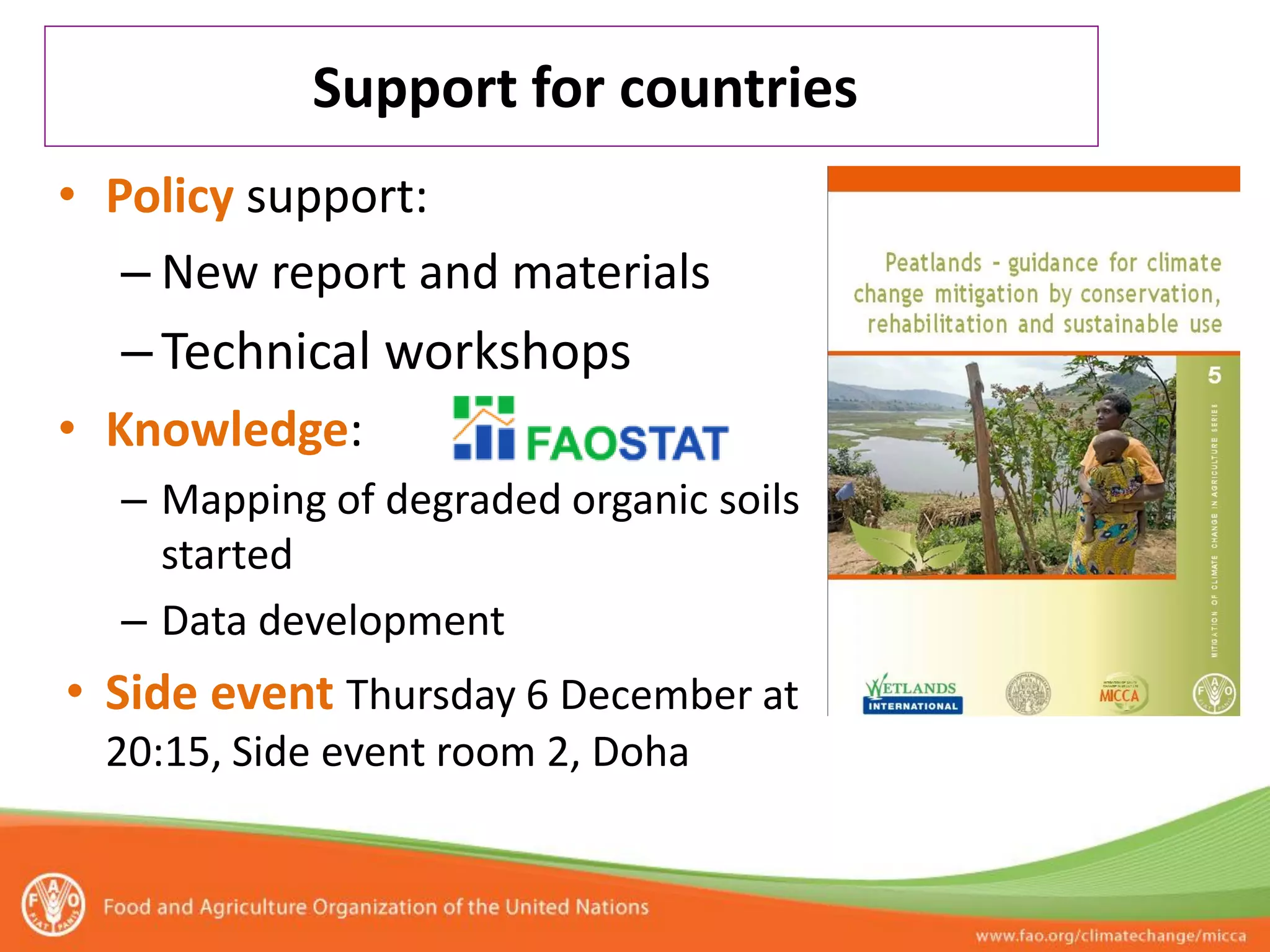
Support for countries
• Policy support:
   – New report and materials
  – Technical workshops
• Knowledge:
  – Mapping of degraded organic soils
    started
  – Data development
• Side event Thursday 6 December at
  20:15, Side event room 2, Doha
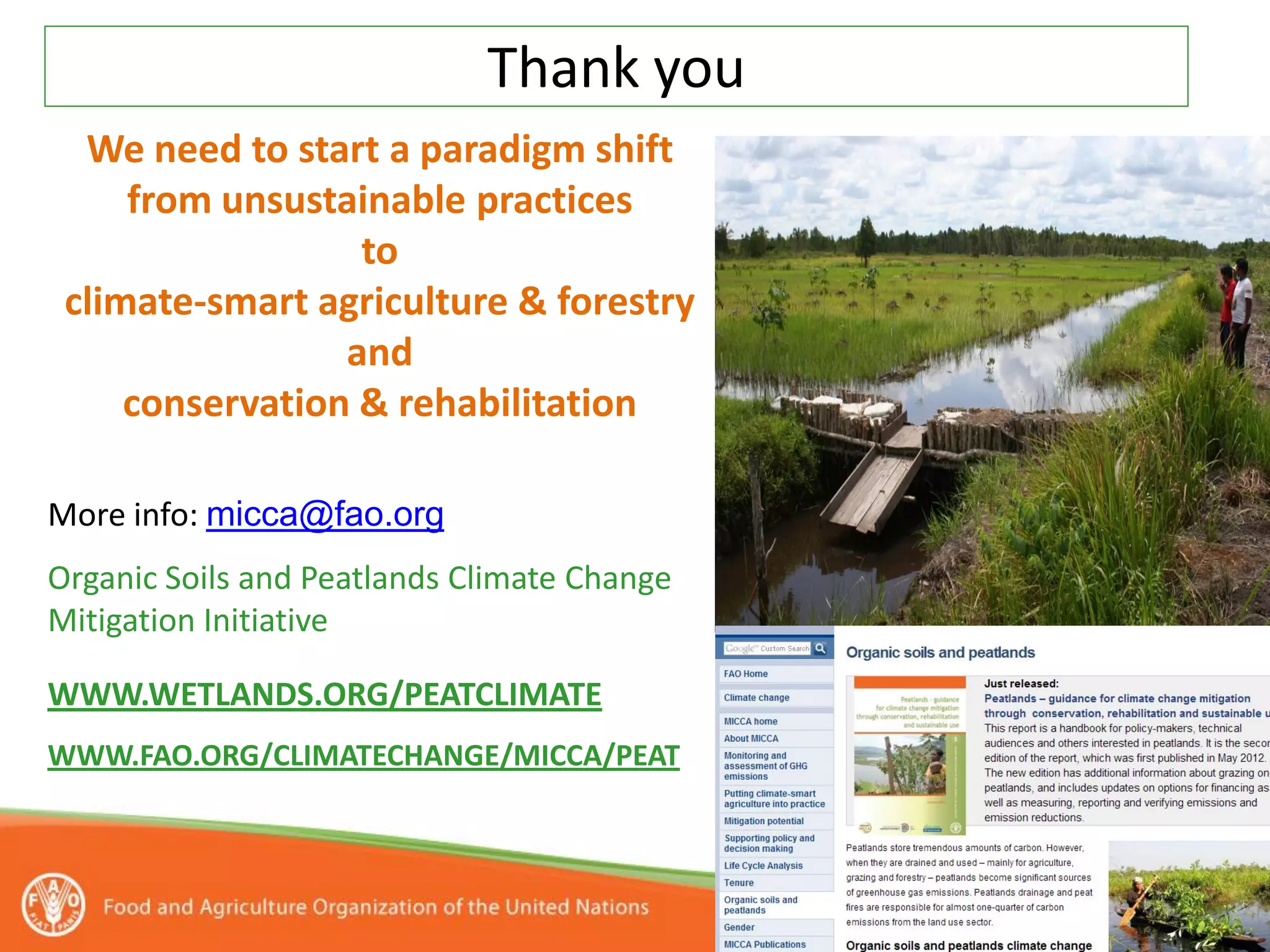
Thank you
  We need to start a paradigm shift
     from unsustainable practices
                  to
 climate-smart agriculture & forestry
                 and
     conservation & rehabilitation

More info: micca@fao.org
Organic Soils and Peatlands Climate Change
Mitigation Initiative

WWW.WETLANDS.ORG/PEATCLIMATE
WWW.FAO.ORG/CLIMATECHANGE/MICCA/PEAT
ADDITIONAL RESOURCES
Adapted management – less emissions
• Minimizing drainage  reduction in peat
  oxidation and land degradation
• Choosing crops:
  – adapted to high soil moisture
  – permanent crops
  – shade reduces surface temperatures
• Avoiding plowing & land clearing by fire
• Limited fertilization
• Well managed grazing: limited heard sizes
                          Jauhiainen et al., 2012; FAO & Wetlands
                          International, 2012
Alternative livelihoods on peatlands
• Social safeguards:
  – Policies
  – Local communities involvement
  – Stakeholder participation
• Developing paludiculture on rewetted
  peatlands
• Other possible livelihoods from peatlands:
  aquaculture, tourism, biomass, fibre, rubber…

Peatlands and REDD+

  • 1.
    1 December 2012,Crown Plaza Hotel, Doha Marcel Silvius, Wetlands International Marja-Liisa Tapio-Biström, FAO Peatlands and Organic Soils Mitigation Initiative
  • 2.
    Peatlands: Major carbonstores & sources • Globally peatlands store 30% of terrestrial carbon (550 Giga ton (Gt) C) – twice the carbon stored in forests • drained & degrading: 15 % (50 million ha) of peatlands • emissions: 2 Gt CO2 per year • 6 % of global emissions / 25 % of land use emissions Peatlands store large amounts of carbon Peatland degradation leads to CO2 emissions which contribute to global warming
  • 3.
    What is sospecial about peatlands? Peat: organic matter accumulated over thousands of years storing carbon in thick layers A peat bog is rain water fed Peat swamp forest River River Mineral Soil Organic matter + 90% water
  • 4.
    Drainage leads toemissions and subsidence C CO2 C
  • 6.
    Drivers of peatlanddegradation - SE Asia • Deforestation – Legal & illegal logging • Fires • Drainage • Forest plantations • Infrastructure • Agriculture • Palm oil plantations
  • 7.
    REDD+ Peat carbon poolmandatory under REDD+ – Inclusion of soil carbon in reference level. Methodological guidance by 2013 – Incentive to prevent or reverse drainage, rewet and revegetate drained peat forests – Multilateral and bilateral funding • for capacity building and technical assistance • Long term finance is still under negotiation – Private sector interest in REDD+
  • 8.
    Tropical peat landrehabilitation options • Major mitigation potential under REDD+: – Indonesia, Malaysia, Brazil, Uganda, PNG, Vietnam, Zambia • Through rewetting & re-vegetation • Paludiculture: • Climate-smart land-use • Perennial crops • No drainage, no soil exposure • Need for safeguards  Policy coherence  Ecosystem approach  Transparency  safeguard biodiversity  Respect rights local people  Address risk of reversal  Full stakeholder participation  Reduce displacement of emissions
  • 9.
    Wetlands International: dambuilding in major channels • Rehabilitation projects in drained and degraded peatlands: aiming to bring water tables up to a level that peatswamp forest may be restored and carbon emissions stopped.
  • 10.
    Reforestation of tropicalpeat swamp forests 2001 2005 2000 2012
  • 11.
    Fire prevention &fire fighting May reduce up to 50 % of emissions
  • 12.
    Global 'Organic soilsand peatlands climate change mitigation initiative' • Informal network started in Durban, 2011 by FAO & Wetlands International together with partners • Aims: reduce emissions from peatlands & safeguard the other vital ecosystem services peatlands provide.
  • 13.
    Support for countries •Policy support: – New report and materials – Technical workshops • Knowledge: – Mapping of degraded organic soils started – Data development • Side event Thursday 6 December at 20:15, Side event room 2, Doha
  • 14.
    Thank you We need to start a paradigm shift from unsustainable practices to climate-smart agriculture & forestry and conservation & rehabilitation More info: micca@fao.org Organic Soils and Peatlands Climate Change Mitigation Initiative WWW.WETLANDS.ORG/PEATCLIMATE WWW.FAO.ORG/CLIMATECHANGE/MICCA/PEAT
  • 15.
  • 17.
    Adapted management –less emissions • Minimizing drainage  reduction in peat oxidation and land degradation • Choosing crops: – adapted to high soil moisture – permanent crops – shade reduces surface temperatures • Avoiding plowing & land clearing by fire • Limited fertilization • Well managed grazing: limited heard sizes Jauhiainen et al., 2012; FAO & Wetlands International, 2012
  • 18.
    Alternative livelihoods onpeatlands • Social safeguards: – Policies – Local communities involvement – Stakeholder participation • Developing paludiculture on rewetted peatlands • Other possible livelihoods from peatlands: aquaculture, tourism, biomass, fibre, rubber…