

Understanding the Value
of Agility in the Cloud
•August 2015
•PANAYA WEBINAR
2
Today’s Speakers
Ofira Shafir
Your Moderator
Panaya
David S. Linthicum
SVP
Cloud Technology Partners
PANAYA WEBINAR
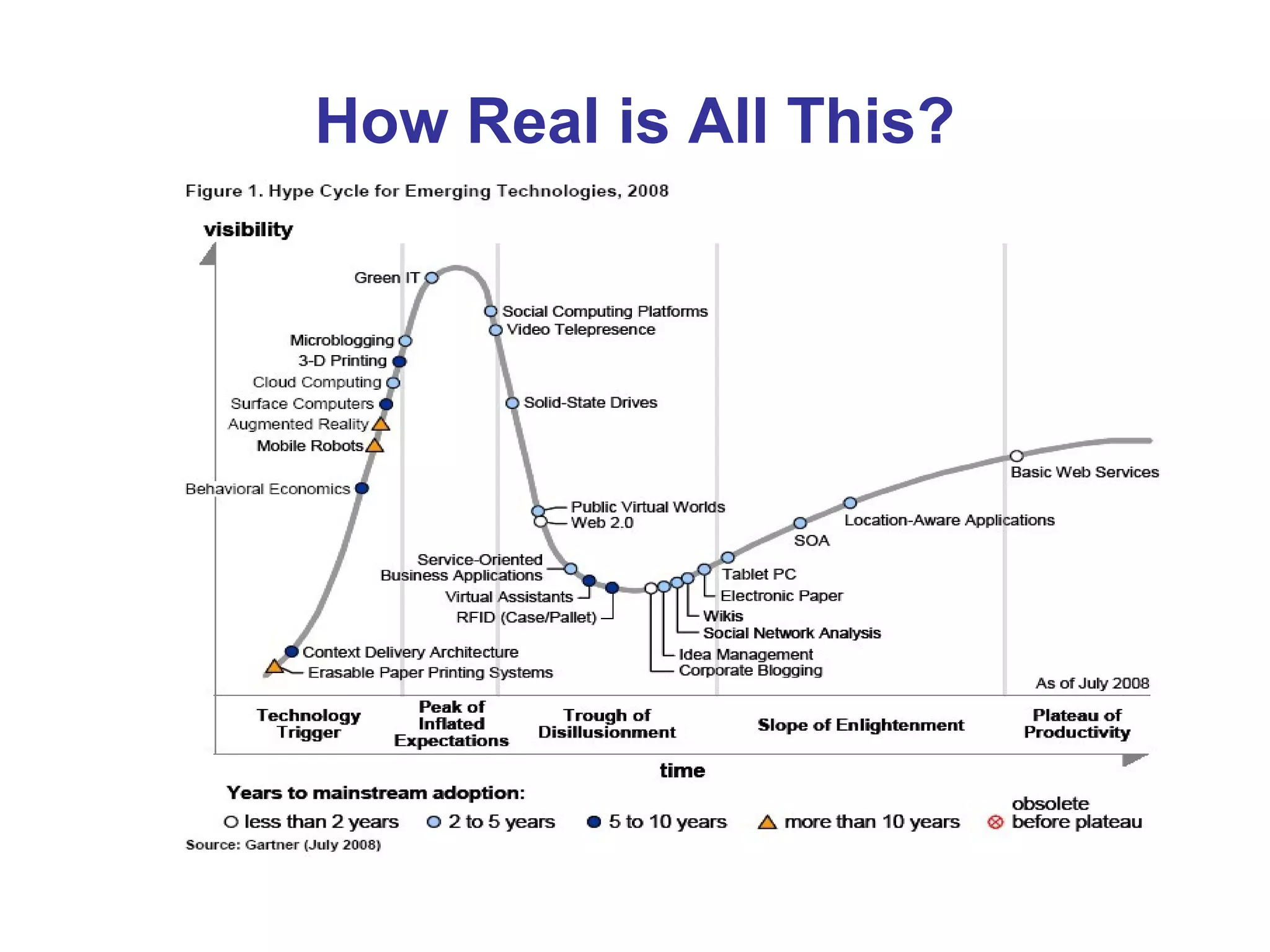
How Real is All This?
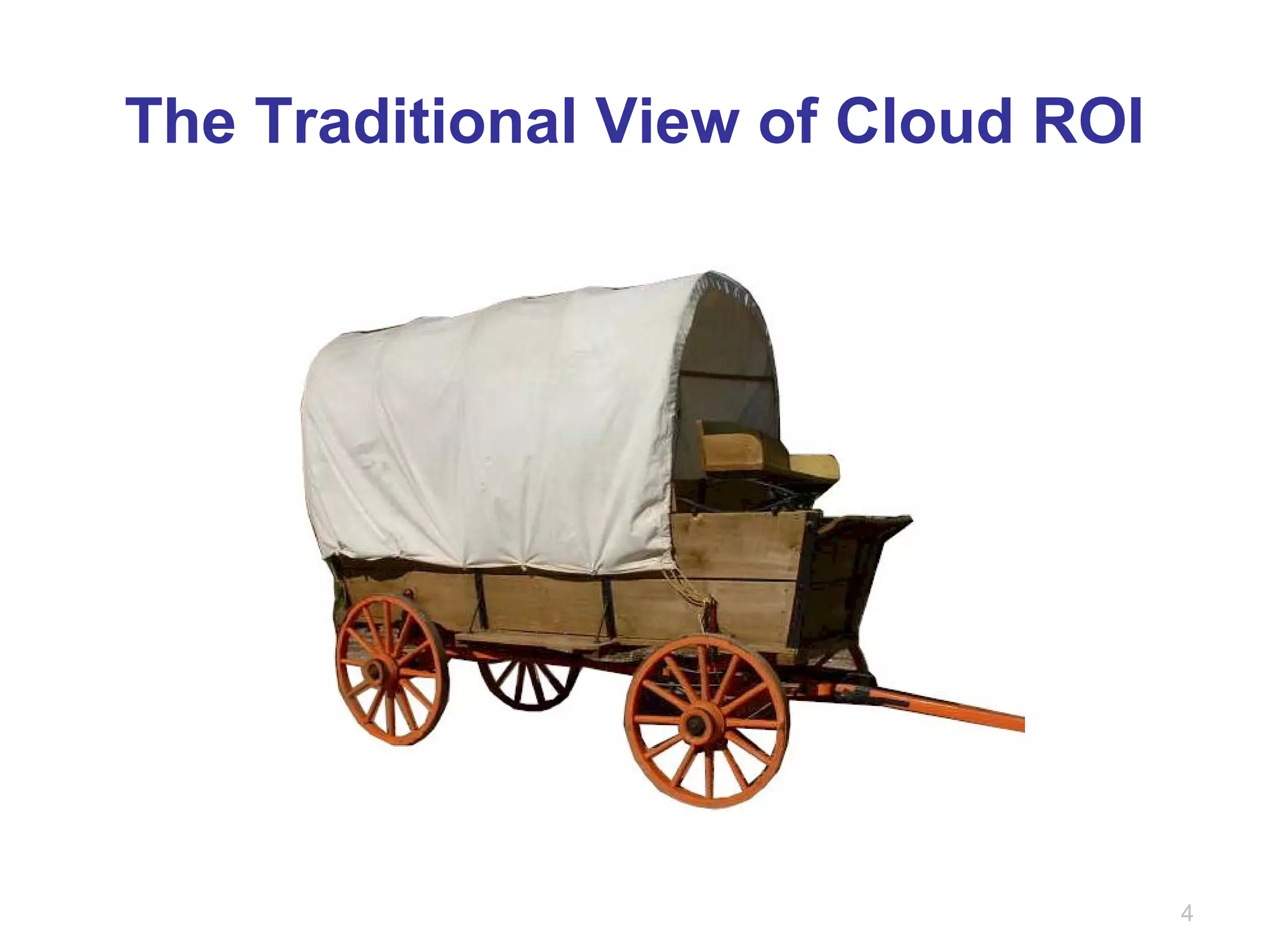
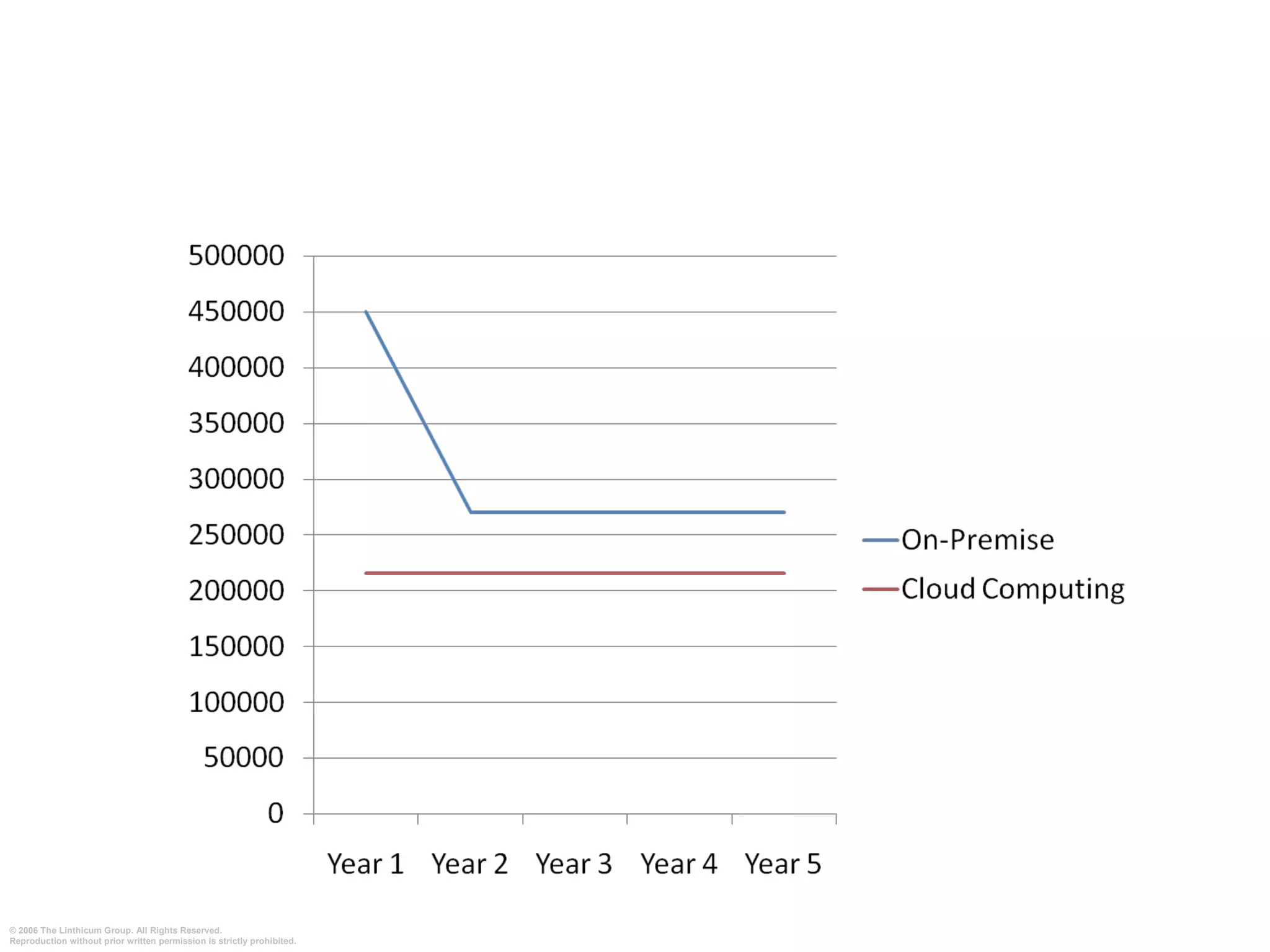
The Traditional View of Cloud ROI
4
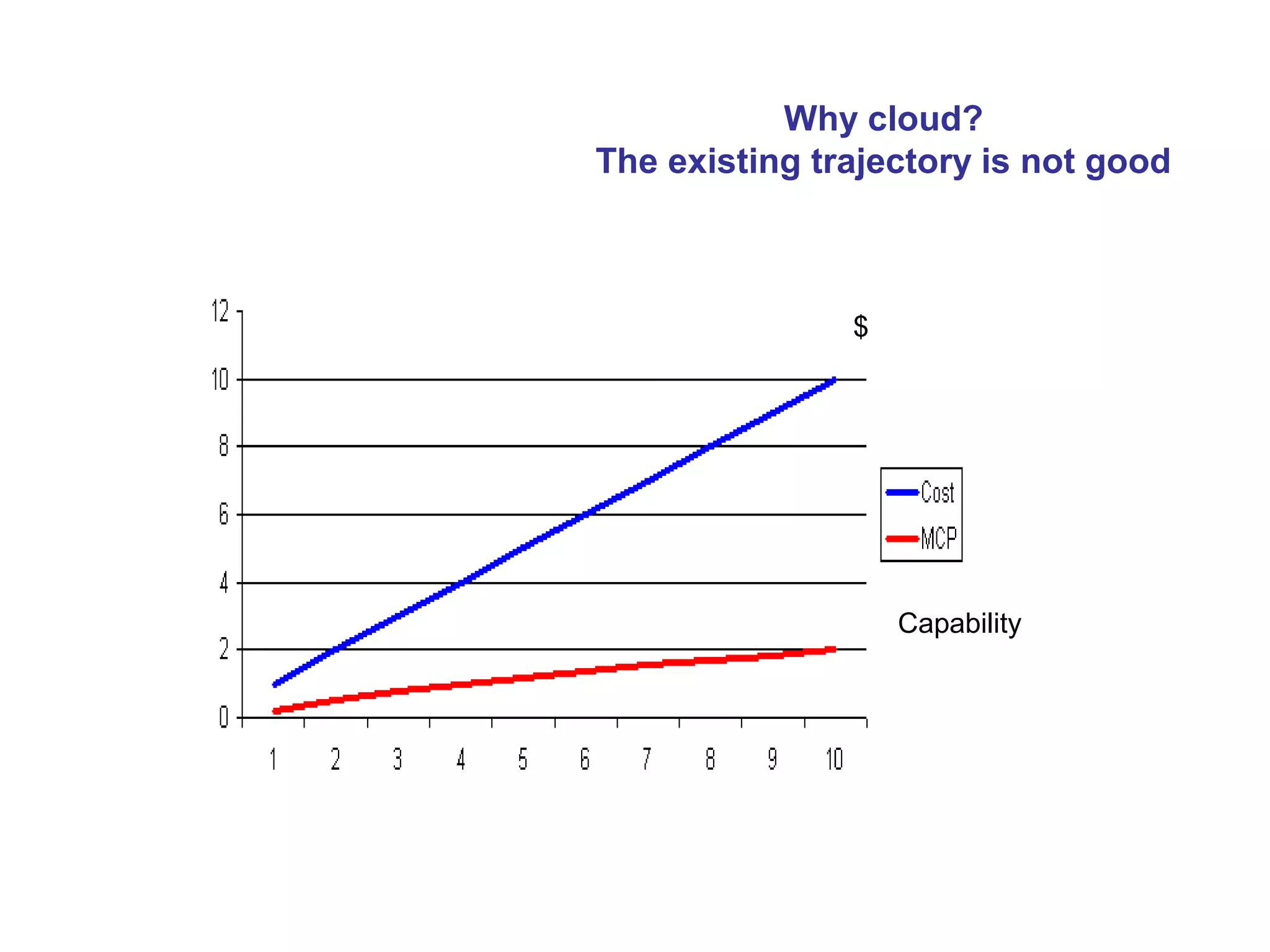
Why cloud?
The existing trajectory is not good
$
Capability
© 2006 The Linthicum Group. All Rights Reserved.
Reproduction without prior written permission is strictly prohibited.
•UNDERSTANDING THE ROI
© 2006 The Linthicum Group. All Rights Reserved.
Reproduction without prior written permission is strictly prohibited.
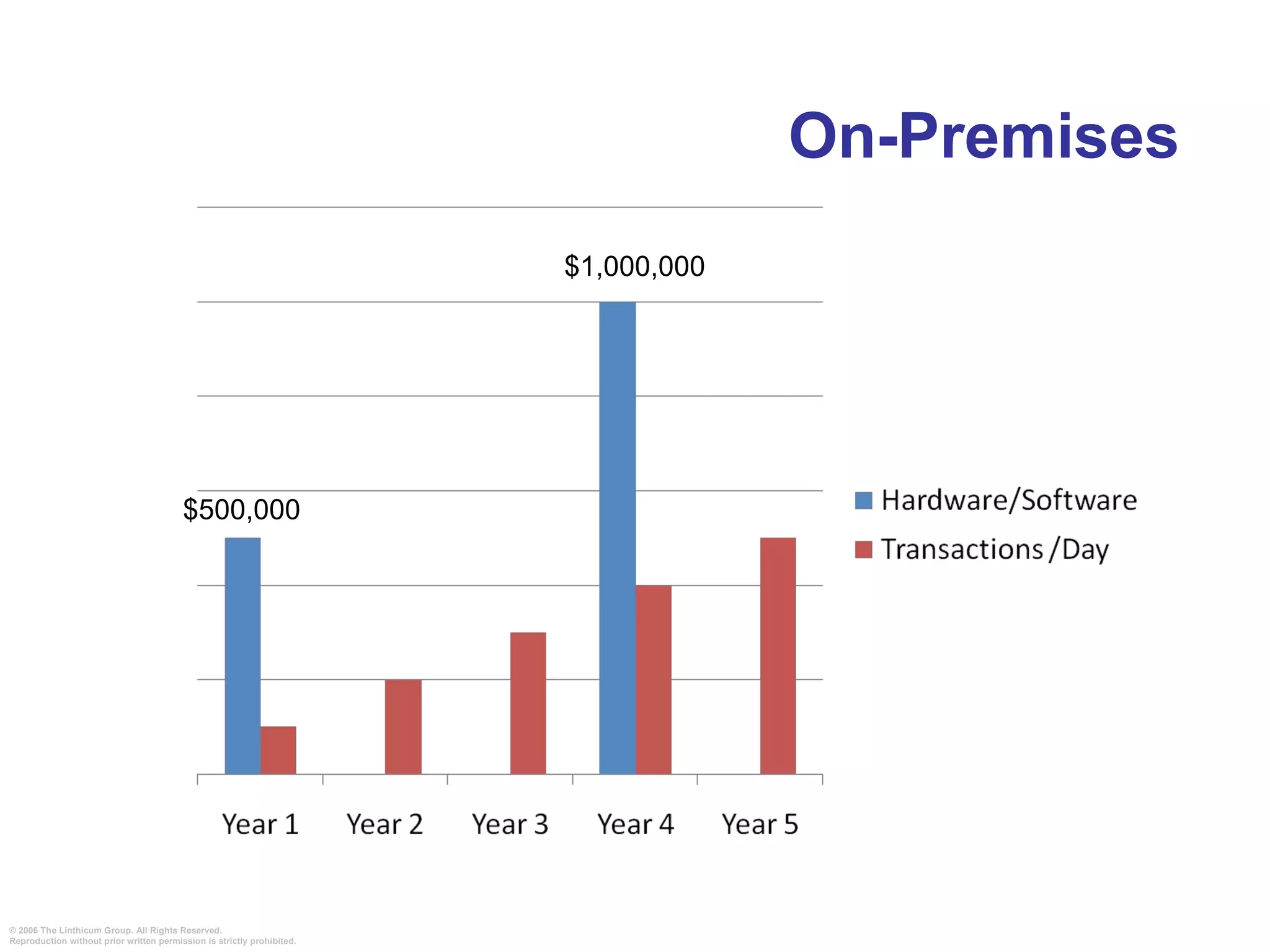
$500,000
$1,000,000
On-Premises
© 2006 The Linthicum Group. All Rights Reserved.
Reproduction without prior written permission is strictly prohibited.
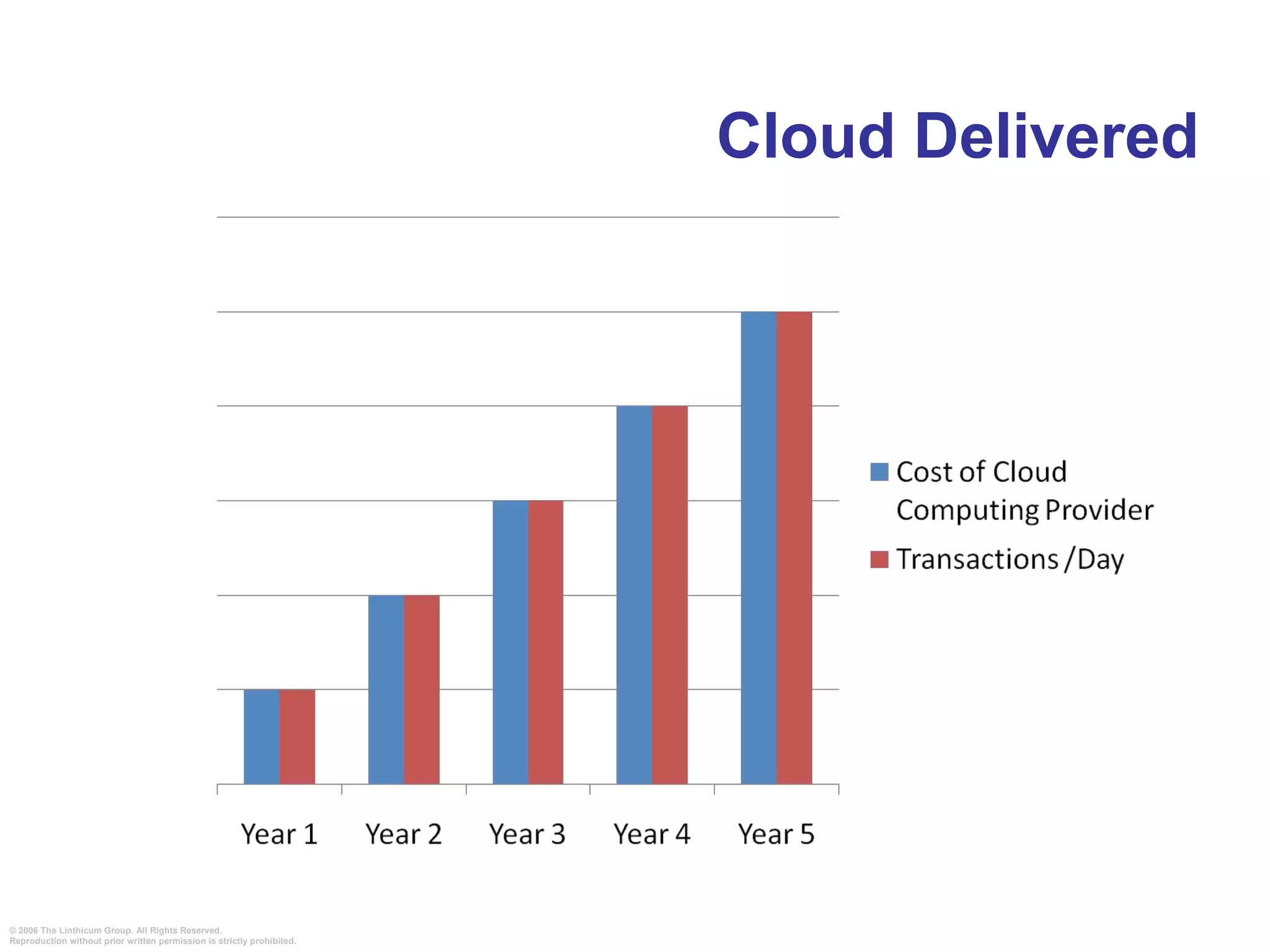
Cloud Delivered
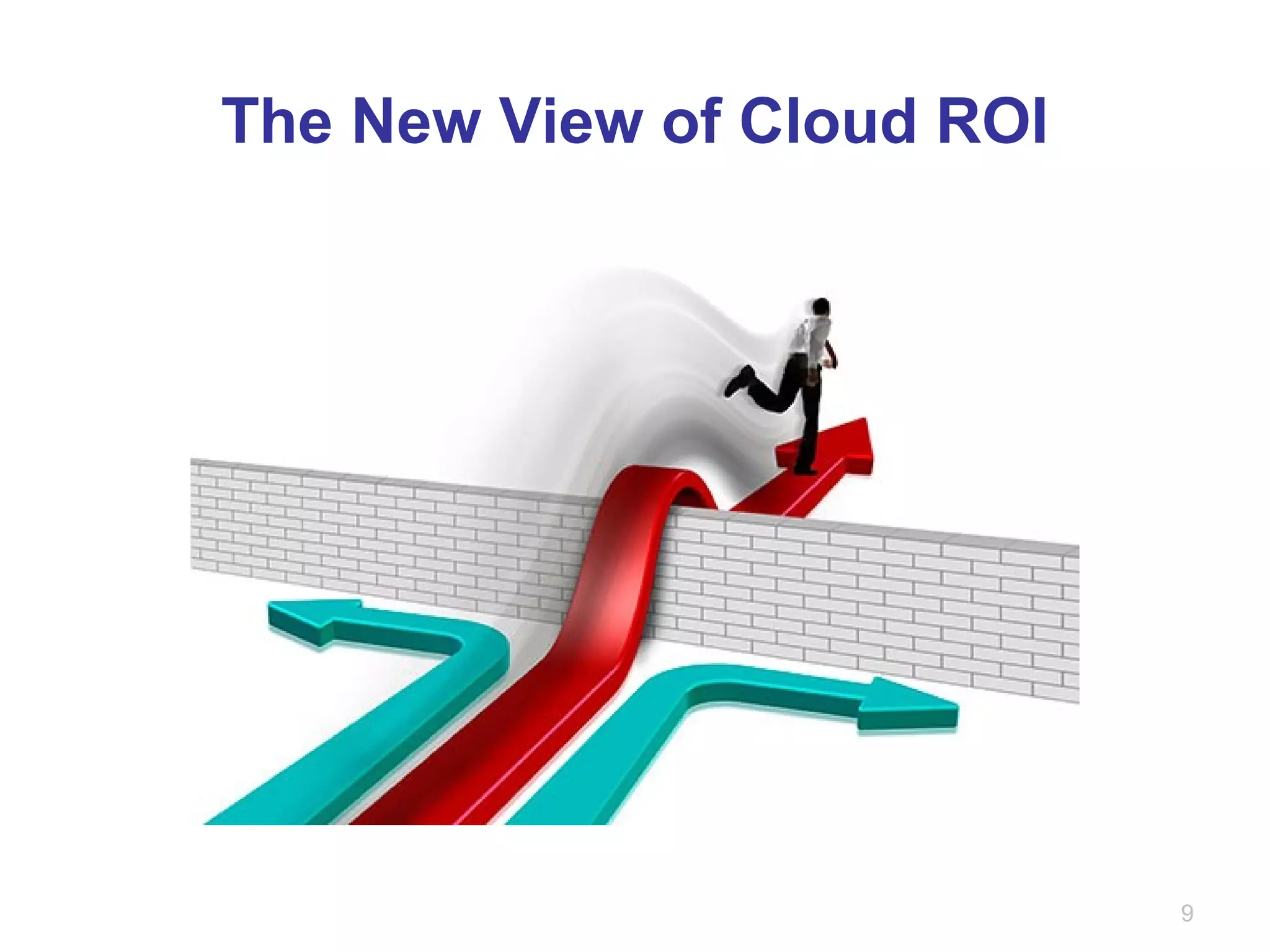
The New View of Cloud ROI
9
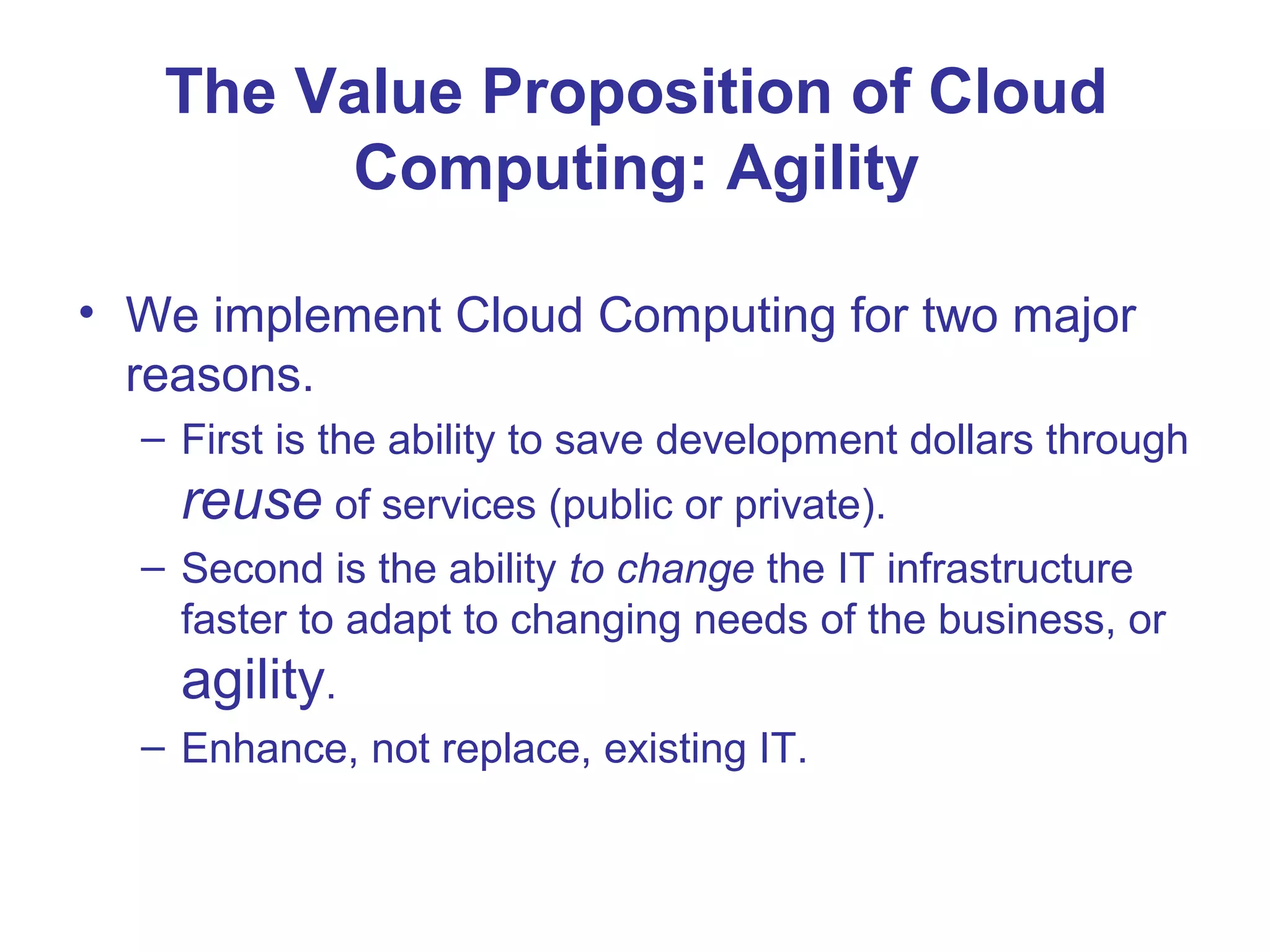
The Value Proposition of Cloud
Computing: Agility
• We implement Cloud Computing for two major
reasons.
– First is the ability to save development dollars through
reuse of services (public or private).
– Second is the ability to change the IT infrastructure
faster to adapt to changing needs of the business, or
agility.
– Enhance, not replace, existing IT.
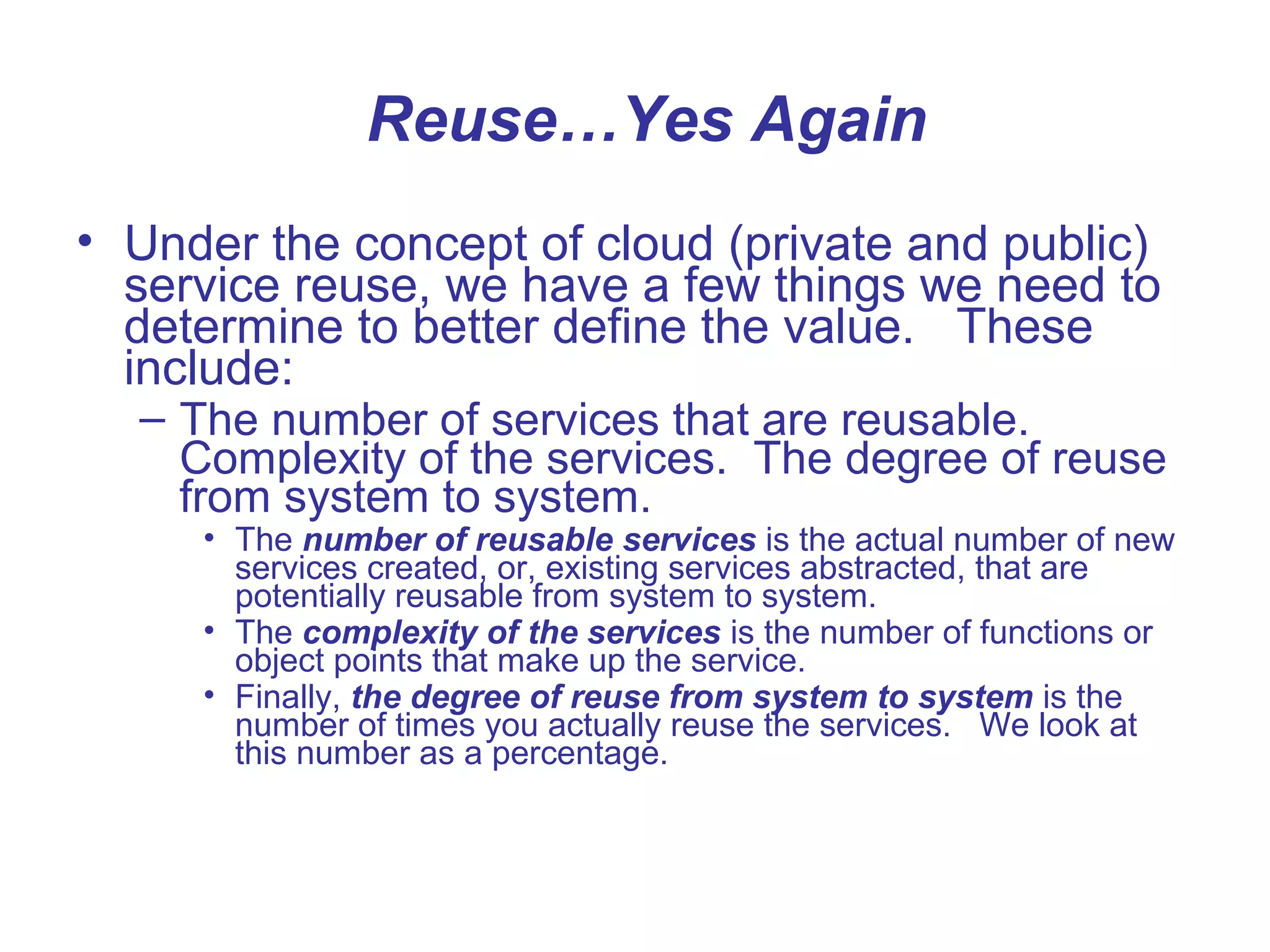
Reuse…Yes Again
• Under the concept of cloud (private and public)
service reuse, we have a few things we need to
determine to better define the value. These
include:
– The number of services that are reusable.
Complexity of the services. The degree of reuse
from system to system.
• The number of reusable services is the actual number of new
services created, or, existing services abstracted, that are
potentially reusable from system to system.
• The complexity of the services is the number of functions or
object points that make up the service.
• Finally, the degree of reuse from system to system is the
number of times you actually reuse the services. We look at
this number as a percentage.
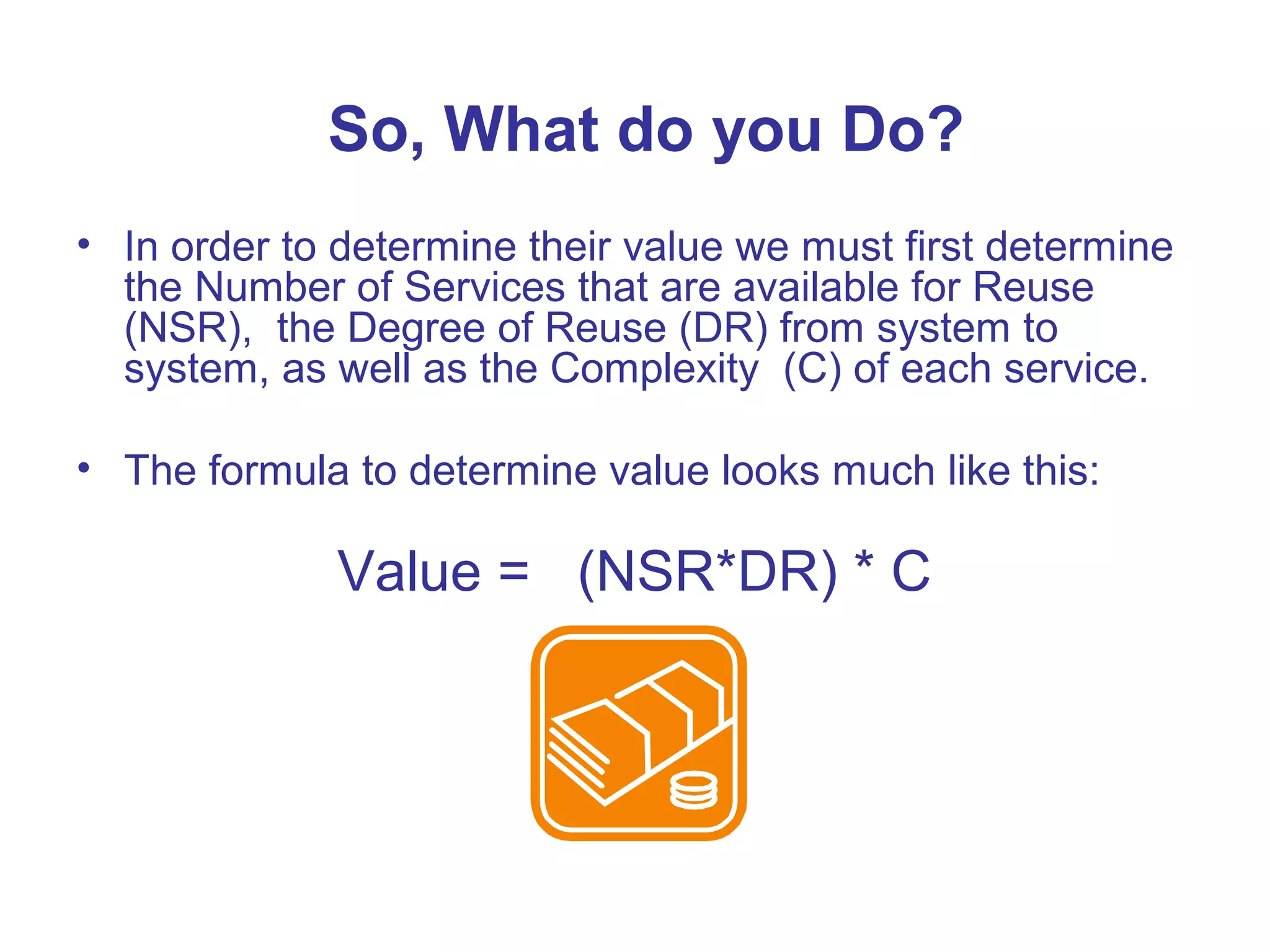
So, What do you Do?
• In order to determine their value we must first determine
the Number of Services that are available for Reuse
(NSR), the Degree of Reuse (DR) from system to
system, as well as the Complexity (C) of each service.
• The formula to determine value looks much like this:
Value = (NSR*DR) * C
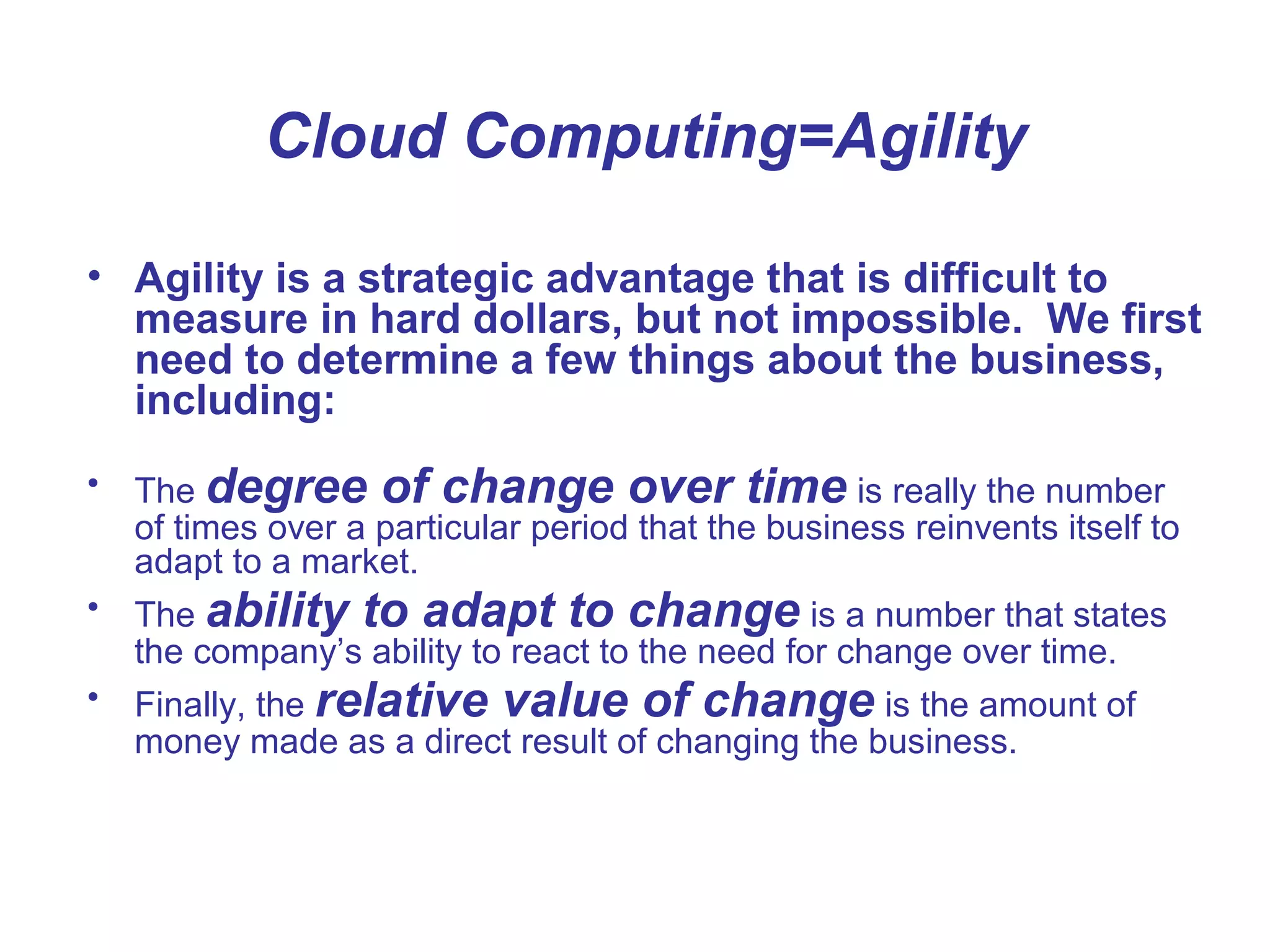
Cloud Computing=Agility
• Agility is a strategic advantage that is difficult to
measure in hard dollars, but not impossible. We first
need to determine a few things about the business,
including:
• The degree of change over time is really the number
of times over a particular period that the business reinvents itself to
adapt to a market.
• The ability to adapt to change is a number that states
the company’s ability to react to the need for change over time.
• Finally, the relative value of change is the amount of
money made as a direct result of changing the business.
What Does this All Mean?
• The ROI of cloud computing is problem
domain dependent.
– Your mileage will vary.
– There are few best practices.
• The concept of agility typically provides
more value than “traditional” cloud
computing ROI metrics.
– Hard to measure, but worth trying.
14
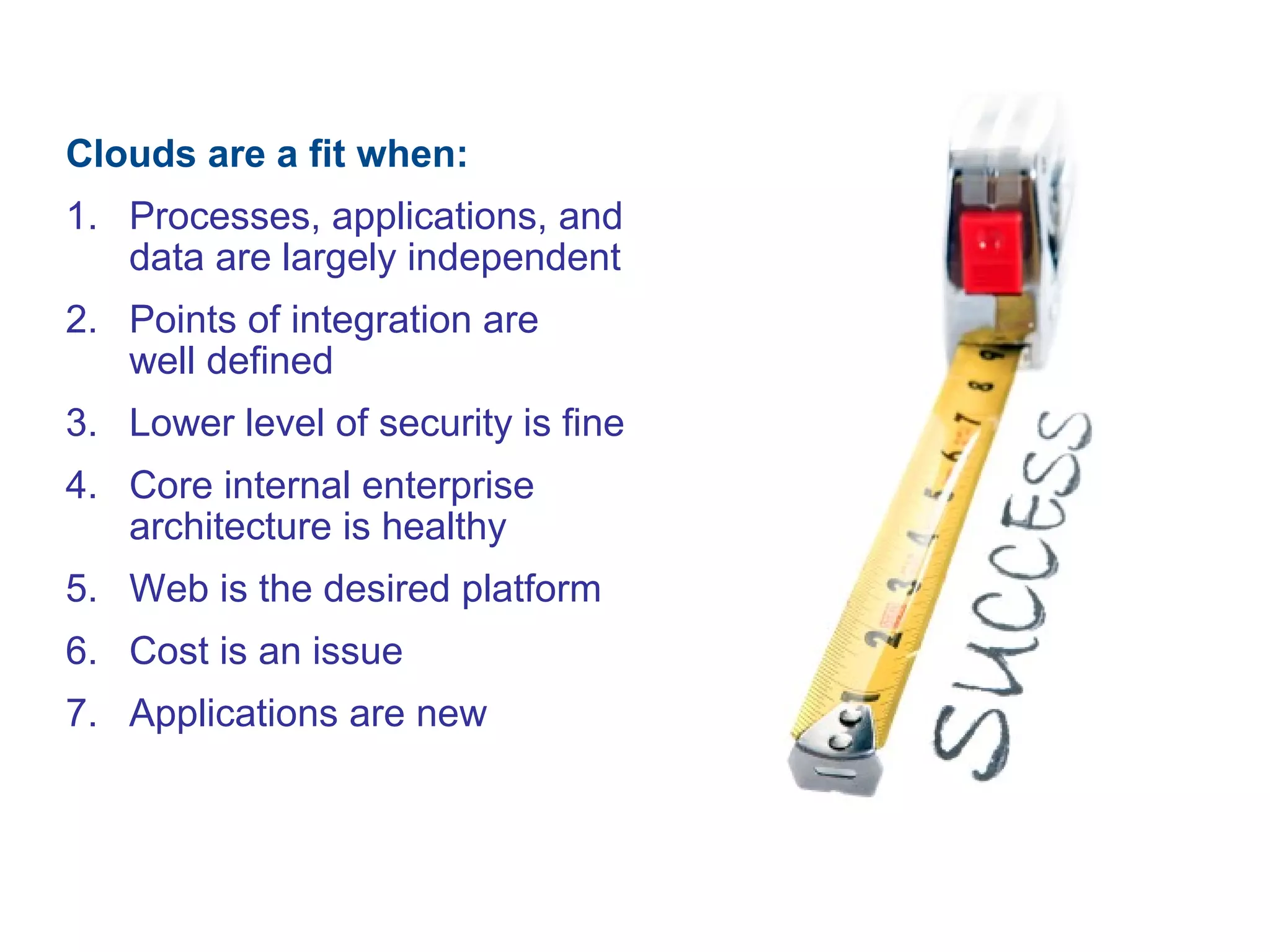
Clouds are a fit when:
1. Processes, applications, and
data are largely independent
2. Points of integration are
well defined
3. Lower level of security is fine
4. Core internal enterprise
architecture is healthy
5. Web is the desired platform
6. Cost is an issue
7. Applications are new
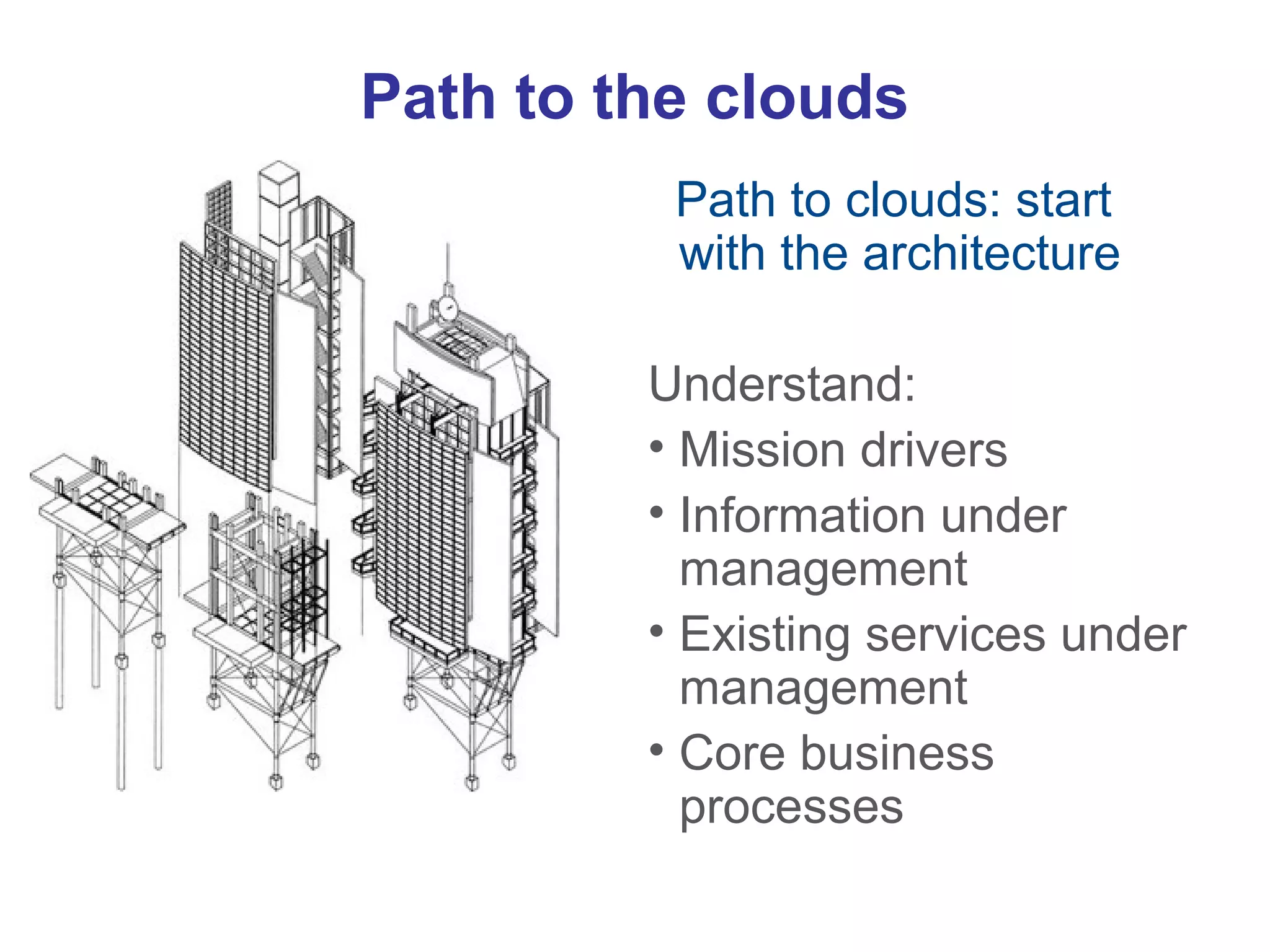
Path to the clouds
Path to clouds: start
with the architecture
Understand:
• Mission drivers
• Information under
management
• Existing services under
management
• Core business
processes
Stepping to the Clouds
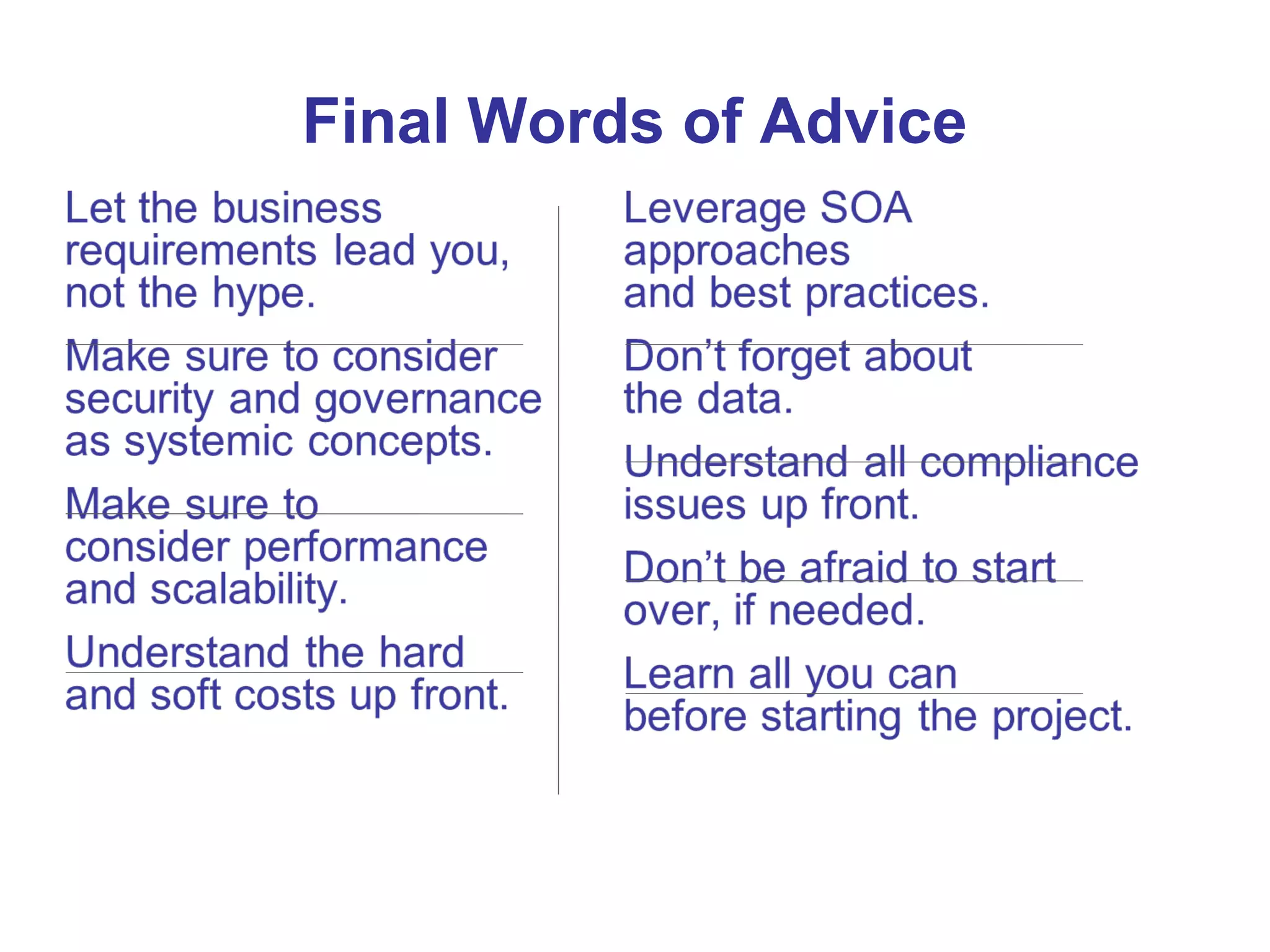
Final Words of Advice
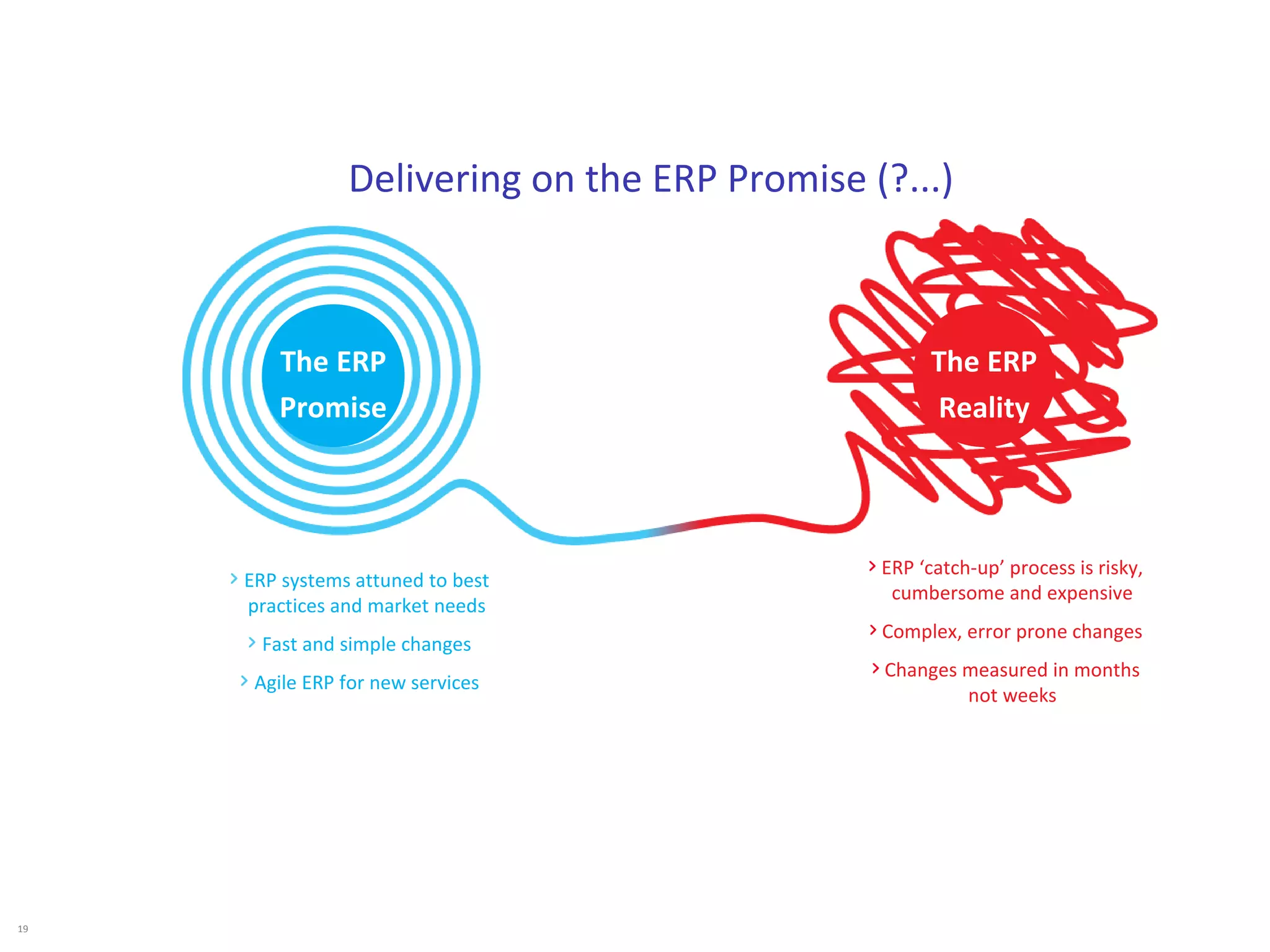
19
ERP systems attuned to best
practices and market needs
Fast and simple changes
Agile ERP for new services
ERP ‘catch-up’ process is risky,
cumbersome and expensive
Complex, error prone changes
Changes measured in months
not weeks
Delivering on the ERP Promise (?...)
The ERP
Promise
The ERP
Reality
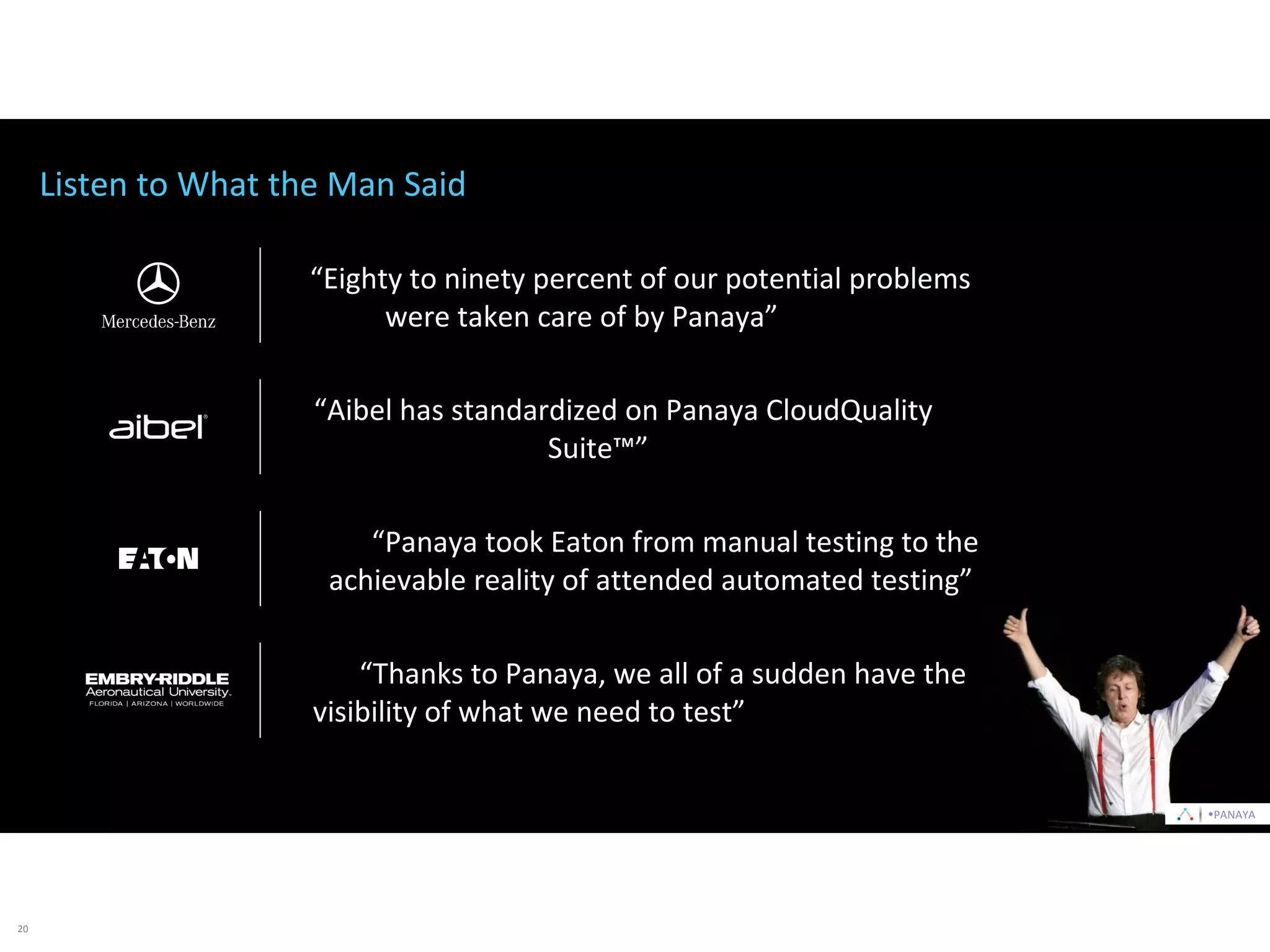
20
Listen to What the Man Said
“Eighty to ninety percent of our potential problems
were taken care of by Panaya” Mercedes-Benz
“Aibel has standardized on Panaya CloudQuality
Suite™” Aibel
“Panaya took Eaton from manual testing to the
achievable reality of attended automated testing” Eaton
“Thanks to Panaya, we all of a sudden have the
visibility of what we need to test” Embry-Riddle Aeronautical University
•PANAYA
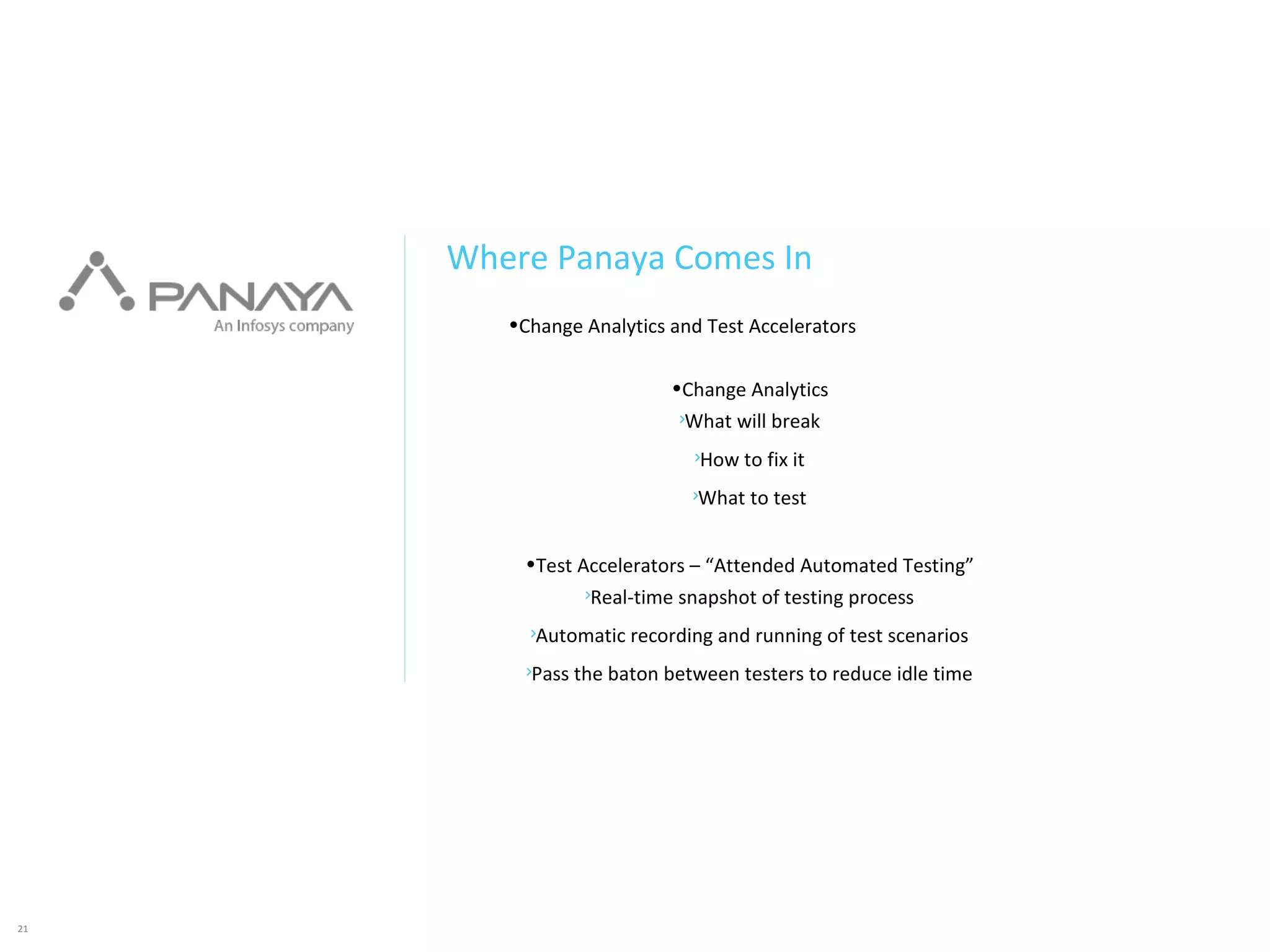
21
•Change Analytics and Test Accelerators
•Change Analytics
What will break
How to fix it
What to test
•Test Accelerators – “Attended Automated Testing”
Real-time snapshot of testing process
Automatic recording and running of test scenarios
Pass the baton between testers to reduce idle time
Where Panaya Comes In
22
•USA Germany Israel Japan Australia

Understanding the value of agility in the cloud

  • 1.
    Understanding the Value ofAgility in the Cloud •August 2015 •PANAYA WEBINAR
  • 2.
    2 Today’s Speakers Ofira Shafir YourModerator Panaya David S. Linthicum SVP Cloud Technology Partners PANAYA WEBINAR
  • 3.
    How Real isAll This?
  • 4.
    The Traditional Viewof Cloud ROI 4
  • 5.
    Why cloud? The existingtrajectory is not good $ Capability
  • 6.
    © 2006 TheLinthicum Group. All Rights Reserved. Reproduction without prior written permission is strictly prohibited. •UNDERSTANDING THE ROI
  • 7.
    © 2006 TheLinthicum Group. All Rights Reserved. Reproduction without prior written permission is strictly prohibited. $500,000 $1,000,000 On-Premises
  • 8.
    © 2006 TheLinthicum Group. All Rights Reserved. Reproduction without prior written permission is strictly prohibited. Cloud Delivered
  • 9.
    The New Viewof Cloud ROI 9
  • 10.
    The Value Propositionof Cloud Computing: Agility • We implement Cloud Computing for two major reasons. – First is the ability to save development dollars through reuse of services (public or private). – Second is the ability to change the IT infrastructure faster to adapt to changing needs of the business, or agility. – Enhance, not replace, existing IT.
  • 11.
    Reuse…Yes Again • Underthe concept of cloud (private and public) service reuse, we have a few things we need to determine to better define the value. These include: – The number of services that are reusable. Complexity of the services. The degree of reuse from system to system. • The number of reusable services is the actual number of new services created, or, existing services abstracted, that are potentially reusable from system to system. • The complexity of the services is the number of functions or object points that make up the service. • Finally, the degree of reuse from system to system is the number of times you actually reuse the services. We look at this number as a percentage.
  • 12.
    So, What doyou Do? • In order to determine their value we must first determine the Number of Services that are available for Reuse (NSR), the Degree of Reuse (DR) from system to system, as well as the Complexity (C) of each service. • The formula to determine value looks much like this: Value = (NSR*DR) * C
  • 13.
    Cloud Computing=Agility • Agilityis a strategic advantage that is difficult to measure in hard dollars, but not impossible. We first need to determine a few things about the business, including: • The degree of change over time is really the number of times over a particular period that the business reinvents itself to adapt to a market. • The ability to adapt to change is a number that states the company’s ability to react to the need for change over time. • Finally, the relative value of change is the amount of money made as a direct result of changing the business.
  • 14.
    What Does thisAll Mean? • The ROI of cloud computing is problem domain dependent. – Your mileage will vary. – There are few best practices. • The concept of agility typically provides more value than “traditional” cloud computing ROI metrics. – Hard to measure, but worth trying. 14
  • 15.
    Clouds are afit when: 1. Processes, applications, and data are largely independent 2. Points of integration are well defined 3. Lower level of security is fine 4. Core internal enterprise architecture is healthy 5. Web is the desired platform 6. Cost is an issue 7. Applications are new
  • 16.
    Path to theclouds Path to clouds: start with the architecture Understand: • Mission drivers • Information under management • Existing services under management • Core business processes
  • 17.
  • 18.
  • 19.
    19 ERP systems attunedto best practices and market needs Fast and simple changes Agile ERP for new services ERP ‘catch-up’ process is risky, cumbersome and expensive Complex, error prone changes Changes measured in months not weeks Delivering on the ERP Promise (?...) The ERP Promise The ERP Reality
  • 20.
    20 Listen to Whatthe Man Said “Eighty to ninety percent of our potential problems were taken care of by Panaya” Mercedes-Benz “Aibel has standardized on Panaya CloudQuality Suite™” Aibel “Panaya took Eaton from manual testing to the achievable reality of attended automated testing” Eaton “Thanks to Panaya, we all of a sudden have the visibility of what we need to test” Embry-Riddle Aeronautical University •PANAYA
  • 21.
    21 •Change Analytics andTest Accelerators •Change Analytics What will break How to fix it What to test •Test Accelerators – “Attended Automated Testing” Real-time snapshot of testing process Automatic recording and running of test scenarios Pass the baton between testers to reduce idle time Where Panaya Comes In
  • 22.
    22 •USA Germany IsraelJapan Australia