Deciding to Go Cloud
Data Modeling and Prototyping within Requirements Gathering
Provides Transparent Roadmap to Cloud Computing


                 Presented by Valeh Nazemoff of Acolyst
                          September 21, 2010
Abstract

   Moving data to the cloud is a scary business pain more and more companies are
   facing. Businesses are concerned with how they can or should trust a third party to
   manage their enterprise’s data, worried about data breach issues, troubled about
   data privacy, and nervous with giving someone responsibility for their data yet still
   being accountable for it. Continuing to ask questions that demonstrate the mystery
   (and the pain) of the unfamiliar like: What data makes the most sense to move to the
   cloud? Where is the data?

   In this webinar we bring you a roadmap methodology to assess the business pain
   points with data management concerns that are involved with the decision of going
   Cloud. The roadmap helps determine which data should go cloud with an order of
   priority in the timeline, a step-by-step approach, and providing stakeholders and
   decision makers techniques and documentation to ease their decision making.


 PAGE 2
Speaker’s Bio

 In this webcast, Valeh Nazemoff, Vice President of Acolyst, shares the step-by-
 step approach to the methodology and a systematic approach for analyzing,
 communicating, validating and managing an organization’s business requirement
 to cloud computing selection. In addition to having an MBA, Valeh holds a
 certificate in Project Management and Business Analysis. Valeh teaches several
 business courses for the University of Phoenix and has received several
 leadership recognitions and awards.
 Valeh is an experienced business strategist supporting many business
 departments and industries including IT, Healthcare, Finance, Legal, Insurance,
 Real Estate, and many more, with their demanding needs for business process
 improvement, application evaluation, requirements analysis, project
 management, and strategic consulting.


 PAGE 3
Agenda: Roadmap to Cloud

• What is Cloud Computing
• Solutions to Fears of Data in the Cloud
    – Identify and Understand the Risks
• Our Everyday Use
• Why We Need it and the Benefits
• Industry Shift / Standards / Best Practices
• Roadmap to Determine Steps
    – Data Modeling, Prototyping, and Process Models: The Key Players
• Questions and Answers


  PAGE 4
What is Cloud Computing
Holistic Ecosystem of Components

•   Scalability,
•   Adaptability,
•   Extensibility, and
•   Manageability

Address the best-in-class requirements of the enterprise:
• Security,
• Real-Time Availability, and
• Performance


    PAGE 6
Types of Cloud Offering

•   Common Services
•   SaaS
•   PaaS
•   IaaS
•   DaaS


    PAGE 7
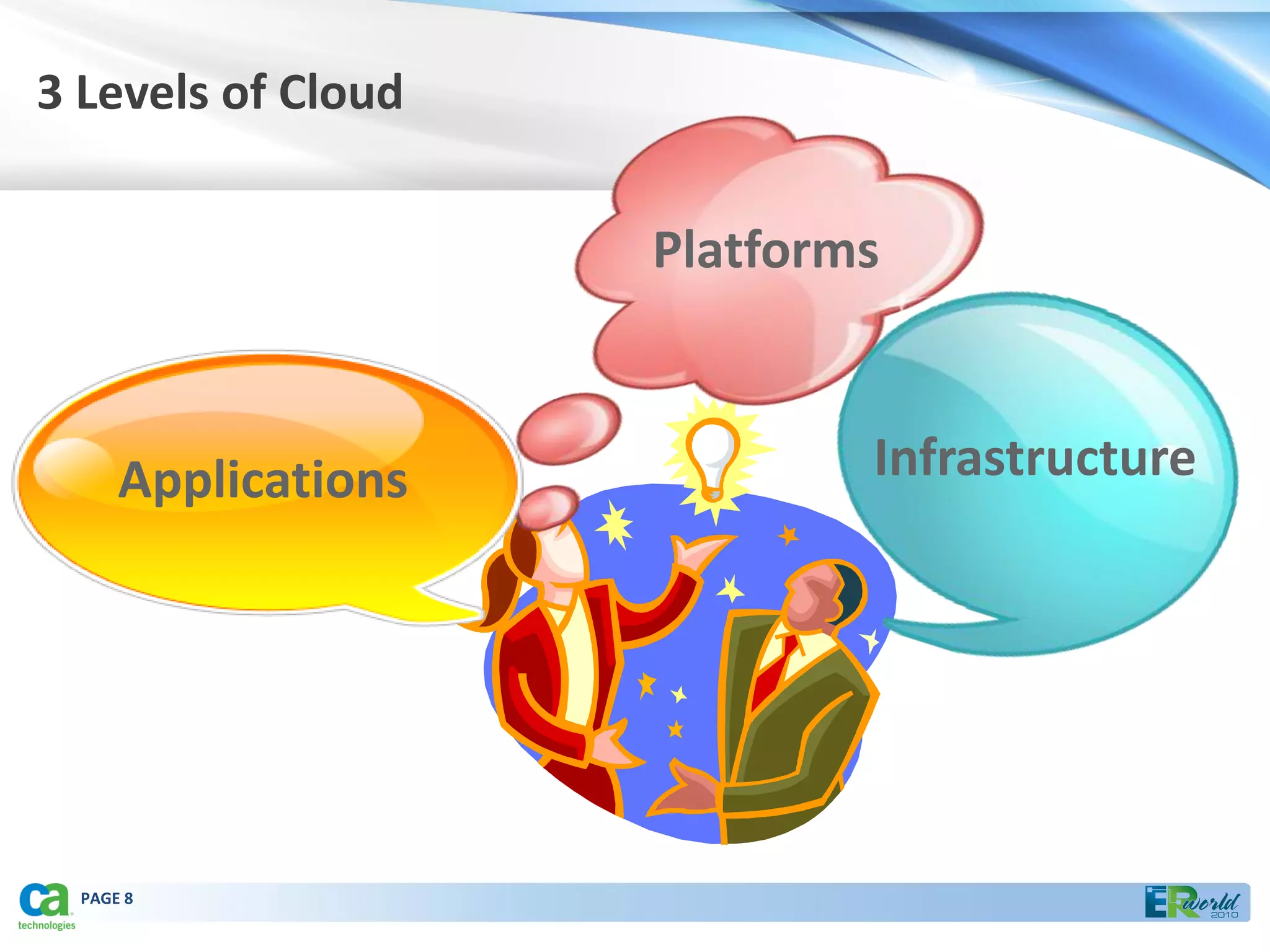
3 Levels of Cloud


                     Platforms


      Applications           Infrastructure


  PAGE 8
Solutions to Fears of Data in the Cloud
Identify and Understand the Risks
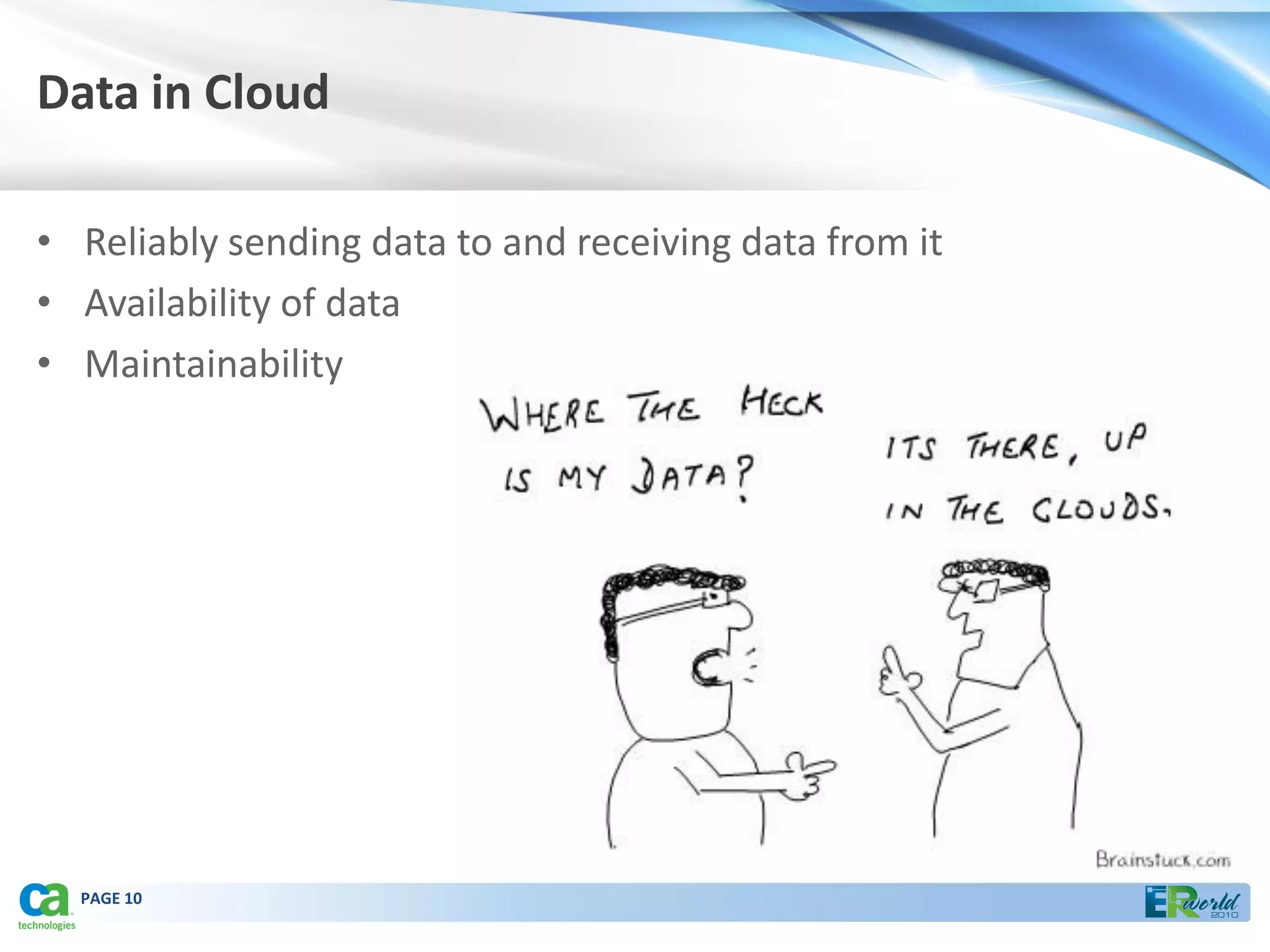
Data in Cloud

• Reliably sending data to and receiving data from it
• Availability of data
• Maintainability


  PAGE 10
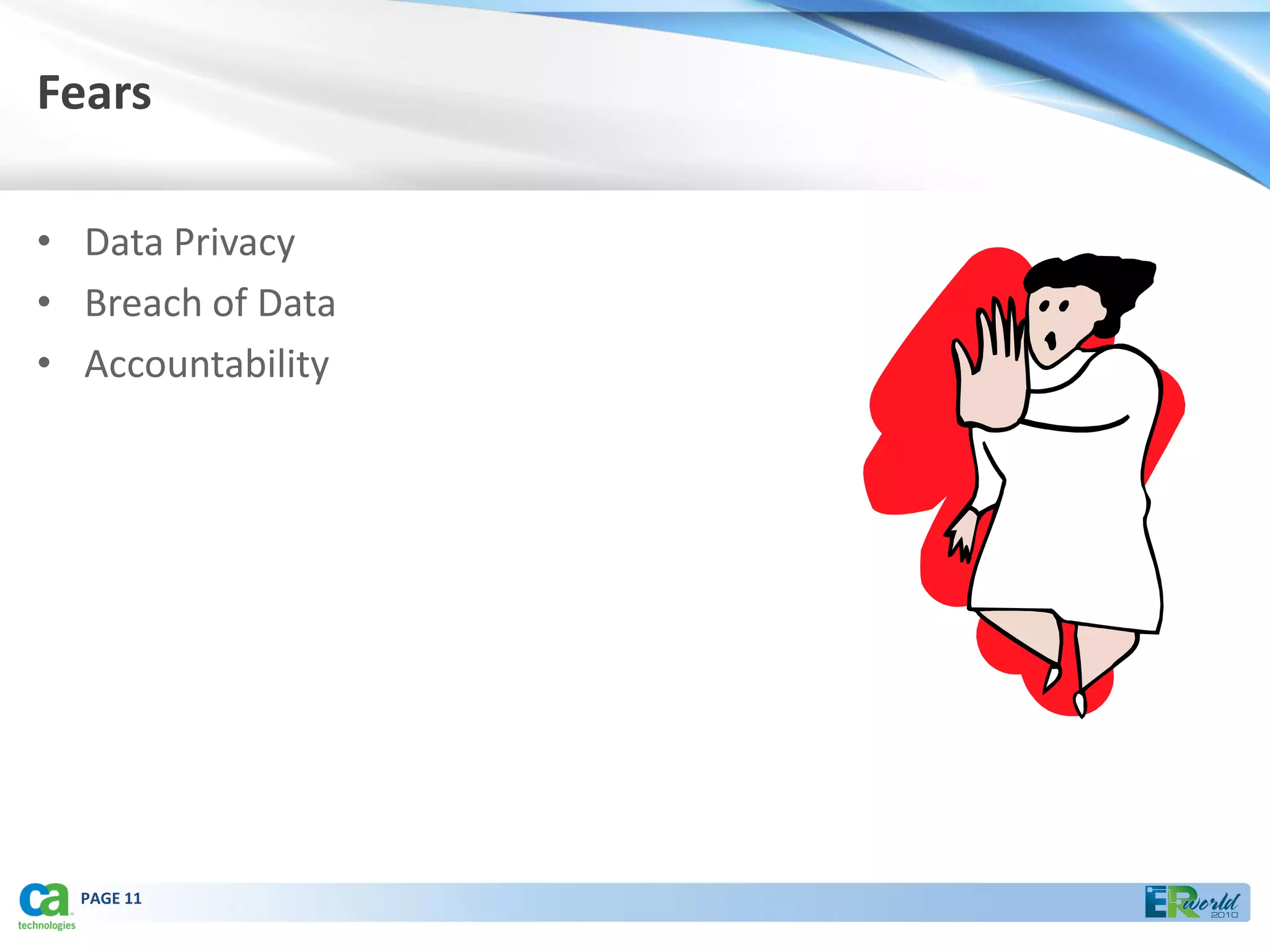
Fears

• Data Privacy
• Breach of Data
• Accountability


  PAGE 11
Our Everyday Use
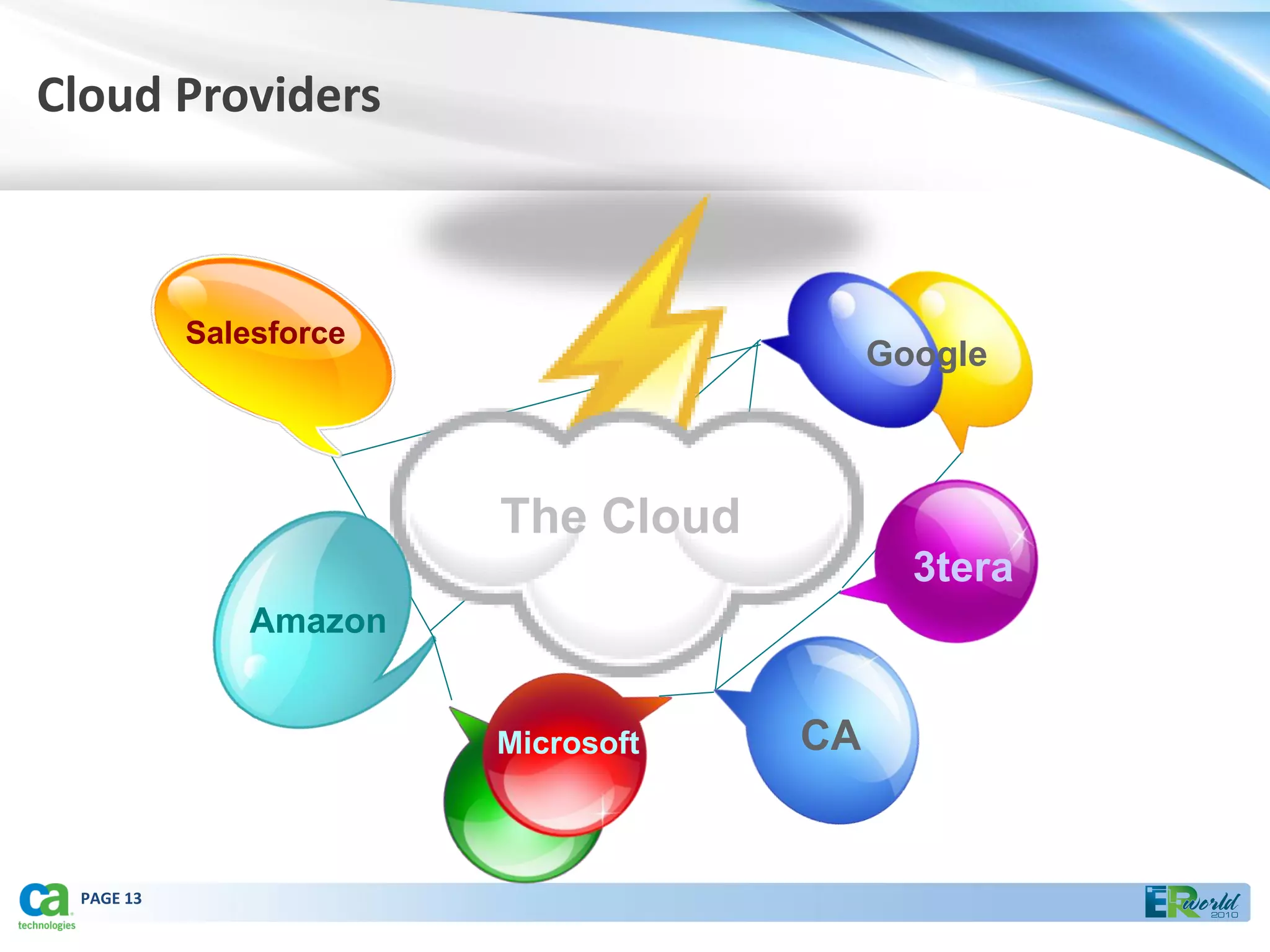
Cloud Providers


           Salesforce
                                         Google


                        The Cloud
                                           3tera
               Amazon


                        Microsoft   CA


 PAGE 13
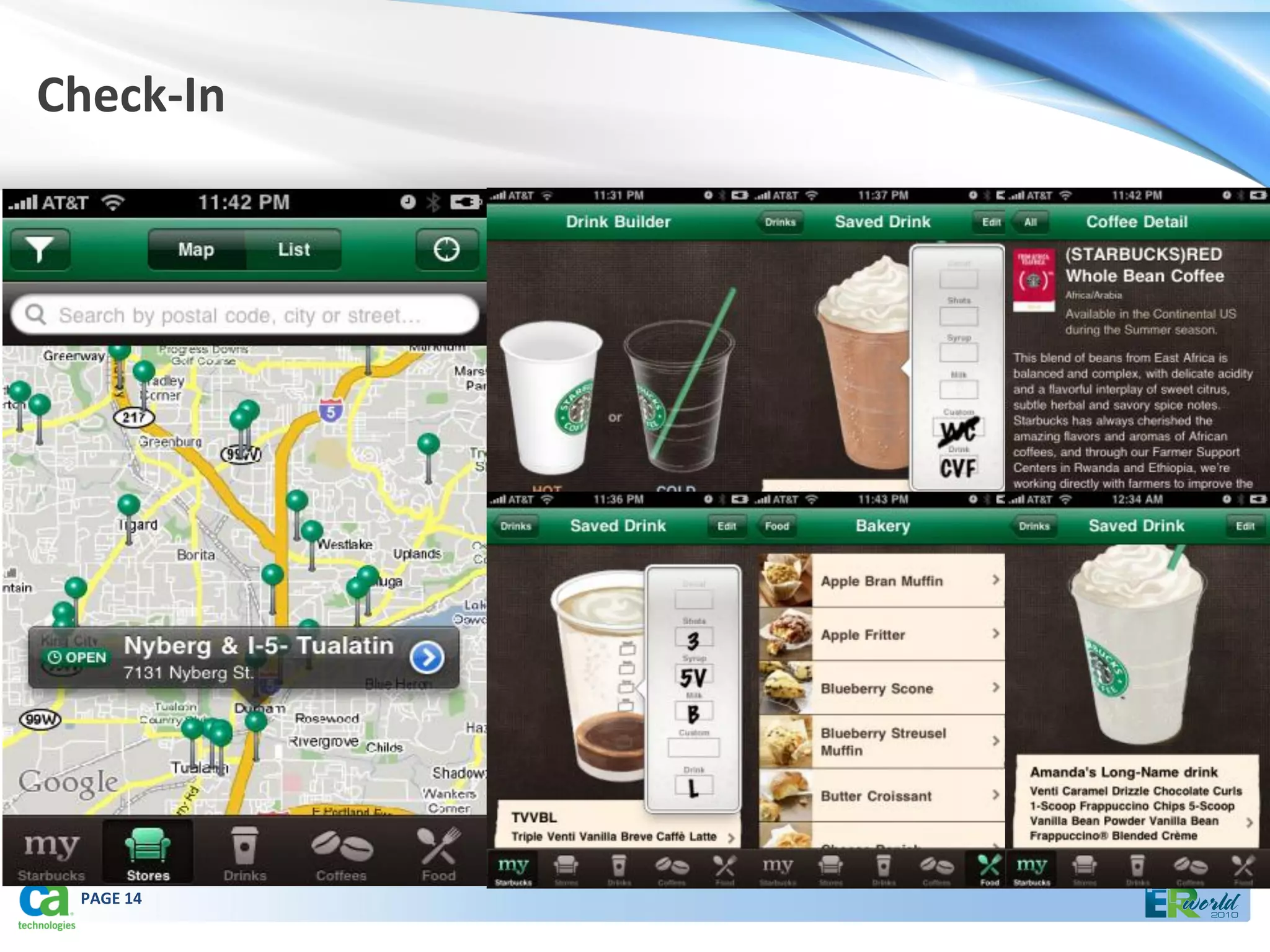
Check-In


 PAGE 14
Why We Need it and the Benefits
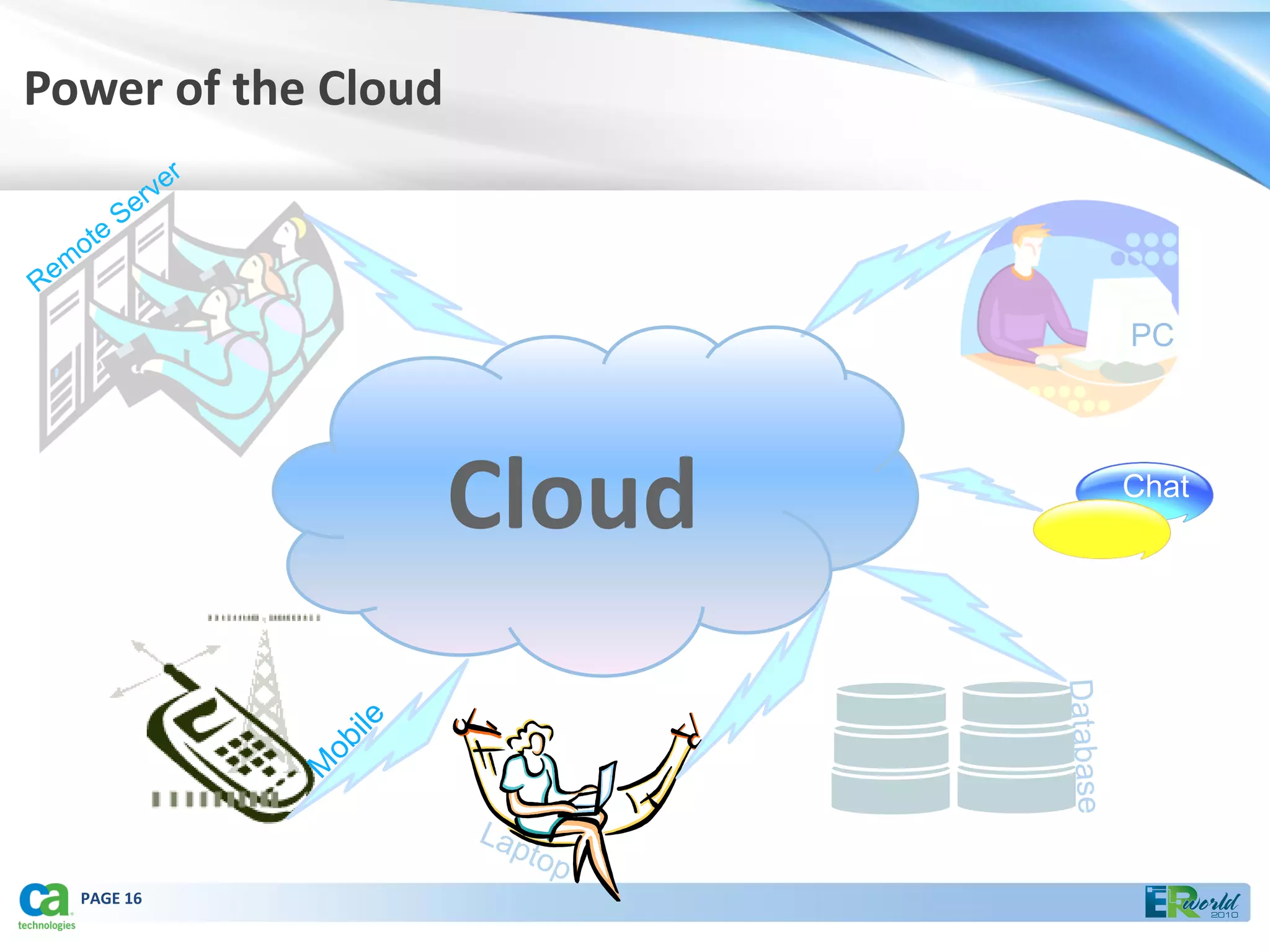
Power of the Cloud


                             PC


                     Cloud   Chat


  PAGE 16
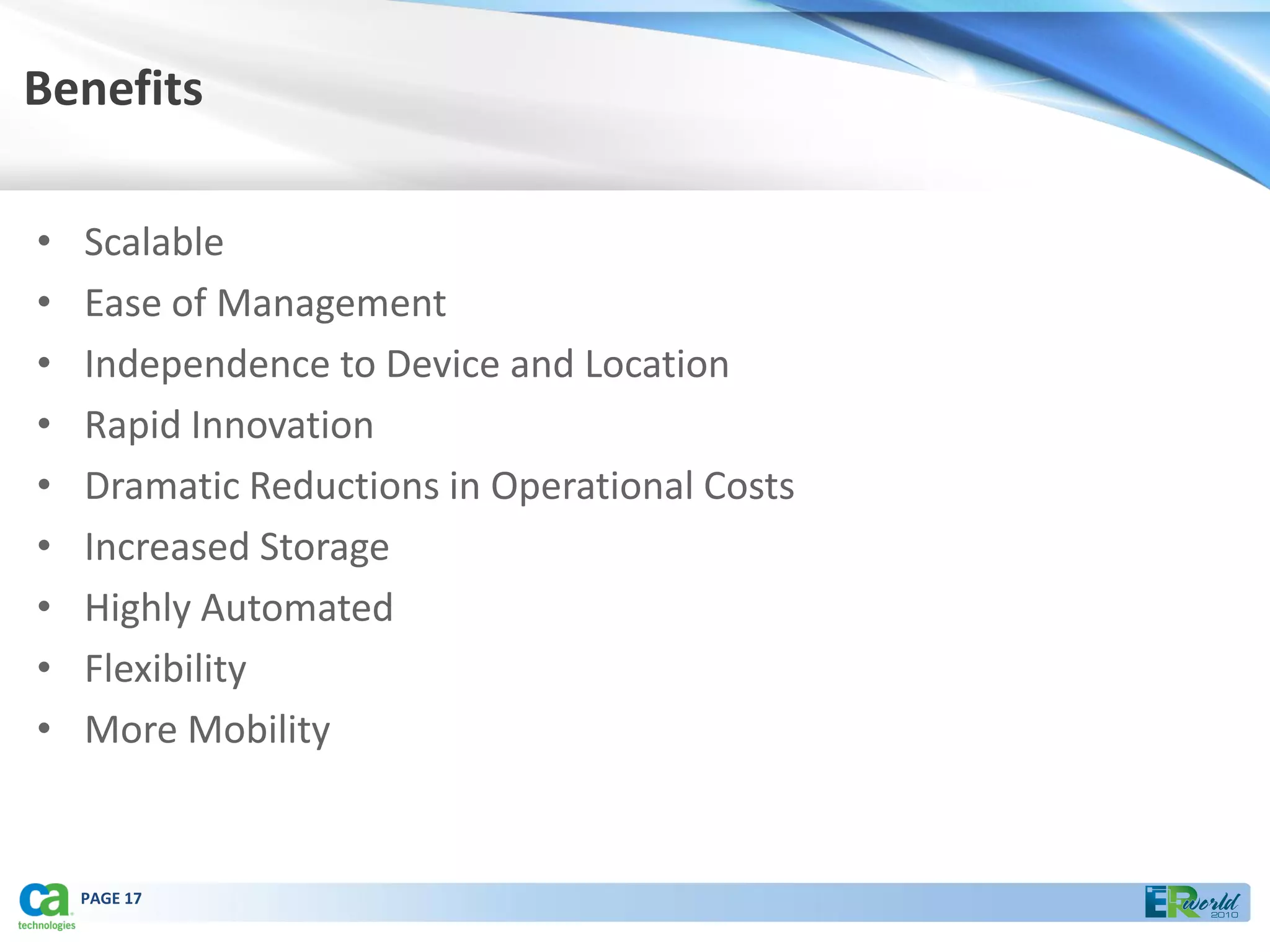
Benefits

•   Scalable
•   Ease of Management
•   Independence to Device and Location
•   Rapid Innovation
•   Dramatic Reductions in Operational Costs
•   Increased Storage
•   Highly Automated
•   Flexibility
•   More Mobility


    PAGE 17
Industry Shift/ Standards / Best
Practices
Analysts

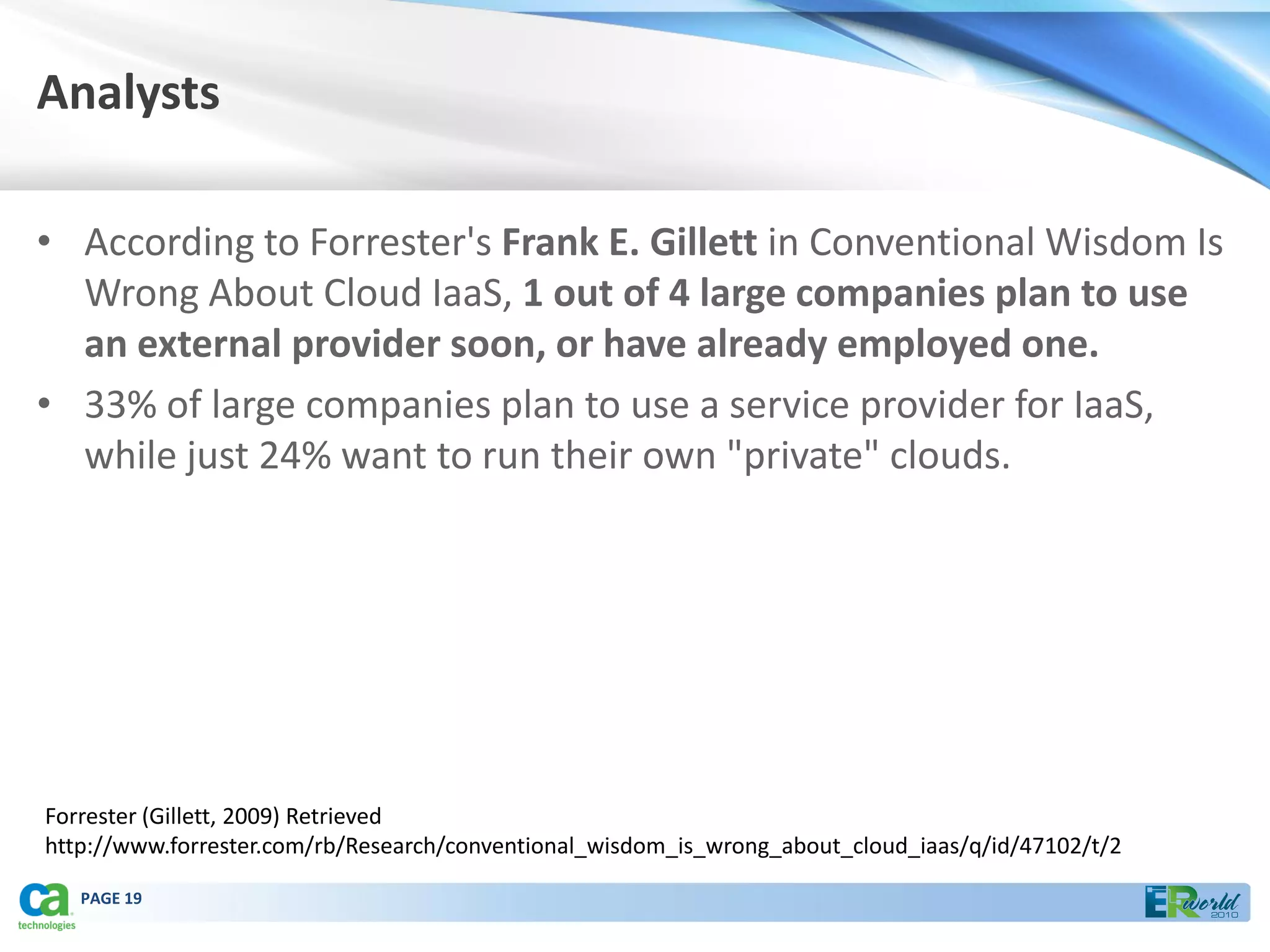
• According to Forrester's Frank E. Gillett in Conventional Wisdom Is
  Wrong About Cloud IaaS, 1 out of 4 large companies plan to use
  an external provider soon, or have already employed one.
• 33% of large companies plan to use a service provider for IaaS,
  while just 24% want to run their own "private" clouds.


Forrester (Gillett, 2009) Retrieved
http://www.forrester.com/rb/Research/conventional_wisdom_is_wrong_about_cloud_iaas/q/id/47102/t/2

   PAGE 19
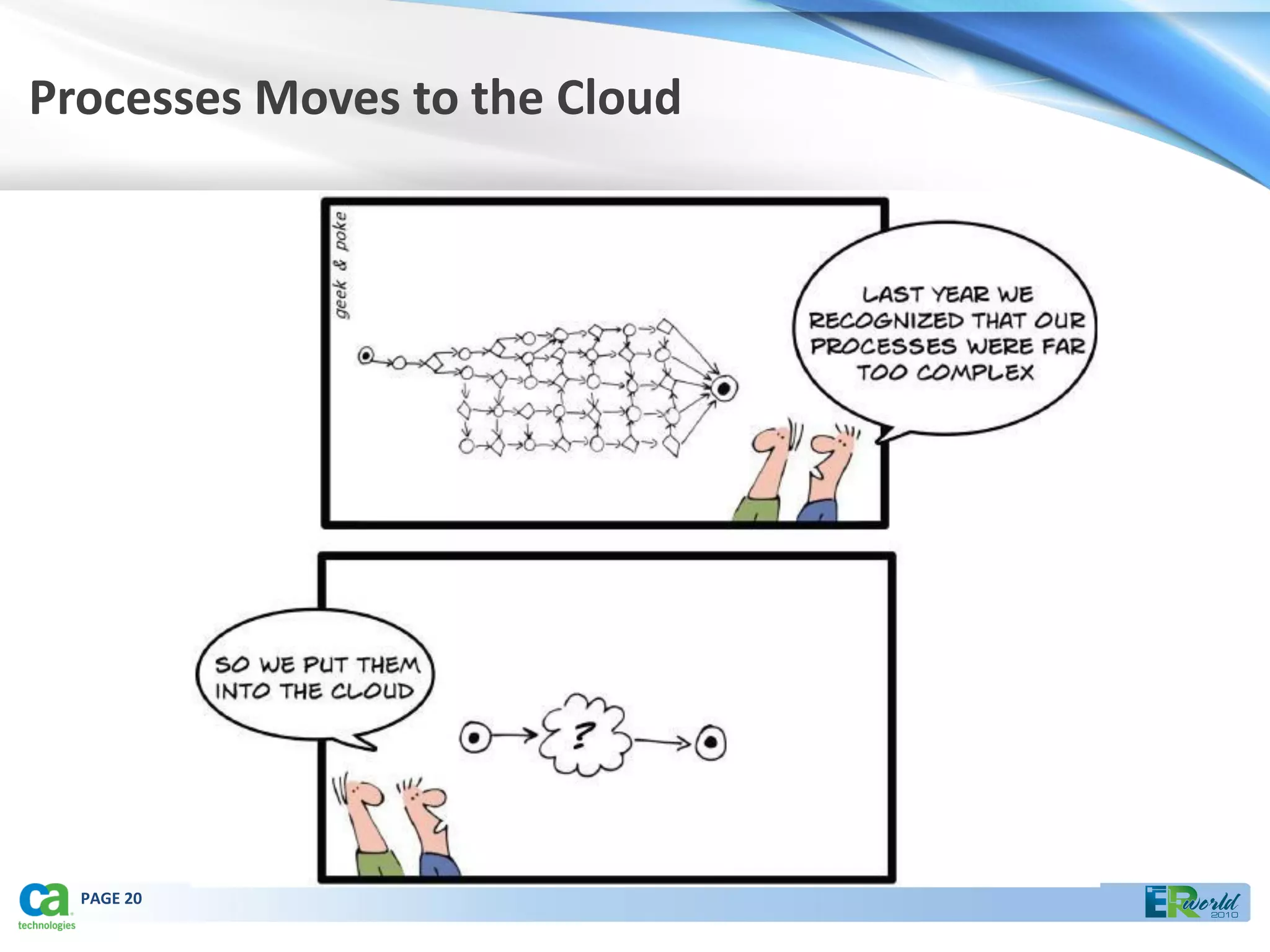
Processes Moves to the Cloud


  PAGE 20
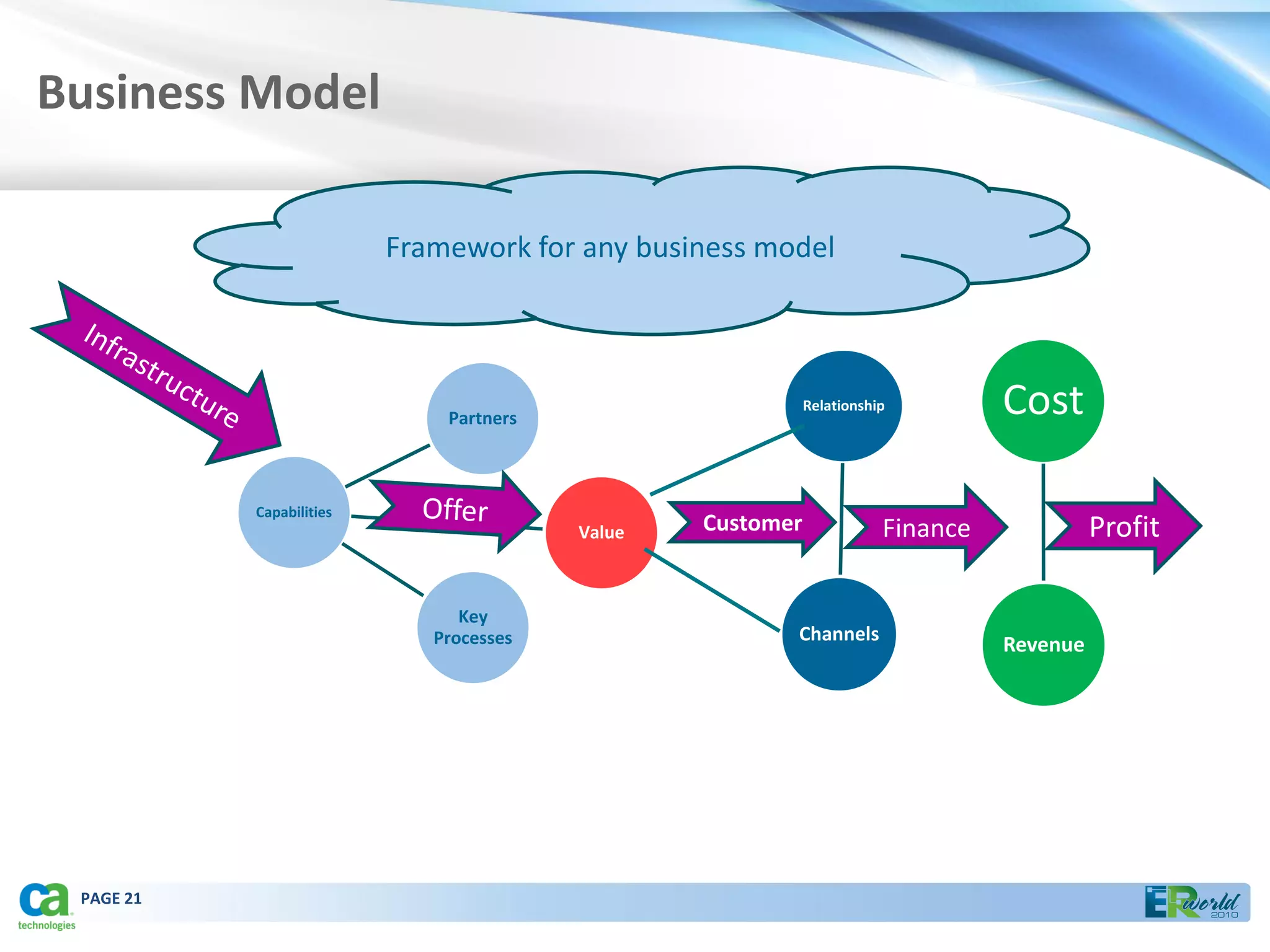
Business Model

                          Framework for any business model


                              Partners
                                                            Relationship         Cost

           Capabilities
                                         Value   Customer              Finance             Profit

                                Key
                             Processes                  Channels
                                                                                 Revenue


 PAGE 21
Roadmap to Determine Steps
Data Modeling, Prototyping, and Process Models: The Key Players
Deciding to Cloud

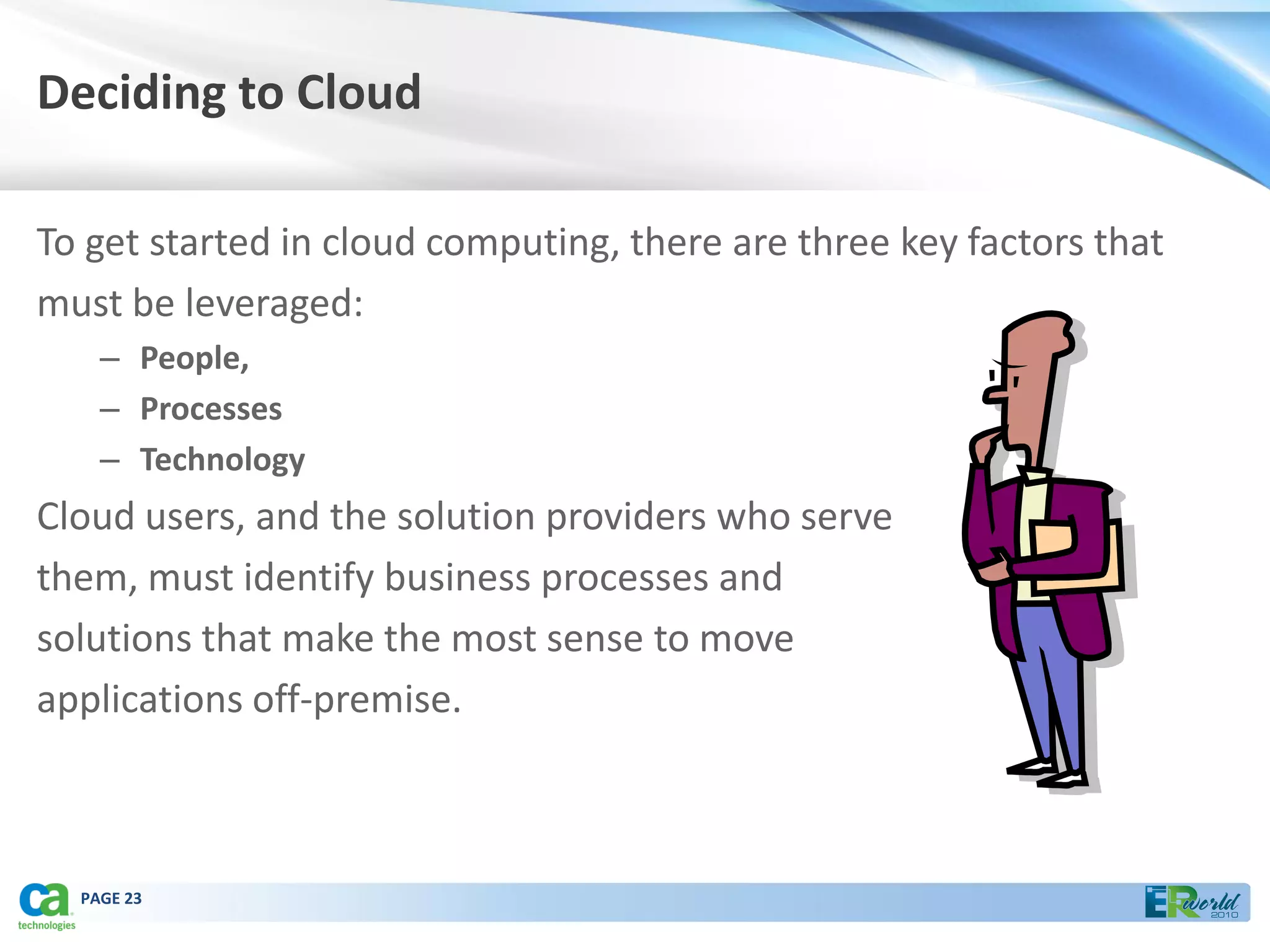
To get started in cloud computing, there are three key factors that
must be leveraged:
    – People,
    – Processes
    – Technology
Cloud users, and the solution providers who serve
them, must identify business processes and
solutions that make the most sense to move
applications off-premise.


  PAGE 23
Understand Goals & Objectives

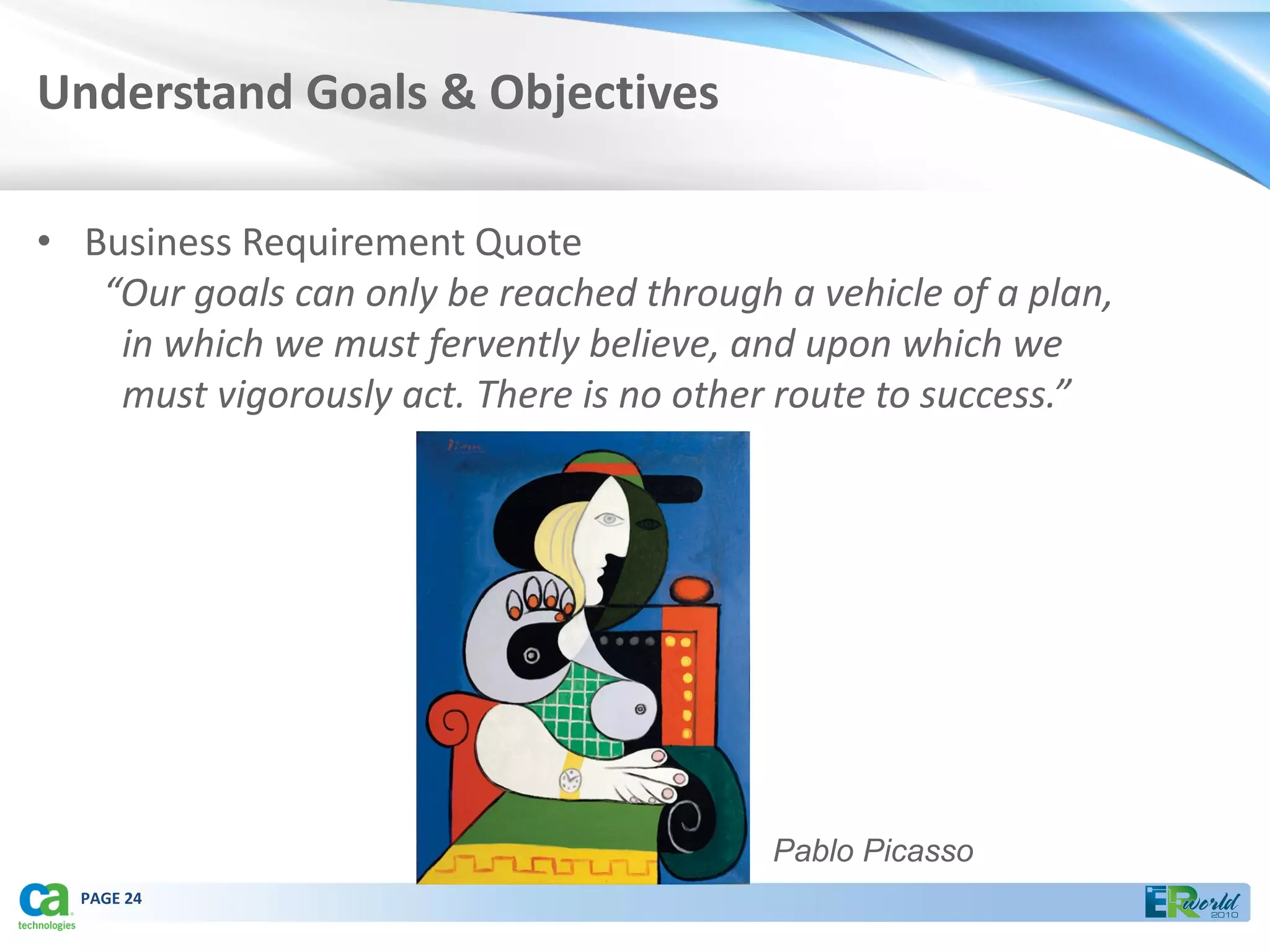
• Business Requirement Quote
   “Our goals can only be reached through a vehicle of a plan,
    in which we must fervently believe, and upon which we
    must vigorously act. There is no other route to success.”


                                          Pablo Picasso
  PAGE 24
Process, Data, & Prototype Consideration

•   Data Compliance Issues
•   Pick the Applications that Make Sense
•   Geography
•   Connection Type
•   Cost Analysis
•   Proof of Concept
•   Business Process Impact


    PAGE 25
4 Components of Cloud Computing
Analysis

•   Organizational Assessment,
•   Information Structure and Objectives,
•   Computing Selection, and
•   Cost Analysis


    PAGE 26
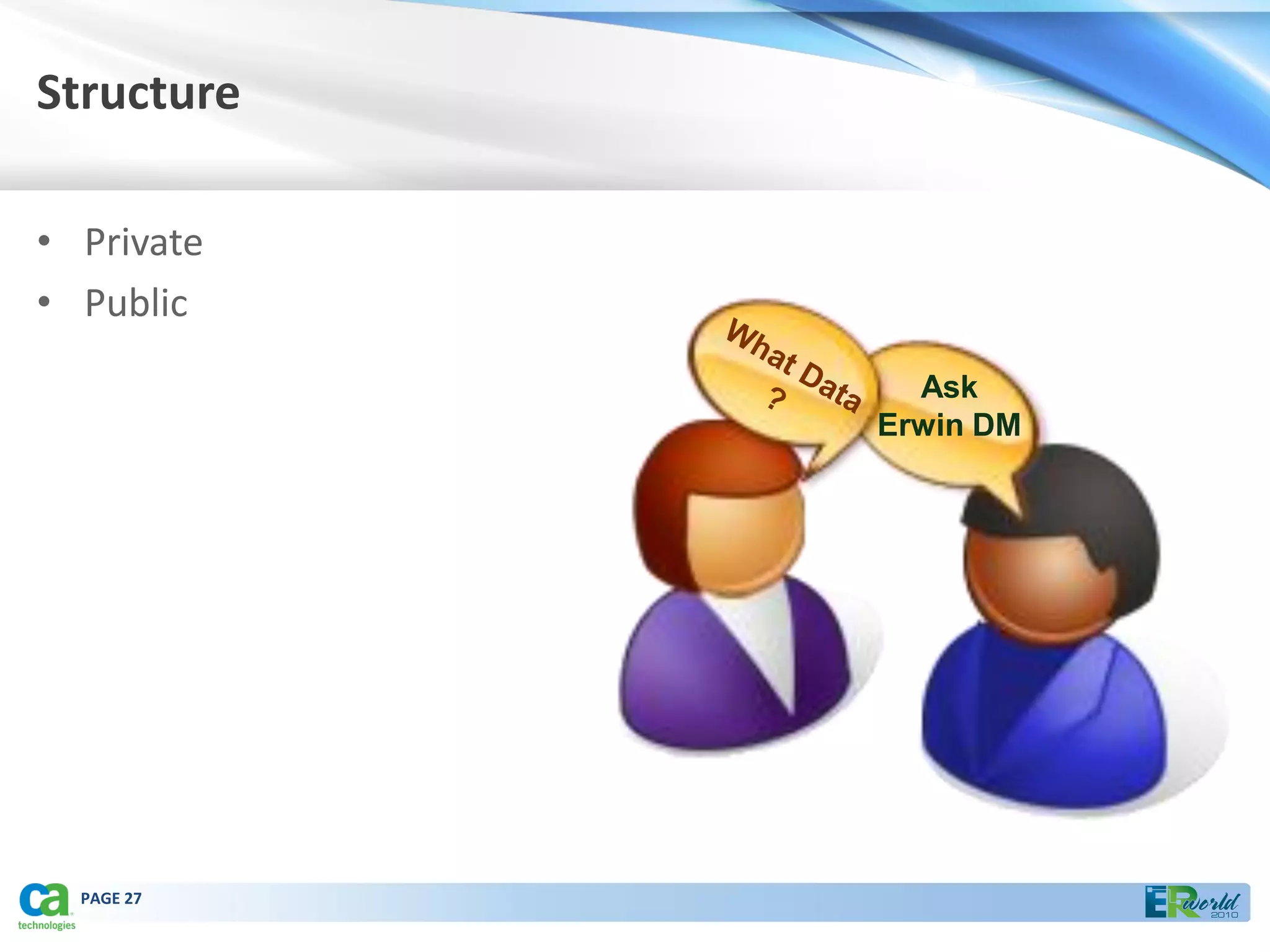
Structure

• Private
• Public
              Ask
            Erwin DM


  PAGE 27
Planning to Go Cloud?
Prototype it…

• Prototype using Simulated Data
• Utilize Data Simulators that Represent Behaviors of Realistic
  Data (Analytical Data)
• Framework to Prototype and Test Pre-Production Application
• Helps business users decide by visually illustrating how their
  application will operate after implementing on cloud.


 PAGE 28
Summary


 1         Conduct Thorough Analysis and Define Business Process Flow
           (Utilize ERwin Process Modeler)


 2         Utilize ERwin Data Modeler to visualize how the data elements
           relate and how they will best be utilized in the cloud


 3         Generate a Prototype Utilizing Acolyst’s Prototype Fusion & Build a
           Realistic Business Scenario, Test, and Determine the Next Steps for
           Transitioning

 4         Redefine the Cloud Offering if Necessary – Re-evaluate


 5         Prepare and Launch a Transition Initiative – Should Include Training
           not just for IT but also for Business Users


 6
 PAGE 29
           Evaluate What Other Applications Can Move to the Cloud
Questions?


               Valeh Nazemoff
                540.370.0010
             valeh@acolyst.com
              www.acolyst.com


 PAGE 30

Deciding to go cloud 09212010

  • 1.
    Deciding to GoCloud Data Modeling and Prototyping within Requirements Gathering Provides Transparent Roadmap to Cloud Computing Presented by Valeh Nazemoff of Acolyst September 21, 2010
  • 2.
    Abstract Moving data to the cloud is a scary business pain more and more companies are facing. Businesses are concerned with how they can or should trust a third party to manage their enterprise’s data, worried about data breach issues, troubled about data privacy, and nervous with giving someone responsibility for their data yet still being accountable for it. Continuing to ask questions that demonstrate the mystery (and the pain) of the unfamiliar like: What data makes the most sense to move to the cloud? Where is the data? In this webinar we bring you a roadmap methodology to assess the business pain points with data management concerns that are involved with the decision of going Cloud. The roadmap helps determine which data should go cloud with an order of priority in the timeline, a step-by-step approach, and providing stakeholders and decision makers techniques and documentation to ease their decision making. PAGE 2
  • 3.
    Speaker’s Bio Inthis webcast, Valeh Nazemoff, Vice President of Acolyst, shares the step-by- step approach to the methodology and a systematic approach for analyzing, communicating, validating and managing an organization’s business requirement to cloud computing selection. In addition to having an MBA, Valeh holds a certificate in Project Management and Business Analysis. Valeh teaches several business courses for the University of Phoenix and has received several leadership recognitions and awards. Valeh is an experienced business strategist supporting many business departments and industries including IT, Healthcare, Finance, Legal, Insurance, Real Estate, and many more, with their demanding needs for business process improvement, application evaluation, requirements analysis, project management, and strategic consulting. PAGE 3
  • 4.
    Agenda: Roadmap toCloud • What is Cloud Computing • Solutions to Fears of Data in the Cloud – Identify and Understand the Risks • Our Everyday Use • Why We Need it and the Benefits • Industry Shift / Standards / Best Practices • Roadmap to Determine Steps – Data Modeling, Prototyping, and Process Models: The Key Players • Questions and Answers PAGE 4
  • 5.
    What is CloudComputing
  • 6.
    Holistic Ecosystem ofComponents • Scalability, • Adaptability, • Extensibility, and • Manageability Address the best-in-class requirements of the enterprise: • Security, • Real-Time Availability, and • Performance PAGE 6
  • 7.
    Types of CloudOffering • Common Services • SaaS • PaaS • IaaS • DaaS PAGE 7
  • 8.
    3 Levels ofCloud Platforms Applications Infrastructure PAGE 8
  • 9.
    Solutions to Fearsof Data in the Cloud Identify and Understand the Risks
  • 10.
    Data in Cloud •Reliably sending data to and receiving data from it • Availability of data • Maintainability PAGE 10
  • 11.
    Fears • Data Privacy •Breach of Data • Accountability PAGE 11
  • 12.
  • 13.
    Cloud Providers Salesforce Google The Cloud 3tera Amazon Microsoft CA PAGE 13
  • 14.
  • 15.
    Why We Needit and the Benefits
  • 16.
    Power of theCloud PC Cloud Chat PAGE 16
  • 17.
    Benefits • Scalable • Ease of Management • Independence to Device and Location • Rapid Innovation • Dramatic Reductions in Operational Costs • Increased Storage • Highly Automated • Flexibility • More Mobility PAGE 17
  • 18.
    Industry Shift/ Standards/ Best Practices
  • 19.
    Analysts • According toForrester's Frank E. Gillett in Conventional Wisdom Is Wrong About Cloud IaaS, 1 out of 4 large companies plan to use an external provider soon, or have already employed one. • 33% of large companies plan to use a service provider for IaaS, while just 24% want to run their own "private" clouds. Forrester (Gillett, 2009) Retrieved http://www.forrester.com/rb/Research/conventional_wisdom_is_wrong_about_cloud_iaas/q/id/47102/t/2 PAGE 19
  • 20.
    Processes Moves tothe Cloud PAGE 20
  • 21.
    Business Model Framework for any business model Partners Relationship Cost Capabilities Value Customer Finance Profit Key Processes Channels Revenue PAGE 21
  • 22.
    Roadmap to DetermineSteps Data Modeling, Prototyping, and Process Models: The Key Players
  • 23.
    Deciding to Cloud Toget started in cloud computing, there are three key factors that must be leveraged: – People, – Processes – Technology Cloud users, and the solution providers who serve them, must identify business processes and solutions that make the most sense to move applications off-premise. PAGE 23
  • 24.
    Understand Goals &Objectives • Business Requirement Quote “Our goals can only be reached through a vehicle of a plan, in which we must fervently believe, and upon which we must vigorously act. There is no other route to success.” Pablo Picasso PAGE 24
  • 25.
    Process, Data, &Prototype Consideration • Data Compliance Issues • Pick the Applications that Make Sense • Geography • Connection Type • Cost Analysis • Proof of Concept • Business Process Impact PAGE 25
  • 26.
    4 Components ofCloud Computing Analysis • Organizational Assessment, • Information Structure and Objectives, • Computing Selection, and • Cost Analysis PAGE 26
  • 27.
  • 28.
    Planning to GoCloud? Prototype it… • Prototype using Simulated Data • Utilize Data Simulators that Represent Behaviors of Realistic Data (Analytical Data) • Framework to Prototype and Test Pre-Production Application • Helps business users decide by visually illustrating how their application will operate after implementing on cloud. PAGE 28
  • 29.
    Summary 1 Conduct Thorough Analysis and Define Business Process Flow (Utilize ERwin Process Modeler) 2 Utilize ERwin Data Modeler to visualize how the data elements relate and how they will best be utilized in the cloud 3 Generate a Prototype Utilizing Acolyst’s Prototype Fusion & Build a Realistic Business Scenario, Test, and Determine the Next Steps for Transitioning 4 Redefine the Cloud Offering if Necessary – Re-evaluate 5 Prepare and Launch a Transition Initiative – Should Include Training not just for IT but also for Business Users 6 PAGE 29 Evaluate What Other Applications Can Move to the Cloud
  • 30.
    Questions? Valeh Nazemoff 540.370.0010 valeh@acolyst.com www.acolyst.com PAGE 30