Download as PDF, PPTX
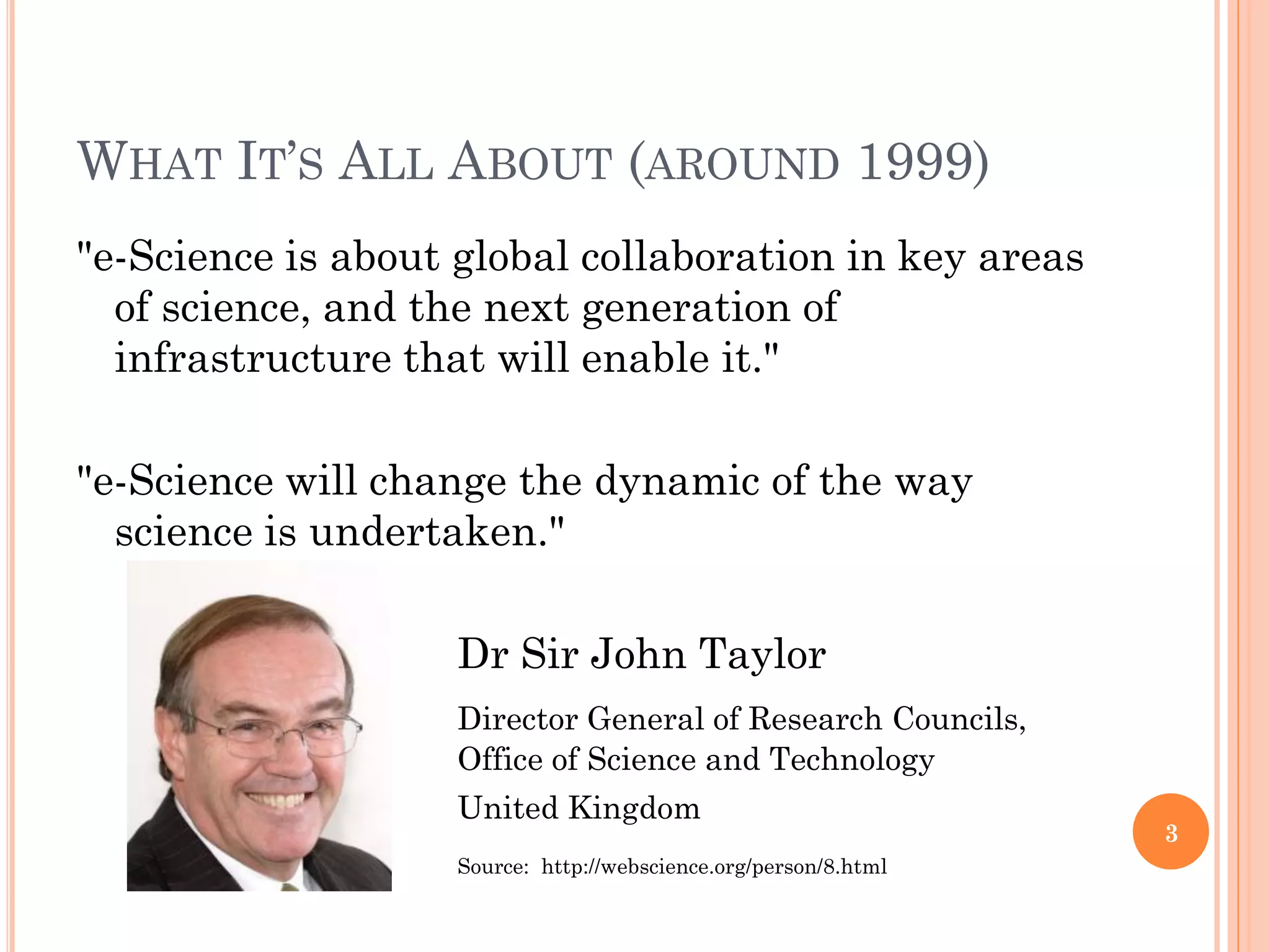
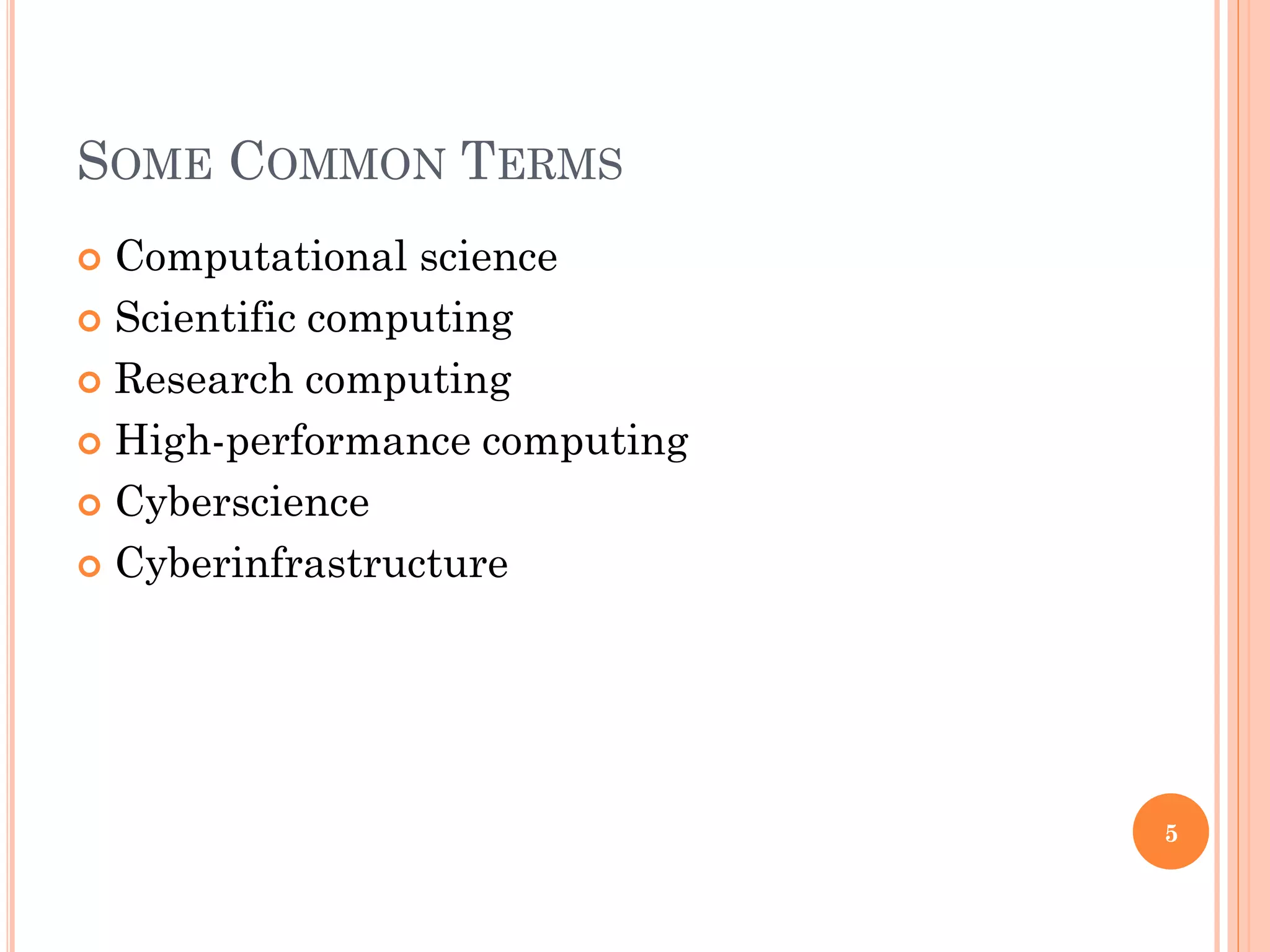
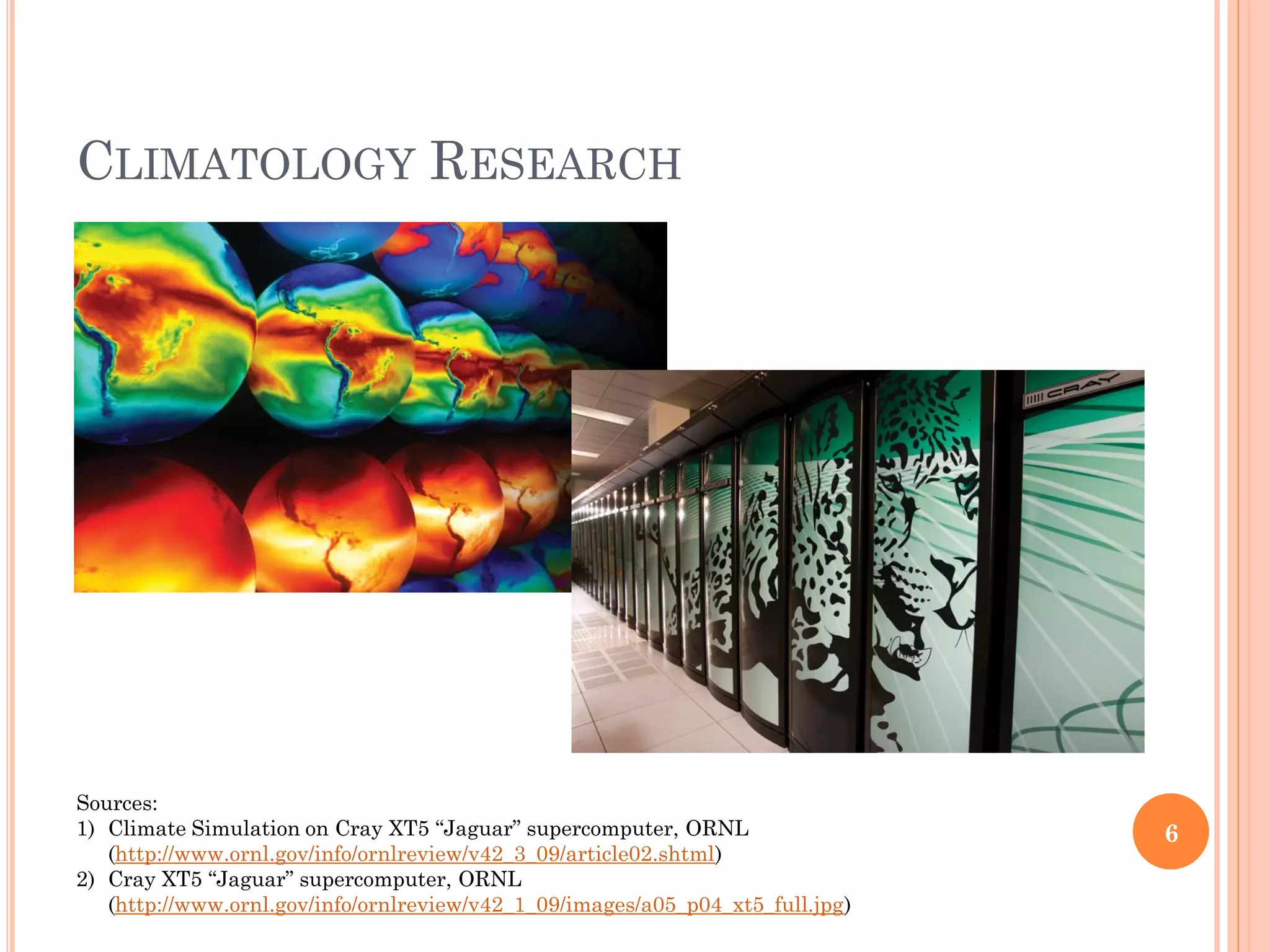
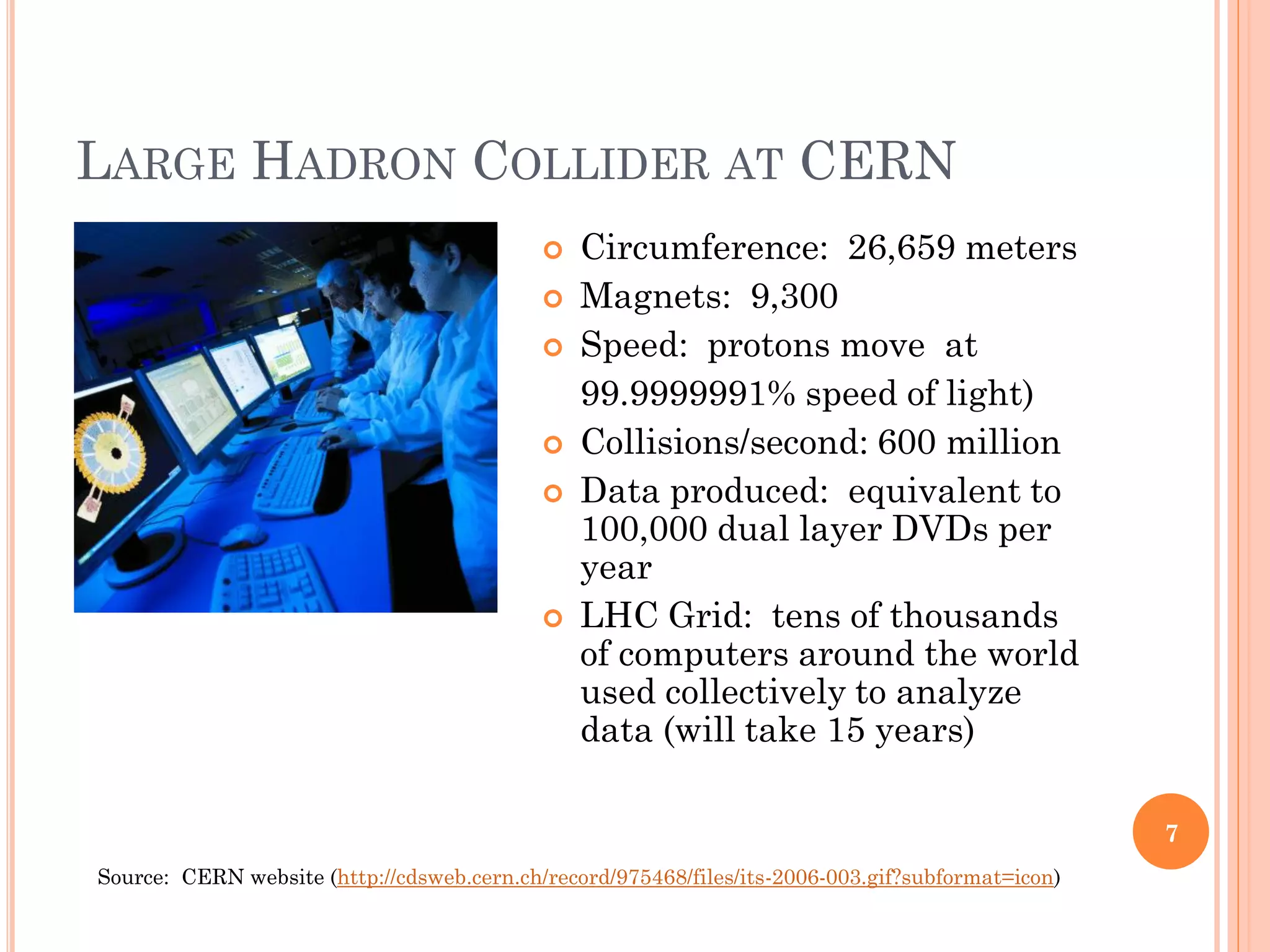
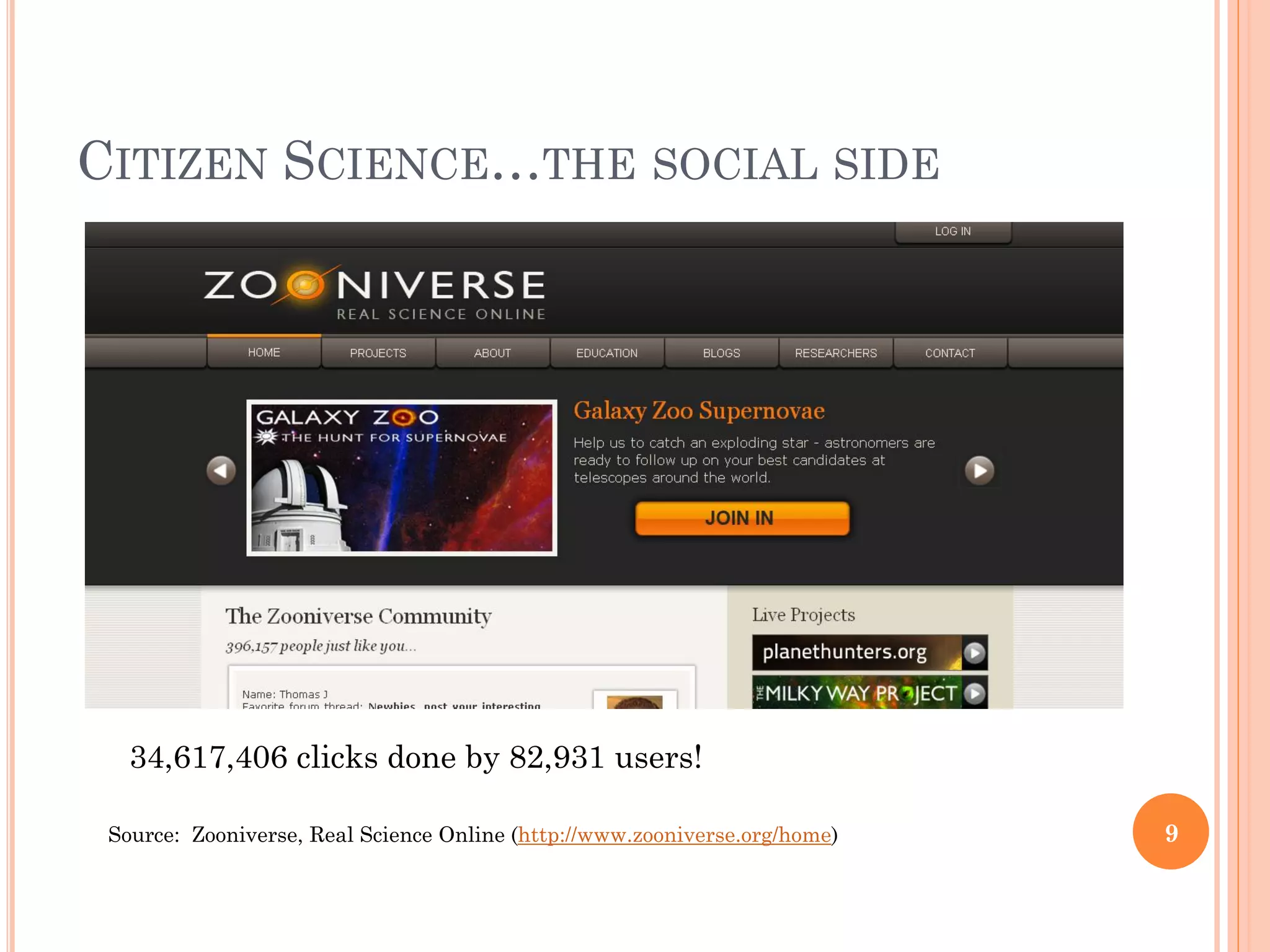
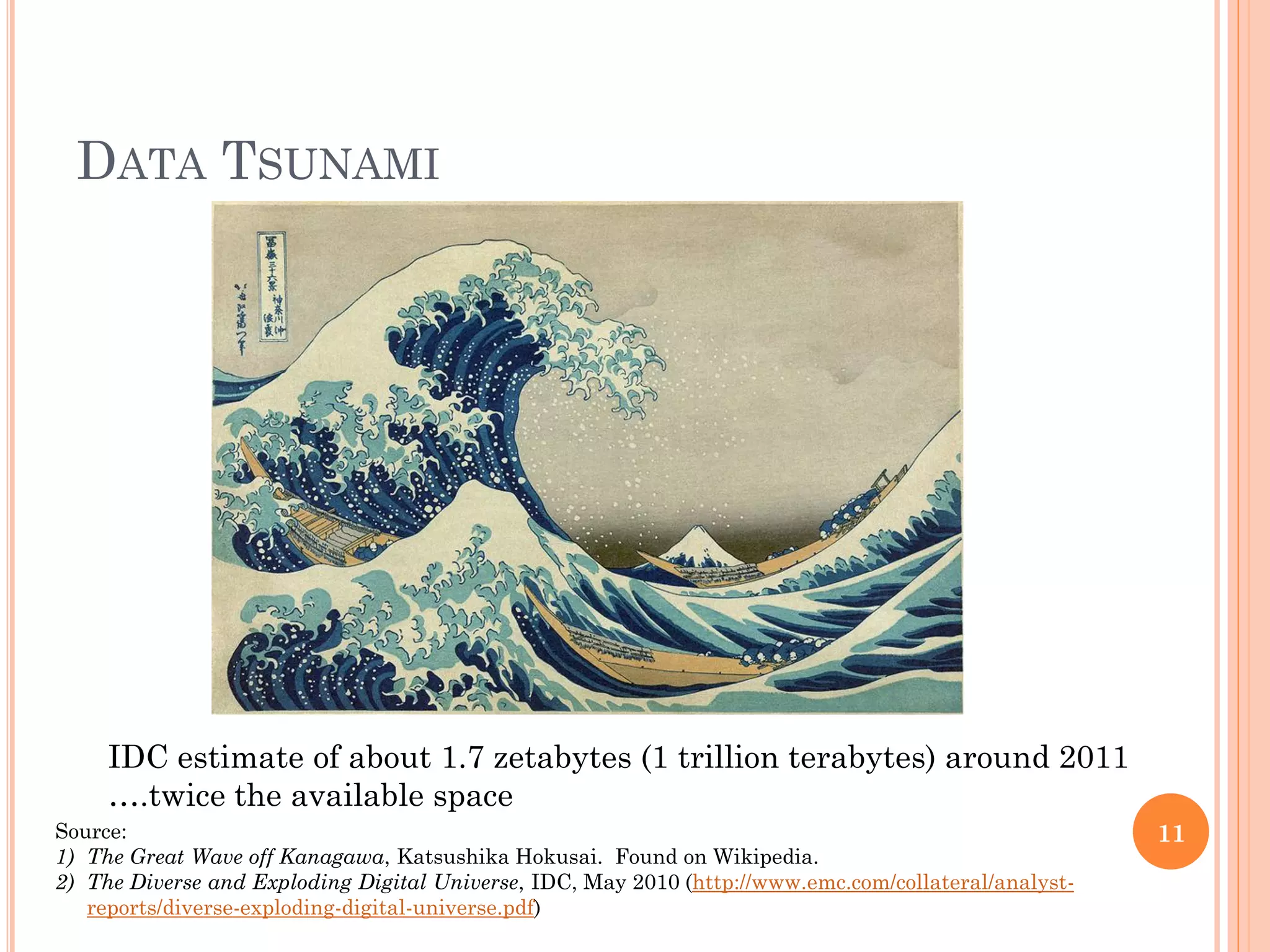
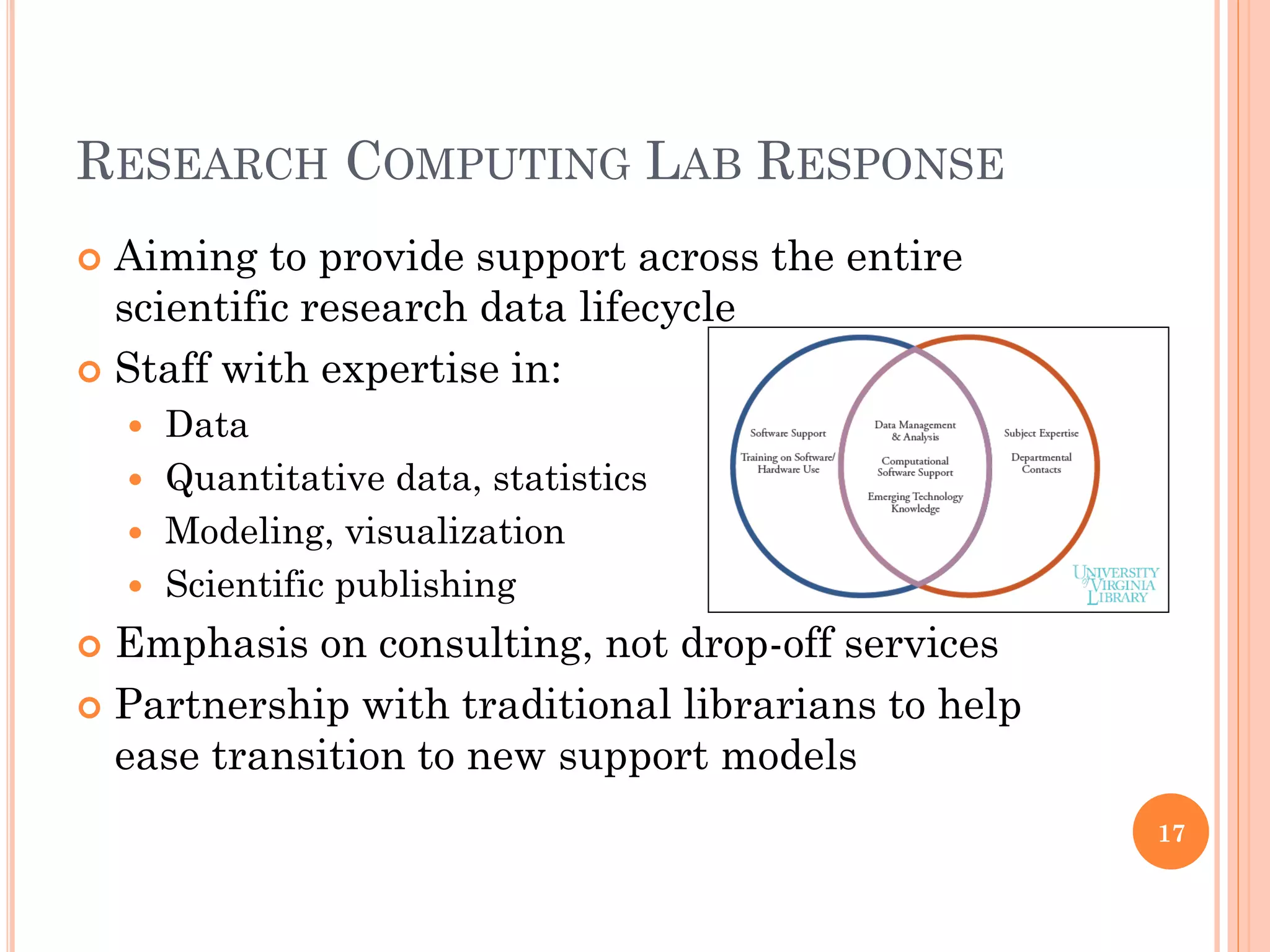
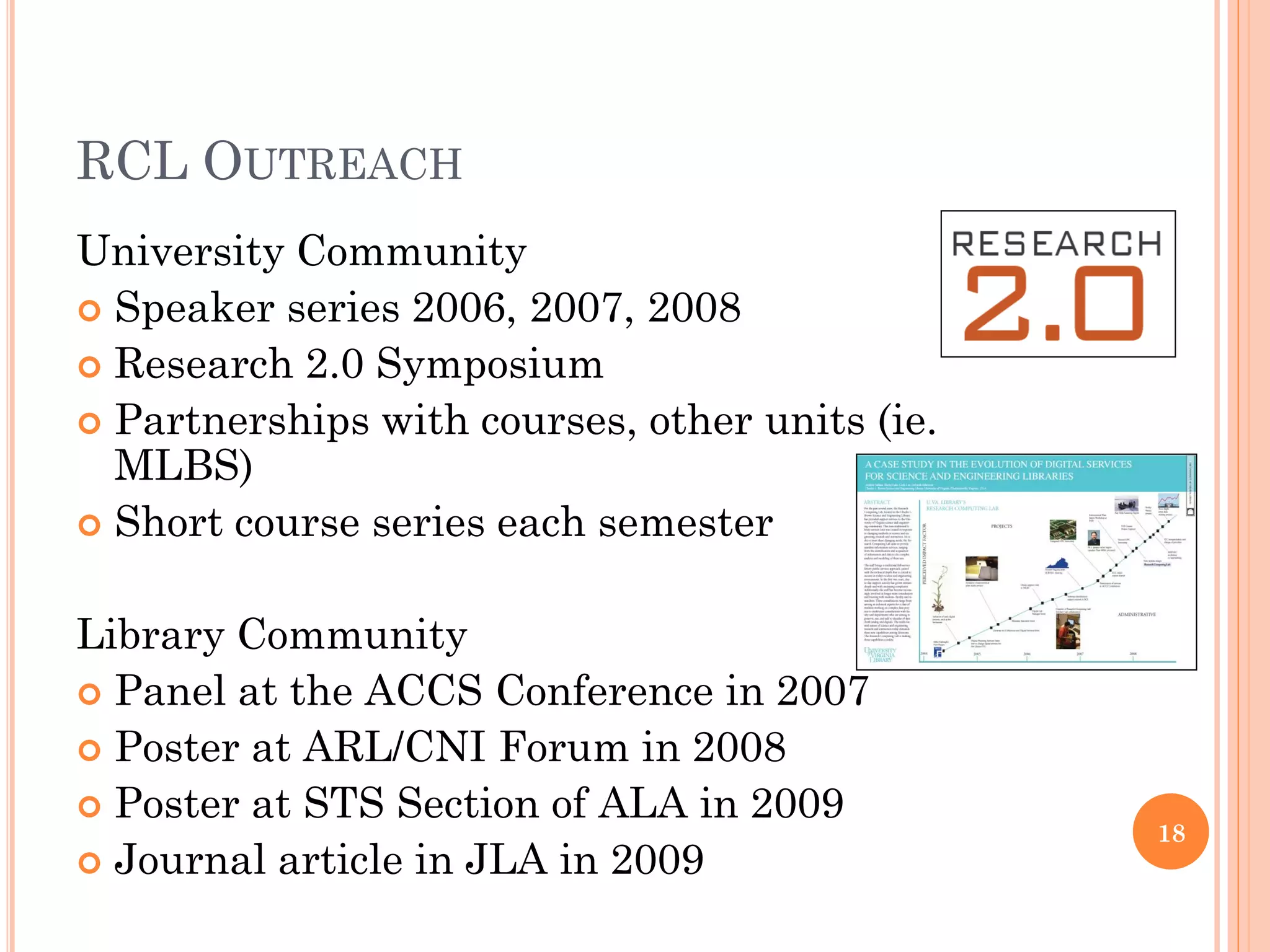
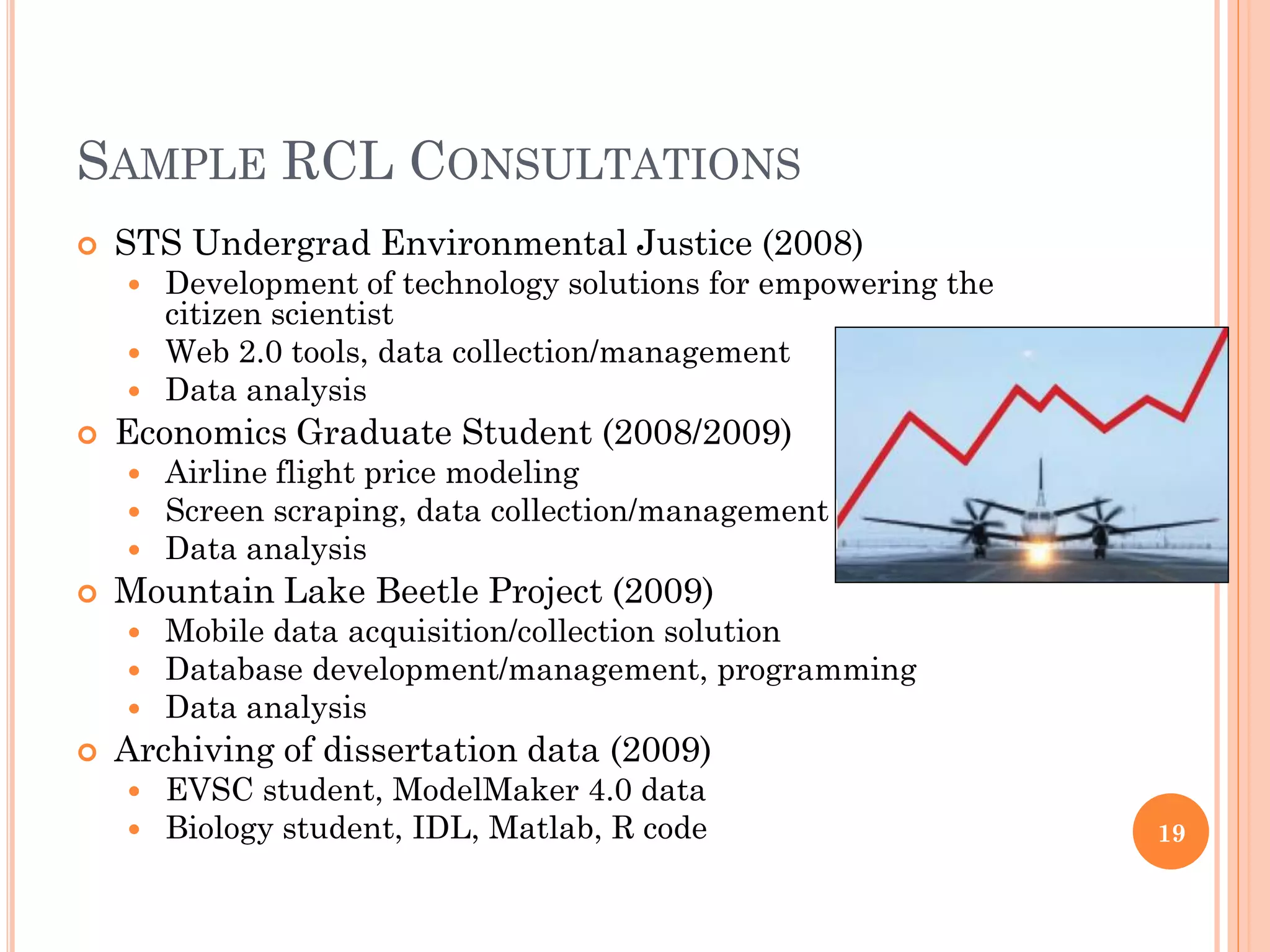
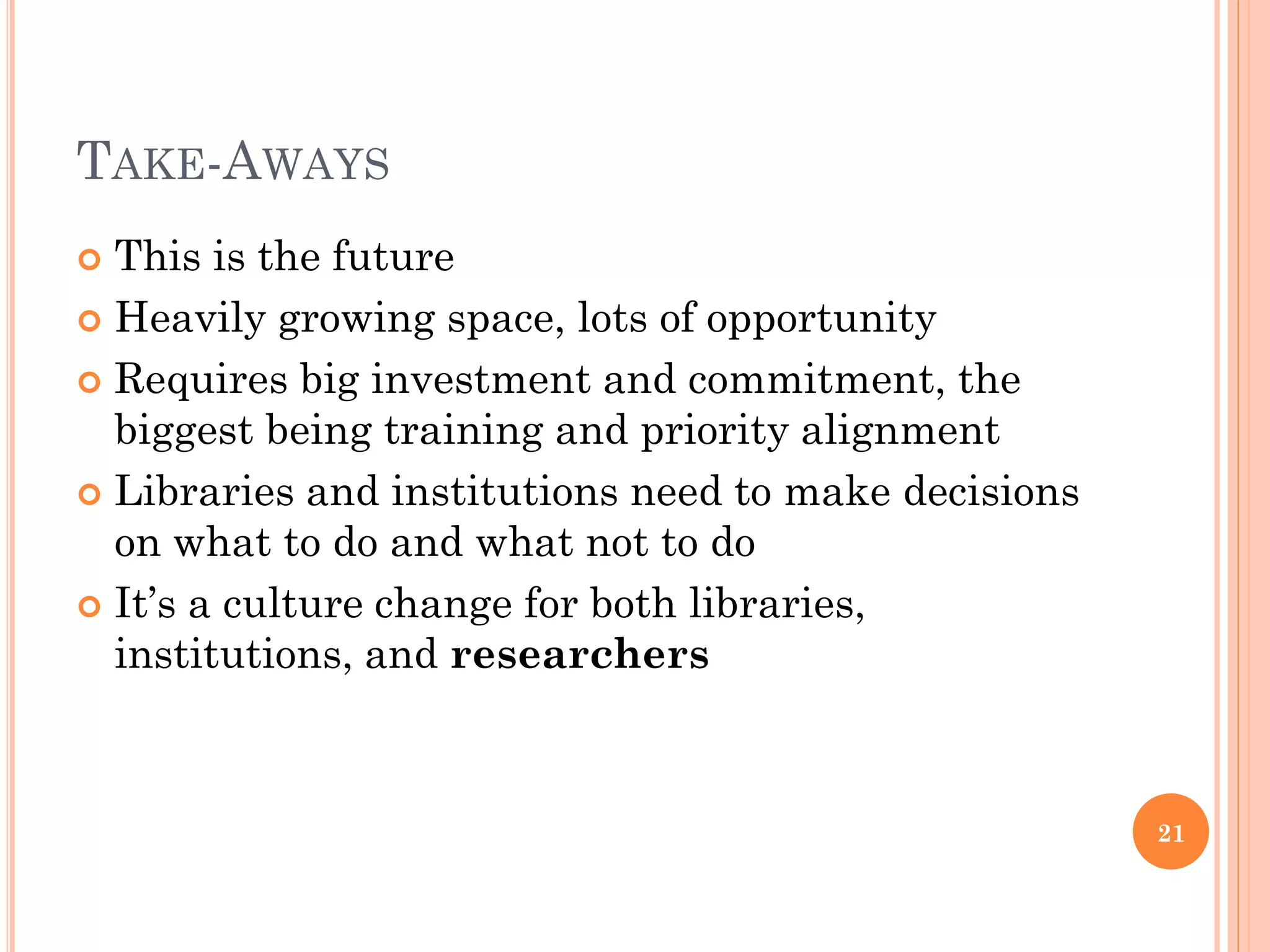


E-science involves large-scale collaborative research enabled by new technologies like high-speed networks and cheap data storage. It produces massive amounts of complex data from areas like climate modeling, particle physics experiments, biomedical research grids, and citizen science projects. This represents a major change for research that requires new infrastructure, expertise, and approaches. Universities like UVA are responding by establishing research computing support services in their libraries to help scientists with the computational and data aspects of e-science throughout the research lifecycle.


