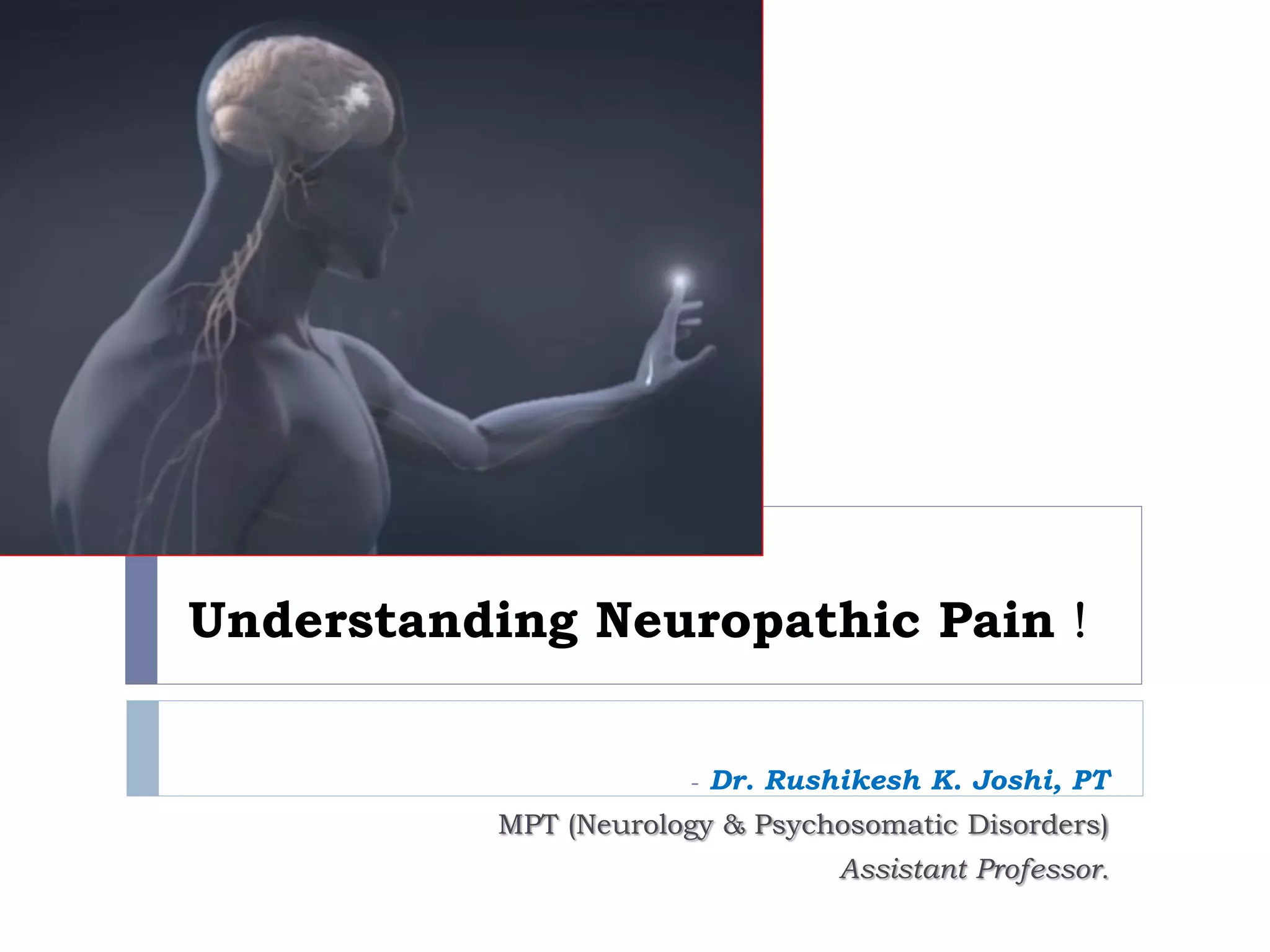



Understanding Neuropathic Pain !
- Dr. Rushikesh K. Joshi, PT
MPT (Neurology & Psychosomatic Disorders)
Assistant Professor.
Difficult to understand !
 Neuropathic pain is an important problem because of its
complex natural history, unclear aetiology, and poor
response to standard physical therapy modalities !
How You Define it!
 Various definitions !
 ‘Neuropathic pain is pain caused by damage or disease
affecting the somato-sensory nervous system’
 ‘Neuropathic pain is caused by damage or injury to the
nerves that transfer information between the brain and
spinal cord from the skin, muscles and other parts of the
body.’
 International Association for the Study of Pain
 ‘Neuropathic pain syndromes are, in the majority of cases,
chronic conditions related to injuries or diseases
occurring at different levels in the nervous systems which
are involved in signaling pain.’ (Treede et al., 2008)
REMEMBER !!
They are CHRONIC CONDITIONS !!
Helps you in differentiating from nociceptive
pain !
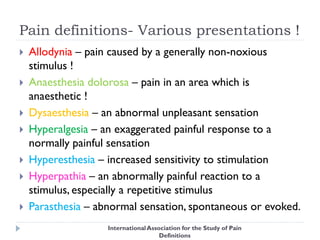
Pain definitions- Various presentations !
 Allodynia – pain caused by a generally non-noxious
stimulus !
 Anaesthesia dolorosa – pain in an area which is
anaesthetic !
 Dysaesthesia – an abnormal unpleasant sensation
 Hyperalgesia – an exaggerated painful response to a
normally painful sensation
 Hyperesthesia – increased sensitivity to stimulation
 Hyperpathia – an abnormally painful reaction to a
stimulus, especially a repetitive stimulus
 Parasthesia – abnormal sensation, spontaneous or evoked.
InternationalAssociation for the Study of Pain
Definitions
Zooming…….. into Neuropathic pain !!
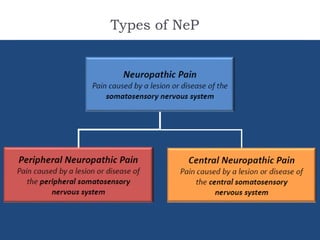
Types of NeP
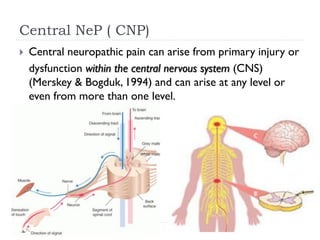
Central NeP ( CNP)
 Central neuropathic pain can arise from primary injury or
dysfunction within the central nervous system (CNS)
(Merskey & Bogduk, 1994) and can arise at any level or
even from more than one level.
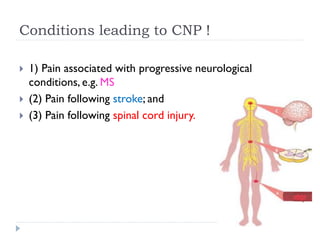
Conditions leading to CNP !
 1) Pain associated with progressive neurological
conditions, e.g. MS
 (2) Pain following stroke; and
 (3) Pain following spinal cord injury.
Why so ? !!
Probable mechanism !!
 Lesions in the spinothalamic pathway, which may become
hyper-excitable following lesioning. ??! ( Hypothesis )
 Basal ganglia and Dopaminergic systems are involved in
the processing of Nociception to higher centres !!
 The role of lesions of the thalamus in ‘Thalamic pain’
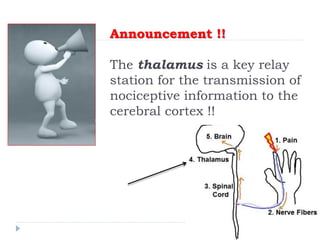
Announcement !!
The thalamus is a key relay
station for the transmission of
nociceptive information to the
cerebral cortex !!
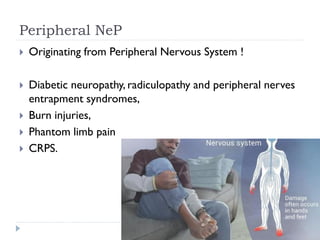
Peripheral NeP
 Originating from Peripheral Nervous System !
 Diabetic neuropathy, radiculopathy and peripheral nerves
entrapment syndromes,
 Burn injuries,
 Phantom limb pain
 CRPS.
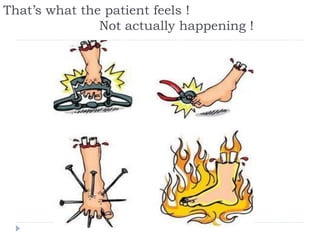
That’s what the patient feels !
Not actually happening !
Pathophysiological Mechanisms behind this!
Hyperactivity in the nociceptors
lead to secondary changes in
neurons processing
somatosensory information in the
Dorsal horn, Spinal cord and
Brain.
Understand this !
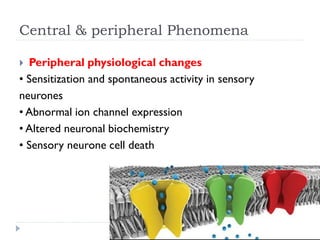
Central & peripheral Phenomena
 Peripheral physiological changes
• Sensitization and spontaneous activity in sensory
neurones
• Abnormal ion channel expression
• Altered neuronal biochemistry
• Sensory neurone cell death
Ion channel over activity !
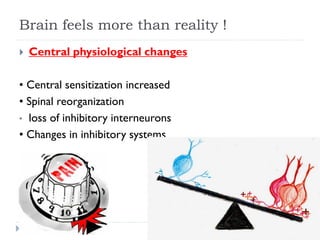
Brain feels more than reality !
 Central physiological changes
• Central sensitization increased
• Spinal reorganization
• loss of inhibitory interneurons
• Changes in inhibitory systems
Diagnosing NeP !
 FACT !
- Neuro. Pain as a subjective sensory symptom is difficult to
measure because it is not something visible and does not
involve only physical aspects, but also psychological and
emotional components. (Baron et al 2010)
Be a Good listener !
 Detailed History with:
 - Description Of Qualities Of Pain;
 - Duration Of Pain;
 -Time Course Pattern;
 - Rating Intensity Of Pain;
 -The Context AndType Of Onset;
 - Presence Of Relieving Factors;
 - Existence Of Provocative Or Enhancer Factors
Complementary studies !
 Adequately performed neurological examination.
 Blood and serologic tests, electrophysiological studies,
imaging procedures will contribute with information
about the etiology of the underlying disease and also to
predict the outcome. (Gilron et al.2006; Haanpaa et al
2011).
Various Assessment Tools
 LANSS (Leedes Assessment of Neuropathic Symptoms
and Signs Scale)
 NPQ (Neuropathic Pain Questionnaire)
 Neuropathic Pain Symptoms Inventory (NPSI)
 Neuropathic Pain Scale (NPS)
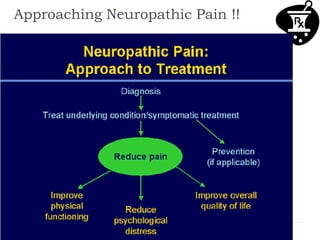
Approaching Neuropathic Pain !!
NICE Guidelines
 National Institute for Health and Clinical Excellence
(NICE) guidelines for the pharmacological
management of neuropathic pain !
 Antidepressants,
 Topical applications (capsaicin and lidocaine)
 Opioids (Analgesics)
 Anticonvulsant medications
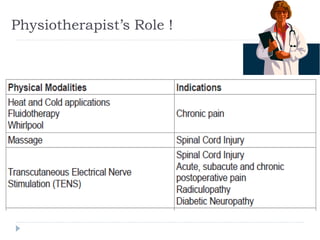
Physiotherapist’s Role !
Exercise Interventions !
 Stretching exercises !
 Strengthening protocols !
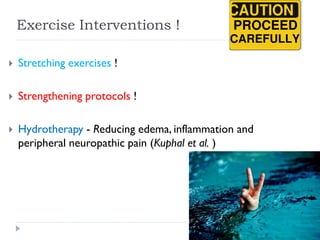
 Hydrotherapy - Reducing edema, inflammation and
peripheral neuropathic pain (Kuphal et al. )
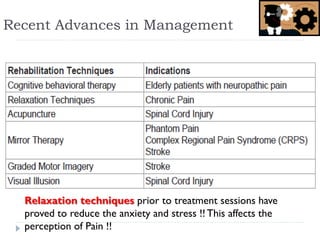
Recent Advances in Management
Relaxation techniques prior to treatment sessions have
proved to reduce the anxiety and stress !! This affects the
perception of Pain !!
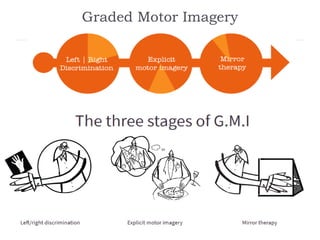
Graded Motor Imagery
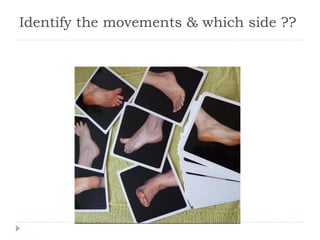
Identify the movements & which side ??
Graded motor imagery & Mirror therapy
Conclusion
 There are several therapeutic options to treat central and
peripheral neuropathic pain.
 One should stress old approaches which remain with
good level of evidence such as TENS.
 Rehabilitation can and should be included as adjuvant to
treat NP patients.
 Rehabilitation provides further autonomy and
functionality to daily lives of these patients
Thank You!
Jai Hind !

Understanding Neuropathic pain

  • 1.
    Understanding Neuropathic Pain! - Dr. Rushikesh K. Joshi, PT MPT (Neurology & Psychosomatic Disorders) Assistant Professor.
  • 2.
    Difficult to understand!  Neuropathic pain is an important problem because of its complex natural history, unclear aetiology, and poor response to standard physical therapy modalities !
  • 3.
    How You Defineit!  Various definitions !  ‘Neuropathic pain is pain caused by damage or disease affecting the somato-sensory nervous system’  ‘Neuropathic pain is caused by damage or injury to the nerves that transfer information between the brain and spinal cord from the skin, muscles and other parts of the body.’  International Association for the Study of Pain
  • 4.
     ‘Neuropathic painsyndromes are, in the majority of cases, chronic conditions related to injuries or diseases occurring at different levels in the nervous systems which are involved in signaling pain.’ (Treede et al., 2008) REMEMBER !! They are CHRONIC CONDITIONS !! Helps you in differentiating from nociceptive pain !
  • 5.
    Pain definitions- Variouspresentations !  Allodynia – pain caused by a generally non-noxious stimulus !  Anaesthesia dolorosa – pain in an area which is anaesthetic !  Dysaesthesia – an abnormal unpleasant sensation  Hyperalgesia – an exaggerated painful response to a normally painful sensation  Hyperesthesia – increased sensitivity to stimulation  Hyperpathia – an abnormally painful reaction to a stimulus, especially a repetitive stimulus  Parasthesia – abnormal sensation, spontaneous or evoked. InternationalAssociation for the Study of Pain Definitions
  • 6.
  • 7.
  • 8.
    Central NeP (CNP)  Central neuropathic pain can arise from primary injury or dysfunction within the central nervous system (CNS) (Merskey & Bogduk, 1994) and can arise at any level or even from more than one level.
  • 9.
    Conditions leading toCNP !  1) Pain associated with progressive neurological conditions, e.g. MS  (2) Pain following stroke; and  (3) Pain following spinal cord injury.
  • 10.
    Why so ?!! Probable mechanism !!  Lesions in the spinothalamic pathway, which may become hyper-excitable following lesioning. ??! ( Hypothesis )  Basal ganglia and Dopaminergic systems are involved in the processing of Nociception to higher centres !!  The role of lesions of the thalamus in ‘Thalamic pain’
  • 11.
    Announcement !! The thalamusis a key relay station for the transmission of nociceptive information to the cerebral cortex !!
  • 12.
    Peripheral NeP  Originatingfrom Peripheral Nervous System !  Diabetic neuropathy, radiculopathy and peripheral nerves entrapment syndromes,  Burn injuries,  Phantom limb pain  CRPS.
  • 13.
    That’s what thepatient feels ! Not actually happening !
  • 14.
    Pathophysiological Mechanisms behindthis! Hyperactivity in the nociceptors lead to secondary changes in neurons processing somatosensory information in the Dorsal horn, Spinal cord and Brain.
  • 15.
  • 16.
    Central & peripheralPhenomena  Peripheral physiological changes • Sensitization and spontaneous activity in sensory neurones • Abnormal ion channel expression • Altered neuronal biochemistry • Sensory neurone cell death
  • 17.
    Ion channel overactivity !
  • 18.
    Brain feels morethan reality !  Central physiological changes • Central sensitization increased • Spinal reorganization • loss of inhibitory interneurons • Changes in inhibitory systems
  • 19.
    Diagnosing NeP ! FACT ! - Neuro. Pain as a subjective sensory symptom is difficult to measure because it is not something visible and does not involve only physical aspects, but also psychological and emotional components. (Baron et al 2010)
  • 21.
    Be a Goodlistener !  Detailed History with:  - Description Of Qualities Of Pain;  - Duration Of Pain;  -Time Course Pattern;  - Rating Intensity Of Pain;  -The Context AndType Of Onset;  - Presence Of Relieving Factors;  - Existence Of Provocative Or Enhancer Factors
  • 22.
    Complementary studies ! Adequately performed neurological examination.  Blood and serologic tests, electrophysiological studies, imaging procedures will contribute with information about the etiology of the underlying disease and also to predict the outcome. (Gilron et al.2006; Haanpaa et al 2011).
  • 23.
    Various Assessment Tools LANSS (Leedes Assessment of Neuropathic Symptoms and Signs Scale)  NPQ (Neuropathic Pain Questionnaire)  Neuropathic Pain Symptoms Inventory (NPSI)  Neuropathic Pain Scale (NPS)
  • 24.
  • 25.
    NICE Guidelines  NationalInstitute for Health and Clinical Excellence (NICE) guidelines for the pharmacological management of neuropathic pain !  Antidepressants,  Topical applications (capsaicin and lidocaine)  Opioids (Analgesics)  Anticonvulsant medications
  • 26.
  • 27.
    Exercise Interventions ! Stretching exercises !  Strengthening protocols !  Hydrotherapy - Reducing edema, inflammation and peripheral neuropathic pain (Kuphal et al. )
  • 28.
    Recent Advances inManagement Relaxation techniques prior to treatment sessions have proved to reduce the anxiety and stress !! This affects the perception of Pain !!
  • 29.
  • 30.
    Identify the movements& which side ??
  • 31.
    Graded motor imagery& Mirror therapy
  • 32.
    Conclusion  There areseveral therapeutic options to treat central and peripheral neuropathic pain.  One should stress old approaches which remain with good level of evidence such as TENS.  Rehabilitation can and should be included as adjuvant to treat NP patients.  Rehabilitation provides further autonomy and functionality to daily lives of these patients
  • 33.