Welcome to the Presentation
on
PreparedBy
 B131345 - JAWAD KALAM CHOWDHURY
 B131360 - SAFAYAT BIN ABSER
 B131367 - MD.ISKANDAR HOSSAIN
 B131176 - MD TOWSIF UDDIN CHOWDHURY
 B131362 - MD.RABIUL HOSSAIN
 B131359 – IBRAHIM MOZUMDER
SEMESTER Enrolled : 6th SECTION: “A”
DEPARTMENT OF BUSINESS ADMINISTRATION
COURSE CODE : MKTG-3602
COURSE TITLE: Marketing Management
Contents
 Demand & Demand states and
Marketing tasks.
 Core Marketing Concept
 Marketing philosophy
 Company Responses &
adjustment
What do we mean by demand ?
-Demand is the total number of requests for a resource.
-Demand Management is all about making choices.
-Demand Management is based on “forecast and
plans”
Demand states and Marketing tasks.
 Negative demand.
Ex:- Dental work ,vaccinations
 No demand.
Ex:- Foreign language courses.
 Latent demand.
Ex:- Harmless cigarettes, fuel efficient cars
 Declining demand.
Ex:- churches.
Demand states and Marketing tasks (Cont.)
 Irregular demand.
Ex:- Hotels, mass-transit.
 Full demand.
Ex:- Changing preference, increasing competition
 Overfull demand.
Ex:- Demarketing.
 Unwholesome demand.
Ex:- cigarettes, Alcohol.
Core Marketing Concept
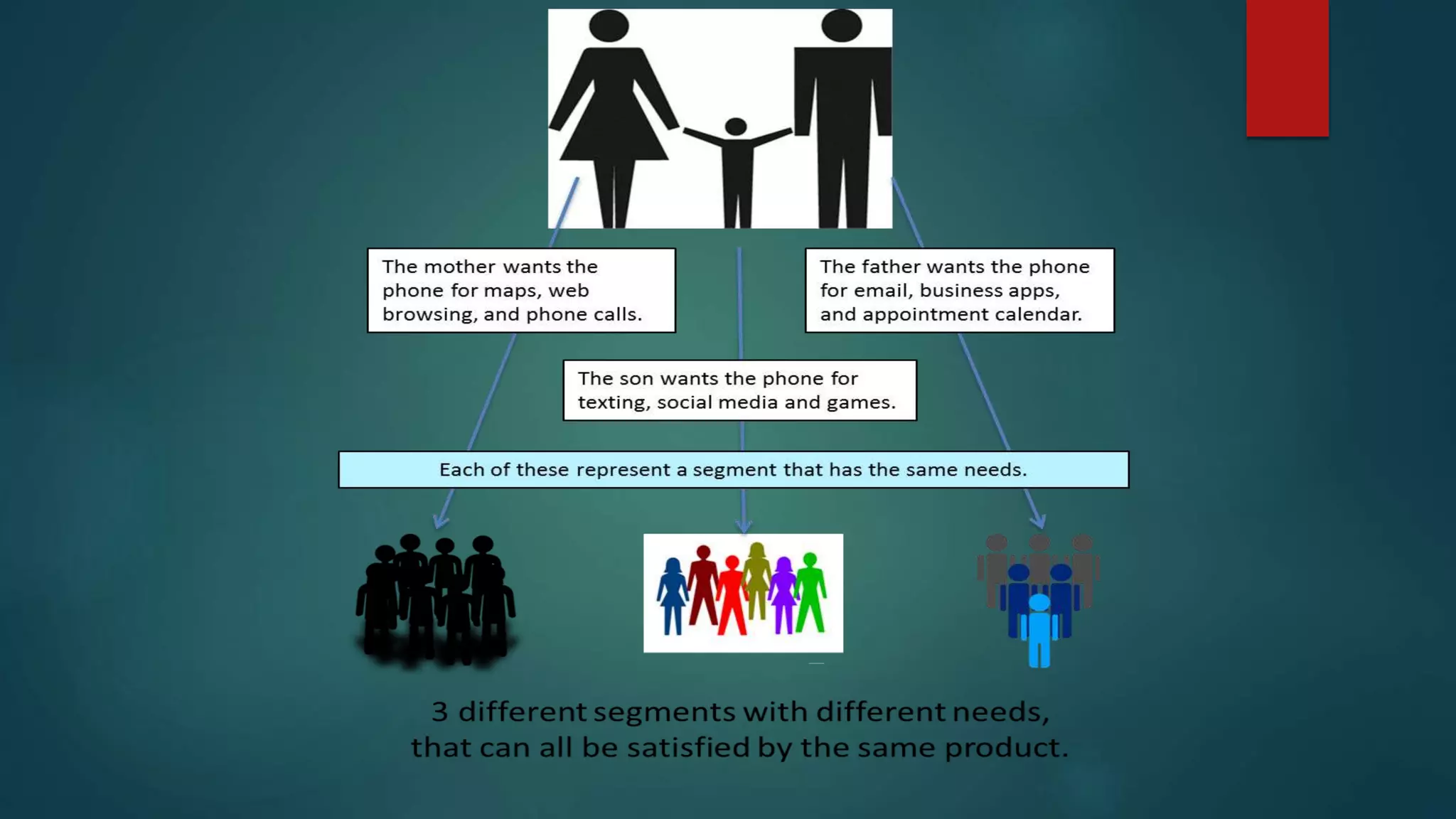
Target Markets & Segmentation
 Segmentation:-
* Identification of customer’s needs and market segments.
* Develop Profiles of resulting market segments.
 Target market
* Evaluation of attractivity of each
segment.
* Select best one or more
segments to enter.
Marketplace, Market Space & Metamarket
 Marketplace
* It is physical as when one goes shopping in a store.
Example:- Afmi Plaza
 Marketspace
* It is digital as when one goes shopping on the internet.
Example:- Asian Sky shop,Branoo.com
 Metamarket
*Two or more distinct markets that are associated in
some way to a product & service.
Example:- Shaadi.com
Marketers & Prospects
 Seeking response from each other when sell something
 Prospect means expectation
Needs, Wants & Demand
 “Needs are states of felt deprivation of some basic
satisfaction” .
Ex:- Hungry, Thirsty etc.
 Wants are desires for specific satisfices of these deeper
needs.
Ex- Rich,Fish vs Barger,Frensh Fry
 Demand- Human wants that are backed by buying power.
Ex- BMW, Radisson Blu
Product, Offering & Brand
 Product- Offered anything for attention, acquisition,
consumption that satisfy a want & need.
 Offering- Product that is sold into the marketplace
 Brand- Offering from a known source.
Ex: McDonald’s,Nike.
Value & Satisfaction
 Ratio between gets & gives.
 Value =Benefits/Costs.
Exchange & Transactions
 Obtaining a desired object from someone by offering
something in return.
Example: Hungry People
 Is a trade of values between two or more parties.
Example: aamra smart solution sell a mobile at price 15999/=
Relationship & Networks
 Aim of building mutually satisfying long term relations
with key parties.
 Building of a unique company assents.
Marketing Channels
 Communication channel, distribution Channel, service
channel.
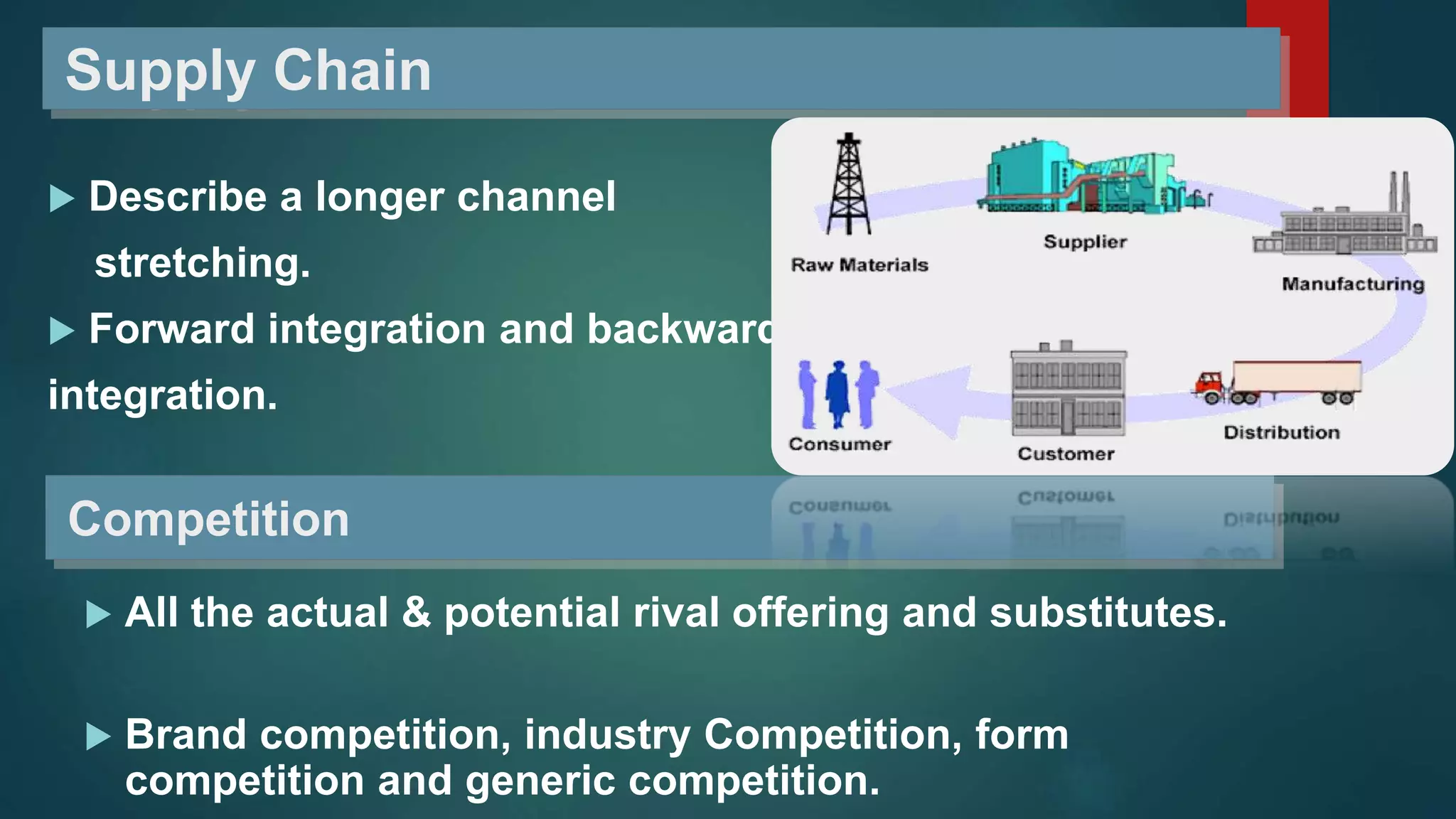
Supply Chain
 Describe a longer channel
stretching.
 Forward integration and backward
integration.
Competition
 All the actual & potential rival offering and substitutes.
 Brand competition, industry Competition, form
competition and generic competition.
Marketing Environment
 Task environment & Broad environment
Marketing Program
 Numbers decisions on the mix of marketing tools to use.
 The Marketing Mix:- Four marketing activities—product, pricing,
place and promotion—that a firm can control to meet the needs of
customers within its target market
Marketing philosophy
The production concept
* Oldest
* Widely available and inexpensive.
* Primarily interest and low price.
Example :- Salt, Shop
The product concept
 Not compromise the quality.
 price high
 Example:-Sony TV. I phone in
apple.
The Selling concept
 Convert cash
 Need sells not need customar satisfaction
 Example :- Micro Max mobile, Insurance company.
Marketing concept
 Adopting it profit can be earned on a long-term basis.
 Realizing a profit by successfully satisfying
customer needs over the long-term
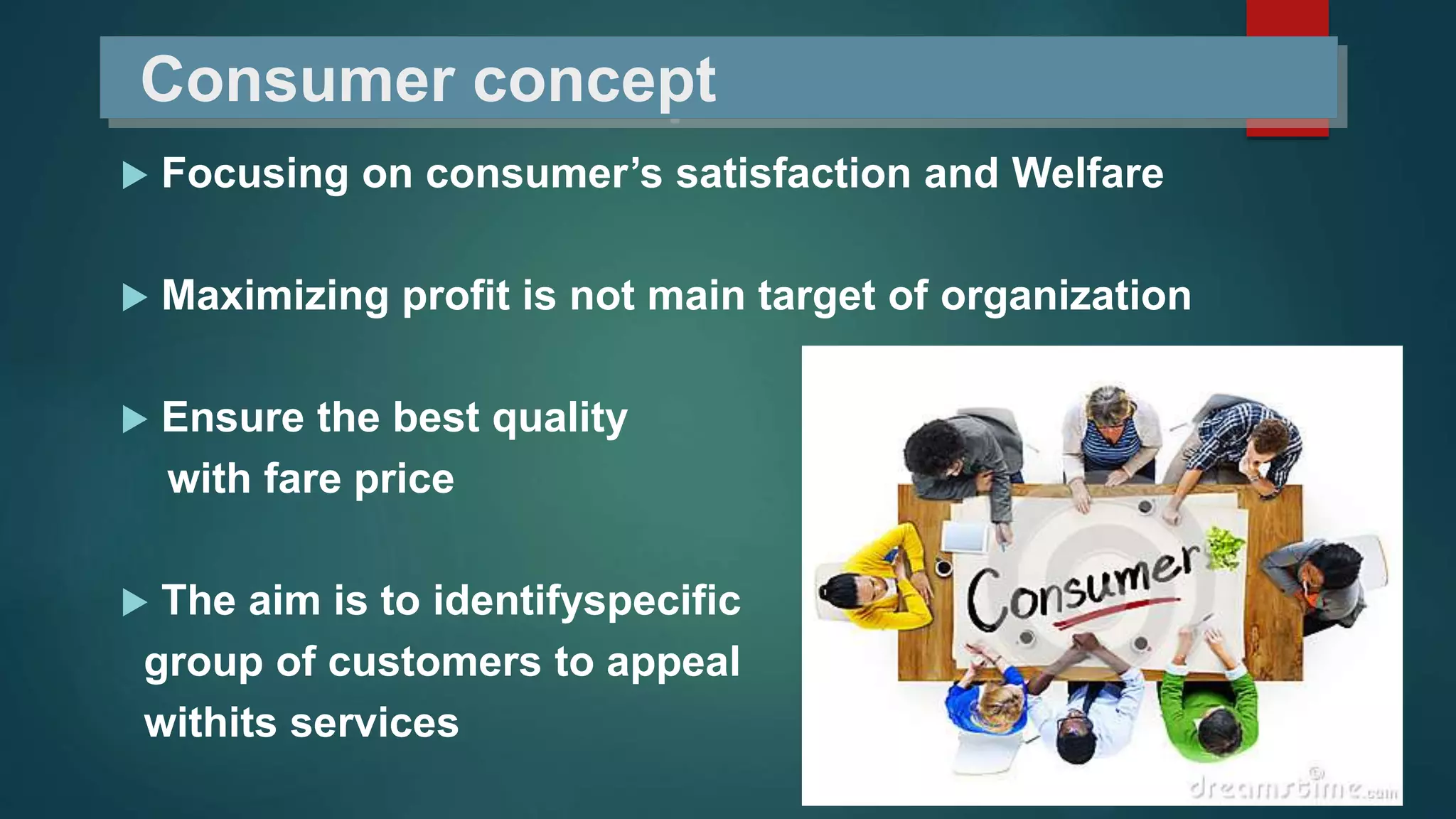
Consumer concept
 Focusing on consumer’s satisfaction and Welfare
 Maximizing profit is not main target of organization
 Ensure the best quality
with fare price
 The aim is to identifyspecific
group of customers to appeal
withits services
Societal concept
 Gives importance not only consumer satisfaction but also
social welfare
 Focusing on human life and pollution free atmosphere.
 Example : produce a vehicle which consumes less petrol
Company Responses & adjustment
 Reengineering
 Outsourcing
 E-Commerce
 Alliances
 Partner suppliers
 Market centered
 Global & local
 Decentralization .
Understanding marketing management

Understanding marketing management

  • 1.
    Welcome to thePresentation on
  • 2.
    PreparedBy  B131345 -JAWAD KALAM CHOWDHURY  B131360 - SAFAYAT BIN ABSER  B131367 - MD.ISKANDAR HOSSAIN  B131176 - MD TOWSIF UDDIN CHOWDHURY  B131362 - MD.RABIUL HOSSAIN  B131359 – IBRAHIM MOZUMDER SEMESTER Enrolled : 6th SECTION: “A” DEPARTMENT OF BUSINESS ADMINISTRATION COURSE CODE : MKTG-3602 COURSE TITLE: Marketing Management
  • 3.
    Contents  Demand &Demand states and Marketing tasks.  Core Marketing Concept  Marketing philosophy  Company Responses & adjustment
  • 4.
    What do wemean by demand ? -Demand is the total number of requests for a resource. -Demand Management is all about making choices. -Demand Management is based on “forecast and plans”
  • 5.
    Demand states andMarketing tasks.  Negative demand. Ex:- Dental work ,vaccinations  No demand. Ex:- Foreign language courses.  Latent demand. Ex:- Harmless cigarettes, fuel efficient cars  Declining demand. Ex:- churches.
  • 6.
    Demand states andMarketing tasks (Cont.)  Irregular demand. Ex:- Hotels, mass-transit.  Full demand. Ex:- Changing preference, increasing competition  Overfull demand. Ex:- Demarketing.  Unwholesome demand. Ex:- cigarettes, Alcohol.
  • 7.
  • 8.
    Target Markets &Segmentation  Segmentation:- * Identification of customer’s needs and market segments. * Develop Profiles of resulting market segments.  Target market * Evaluation of attractivity of each segment. * Select best one or more segments to enter.
  • 10.
    Marketplace, Market Space& Metamarket  Marketplace * It is physical as when one goes shopping in a store. Example:- Afmi Plaza  Marketspace * It is digital as when one goes shopping on the internet. Example:- Asian Sky shop,Branoo.com  Metamarket *Two or more distinct markets that are associated in some way to a product & service. Example:- Shaadi.com
  • 11.
    Marketers & Prospects Seeking response from each other when sell something  Prospect means expectation
  • 12.
    Needs, Wants &Demand  “Needs are states of felt deprivation of some basic satisfaction” . Ex:- Hungry, Thirsty etc.  Wants are desires for specific satisfices of these deeper needs. Ex- Rich,Fish vs Barger,Frensh Fry  Demand- Human wants that are backed by buying power. Ex- BMW, Radisson Blu
  • 13.
    Product, Offering &Brand  Product- Offered anything for attention, acquisition, consumption that satisfy a want & need.  Offering- Product that is sold into the marketplace  Brand- Offering from a known source. Ex: McDonald’s,Nike.
  • 14.
    Value & Satisfaction Ratio between gets & gives.  Value =Benefits/Costs. Exchange & Transactions  Obtaining a desired object from someone by offering something in return. Example: Hungry People  Is a trade of values between two or more parties. Example: aamra smart solution sell a mobile at price 15999/=
  • 15.
    Relationship & Networks Aim of building mutually satisfying long term relations with key parties.  Building of a unique company assents. Marketing Channels  Communication channel, distribution Channel, service channel.
  • 16.
    Supply Chain  Describea longer channel stretching.  Forward integration and backward integration. Competition  All the actual & potential rival offering and substitutes.  Brand competition, industry Competition, form competition and generic competition.
  • 17.
    Marketing Environment  Taskenvironment & Broad environment Marketing Program  Numbers decisions on the mix of marketing tools to use.  The Marketing Mix:- Four marketing activities—product, pricing, place and promotion—that a firm can control to meet the needs of customers within its target market
  • 18.
  • 19.
    The production concept *Oldest * Widely available and inexpensive. * Primarily interest and low price. Example :- Salt, Shop
  • 20.
    The product concept Not compromise the quality.  price high  Example:-Sony TV. I phone in apple.
  • 21.
    The Selling concept Convert cash  Need sells not need customar satisfaction  Example :- Micro Max mobile, Insurance company.
  • 22.
    Marketing concept  Adoptingit profit can be earned on a long-term basis.  Realizing a profit by successfully satisfying customer needs over the long-term
  • 23.
    Consumer concept  Focusingon consumer’s satisfaction and Welfare  Maximizing profit is not main target of organization  Ensure the best quality with fare price  The aim is to identifyspecific group of customers to appeal withits services
  • 24.
    Societal concept  Givesimportance not only consumer satisfaction but also social welfare  Focusing on human life and pollution free atmosphere.  Example : produce a vehicle which consumes less petrol
  • 25.
    Company Responses &adjustment  Reengineering  Outsourcing  E-Commerce  Alliances  Partner suppliers  Market centered  Global & local  Decentralization .