Understanding
ISO 15189
Accreditation
Introduction to ISO 15189
What is ISO 15189?
ISO 15189 is an international standard
that specifies the requirements for
quality and competence in medical
laboratories. It outlines the
necessary processes and procedures to
ensure accurate and reliable testing,
as well as the proper management of
laboratory operations.
What is ISO 15189?
ISO 15189 accreditation demonstrates a
laboratory's commitment to quality and
competence, which can lead to
increased confidence from patients,
healthcare providers, and regulatory
bodies. It also helps laboratories
identify areas for improvement and
implement best practices for efficient
and effective operations.
Benefits of ISO 15189
Accreditation
• Improved Quality of Services
ISO 15189 accreditation ensures that medical laboratories provide accurate and
reliable results to their clients. This leads to improved quality of services and
better patient outcomes.
• Increased Credibility and Trust
ISO 15189 accreditation is recognized internationally and provides medical
laboratories with increased credibility and trust. This leads to more business
opportunities and higher patient satisfaction.
• Compliance with Regulations and Standards
ISO 15189 accreditation ensures that medical laboratories comply with regulations
and standards set by governing bodies. This reduces the risk of legal action and
improves overall laboratory operations.
ISO 15189 Accreditation
Process
Initial Assessment
The first step in the ISO 15189 accreditation process is an initial assessment to
determine the laboratory's readiness for accreditation. This assessment includes a
review of the laboratory's quality management system, policies, and procedures, as
well as an evaluation of the laboratory's technical competence and proficiency
testing results.
Documentation Review
The next step is a documentation review, which involves a detailed examination of
the laboratory's quality manual, standard operating procedures, and other
documentation related to the laboratory's quality management system. The
documentation review ensures that the laboratory's procedures are consistent with
ISO 15189 requirements and that the laboratory has a comprehensive quality
management system in place.
On-Site Assessment
The on-site assessment is a comprehensive evaluation of the laboratory's quality
management system and technical competence. During the on-site assessment, the
accreditation body's assessors will review the laboratory's procedures, observe the
laboratory's operations, and interview laboratory staff. The on-site assessment is
the most critical step in the accreditation process, as it determines whether the
laboratory meets ISO 15189 requirements and is eligible for accreditation.
Corrective Actions and Follow-Up Assessments
If the laboratory does not meet all ISO 15189 requirements during the on-site
assessment, the laboratory will be required to implement corrective actions to
address any deficiencies. The accreditation body will then conduct follow-up
assessments to ensure that the laboratory has implemented the necessary corrective
actions and is in compliance with ISO 15189 requirements.
Establishing a
Quality Management
System
Develop a quality
manual, procedures,
and policies that
comply with ISO 15189
standards.
Training Personnel
Ensure all staff
members are trained in
quality management
systems, internal
audits, and risk
management.
Document Control
Establish a document
control system that
ensures all documents
are up-to-date, and
changes are
communicated to staff
members.
Preparing for ISO 15189
Accreditation
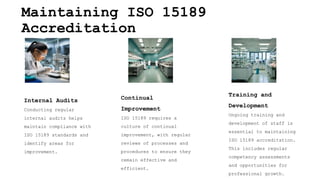
Maintaining ISO 15189
Accreditation
Internal Audits
Conducting regular
internal audits helps
maintain compliance with
ISO 15189 standards and
identify areas for
improvement.
Continual
Improvement
ISO 15189 requires a
culture of continual
improvement, with regular
reviews of processes and
procedures to ensure they
remain effective and
efficient.
Training and
Development
Ongoing training and
development of staff is
essential to maintaining
ISO 15189 accreditation.
This includes regular
competency assessments
and opportunities for
professional growth.
THANKS!

Understanding ISO 15189 Accreditation

  • 1.
  • 2.
    Introduction to ISO15189 What is ISO 15189? ISO 15189 is an international standard that specifies the requirements for quality and competence in medical laboratories. It outlines the necessary processes and procedures to ensure accurate and reliable testing, as well as the proper management of laboratory operations. What is ISO 15189? ISO 15189 accreditation demonstrates a laboratory's commitment to quality and competence, which can lead to increased confidence from patients, healthcare providers, and regulatory bodies. It also helps laboratories identify areas for improvement and implement best practices for efficient and effective operations.
  • 3.
    Benefits of ISO15189 Accreditation • Improved Quality of Services ISO 15189 accreditation ensures that medical laboratories provide accurate and reliable results to their clients. This leads to improved quality of services and better patient outcomes. • Increased Credibility and Trust ISO 15189 accreditation is recognized internationally and provides medical laboratories with increased credibility and trust. This leads to more business opportunities and higher patient satisfaction. • Compliance with Regulations and Standards ISO 15189 accreditation ensures that medical laboratories comply with regulations and standards set by governing bodies. This reduces the risk of legal action and improves overall laboratory operations.
  • 4.
  • 5.
    Initial Assessment The firststep in the ISO 15189 accreditation process is an initial assessment to determine the laboratory's readiness for accreditation. This assessment includes a review of the laboratory's quality management system, policies, and procedures, as well as an evaluation of the laboratory's technical competence and proficiency testing results. Documentation Review The next step is a documentation review, which involves a detailed examination of the laboratory's quality manual, standard operating procedures, and other documentation related to the laboratory's quality management system. The documentation review ensures that the laboratory's procedures are consistent with ISO 15189 requirements and that the laboratory has a comprehensive quality management system in place.
  • 6.
    On-Site Assessment The on-siteassessment is a comprehensive evaluation of the laboratory's quality management system and technical competence. During the on-site assessment, the accreditation body's assessors will review the laboratory's procedures, observe the laboratory's operations, and interview laboratory staff. The on-site assessment is the most critical step in the accreditation process, as it determines whether the laboratory meets ISO 15189 requirements and is eligible for accreditation. Corrective Actions and Follow-Up Assessments If the laboratory does not meet all ISO 15189 requirements during the on-site assessment, the laboratory will be required to implement corrective actions to address any deficiencies. The accreditation body will then conduct follow-up assessments to ensure that the laboratory has implemented the necessary corrective actions and is in compliance with ISO 15189 requirements.
  • 7.
    Establishing a Quality Management System Developa quality manual, procedures, and policies that comply with ISO 15189 standards. Training Personnel Ensure all staff members are trained in quality management systems, internal audits, and risk management. Document Control Establish a document control system that ensures all documents are up-to-date, and changes are communicated to staff members. Preparing for ISO 15189 Accreditation
  • 8.
    Maintaining ISO 15189 Accreditation InternalAudits Conducting regular internal audits helps maintain compliance with ISO 15189 standards and identify areas for improvement. Continual Improvement ISO 15189 requires a culture of continual improvement, with regular reviews of processes and procedures to ensure they remain effective and efficient. Training and Development Ongoing training and development of staff is essential to maintaining ISO 15189 accreditation. This includes regular competency assessments and opportunities for professional growth.
  • 9.