Introduction to ISO
27001 Certification
Introduction
"Understanding the Need for Information
Security“
• Increasing reliance on digital data
• Escalating cyber threats
• Importance of safeguarding sensitive information
ISO 27001 Overview
• International standard for Information Security Management Systems
(ISMS).
• ISO 27001 certification focuses on protecting sensitive data and
Key Principles of ISO 27001
"Building a Strong Foundation"
• Risk Assessment and Management
• Identify and assess security risks.
• Develop strategies to mitigate potential threats.
• Information Security Policies
• Establish clear and comprehensive security policies.
• Ensure alignment with organizational objectives.
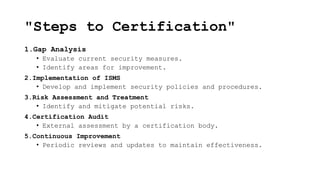
"Steps to Certification"
1.Gap Analysis
• Evaluate current security measures.
• Identify areas for improvement.
2.Implementation of ISMS
• Develop and implement security policies and procedures.
3.Risk Assessment and Treatment
• Identify and mitigate potential risks.
4.Certification Audit
• External assessment by a certification body.
5.Continuous Improvement
• Periodic reviews and updates to maintain effectiveness.
Benefits of ISO 27001
Certification
"Securing Your Business"
• Enhanced Security
• Protect critical information assets.
• Ensure confidentiality, integrity, and availability.
• Compliance
• Meet legal and regulatory requirements.
• Demonstrate commitment to data protection.
• Customer Trust
• Build trust with clients and stakeholders.
• Improve market reputation.
Conclusion
"Investing in Security"
Summary
• ISO 27001 certification is a strategic investment.
• Enhance security, compliance, and customer trust.
Next Steps
• Consider a gap analysis and initiate the certification
process.

Introduction to ISO 27001 Certification

  • 1.
  • 2.
    Introduction "Understanding the Needfor Information Security“ • Increasing reliance on digital data • Escalating cyber threats • Importance of safeguarding sensitive information ISO 27001 Overview • International standard for Information Security Management Systems (ISMS). • ISO 27001 certification focuses on protecting sensitive data and
  • 3.
    Key Principles ofISO 27001 "Building a Strong Foundation" • Risk Assessment and Management • Identify and assess security risks. • Develop strategies to mitigate potential threats. • Information Security Policies • Establish clear and comprehensive security policies. • Ensure alignment with organizational objectives.
  • 4.
    "Steps to Certification" 1.GapAnalysis • Evaluate current security measures. • Identify areas for improvement. 2.Implementation of ISMS • Develop and implement security policies and procedures. 3.Risk Assessment and Treatment • Identify and mitigate potential risks. 4.Certification Audit • External assessment by a certification body. 5.Continuous Improvement • Periodic reviews and updates to maintain effectiveness.
  • 5.
    Benefits of ISO27001 Certification "Securing Your Business" • Enhanced Security • Protect critical information assets. • Ensure confidentiality, integrity, and availability. • Compliance • Meet legal and regulatory requirements. • Demonstrate commitment to data protection. • Customer Trust • Build trust with clients and stakeholders. • Improve market reputation.
  • 6.
    Conclusion "Investing in Security" Summary •ISO 27001 certification is a strategic investment. • Enhance security, compliance, and customer trust. Next Steps • Consider a gap analysis and initiate the certification process.