Downloaded 296 times
![Intangible Heritage
• It includes traditions or living expressions inherited from our
ancestors and passed on to our descendants
Such as- Oral traditions, performing arts, social practices, rituals,
festive events, knowledge and practices concerning nature and the
universe or the knowledge and skills to produce traditional crafts.
[PS: For better understanding, see the table in next slide]](https://image.slidesharecdn.com/understanding-140910130737-phpapp01/75/Understanding-Heritage-7-2048.jpg)
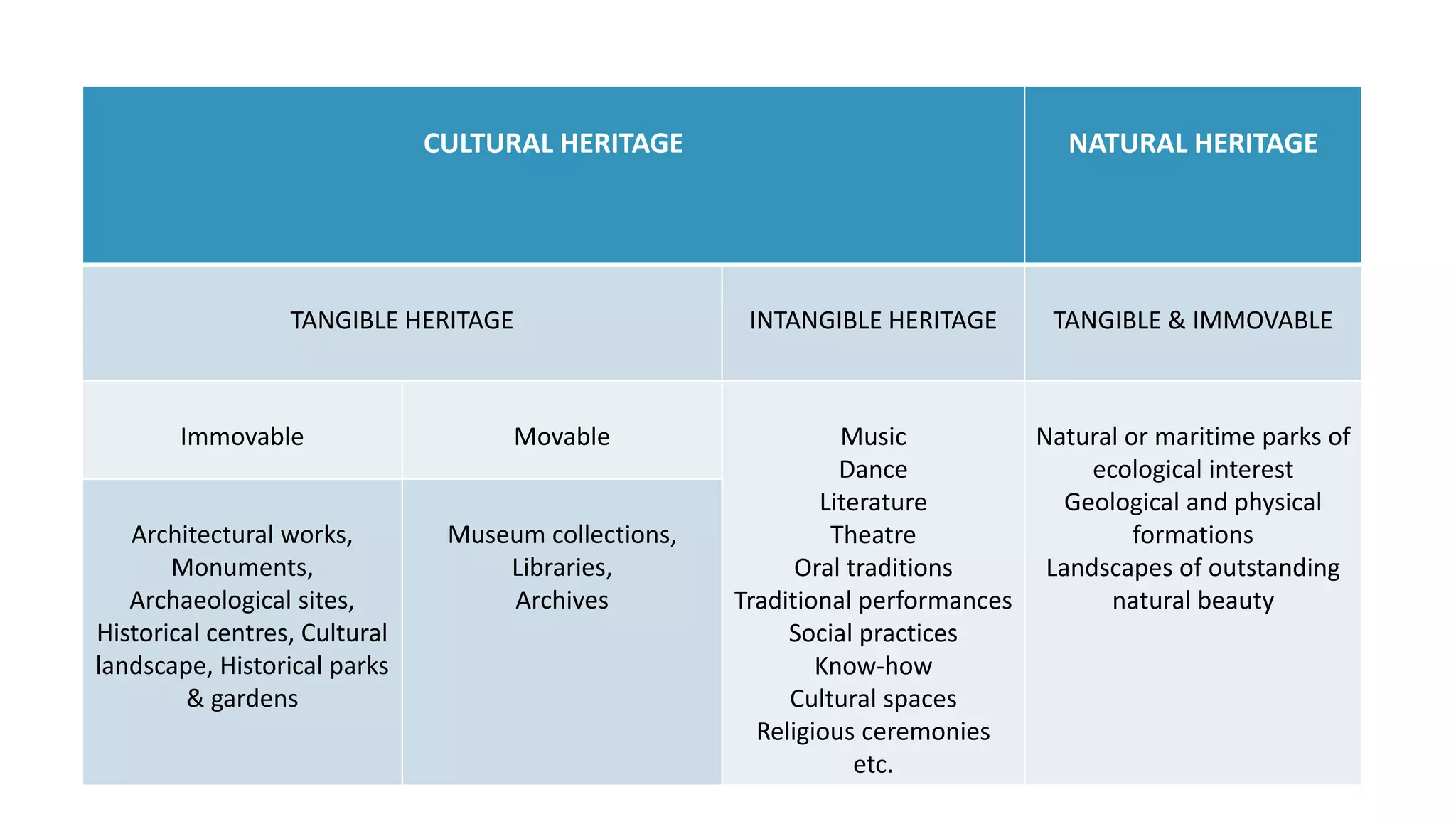
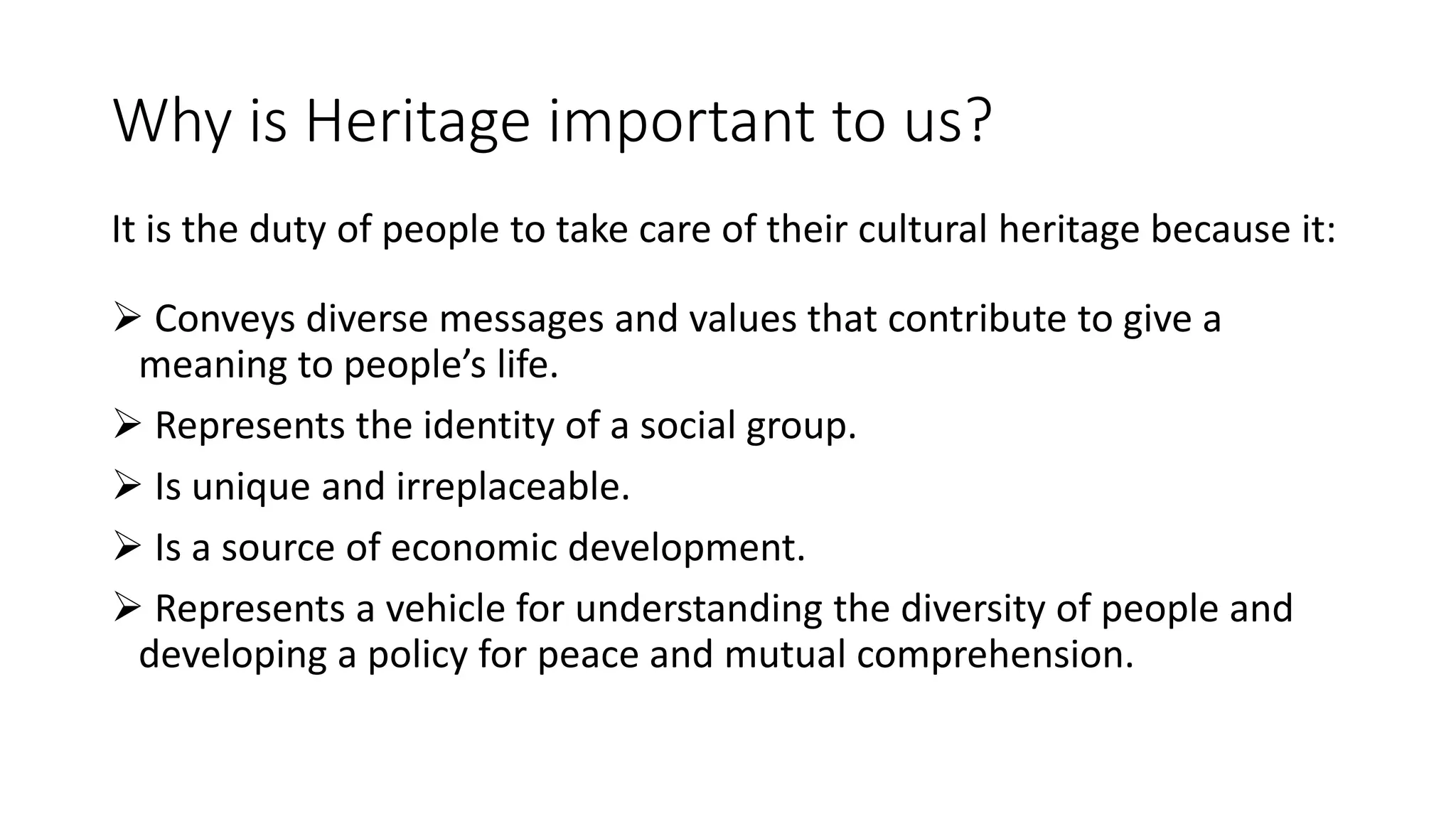


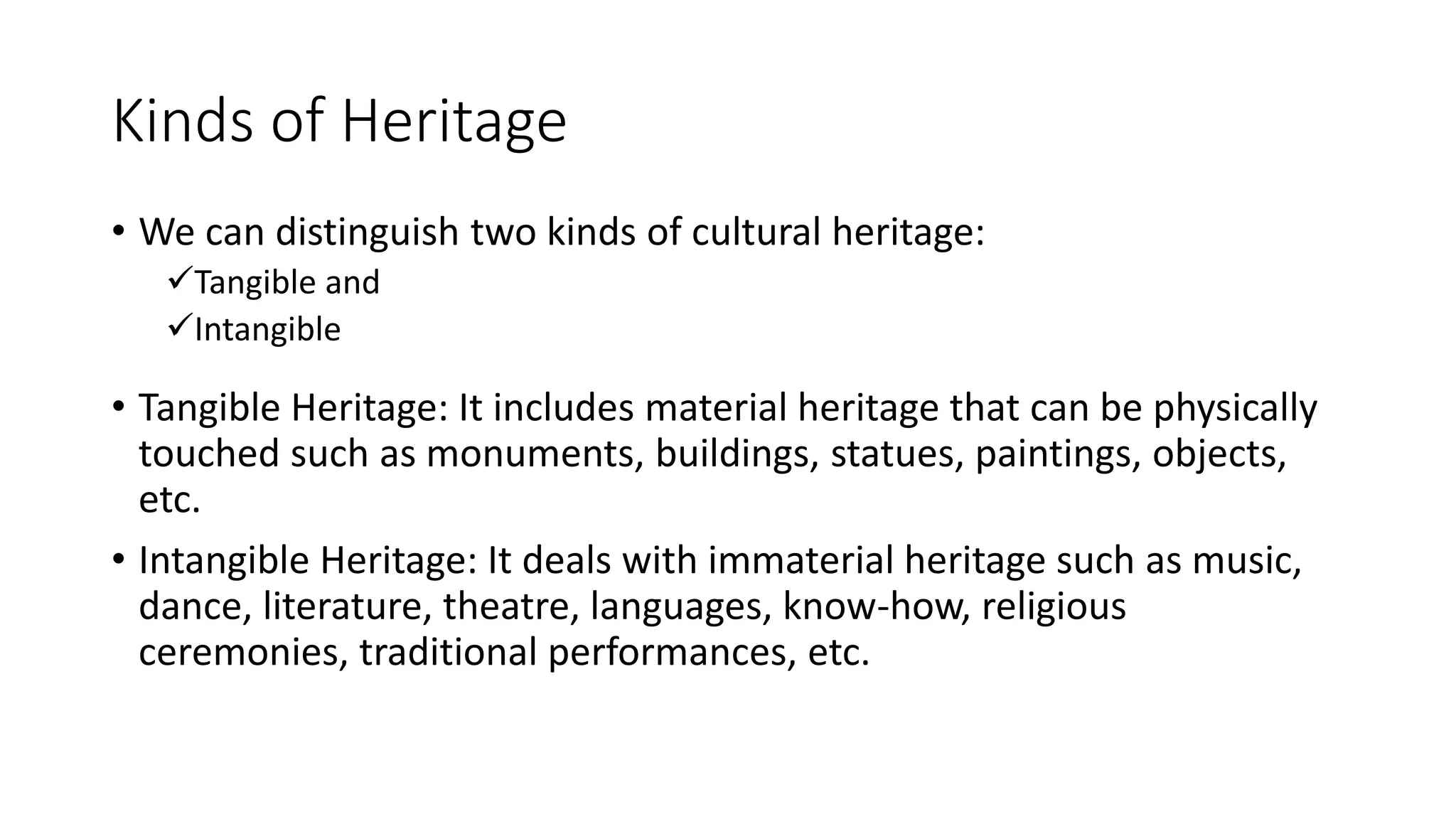
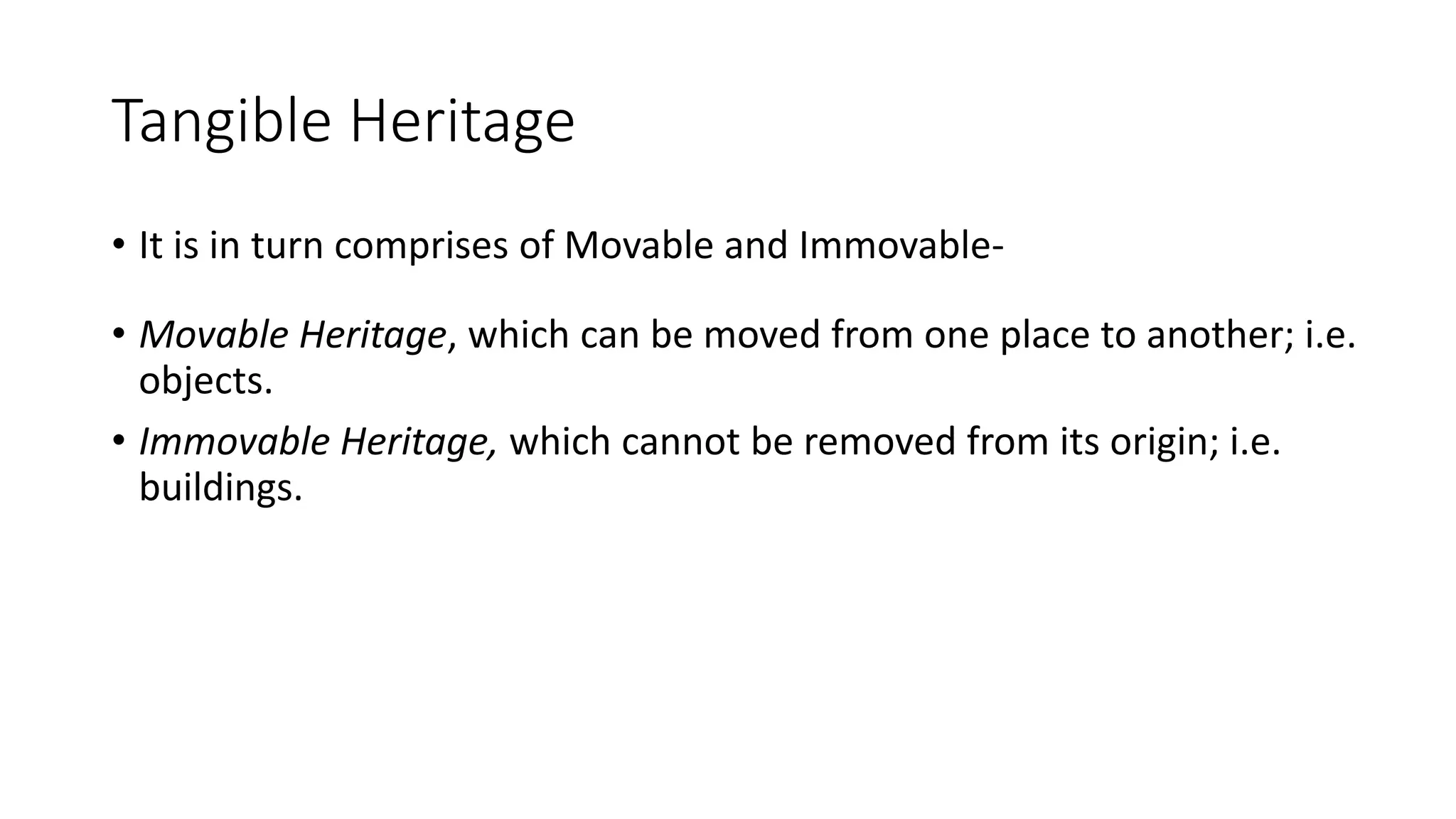
This document discusses cultural heritage and defines it as the creative expression of a people's existence in the past, near past, and present that tells their traditions, beliefs, and achievements. It notes that cultural heritage includes both tangible and intangible forms. Tangible heritage can be physically touched, like monuments and objects, while intangible heritage includes non-physical forms like music, dance, languages, and traditions. The document emphasizes that cultural heritage is important because it conveys identity and values, is unique, can support economic development, and helps people understand cultural diversity.


