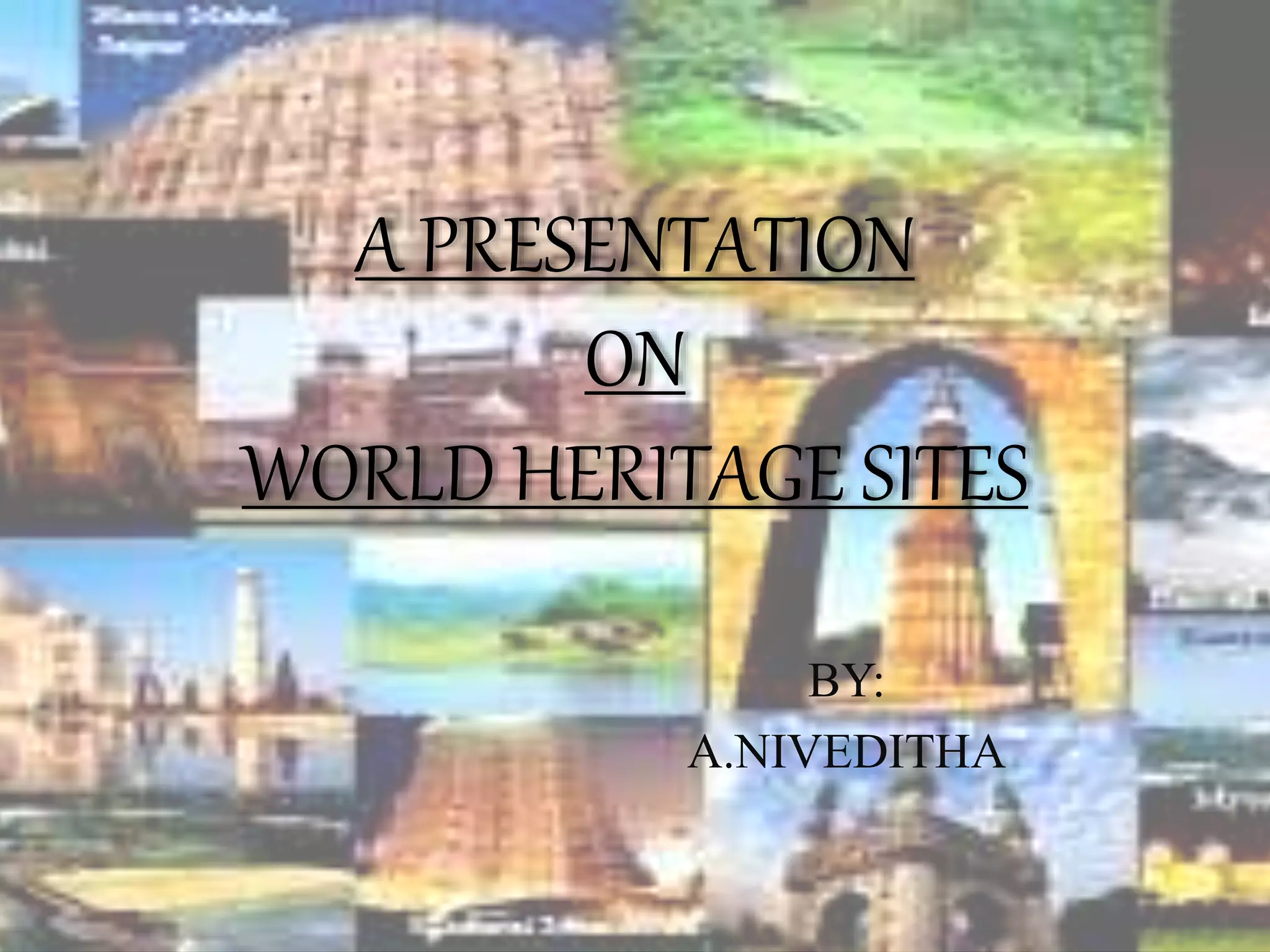
A PRESENTATION
ON
WORLD HERITAGE SITES
BY:
A.NIVEDITHA
SIGNIFICANCE OF TOURISM
Tourism is an important source of income for many
countries.
Its importance was recognized in the Manila declaration
on World Tourism of 1980 as “ an activity essential to
the life of nations because of its direct effects on the
social, cultural, educational and economic sectors of
national societies and on their international relations.
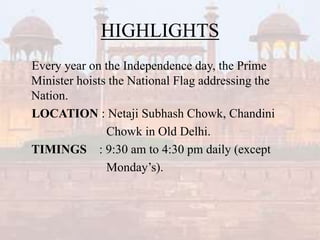
The service industries benefit from tourism:
 Transportation services - Airlines, Cruise and
Taxicabs.
 Hospitality services -Accommodation,
including hotels.
 Other services - Shopping malls, music
venues, amusement parks,
casinos and theaters.
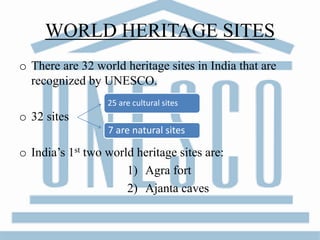
WORLD HERITAGE SITES
o There are 32 world heritage sites in India that are
recognized by UNESCO.
o 32 sites
o India’s 1st two world heritage sites are:
1) Agra fort
2) Ajanta caves
25 are cultural sites
7 are natural sites
o 30 more sites have been inscribed.
o The latest – The great Himalayan National
Park in 2014.
o These are the places of importance of Cultural or
natural heritage as described in the UNESCO.
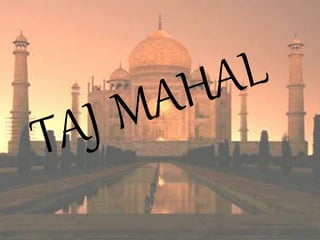
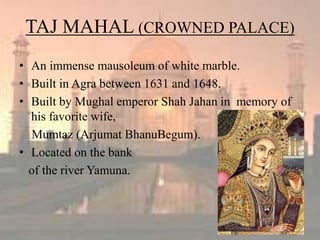
TAJ MAHAL (CROWNED PALACE)
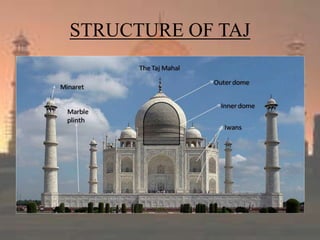
• An immense mausoleum of white marble.
• Built in Agra between 1631 and 1648.
• Built by Mughal emperor Shah Jahan in memory of
his favorite wife,
Mumtaz (Arjumat BhanuBegum).
• Located on the bank
of the river Yamuna.
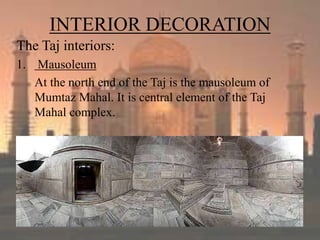
INTERIOR DECORATION
The Taj interiors:
1. Mausoleum
At the north end of the Taj is the mausoleum of
Mumtaz Mahal. It is central element of the Taj
Mahal complex.
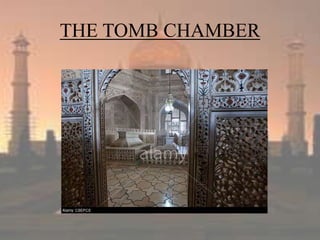
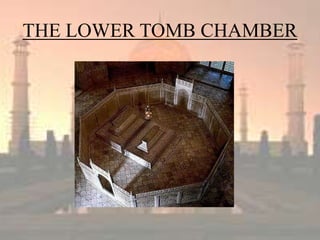
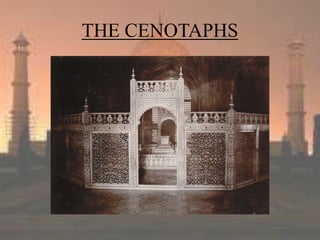
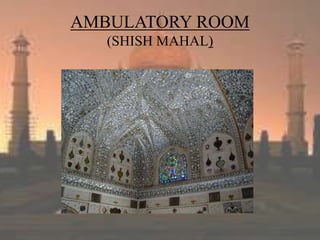
THE TOMB CHAMBER
THE LOWER TOMB CHAMBER
THE CENOTAPHS
AMBULATORY ROOM
(SHISH MAHAL)
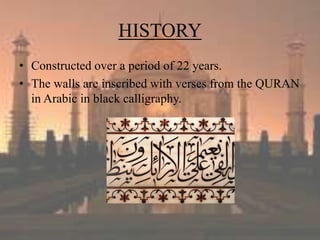
HISTORY
• Constructed over a period of 22 years.
• The walls are inscribed with verses from the QURAN
in Arabic in black calligraphy.
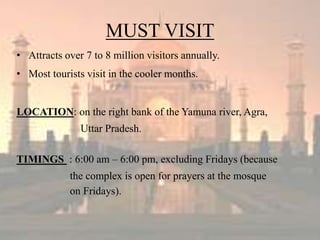
MUST VISIT
• Attracts over 7 to 8 million visitors annually.
• Most tourists visit in the cooler months.
LOCATION: on the right bank of the Yamuna river, Agra,
Uttar Pradesh.
TIMINGS : 6:00 am – 6:00 pm, excluding Fridays (because
the complex is open for prayers at the mosque
on Fridays).
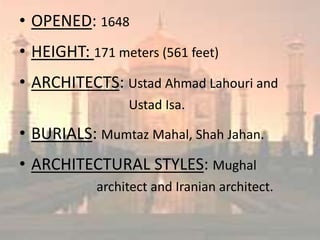
• OPENED: 1648
• HEIGHT: 171 meters (561 feet)
• ARCHITECTS: Ustad Ahmad Lahouri and
Ustad Isa.
• BURIALS: Mumtaz Mahal, Shah Jahan.
• ARCHITECTURAL STYLES: Mughal
architect and Iranian architect.
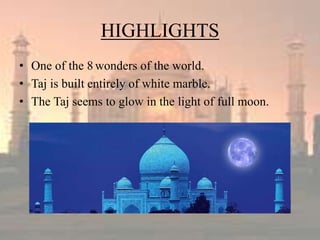
HIGHLIGHTS
• One of the 8 wonders of the world.
• Taj is built entirely of white marble.
• The Taj seems to glow in the light of full moon.
STRUCTURE OF TAJ
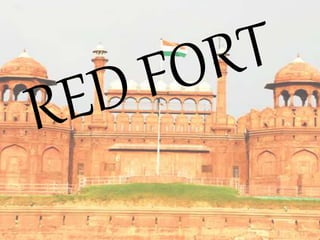
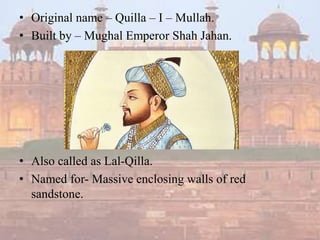
• Original name – Quilla – I – Mullah.
• Built by – Mughal Emperor Shah Jahan.
• Also called as Lal-Qilla.
• Named for- Massive enclosing walls of red
sandstone.
MAIN STRUCTURES
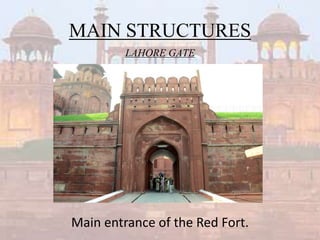
LAHORE GATE
Main entrance of the Red Fort.
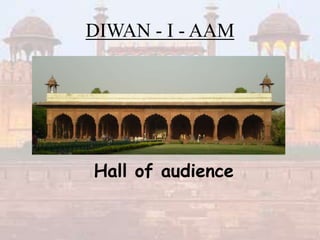
DIWAN - I - AAM
Hall of audience
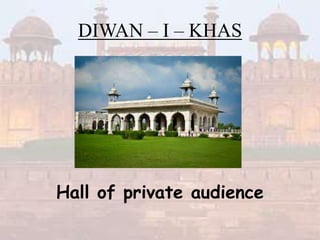
DIWAN – I – KHAS
Hall of private audience
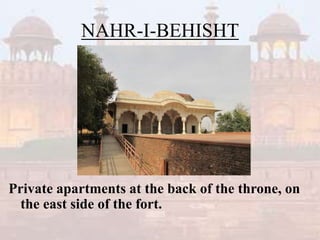
NAHR-I-BEHISHT
Private apartments at the back of the throne, on
the east side of the fort.
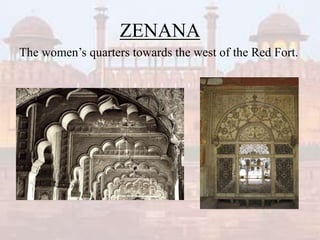
ZENANA
The women’s quarters towards the west of the Red Fort.
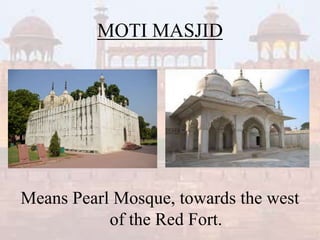
MOTI MASJID
Means Pearl Mosque, towards the west
of the Red Fort.
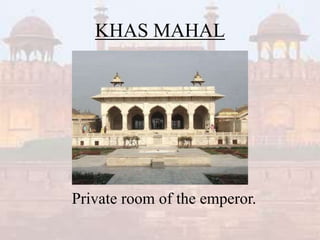
KHAS MAHAL
Private room of the emperor.
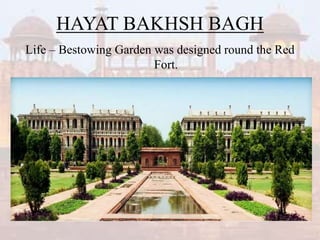
HAYAT BAKHSH BAGH
Life – Bestowing Garden was designed round the Red
Fort.
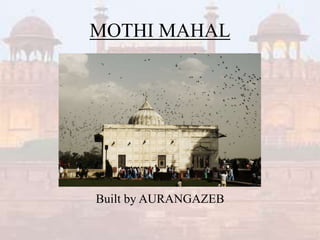
MOTHI MAHAL
Built by AURANGAZEB
HISTORY
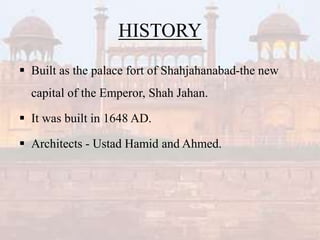
 Built as the palace fort of Shahjahanabad-the new
capital of the Emperor, Shah Jahan.
 It was built in 1648 AD.
 Architects - Ustad Hamid and Ahmed.
MUST VISIT
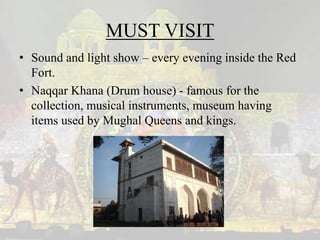
• Sound and light show – every evening inside the Red
Fort.
• Naqqar Khana (Drum house) - famous for the
collection, musical instruments, museum having
items used by Mughal Queens and kings.
HIGHLIGHTS
Every year on the Independence day, the Prime
Minister hoists the National Flag addressing the
Nation.
LOCATION : Netaji Subhash Chowk, Chandini
Chowk in Old Delhi.
TIMINGS : 9:30 am to 4:30 pm daily (except
Monday’s).
OTHER ATTRACTIONS
• MUMTAZ MAHAL
(Jewel Palace)
0.2 km
• CHHATTA CHOWK BAZAR
0.2 km
• ARCHELOGICAL MUSEUM
0.2 km
• DIGAMBAR JAIN TEMPLE
0.1 km
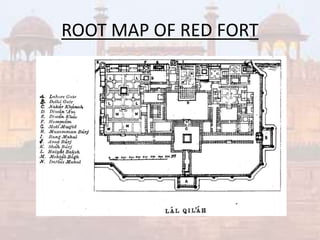
ROOT MAP OF RED FORT
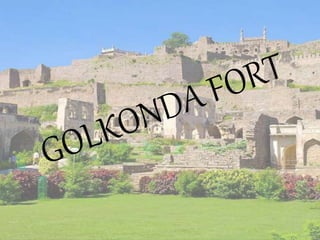
• Also known as Golla Konda(Shepherds Hill).
• It is one of the most Magnificent Fort complex in
India.
• It is also a mandal of Hyderabad District.
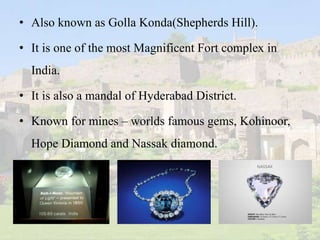
• Known for mines – worlds famous gems, Kohinoor,
Hope Diamond and Nassak diamond.
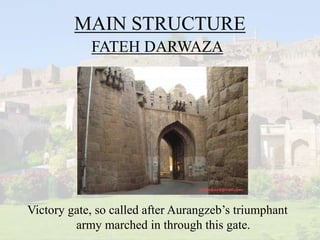
MAIN STRUCTURE
FATEH DARWAZA
Victory gate, so called after Aurangzeb’s triumphant
army marched in through this gate.
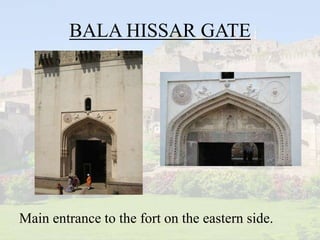
BALA HISSAR GATE
Main entrance to the fort on the eastern side.
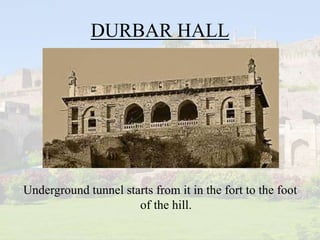
DURBAR HALL
Underground tunnel starts from it in the fort to the foot
of the hill.
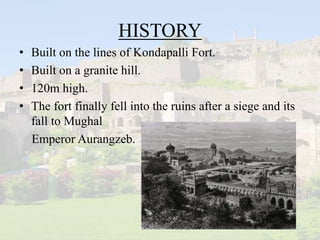
HISTORY
• Built on the lines of Kondapalli Fort.
• Built on a granite hill.
• 120m high.
• The fort finally fell into the ruins after a siege and its
fall to Mughal
Emperor Aurangzeb.
MUST VISIT
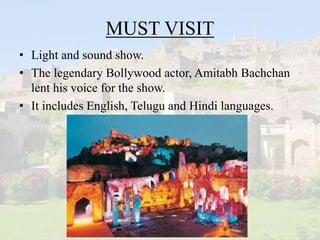
• Light and sound show.
• The legendary Bollywood actor, Amitabh Bachchan
lent his voice for the show.
• It includes English, Telugu and Hindi languages.
HIGHLIGHTS
The sounds of the claps made at the entrance of the fort
can be clearly heard at the top of the hill.
• LOCATION : 11 km west of Hyderabad.
• FAMOUS FOR: Architect, light and sound show every
evening.
• TIMINGS : 8:00 am to 6:30 pm (except Fridays).
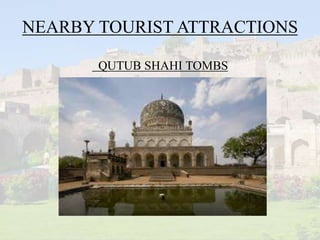
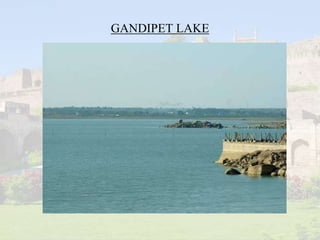
NEARBY TOURIST ATTRACTIONS
QUTUB SHAHI TOMBS
GANDIPET LAKE
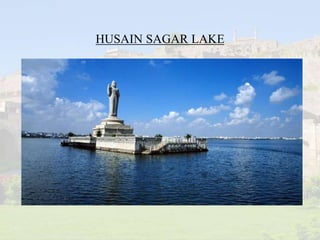
HUSAIN SAGAR LAKE
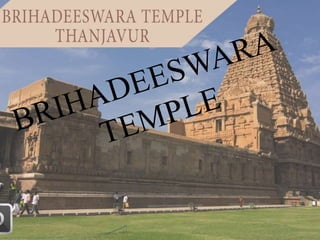
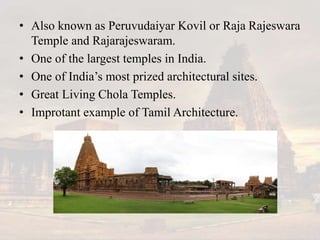
• Also known as Peruvudaiyar Kovil or Raja Rajeswara
Temple and Rajarajeswaram.
• One of the largest temples in India.
• One of India’s most prized architectural sites.
• Great Living Chola Temples.
• Improtant example of Tamil Architecture.
MAIN STUCTURE
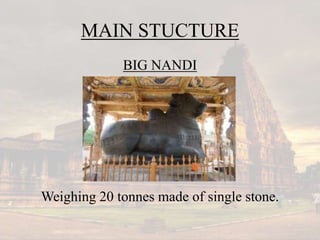
BIG NANDI
Weighing 20 tonnes made of single stone.
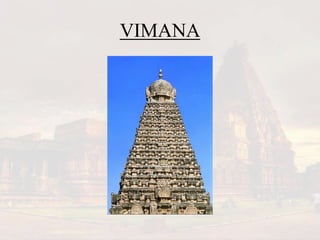
VIMANA
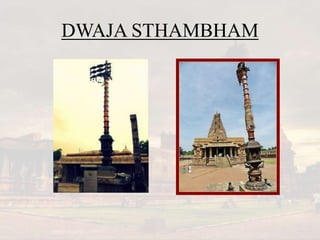
DWAJA STHAMBHAM
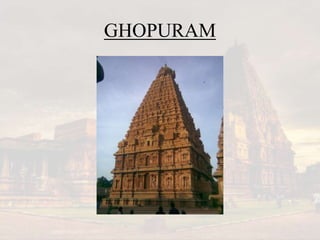
GHOPURAM
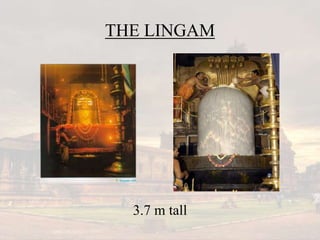
THE LINGAM
3.7 m tall
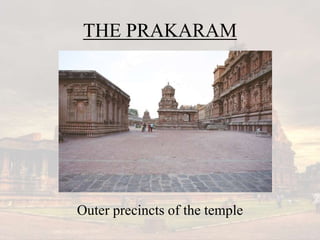
THE PRAKARAM
Outer precincts of the temple
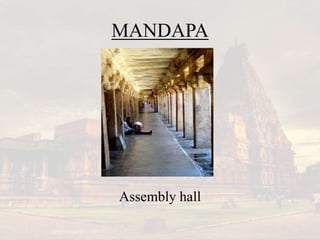
MANDAPA
Assembly hall
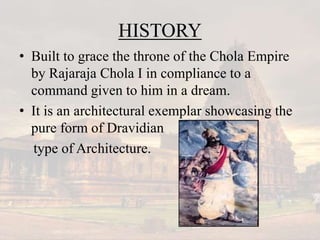
HISTORY
• Built to grace the throne of the Chola Empire
by Rajaraja Chola I in compliance to a
command given to him in a dream.
• It is an architectural exemplar showcasing the
pure form of Dravidian
type of Architecture.
MUST VISIT
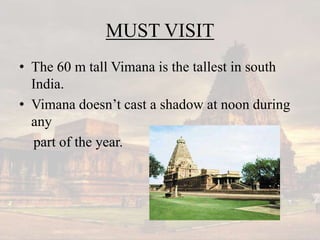
• The 60 m tall Vimana is the tallest in south
India.
• Vimana doesn’t cast a shadow at noon during
any
part of the year.
HIGHLIGHTS
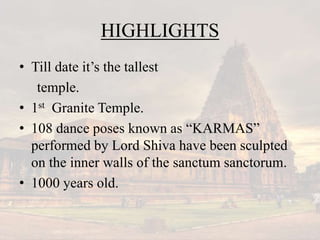
• Till date it’s the tallest
temple.
• 1st Granite Temple.
• 108 dance poses known as “KARMAS”
performed by Lord Shiva have been sculpted
on the inner walls of the sanctum sanctorum.
• 1000 years old.
OTHER ATTRACTIONS
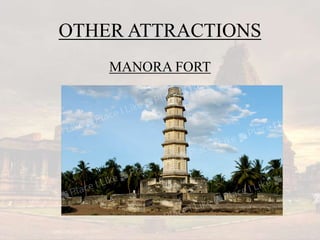
MANORA FORT
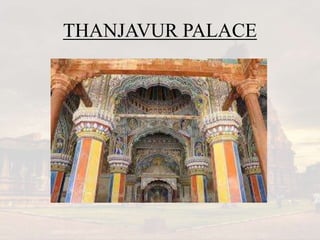
THANJAVUR PALACE
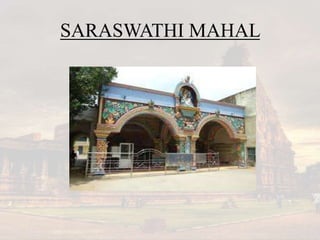
SARASWATHI MAHAL
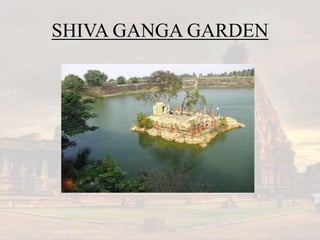
SHIVA GANGA GARDEN
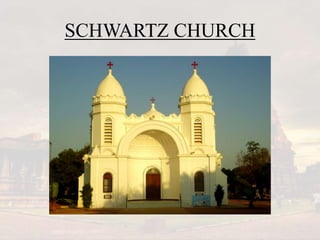
SCHWARTZ CHURCH
• LOCATION: Membalam road, Balaganapathy
Nagar, Thanjavur, Tamil Nadu.
• OPENED: 1010
• ARCHITECTURAL STYLE: Dravidian architecture
• HEIGHT: 66 m
• TIMINGS: 6:00 am to 9:00 pm
• ARCHITECT: Kunjara Mallan Raja Raja Perunthachan
• PROPER NAME: Peruvudaiyar Temple
• PRIMARY DEITY: Lord Shiva
• IMPORTANT FESTIVAL: Maha Shivaratri
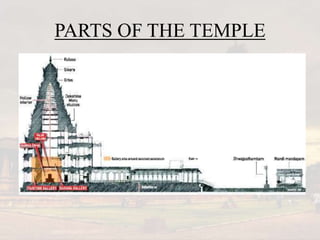
PARTS OF THE TEMPLE
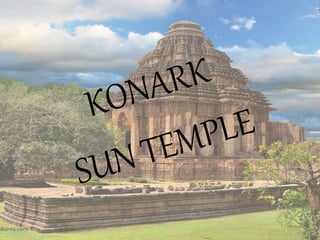
• It is a monumental representation of the sun
god, Surya’s chariot.
• 24 wheels are decorated with symbolic designs
it is led by a team of six horses.
• One of the India’s most famous Brahman
Sanctuaries.
• Also known as black Pagoda.
• Most renowned temple.
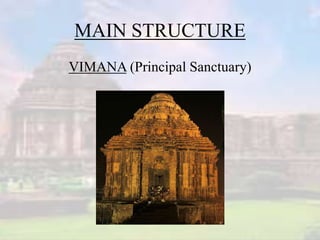
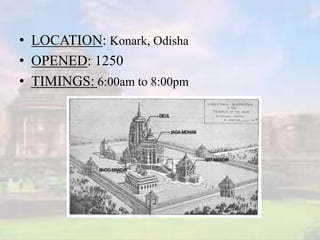
MAIN STRUCTURE
VIMANA (Principal Sanctuary)
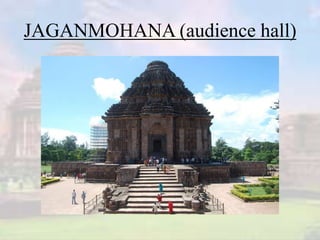
JAGANMOHANA (audience hall)
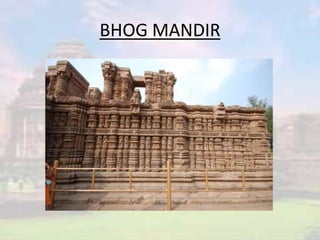
BHOG MANDIR
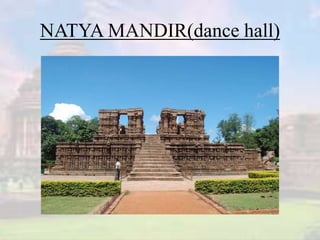
NATYA MANDIR(dance hall)
HISTORY
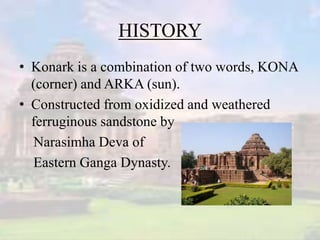
• Konark is a combination of two words, KONA
(corner) and ARKA (sun).
• Constructed from oxidized and weathered
ferruginous sandstone by
Narasimha Deva of
Eastern Ganga Dynasty.
MUST VISIT
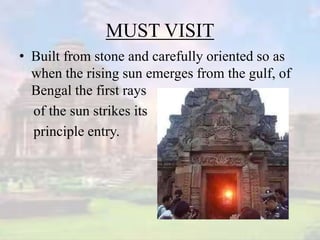
• Built from stone and carefully oriented so as
when the rising sun emerges from the gulf, of
Bengal the first rays
of the sun strikes its
principle entry.
HIGHLIGHTS
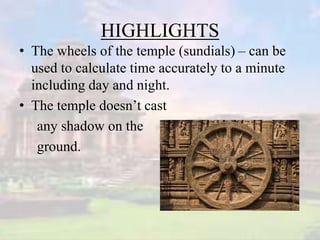
• The wheels of the temple (sundials) – can be
used to calculate time accurately to a minute
including day and night.
• The temple doesn’t cast
any shadow on the
ground.
OTHER ATTRACTIONS
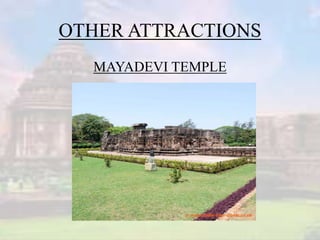
MAYADEVI TEMPLE
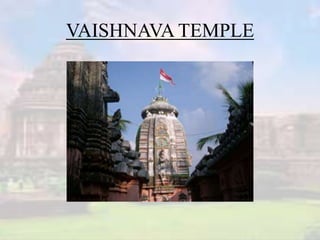
VAISHNAVA TEMPLE
• LOCATION: Konark, Odisha
• OPENED: 1250
• TIMINGS: 6:00am to 8:00pm
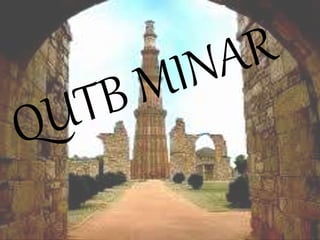
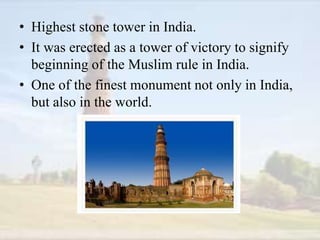
• Highest stone tower in India.
• It was erected as a tower of victory to signify
beginning of the Muslim rule in India.
• One of the finest monument not only in India,
but also in the world.
MONUMENTS WITHIN THE
COMPLEX
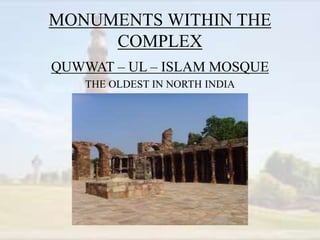
QUWWAT – UL – ISLAM MOSQUE
THE OLDEST IN NORTH INDIA
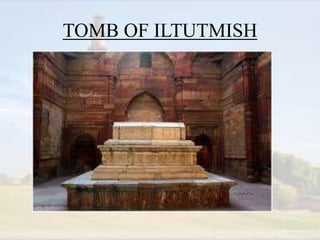
TOMB OF ILTUTMISH
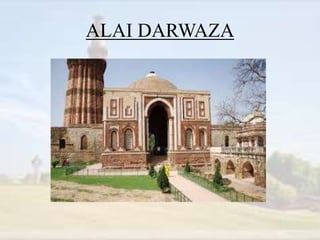
ALAI DARWAZA
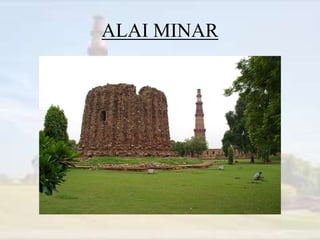
ALAI MINAR
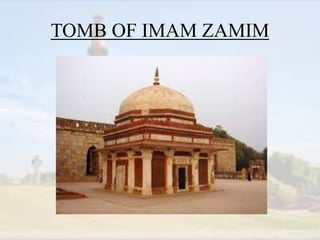
TOMB OF IMAM ZAMIM
HISTORY
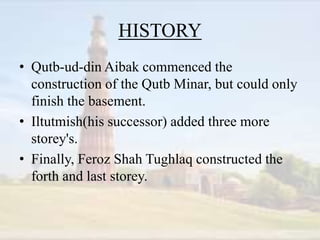
• Qutb-ud-din Aibak commenced the
construction of the Qutb Minar, but could only
finish the basement.
• Iltutmish(his successor) added three more
storey's.
• Finally, Feroz Shah Tughlaq constructed the
forth and last storey.
MUST VISIT
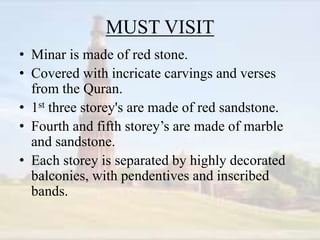
• Minar is made of red stone.
• Covered with incricate carvings and verses
from the Quran.
• 1st three storey's are made of red sandstone.
• Fourth and fifth storey’s are made of marble
and sandstone.
• Each storey is separated by highly decorated
balconies, with pendentives and inscribed
bands.
HIGHLIGHTS
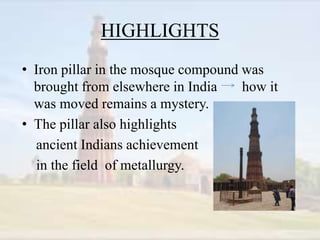
• Iron pillar in the mosque compound was
brought from elsewhere in India how it
was moved remains a mystery.
• The pillar also highlights
ancient Indians achievement
in the field of metallurgy.
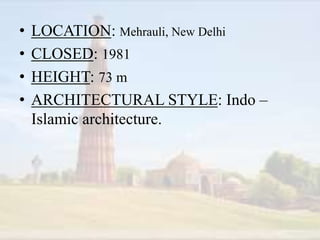
• LOCATION: Mehrauli, New Delhi
• CLOSED: 1981
• HEIGHT: 73 m
• ARCHITECTURAL STYLE: Indo –
Islamic architecture.
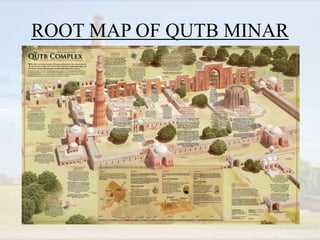
ROOT MAP OF QUTB MINAR
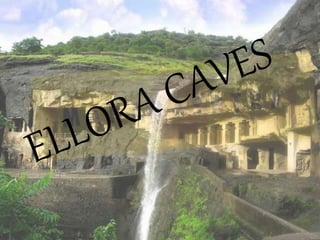
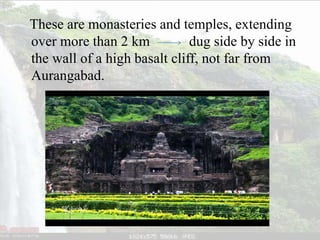
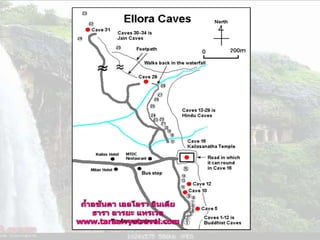
These are monasteries and temples, extending
over more than 2 km dug side by side in
the wall of a high basalt cliff, not far from
Aurangabad.
MAIN STRUCTURE
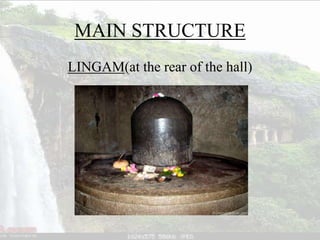
LINGAM(at the rear of the hall)
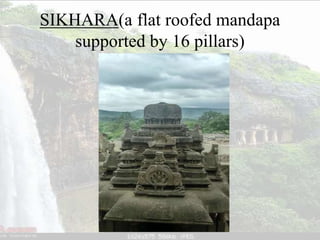
SIKHARA(a flat roofed mandapa
supported by 16 pillars)
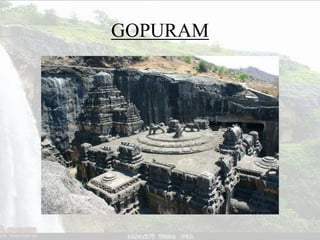
GOPURAM
HISTORY
• Ellora caves bear witness to three great
religions – Buddhism, Brahmanism, Jainism.
• Illustrates the spirit of tolerance, characteristic
of ancient India, which permitted these three
religions to establish their sanctuaries and their
communities in a single place – served to
reinforce its universal value.
MUST VISIT
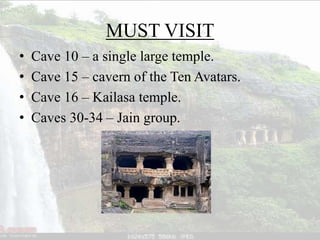
• Cave 10 – a single large temple.
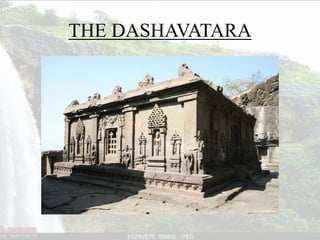
• Cave 15 – cavern of the Ten Avatars.
• Cave 16 – Kailasa temple.
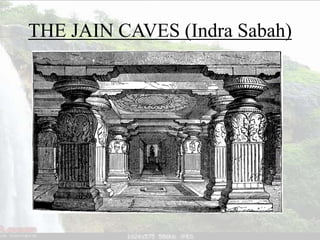
• Caves 30-34 – Jain group.
• HIGHLIGHTS: Largest rock monastic temple
complex.
• TIMINGS: 9:00 am – 5:00 pm (except Monday’s)
• LOCATION: Aurangabad, Maharashtra.
• VISIT DURATION : 2 to 3 hours
• BUILT IN: 5th – 10th century AD
• DYNASTY: Rashtrakuta
• OTHER NAMES: Verul Leni, Ellooru.
OTHER ATTRACTIONS
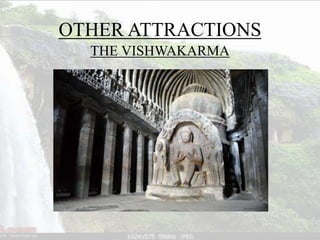
THE VISHWAKARMA
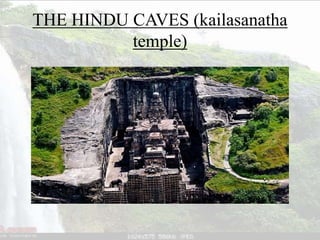
THE HINDU CAVES (kailasanatha
temple)
THE DASHAVATARA
THE JAIN CAVES (Indra Sabah)
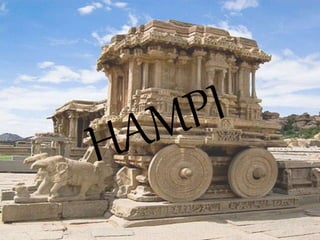
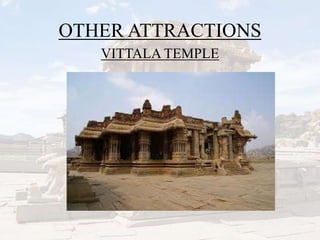
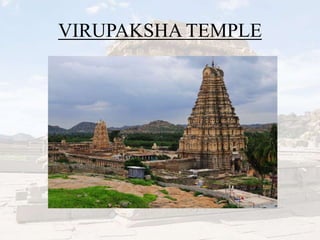
• Austere, Grandiose site of Hampi was the last
capital of the last great Hindu Kingdom of
Vijayanagar.
HISTORY
• Hampi was once a pilgrimage place before it
came to be established as the Vijayanagara
Kingdom.
MUST VISIT
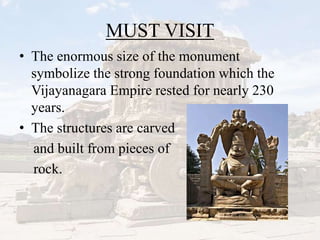
• The enormous size of the monument
symbolize the strong foundation which the
Vijayanagara Empire rested for nearly 230
years.
• The structures are carved
and built from pieces of
rock.
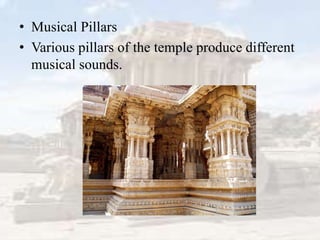
• Musical Pillars
• Various pillars of the temple produce different
musical sounds.
HIGHLIGHTS
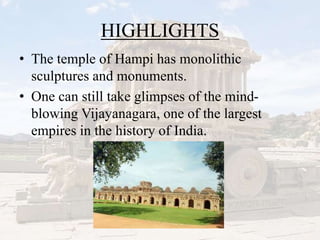
• The temple of Hampi has monolithic
sculptures and monuments.
• One can still take glimpses of the mind-
blowing Vijayanagara, one of the largest
empires in the history of India.
OTHER ATTRACTIONS
VITTALA TEMPLE
VIRUPAKSHA TEMPLE
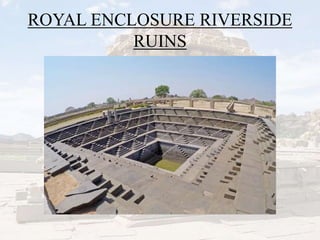
ROYAL ENCLOSURE RIVERSIDE
RUINS
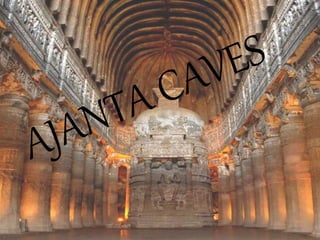
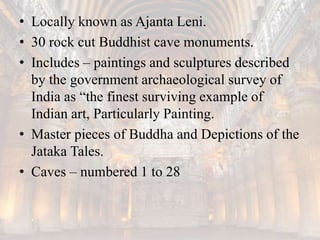
• Locally known as Ajanta Leni.
• 30 rock cut Buddhist cave monuments.
• Includes – paintings and sculptures described
by the government archaeological survey of
India as “the finest surviving example of
Indian art, Particularly Painting.
• Master pieces of Buddha and Depictions of the
Jataka Tales.
• Caves – numbered 1 to 28
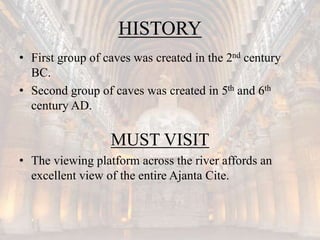
HISTORY
• First group of caves was created in the 2nd century
BC.
• Second group of caves was created in 5th and 6th
century AD.
MUST VISIT
• The viewing platform across the river affords an
excellent view of the entire Ajanta Cite.
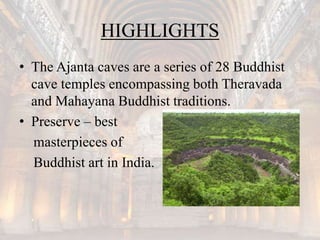
HIGHLIGHTS
• The Ajanta caves are a series of 28 Buddhist
cave temples encompassing both Theravada
and Mahayana Buddhist traditions.
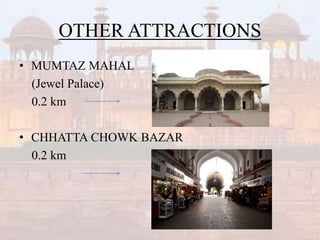
• Preserve – best
masterpieces of
Buddhist art in India.
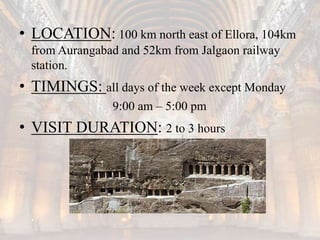
• LOCATION: 100 km north east of Ellora, 104km
from Aurangabad and 52km from Jalgaon railway
station.
• TIMINGS: all days of the week except Monday
9:00 am – 5:00 pm
• VISIT DURATION: 2 to 3 hours
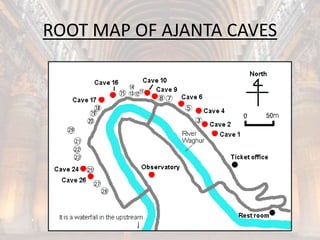
ROOT MAP OF AJANTA CAVES
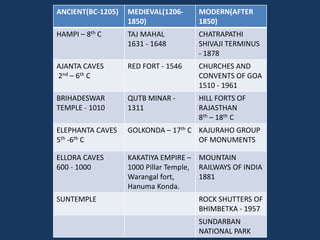
ANCIENT(BC-1205) MEDIEVAL(1206-
1850)
MODERN(AFTER
1850)
HAMPI – 8th C TAJ MAHAL
1631 - 1648
CHATRAPATHI
SHIVAJI TERMINUS
- 1878
AJANTA CAVES
2nd – 6th C
RED FORT - 1546 CHURCHES AND
CONVENTS OF GOA
1510 - 1961
BRIHADESWAR
TEMPLE - 1010
QUTB MINAR -
1311
HILL FORTS OF
RAJASTHAN
8th – 18th C
ELEPHANTA CAVES
5th -6th C
GOLKONDA – 17th C KAJURAHO GROUP
OF MONUMENTS
ELLORA CAVES
600 - 1000
KAKATIYA EMPIRE –
1000 Pillar Temple,
Warangal fort,
Hanuma Konda.
MOUNTAIN
RAILWAYS OF INDIA
1881
SUNTEMPLE ROCK SHUTTERS OF
BHIMBETKA - 1957
SUNDARBAN
NATIONAL PARK
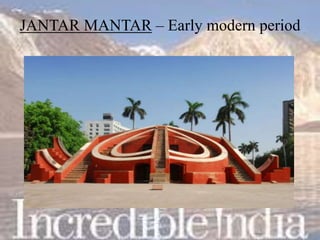
JANTAR MANTAR – Early modern period
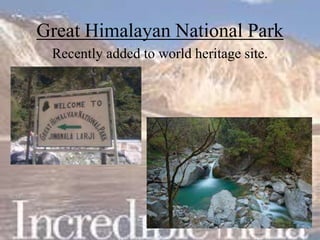
Great Himalayan National Park
Recently added to world heritage site.
CONCLUSION
• Historic monuments and forts plays a major role
in the heritage development of certain country or
city. India which is also called incredible India
has many such forts and historic monuments
which resembles the art, architecture, living style,
currency and many other things about early
civilizations. These are very important and gives
us a vast knowledge about historical events.
World heritage sites

World heritage sites

  • 1.
    A PRESENTATION ON WORLD HERITAGESITES BY: A.NIVEDITHA
  • 2.
    SIGNIFICANCE OF TOURISM Tourismis an important source of income for many countries. Its importance was recognized in the Manila declaration on World Tourism of 1980 as “ an activity essential to the life of nations because of its direct effects on the social, cultural, educational and economic sectors of national societies and on their international relations.
  • 3.
    The service industriesbenefit from tourism:  Transportation services - Airlines, Cruise and Taxicabs.  Hospitality services -Accommodation, including hotels.  Other services - Shopping malls, music venues, amusement parks, casinos and theaters.
  • 4.
    WORLD HERITAGE SITES oThere are 32 world heritage sites in India that are recognized by UNESCO. o 32 sites o India’s 1st two world heritage sites are: 1) Agra fort 2) Ajanta caves 25 are cultural sites 7 are natural sites
  • 5.
    o 30 moresites have been inscribed. o The latest – The great Himalayan National Park in 2014. o These are the places of importance of Cultural or natural heritage as described in the UNESCO.
  • 7.
    TAJ MAHAL (CROWNEDPALACE) • An immense mausoleum of white marble. • Built in Agra between 1631 and 1648. • Built by Mughal emperor Shah Jahan in memory of his favorite wife, Mumtaz (Arjumat BhanuBegum). • Located on the bank of the river Yamuna.
  • 8.
    INTERIOR DECORATION The Tajinteriors: 1. Mausoleum At the north end of the Taj is the mausoleum of Mumtaz Mahal. It is central element of the Taj Mahal complex.
  • 9.
  • 10.
  • 11.
  • 12.
  • 13.
    HISTORY • Constructed overa period of 22 years. • The walls are inscribed with verses from the QURAN in Arabic in black calligraphy.
  • 14.
    MUST VISIT • Attractsover 7 to 8 million visitors annually. • Most tourists visit in the cooler months. LOCATION: on the right bank of the Yamuna river, Agra, Uttar Pradesh. TIMINGS : 6:00 am – 6:00 pm, excluding Fridays (because the complex is open for prayers at the mosque on Fridays).
  • 15.
    • OPENED: 1648 •HEIGHT: 171 meters (561 feet) • ARCHITECTS: Ustad Ahmad Lahouri and Ustad Isa. • BURIALS: Mumtaz Mahal, Shah Jahan. • ARCHITECTURAL STYLES: Mughal architect and Iranian architect.
  • 16.
    HIGHLIGHTS • One ofthe 8 wonders of the world. • Taj is built entirely of white marble. • The Taj seems to glow in the light of full moon.
  • 18.
  • 20.
    • Original name– Quilla – I – Mullah. • Built by – Mughal Emperor Shah Jahan. • Also called as Lal-Qilla. • Named for- Massive enclosing walls of red sandstone.
  • 21.
    MAIN STRUCTURES LAHORE GATE Mainentrance of the Red Fort.
  • 22.
    DIWAN - I- AAM Hall of audience
  • 23.
    DIWAN – I– KHAS Hall of private audience
  • 24.
    NAHR-I-BEHISHT Private apartments atthe back of the throne, on the east side of the fort.
  • 25.
    ZENANA The women’s quarterstowards the west of the Red Fort.
  • 26.
    MOTI MASJID Means PearlMosque, towards the west of the Red Fort.
  • 27.
    KHAS MAHAL Private roomof the emperor.
  • 28.
    HAYAT BAKHSH BAGH Life– Bestowing Garden was designed round the Red Fort.
  • 29.
  • 30.
    HISTORY  Built asthe palace fort of Shahjahanabad-the new capital of the Emperor, Shah Jahan.  It was built in 1648 AD.  Architects - Ustad Hamid and Ahmed.
  • 31.
    MUST VISIT • Soundand light show – every evening inside the Red Fort. • Naqqar Khana (Drum house) - famous for the collection, musical instruments, museum having items used by Mughal Queens and kings.
  • 32.
    HIGHLIGHTS Every year onthe Independence day, the Prime Minister hoists the National Flag addressing the Nation. LOCATION : Netaji Subhash Chowk, Chandini Chowk in Old Delhi. TIMINGS : 9:30 am to 4:30 pm daily (except Monday’s).
  • 33.
    OTHER ATTRACTIONS • MUMTAZMAHAL (Jewel Palace) 0.2 km • CHHATTA CHOWK BAZAR 0.2 km
  • 34.
    • ARCHELOGICAL MUSEUM 0.2km • DIGAMBAR JAIN TEMPLE 0.1 km
  • 35.
    ROOT MAP OFRED FORT
  • 38.
    • Also knownas Golla Konda(Shepherds Hill). • It is one of the most Magnificent Fort complex in India. • It is also a mandal of Hyderabad District. • Known for mines – worlds famous gems, Kohinoor, Hope Diamond and Nassak diamond.
  • 39.
    MAIN STRUCTURE FATEH DARWAZA Victorygate, so called after Aurangzeb’s triumphant army marched in through this gate.
  • 40.
    BALA HISSAR GATE Mainentrance to the fort on the eastern side.
  • 41.
    DURBAR HALL Underground tunnelstarts from it in the fort to the foot of the hill.
  • 42.
    HISTORY • Built onthe lines of Kondapalli Fort. • Built on a granite hill. • 120m high. • The fort finally fell into the ruins after a siege and its fall to Mughal Emperor Aurangzeb.
  • 43.
    MUST VISIT • Lightand sound show. • The legendary Bollywood actor, Amitabh Bachchan lent his voice for the show. • It includes English, Telugu and Hindi languages.
  • 44.
    HIGHLIGHTS The sounds ofthe claps made at the entrance of the fort can be clearly heard at the top of the hill. • LOCATION : 11 km west of Hyderabad. • FAMOUS FOR: Architect, light and sound show every evening. • TIMINGS : 8:00 am to 6:30 pm (except Fridays).
  • 45.
  • 46.
  • 47.
  • 50.
    • Also knownas Peruvudaiyar Kovil or Raja Rajeswara Temple and Rajarajeswaram. • One of the largest temples in India. • One of India’s most prized architectural sites. • Great Living Chola Temples. • Improtant example of Tamil Architecture.
  • 51.
    MAIN STUCTURE BIG NANDI Weighing20 tonnes made of single stone.
  • 52.
  • 53.
  • 54.
  • 55.
  • 56.
  • 57.
  • 58.
    HISTORY • Built tograce the throne of the Chola Empire by Rajaraja Chola I in compliance to a command given to him in a dream. • It is an architectural exemplar showcasing the pure form of Dravidian type of Architecture.
  • 59.
    MUST VISIT • The60 m tall Vimana is the tallest in south India. • Vimana doesn’t cast a shadow at noon during any part of the year.
  • 60.
    HIGHLIGHTS • Till dateit’s the tallest temple. • 1st Granite Temple. • 108 dance poses known as “KARMAS” performed by Lord Shiva have been sculpted on the inner walls of the sanctum sanctorum. • 1000 years old.
  • 61.
  • 62.
  • 63.
  • 64.
  • 65.
  • 66.
    • LOCATION: Membalamroad, Balaganapathy Nagar, Thanjavur, Tamil Nadu. • OPENED: 1010 • ARCHITECTURAL STYLE: Dravidian architecture • HEIGHT: 66 m • TIMINGS: 6:00 am to 9:00 pm • ARCHITECT: Kunjara Mallan Raja Raja Perunthachan • PROPER NAME: Peruvudaiyar Temple • PRIMARY DEITY: Lord Shiva • IMPORTANT FESTIVAL: Maha Shivaratri
  • 67.
  • 69.
    • It isa monumental representation of the sun god, Surya’s chariot. • 24 wheels are decorated with symbolic designs it is led by a team of six horses. • One of the India’s most famous Brahman Sanctuaries. • Also known as black Pagoda. • Most renowned temple.
  • 70.
  • 71.
  • 72.
  • 73.
  • 74.
    HISTORY • Konark isa combination of two words, KONA (corner) and ARKA (sun). • Constructed from oxidized and weathered ferruginous sandstone by Narasimha Deva of Eastern Ganga Dynasty.
  • 75.
    MUST VISIT • Builtfrom stone and carefully oriented so as when the rising sun emerges from the gulf, of Bengal the first rays of the sun strikes its principle entry.
  • 76.
    HIGHLIGHTS • The wheelsof the temple (sundials) – can be used to calculate time accurately to a minute including day and night. • The temple doesn’t cast any shadow on the ground.
  • 77.
  • 78.
  • 79.
    • LOCATION: Konark,Odisha • OPENED: 1250 • TIMINGS: 6:00am to 8:00pm
  • 81.
    • Highest stonetower in India. • It was erected as a tower of victory to signify beginning of the Muslim rule in India. • One of the finest monument not only in India, but also in the world.
  • 82.
    MONUMENTS WITHIN THE COMPLEX QUWWAT– UL – ISLAM MOSQUE THE OLDEST IN NORTH INDIA
  • 83.
  • 84.
  • 85.
  • 86.
  • 87.
    HISTORY • Qutb-ud-din Aibakcommenced the construction of the Qutb Minar, but could only finish the basement. • Iltutmish(his successor) added three more storey's. • Finally, Feroz Shah Tughlaq constructed the forth and last storey.
  • 88.
    MUST VISIT • Minaris made of red stone. • Covered with incricate carvings and verses from the Quran. • 1st three storey's are made of red sandstone. • Fourth and fifth storey’s are made of marble and sandstone. • Each storey is separated by highly decorated balconies, with pendentives and inscribed bands.
  • 89.
    HIGHLIGHTS • Iron pillarin the mosque compound was brought from elsewhere in India how it was moved remains a mystery. • The pillar also highlights ancient Indians achievement in the field of metallurgy.
  • 90.
    • LOCATION: Mehrauli,New Delhi • CLOSED: 1981 • HEIGHT: 73 m • ARCHITECTURAL STYLE: Indo – Islamic architecture.
  • 91.
    ROOT MAP OFQUTB MINAR
  • 94.
    These are monasteriesand temples, extending over more than 2 km dug side by side in the wall of a high basalt cliff, not far from Aurangabad.
  • 95.
  • 96.
    SIKHARA(a flat roofedmandapa supported by 16 pillars)
  • 97.
  • 98.
    HISTORY • Ellora cavesbear witness to three great religions – Buddhism, Brahmanism, Jainism. • Illustrates the spirit of tolerance, characteristic of ancient India, which permitted these three religions to establish their sanctuaries and their communities in a single place – served to reinforce its universal value.
  • 99.
    MUST VISIT • Cave10 – a single large temple. • Cave 15 – cavern of the Ten Avatars. • Cave 16 – Kailasa temple. • Caves 30-34 – Jain group.
  • 100.
    • HIGHLIGHTS: Largestrock monastic temple complex. • TIMINGS: 9:00 am – 5:00 pm (except Monday’s) • LOCATION: Aurangabad, Maharashtra. • VISIT DURATION : 2 to 3 hours • BUILT IN: 5th – 10th century AD • DYNASTY: Rashtrakuta • OTHER NAMES: Verul Leni, Ellooru.
  • 101.
  • 102.
    THE HINDU CAVES(kailasanatha temple)
  • 103.
  • 105.
    THE JAIN CAVES(Indra Sabah)
  • 108.
    • Austere, Grandiosesite of Hampi was the last capital of the last great Hindu Kingdom of Vijayanagar. HISTORY • Hampi was once a pilgrimage place before it came to be established as the Vijayanagara Kingdom.
  • 109.
    MUST VISIT • Theenormous size of the monument symbolize the strong foundation which the Vijayanagara Empire rested for nearly 230 years. • The structures are carved and built from pieces of rock.
  • 110.
    • Musical Pillars •Various pillars of the temple produce different musical sounds.
  • 111.
    HIGHLIGHTS • The templeof Hampi has monolithic sculptures and monuments. • One can still take glimpses of the mind- blowing Vijayanagara, one of the largest empires in the history of India.
  • 112.
  • 113.
  • 114.
  • 116.
    • Locally knownas Ajanta Leni. • 30 rock cut Buddhist cave monuments. • Includes – paintings and sculptures described by the government archaeological survey of India as “the finest surviving example of Indian art, Particularly Painting. • Master pieces of Buddha and Depictions of the Jataka Tales. • Caves – numbered 1 to 28
  • 117.
    HISTORY • First groupof caves was created in the 2nd century BC. • Second group of caves was created in 5th and 6th century AD. MUST VISIT • The viewing platform across the river affords an excellent view of the entire Ajanta Cite.
  • 118.
    HIGHLIGHTS • The Ajantacaves are a series of 28 Buddhist cave temples encompassing both Theravada and Mahayana Buddhist traditions. • Preserve – best masterpieces of Buddhist art in India.
  • 119.
    • LOCATION: 100km north east of Ellora, 104km from Aurangabad and 52km from Jalgaon railway station. • TIMINGS: all days of the week except Monday 9:00 am – 5:00 pm • VISIT DURATION: 2 to 3 hours
  • 120.
    ROOT MAP OFAJANTA CAVES
  • 121.
    ANCIENT(BC-1205) MEDIEVAL(1206- 1850) MODERN(AFTER 1850) HAMPI –8th C TAJ MAHAL 1631 - 1648 CHATRAPATHI SHIVAJI TERMINUS - 1878 AJANTA CAVES 2nd – 6th C RED FORT - 1546 CHURCHES AND CONVENTS OF GOA 1510 - 1961 BRIHADESWAR TEMPLE - 1010 QUTB MINAR - 1311 HILL FORTS OF RAJASTHAN 8th – 18th C ELEPHANTA CAVES 5th -6th C GOLKONDA – 17th C KAJURAHO GROUP OF MONUMENTS ELLORA CAVES 600 - 1000 KAKATIYA EMPIRE – 1000 Pillar Temple, Warangal fort, Hanuma Konda. MOUNTAIN RAILWAYS OF INDIA 1881 SUNTEMPLE ROCK SHUTTERS OF BHIMBETKA - 1957 SUNDARBAN NATIONAL PARK
  • 122.
    JANTAR MANTAR –Early modern period
  • 123.
    Great Himalayan NationalPark Recently added to world heritage site.
  • 124.
    CONCLUSION • Historic monumentsand forts plays a major role in the heritage development of certain country or city. India which is also called incredible India has many such forts and historic monuments which resembles the art, architecture, living style, currency and many other things about early civilizations. These are very important and gives us a vast knowledge about historical events.