Understanding 
Employee 
Turnover 
Laura 
Moody, 
SPHR 
G&A 
Partners
Before 
we 
get 
started… 
• I 
am 
not 
an 
aDorney 
• This 
is 
not 
legal 
advice, 
nor 
should 
the 
presentaGon 
be 
subsGtuted 
for 
experienced 
legal 
counsel
What 
to 
Expect 
• Understanding 
employee 
turnover 
• Calculate 
employee 
turnover 
• Strategies 
for 
employee 
retenGon
Employee 
Turnover 
-­‐ 
DefiniGon 
• Employee 
turnover 
is 
the 
number 
or 
percentage 
of 
employees 
who 
leave 
a 
company 
and 
are 
replaced 
by 
new 
employees
End 
of 
Employment 
• Employees 
leave 
an 
organizaGon 
for 
many 
reasons, 
including: 
• ResignaGon 
• ReGrement 
• Layoff 
• Dismissal 
• Leave 
of 
absence 
• Death
Turnover 
– 
Voluntary 
& 
Involuntary 
• Voluntary 
– 
When 
an 
employee 
chooses 
to 
leave 
the 
company 
• Involuntary 
– 
When 
the 
decision 
for 
an 
employee 
to 
leave 
is 
made 
by 
the 
company 
and 
not 
the 
employee
Why 
is 
Turnover 
Important 
to 
Measure? 
Turnover 
can 
indicate: 
• Employee 
saGsfacGon 
within 
the 
organizaGon 
• EffecGveness 
of 
the 
recruiGng 
process 
• Insight 
into 
how 
well 
managers 
are 
interacGng 
with 
employees 
• OrganizaGonal 
culture
What 
is 
Employee 
Turnover? 
• Turnover 
is 
normally 
calculated 
using 
a 
formula 
that 
tracks 
the 
number 
of 
separaGons 
and 
the 
total 
number 
of 
employees 
per 
measurement 
period
Employee 
Turnover 
-­‐ 
CalculaGon 
Turnover 
Rate 
= 
# 
of 
SeparaGons 
X 
100 
Average 
# 
of 
employees
Turnover 
-­‐ 
Example 
#1 
• For 
example, 
a 
company 
has 
98 
employees 
at 
the 
start 
of 
the 
year 
and 
102 
employees 
at 
the 
end 
of 
the 
year. 
During 
the 
year, 
8 
employees 
quit 
and 
6 
are 
laid 
off 
Voluntary 
Turnover: 
8.0 
% 
= 
8 
X 
100 
(98+102)/2 
Involuntary 
Turnover: 
6.0% 
= 
6 
X 
100 
(98+102)/2 
Total 
Turnover: 
14.0% 
= 
14 
X 
100 
(98+102)/2
Turnover 
-­‐ 
Example 
#2 
• For 
example, 
a 
company 
has 
100 
employees 
and 
17 
employees 
quit. 
Assume 
5 
employees 
leave 
in 
February, 
3 
leave 
in 
June, 
4 
leave 
in 
August 
and 
5 
employees 
leave 
in 
November 
Monthly 
turnover: 
January 
0.0% 
May 
0.0% 
September 
0.0% 
February 
5.0% 
June 
3.0% 
October 
0.0% 
March 
0.0% 
July 
0.0% 
November 
5.0% 
April 
0.0% 
August 
4.0% 
December 
0.0% 
Annual 
turnover: 
17.0% 
= 
17 
X 
100 
100
New 
Employee 
Turnover 
-­‐ 
Example 
• For 
example, 
a 
company 
has 
30 
employees 
who 
leave 
during 
the 
measurement 
period 
and 
12 
of 
them 
had 
been 
with 
the 
company 
for 
less 
than 
one 
year 
Employees 
with 
less 
than 
1 
year 
X 
100 
Total 
employees 
who 
terminated 
40.0% 
= 
12 
X 
100 
30
What 
is 
the 
Cost 
to 
the 
Company? 
• Turnover 
is 
costly, 
disrupGve 
and 
impacts 
the 
morale 
of 
the 
remaining 
employees
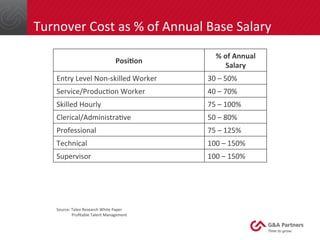
Turnover 
Cost 
as 
% 
of 
Annual 
Base 
Salary 
Posi/on 
% 
of 
Annual 
Salary 
Entry 
Level 
Non-­‐skilled 
Worker 
30 
– 
50% 
Service/ProducGon 
Worker 
40 
– 
70% 
Skilled 
Hourly 
75 
– 
100% 
Clerical/AdministraGve 
50 
– 
80% 
Professional 
75 
– 
125% 
Technical 
100 
– 
150% 
Supervisor 
100 
– 
150% 
Source: 
Taleo 
Research 
White 
Paper 
Profitable 
Talent 
Management
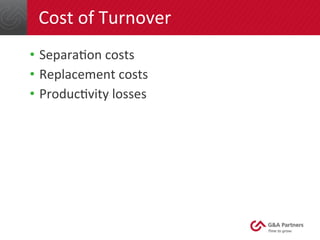
Cost 
of 
Turnover 
• SeparaGon 
costs 
• Replacement 
costs 
• ProducGvity 
losses
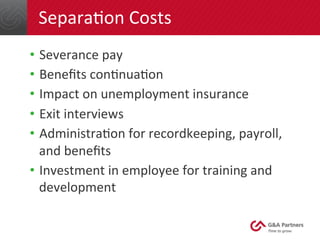
SeparaGon 
Costs 
• Severance 
pay 
• Benefits 
conGnuaGon 
• Impact 
on 
unemployment 
insurance 
• Exit 
interviews 
• AdministraGon 
for 
recordkeeping, 
payroll, 
and 
benefits 
• Investment 
in 
employee 
for 
training 
and 
development
Replacement 
Costs 
• AdverGsing 
• RecruiGng 
• Interviewing 
• Background 
checks/ 
Drug 
tesGng 
• OrientaGon 
• Training
ProducGvity 
Losses 
• Temporary 
labor 
• Replacement 
training 
• Lost 
producGvity 
• Lost 
experGse 
• Lost 
revenue
CombaGng 
Turnover
Variables 
Leading 
to 
Turnover 
• Why 
do 
employees 
leave 
or 
say 
they 
would 
leave? 
• Lack 
of 
opportunity 
and 
career 
development 
• CompensaGon 
• Benefits 
• Management 
style 
• Working 
condiGons 
• Other 
variables 
affecGng 
job 
saGsfacGon
Ways 
to 
Learn 
Why 
Employees 
are 
Leaving 
• Ask 
current 
employees 
• Employee 
aotude 
surveys 
• Focus 
groups 
• Structured 
interviews 
• Informal 
feedback 
• Terminated 
employees 
-­‐ 
Exit 
interviews
Employee 
RetenGon 
-­‐ 
DefiniGon 
• Employee 
RetenGon 
– 
is 
the 
ability 
to 
retain 
talented 
employees 
in 
the 
organizaGon
Employee 
RetenGon 
Strategies 
• Growth 
and 
potenGal 
opportuniGes 
• Ensure 
you 
are 
offering 
a 
compeGGve 
compensaGon 
and 
rewards 
package 
• Foster 
a 
learning 
environment 
• Engage 
your 
employees 
• Promote 
diversity
Employee 
RetenGon 
Strategies 
Cont’d 
• Implement 
recogniGon 
and/or 
reward 
programs 
at 
all 
levels 
of 
the 
organizaGon 
• Ensure 
that 
the 
performance 
management 
system 
is 
working 
• Have 
fun 
at 
work
Employee 
RetenGon 
Plan 
• Understand 
employee 
turnover 
• Decide 
how 
to 
proceed 
• ImplementaGon 
• EvaluaGon
Summary 
• Measuring 
and 
tracking 
turnover 
is 
valuable 
• Reducing 
the 
cost 
of 
turnover 
through 
employee 
retenGon 
strategies 
is 
essenGal
QUESTIONS? 
G&A 
Partners 
info@gnapartners.com 
(800) 
253-­‐8562 
*This webinar has been recorded and will be posted on the G&A website by Friday 
HRCI 
Cer/fica/on 
Credits: 
"This 
webinar 
has 
been 
pre-­‐cerGfied 
for 
1 
hour 
of 
general 
recerGficaGon 
credit 
toward 
PHR, 
SPHR 
and 
GPHR 
recerGficaGon 
through 
the 
HR 
CerGficaGon 
InsGtute. 
We 
will 
send 
out 
a 
confirma/on 
e-­‐mail 
to 
all 
those 
that 
are 
confirmed 
as 
aBended 
with 
the 
program 
ID 
code 
to 
note 
on 
your 
HRCI 
recer/fica/on 
applica/on 
form. 
The 
use 
of 
this 
seal 
is 
not 
an 
endorsement 
by 
the 
HR 
CerGficaGon 
InsGtute 
of 
the 
quality 
of 
the 
program. 
It 
means 
that 
this 
program 
has 
met 
the 
HR 
CerGficaGon 
InsGtute's 
criteria 
to 
be 
pre-­‐ 
approved 
for 
recerGficaGon 
credit."

Understanding Employee Turnover

  • 1.
    Understanding Employee Turnover Laura Moody, SPHR G&A Partners
  • 2.
    Before we get started… • I am not an aDorney • This is not legal advice, nor should the presentaGon be subsGtuted for experienced legal counsel
  • 3.
    What to Expect • Understanding employee turnover • Calculate employee turnover • Strategies for employee retenGon
  • 4.
    Employee Turnover -­‐ DefiniGon • Employee turnover is the number or percentage of employees who leave a company and are replaced by new employees
  • 5.
    End of Employment • Employees leave an organizaGon for many reasons, including: • ResignaGon • ReGrement • Layoff • Dismissal • Leave of absence • Death
  • 6.
    Turnover – Voluntary & Involuntary • Voluntary – When an employee chooses to leave the company • Involuntary – When the decision for an employee to leave is made by the company and not the employee
  • 7.
    Why is Turnover Important to Measure? Turnover can indicate: • Employee saGsfacGon within the organizaGon • EffecGveness of the recruiGng process • Insight into how well managers are interacGng with employees • OrganizaGonal culture
  • 8.
    What is Employee Turnover? • Turnover is normally calculated using a formula that tracks the number of separaGons and the total number of employees per measurement period
  • 9.
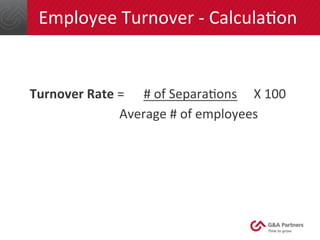
    Employee Turnover -­‐ CalculaGon Turnover Rate = # of SeparaGons X 100 Average # of employees
  • 10.
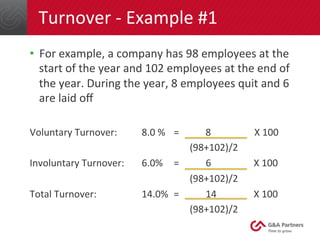
    Turnover -­‐ Example #1 • For example, a company has 98 employees at the start of the year and 102 employees at the end of the year. During the year, 8 employees quit and 6 are laid off Voluntary Turnover: 8.0 % = 8 X 100 (98+102)/2 Involuntary Turnover: 6.0% = 6 X 100 (98+102)/2 Total Turnover: 14.0% = 14 X 100 (98+102)/2
  • 11.
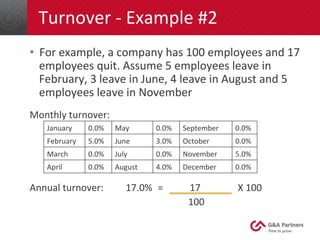
    Turnover -­‐ Example #2 • For example, a company has 100 employees and 17 employees quit. Assume 5 employees leave in February, 3 leave in June, 4 leave in August and 5 employees leave in November Monthly turnover: January 0.0% May 0.0% September 0.0% February 5.0% June 3.0% October 0.0% March 0.0% July 0.0% November 5.0% April 0.0% August 4.0% December 0.0% Annual turnover: 17.0% = 17 X 100 100
  • 12.
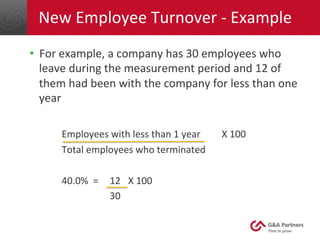
    New Employee Turnover -­‐ Example • For example, a company has 30 employees who leave during the measurement period and 12 of them had been with the company for less than one year Employees with less than 1 year X 100 Total employees who terminated 40.0% = 12 X 100 30
  • 13.
    What is the Cost to the Company? • Turnover is costly, disrupGve and impacts the morale of the remaining employees
  • 14.
    Turnover Cost as % of Annual Base Salary Posi/on % of Annual Salary Entry Level Non-­‐skilled Worker 30 – 50% Service/ProducGon Worker 40 – 70% Skilled Hourly 75 – 100% Clerical/AdministraGve 50 – 80% Professional 75 – 125% Technical 100 – 150% Supervisor 100 – 150% Source: Taleo Research White Paper Profitable Talent Management
  • 15.
    Cost of Turnover • SeparaGon costs • Replacement costs • ProducGvity losses
  • 16.
    SeparaGon Costs •Severance pay • Benefits conGnuaGon • Impact on unemployment insurance • Exit interviews • AdministraGon for recordkeeping, payroll, and benefits • Investment in employee for training and development
  • 17.
    Replacement Costs •AdverGsing • RecruiGng • Interviewing • Background checks/ Drug tesGng • OrientaGon • Training
  • 18.
    ProducGvity Losses •Temporary labor • Replacement training • Lost producGvity • Lost experGse • Lost revenue
  • 19.
  • 20.
    Variables Leading to Turnover • Why do employees leave or say they would leave? • Lack of opportunity and career development • CompensaGon • Benefits • Management style • Working condiGons • Other variables affecGng job saGsfacGon
  • 21.
    Ways to Learn Why Employees are Leaving • Ask current employees • Employee aotude surveys • Focus groups • Structured interviews • Informal feedback • Terminated employees -­‐ Exit interviews
  • 22.
    Employee RetenGon -­‐ DefiniGon • Employee RetenGon – is the ability to retain talented employees in the organizaGon
  • 23.
    Employee RetenGon Strategies • Growth and potenGal opportuniGes • Ensure you are offering a compeGGve compensaGon and rewards package • Foster a learning environment • Engage your employees • Promote diversity
  • 24.
    Employee RetenGon Strategies Cont’d • Implement recogniGon and/or reward programs at all levels of the organizaGon • Ensure that the performance management system is working • Have fun at work
  • 25.
    Employee RetenGon Plan • Understand employee turnover • Decide how to proceed • ImplementaGon • EvaluaGon
  • 26.
    Summary • Measuring and tracking turnover is valuable • Reducing the cost of turnover through employee retenGon strategies is essenGal
  • 27.
    QUESTIONS? G&A Partners info@gnapartners.com (800) 253-­‐8562 *This webinar has been recorded and will be posted on the G&A website by Friday HRCI Cer/fica/on Credits: "This webinar has been pre-­‐cerGfied for 1 hour of general recerGficaGon credit toward PHR, SPHR and GPHR recerGficaGon through the HR CerGficaGon InsGtute. We will send out a confirma/on e-­‐mail to all those that are confirmed as aBended with the program ID code to note on your HRCI recer/fica/on applica/on form. The use of this seal is not an endorsement by the HR CerGficaGon InsGtute of the quality of the program. It means that this program has met the HR CerGficaGon InsGtute's criteria to be pre-­‐ approved for recerGficaGon credit."