
Distributed Ledger Technology
Background
What is DLT?
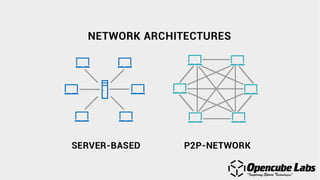
“A distributed ledger is a type of data structure which resides across
multiple computer devices, generally spread across locations or
regions.”
- Linux Foundation
“Distributed Ledger Technology includes blockchain technologies and
smart contracts. While distributed ledgers existed prior to Bitcoin, the
Bitcoin blockchain marks the convergence of a host of technologies,
including timestamping of transactions, Peer-to-Peer (P2P) networks,
cryptography, and shared computational power, along with a new
consensus algorithm. ”
- Linux Foundation
Basic components of a DLT
● A data model that captures the current state of the ledger.
● A language of transactions that changes the ledger state.
● A protocol used to build consensus among participants around which
transactions will be accepted, and in what order, by the ledger.
“A blockchain is a peer-to-peer distributed ledger forged by consensus,
combined with a system for "smart contracts" and other assistive
technologies."
- hyperledger.org
“Smart contracts are simply computer programs that execute
predefined actions when certain conditions within the system
are met."
- hyperledger.org
“Consensus refers to a system of ensuring that parties agree to a
certain state of the system as the true state."
- hyperledger.org
The difference between DLT
and Blockchain
Blockchain continued...
● Blockchain is a specific form or subset of distributed ledger technologies,
which constructs a chronological chain of blocks, hence the name 'block-chain'.
● A block refers to a set of transactions that are bundled together and added to
the chain at the same time.
● In the Bitcoin blockchain, the miner nodes bundle unconfirmed and valid
transactions into a block. Each block contains a given number of transactions.
● In the Bitcoin network, miners must solve a cryptographic challenge to propose
the next block. This process is known as 'proof of work', and requires significant
computing power.
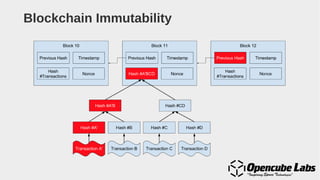
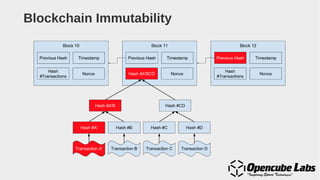
“Timestamping is another key feature of blockchain technology.
Each block is timestamped, with each new block referring to the
previous block. Combined with cryptographic hashes, this
timestamped chain of blocks provides an immutable record of all
transactions in the network, from the very first (or genesis) block."
Block Components
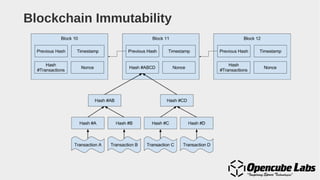
● The reference to the previous block
● The proof of work, also known as a nonce
● The timestamp
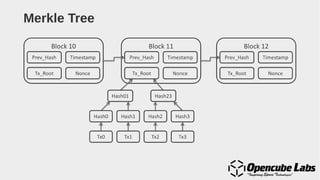
● The Merkle tree root for the transactions included in this block.
“Merkle trees are used to summarize all the transactions in a
block, producing an overall digital fingerprint of the entire set of
transactions, providing a very efficient process to verify whether
a transaction is included in a block."
- Andreas M. Antonopoulos
Merkle Tree
“The record of an event, cryptographically secured with a digital
signature, that is verified, ordered, and bundled together into
blocks, form the transactions in the blockchain.
Cryptography has a key role to play both in the security, as well
as in the immutability of the transactions recorded on blockchains. ”
- hyperledger.org
Immutability of Data
“When people say that blockchains are immutable, they don't mean
that the data can't be changed, they mean it is extremely hard to
change without collusion, and if you try, it's extremely easy to detect
the attempt.”
-Antony Lewis
Blockchain Immutability
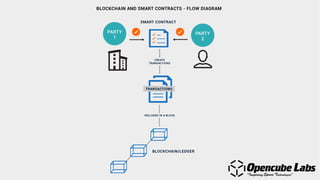
Smart Contracts
“Smart contracts are simply computer programs that execute
predefined actions when certain conditions within the system are
met. Smart contracts provide the language of transactions that
allow the ledger state to be modified. They can facilitate the
exchange and transfer of anything of value.”
- hyperledger.org
“Cryptoeconomics is about building systems that have certain
desired properties using cryptography to prove properties about
messages that happened in the past while using economic
incentives defined inside the system to encourage desired
properties to hold into the future”
- Vitalik Buterin
“Cryptoeconomics is about building systems that have certain
desired properties using cryptography to prove properties about
messages that happened in the past while using economic
incentives defined inside the system to encourage desired
properties to hold into the future”
- Vitalik Buterin
Ethereum
“Ethereum is an open blockchain platform that lets anyone build
and use decentralized applications that run on blockchain technology.”
- ethdocs.org
“Ethereum is an open blockchain platform that lets anyone build
and use decentralized applications that run on blockchain technology.”
- ethdocs.org
Dapps
Consensus Algorithms
“Consensus in the network refers to the process of achieving agreement
among the network participants as to the correct state of data on the
system. Consensus leads to all nodes sharing the exact same data. A
consensus algorithm, hence, does two things: it ensures that the data on
the ledger is the same for all the nodes in the network, and, in turn,
prevents malicious actors from manipulating the data. The consensus
algorithm varies with different blockchain implementations.”
- hyperledger.org
Proof of Work(PoW)
“Guessing a combination to a lock is a proof to a challenge. It is very hard to
produce this since you will need to guess many different combinations; but
once produced, it is easy to validate. Just enter the combination and see if
the lock opens.”
- Ofir Beigel
Proof of Work(PoW)
“Guessing a combination to a lock is a proof to a challenge. It is very hard to
produce this since you will need to guess many different combinations; but
once produced, it is easy to validate. Just enter the combination and see if
the lock opens.”
- Ofir Beigel
Proof of Stake (PoS)
Proof of Elapsed Time(PoET)
Instead of competing to solve the cryptographic challenge and mine the
next block, as in the Bitcoin blockchain, the PoET consensus algorithm
is a hybrid of a random lottery and first-come-first-serve basis. In PoET,
each validator is given a random wait time.
“The validator with the shortest wait time for a particular transaction block
is elected the leader.”
- sawtooth.hyperledger.org
Proof of Authority(PoA)
Proof-of-Authority (PoA) is a consensus algorithm which can be used
for permissioned ledgers. It uses a set of 'authorities', which are
designated nodes that are allowed to create new blocks and secure
the ledger. Ledgers using PoA require sign-off by a majority of
authorities in order for a block to be created.
When to use Blockchain?
● There is a need for a shared common database
● The parties involved with the process have conflicting incentives, or do not have
trust among participants
● There are multiple parties involved or writers to a database
● There are currently trusted third parties involved in the process that facilitate
interactions between multiple parties who must trust the third party.
This could include escrow services, data feed providers, licensing authorities,
or a notary public
● Data for a business process is being entered into many different databases along
● the lifecycle of the process. It is important that this data is consistent across all
● entities, and/or digitization of such a process is desired
● There are uniform rules governing participants in the system
● Decision making of the parties is transparent, rather than confidential
● There is a need for an objective, immutable history or log of facts for parties’ reference
● Transaction frequency does not exceed 10,000 transactions per second.
When Not to Use Blockchain
● The process involves confidential data
● The process stores a lot of static data, or the data is quite large
● Rules of transactions change frequently
● The use of external services to gather/store data
Thank You
@_surajjana
suraj@ocl.space

Understanding Blockchain: Distributed Ledger Technology

  • 2.
  • 3.
  • 4.
  • 5.
    “A distributed ledgeris a type of data structure which resides across multiple computer devices, generally spread across locations or regions.” - Linux Foundation
  • 6.
    “Distributed Ledger Technologyincludes blockchain technologies and smart contracts. While distributed ledgers existed prior to Bitcoin, the Bitcoin blockchain marks the convergence of a host of technologies, including timestamping of transactions, Peer-to-Peer (P2P) networks, cryptography, and shared computational power, along with a new consensus algorithm. ” - Linux Foundation
  • 7.
    Basic components ofa DLT ● A data model that captures the current state of the ledger. ● A language of transactions that changes the ledger state. ● A protocol used to build consensus among participants around which transactions will be accepted, and in what order, by the ledger.
  • 8.
    “A blockchain isa peer-to-peer distributed ledger forged by consensus, combined with a system for "smart contracts" and other assistive technologies." - hyperledger.org
  • 9.
    “Smart contracts aresimply computer programs that execute predefined actions when certain conditions within the system are met." - hyperledger.org
  • 10.
    “Consensus refers toa system of ensuring that parties agree to a certain state of the system as the true state." - hyperledger.org
  • 11.
    The difference betweenDLT and Blockchain
  • 12.
    Blockchain continued... ● Blockchainis a specific form or subset of distributed ledger technologies, which constructs a chronological chain of blocks, hence the name 'block-chain'. ● A block refers to a set of transactions that are bundled together and added to the chain at the same time. ● In the Bitcoin blockchain, the miner nodes bundle unconfirmed and valid transactions into a block. Each block contains a given number of transactions. ● In the Bitcoin network, miners must solve a cryptographic challenge to propose the next block. This process is known as 'proof of work', and requires significant computing power.
  • 13.
    “Timestamping is anotherkey feature of blockchain technology. Each block is timestamped, with each new block referring to the previous block. Combined with cryptographic hashes, this timestamped chain of blocks provides an immutable record of all transactions in the network, from the very first (or genesis) block."
  • 14.
    Block Components ● Thereference to the previous block ● The proof of work, also known as a nonce ● The timestamp ● The Merkle tree root for the transactions included in this block.
  • 15.
    “Merkle trees areused to summarize all the transactions in a block, producing an overall digital fingerprint of the entire set of transactions, providing a very efficient process to verify whether a transaction is included in a block." - Andreas M. Antonopoulos
  • 16.
  • 17.
    “The record ofan event, cryptographically secured with a digital signature, that is verified, ordered, and bundled together into blocks, form the transactions in the blockchain. Cryptography has a key role to play both in the security, as well as in the immutability of the transactions recorded on blockchains. ” - hyperledger.org
  • 21.
  • 22.
    “When people saythat blockchains are immutable, they don't mean that the data can't be changed, they mean it is extremely hard to change without collusion, and if you try, it's extremely easy to detect the attempt.” -Antony Lewis
  • 23.
  • 24.
  • 25.
  • 26.
  • 27.
    “Smart contracts aresimply computer programs that execute predefined actions when certain conditions within the system are met. Smart contracts provide the language of transactions that allow the ledger state to be modified. They can facilitate the exchange and transfer of anything of value.” - hyperledger.org
  • 29.
    “Cryptoeconomics is aboutbuilding systems that have certain desired properties using cryptography to prove properties about messages that happened in the past while using economic incentives defined inside the system to encourage desired properties to hold into the future” - Vitalik Buterin
  • 30.
    “Cryptoeconomics is aboutbuilding systems that have certain desired properties using cryptography to prove properties about messages that happened in the past while using economic incentives defined inside the system to encourage desired properties to hold into the future” - Vitalik Buterin
  • 31.
  • 32.
    “Ethereum is anopen blockchain platform that lets anyone build and use decentralized applications that run on blockchain technology.” - ethdocs.org
  • 33.
    “Ethereum is anopen blockchain platform that lets anyone build and use decentralized applications that run on blockchain technology.” - ethdocs.org
  • 34.
  • 35.
  • 36.
  • 37.
    “Consensus in thenetwork refers to the process of achieving agreement among the network participants as to the correct state of data on the system. Consensus leads to all nodes sharing the exact same data. A consensus algorithm, hence, does two things: it ensures that the data on the ledger is the same for all the nodes in the network, and, in turn, prevents malicious actors from manipulating the data. The consensus algorithm varies with different blockchain implementations.” - hyperledger.org
  • 38.
    Proof of Work(PoW) “Guessinga combination to a lock is a proof to a challenge. It is very hard to produce this since you will need to guess many different combinations; but once produced, it is easy to validate. Just enter the combination and see if the lock opens.” - Ofir Beigel
  • 39.
    Proof of Work(PoW) “Guessinga combination to a lock is a proof to a challenge. It is very hard to produce this since you will need to guess many different combinations; but once produced, it is easy to validate. Just enter the combination and see if the lock opens.” - Ofir Beigel
  • 40.
  • 41.
    Proof of ElapsedTime(PoET) Instead of competing to solve the cryptographic challenge and mine the next block, as in the Bitcoin blockchain, the PoET consensus algorithm is a hybrid of a random lottery and first-come-first-serve basis. In PoET, each validator is given a random wait time. “The validator with the shortest wait time for a particular transaction block is elected the leader.” - sawtooth.hyperledger.org
  • 42.
    Proof of Authority(PoA) Proof-of-Authority(PoA) is a consensus algorithm which can be used for permissioned ledgers. It uses a set of 'authorities', which are designated nodes that are allowed to create new blocks and secure the ledger. Ledgers using PoA require sign-off by a majority of authorities in order for a block to be created.
  • 43.
    When to useBlockchain? ● There is a need for a shared common database ● The parties involved with the process have conflicting incentives, or do not have trust among participants ● There are multiple parties involved or writers to a database ● There are currently trusted third parties involved in the process that facilitate interactions between multiple parties who must trust the third party. This could include escrow services, data feed providers, licensing authorities, or a notary public ● Data for a business process is being entered into many different databases along ● the lifecycle of the process. It is important that this data is consistent across all ● entities, and/or digitization of such a process is desired ● There are uniform rules governing participants in the system ● Decision making of the parties is transparent, rather than confidential ● There is a need for an objective, immutable history or log of facts for parties’ reference ● Transaction frequency does not exceed 10,000 transactions per second.
  • 44.
    When Not toUse Blockchain ● The process involves confidential data ● The process stores a lot of static data, or the data is quite large ● Rules of transactions change frequently ● The use of external services to gather/store data
  • 45.