Understanding Mental Illness

 Session Two: Understanding Anxiety


 Webinars presented by the National Council for
Community Behavioral Healthcare in observance of
          May is Mental Health Month

 Program content based upon Mental Health First Aid USA
Bryan Gibb
Director of Public Education, National
 Council for Community Behavioral
              Healthcare


                                         2
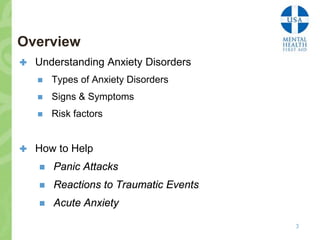
Overview
 Understanding Anxiety Disorders
      Types of Anxiety Disorders
      Signs & Symptoms
      Risk factors


 How to Help

      Panic Attacks
      Reactions to Traumatic Events
      Acute Anxiety

                                       3
What Is Mental Health First Aid?

Mental Health First Aid is the help offered to a
person developing a mental health problem or
experiencing a mental health crisis. The first aid
is given until appropriate treatment and support
are received or until the crisis resolves.


                                                     4
Why Mental Health First Aid?

 Mental health problems are common.

 Stigma is associated with mental health problems.

 Many people are not well informed about mental
   health problems.
 Professional help is not always on hand.

 People often do not know how to respond.
 People with mental health problems often do not
   seek help.
                                                      5
The Mental Health First Aid Action Plan


 Assess for risk of suicide or harm
 Listen nonjudgmentally
 Give reassurance and information
 Encourage appropriate professional help
 Encourage self-help and other support strategies


                                                     6
What Is a Mental Disorder?

A mental disorder or mental illness is a diagnosable
illness that:

 Affects a person’s thinking, emotional state, and
  behavior
 Disrupts the person’s ability to
      Work
      Carry out daily activities
      Engage in satisfying relationships


                                                      7
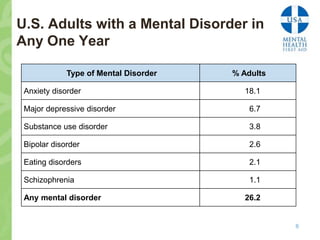
U.S. Adults with a Mental Disorder in
Any One Year

             Type of Mental Disorder   % Adults

 Anxiety disorder                         18.1    .

 Major depressive disorder                 6.7    .

 Substance use disorder                    3.8    .

 Bipolar disorder                          2.6    .

 Eating disorders                          2.1    .

 Schizophrenia                             1.1    .

 Any mental disorder                      26.2    .


                                                  8
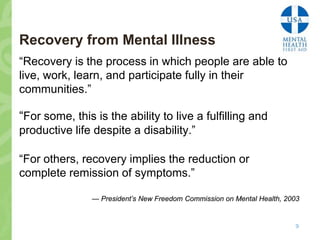
Recovery from Mental Illness
“Recovery is the process in which people are able to
live, work, learn, and participate fully in their
communities.”

“For some, this is the ability to live a fulfilling and
productive life despite a disability.”

“For others, recovery implies the reduction or
complete remission of symptoms.”

                — President’s New Freedom Commission on Mental Health, 2003


                                                                         9
Suzette Sova
MHMR Authority of Harris County,
        Houston, TX


                                   10
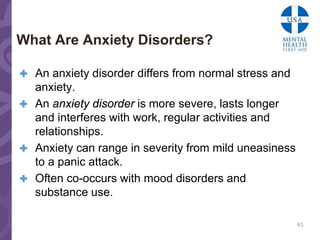
What Are Anxiety Disorders?

 An anxiety disorder differs from normal stress and
  anxiety.
 An anxiety disorder is more severe, lasts longer
  and interferes with work, regular activities and
  relationships.
 Anxiety can range in severity from mild uneasiness
  to a panic attack.
 Often co-occurs with mood disorders and
  substance use.

                                                       41
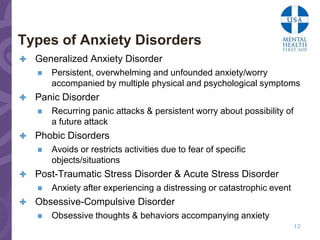
Types of Anxiety Disorders
   Generalized Anxiety Disorder
       Persistent, overwhelming and unfounded anxiety/worry
        accompanied by multiple physical and psychological symptoms
   Panic Disorder
       Recurring panic attacks & persistent worry about possibility of
        a future attack
   Phobic Disorders
       Avoids or restricts activities due to fear of specific
        objects/situations
   Post-Traumatic Stress Disorder & Acute Stress Disorder
       Anxiety after experiencing a distressing or catastrophic event
   Obsessive-Compulsive Disorder
       Obsessive thoughts & behaviors accompanying anxiety
                                                                          12
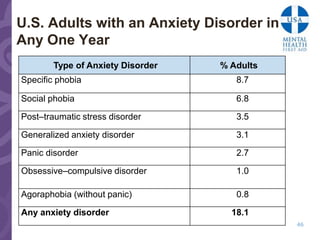
U.S. Adults with an Anxiety Disorder in
Any One Year
        Type of Anxiety Disorder   % Adults
Specific phobia                       8.7     .

Social phobia                         6.8     .

Post–traumatic stress disorder        3.5     .

Generalized anxiety disorder          3.1     .

Panic disorder                        2.7     .

Obsessive–compulsive disorder         1.0     .

Agoraphobia (without panic)           0.8     .

Any anxiety disorder                 18.1     .
                                                  46
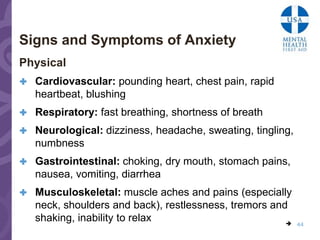
Signs and Symptoms of Anxiety
Physical
 Cardiovascular: pounding heart, chest pain, rapid
   heartbeat, blushing
 Respiratory: fast breathing, shortness of breath

 Neurological: dizziness, headache, sweating, tingling,
   numbness
 Gastrointestinal: choking, dry mouth, stomach pains,
   nausea, vomiting, diarrhea
 Musculoskeletal: muscle aches and pains (especially
   neck, shoulders and back), restlessness, tremors and
   shaking, inability to relax                            44
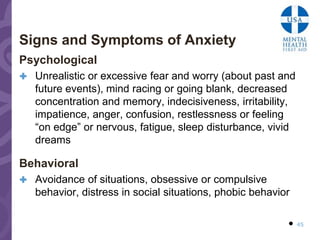
Signs and Symptoms of Anxiety
Psychological
 Unrealistic or excessive fear and worry (about past and
   future events), mind racing or going blank, decreased
   concentration and memory, indecisiveness, irritability,
   impatience, anger, confusion, restlessness or feeling
   “on edge” or nervous, fatigue, sleep disturbance, vivid
   dreams

Behavioral
 Avoidance of situations, obsessive or compulsive
   behavior, distress in social situations, phobic behavior

                                                           45
Risk Factors for Anxiety Disorders
 People who are more likely to react with anxiety
   when they feel threatened are those who:
      Have a more sensitive emotional nature
      Have a history of anxiety in childhood or
       adolescence
      Are female
      Abuse alcohol
      Experience a traumatic event
 Medical conditions or side effects of some
  prescription medications
 Intoxication or withdrawal from alcohol, cocaine,
                                                      47
  sedatives, and anti-anxiety medications
Assess for Risk of Suicide
or Harm
The most common crisis to assess for with anxiety
symptoms is an extreme level of anxiety:

      Panic attack
      Reaction to a traumatic event


                                                    50
Symptoms of a Panic Attack
 Palpitations, pounding heart, or rapid heart rate
 Sweating
 Trembling and shaking
 Shortness of breath, sensations of choking or smothering
 Chest pain or discomfort
 Abdominal distress or nausea
 Dizziness, light-headedness, feeling faint, unsteady
 Feelings of unreality
 Feelings of being detached from oneself
 Fear of losing control or going crazy
 Fear of dying
 Numbness or tingling
 Chills or hot flashes                                      51
How to Help
If you don’t know if it is a panic attack or other medical
problem, seek medical assistance
If the person believes it is a panic attack:
      Ask the person if & how you can help
      Remain calm and speak in a reassuring but firm manner.
      Acknowledge that the terror feels very real, but reassure
        the person that he or she is safe and that the symptoms
        will pass.
      If appropriate, model a regular breathing pace for them
        to follow.

                                                             
                                                                 52
Traumatic Events
 A “traumatic event” is any incident experienced or
   witnessed by a person that is perceived to be
   traumatic, including: accidents, assault, mass
   traumatic events, recurring trauma, and memories
   of past trauma.
 People with mental illnesses — especially those
   who have been traumatized in the past — are at
   increased risk for serious reaction to trauma.


                                                       56
How to Help: After a Trauma
 Ensure your safety first
 Ask how the person would like to be helped and try to
  determine the person’s immediate needs:
  water, shelter, food, clothing; other safety, comfort &
  dignity.
 If the person is injured, seek medical assistance. Do
  not take over the role of any professionals (e.g., law
  enforcement, paramedics).
 If the person does not appear injured, observe the
  person for any changes in physical or mental state.
 Speak clearly, be patient and give truthful information.
 It is more important to be genuinely caring than to say
  all the “right things.”                                21
How to Help
Encourage the person to:
 Tell others what he or she needs
 Identify sources of support
 Use coping strategies that have helped in the past
 Encourage seeking professional help if, for 4 weeks
   or more after the trauma, the person has feelings
   that are interfering with usual activities


                                                       60
Questions on Anxiety


                   ?
                       23
Mental Health First Aid in your
Community
 A recording of this webinar & the power point will
  be available on the National Council website 48
  hours after it has ended.
 Visit www.MentalHealthFirstAid.org for further
  information on the course and to find an instructor
  near you.
 Become a fan of Mental Health First Aid USA on
  Facebook & get updates and information on a
  variety of mental health topics.
 For any further questions, contact Bryan Gibb at
  bryang@thenationalcouncil.org or Susan Partain at
  susanp@thenationalcouncil.org or 202.684.3732. 24

Understanding anxiety

  • 1.
    Understanding Mental Illness Session Two: Understanding Anxiety Webinars presented by the National Council for Community Behavioral Healthcare in observance of May is Mental Health Month Program content based upon Mental Health First Aid USA
  • 2.
    Bryan Gibb Director ofPublic Education, National Council for Community Behavioral Healthcare 2
  • 3.
    Overview  Understanding AnxietyDisorders  Types of Anxiety Disorders  Signs & Symptoms  Risk factors  How to Help  Panic Attacks  Reactions to Traumatic Events  Acute Anxiety 3
  • 4.
    What Is MentalHealth First Aid? Mental Health First Aid is the help offered to a person developing a mental health problem or experiencing a mental health crisis. The first aid is given until appropriate treatment and support are received or until the crisis resolves. 4
  • 5.
    Why Mental HealthFirst Aid?  Mental health problems are common.  Stigma is associated with mental health problems.  Many people are not well informed about mental health problems.  Professional help is not always on hand.  People often do not know how to respond.  People with mental health problems often do not seek help. 5
  • 6.
    The Mental HealthFirst Aid Action Plan  Assess for risk of suicide or harm  Listen nonjudgmentally  Give reassurance and information  Encourage appropriate professional help  Encourage self-help and other support strategies 6
  • 7.
    What Is aMental Disorder? A mental disorder or mental illness is a diagnosable illness that:  Affects a person’s thinking, emotional state, and behavior  Disrupts the person’s ability to  Work  Carry out daily activities  Engage in satisfying relationships 7
  • 8.
    U.S. Adults witha Mental Disorder in Any One Year Type of Mental Disorder % Adults Anxiety disorder 18.1 . Major depressive disorder 6.7 . Substance use disorder 3.8 . Bipolar disorder 2.6 . Eating disorders 2.1 . Schizophrenia 1.1 . Any mental disorder 26.2 . 8
  • 9.
    Recovery from MentalIllness “Recovery is the process in which people are able to live, work, learn, and participate fully in their communities.” “For some, this is the ability to live a fulfilling and productive life despite a disability.” “For others, recovery implies the reduction or complete remission of symptoms.” — President’s New Freedom Commission on Mental Health, 2003 9
  • 10.
    Suzette Sova MHMR Authorityof Harris County, Houston, TX 10
  • 11.
    What Are AnxietyDisorders?  An anxiety disorder differs from normal stress and anxiety.  An anxiety disorder is more severe, lasts longer and interferes with work, regular activities and relationships.  Anxiety can range in severity from mild uneasiness to a panic attack.  Often co-occurs with mood disorders and substance use. 41
  • 12.
    Types of AnxietyDisorders  Generalized Anxiety Disorder  Persistent, overwhelming and unfounded anxiety/worry accompanied by multiple physical and psychological symptoms  Panic Disorder  Recurring panic attacks & persistent worry about possibility of a future attack  Phobic Disorders  Avoids or restricts activities due to fear of specific objects/situations  Post-Traumatic Stress Disorder & Acute Stress Disorder  Anxiety after experiencing a distressing or catastrophic event  Obsessive-Compulsive Disorder  Obsessive thoughts & behaviors accompanying anxiety 12
  • 13.
    U.S. Adults withan Anxiety Disorder in Any One Year Type of Anxiety Disorder % Adults Specific phobia 8.7 . Social phobia 6.8 . Post–traumatic stress disorder 3.5 . Generalized anxiety disorder 3.1 . Panic disorder 2.7 . Obsessive–compulsive disorder 1.0 . Agoraphobia (without panic) 0.8 . Any anxiety disorder 18.1 . 46
  • 14.
    Signs and Symptomsof Anxiety Physical  Cardiovascular: pounding heart, chest pain, rapid heartbeat, blushing  Respiratory: fast breathing, shortness of breath  Neurological: dizziness, headache, sweating, tingling, numbness  Gastrointestinal: choking, dry mouth, stomach pains, nausea, vomiting, diarrhea  Musculoskeletal: muscle aches and pains (especially neck, shoulders and back), restlessness, tremors and shaking, inability to relax  44
  • 15.
    Signs and Symptomsof Anxiety Psychological  Unrealistic or excessive fear and worry (about past and future events), mind racing or going blank, decreased concentration and memory, indecisiveness, irritability, impatience, anger, confusion, restlessness or feeling “on edge” or nervous, fatigue, sleep disturbance, vivid dreams Behavioral  Avoidance of situations, obsessive or compulsive behavior, distress in social situations, phobic behavior  45
  • 16.
    Risk Factors forAnxiety Disorders  People who are more likely to react with anxiety when they feel threatened are those who:  Have a more sensitive emotional nature  Have a history of anxiety in childhood or adolescence  Are female  Abuse alcohol  Experience a traumatic event  Medical conditions or side effects of some prescription medications  Intoxication or withdrawal from alcohol, cocaine, 47 sedatives, and anti-anxiety medications
  • 17.
    Assess for Riskof Suicide or Harm The most common crisis to assess for with anxiety symptoms is an extreme level of anxiety:  Panic attack  Reaction to a traumatic event 50
  • 18.
    Symptoms of aPanic Attack  Palpitations, pounding heart, or rapid heart rate  Sweating  Trembling and shaking  Shortness of breath, sensations of choking or smothering  Chest pain or discomfort  Abdominal distress or nausea  Dizziness, light-headedness, feeling faint, unsteady  Feelings of unreality  Feelings of being detached from oneself  Fear of losing control or going crazy  Fear of dying  Numbness or tingling  Chills or hot flashes 51
  • 19.
    How to Help Ifyou don’t know if it is a panic attack or other medical problem, seek medical assistance If the person believes it is a panic attack:  Ask the person if & how you can help  Remain calm and speak in a reassuring but firm manner.  Acknowledge that the terror feels very real, but reassure the person that he or she is safe and that the symptoms will pass.  If appropriate, model a regular breathing pace for them to follow.  52
  • 20.
    Traumatic Events  A“traumatic event” is any incident experienced or witnessed by a person that is perceived to be traumatic, including: accidents, assault, mass traumatic events, recurring trauma, and memories of past trauma.  People with mental illnesses — especially those who have been traumatized in the past — are at increased risk for serious reaction to trauma. 56
  • 21.
    How to Help:After a Trauma  Ensure your safety first  Ask how the person would like to be helped and try to determine the person’s immediate needs: water, shelter, food, clothing; other safety, comfort & dignity.  If the person is injured, seek medical assistance. Do not take over the role of any professionals (e.g., law enforcement, paramedics).  If the person does not appear injured, observe the person for any changes in physical or mental state.  Speak clearly, be patient and give truthful information.  It is more important to be genuinely caring than to say all the “right things.” 21
  • 22.
    How to Help Encouragethe person to:  Tell others what he or she needs  Identify sources of support  Use coping strategies that have helped in the past  Encourage seeking professional help if, for 4 weeks or more after the trauma, the person has feelings that are interfering with usual activities 60
  • 23.
  • 24.
    Mental Health FirstAid in your Community  A recording of this webinar & the power point will be available on the National Council website 48 hours after it has ended.  Visit www.MentalHealthFirstAid.org for further information on the course and to find an instructor near you.  Become a fan of Mental Health First Aid USA on Facebook & get updates and information on a variety of mental health topics.  For any further questions, contact Bryan Gibb at bryang@thenationalcouncil.org or Susan Partain at susanp@thenationalcouncil.org or 202.684.3732. 24