Introduction to IoTand
Radar Systems
In this presentation, we will explore
the integration of IoT with radar
systems using the ESP32, ultrasonic
sensors, and servo motors. These
technologies can enhance object
detection and automation, paving the
way for innovative applications in
various fields.
3.
Understanding IoT
Internet ofThings (IoT) refers to the
network of physical devices that connect
and exchange data over the internet. By
integrating sensors and actuators, IoT
enables smart solutions that improve
efficiency and functionality across various
sectors.
4.
What are Radar
Systems?
Radarsystems use radio
waves to detect and locate
objects. They are essential in
applications like navigation,
traffic monitoring, and security.
By implementing radar
technology, we can enhance the
capabilities of IoT
devices significantly.
5.
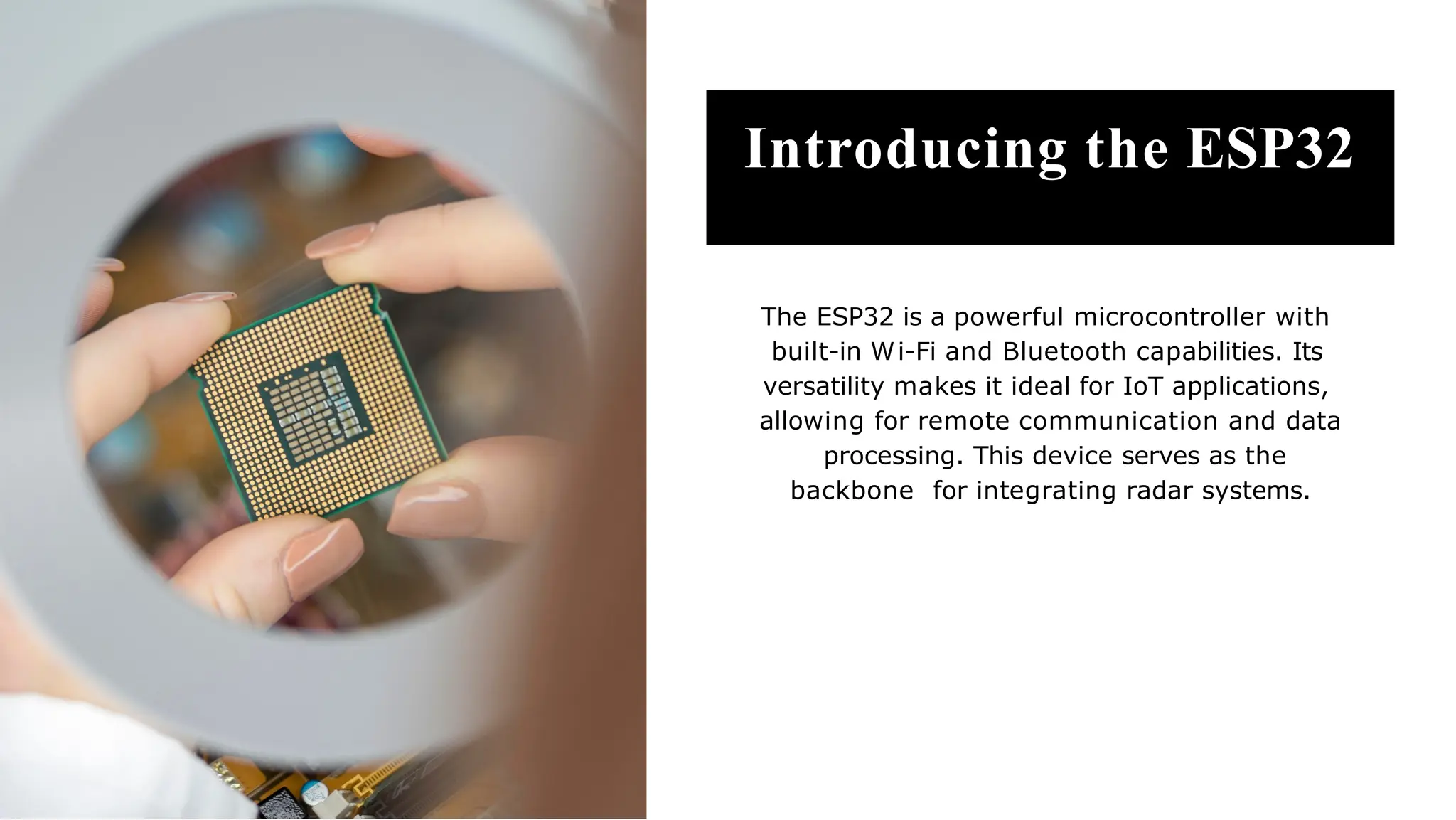
Introducing the ESP32
TheESP32 is a powerful microcontroller with
built-in Wi-Fi and Bluetooth capabilities. Its
versatility makes it ideal for IoT applications,
allowing for remote communication and data
processing. This device serves as the
backbone for integrating radar systems.
6.
Ultrasonic Sensors
Explained
Ultrasonic sensorsmeasure distance
by emitting sound waves and
analyzing the time taken for the echo
to return. They are crucial in object
detection and proximity sensing,
making them a perfect fit for radar
system applications.
7.
Role of ServoMotors
Servo motors are essential for
precise control of angular position.
In conjunction with radar systems,
they enable dynamic movement
and adjustment of sensors,
improving the accuracy and
responsiveness of IoT
applications.
8.
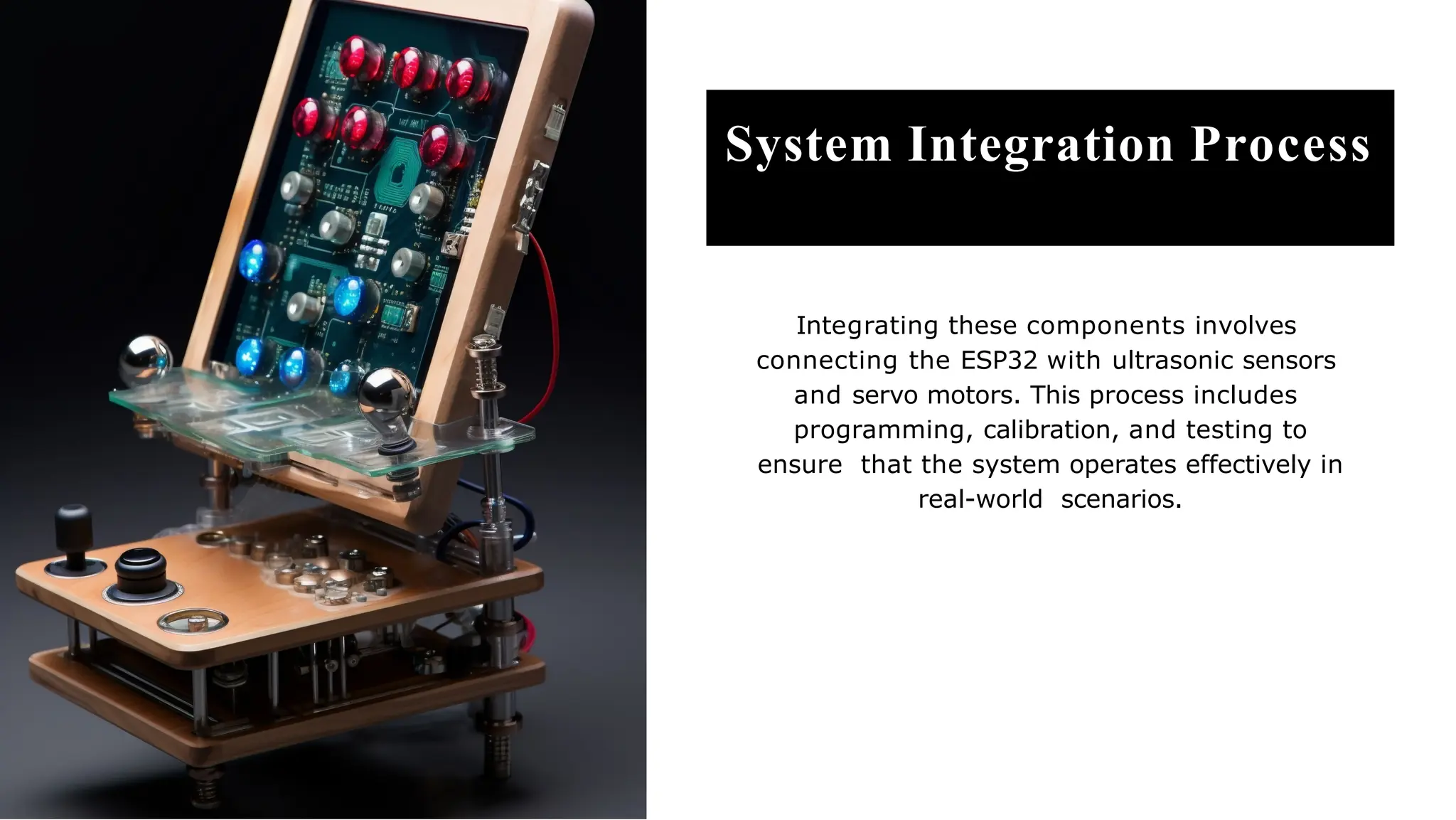
System Integration Process
Integratingthese components involves
connecting the ESP32 with ultrasonic sensors
and servo motors. This process includes
programming, calibration, and testing to
ensure that the system operates effectively in
real-world scenarios.
9.
Applications of theSystem
The combined use of ESP32,
ultrasonic sensors, and servo motors
can be applied in various fields such
as automated vehicles, smart
homes, and industrial automation.
These applications enhance
efficiency and provide innovative
solutions to
common challenges.
10.
Challenges and Solutions
Implementingthese systems can
present challenges such as
interference, power consumption, and
data processing. Addressing these
issues through proper design,
optimization, and testing is essential
for achieving reliable performance.
11.
Conclusion and Future
Directions
Inconclusion, the integration of radar systems with
ESP32, ultrasonic sensors, and servo motors represents a
significant advancement in IoT
. Future developments
may include enhanced AI capabilities and greater
automation, leading to smarter environments.

![Yashv iot PPT 1 IOT project servo motor[1].pptx](https://cdn.slidesharecdn.com/ss_thumbnails/yashviotppt11-250219163532-066896d4-thumbnail.jpg?width=640&height=640&fit=bounds)


