Downloaded 12 times
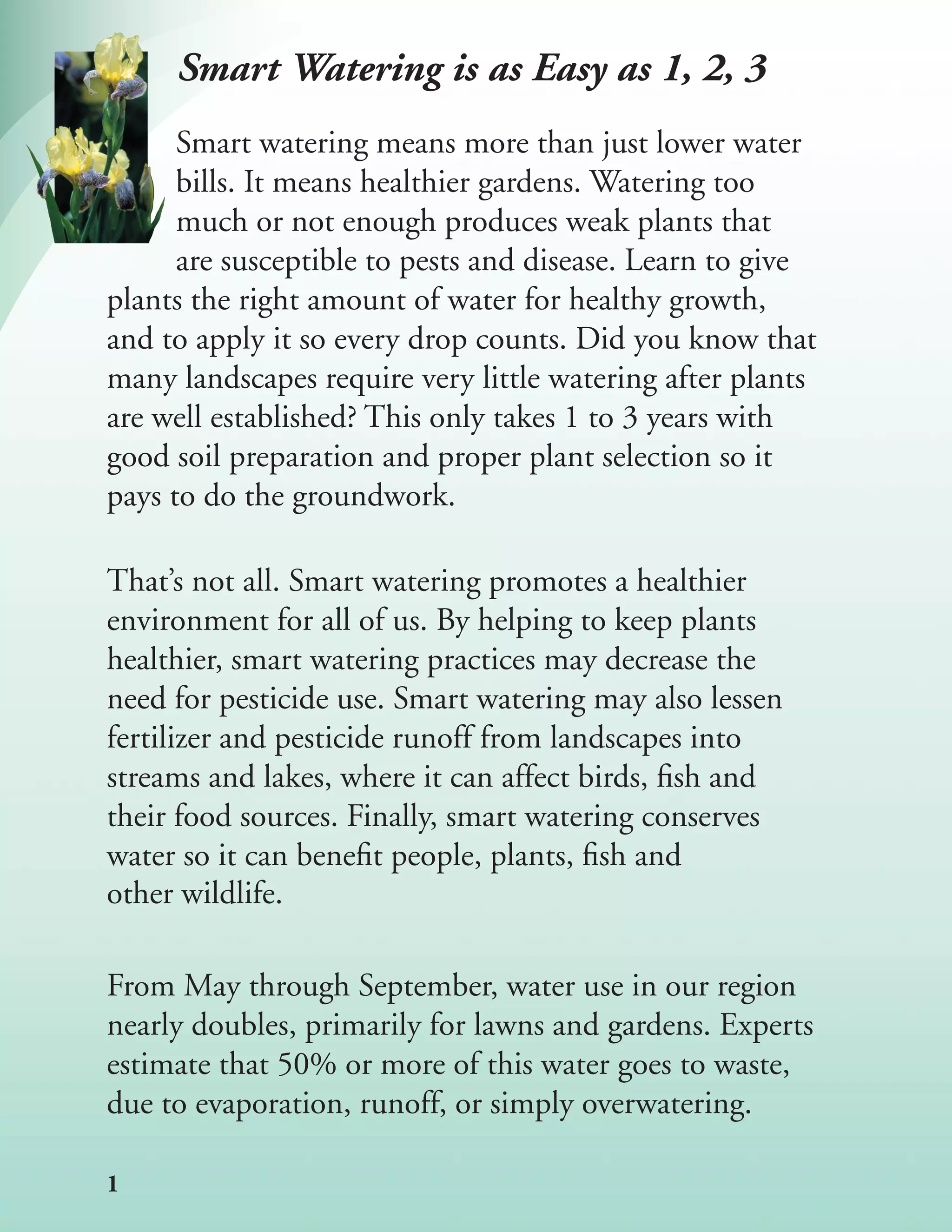
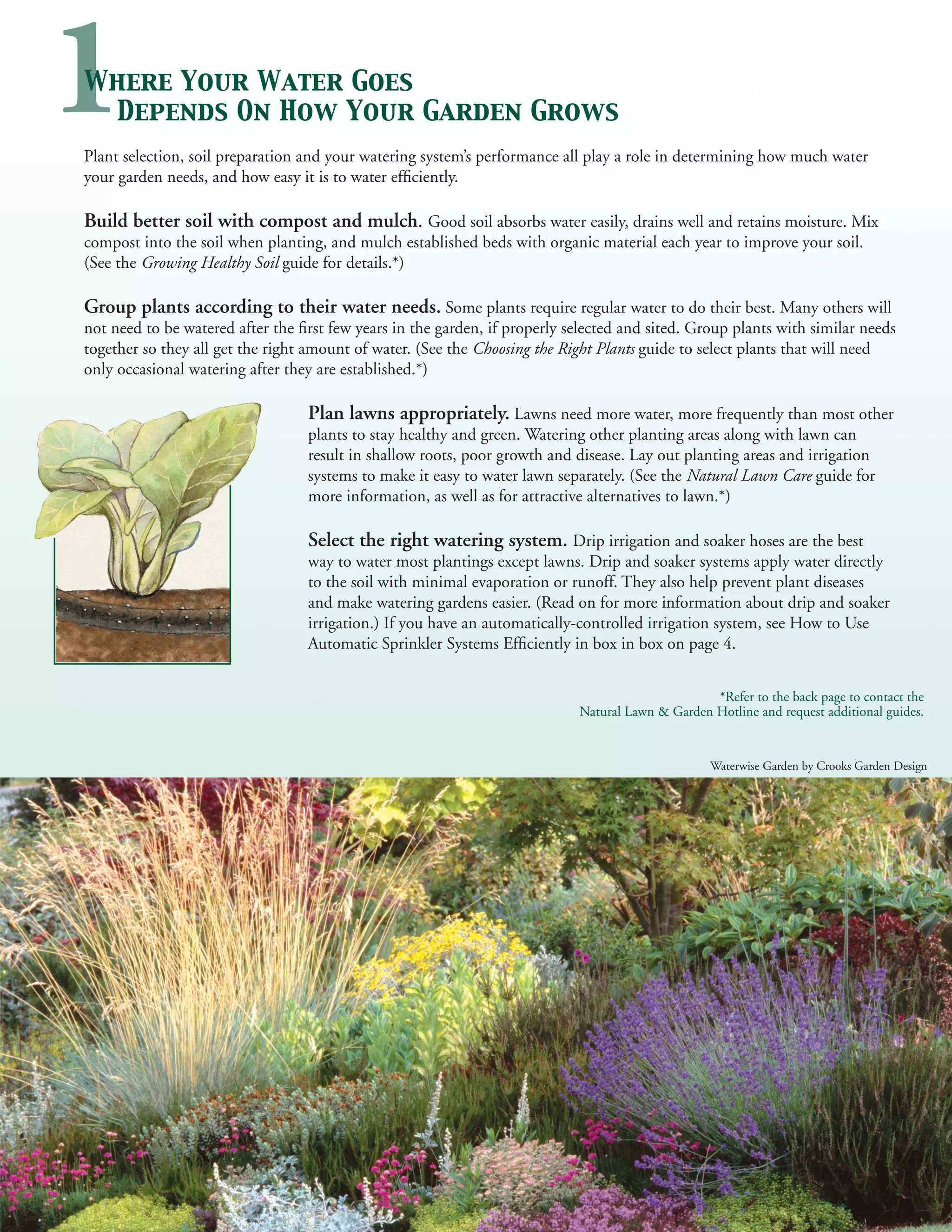
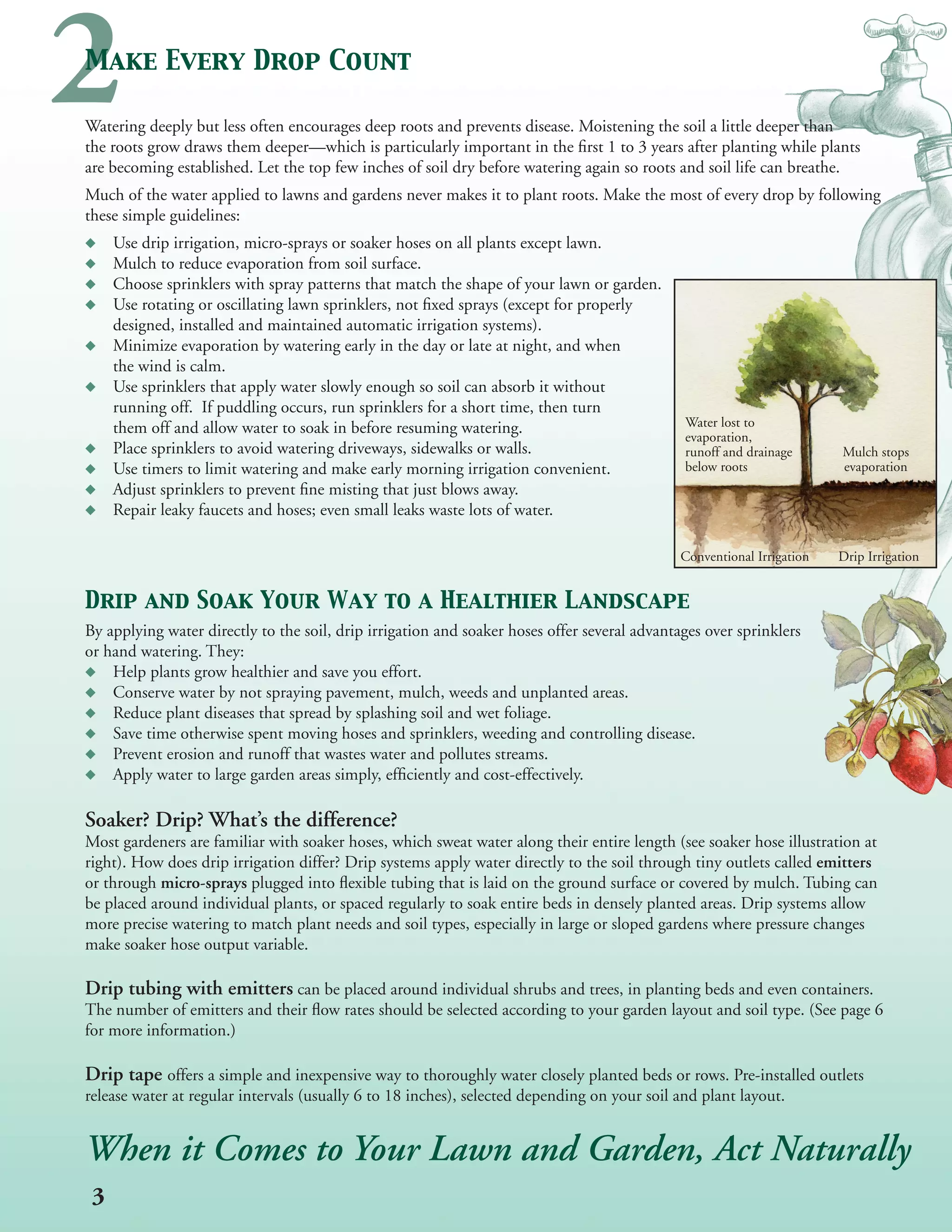
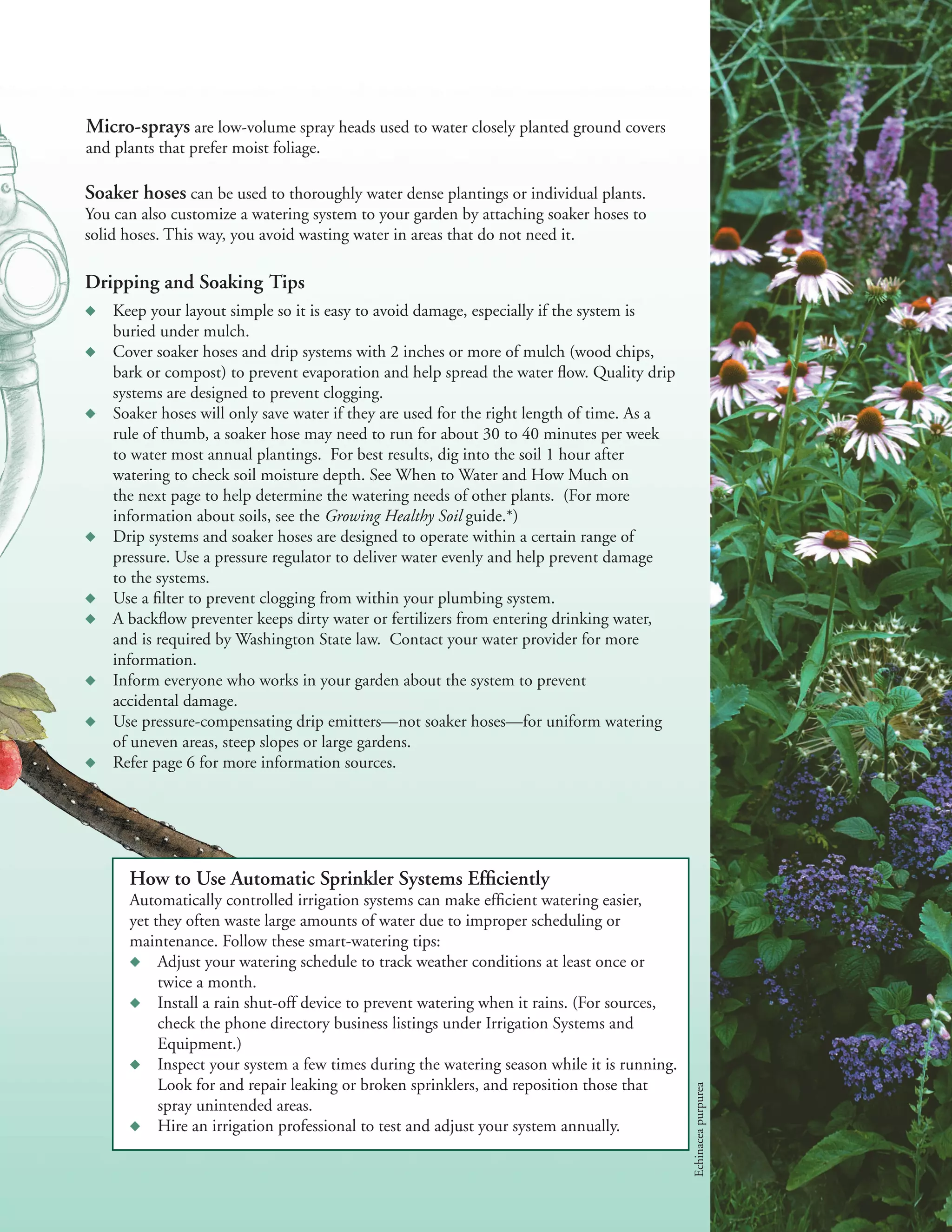
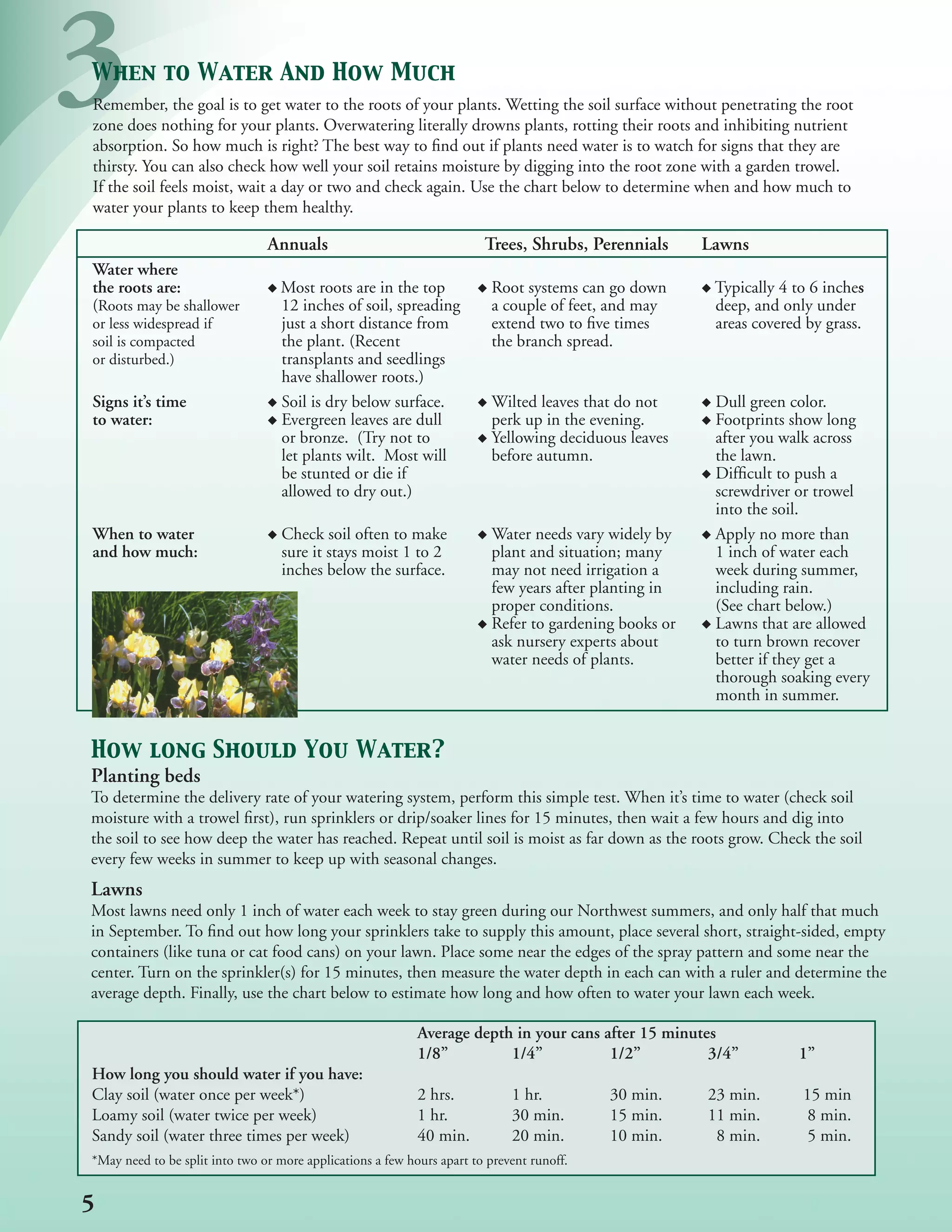

Smart watering means applying the right amount of water for plant health while conserving water resources. It promotes healthier plants that are less susceptible to pests and disease. Smart watering also helps protect the environment by decreasing the need for pesticides and reducing fertilizer and pesticide runoff. From May to September, outdoor water use in the region nearly doubles for lawns and gardens, with experts estimating that 50% or more of this water is wasted through evaporation, runoff, or overwatering. The document provides tips for smart watering through proper soil preparation, plant selection, irrigation methods like drip systems and soakers hoses, and best practices for watering amounts and schedules.


