XERISCAPING
Drought Tolerant Landscaping
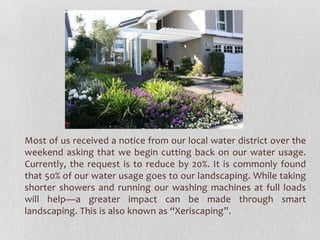
Most of us received a notice from our local water district over the
weekend asking that we begin cutting back on our water usage.
Currently, the request is to reduce by 20%. It is commonly found
that 50% of our water usage goes to our landscaping. While taking
shorter showers and running our washing machines at full loads
will help—a greater impact can be made through smart
landscaping. This is also known as “Xeriscaping”.
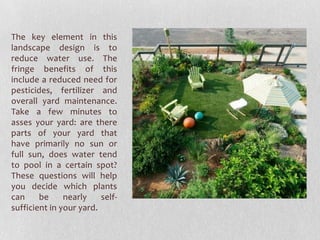
The key element in this
landscape design is to
reduce water use. The
fringe benefits of this
include a reduced need for
pesticides, fertilizer and
overall yard maintenance.
Take a few minutes to
asses your yard: are there
parts of your yard that
have primarily no sun or
full sun, does water tend
to pool in a certain spot?
These questions will help
you decide which plants
can
be
nearly
selfsufficient in your yard.
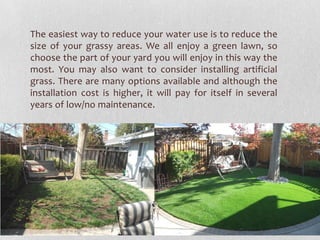
The easiest way to reduce your water use is to reduce the
size of your grassy areas. We all enjoy a green lawn, so
choose the part of your yard you will enjoy in this way the
most. You may also want to consider installing artificial
grass. There are many options available and although the
installation cost is higher, it will pay for itself in several
years of low/no maintenance.
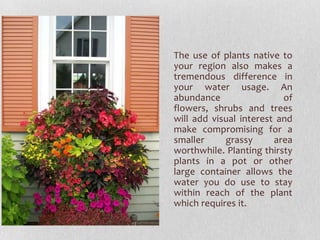
The use of plants native to
your region also makes a
tremendous difference in
your water usage. An
abundance
of
flowers, shrubs and trees
will add visual interest and
make compromising for a
smaller
grassy
area
worthwhile. Planting thirsty
plants in a pot or other
large container allows the
water you do use to stay
within reach of the plant
which requires it.
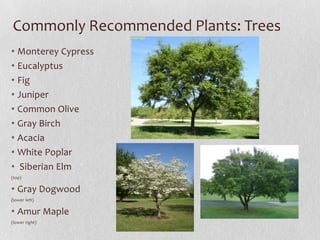
Commonly Recommended Plants: Trees
• Monterey Cypress
• Eucalyptus
• Fig
• Juniper
• Common Olive
• Gray Birch
• Acacia
• White Poplar
• Siberian Elm
(top)

• Gray Dogwood
(lower left)

• Amur Maple
(lower right)
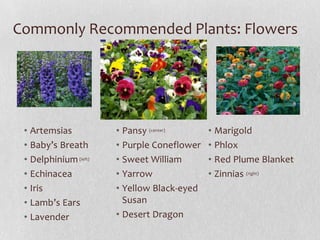
Commonly Recommended Plants: Flowers

• Artemsias
• Baby’s Breath
• Delphinium (left)
• Echinacea
• Iris
• Lamb’s Ears
• Lavender

• Pansy (center)
• Purple Coneflower
• Sweet William
• Yarrow
• Yellow Black-eyed
Susan
• Desert Dragon

• Marigold
• Phlox
• Red Plume Blanket
• Zinnias (right)
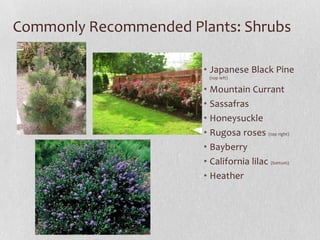
Commonly Recommended Plants: Shrubs
• Japanese Black Pine
(top left)

• Mountain Currant
• Sassafras
• Honeysuckle
• Rugosa roses (top right)
• Bayberry
• California lilac (bottom)
• Heather
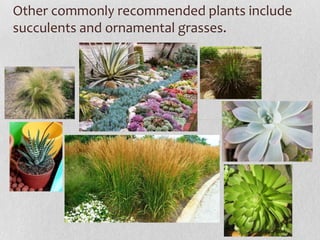
Other commonly recommended plants include
succulents and ornamental grasses.
Smart Maintenance
A key part of Xeriscaping is
choosing plants for the full growth
size, this reduces the need for
excessive trimming, except as
necessary to keep the plant
healthy. Water is essential to every
plant, the use of mulch helps soil
retain water by providing a barrier
to evaporation. We also
recommend installing a drip system
for a controlled slow watering
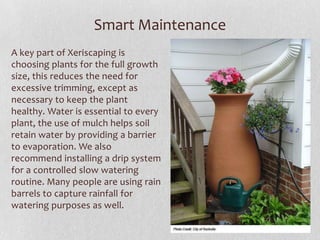
routine. Many people are using rain
barrels to capture rainfall for
watering purposes as well.
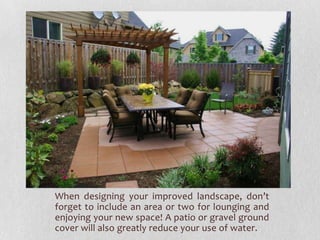
When designing your improved landscape, don’t
forget to include an area or two for lounging and
enjoying your new space! A patio or gravel ground
cover will also greatly reduce your use of water.

Xeriscaping: Drought Tolerant Landscaping

  • 1.
  • 2.
    Most of usreceived a notice from our local water district over the weekend asking that we begin cutting back on our water usage. Currently, the request is to reduce by 20%. It is commonly found that 50% of our water usage goes to our landscaping. While taking shorter showers and running our washing machines at full loads will help—a greater impact can be made through smart landscaping. This is also known as “Xeriscaping”.
  • 3.
    The key elementin this landscape design is to reduce water use. The fringe benefits of this include a reduced need for pesticides, fertilizer and overall yard maintenance. Take a few minutes to asses your yard: are there parts of your yard that have primarily no sun or full sun, does water tend to pool in a certain spot? These questions will help you decide which plants can be nearly selfsufficient in your yard.
  • 4.
    The easiest wayto reduce your water use is to reduce the size of your grassy areas. We all enjoy a green lawn, so choose the part of your yard you will enjoy in this way the most. You may also want to consider installing artificial grass. There are many options available and although the installation cost is higher, it will pay for itself in several years of low/no maintenance.
  • 5.
    The use ofplants native to your region also makes a tremendous difference in your water usage. An abundance of flowers, shrubs and trees will add visual interest and make compromising for a smaller grassy area worthwhile. Planting thirsty plants in a pot or other large container allows the water you do use to stay within reach of the plant which requires it.
  • 6.
    Commonly Recommended Plants:Trees • Monterey Cypress • Eucalyptus • Fig • Juniper • Common Olive • Gray Birch • Acacia • White Poplar • Siberian Elm (top) • Gray Dogwood (lower left) • Amur Maple (lower right)
  • 7.
    Commonly Recommended Plants:Flowers • Artemsias • Baby’s Breath • Delphinium (left) • Echinacea • Iris • Lamb’s Ears • Lavender • Pansy (center) • Purple Coneflower • Sweet William • Yarrow • Yellow Black-eyed Susan • Desert Dragon • Marigold • Phlox • Red Plume Blanket • Zinnias (right)
  • 8.
    Commonly Recommended Plants:Shrubs • Japanese Black Pine (top left) • Mountain Currant • Sassafras • Honeysuckle • Rugosa roses (top right) • Bayberry • California lilac (bottom) • Heather
  • 9.
    Other commonly recommendedplants include succulents and ornamental grasses.
  • 10.
    Smart Maintenance A keypart of Xeriscaping is choosing plants for the full growth size, this reduces the need for excessive trimming, except as necessary to keep the plant healthy. Water is essential to every plant, the use of mulch helps soil retain water by providing a barrier to evaporation. We also recommend installing a drip system for a controlled slow watering routine. Many people are using rain barrels to capture rainfall for watering purposes as well.
  • 11.
    When designing yourimproved landscape, don’t forget to include an area or two for lounging and enjoying your new space! A patio or gravel ground cover will also greatly reduce your use of water.