READINGS IN PHILIPPINE
HISTORY
SELECTED PRIMARY SOURCES IN THE PHILIPPINE HISTORY:
LAGUNA COPPERPLATE INSCRIPTION
MR. MICHAEL P. MAGANA
4
NO. 4
READINGS IN PHILIPPINE HISTORY
SELECTED PRIMARY SOURCES IN THE PHILIPPINE HISTORY:
LAGUNA COPPERPLATE INSCRIPTION
a. Restate the English translation of the inscription in
the copperplate.
b. Explain the relevance of the discovery of the
copperplate to Philippine historiography.
c. Justify the existence of advanced Philippine
civilization prior to the arrival of the Spaniards.
NO. 4
READINGS IN PHILIPPINE HISTORY
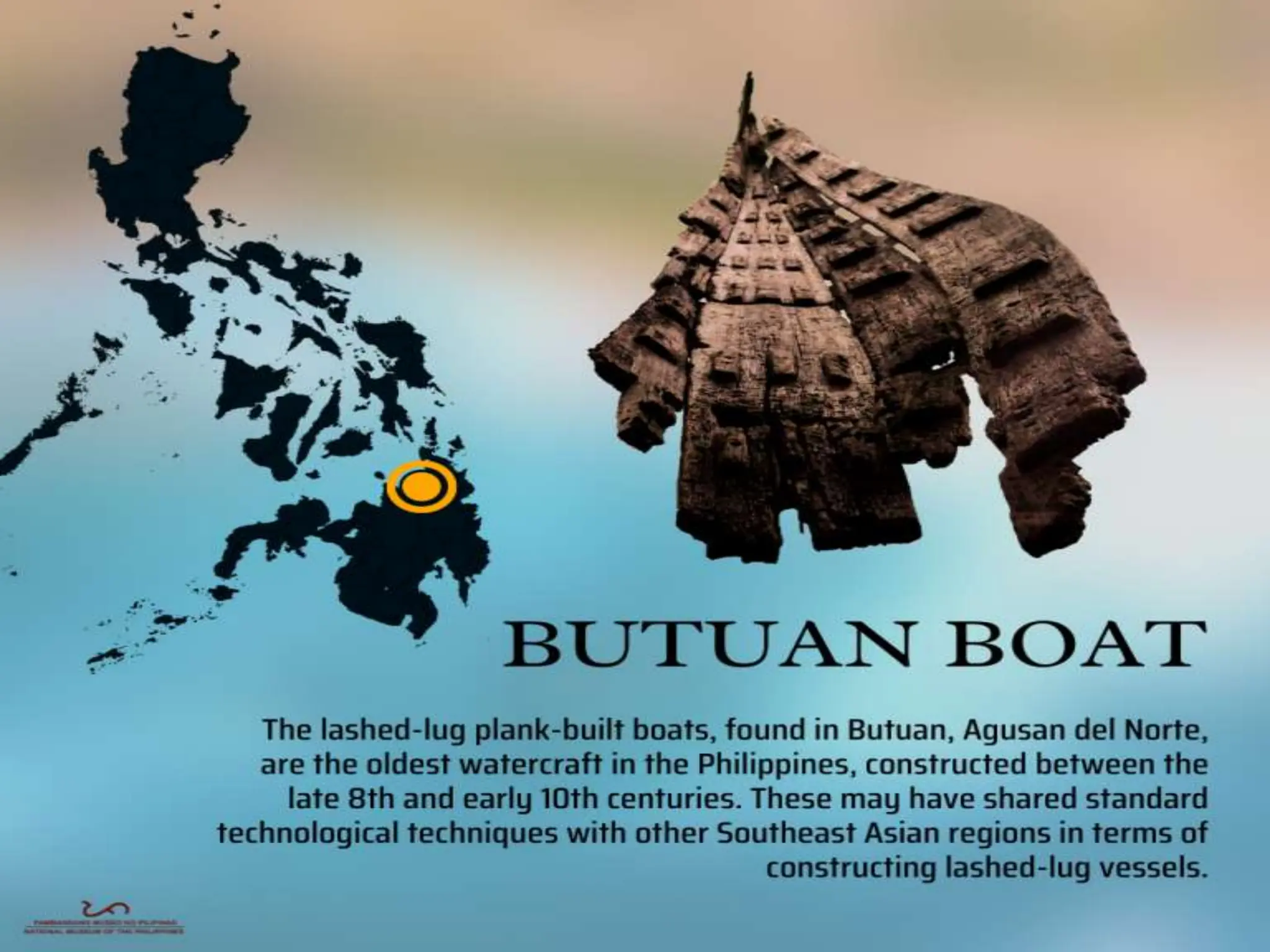
Material evidences that
signify the maritime
contact of Philippines to
other Asian Regions
NO. 4
READINGS IN PHILIPPINE HISTORY
NO. 4
READINGS IN PHILIPPINE HISTORY
NO. 4
READINGS IN PHILIPPINE HISTORY
NO. 4
READINGS IN PHILIPPINE HISTORY
The Laguna Copperplate Inscription: An Ancient
Text That Changed the Perception of the History
of the Philippines
NO. 4
READINGS IN PHILIPPINE HISTORY
NO. 4
READINGS IN PHILIPPINE HISTORY
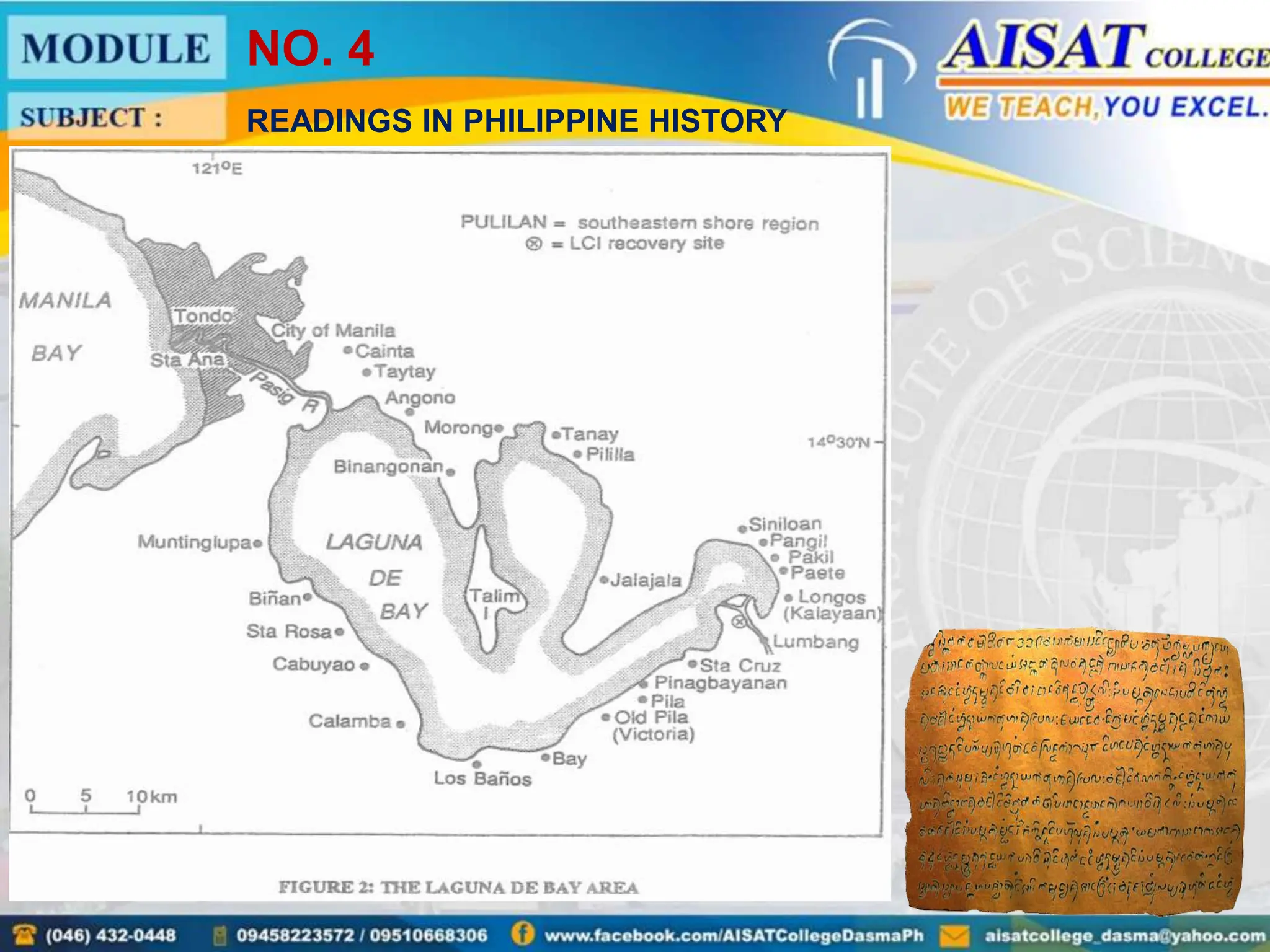
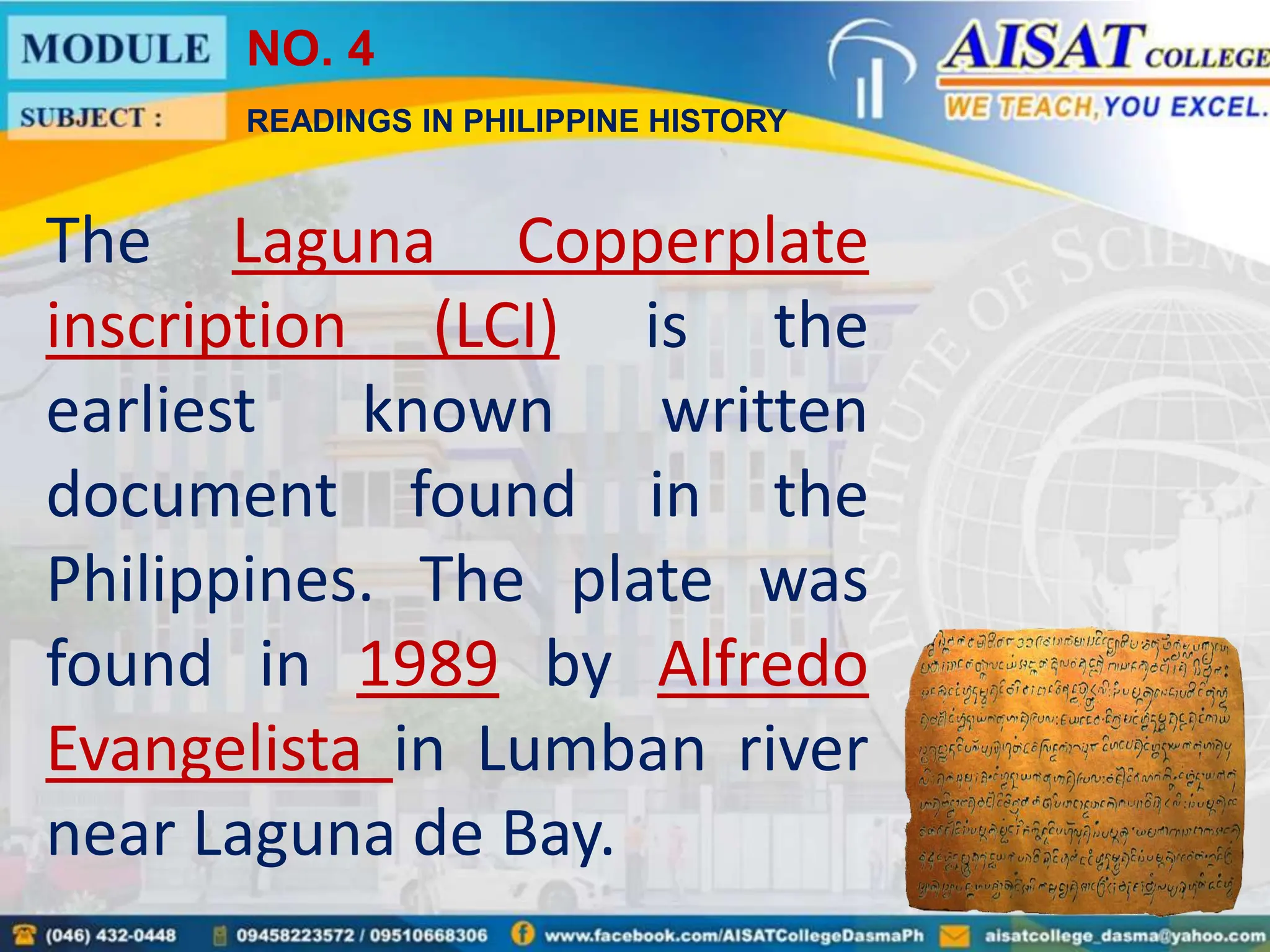
The Laguna Copperplate
inscription (LCI) is the
earliest known written
document found in the
Philippines. The plate was
found in 1989 by Alfredo
Evangelista in Lumban river
near Laguna de Bay.
NO. 4
READINGS IN PHILIPPINE HISTORY
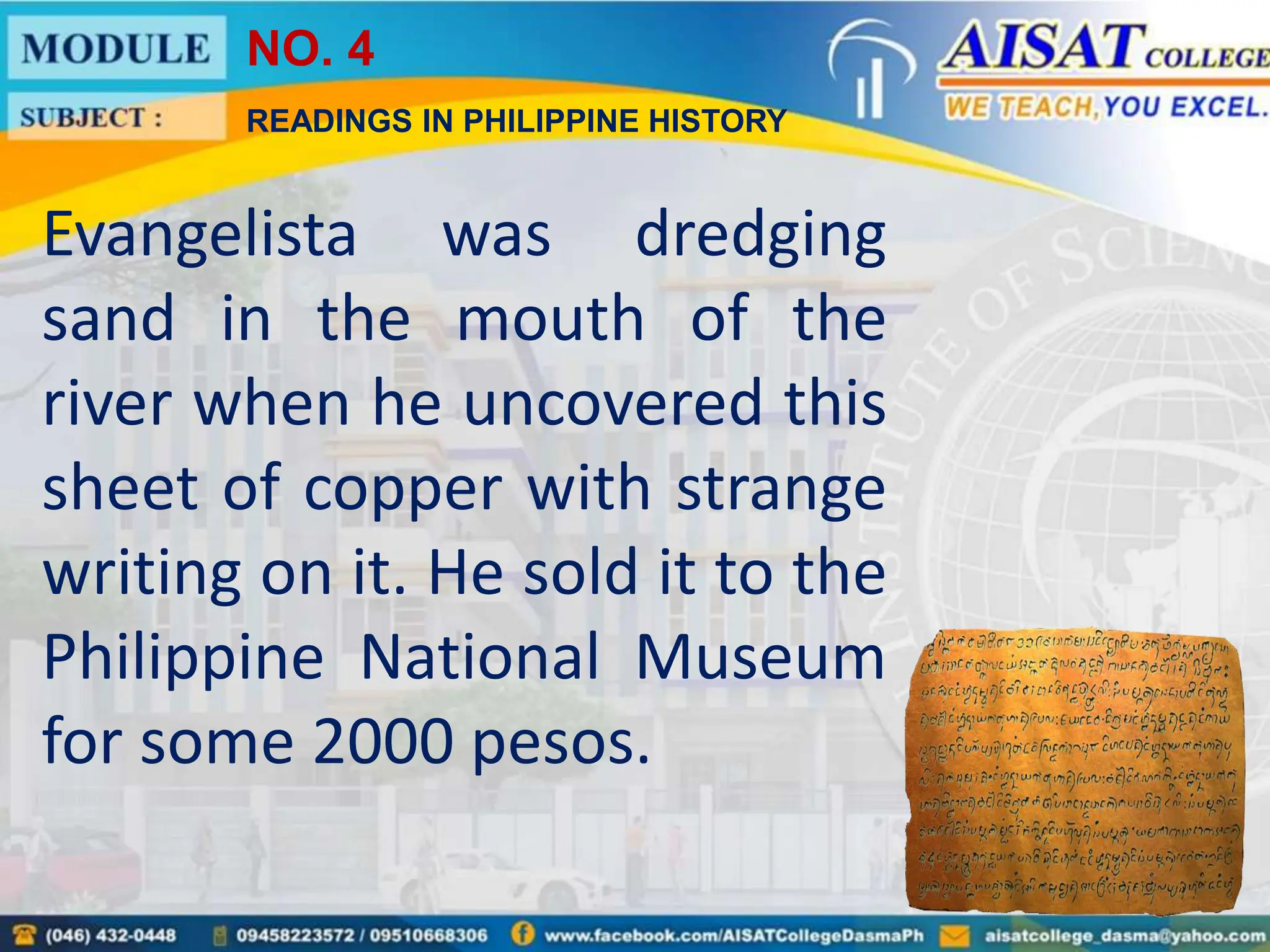
Evangelista was dredging
sand in the mouth of the
river when he uncovered this
sheet of copper with strange
writing on it. He sold it to the
Philippine National Museum
for some 2000 pesos.
NO. 4
READINGS IN PHILIPPINE HISTORY
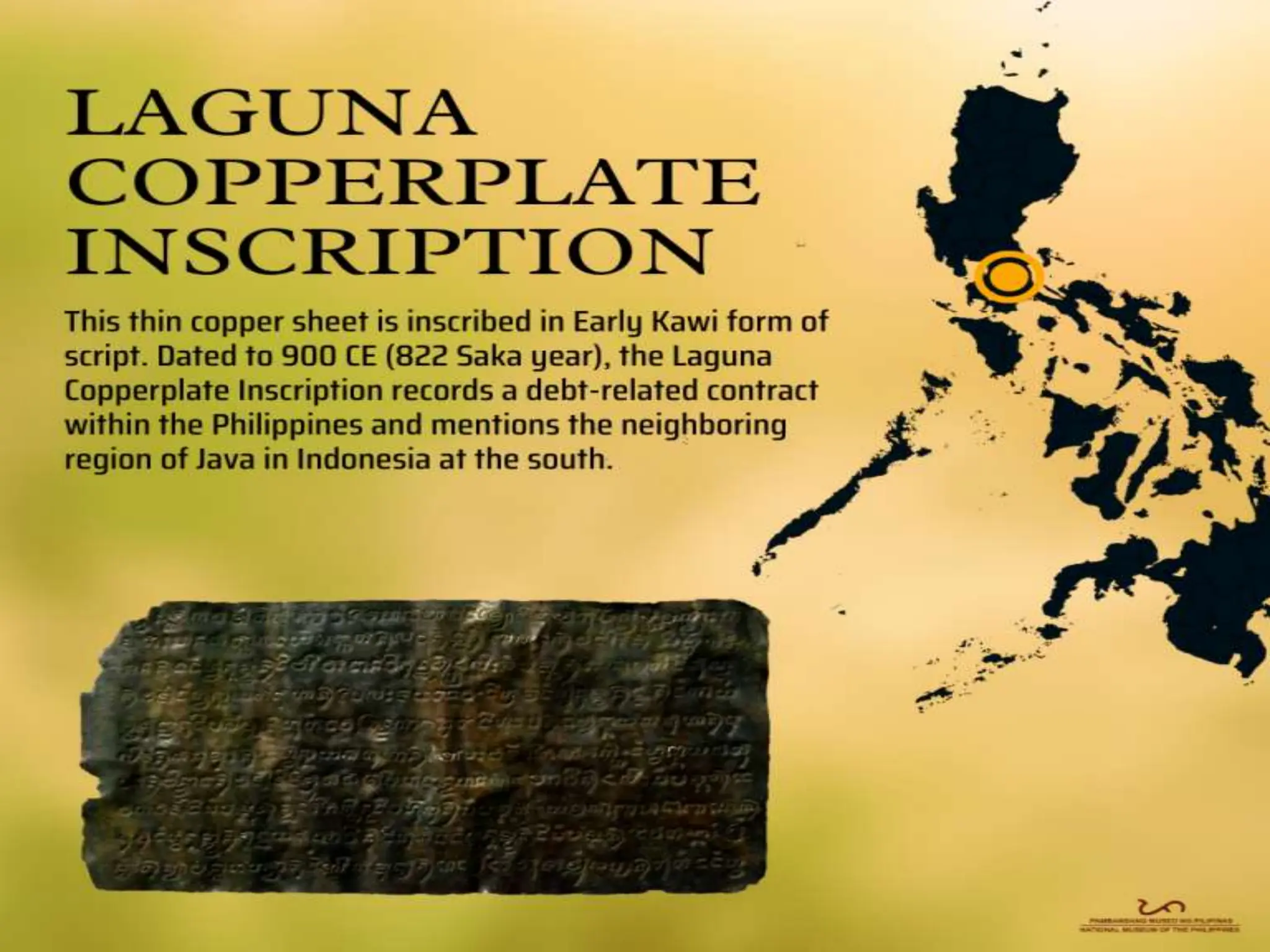
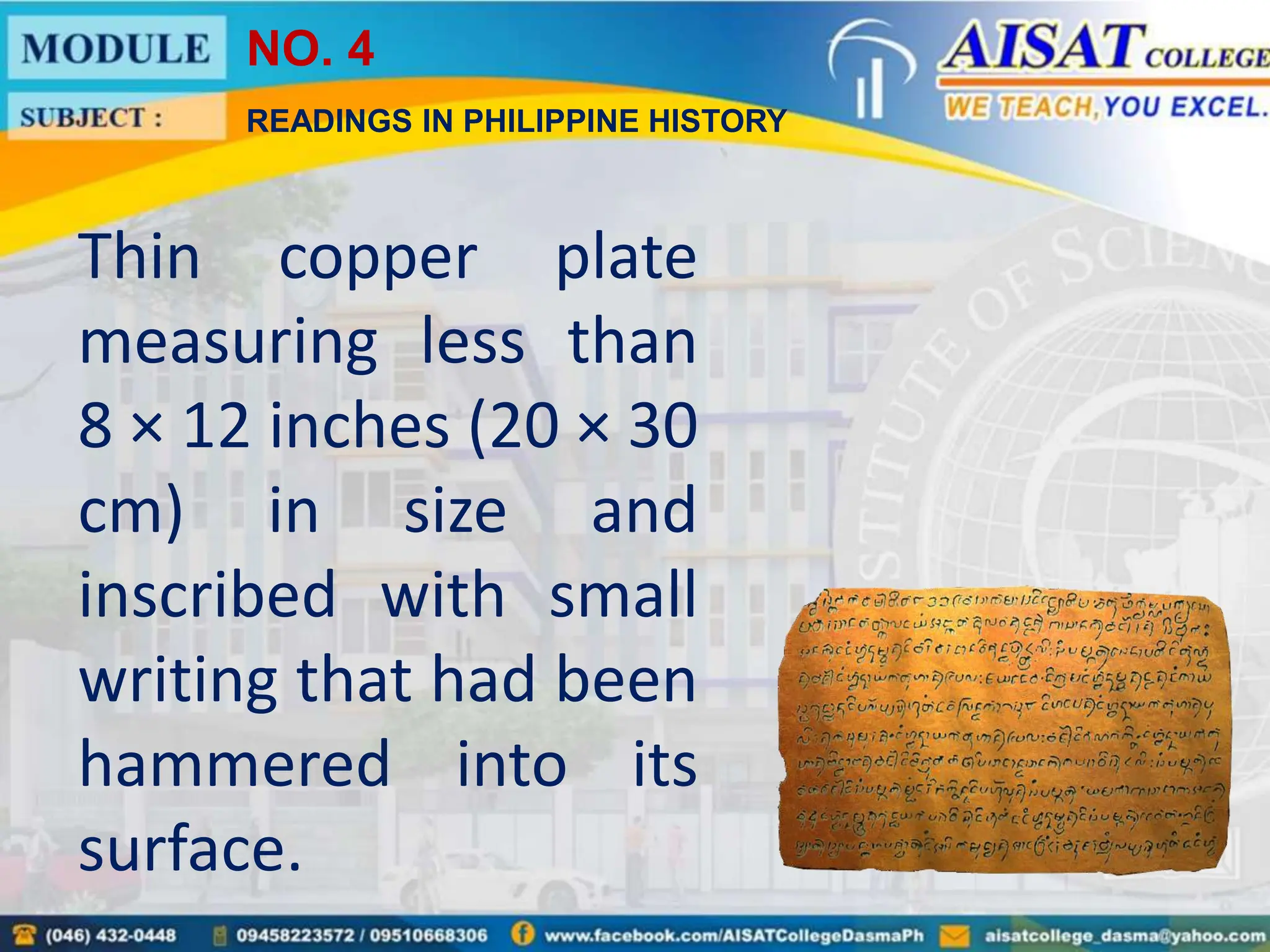
Thin copper plate
measuring less than
8 × 12 inches (20 × 30
cm) in size and
inscribed with small
writing that had been
hammered into its
surface.
NO. 4
READINGS IN PHILIPPINE HISTORY
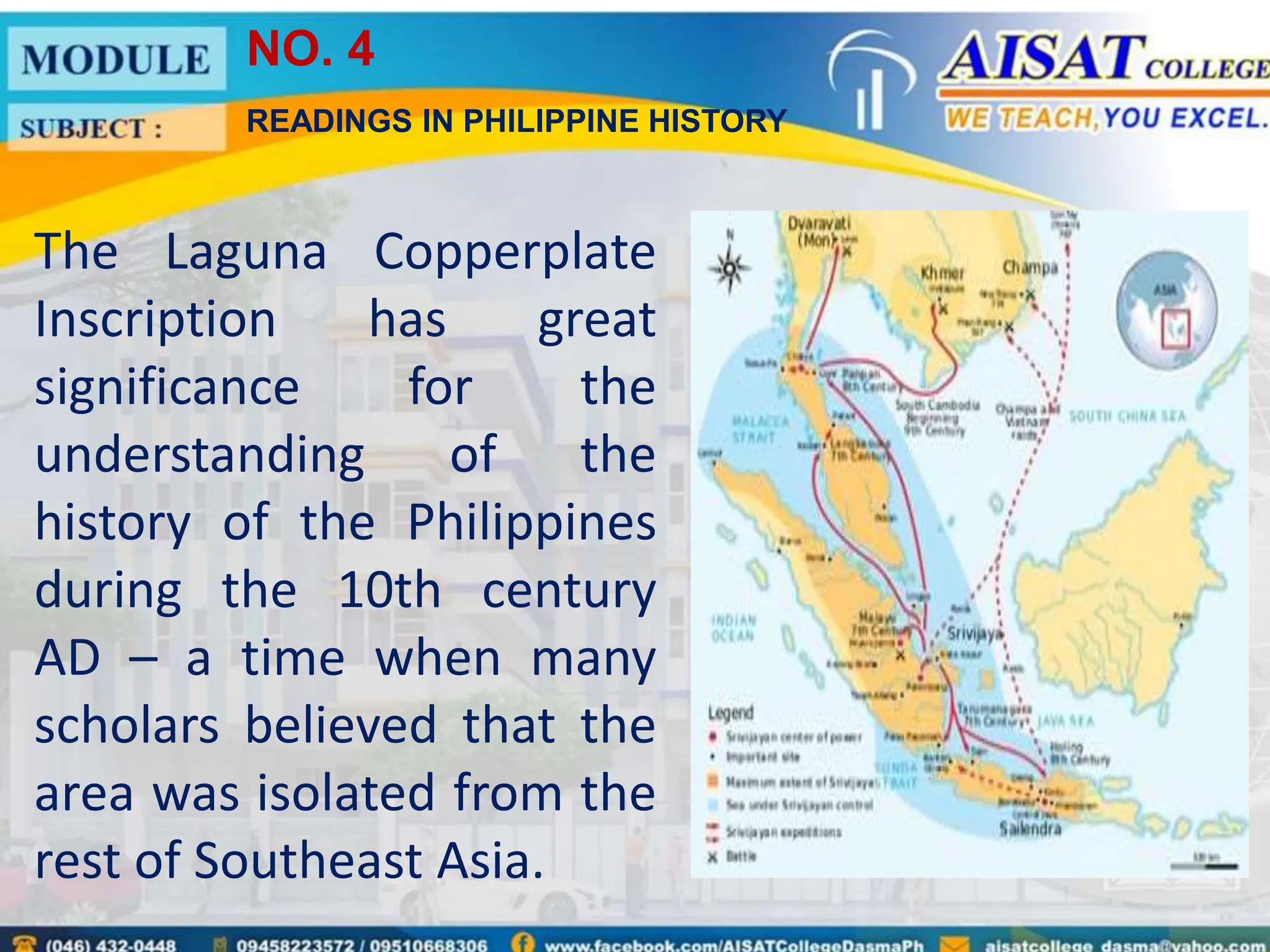
The Laguna Copperplate
Inscription has great
significance for the
understanding of the
history of the Philippines
during the 10th century
AD – a time when many
scholars believed that the
area was isolated from the
rest of Southeast Asia.
NO. 4
READINGS IN PHILIPPINE HISTORY
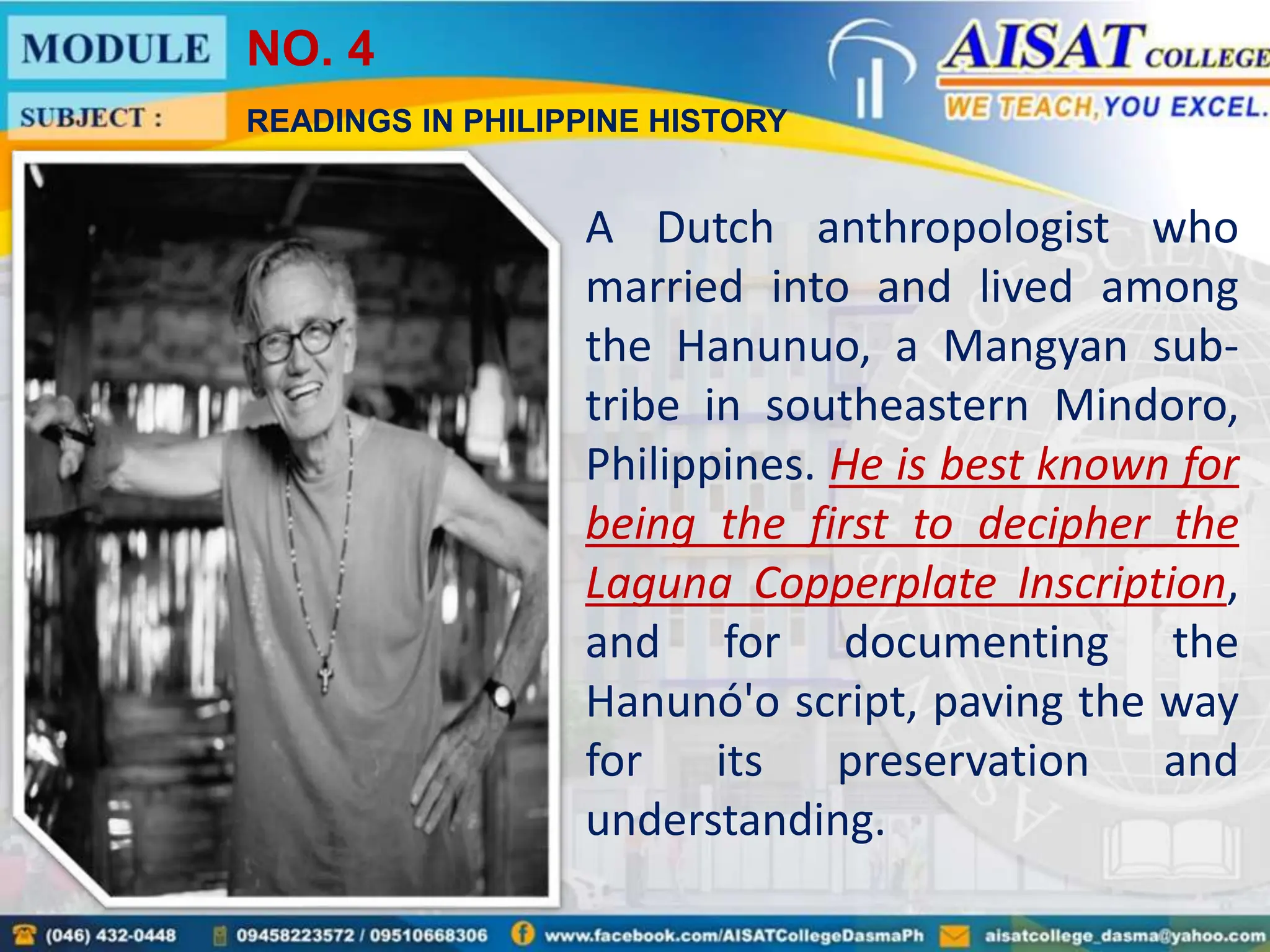
A Dutch anthropologist who
married into and lived among
the Hanunuo, a Mangyan sub-
tribe in southeastern Mindoro,
Philippines. He is best known for
being the first to decipher the
Laguna Copperplate Inscription,
and for documenting the
Hanunó'o script, paving the way
for its preservation and
understanding.
NO. 4
READINGS IN PHILIPPINE HISTORY
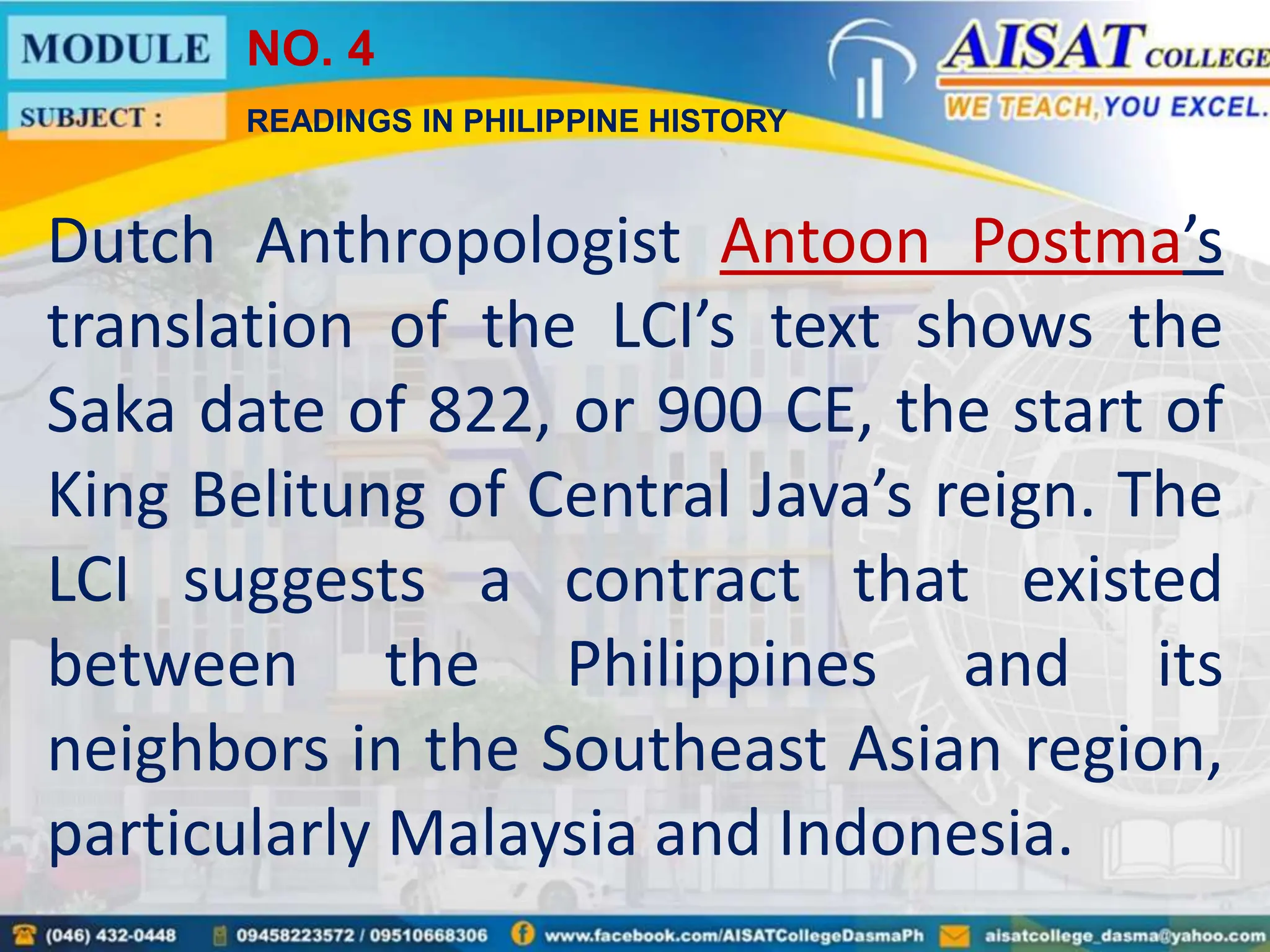
Dutch Anthropologist Antoon Postma’s
translation of the LCI’s text shows the
Saka date of 822, or 900 CE, the start of
King Belitung of Central Java’s reign. The
LCI suggests a contract that existed
between the Philippines and its
neighbors in the Southeast Asian region,
particularly Malaysia and Indonesia.
NO. 4
READINGS IN PHILIPPINE HISTORY
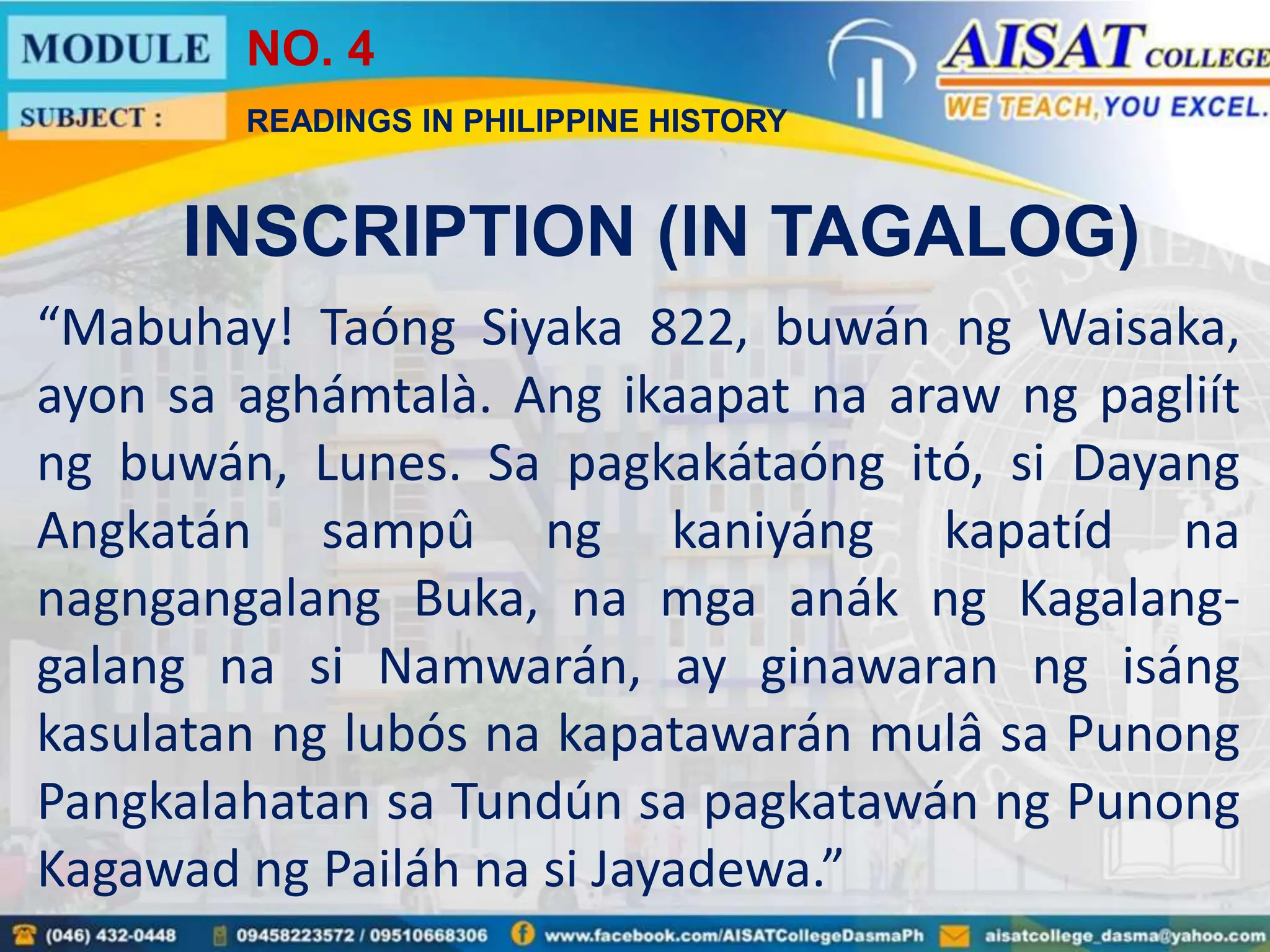
INSCRIPTION (IN TAGALOG)
“Mabuhay! Taóng Siyaka 822, buwán ng Waisaka,
ayon sa aghámtalà. Ang ikaapat na araw ng pagliít
ng buwán, Lunes. Sa pagkakátaóng itó, si Dayang
Angkatán sampû ng kaniyáng kapatíd na
nagngangalang Buka, na mga anák ng Kagalang-
galang na si Namwarán, ay ginawaran ng isáng
kasulatan ng lubós na kapatawarán mulâ sa Punong
Pangkalahatan sa Tundún sa pagkatawán ng Punong
Kagawad ng Pailáh na si Jayadewa.”
NO. 4
READINGS IN PHILIPPINE HISTORY
“Sa atas na itó, sa pamamagitan ng Tagasulat,
ang Kagalang-galang na si Namwarán ay
pinatawad na sa lahát at inalpasán sa
kaniyáng utang at kaniyáng mga náhulíng
kabayarán na 1 katî at 8 suwarna sa harapán
ng Kagalang-galang na Punong Kagawad ng
Puliran na si Ka Sumurán, sa kapangyarihan
ng Kagalang-galang na Punong Kagawad ng
Pailáh.”
NO. 4
READINGS IN PHILIPPINE HISTORY
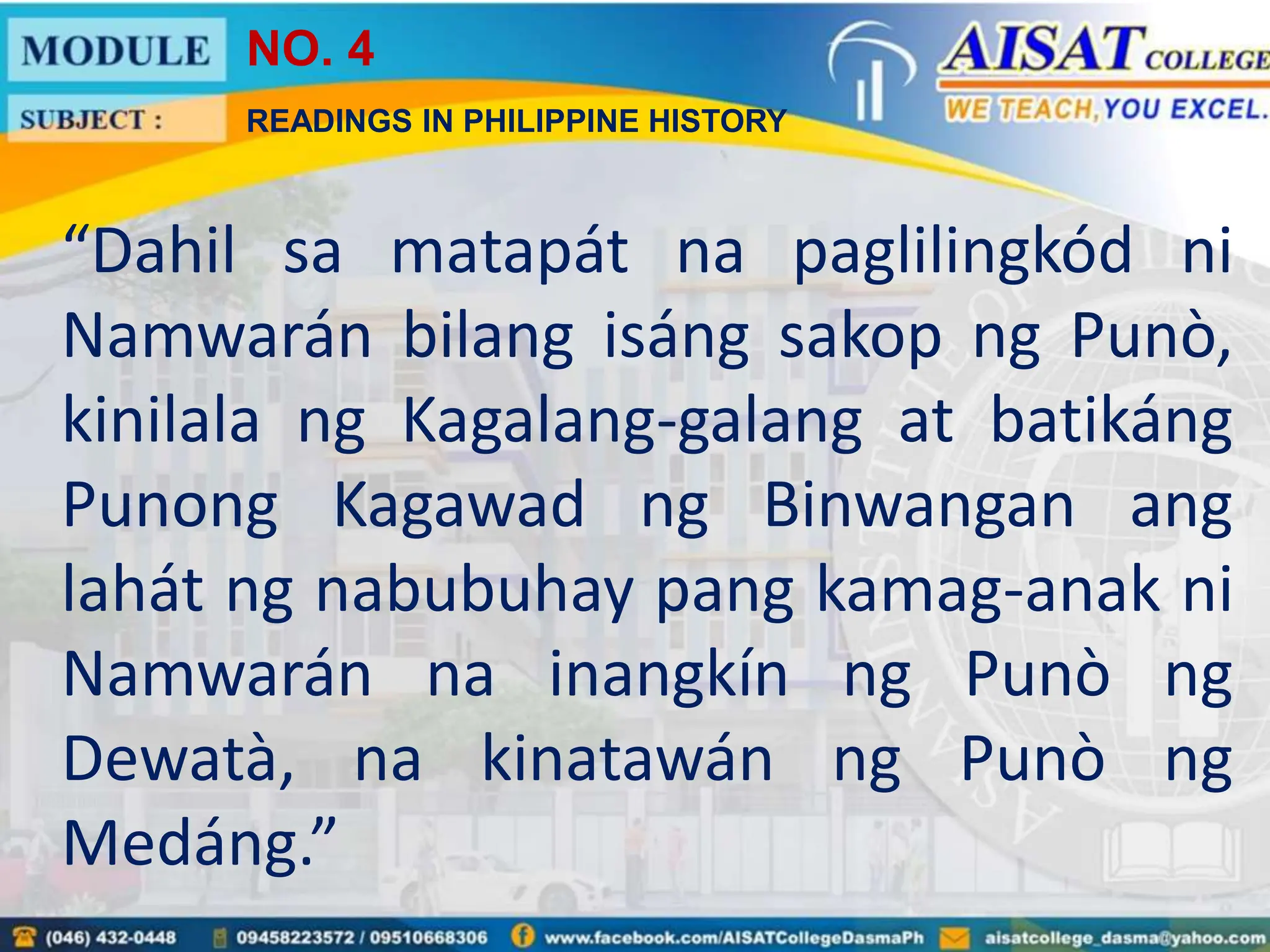
“Dahil sa matapát na paglilingkód ni
Namwarán bilang isáng sakop ng Punò,
kinilala ng Kagalang-galang at batikáng
Punong Kagawad ng Binwangan ang
lahát ng nabubuhay pang kamag-anak ni
Namwarán na inangkín ng Punò ng
Dewatà, na kinatawán ng Punò ng
Medáng.”
NO. 4
READINGS IN PHILIPPINE HISTORY
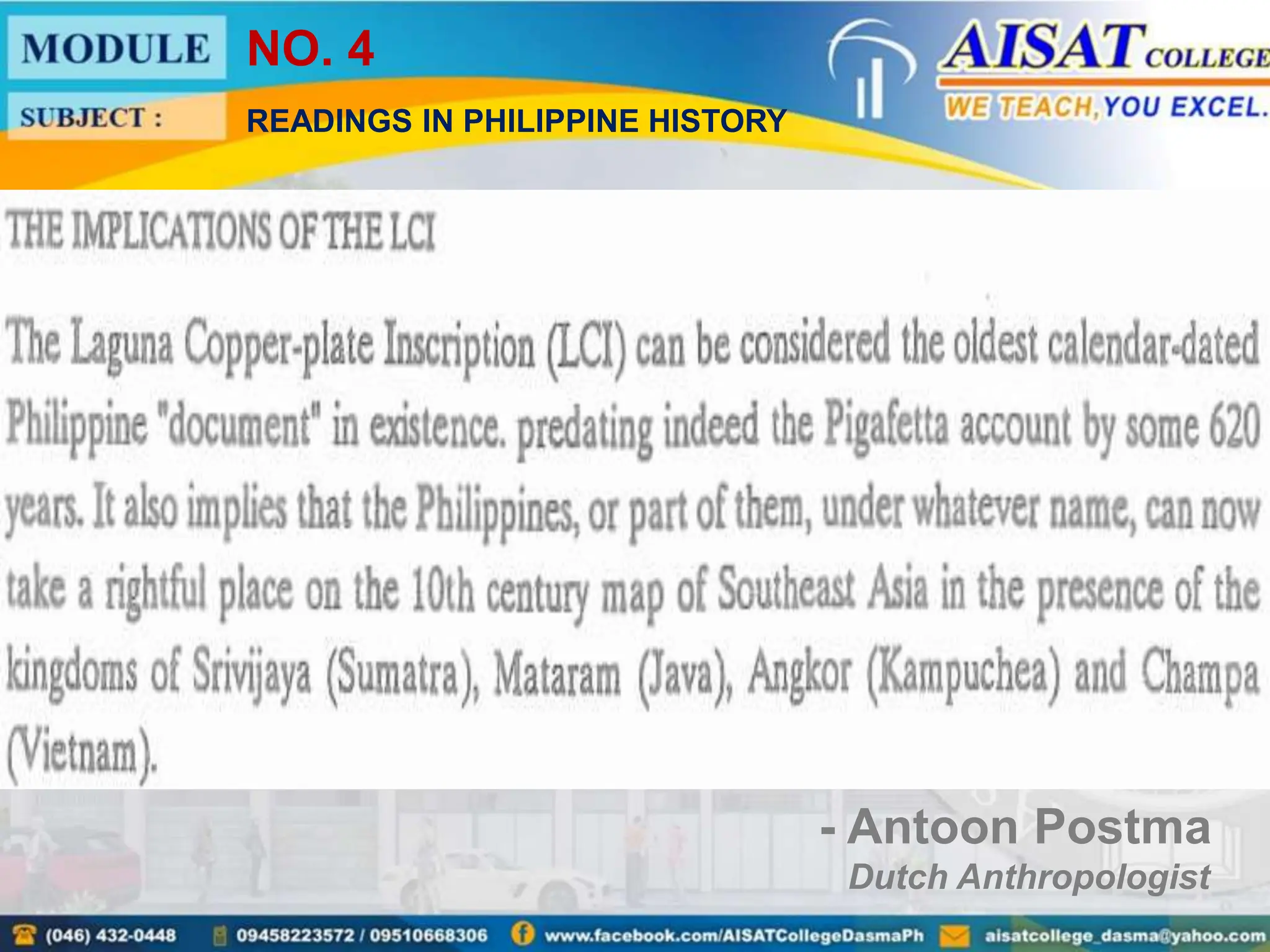
- Antoon Postma
Dutch Anthropologist
NO. 4
READINGS IN PHILIPPINE HISTORY

Laguna Copperplate Inscription - Readings in Philippine History

  • 1.
    READINGS IN PHILIPPINE HISTORY SELECTEDPRIMARY SOURCES IN THE PHILIPPINE HISTORY: LAGUNA COPPERPLATE INSCRIPTION MR. MICHAEL P. MAGANA 4
  • 2.
    NO. 4 READINGS INPHILIPPINE HISTORY SELECTED PRIMARY SOURCES IN THE PHILIPPINE HISTORY: LAGUNA COPPERPLATE INSCRIPTION a. Restate the English translation of the inscription in the copperplate. b. Explain the relevance of the discovery of the copperplate to Philippine historiography. c. Justify the existence of advanced Philippine civilization prior to the arrival of the Spaniards.
  • 3.
    NO. 4 READINGS INPHILIPPINE HISTORY Material evidences that signify the maritime contact of Philippines to other Asian Regions
  • 4.
    NO. 4 READINGS INPHILIPPINE HISTORY
  • 5.
    NO. 4 READINGS INPHILIPPINE HISTORY
  • 6.
    NO. 4 READINGS INPHILIPPINE HISTORY
  • 7.
    NO. 4 READINGS INPHILIPPINE HISTORY The Laguna Copperplate Inscription: An Ancient Text That Changed the Perception of the History of the Philippines
  • 8.
    NO. 4 READINGS INPHILIPPINE HISTORY
  • 9.
    NO. 4 READINGS INPHILIPPINE HISTORY The Laguna Copperplate inscription (LCI) is the earliest known written document found in the Philippines. The plate was found in 1989 by Alfredo Evangelista in Lumban river near Laguna de Bay.
  • 10.
    NO. 4 READINGS INPHILIPPINE HISTORY Evangelista was dredging sand in the mouth of the river when he uncovered this sheet of copper with strange writing on it. He sold it to the Philippine National Museum for some 2000 pesos.
  • 11.
    NO. 4 READINGS INPHILIPPINE HISTORY Thin copper plate measuring less than 8 × 12 inches (20 × 30 cm) in size and inscribed with small writing that had been hammered into its surface.
  • 12.
    NO. 4 READINGS INPHILIPPINE HISTORY The Laguna Copperplate Inscription has great significance for the understanding of the history of the Philippines during the 10th century AD – a time when many scholars believed that the area was isolated from the rest of Southeast Asia.
  • 13.
    NO. 4 READINGS INPHILIPPINE HISTORY A Dutch anthropologist who married into and lived among the Hanunuo, a Mangyan sub- tribe in southeastern Mindoro, Philippines. He is best known for being the first to decipher the Laguna Copperplate Inscription, and for documenting the Hanunó'o script, paving the way for its preservation and understanding.
  • 14.
    NO. 4 READINGS INPHILIPPINE HISTORY Dutch Anthropologist Antoon Postma’s translation of the LCI’s text shows the Saka date of 822, or 900 CE, the start of King Belitung of Central Java’s reign. The LCI suggests a contract that existed between the Philippines and its neighbors in the Southeast Asian region, particularly Malaysia and Indonesia.
  • 15.
    NO. 4 READINGS INPHILIPPINE HISTORY INSCRIPTION (IN TAGALOG) “Mabuhay! Taóng Siyaka 822, buwán ng Waisaka, ayon sa aghámtalà. Ang ikaapat na araw ng pagliít ng buwán, Lunes. Sa pagkakátaóng itó, si Dayang Angkatán sampû ng kaniyáng kapatíd na nagngangalang Buka, na mga anák ng Kagalang- galang na si Namwarán, ay ginawaran ng isáng kasulatan ng lubós na kapatawarán mulâ sa Punong Pangkalahatan sa Tundún sa pagkatawán ng Punong Kagawad ng Pailáh na si Jayadewa.”
  • 16.
    NO. 4 READINGS INPHILIPPINE HISTORY “Sa atas na itó, sa pamamagitan ng Tagasulat, ang Kagalang-galang na si Namwarán ay pinatawad na sa lahát at inalpasán sa kaniyáng utang at kaniyáng mga náhulíng kabayarán na 1 katî at 8 suwarna sa harapán ng Kagalang-galang na Punong Kagawad ng Puliran na si Ka Sumurán, sa kapangyarihan ng Kagalang-galang na Punong Kagawad ng Pailáh.”
  • 17.
    NO. 4 READINGS INPHILIPPINE HISTORY “Dahil sa matapát na paglilingkód ni Namwarán bilang isáng sakop ng Punò, kinilala ng Kagalang-galang at batikáng Punong Kagawad ng Binwangan ang lahát ng nabubuhay pang kamag-anak ni Namwarán na inangkín ng Punò ng Dewatà, na kinatawán ng Punò ng Medáng.”
  • 18.
    NO. 4 READINGS INPHILIPPINE HISTORY - Antoon Postma Dutch Anthropologist
  • 19.
    NO. 4 READINGS INPHILIPPINE HISTORY