CLINICAL PICTURES &TYPES of stroke
Presented By
Mr. Pradeepsingh N B
Asst. Professor & HODOf Medical Surgical Nursing
KLE’SInstituteOf Nursing Sciences Ankola
World Stoke Day
• The theme for World Stroke Day 2023 is
"Together we are Greater Than Stroke."
The theme for World Stroke Day 2023 is "Together we are Greater Than Stroke."
Introduction
• A stroke, sometimes called a brain attack, It
occurs when something blocks blood supply to
part of the brain or when a blood vessel in the
brain bursts. In either case, parts of the brain
become damaged or die.
Statistic related to stoke
• World wide stroke is the 2nd leading cause of
mortality rate & 3rd leading cause of disability.
• Globally, 70% CVA and 87% of both CVA
related mortality rates & Disability adjusted
life year(DALY) it occur in low & middle
income territories.
Cont..
• In the United States, about 795,000 people
suffer a stroke each year. Someone has a stroke
every 40 seconds, and every 4 minutes
someone dies from stroke. There are more than
140,000 deaths each year from stroke.
Statistics show that about 40% of stroke deaths
occur in males and 60% in females.
Cont..
• Stroke is a significant global health problem
and a major cause of mortality and morbidity
in developed countries and increasingly in
low-middle income countries (LMICs).
• Life expectancy in India has recently 50 to 60
years of age, leading to an increase in age-
related, non-communicable diseases including
stroke cases also may increased.
• India’s fourth leading cause of death and fifth
leading cause of disability.
DEFINITION
Stroke:
•Also known as cerebrovascular Accident (CVA)
•Results in the sudden death of the brain cells
due to the:
•O2 deficiency when the blood flow to the brain
is lost by obstruction/ rupture of cerebral
arteries, when supplies to the brain.
•Loss of neurological functions, lasting more
than 24hours or leading to death.
TIA
• CVA is distinguished from Transient Ischemic
Attack
• TIA: It is defined as a temporary interruption
of blood supply to the brain may last for few
minutes to 24hours with no evidence of
infarction.
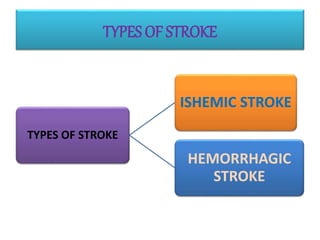
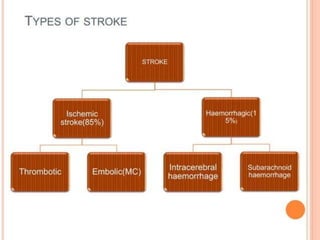
TYPES OF STROKE
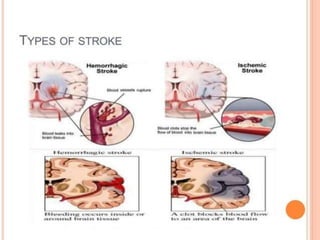
TYPES OF STROKE
ISHEMIC STROKE
HEMORRHAGIC
STROKE
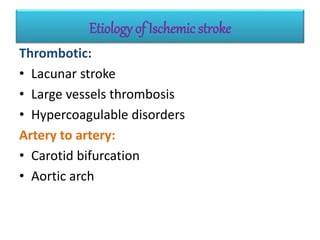
Etiology of Ischemic stroke
Thrombotic:
• Lacunar stroke
• Large vessels thrombosis
• Hypercoagulable disorders
Artery to artery:
• Carotid bifurcation
• Aortic arch
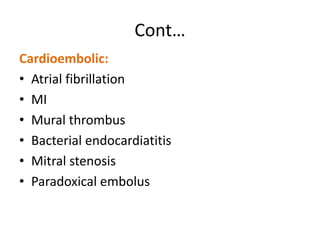
Cont…
Cardioembolic:
• Atrial fibrillation
• MI
• Mural thrombus
• Bacterial endocardiatitis
• Mitral stenosis
• Paradoxical embolus
Thrombotic stroke
• Atherosclerosis: is the most common
pathology leading to thrombotic occlusion of
blood vessels.
• Lacunar stroke:
• Accounts for 20% of all stroke
• Results from occlusion of small deep
penetrating arteries of the brain.
• Thrombosis leads to small infarcts known as
lacunes.
• Clinically manifested as lacunar syndrome
Embolic stroke
• Cardioembolic stroke:
• Embolus from the heart gets lodged in
intracranial vessels.
• Arterial fibrillation is the most common cause.
• Others: MI, Prosthetic valves, RHD
• Artery to artery embolism:
• Thrombus formed on atherosclerotic plaque
gets embolised to intracranial vessels.
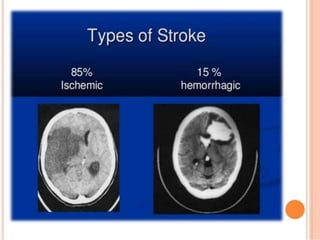
Hemorrhagic stroke
• Explosive entry of blood into the brain
parenchyma structurally disrupts neurons.
• White matter fibre tracts are split.
• Immediate cessation of neural function.
• Expanding hemorrhage can acts as a mass
lesion and cause further progression of
neurological deficit.
• Large hemorrhage can cause transtentorial
coning of rapid death.
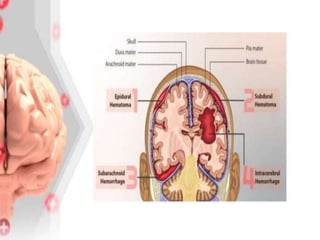
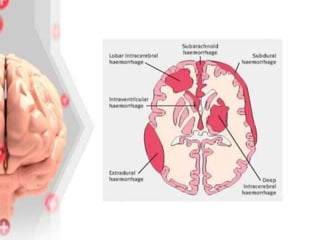
Hemorrhagic stroke
• When abnormal bleeding occurs into the
extravascular areas of the brain. Results from
the rupture of cerebral blood vessels or
trauma.
• Affecting about 13% of all stroke cases.
• The most common causes are:
Hypertension(30-40%), cerebral amyloid
angiopathy (10-30%), anticoagulations(1-2%)
& vascular structural lesions (3-8%)
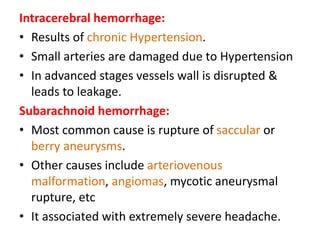
Intracerebral hemorrhage:
• Results of chronic Hypertension.
• Small arteries are damaged due to Hypertension
• In advanced stages vessels wall is disrupted &
leads to leakage.
Subarachnoid hemorrhage:
• Most common cause is rupture of saccular or
berry aneurysms.
• Other causes include arteriovenous
malformation, angiomas, mycotic aneurysmal
rupture, etc
• It associated with extremely severe headache.
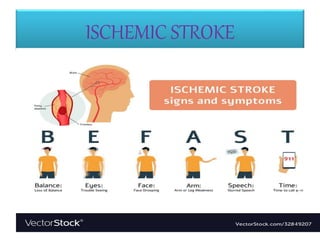
ISCHEMIC STROKE
TYPES OF STROKE.pptx

TYPES OF STROKE.pptx

  • 1.
    CLINICAL PICTURES &TYPESof stroke Presented By Mr. Pradeepsingh N B Asst. Professor & HODOf Medical Surgical Nursing KLE’SInstituteOf Nursing Sciences Ankola
  • 2.
    World Stoke Day •The theme for World Stroke Day 2023 is "Together we are Greater Than Stroke." The theme for World Stroke Day 2023 is "Together we are Greater Than Stroke."
  • 3.
    Introduction • A stroke,sometimes called a brain attack, It occurs when something blocks blood supply to part of the brain or when a blood vessel in the brain bursts. In either case, parts of the brain become damaged or die.
  • 4.
    Statistic related tostoke • World wide stroke is the 2nd leading cause of mortality rate & 3rd leading cause of disability. • Globally, 70% CVA and 87% of both CVA related mortality rates & Disability adjusted life year(DALY) it occur in low & middle income territories.
  • 5.
    Cont.. • In theUnited States, about 795,000 people suffer a stroke each year. Someone has a stroke every 40 seconds, and every 4 minutes someone dies from stroke. There are more than 140,000 deaths each year from stroke. Statistics show that about 40% of stroke deaths occur in males and 60% in females.
  • 6.
    Cont.. • Stroke isa significant global health problem and a major cause of mortality and morbidity in developed countries and increasingly in low-middle income countries (LMICs). • Life expectancy in India has recently 50 to 60 years of age, leading to an increase in age- related, non-communicable diseases including stroke cases also may increased. • India’s fourth leading cause of death and fifth leading cause of disability.
  • 7.
    DEFINITION Stroke: •Also known ascerebrovascular Accident (CVA) •Results in the sudden death of the brain cells due to the: •O2 deficiency when the blood flow to the brain is lost by obstruction/ rupture of cerebral arteries, when supplies to the brain. •Loss of neurological functions, lasting more than 24hours or leading to death.
  • 8.
    TIA • CVA isdistinguished from Transient Ischemic Attack • TIA: It is defined as a temporary interruption of blood supply to the brain may last for few minutes to 24hours with no evidence of infarction.
  • 12.
    TYPES OF STROKE TYPESOF STROKE ISHEMIC STROKE HEMORRHAGIC STROKE
  • 16.
    Etiology of Ischemicstroke Thrombotic: • Lacunar stroke • Large vessels thrombosis • Hypercoagulable disorders Artery to artery: • Carotid bifurcation • Aortic arch
  • 17.
    Cont… Cardioembolic: • Atrial fibrillation •MI • Mural thrombus • Bacterial endocardiatitis • Mitral stenosis • Paradoxical embolus
  • 18.
    Thrombotic stroke • Atherosclerosis:is the most common pathology leading to thrombotic occlusion of blood vessels. • Lacunar stroke: • Accounts for 20% of all stroke • Results from occlusion of small deep penetrating arteries of the brain. • Thrombosis leads to small infarcts known as lacunes. • Clinically manifested as lacunar syndrome
  • 19.
    Embolic stroke • Cardioembolicstroke: • Embolus from the heart gets lodged in intracranial vessels. • Arterial fibrillation is the most common cause. • Others: MI, Prosthetic valves, RHD • Artery to artery embolism: • Thrombus formed on atherosclerotic plaque gets embolised to intracranial vessels.
  • 20.
    Hemorrhagic stroke • Explosiveentry of blood into the brain parenchyma structurally disrupts neurons. • White matter fibre tracts are split. • Immediate cessation of neural function. • Expanding hemorrhage can acts as a mass lesion and cause further progression of neurological deficit. • Large hemorrhage can cause transtentorial coning of rapid death.
  • 21.
    Hemorrhagic stroke • Whenabnormal bleeding occurs into the extravascular areas of the brain. Results from the rupture of cerebral blood vessels or trauma. • Affecting about 13% of all stroke cases. • The most common causes are: Hypertension(30-40%), cerebral amyloid angiopathy (10-30%), anticoagulations(1-2%) & vascular structural lesions (3-8%)
  • 22.
    Intracerebral hemorrhage: • Resultsof chronic Hypertension. • Small arteries are damaged due to Hypertension • In advanced stages vessels wall is disrupted & leads to leakage. Subarachnoid hemorrhage: • Most common cause is rupture of saccular or berry aneurysms. • Other causes include arteriovenous malformation, angiomas, mycotic aneurysmal rupture, etc • It associated with extremely severe headache.
  • 28.