 What is server?
 Define Different services provided by
server?
 Define different types of server?
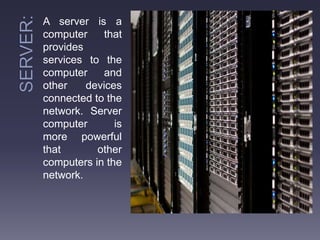
A server is a
computer that
provides
services to the
computer and
other devices
connected to the
network. Server
computer is
more powerful
that other
computers in the
network.
 Control access to the hardware, software
and data.
 Centralized storage for software, data and
information.
 Sharing software.
 Managing network traffic.
 Print server
 Application server
 Database server
 E-Mail server
 Communication server
 Web server
 Authentication server
 File server
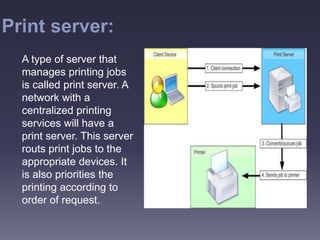
A type of server that
manages printing jobs
is called print server. A
network with a
centralized printing
services will have a
print server. This server
routs print jobs to the
appropriate devices. It
is also priorities the
printing according to
order of request.
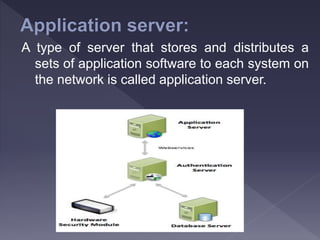
A type of server that stores and distributes a
sets of application software to each system on
the network is called application server.
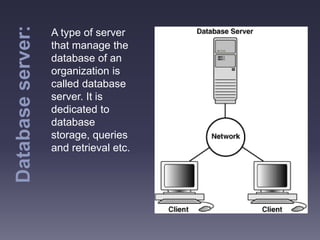
A type of server
that manage the
database of an
organization is
called database
server. It is
dedicated to
database
storage, queries
and retrieval etc.
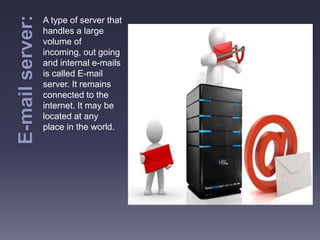
A type of server that
handles a large
volume of
incoming, out going
and internal e-mails
is called E-mail
server. It remains
connected to the
internet. It may be
located at any
place in the world.
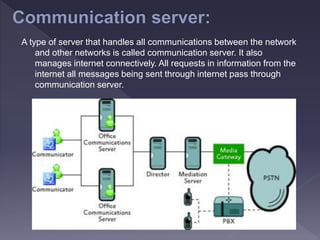
A type of server that handles all communications between the network
and other networks is called communication server. It also
manages internet connectively. All requests in information from the
internet all messages being sent through internet pass through
communication server.
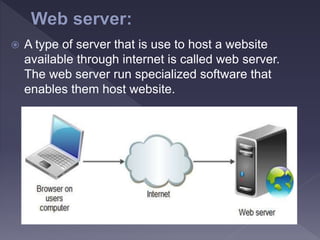
 A type of server that is use to host a website
available through internet is called web server.
The web server run specialized software that
enables them host website.
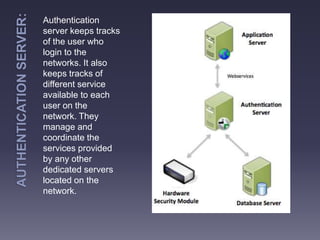
Authentication
server keeps tracks
of the user who
login to the
networks. It also
keeps tracks of
different service
available to each
user on the
network. They
manage and
coordinate the
services provided
by any other
dedicated servers
located on the
network.
File server store
and
management
files for network
user. On
corporate
network
employs are
provided with
space on a file
server to store
files.
Types of server
Types of server

Types of server

  • 2.
     What isserver?  Define Different services provided by server?  Define different types of server?
  • 3.
    A server isa computer that provides services to the computer and other devices connected to the network. Server computer is more powerful that other computers in the network.
  • 4.
     Control accessto the hardware, software and data.  Centralized storage for software, data and information.  Sharing software.  Managing network traffic.
  • 5.
     Print server Application server  Database server  E-Mail server  Communication server  Web server  Authentication server  File server
  • 6.
    A type ofserver that manages printing jobs is called print server. A network with a centralized printing services will have a print server. This server routs print jobs to the appropriate devices. It is also priorities the printing according to order of request.
  • 7.
    A type ofserver that stores and distributes a sets of application software to each system on the network is called application server.
  • 8.
    A type ofserver that manage the database of an organization is called database server. It is dedicated to database storage, queries and retrieval etc.
  • 9.
    A type ofserver that handles a large volume of incoming, out going and internal e-mails is called E-mail server. It remains connected to the internet. It may be located at any place in the world.
  • 10.
    A type ofserver that handles all communications between the network and other networks is called communication server. It also manages internet connectively. All requests in information from the internet all messages being sent through internet pass through communication server.
  • 11.
     A typeof server that is use to host a website available through internet is called web server. The web server run specialized software that enables them host website.
  • 12.
    Authentication server keeps tracks ofthe user who login to the networks. It also keeps tracks of different service available to each user on the network. They manage and coordinate the services provided by any other dedicated servers located on the network.
  • 13.
    File server store and management filesfor network user. On corporate network employs are provided with space on a file server to store files.