Twitter basics Or: How I stopped worrying and learned to love to tweet
What you’ll learn: How to sign up for a twitter account How to post a message, reply and send a direct message How to use Twitter from your cell phone How to find people to follow Best practices on using Twitter
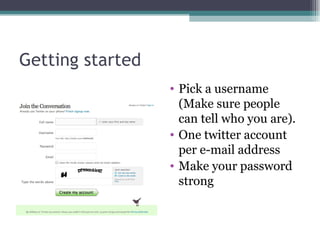
Getting started Pick a username (Make sure people can tell who you are). One twitter account per e-mail address Make your password strong
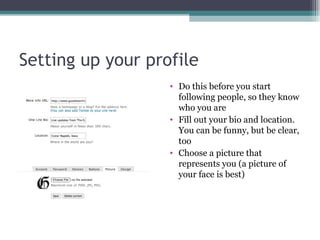
Setting up your profile Do this before you start following people, so they know who you are Fill out your bio and location. You can be funny, but be clear, too Choose a picture that represents you (a picture of your face is best)
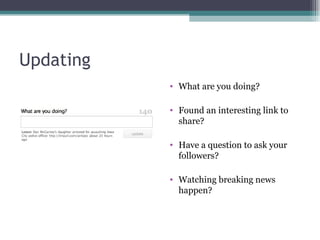
Updating What are you doing? Found an interesting link to share? Have a question to ask your followers? Watching breaking news happen?
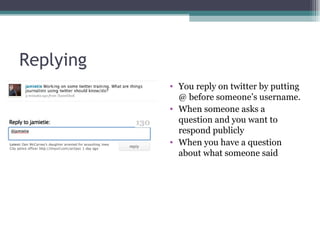
Replying You reply on twitter by putting @ before someone’s username. When someone asks a question and you want to respond publicly When you have a question about what someone said
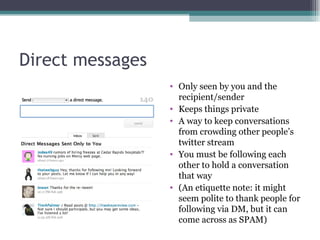
Direct messages Only seen by you and the recipient/sender Keeps things private A way to keep conversations from crowding other people’s twitter stream You must be following each other to hold a conversation that way (An etiquette note: it might seem polite to thank people for following via DM, but it can come across as SPAM)
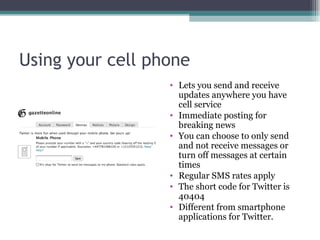
Using your cell phone Lets you send and receive updates anywhere you have cell service Immediate posting for breaking news You can choose to only send and not receive messages or turn off messages at certain times Regular SMS rates apply The short code for Twitter is 40404 Different from smartphone applications for Twitter.
Finding people to follow Figure out what you’re interested in Use Twitter’s search and friend-finder tools Look at who other people in the newsroom are following Visit  www.twellow.com  to find local people Put your username up on your blog so people know where to find you.
Some best practices Give people a reason to read your updates. Just sending out links to your stories and posts isn’t enough. Use it consistently. If you don’t, people will have no reason to follow you. If you don’t build a following, you’re wasting your time. Remember it’s a two-way conversation. Engage, engage, engage to get the most out of it.
Some advice I asked: Working on some twitter training. What are things journalists using twitter should know/do? about 1 hour ago Working on some twitter training. What are things journalists using twitter should know/do? Here are the best answers: Jowhaley  I always tell clients that you aren't just connecting with a person, but groups, organizations, and businesses. Masses of People! mollyr  I think journos using it for work should be casual, conversational but still professional -- avoid using "wtf," for instance.

Twitter Basics

  • 1.
    Twitter basics Or:How I stopped worrying and learned to love to tweet
  • 2.
    What you’ll learn:How to sign up for a twitter account How to post a message, reply and send a direct message How to use Twitter from your cell phone How to find people to follow Best practices on using Twitter
  • 3.
    Getting started Picka username (Make sure people can tell who you are). One twitter account per e-mail address Make your password strong
  • 4.
    Setting up yourprofile Do this before you start following people, so they know who you are Fill out your bio and location. You can be funny, but be clear, too Choose a picture that represents you (a picture of your face is best)
  • 5.
    Updating What areyou doing? Found an interesting link to share? Have a question to ask your followers? Watching breaking news happen?
  • 6.
    Replying You replyon twitter by putting @ before someone’s username. When someone asks a question and you want to respond publicly When you have a question about what someone said
  • 7.
    Direct messages Onlyseen by you and the recipient/sender Keeps things private A way to keep conversations from crowding other people’s twitter stream You must be following each other to hold a conversation that way (An etiquette note: it might seem polite to thank people for following via DM, but it can come across as SPAM)
  • 8.
    Using your cellphone Lets you send and receive updates anywhere you have cell service Immediate posting for breaking news You can choose to only send and not receive messages or turn off messages at certain times Regular SMS rates apply The short code for Twitter is 40404 Different from smartphone applications for Twitter.
  • 9.
    Finding people tofollow Figure out what you’re interested in Use Twitter’s search and friend-finder tools Look at who other people in the newsroom are following Visit www.twellow.com to find local people Put your username up on your blog so people know where to find you.
  • 10.
    Some best practicesGive people a reason to read your updates. Just sending out links to your stories and posts isn’t enough. Use it consistently. If you don’t, people will have no reason to follow you. If you don’t build a following, you’re wasting your time. Remember it’s a two-way conversation. Engage, engage, engage to get the most out of it.
  • 11.
    Some advice Iasked: Working on some twitter training. What are things journalists using twitter should know/do? about 1 hour ago Working on some twitter training. What are things journalists using twitter should know/do? Here are the best answers: Jowhaley I always tell clients that you aren't just connecting with a person, but groups, organizations, and businesses. Masses of People! mollyr I think journos using it for work should be casual, conversational but still professional -- avoid using "wtf," for instance.