
What is social media and why does it matter?
What do we mean when we say social media? It goes beyond traditional methods of finding sources Listen to the community to find out what they want to know Learn what issues matter to readers and what they’re engaged in Adapt what we offer to engage them better
 
 
What it isn’t A tool or set of tools A passing fad Catering to the lowest common denominator The death of journalism
What it is A way to get people involved in reporting and telling stories that matter to them Something reporters can use to make sure they’re finding interesting stories A way to give regular people a voice and still do the watchdog-style reporting we do well
Great, so how do I get started? Before you sign up for anything, think about what you’re trying to do Ask questions, not just of your sources, but of your readers Listen to what readers have to say about what we’re doing
So how would social media contribute to a story?
You could: Monitor blogs and forums for  comments about the flooding Use Twitter to send out updates on flood recovery progress and ask questions of your followers Create a blog dedicated to flood recovery and ask community members to contribute Post city documents about the recovery efforts, spending, etc. online for people to see. Search photo and video-sharing sites for images of the damage and recovery and share those with readers
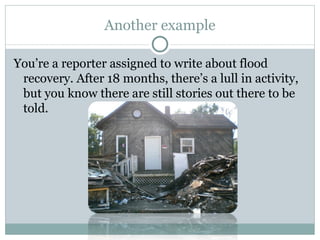
Another example You’re a reporter assigned to write about flood recovery. After 18 months, there’s a lull in activity, but you know there are still stories out there to be told.
  You could do anything mentioned previously, plus: Set up a Facebook group for people  affected by the flood and monitor  posts there Create a page on your blog for people to upload videos, photos or audio about their experiences Create a map or map wiki to help people track the rebuilding progress and add their comments

Social Media

  • 1.
    What is socialmedia and why does it matter?
  • 2.
    What do wemean when we say social media? It goes beyond traditional methods of finding sources Listen to the community to find out what they want to know Learn what issues matter to readers and what they’re engaged in Adapt what we offer to engage them better
  • 3.
  • 4.
  • 5.
    What it isn’tA tool or set of tools A passing fad Catering to the lowest common denominator The death of journalism
  • 6.
    What it isA way to get people involved in reporting and telling stories that matter to them Something reporters can use to make sure they’re finding interesting stories A way to give regular people a voice and still do the watchdog-style reporting we do well
  • 7.
    Great, so howdo I get started? Before you sign up for anything, think about what you’re trying to do Ask questions, not just of your sources, but of your readers Listen to what readers have to say about what we’re doing
  • 8.
    So how wouldsocial media contribute to a story?
  • 9.
    You could: Monitorblogs and forums for comments about the flooding Use Twitter to send out updates on flood recovery progress and ask questions of your followers Create a blog dedicated to flood recovery and ask community members to contribute Post city documents about the recovery efforts, spending, etc. online for people to see. Search photo and video-sharing sites for images of the damage and recovery and share those with readers
  • 10.
    Another example You’rea reporter assigned to write about flood recovery. After 18 months, there’s a lull in activity, but you know there are still stories out there to be told.
  • 11.
    Youcould do anything mentioned previously, plus: Set up a Facebook group for people affected by the flood and monitor posts there Create a page on your blog for people to upload videos, photos or audio about their experiences Create a map or map wiki to help people track the rebuilding progress and add their comments