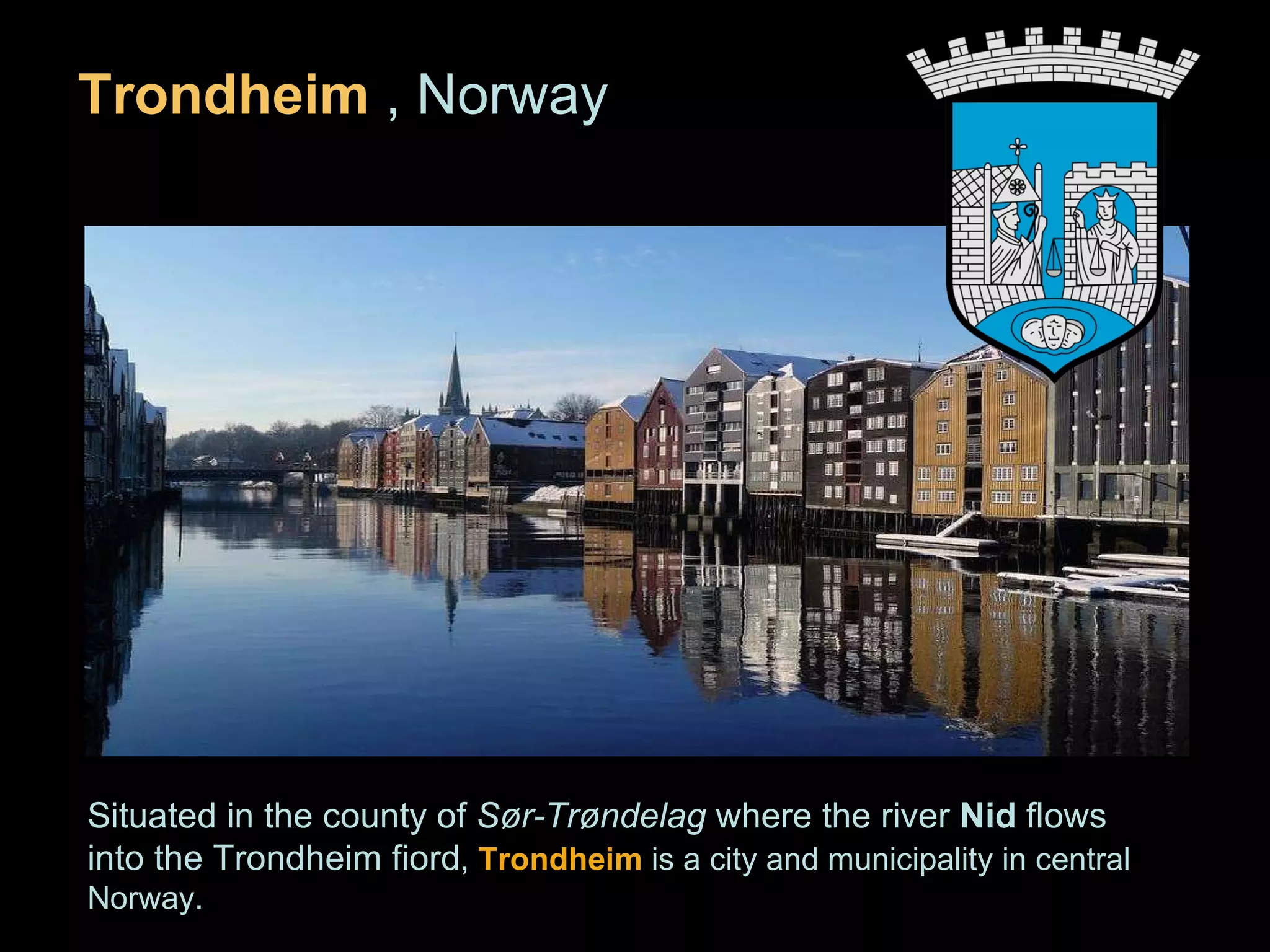
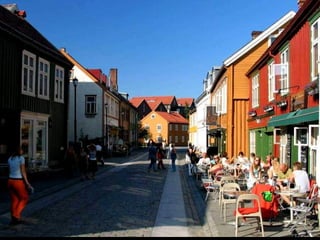
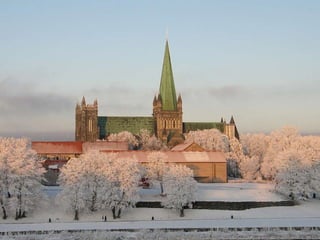
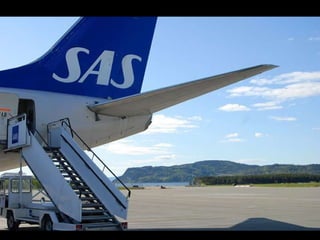
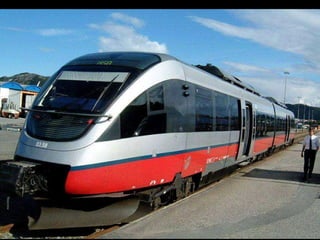
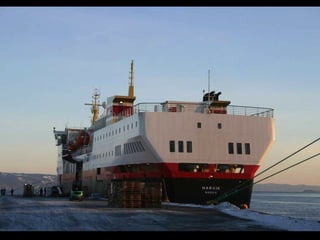
Trondheim  , Norway Situated in the county of  Sør-Trøndelag  where the river  Nid  flows into the Trondheim fiord ,  Trondheim   is a city and municipality in central Norway. .
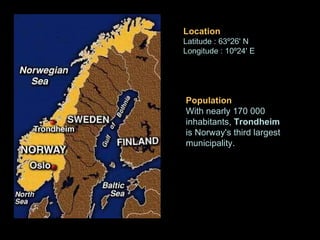
Population With nearly 170 000 inhabitants,  Trondheim  is Norway's third largest municipality. Location Latitude : 63º26' N  Longitude : 10º24' E
 
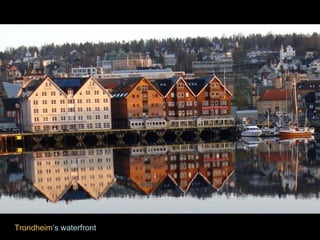
Trondheim ’s waterfront
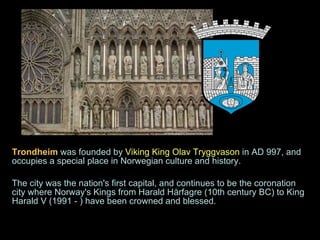
Trondheim   was founded by  Viking King Olav Tryggvason  in AD 997, and occupies a special place in Norwegian culture and history.  The city was the nation's first capital, and continues to be the coronation city where Norway's Kings from Harald Hårfagre (10th century BC) to King Harald V (1991 - ) have been crowned and blessed.
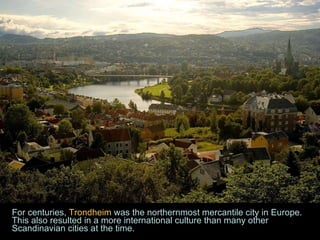
For centuries,  Trondheim  was the northernmost mercantile city in Europe. This also resulted in a more international culture than many other Scandinavian cities at the time.
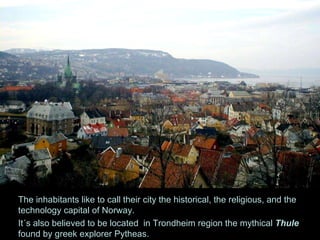
The inhabitants like to call their city the historical, the religious, and the technology capital of Norway.  It´s also believed to be located  in Trondheim region the mythical  Thule  found by greek explorer Pytheas.
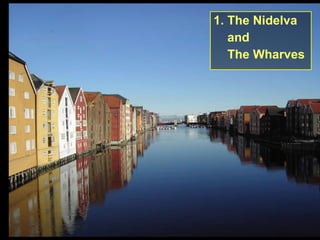
1. The Nidelva and The Wharves
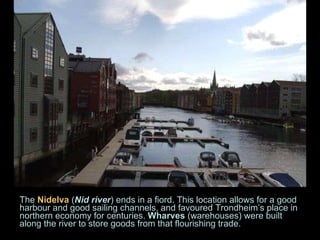
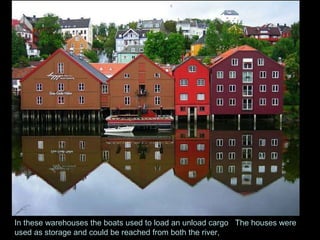
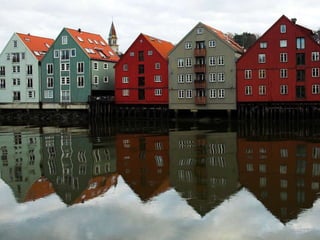
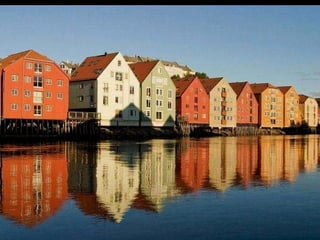
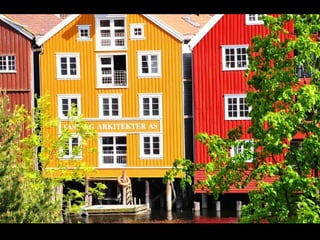
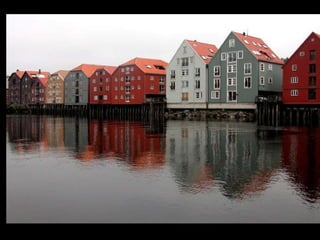
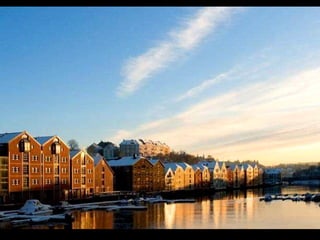
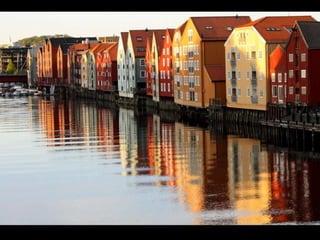
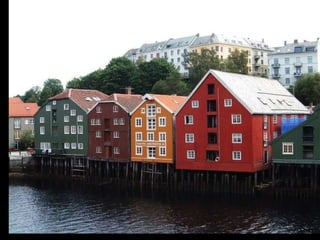
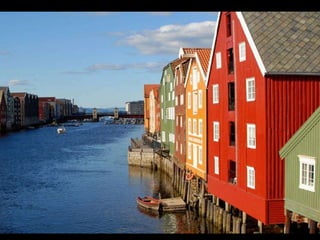
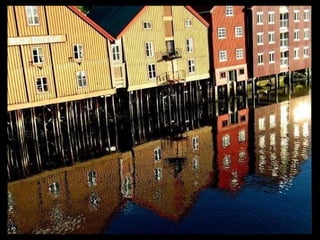
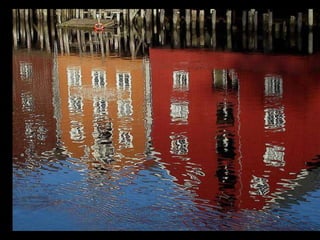
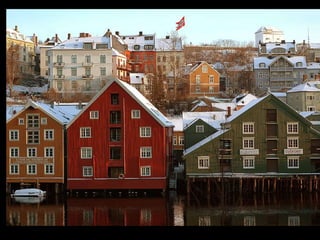
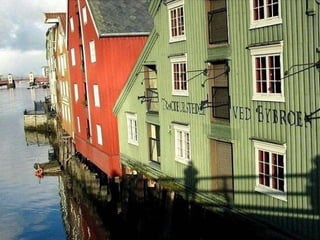
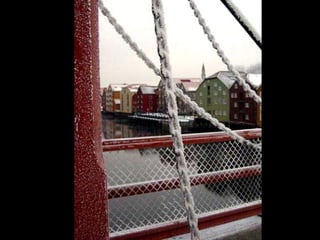
The  Nidelva  ( Nid river ) ends in a fiord. This location allows for a good harbour and good sailing channels, and favoured Trondheim’s place in northern economy for centuries.  Wharves  (warehouses) were built along the river to store goods from that flourishing trade.
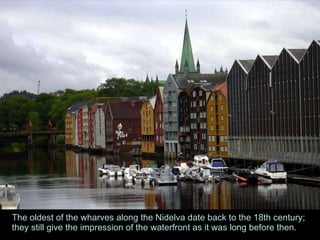
The oldest of the wharves along the Nidelva date back to the 18th century; they still give the impression of the waterfront as it was long before then.
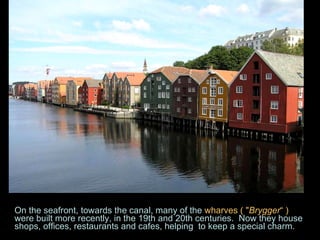
On the seafront, towards the canal, many of the  wharves ( " Brygger “ )   were built more recently, in the 19th and 20th centuries.  Now they house shops, offices, restaurants and cafes, helping  to keep a special charm.
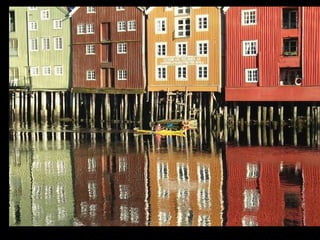
In these warehouses the boats used to load an unload cargo  .  The houses were used as storage and could be reached from both the river,
 
 
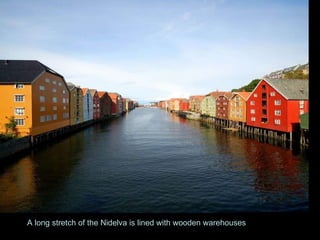
A long stretch of the Nidelva is lined with wooden warehouses


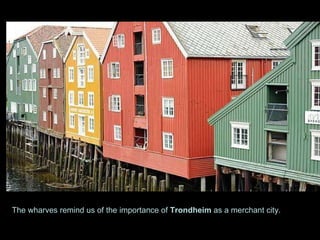
The wharves remind us of the importance of  Trondheim  as a merchant city.


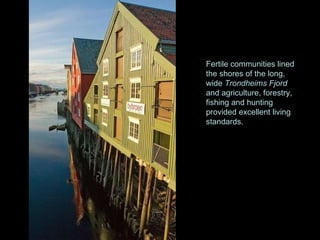
Fertile communities lined the shores of the long, wide  Trondheims Fjord  and agriculture, forestry, fishing and hunting provided excellent living standards.


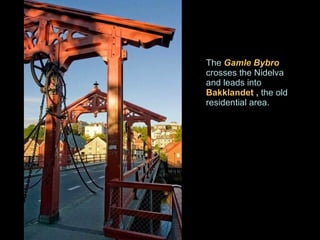
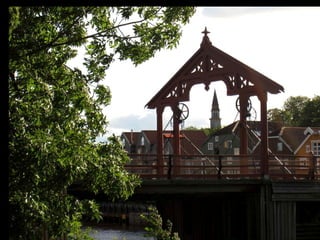
2. The old bridge (Gamle Bybro)
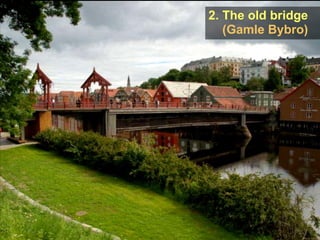
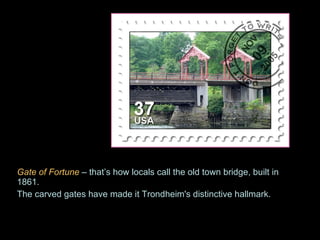
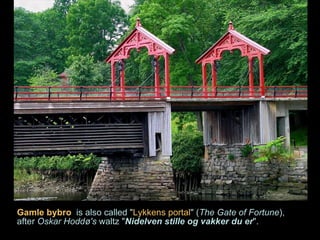
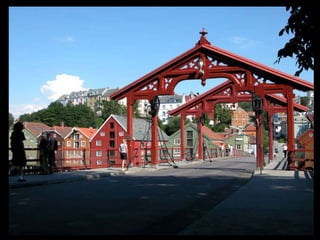
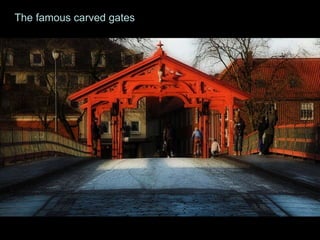
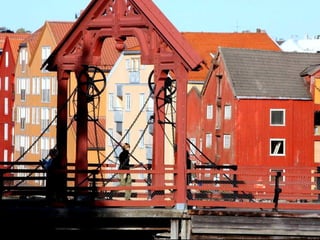
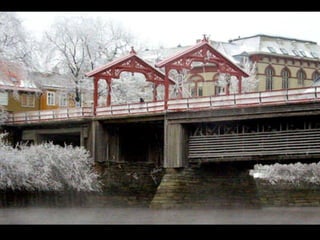
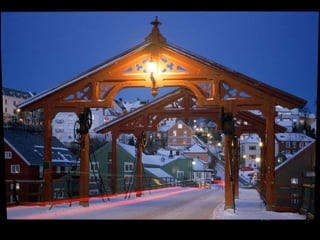
Gate of Fortune   – that’s how locals call the old town bridge, built in 1861.  The carved gates have made it Trondheim's distinctive hallmark.
Gamle bybro   is also called " Lykkens portal " ( The Gate of Fortune ), after  Oskar Hoddø's  waltz " Nidelven stille og vakker du er ".
 
The famous carved gates
 
The  Gamle Bybro  crosses the Nidelva  and leads into  Bakklandet  ,   the old residential area.
 
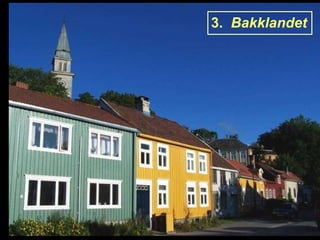
3.  Bakklandet
 
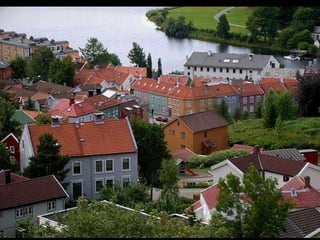
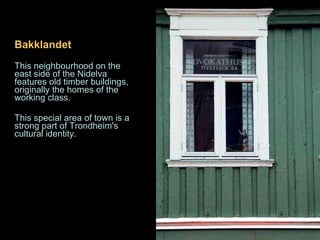
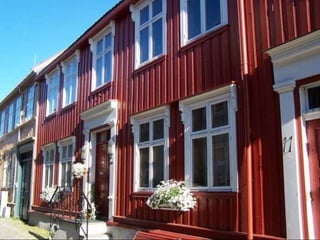
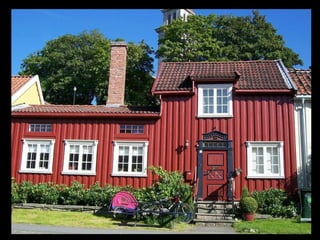
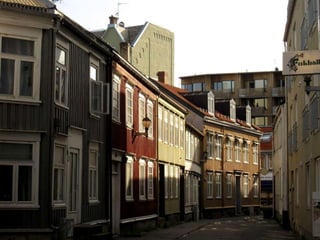
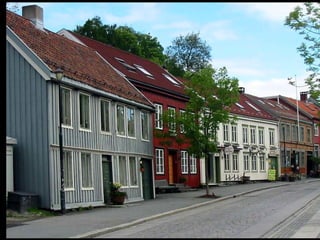
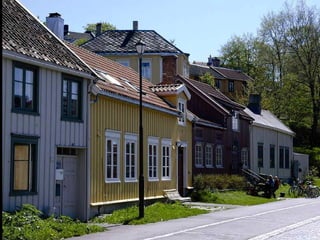
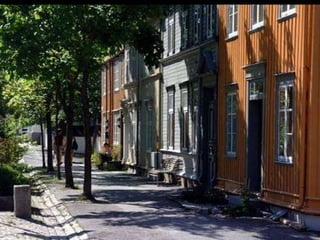
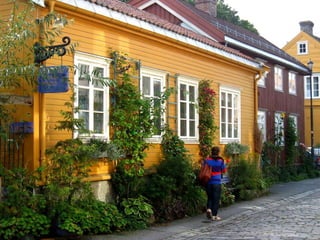
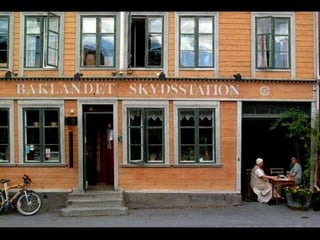
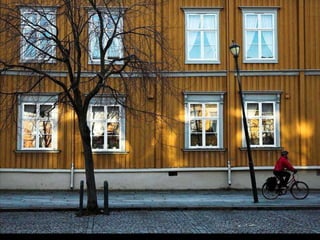
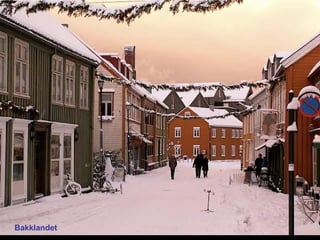
Bakklandet  i s one of the best  This neighbourhood on the east side of the Nidelva features old timber buildings, originally the homes of the working class.  This special area of town is a strong part of Trondheim's cultural identity.
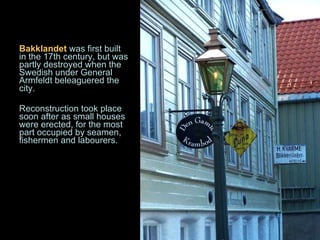
Bakklandet  was first built in the 17th century, but was partly destroyed when the Swedish under General Armfeldt beleaguered the city.  Reconstruction took place soon after as small houses were erected, for the most part occupied by seamen, fishermen and labourers.


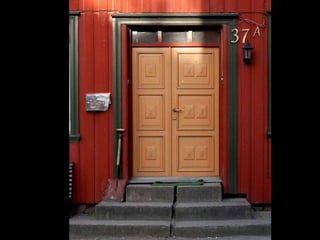
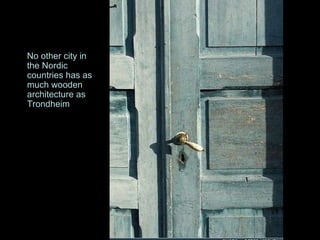
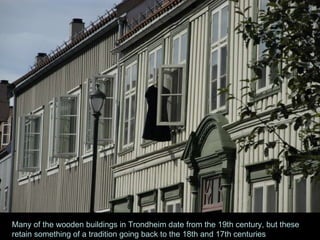
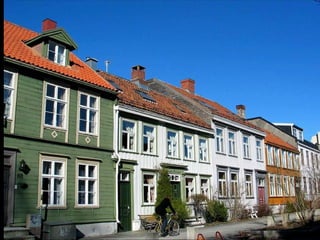
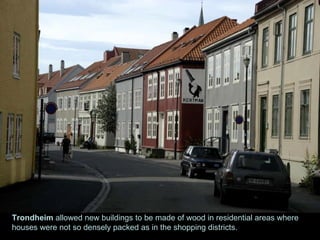
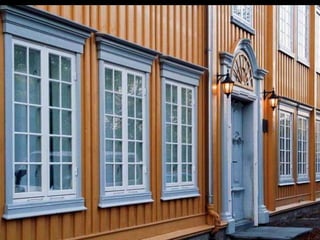
No other city in the Nordic countries has as much wooden architecture as Trondheim
 
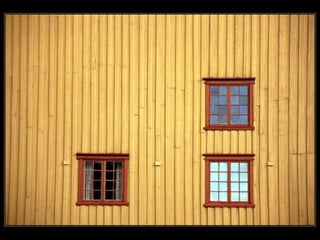
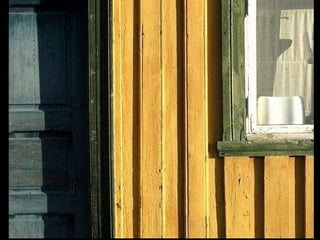
Many of the wooden buildings in Trondheim date from the 19th century, but these retain something of a tradition going back to the 18th and 17th centuries


Trondheim  allowed new buildings to be made of wood in residential areas where houses were not so densely packed as in the shopping districts.


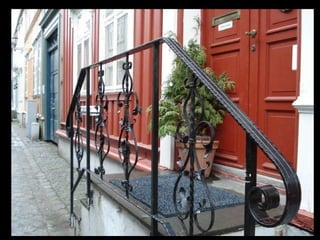
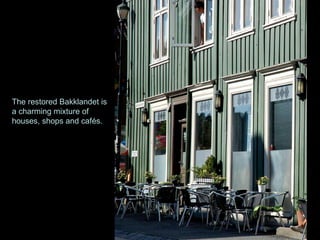
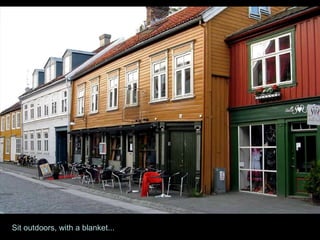
The restored Bakklandet is a charming mixture of houses, shops and cafés.
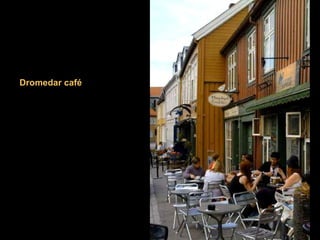
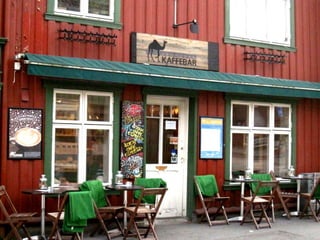
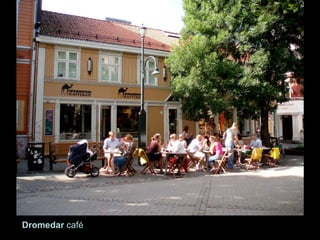
Dromedar café
 
Sit outdoors, with a blanket...
 
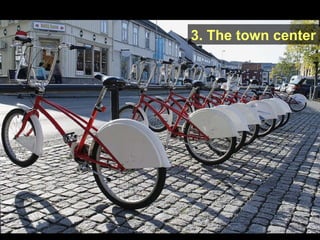
3. The town center
 
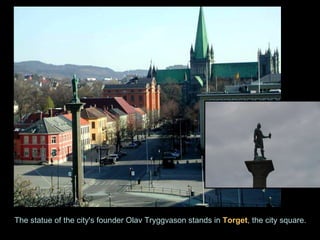
The statue of the city's founder Olav Tryggvason stands in  Torget , the city square.
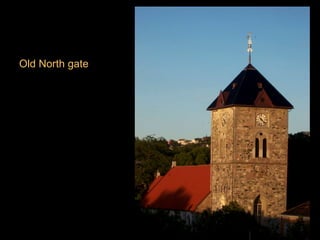
Old North gate
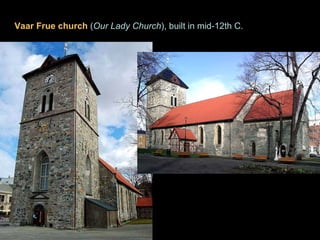
Vaar Frue church  ( Our Lady Church ), built in mid-12th C.
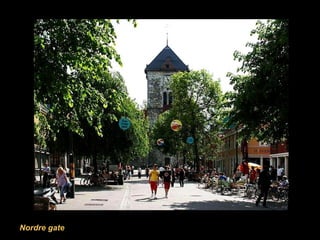
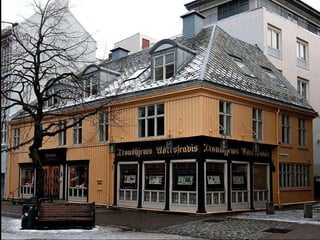
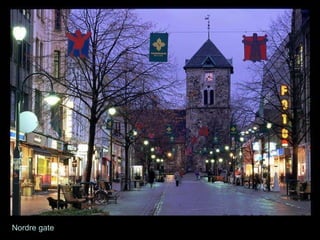
Nordre gate
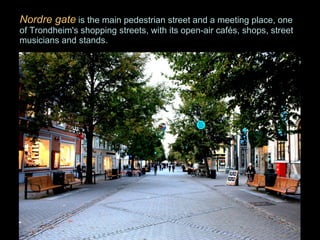
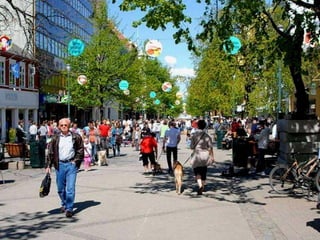
Nordre gate  is the main pedestrian street and a meeting place, one of Trondheim's shopping streets, with its open-air cafés, shops, street musicians and stands.
 
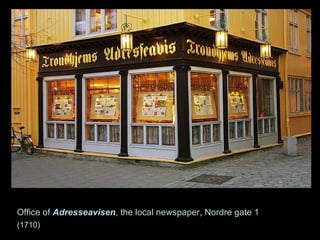
Office of   Adresseavisen , the local newspaper, Nordre gate 1   (1710)
 
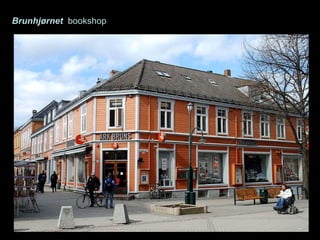
Brunhjørnet  bookshop
 
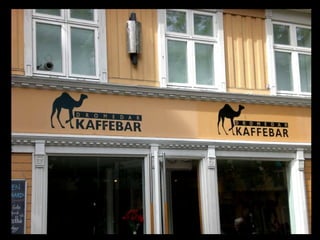
Dromedar  café
 
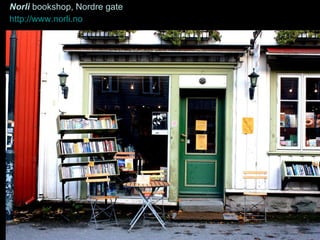
Norli   bookshop, Nordre gate  http://www.norli.no
 
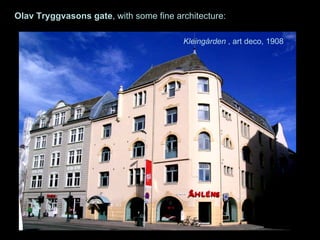
Olav Tryggvasons gate , with some fine architecture: Kleingården  , art deco, 1908
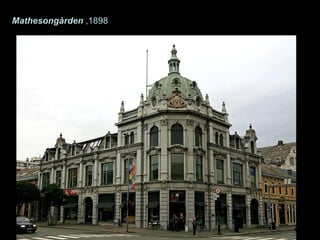
Mathesongården  ,1898
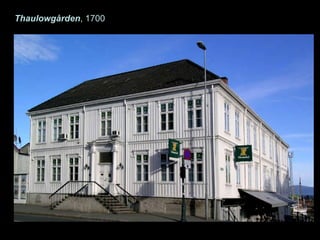
Thaulowgården , 1700
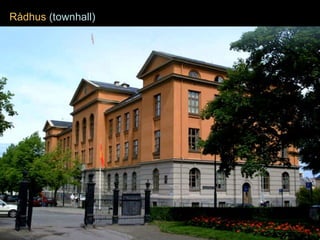
Rådhus  (townhall)
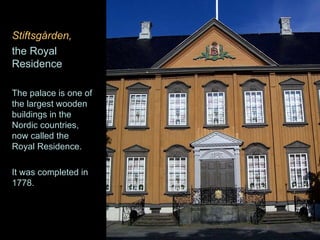
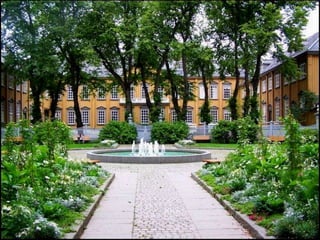
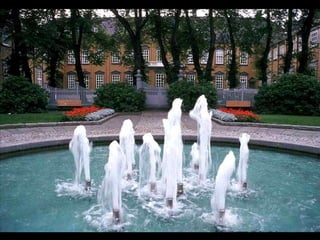
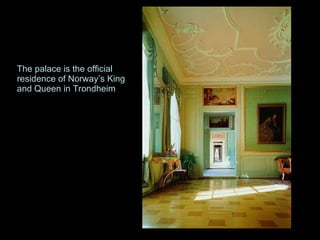
Stiftsgården,   the Royal Residence The palace is one of the largest wooden buildings in the Nordic countries, now called the Royal Residence.  It was completed in 1778.


The palace is the official residence of Norway’s King and Queen in Trondheim
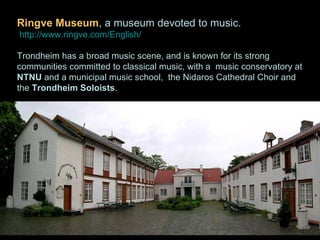
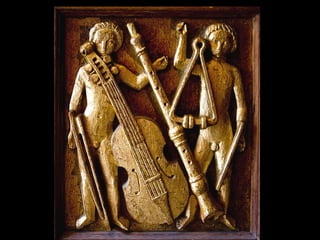
Ringve Museum , a museum devoted to music. http://www.ringve.com/English/ Trondheim has a broad music scene, and is known for its strong communities committed to classical music, with a  music conservatory at  NTNU  and a municipal music school,  the Nidaros Cathedral Choir and the  Trondheim Soloists .
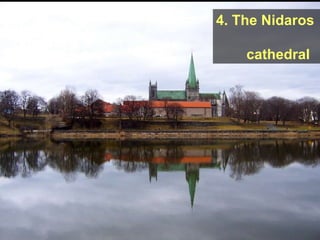
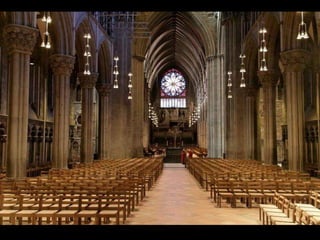
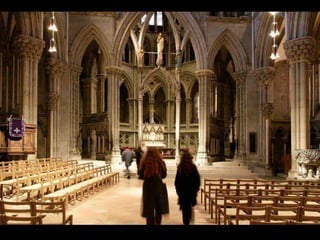
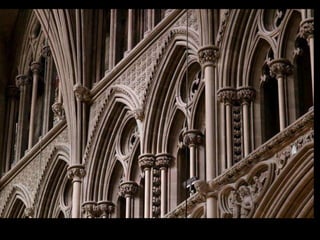
4. The Nidaros  cathedral
 
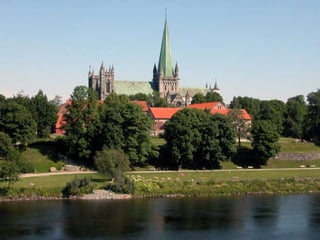
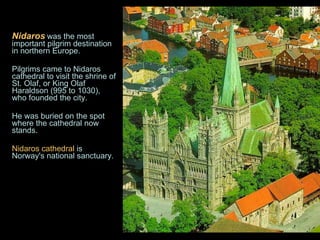
Nidaros   was the most important pilgrim destination in northern Europe.  Pilgrims came to Nidaros cathedral to visit the shrine of St. Olaf, or King Olaf Haraldson (995 to 1030), who founded the city.  He was buried on the spot where the cathedral now stands. Nidaros cathedral  is Norway's national sanctuary.
 
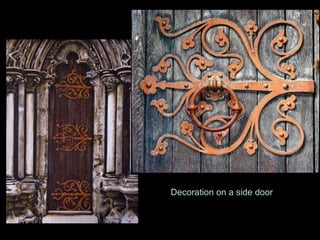
Decoration on a side door
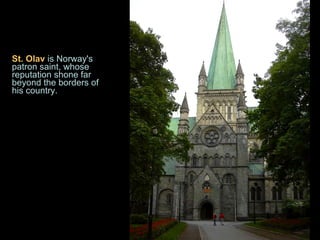
St. Olav  is Norway's patron saint, whose reputation shone far beyond the borders of his country.
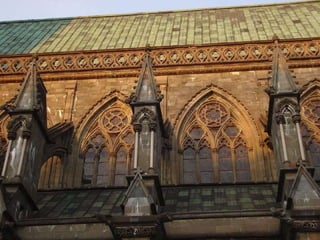
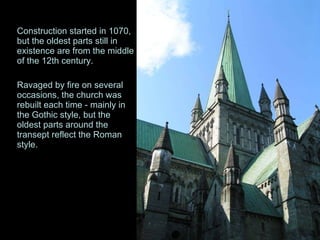
Construction started in 1070, but the oldest parts still in existence are from the middle of the 12th century.  Ravaged by fire on several occasions, the church was rebuilt each time - mainly in the Gothic style, but the oldest parts around the transept reflect the Roman style.
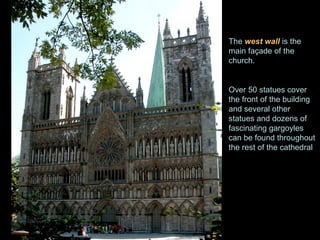
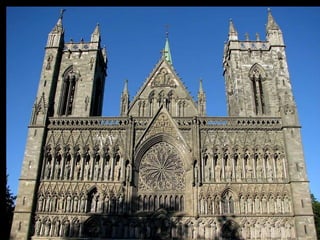
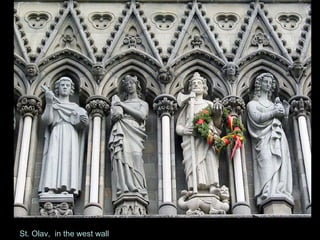
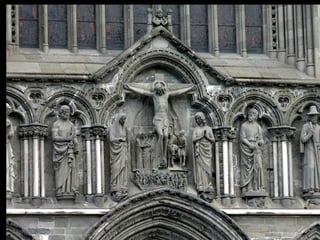
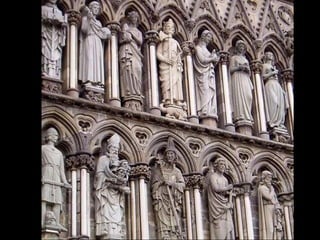
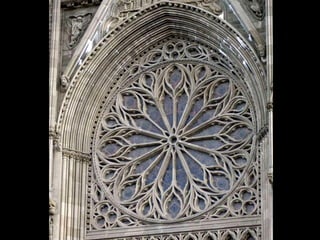
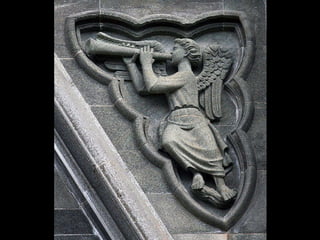
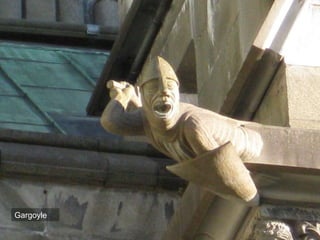
The  west wall  is the main façade of the church.  Over 50 statues cover the front of the building and several other statues and dozens of fascinating gargoyles can be found throughout the rest of the cathedral
 
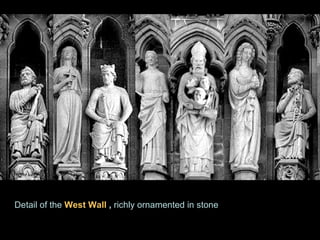
Detail of the  West Wall  ,   richly ornamented in stone
St. Olav,  in the west wall
 
 
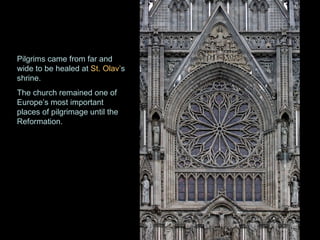
Pilgrims came from far and wide to be healed at  St. Olav’ s shrine.  The church remained one of Europe’s most important places of pilgrimage until the Reformation.
 
 
Gargoyle


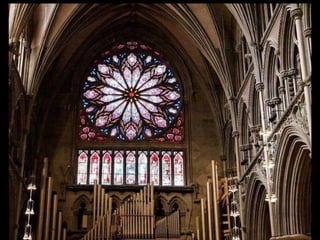
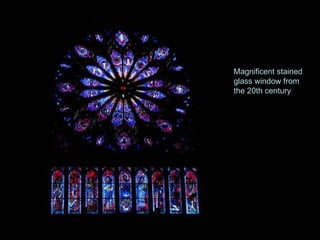
Magnificent stained glass window from the 20th century
 
 
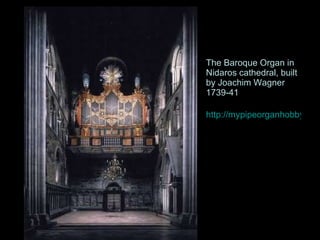
The Baroque Organ in Nidaros cathedral, built by Joachim Wagner 1739-41 http://mypipeorganhobby.blogspot.com/2009/10/wagner-organ-1739-trondheim-norway.html
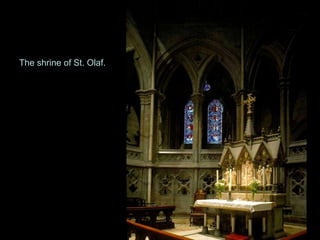
The shrine of St. Olaf.
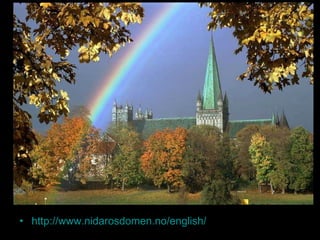
http://www.nidarosdomen.no/english/
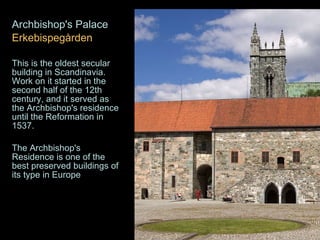
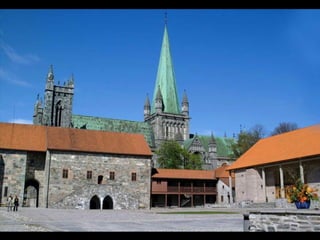
Archbishop's Palace  Erkebispegården  This is the oldest secular building in Scandinavia. Work on it started in the second half of the 12th century, and it served as the Archbishop's residence until the Reformation in 1537.  The Archbishop's Residence is one of the best preserved buildings of its type in Europe
 
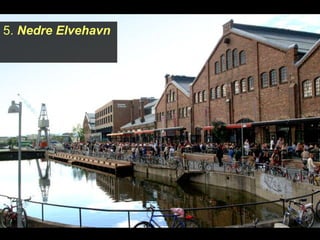
5.  Nedre Elvehavn
 
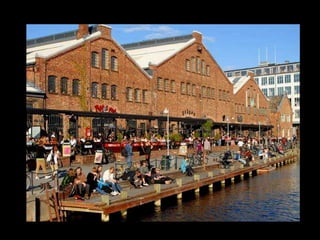
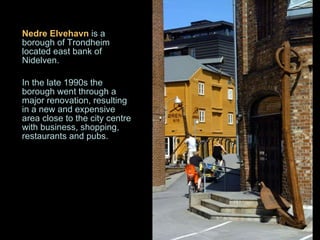
Nedre Elvehavn  is a borough of Trondheim located east bank of Nidelven.  In the late 1990s the borough went through a major renovation, resulting in a new and expensive area close to the city centre with business, shopping, restaurants and pubs.
 
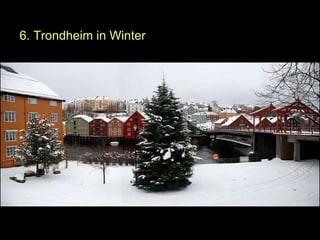
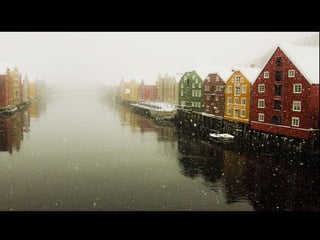
6. Trondheim in Winter
 
 
Nordre gate
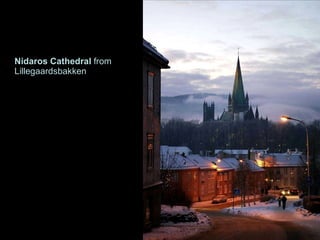
Nidaros Cathedral  from Lillegaardsbakken


Bakklandet
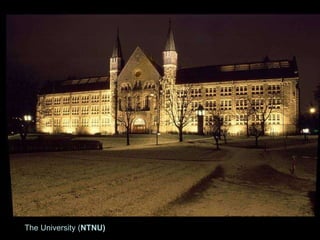
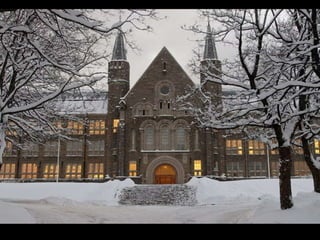
The University ( NTNU)
 
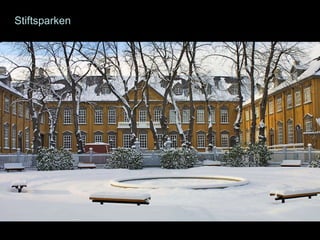
Stiftsparken
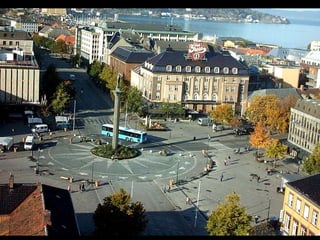
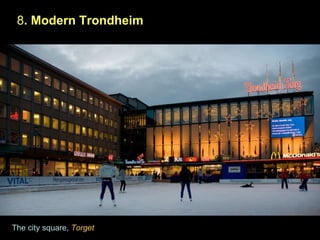
8 . Modern Trondheim The city square,  Torget
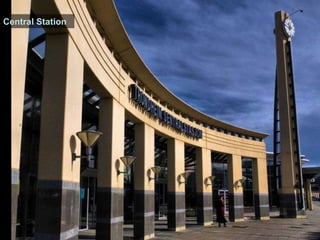
Central Station
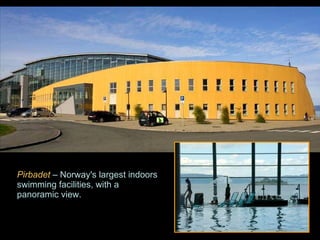
Pirbadet  – Norway's largest indoors swimming facilities, with a panoramic view.
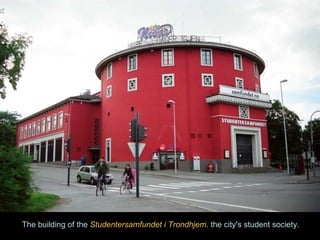
The building of the  Studentersamfundet i Trondhjem . the city's student society.
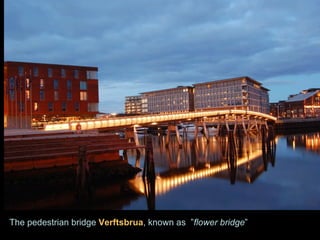
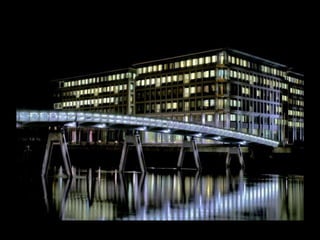
The pedestrian bridge  Verftsbrua , known as  ” flower bridge ”
 
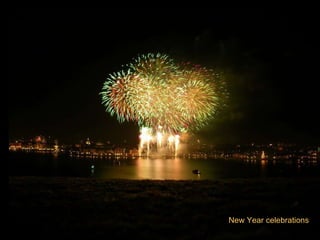
New Year celebrations
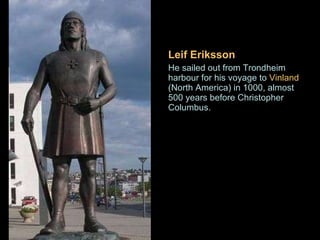
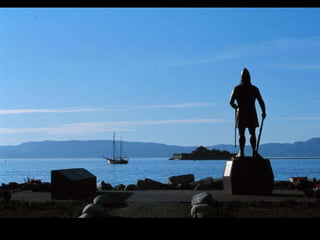
Leif Eriksson He sailed out from Trondheim harbour for his voyage to  Vinland  (North America) in 1000, almost 500 years before Christopher Columbus. .
 
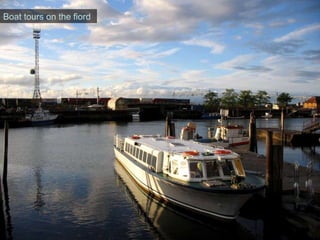
Boat tours on the fiord


The End
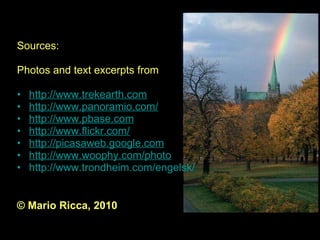
Sources: Photos and text excerpts from http://www.trekearth.com http ://www.panoramio.com/ http://www.pbase.com http ://www.flickr.com/ http://picasaweb.google.com http://www.woophy.com/photo http://www.trondheim.com/engelsk/ ©  Mario Ricca, 2010

Trondheim

  • 1.
    Trondheim ,Norway Situated in the county of Sør-Trøndelag where the river Nid flows into the Trondheim fiord , Trondheim is a city and municipality in central Norway. .
  • 2.
    Population With nearly170 000 inhabitants, Trondheim is Norway's third largest municipality. Location Latitude : 63º26' N Longitude : 10º24' E
  • 3.
  • 4.
  • 5.
    Trondheim was founded by Viking King Olav Tryggvason in AD 997, and occupies a special place in Norwegian culture and history. The city was the nation's first capital, and continues to be the coronation city where Norway's Kings from Harald Hårfagre (10th century BC) to King Harald V (1991 - ) have been crowned and blessed.
  • 6.
    For centuries, Trondheim was the northernmost mercantile city in Europe. This also resulted in a more international culture than many other Scandinavian cities at the time.
  • 7.
    The inhabitants liketo call their city the historical, the religious, and the technology capital of Norway. It´s also believed to be located in Trondheim region the mythical Thule found by greek explorer Pytheas.
  • 8.
    1. The Nidelvaand The Wharves
  • 9.
    The Nidelva ( Nid river ) ends in a fiord. This location allows for a good harbour and good sailing channels, and favoured Trondheim’s place in northern economy for centuries. Wharves (warehouses) were built along the river to store goods from that flourishing trade.
  • 10.
    The oldest ofthe wharves along the Nidelva date back to the 18th century; they still give the impression of the waterfront as it was long before then.
  • 11.
    On the seafront,towards the canal, many of the wharves ( " Brygger “ ) were built more recently, in the 19th and 20th centuries. Now they house shops, offices, restaurants and cafes, helping to keep a special charm.
  • 12.
    In these warehousesthe boats used to load an unload cargo . The houses were used as storage and could be reached from both the river,
  • 13.
  • 14.
  • 15.
    A long stretchof the Nidelva is lined with wooden warehouses
  • 16.
  • 17.
  • 18.
  • 19.
  • 20.
  • 21.
  • 22.
    The wharves remindus of the importance of Trondheim as a merchant city.
  • 23.
  • 24.
  • 25.
  • 26.
    Fertile communities linedthe shores of the long, wide Trondheims Fjord and agriculture, forestry, fishing and hunting provided excellent living standards.
  • 27.
  • 28.
  • 29.
  • 30.
    2. The oldbridge (Gamle Bybro)
  • 31.
    Gate of Fortune  – that’s how locals call the old town bridge, built in 1861. The carved gates have made it Trondheim's distinctive hallmark.
  • 32.
    Gamle bybro is also called " Lykkens portal " ( The Gate of Fortune ), after Oskar Hoddø's waltz " Nidelven stille og vakker du er ".
  • 33.
  • 34.
  • 35.
  • 36.
    The GamleBybro crosses the Nidelva and leads into Bakklandet , the old residential area.
  • 37.
  • 38.
  • 39.
  • 40.
    Bakklandet is one of the best This neighbourhood on the east side of the Nidelva features old timber buildings, originally the homes of the working class. This special area of town is a strong part of Trondheim's cultural identity.
  • 41.
    Bakklandet wasfirst built in the 17th century, but was partly destroyed when the Swedish under General Armfeldt beleaguered the city. Reconstruction took place soon after as small houses were erected, for the most part occupied by seamen, fishermen and labourers.
  • 42.
  • 43.
  • 44.
  • 45.
  • 46.
    No other cityin the Nordic countries has as much wooden architecture as Trondheim
  • 47.
  • 48.
    Many of thewooden buildings in Trondheim date from the 19th century, but these retain something of a tradition going back to the 18th and 17th centuries
  • 49.
  • 50.
  • 51.
  • 52.
  • 53.
    Trondheim allowednew buildings to be made of wood in residential areas where houses were not so densely packed as in the shopping districts.
  • 54.
  • 55.
  • 56.
  • 57.
  • 58.
    The restored Bakklandetis a charming mixture of houses, shops and cafés.
  • 59.
  • 60.
  • 61.
    Sit outdoors, witha blanket...
  • 62.
  • 63.
  • 64.
  • 65.
    The statue ofthe city's founder Olav Tryggvason stands in Torget , the city square.
  • 66.
  • 67.
    Vaar Frue church ( Our Lady Church ), built in mid-12th C.
  • 68.
  • 69.
    Nordre gate is the main pedestrian street and a meeting place, one of Trondheim's shopping streets, with its open-air cafés, shops, street musicians and stands.
  • 70.
  • 71.
    Office of Adresseavisen , the local newspaper, Nordre gate 1 (1710)
  • 72.
  • 73.
  • 74.
  • 75.
  • 76.
  • 77.
    Norli bookshop, Nordre gate http://www.norli.no
  • 78.
  • 79.
    Olav Tryggvasons gate, with some fine architecture: Kleingården , art deco, 1908
  • 80.
  • 81.
  • 82.
  • 83.
    Stiftsgården,   theRoyal Residence The palace is one of the largest wooden buildings in the Nordic countries, now called the Royal Residence. It was completed in 1778.
  • 84.
  • 85.
  • 86.
  • 87.
  • 88.
    The palace isthe official residence of Norway’s King and Queen in Trondheim
  • 89.
    Ringve Museum ,a museum devoted to music. http://www.ringve.com/English/ Trondheim has a broad music scene, and is known for its strong communities committed to classical music, with a music conservatory at NTNU and a municipal music school, the Nidaros Cathedral Choir and the Trondheim Soloists .
  • 90.
    4. The Nidaros cathedral
  • 91.
  • 92.
    Nidaros was the most important pilgrim destination in northern Europe. Pilgrims came to Nidaros cathedral to visit the shrine of St. Olaf, or King Olaf Haraldson (995 to 1030), who founded the city. He was buried on the spot where the cathedral now stands. Nidaros cathedral is Norway's national sanctuary.
  • 93.
  • 94.
    Decoration on aside door
  • 95.
    St. Olav is Norway's patron saint, whose reputation shone far beyond the borders of his country.
  • 96.
    Construction started in1070, but the oldest parts still in existence are from the middle of the 12th century. Ravaged by fire on several occasions, the church was rebuilt each time - mainly in the Gothic style, but the oldest parts around the transept reflect the Roman style.
  • 97.
    The westwall is the main façade of the church. Over 50 statues cover the front of the building and several other statues and dozens of fascinating gargoyles can be found throughout the rest of the cathedral
  • 98.
  • 99.
    Detail of the West Wall , richly ornamented in stone
  • 100.
    St. Olav, in the west wall
  • 101.
  • 102.
  • 103.
    Pilgrims came fromfar and wide to be healed at St. Olav’ s shrine. The church remained one of Europe’s most important places of pilgrimage until the Reformation.
  • 104.
  • 105.
  • 106.
  • 107.
  • 108.
  • 109.
  • 110.
    Magnificent stained glasswindow from the 20th century
  • 111.
  • 112.
  • 113.
    The Baroque Organin Nidaros cathedral, built by Joachim Wagner 1739-41 http://mypipeorganhobby.blogspot.com/2009/10/wagner-organ-1739-trondheim-norway.html
  • 114.
    The shrine ofSt. Olaf.
  • 115.
  • 116.
    Archbishop's Palace Erkebispegården This is the oldest secular building in Scandinavia. Work on it started in the second half of the 12th century, and it served as the Archbishop's residence until the Reformation in 1537. The Archbishop's Residence is one of the best preserved buildings of its type in Europe
  • 117.
  • 118.
    5. NedreElvehavn
  • 119.
  • 120.
    Nedre Elvehavn is a borough of Trondheim located east bank of Nidelven. In the late 1990s the borough went through a major renovation, resulting in a new and expensive area close to the city centre with business, shopping, restaurants and pubs.
  • 121.
  • 122.
  • 123.
  • 124.
  • 125.
  • 126.
    Nidaros Cathedral from Lillegaardsbakken
  • 127.
  • 128.
  • 129.
  • 130.
  • 131.
  • 132.
  • 133.
  • 134.
    8 . ModernTrondheim The city square, Torget
  • 135.
  • 136.
    Pirbadet –Norway's largest indoors swimming facilities, with a panoramic view.
  • 137.
    The building ofthe Studentersamfundet i Trondhjem . the city's student society.
  • 138.
    The pedestrian bridge Verftsbrua , known as ” flower bridge ”
  • 139.
  • 140.
  • 141.
    Leif Eriksson Hesailed out from Trondheim harbour for his voyage to Vinland (North America) in 1000, almost 500 years before Christopher Columbus. .
  • 142.
  • 143.
    Boat tours onthe fiord
  • 144.
  • 145.
  • 146.
  • 147.
  • 148.
    Sources: Photos andtext excerpts from http://www.trekearth.com http ://www.panoramio.com/ http://www.pbase.com http ://www.flickr.com/ http://picasaweb.google.com http://www.woophy.com/photo http://www.trondheim.com/engelsk/ © Mario Ricca, 2010