
Carl Larsson
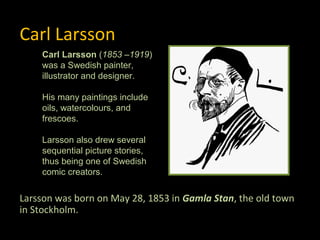
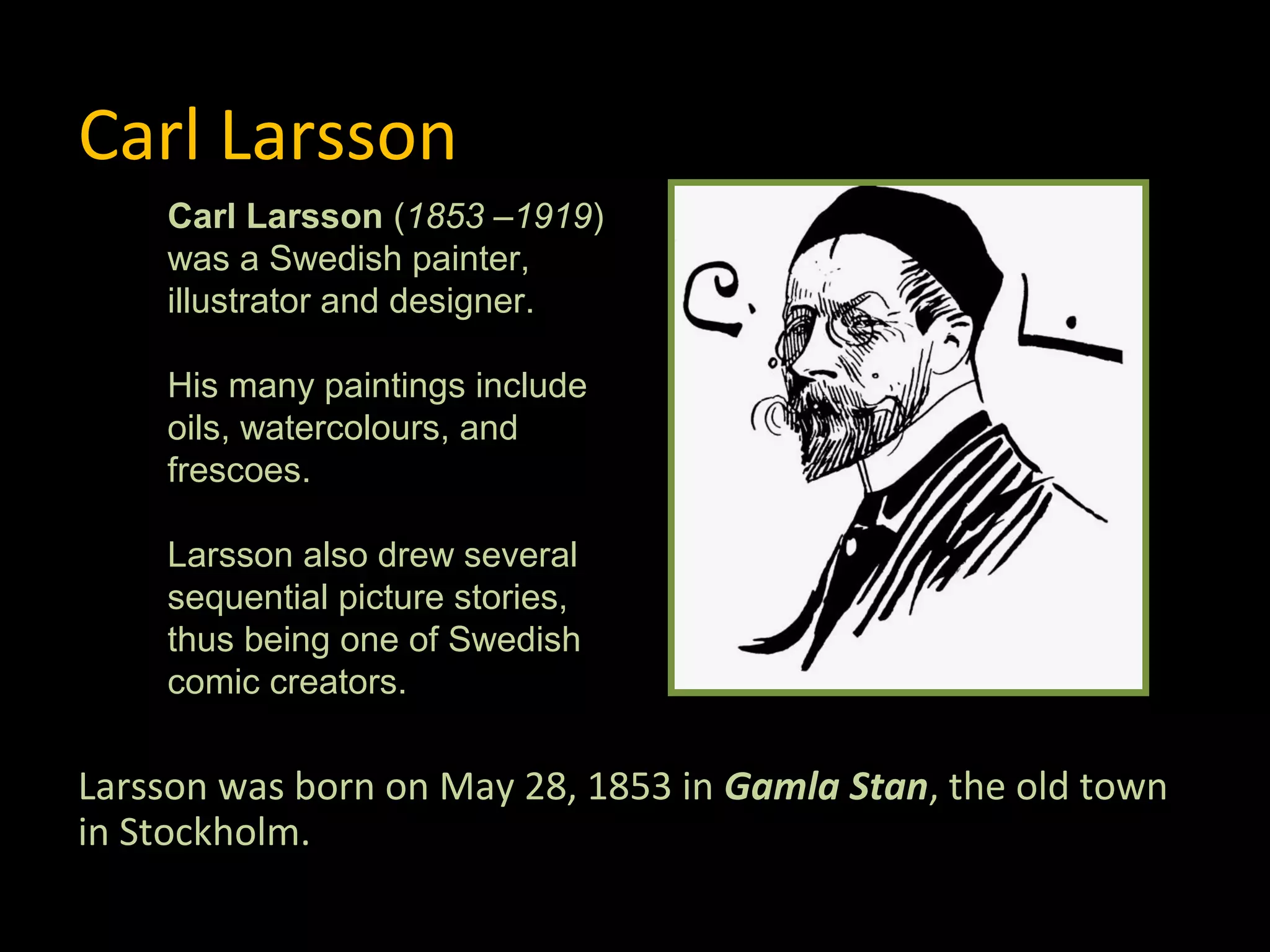
    Carl Larsson (1853 –1919)
    was a Swedish painter,
    illustrator and designer.

    His many paintings include
    oils, watercolours, and
    frescoes.

    Larsson also drew several
    sequential picture stories,
    thus being one of Swedish
    comic creators.


Larsson was born on May 28, 1853 in Gamla Stan, the old town
in Stockholm.
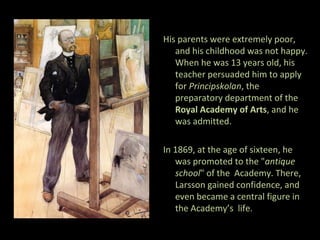
His parents were extremely poor,
   and his childhood was not happy.
   When he was 13 years old, his
   teacher persuaded him to apply
   for Principskolan, the
   preparatory department of the
   Royal Academy of Arts, and he
   was admitted.

In 1869, at the age of sixteen, he
   was promoted to the "antique
   school" of the Academy. There,
   Larsson gained confidence, and
   even became a central figure in
   the Academy’s life.
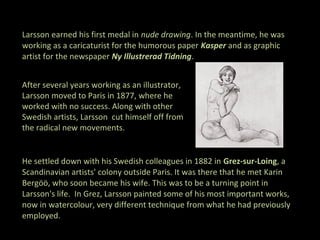
Larsson earned his first medal in nude drawing. In the meantime, he was
working as a caricaturist for the humorous paper Kasper and as graphic
artist for the newspaper Ny Illustrerad Tidning.


After several years working as an illustrator,
Larsson moved to Paris in 1877, where he
worked with no success. Along with other
Swedish artists, Larsson cut himself off from
the radical new movements.


He settled down with his Swedish colleagues in 1882 in Grez-sur-Loing, a
Scandinavian artists' colony outside Paris. It was there that he met Karin
Bergöö, who soon became his wife. This was to be a turning point in
Larsson's life. In Grez, Larsson painted some of his most important works,
now in watercolour, very different technique from what he had previously
employed.
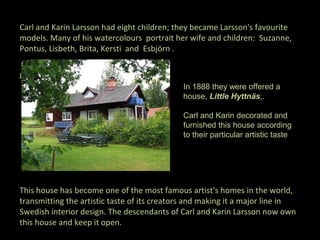
Carl and Karin Larsson had eight children; they became Larsson's favourite
models. Many of his watercolours portrait her wife and children: Suzanne,
Pontus, Lisbeth, Brita, Kersti and Esbjörn .

given a small
                                             In 1888 they were offered a
                                             house, Little Hyttnäs,.

                                             Carl and Karin decorated and
                                             furnished this house according
                                             to their particular artistic taste


This house has become one of the most famous artist's homes in the world,
transmitting the artistic taste of its creators and making it a major line in
Swedish interior design. The descendants of Carl and Karin Larsson now own
this house and keep it open.
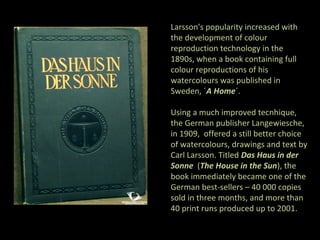
Larsson's popularity increased with
the development of colour
reproduction technology in the
1890s, when a book containing full
colour reproductions of his
watercolours was published in
Sweden, ´A Home´.

Using a much improved tecnhique,
the German publisher Langewiesche,
in 1909, offered a still better choice
of watercolours, drawings and text by
Carl Larsson. Titled Das Haus in der
Sonne (The House in the Sun), the
book immediately became one of the
German best-sellers – 40 000 copies
sold in three months, and more than
40 print runs produced up to 2001.
Works of Carl Larsson
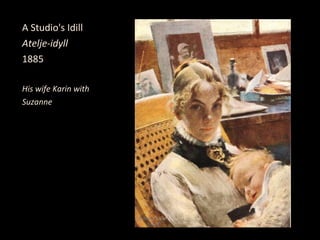
A Studio's Idill
Atelje-idyll
1885

His wife Karin with
Suzanne
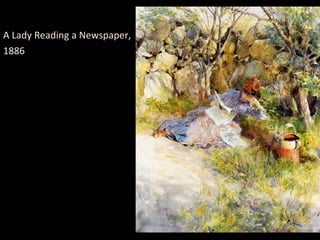
A Lady Reading a Newspaper,
1886
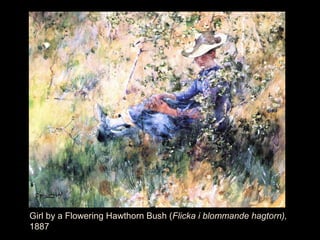
Girl by a Flowering Hawthorn Bush (Flicka i blommande hagtorn),
1887
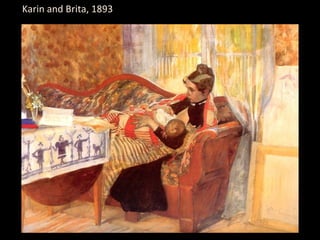
Karin and Brita, 1893
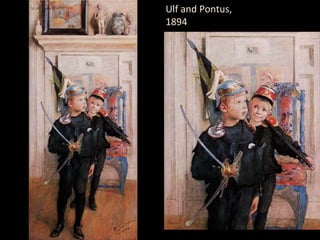
Ulf and Pontus,
1894
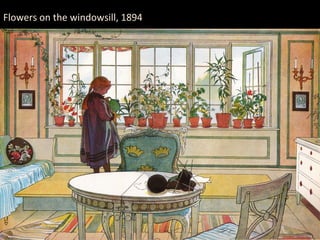
Flowers on the windowsill, 1894
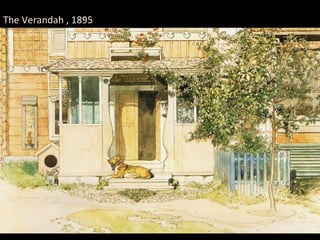
The Verandah , 1895
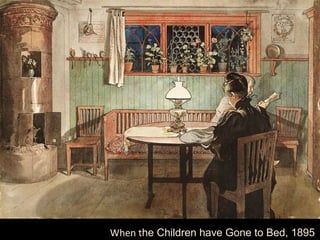
When the Children have Gone to Bed, 1895
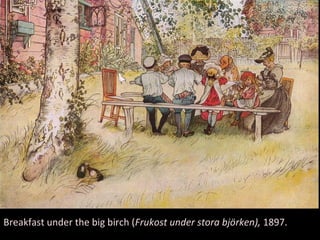
Breakfast under the big birch (Frukost under stora björken), 1897.
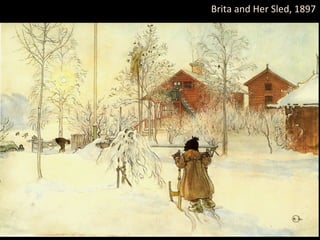
Brita and Her Sled, 1897
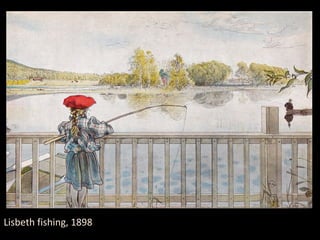
Lisbeth fishing, 1898
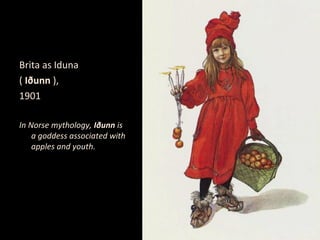
Brita as Iduna
( Iðunn ),
1901

In Norse mythology, Iðunn is
    a goddess associated with
    apples and youth.
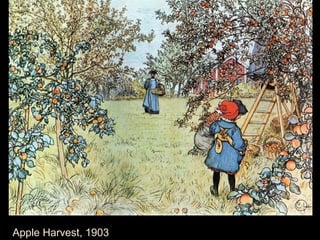
Apple Harvest, 1903
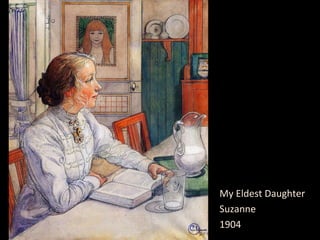
My Eldest Daughter
Suzanne
1904
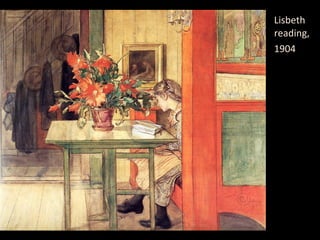
Lisbeth
reading,
1904
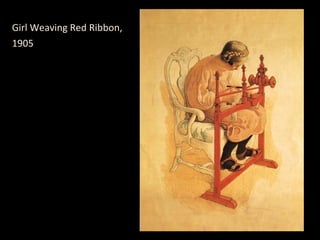
Girl Weaving Red Ribbon,
1905
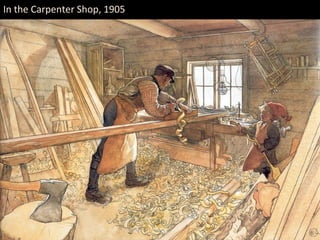
In the Carpenter Shop, 1905
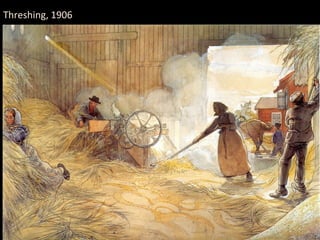
Threshing, 1906
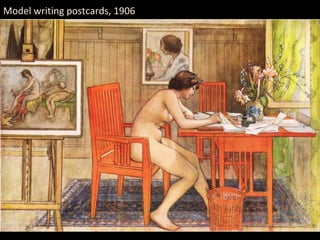
Model writing postcards, 1906
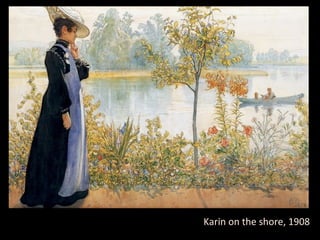
Karin on the shore, 1908
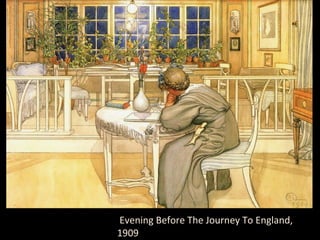
Evening Before The Journey To England,
1909
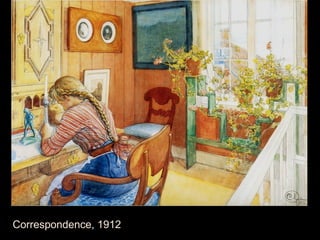
Correspondence, 1912
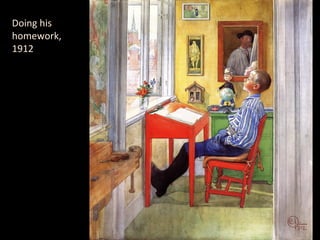
Doing his
homework,
1912
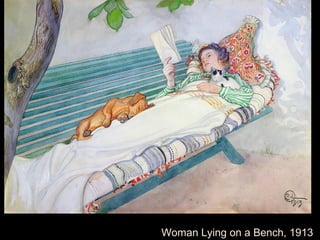
Woman Lying on a Bench, 1913
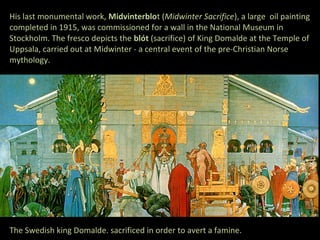
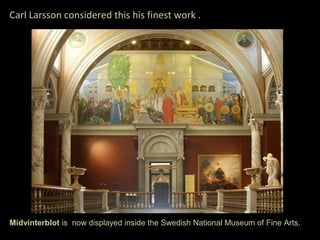
His last monumental work, Midvinterblot (Midwinter Sacrifice), a large oil painting
completed in 1915, was commissioned for a wall in the National Museum in
Stockholm. The fresco depicts the blót (sacrifice) of King Domalde at the Temple of
Uppsala, carried out at Midwinter - a central event of the pre-Christian Norse
mythology.


The Swedish king Domalde. sacrificed in order to avert a famine.
Carl Larsson considered this his finest work .


Midvinterblot is now displayed inside the Swedish National Museum of Fine Arts.
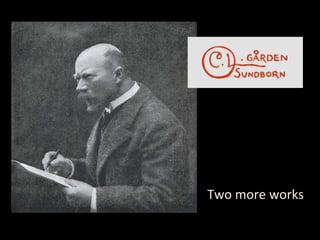
Two more works
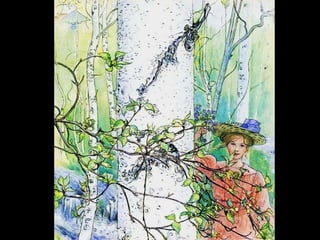
Spring (Våren), 1907
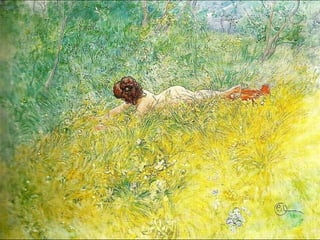
On the grass (Grongraset) , 1902
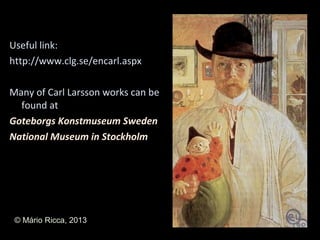
Useful link:
http://www.clg.se/encarl.aspx

Many of Carl Larsson works can be
  found at
Goteborgs Konstmuseum Sweden
National Museum in Stockholm


 © Mário Ricca, 2013

Carl Larsson

  • 1.
    Carl Larsson Carl Larsson (1853 –1919) was a Swedish painter, illustrator and designer. His many paintings include oils, watercolours, and frescoes. Larsson also drew several sequential picture stories, thus being one of Swedish comic creators. Larsson was born on May 28, 1853 in Gamla Stan, the old town in Stockholm.
  • 2.
    His parents wereextremely poor, and his childhood was not happy. When he was 13 years old, his teacher persuaded him to apply for Principskolan, the preparatory department of the Royal Academy of Arts, and he was admitted. In 1869, at the age of sixteen, he was promoted to the "antique school" of the Academy. There, Larsson gained confidence, and even became a central figure in the Academy’s life.
  • 3.
    Larsson earned hisfirst medal in nude drawing. In the meantime, he was working as a caricaturist for the humorous paper Kasper and as graphic artist for the newspaper Ny Illustrerad Tidning. After several years working as an illustrator, Larsson moved to Paris in 1877, where he worked with no success. Along with other Swedish artists, Larsson cut himself off from the radical new movements. He settled down with his Swedish colleagues in 1882 in Grez-sur-Loing, a Scandinavian artists' colony outside Paris. It was there that he met Karin Bergöö, who soon became his wife. This was to be a turning point in Larsson's life. In Grez, Larsson painted some of his most important works, now in watercolour, very different technique from what he had previously employed.
  • 4.
    Carl and KarinLarsson had eight children; they became Larsson's favourite models. Many of his watercolours portrait her wife and children: Suzanne, Pontus, Lisbeth, Brita, Kersti and Esbjörn . given a small In 1888 they were offered a house, Little Hyttnäs,. Carl and Karin decorated and furnished this house according to their particular artistic taste This house has become one of the most famous artist's homes in the world, transmitting the artistic taste of its creators and making it a major line in Swedish interior design. The descendants of Carl and Karin Larsson now own this house and keep it open.
  • 5.
    Larsson's popularity increasedwith the development of colour reproduction technology in the 1890s, when a book containing full colour reproductions of his watercolours was published in Sweden, ´A Home´. Using a much improved tecnhique, the German publisher Langewiesche, in 1909, offered a still better choice of watercolours, drawings and text by Carl Larsson. Titled Das Haus in der Sonne (The House in the Sun), the book immediately became one of the German best-sellers – 40 000 copies sold in three months, and more than 40 print runs produced up to 2001.
  • 6.
  • 7.
  • 8.
    A Lady Readinga Newspaper, 1886
  • 9.
    Girl by aFlowering Hawthorn Bush (Flicka i blommande hagtorn), 1887
  • 10.
  • 11.
  • 12.
    Flowers on thewindowsill, 1894
  • 13.
  • 14.
    When the Childrenhave Gone to Bed, 1895
  • 15.
    Breakfast under thebig birch (Frukost under stora björken), 1897.
  • 16.
    Brita and HerSled, 1897
  • 17.
  • 18.
    Brita as Iduna (Iðunn ), 1901 In Norse mythology, Iðunn is a goddess associated with apples and youth.
  • 19.
  • 20.
  • 21.
  • 22.
    Girl Weaving RedRibbon, 1905
  • 23.
    In the CarpenterShop, 1905
  • 24.
  • 25.
  • 26.
    Karin on theshore, 1908
  • 27.
    Evening Before TheJourney To England, 1909
  • 28.
  • 29.
  • 30.
    Woman Lying ona Bench, 1913
  • 31.
    His last monumentalwork, Midvinterblot (Midwinter Sacrifice), a large oil painting completed in 1915, was commissioned for a wall in the National Museum in Stockholm. The fresco depicts the blót (sacrifice) of King Domalde at the Temple of Uppsala, carried out at Midwinter - a central event of the pre-Christian Norse mythology. The Swedish king Domalde. sacrificed in order to avert a famine.
  • 33.
    Carl Larsson consideredthis his finest work . Midvinterblot is now displayed inside the Swedish National Museum of Fine Arts.
  • 34.
  • 35.
  • 37.
    On the grass(Grongraset) , 1902
  • 39.
    Useful link: http://www.clg.se/encarl.aspx Many ofCarl Larsson works can be found at Goteborgs Konstmuseum Sweden National Museum in Stockholm © Mário Ricca, 2013