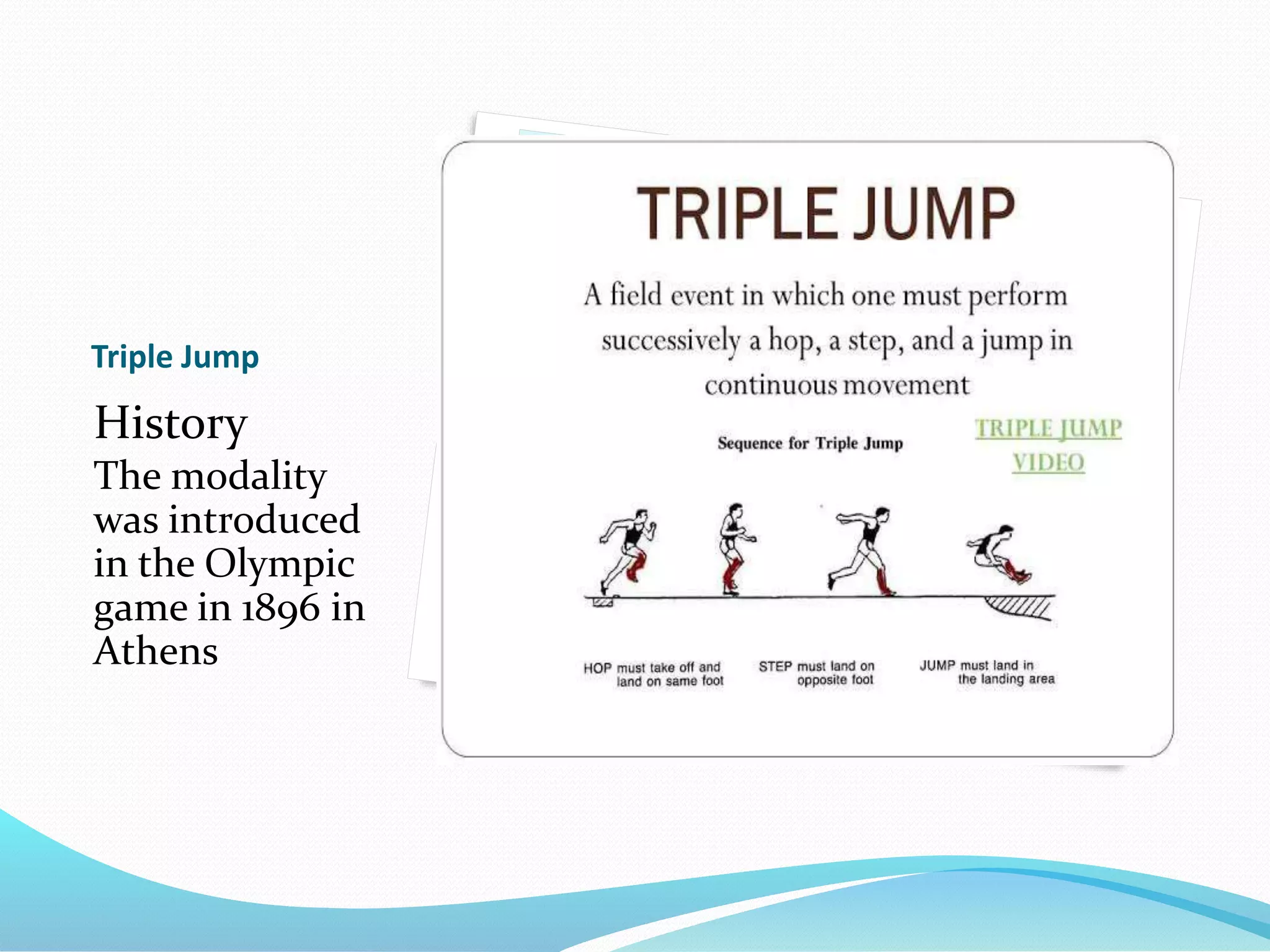
Triple Jump
History
The modality
was introduced
in the Olympic
game in 1896 in
Athens
Triple jump
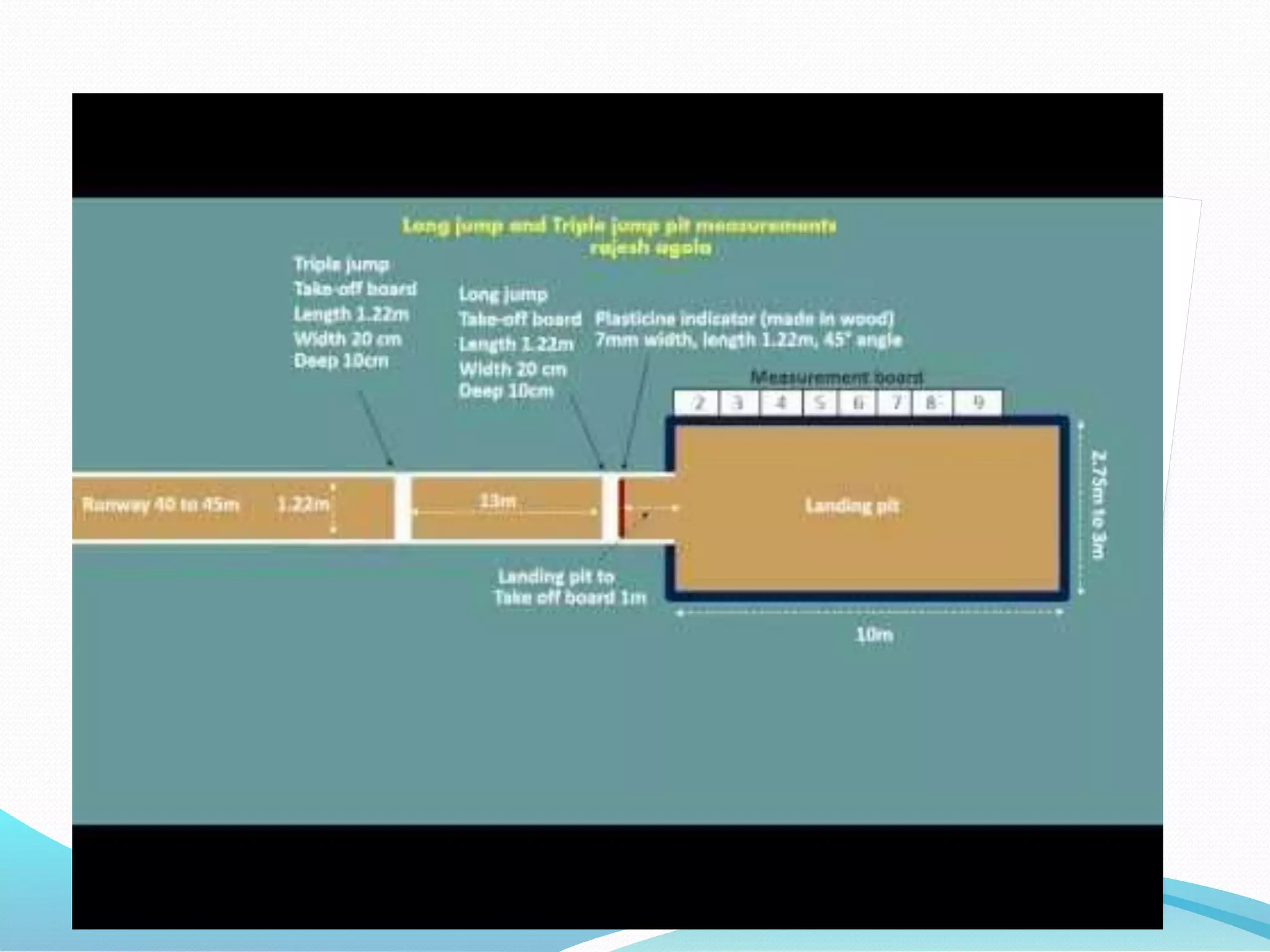
Measurement of Runway
 Ranway 40 to45 m
 Landing width 2.75m to
3m, length 10m
 Landing pit to take of
board 1m
 Triple jump take of
board length 1.22m ,
width 20 cm
 Deep 10 cm
 Made in wood width
7mm, length 1.22m
 Angle 45
3 keys to success
Sprint mechanics
 Strength : on the track
weight room
 Technique :sprinting
jumping
 Speed : build equally
with other 2
 Toe up
 Heel up
 Thigh up
 Hips tall
 Step over the opposite knee
How we correct triple jump
 It is very easy but for the athletes.
 Running to take off speed.
 Then when you arrive to the jump line you have to
jump on one leg.
 The other step is to repeat the first leg an other one.
 The last one is that you change the leg and you jump
with it and it is going to be Last impulse before falling
to the sand
Tripple Jummp officaial
 Chelf jude
 Recorder
 Three or four officials
5 main components of the triple
jump
 Approach
 Takeoff
 Hop
 Step
 Jump
 Approach
 Steps depend on skill
level
- Beginner woman: 1o-14
- -Elite women :12 -18
- Beginner men:12-16
- Elite Men :16-20
- Distance should be a
controlled run, if athlete
is not able to control do
not advance.
Developing the approach
 The approach must be run over and over and over
and again.
 Approaches precede technical work in the daily
training.
 Some days you can do approaches before the sprint
workout.
How to start ?
 Standing start
 Vs.
 Walk-in-start
 Training for the approach
 Short sprints (10, 20, 30) from 3 point
 Wicket drills
 Short speed endurance (60m sprints)
The hop phase
 The first motion after
take off should be the
hips moving forward off
the board.
 The swing leg should
move through the jump
with the take off leg.
 The contact be under
the body to avoid
exercise contact time .
 Whether double or
single arm the arm
should be long and
come up to eye level
help generate vertical
force.
 The athlete should
maintain an up right
body position
throughout flight.
The Hop phase
The step phase
 Like the hop phase athlete should push the hips
forward off of this phase
 Whether double or single arm the arms should be
long and come up to eye level help generate vertical
force .
 Keep an upright body position throughout flight.
 Like the hop phase the contact should be under the
body to avoid excess contact time.
The step / second phase
The jump third
phase
Tripple jump rules
 Start the jump before the board.
 When jumping the athletes must land on the same
foot used to take off.
 During the second phase the athletes must land on the
opposing foot and initiate the third phase of the jump.
 The athletes can land in the sand.
 The measurement distance will be measured from the
sand to the take off point.

Triple jump

  • 2.
    Triple Jump History The modality wasintroduced in the Olympic game in 1896 in Athens
  • 3.
  • 4.
    Measurement of Runway Ranway 40 to45 m  Landing width 2.75m to 3m, length 10m  Landing pit to take of board 1m  Triple jump take of board length 1.22m , width 20 cm  Deep 10 cm  Made in wood width 7mm, length 1.22m  Angle 45
  • 6.
    3 keys tosuccess Sprint mechanics  Strength : on the track weight room  Technique :sprinting jumping  Speed : build equally with other 2  Toe up  Heel up  Thigh up  Hips tall  Step over the opposite knee
  • 7.
    How we correcttriple jump  It is very easy but for the athletes.  Running to take off speed.  Then when you arrive to the jump line you have to jump on one leg.  The other step is to repeat the first leg an other one.  The last one is that you change the leg and you jump with it and it is going to be Last impulse before falling to the sand
  • 8.
    Tripple Jummp officaial Chelf jude  Recorder  Three or four officials
  • 9.
    5 main componentsof the triple jump  Approach  Takeoff  Hop  Step  Jump  Approach  Steps depend on skill level - Beginner woman: 1o-14 - -Elite women :12 -18 - Beginner men:12-16 - Elite Men :16-20 - Distance should be a controlled run, if athlete is not able to control do not advance.
  • 10.
    Developing the approach The approach must be run over and over and over and again.  Approaches precede technical work in the daily training.  Some days you can do approaches before the sprint workout.
  • 11.
    How to start?  Standing start  Vs.  Walk-in-start  Training for the approach  Short sprints (10, 20, 30) from 3 point  Wicket drills  Short speed endurance (60m sprints)
  • 12.
    The hop phase The first motion after take off should be the hips moving forward off the board.  The swing leg should move through the jump with the take off leg.  The contact be under the body to avoid exercise contact time .  Whether double or single arm the arm should be long and come up to eye level help generate vertical force.  The athlete should maintain an up right body position throughout flight.
  • 13.
  • 14.
    The step phase Like the hop phase athlete should push the hips forward off of this phase  Whether double or single arm the arms should be long and come up to eye level help generate vertical force .  Keep an upright body position throughout flight.  Like the hop phase the contact should be under the body to avoid excess contact time.
  • 15.
    The step /second phase
  • 16.
  • 17.
    Tripple jump rules Start the jump before the board.  When jumping the athletes must land on the same foot used to take off.  During the second phase the athletes must land on the opposing foot and initiate the third phase of the jump.  The athletes can land in the sand.  The measurement distance will be measured from the sand to the take off point.