


School of
Computer
Science
Trends in Software Architecture
a professional (des)orientation
Sergio Fernández
Software Development Engineer (Amazon)
Oviedo, 30/01/2019
Software Architecture, Bachelor Degree in Computer Science
DISCLAIMER:
The content in this presentation was created for
academic purposes. All the opinions expressed here are
my own and do not necessarily represent those of my
current or past employers.
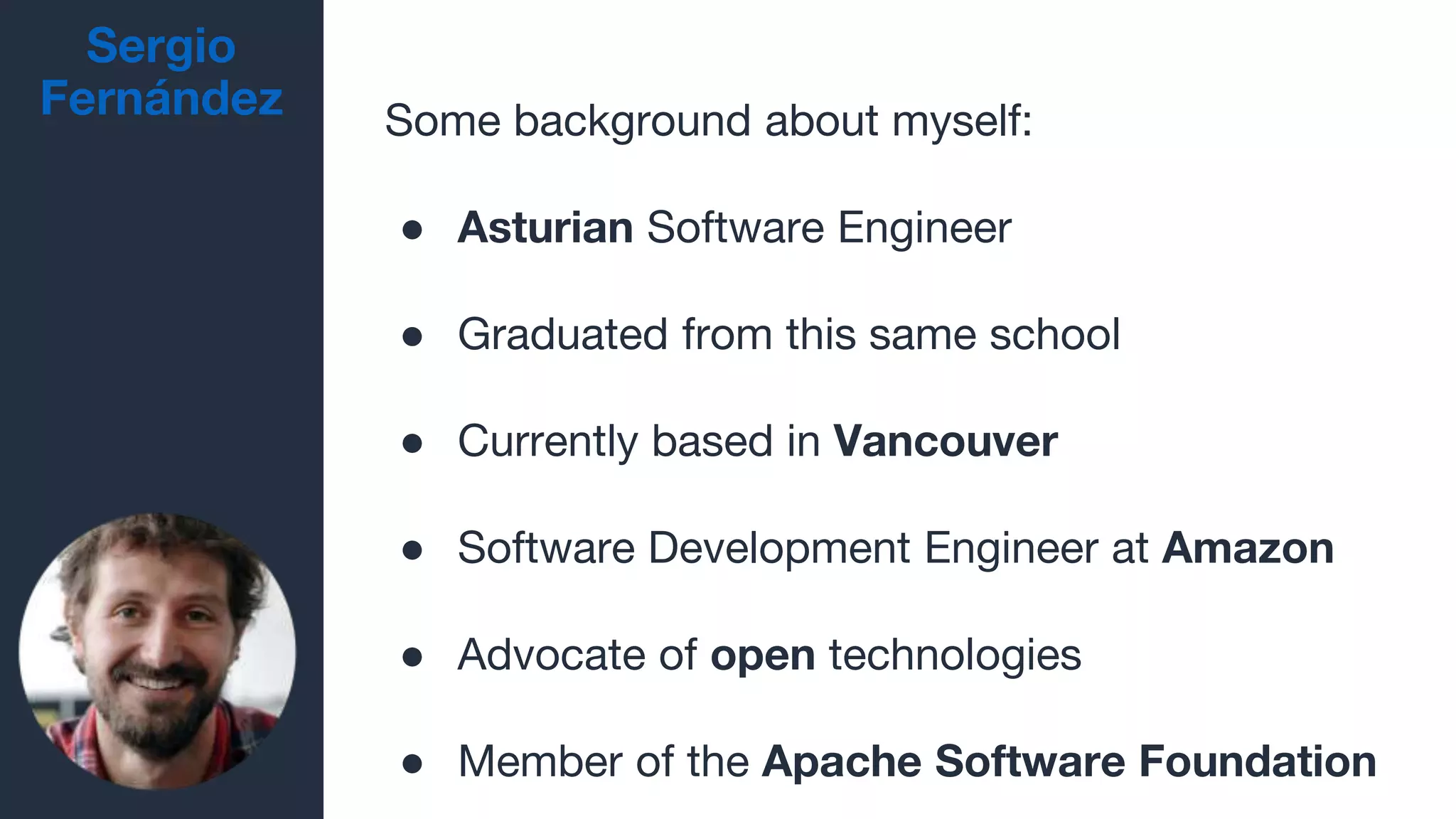
Sergio
Fernández Some background about myself:
● Asturian Software Engineer
● Graduated from this same school
● Currently based in Vancouver
● Software Development Engineer at Amazon
● Advocate of open technologies
● Member of the Apache Software Foundation
4
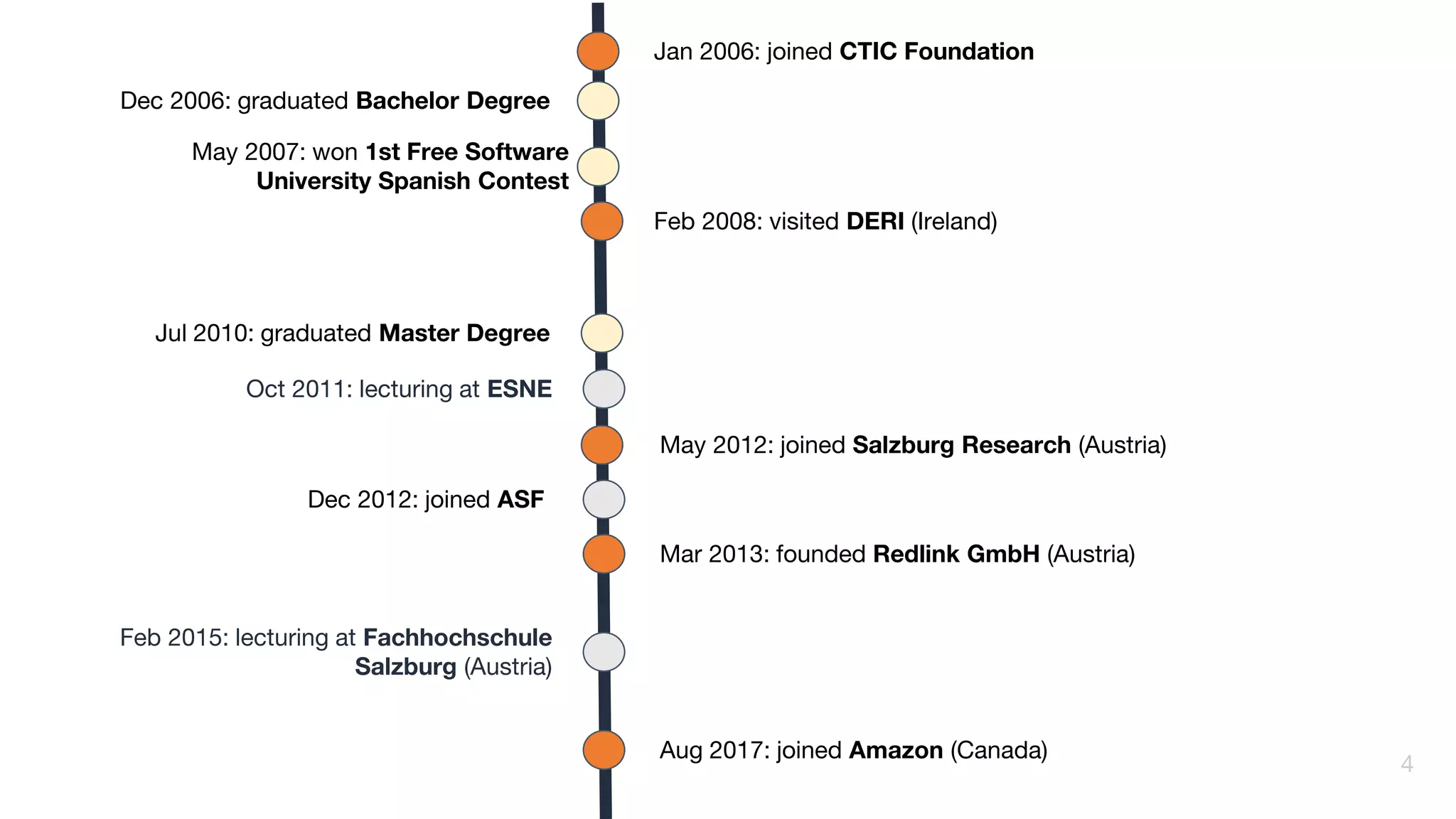
Jan 2006: joined CTIC Foundation
Feb 2008: visited DERI (Ireland)
Aug 2017: joined Amazon (Canada)
May 2012: joined Salzburg Research (Austria)
Mar 2013: founded Redlink GmbH (Austria)
Dec 2006: graduated Bachelor Degree
Jul 2010: graduated Master Degree
Dec 2012: joined ASF
Feb 2015: lecturing at Fachhochschule
Salzburg (Austria)
Oct 2011: lecturing at ESNE
May 2007: won 1st Free Software
University Spanish Contest
School of
Computer
Science
Outline for today
• Software Architecture overview
• Trends in software architectures
• Architecting software at scale
• Professional opportunities
• Q&A
5
School of
Computer
Science
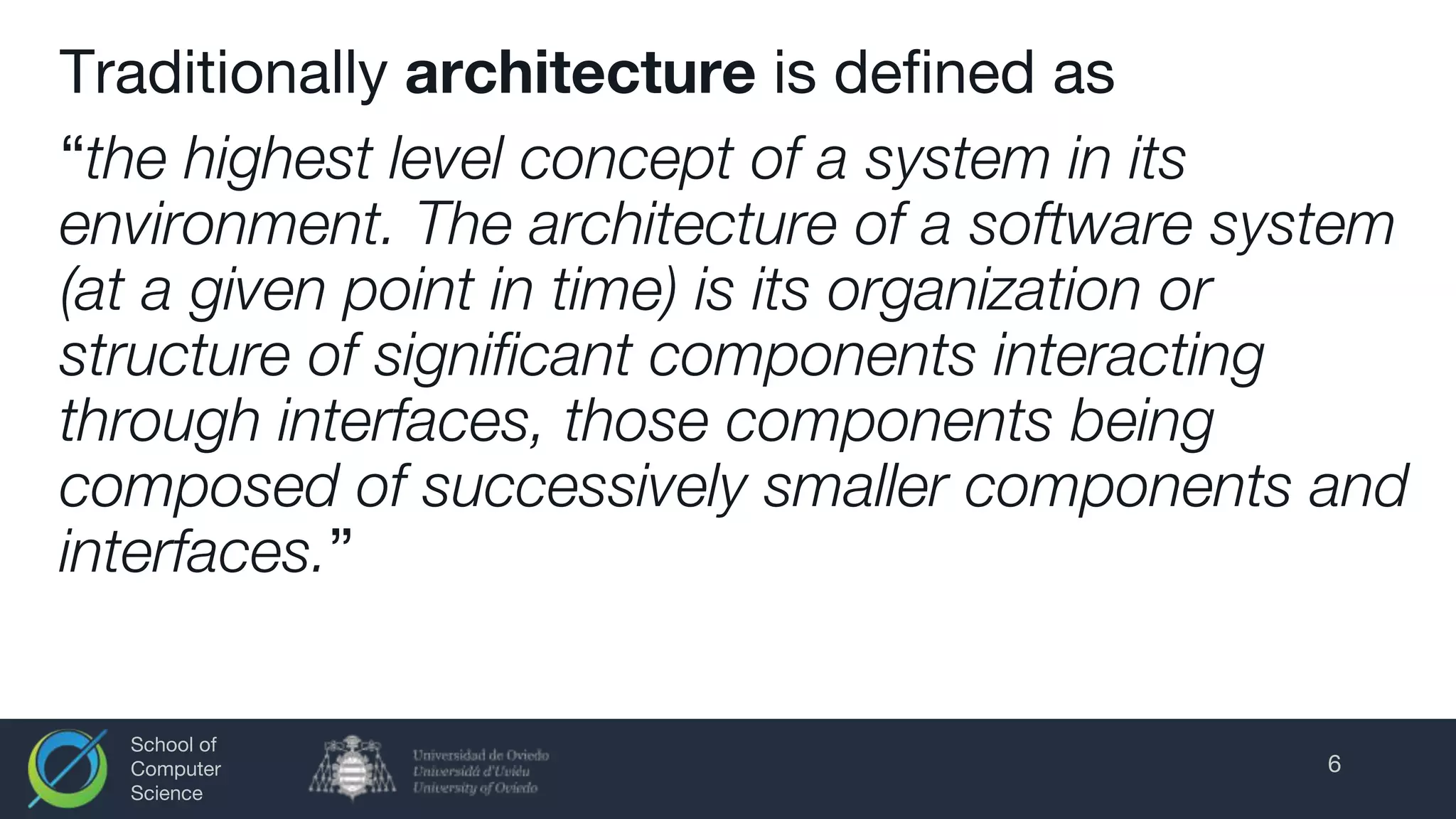
Traditionally architecture is defined as
“the highest level concept of a system in its
environment. The architecture of a software system
(at a given point in time) is its organization or
structure of significant components interacting
through interfaces, those components being
composed of successively smaller components and
interfaces.”
6
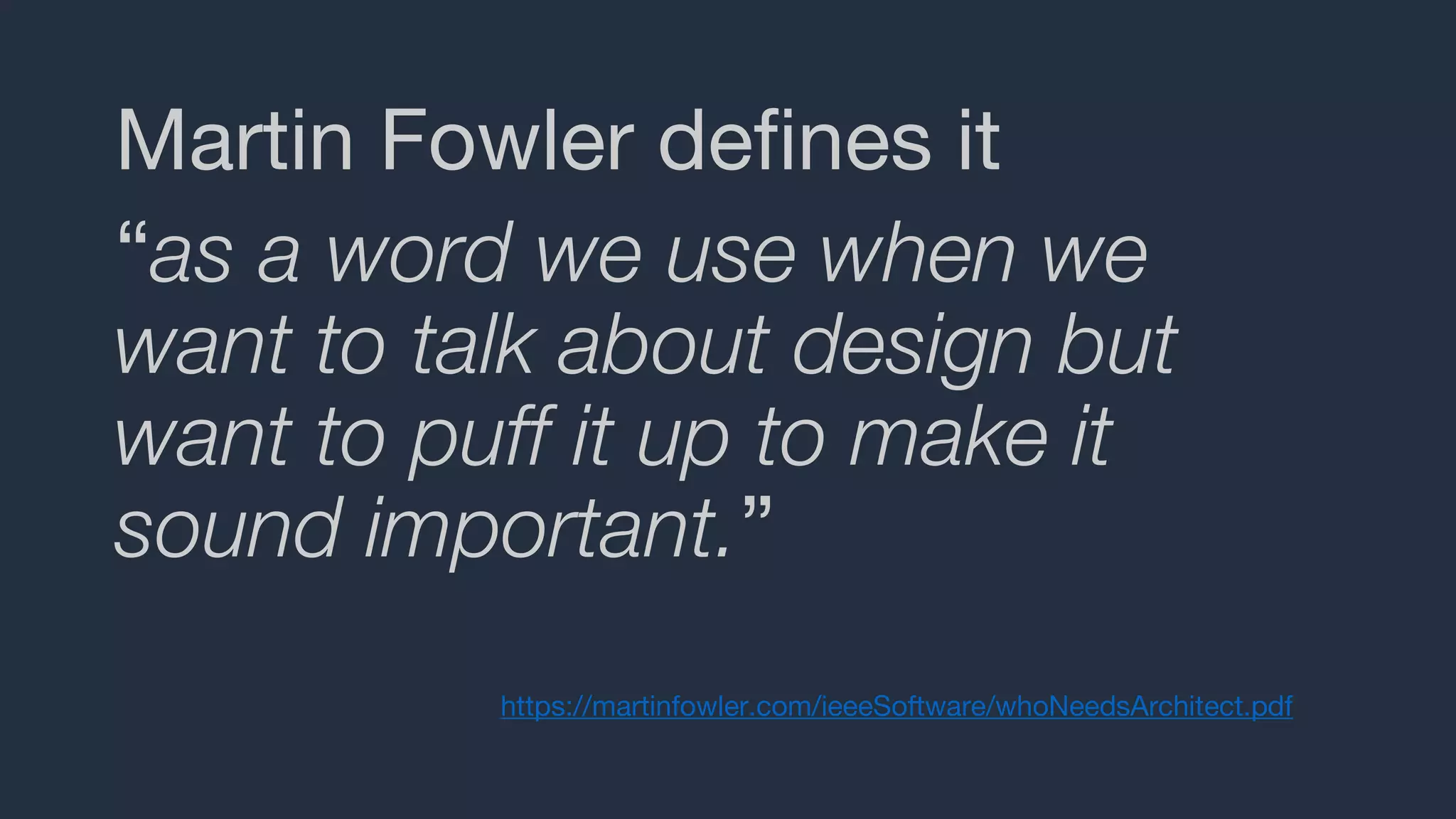
Martin Fowler defines it
“as a word we use when we
want to talk about design but
want to puff it up to make it
sound important.”
https://martinfowler.com/ieeeSoftware/whoNeedsArchitect.pdf
Are Right, a Lot.
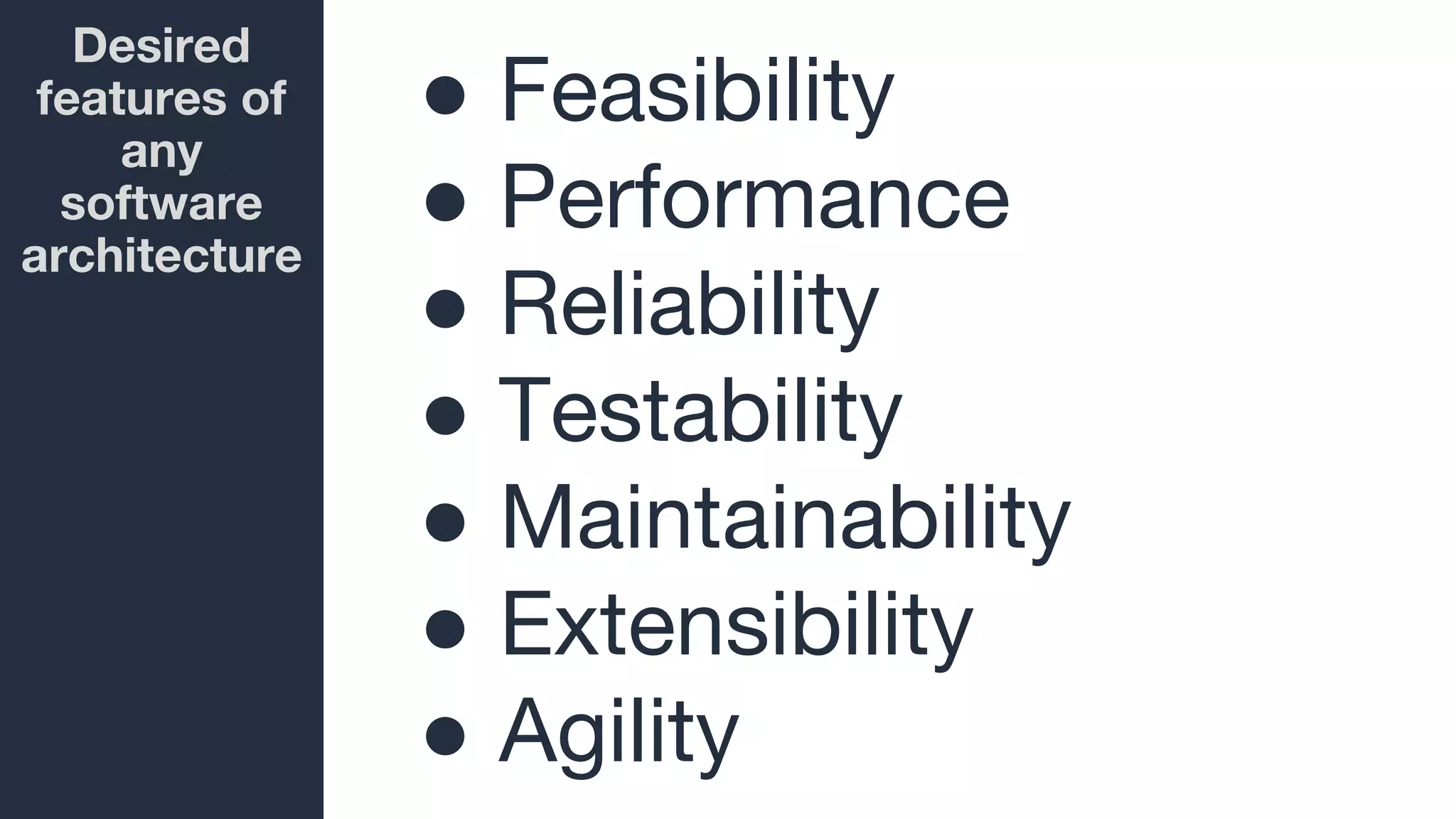
Desired
features of
any
software
architecture
● Feasibility
● Performance
● Reliability
● Testability
● Maintainability
● Extensibility
● Agility
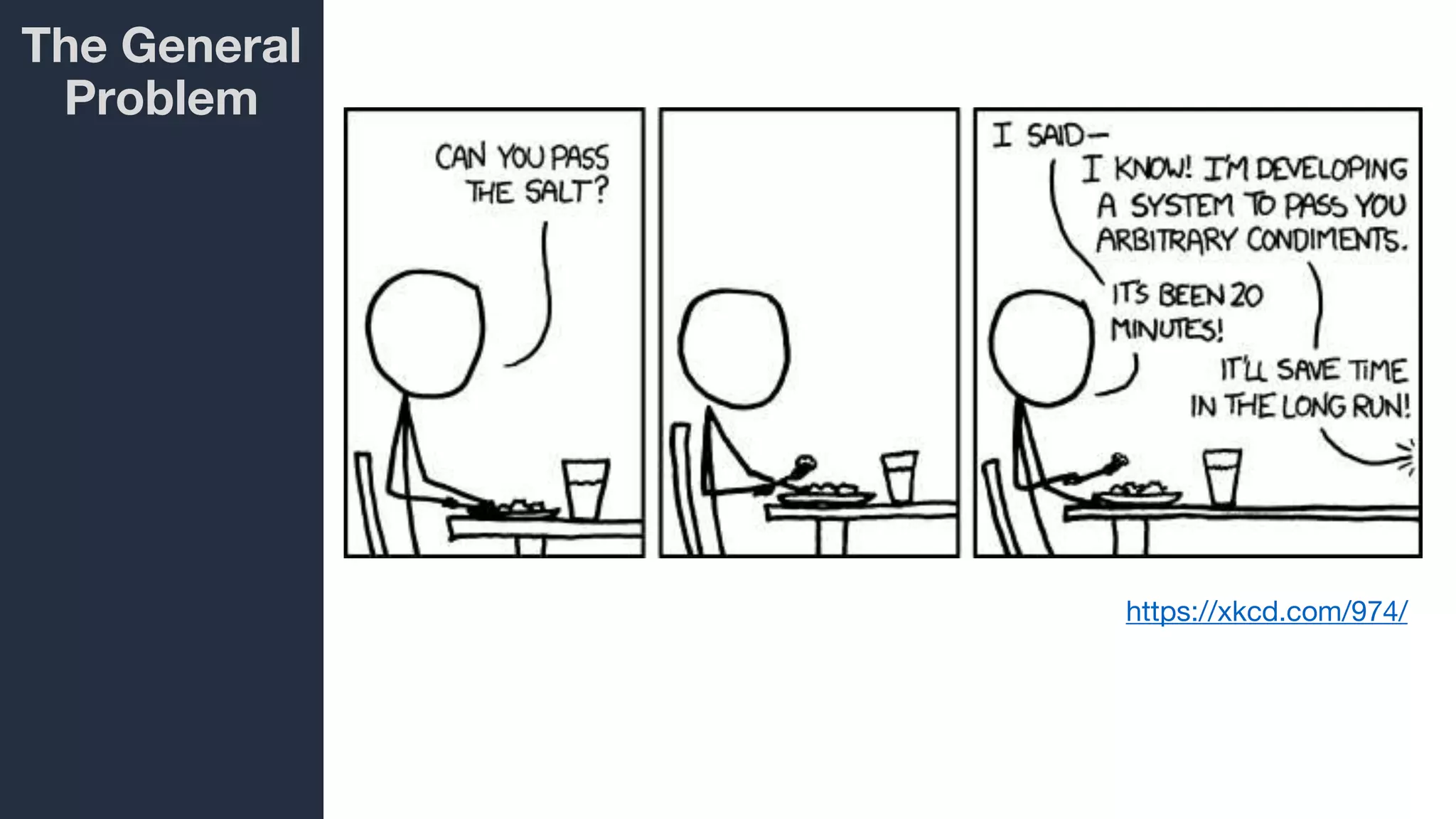
The General
Problem
https://xkcd.com/974/
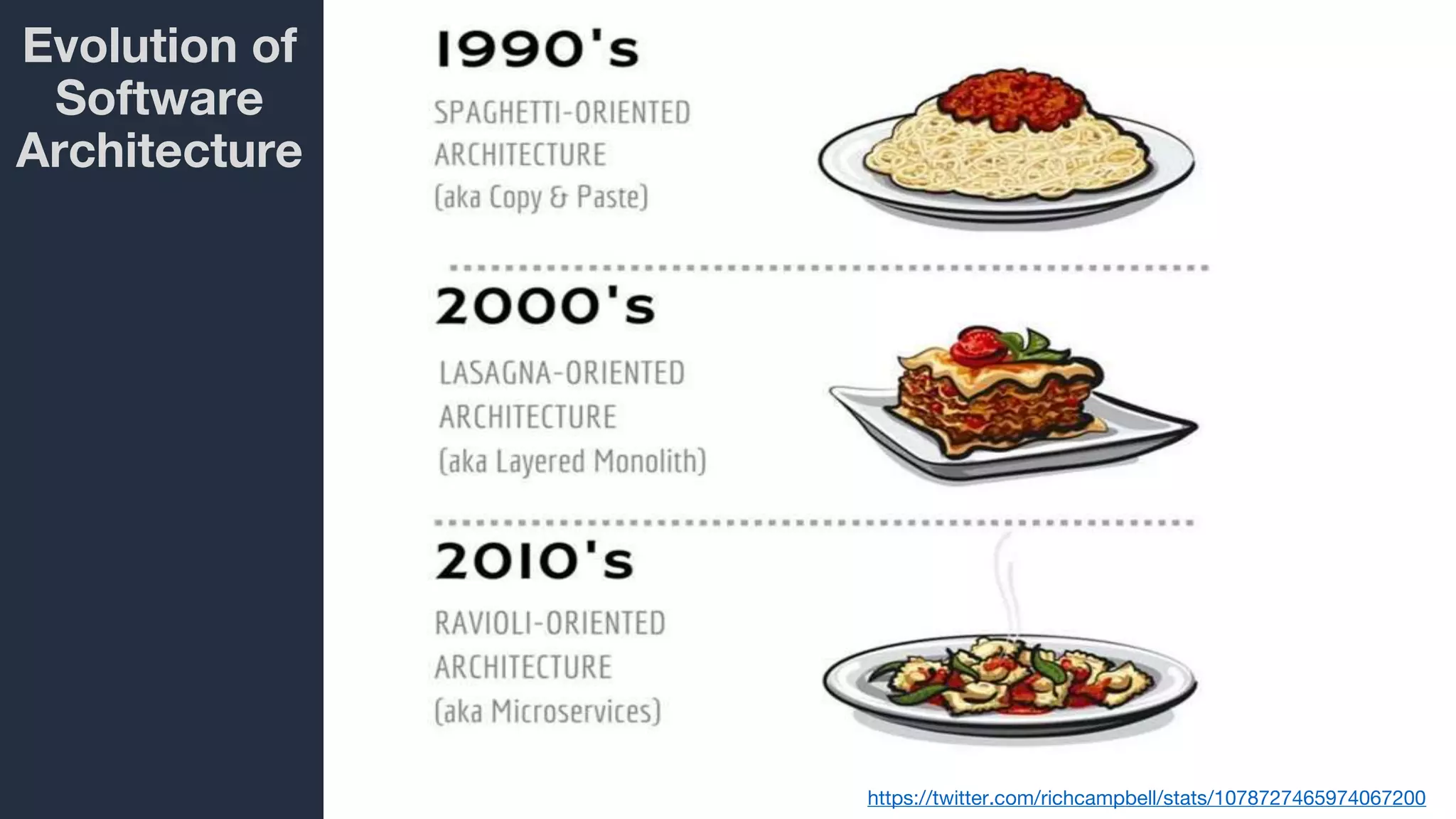
Evolution of
Software
Architecture
https://twitter.com/richcampbell/stats/1078727465974067200
School of
Computer
Science
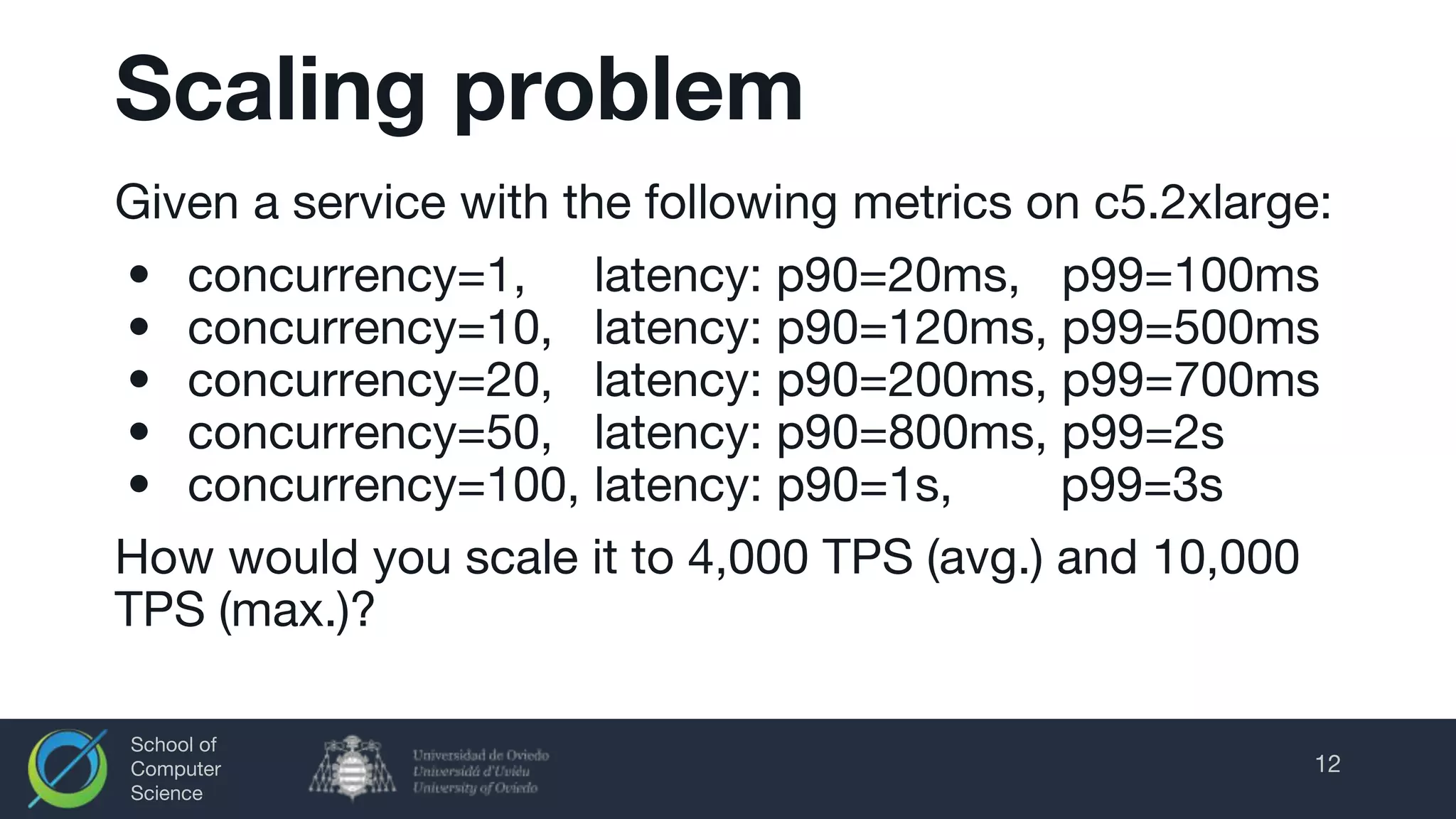
Scaling problem
Given a service with the following metrics on c5.2xlarge:
• concurrency=1, latency: p90=20ms, p99=100ms
• concurrency=10, latency: p90=120ms, p99=500ms
• concurrency=20, latency: p90=200ms, p99=700ms
• concurrency=50, latency: p90=800ms, p99=2s
• concurrency=100, latency: p90=1s, p99=3s
How would you scale it to 4,000 TPS (avg.) and 10,000
TPS (max.)?
12
School of
Computer
Science
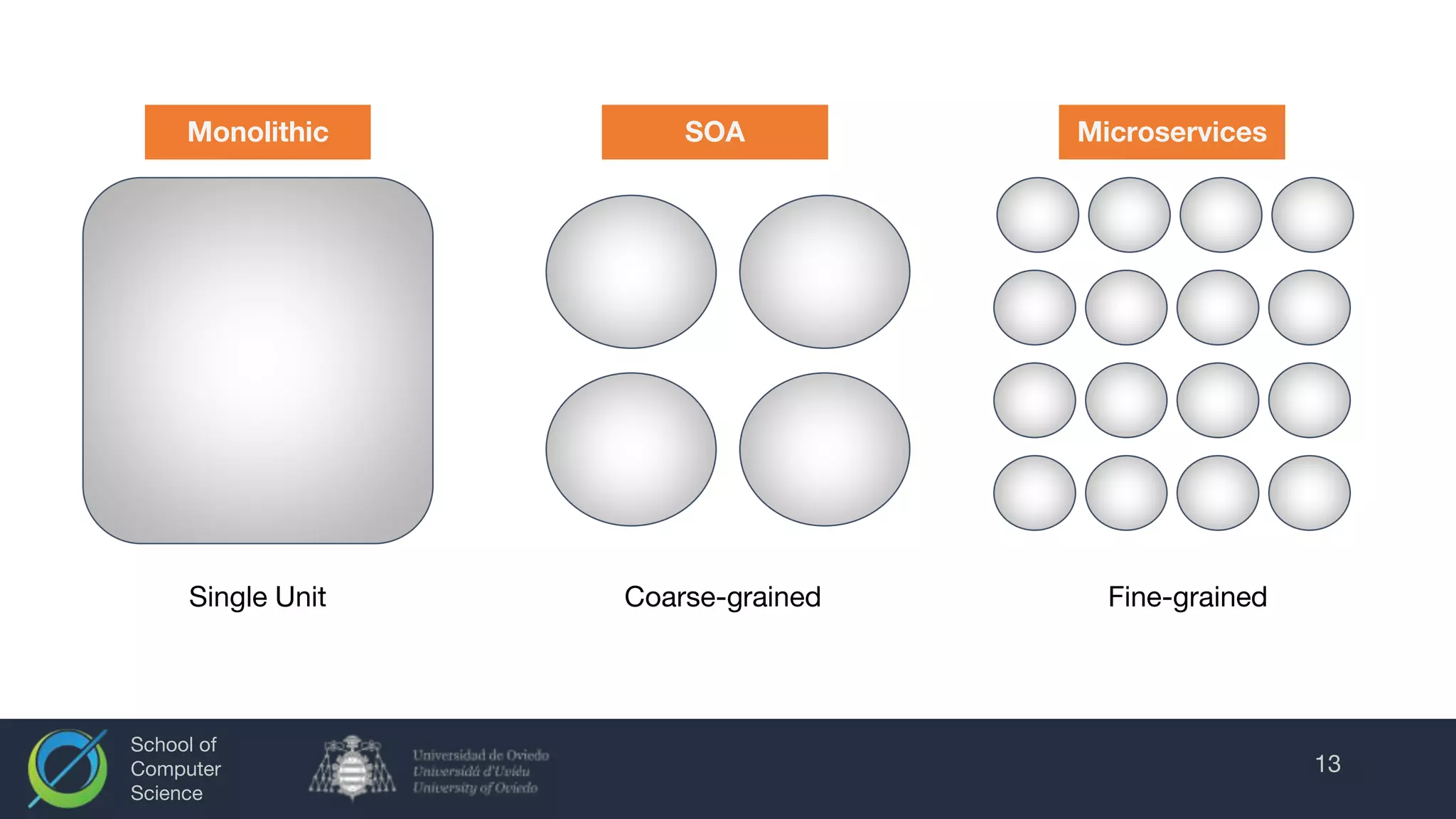
13
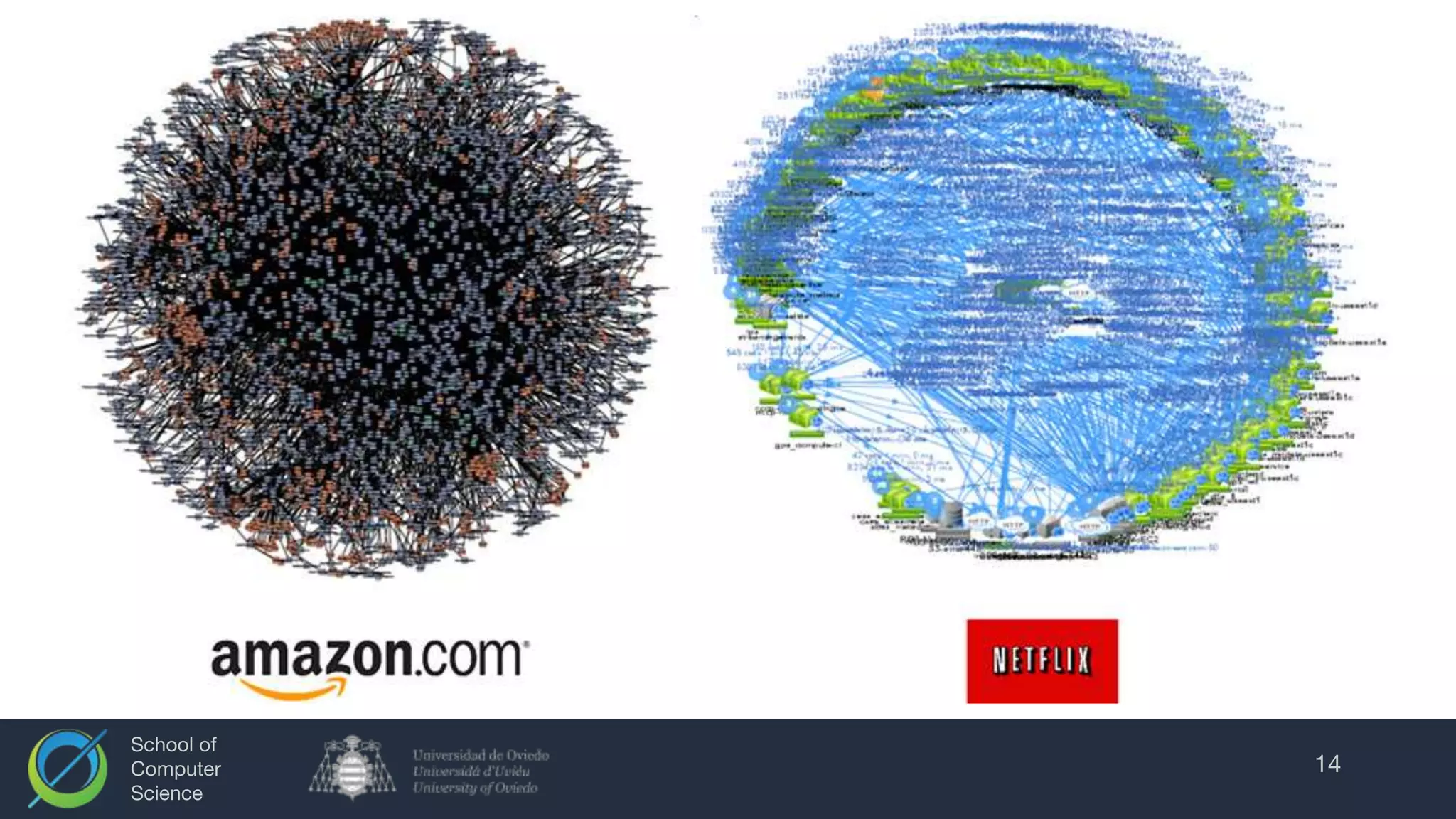
Monolithic SOA Microservices
Single Unit Coarse-grained Fine-grained
School of
Computer
Science
14
School of
Computer
Science
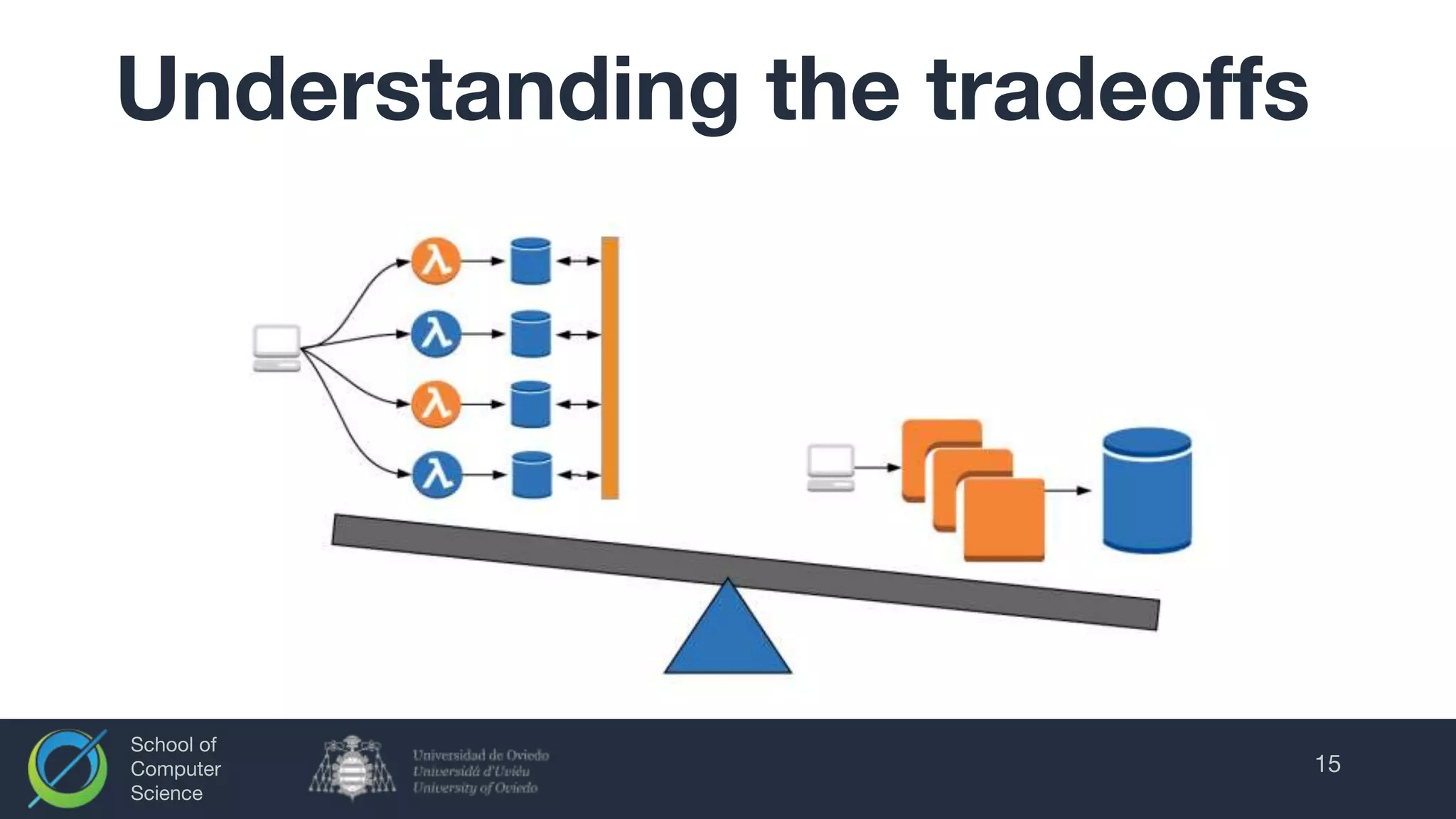
Understanding the tradeoffs
15
stateful services
scaling
is far more complex than
stateless services
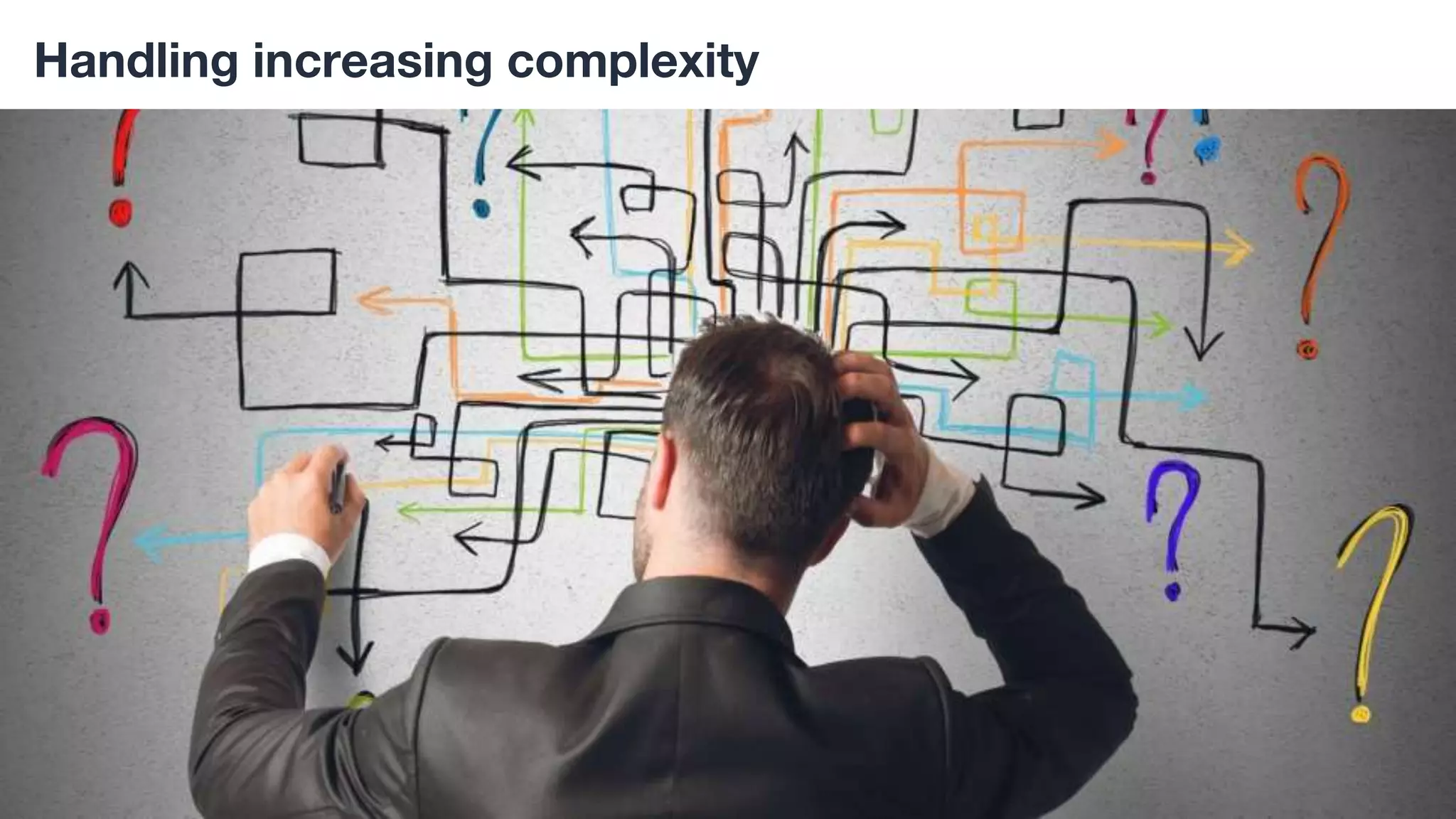
Handling increasing complexity
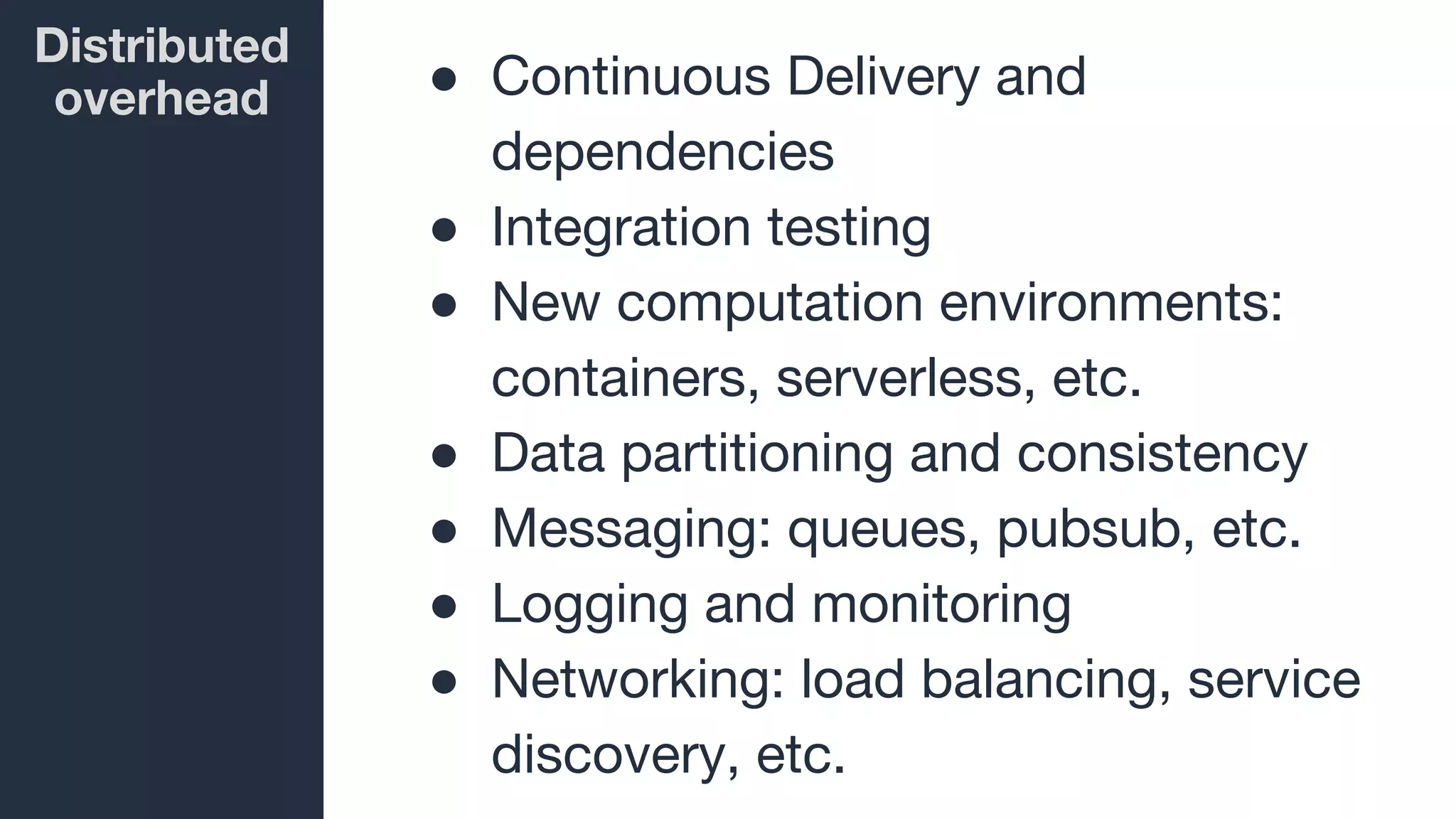
Distributed
overhead ● Continuous Delivery and
dependencies
● Integration testing
● New computation environments:
containers, serverless, etc.
● Data partitioning and consistency
● Messaging: queues, pubsub, etc.
● Logging and monitoring
● Networking: load balancing, service
discovery, etc.
AWS Architecture Center
https://aws.amazon.com/architecture/
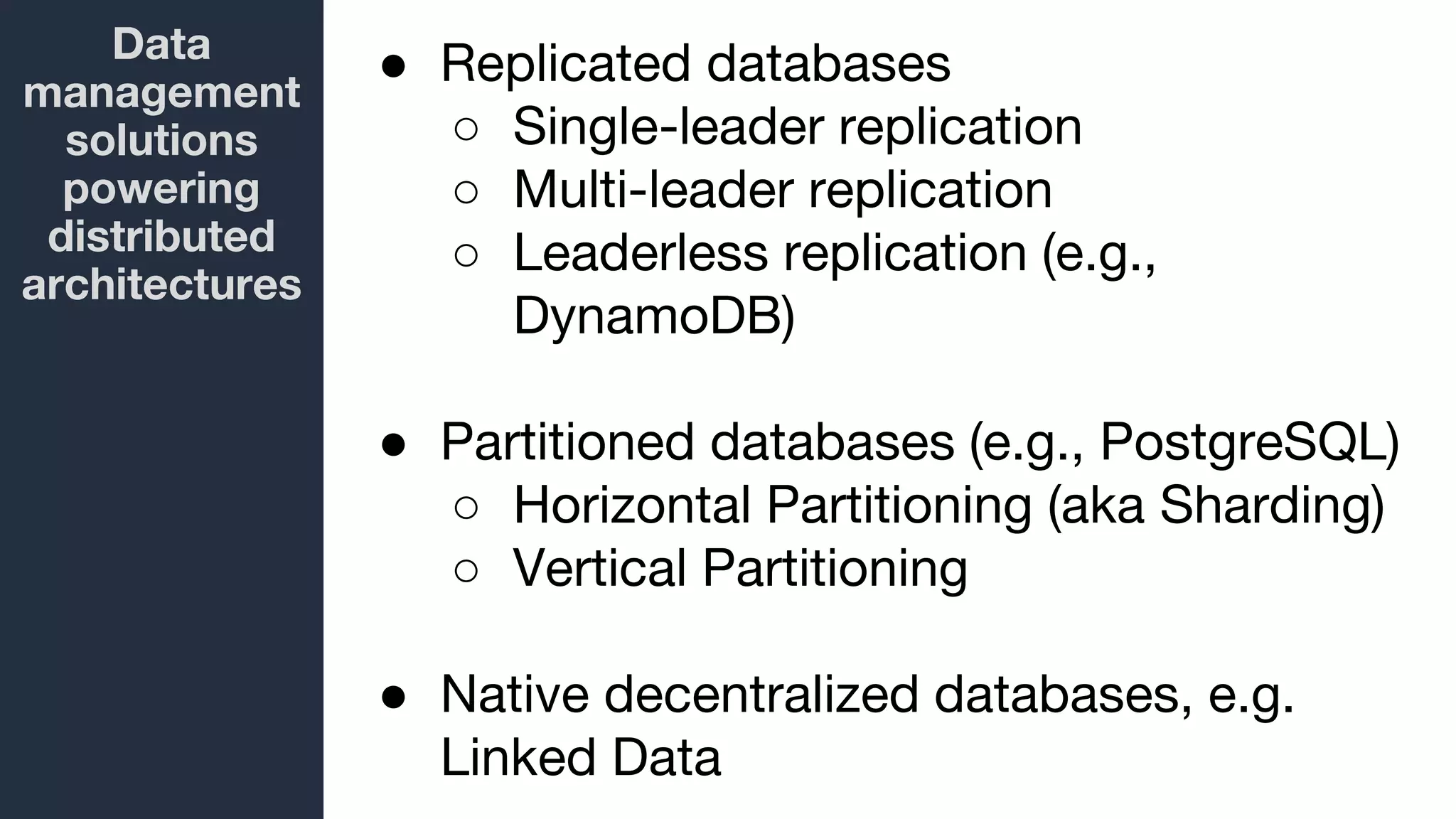
Data
management
solutions
powering
distributed
architectures
● Replicated databases
○ Single-leader replication
○ Multi-leader replication
○ Leaderless replication (e.g.,
DynamoDB)
● Partitioned databases (e.g., PostgreSQL)
○ Horizontal Partitioning (aka Sharding)
○ Vertical Partitioning
● Native decentralized databases, e.g.
Linked Data
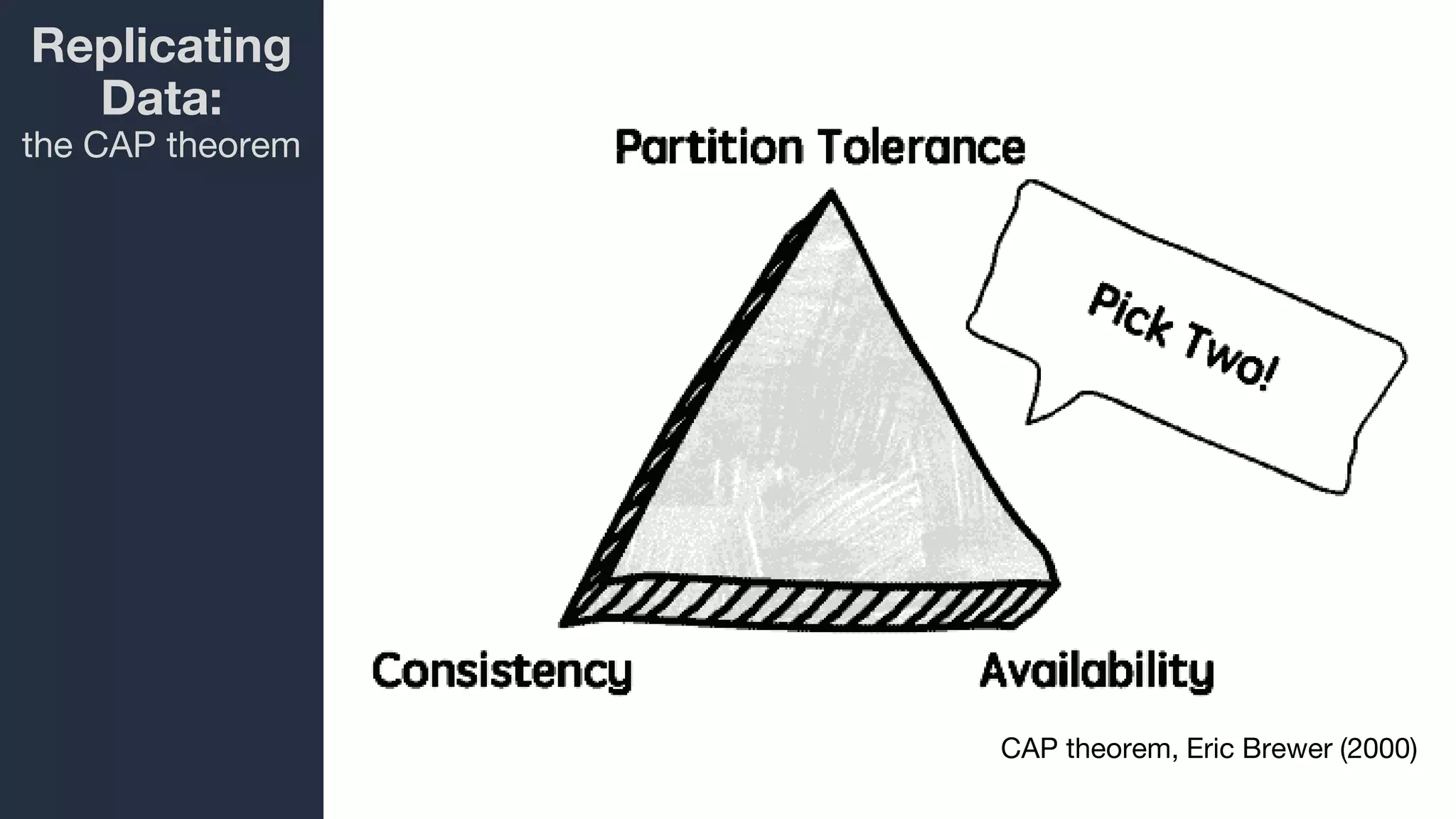
Replicating
Data:
the CAP theorem
CAP theorem, Eric Brewer (2000)
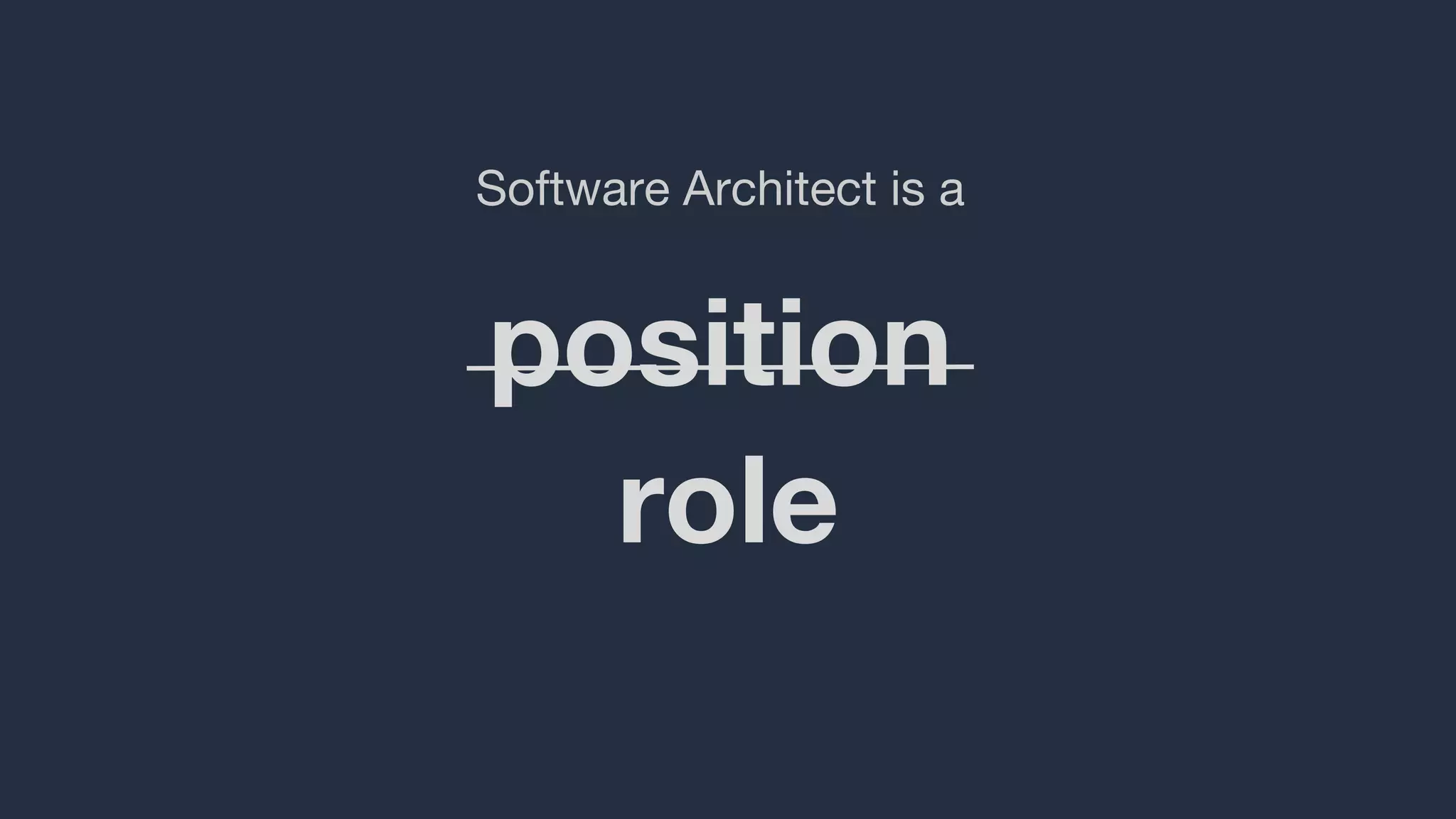
position
Software Architect is a
role
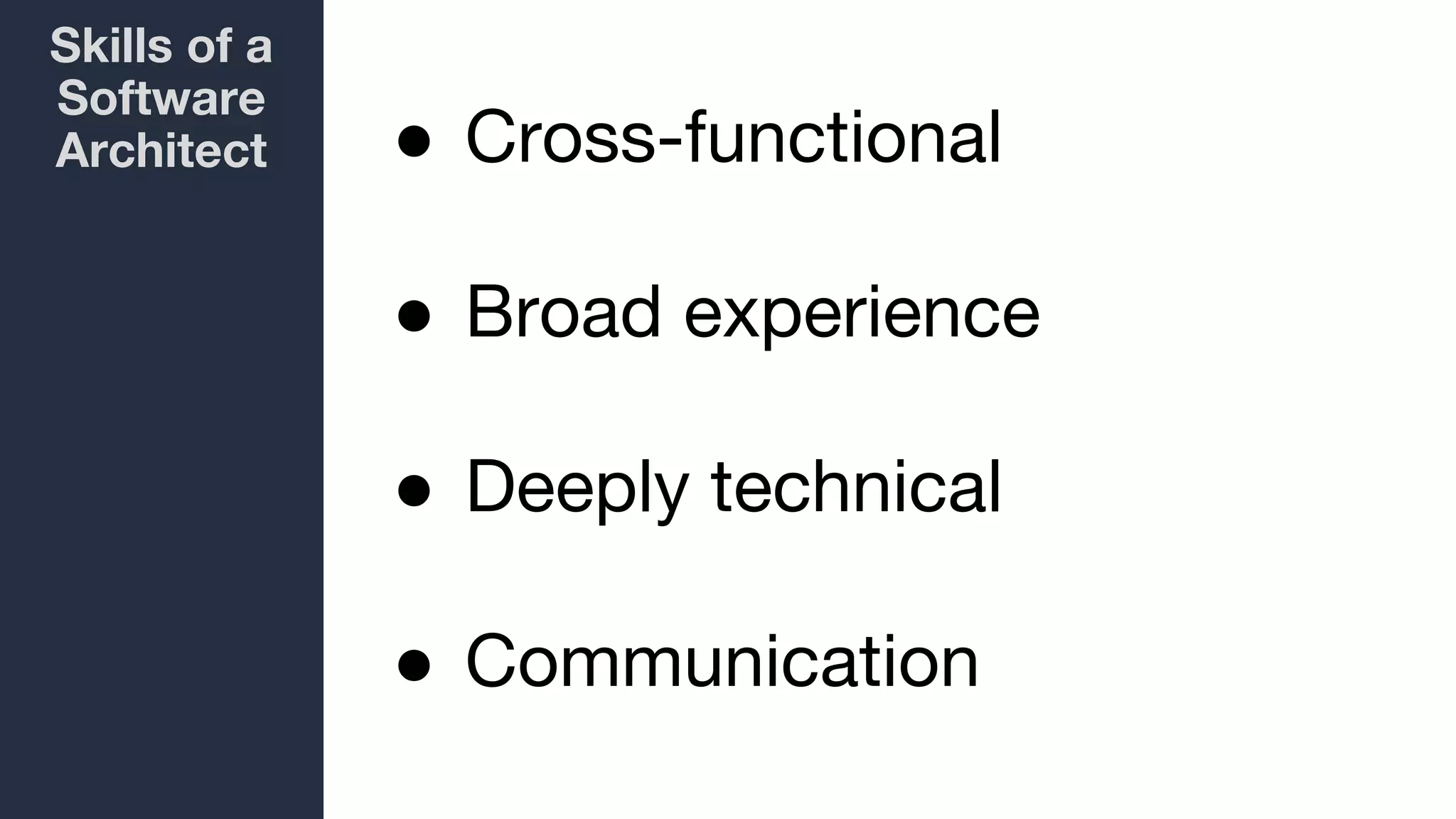
Skills of a
Software
Architect ● Cross-functional
● Broad experience
● Deeply technical
● Communication
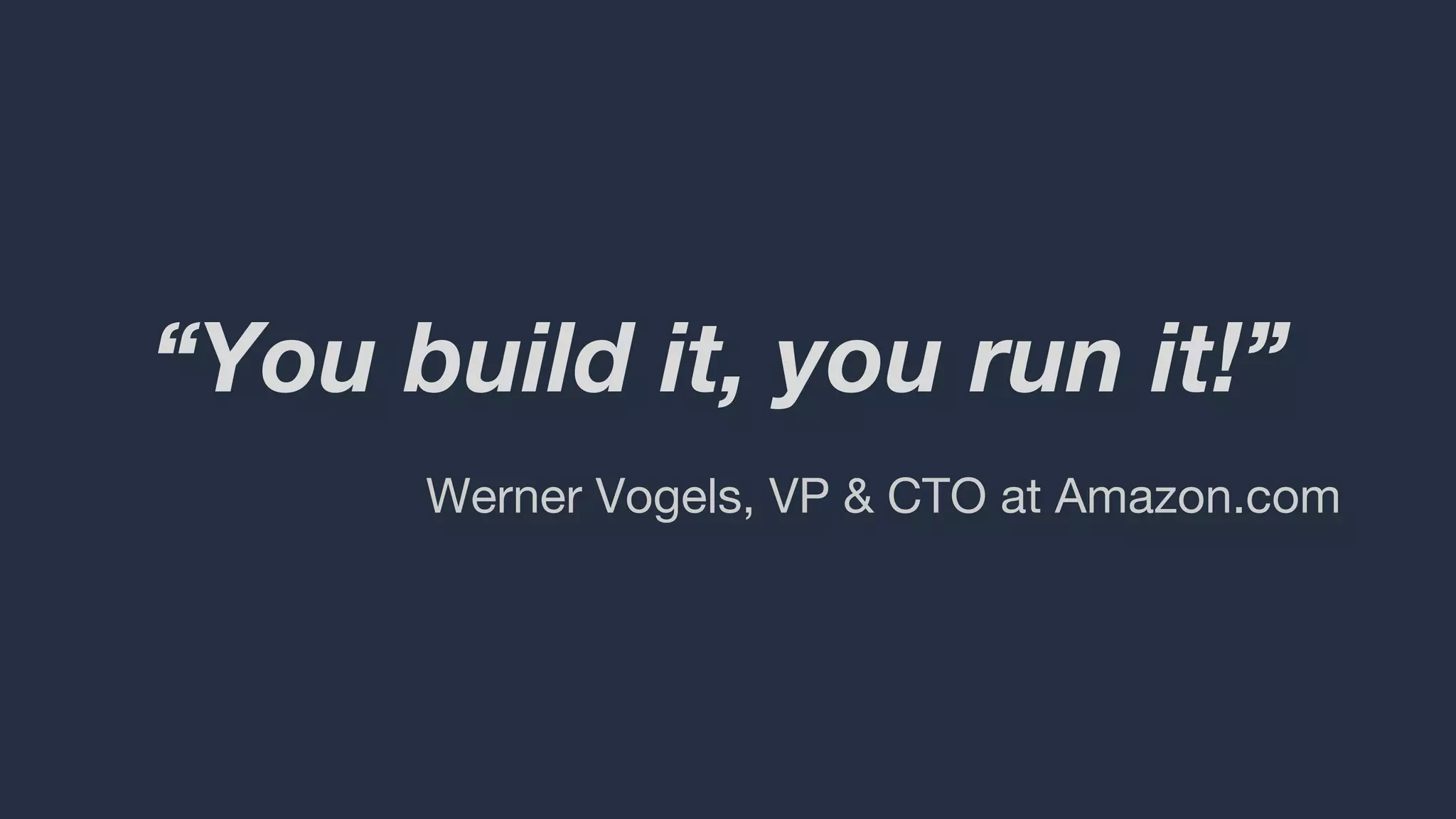
“You build it, you run it!”
Werner Vogels, VP & CTO at Amazon.com
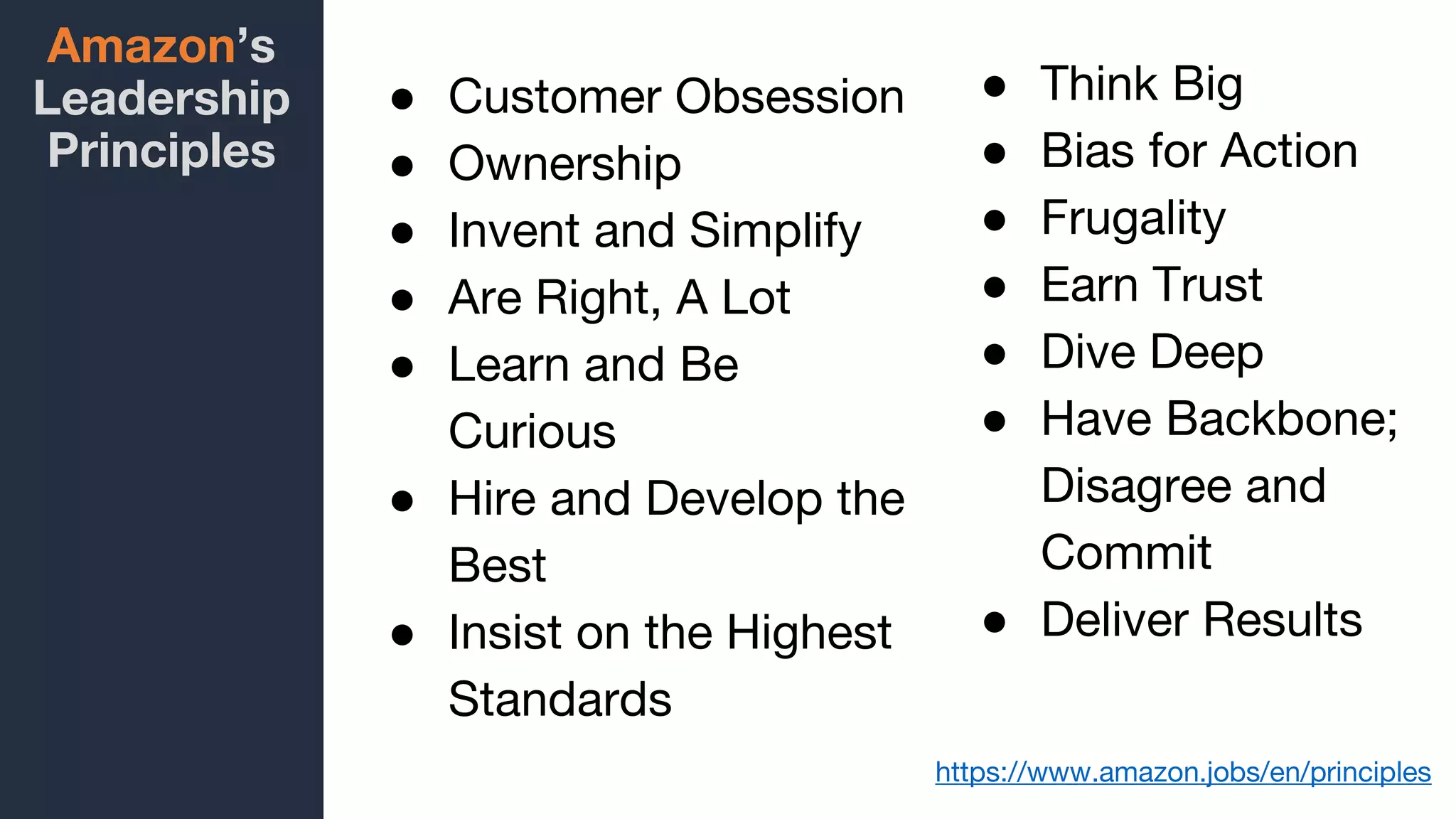
Amazon’s
Leadership
Principles
● Customer Obsession
● Ownership
● Invent and Simplify
● Are Right, A Lot
● Learn and Be
Curious
● Hire and Develop the
Best
● Insist on the Highest
Standards
● Think Big
● Bias for Action
● Frugality
● Earn Trust
● Dive Deep
● Have Backbone;
Disagree and
Commit
● Deliver Results
https://www.amazon.jobs/en/principles
School of
Computer
Science
Career Opportunities
www.amazon.jobs
26
Q&A
School of
Computer
Science
sergio@wikier.org
web
twitter
email
Laboratory
Assignment
(Labra)
The goal is to create DeChat, a decentralized chat app based on the Solid
Specifications.
The system will be developed by teams of 5-8 students as part of their Software
Architecture course.
High level requirements
● The system will be based on a decentralized architecture where data
storage is separated from the app
● Users can store their chat data in their own pods
● The app will allow a user to share pictures, videos or other kinds of files
with other friends through the chat
● A user can get notifications when some friend wants to chat with him
● Users can have groups of friends with whom they may want to chat
● It will be possible to have group chats where all members receive the
messages

Trends in software architecture: a professional (des)orientation

Editor's Notes

  • #7 There is no highest level concept of a system. Customers have a different concept than developers. Customers do not care at all about the structure of significant components. So, perhaps an architecture is the highest level concept that developers have of a system in its environment. Let’s forget the developers who just understand their little piece. Architecture is the highest level concept of the expert developers. What makes a component significant? It is significant because the expert developers say so.
  • #9 architectures in software require to be agile, because architectures need to continuously evolve and adapt
  • #11 Open-Close Principle
  • #12 The trend goes to small components to maximize the features described before: smaller is easier to test and scale. Labra will describe in detail the different architectures.
  • #24 You must know alternatives and their tradeoffs for making the right decisions. Keep coding, Keep reading code from others (open source). Architecting is about communicating and reaching a common understanding in the team.
  • #25 “The traditional model is that you take your software to the wall that separates development and operations, and throw it over and then forget about it. Not at Amazon. You build it, you run it. This brings developers into contact with the day-to-day operation of their software. It also brings them into day-to-day contact with the customer. This customer feedback loop is essential for improving the quality of the service.” -- Werner Vogels in “A conversation with Werner Vogels” in ACM Queue, May 2006