Transverse Myelitis
Objectives
 Introduction
 Definition
 Causes
 Side effects
 Diagnostic Examination
 Management
 Complication
 Conclusion
Introduction
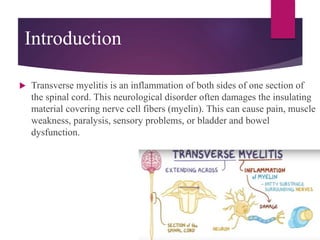
 Transverse myelitis is an inflammation of both sides of one section of
the spinal cord. This neurological disorder often damages the insulating
material covering nerve cell fibers (myelin). This can cause pain, muscle
weakness, paralysis, sensory problems, or bladder and bowel
dysfunction.
Definition
 Transverse myelitis is a rare acquired neuro-immune
spinal cord disorder that can present with the rapid
onset of weakness, sensory alterations, and bowel or
bladder dysfunction
Causes
 The exact reason for transverse myelitis is not known
 Viral, bacterial and fungal infections affecting the spinal
cord may cause transverse myelitis.
 Immune system disorders
Symptoms
 Pain. Transverse myelitis pain may begin suddenly in your lower back.
Sharp pain may shoot down your legs or arms or around your chest or
abdomen. Pain symptoms vary based on the part of your spinal cord that's
affected.
 Abnormal sensations. Some people with transverse myelitis report
sensations of numbness, tingling, coldness or burning. Some are especially
sensitive to the light touch of clothing or to extreme heat or cold. You may
feel as if something is tightly wrapping the skin of your chest, abdomen or
legs.
 Weakness in your arms or legs. Some people notice heaviness in the legs,
or that they're stumbling or dragging one foot. Others may develop severe
weakness or even total paralysis.
 Bladder and bowel problems. This may include needing to urinate more
frequently, urinary incontinence, difficulty urinating and constipation.
Diagnostic Examination
 Medical history and thorough neurological examination.
 Evaluate any spinal cord condition causes that require
emergency intervention, such as trauma or a mass putting
pressure on the cord.
 Magnetic resonance imaging
 Blood
 Lumbar puncture (also called spinal tap)
Management
 Pharmacological
 Nursing
Pharmacological Management
 Pain medication.
 Intravenous steroids
 Plasma exchange therapy
 Antiviral medication.
 Medications to treat other complications.
 Medications to prevent recurrent attacks of transverse
myelitis.
Other therapies
 Physical therapy.
 Occupational therapy.
 Psychotherapy.
Nursing Management
 Pain management
 Effective management of bowel and bladder function
 Monitor the signs of infection
 Improve the function to performing the specific activities of daily
living.
 Try to identify the underlying cause of the fatigue
 Monitor the complication of Immobility
 Collaborate with the Physical therapist and occupational therapist
 Assess the skin integrity and the turn the client every 2 hours
 Encourage the client to express feelings of anger and depression
 Promote rehabilitation with self care measures
Complication
 Pain
 Stiffness, tightness or painful spasms
 Partial or total paralysis of your arms, legs or both.
 Sexual dysfunction
 Depression or anxiety
Conclusion
 In summary, Transverse myelitis is a segmental spinal
cord injury caused by acute inflammation due to viral ,
bacterial or fungal
Questions
Transverse myelitis

Transverse myelitis

  • 1.
  • 2.
    Objectives  Introduction  Definition Causes  Side effects  Diagnostic Examination  Management  Complication  Conclusion
  • 3.
    Introduction  Transverse myelitisis an inflammation of both sides of one section of the spinal cord. This neurological disorder often damages the insulating material covering nerve cell fibers (myelin). This can cause pain, muscle weakness, paralysis, sensory problems, or bladder and bowel dysfunction.
  • 4.
    Definition  Transverse myelitisis a rare acquired neuro-immune spinal cord disorder that can present with the rapid onset of weakness, sensory alterations, and bowel or bladder dysfunction
  • 5.
    Causes  The exactreason for transverse myelitis is not known  Viral, bacterial and fungal infections affecting the spinal cord may cause transverse myelitis.  Immune system disorders
  • 6.
    Symptoms  Pain. Transversemyelitis pain may begin suddenly in your lower back. Sharp pain may shoot down your legs or arms or around your chest or abdomen. Pain symptoms vary based on the part of your spinal cord that's affected.  Abnormal sensations. Some people with transverse myelitis report sensations of numbness, tingling, coldness or burning. Some are especially sensitive to the light touch of clothing or to extreme heat or cold. You may feel as if something is tightly wrapping the skin of your chest, abdomen or legs.  Weakness in your arms or legs. Some people notice heaviness in the legs, or that they're stumbling or dragging one foot. Others may develop severe weakness or even total paralysis.  Bladder and bowel problems. This may include needing to urinate more frequently, urinary incontinence, difficulty urinating and constipation.
  • 7.
    Diagnostic Examination  Medicalhistory and thorough neurological examination.  Evaluate any spinal cord condition causes that require emergency intervention, such as trauma or a mass putting pressure on the cord.  Magnetic resonance imaging  Blood  Lumbar puncture (also called spinal tap)
  • 8.
  • 9.
    Pharmacological Management  Painmedication.  Intravenous steroids  Plasma exchange therapy  Antiviral medication.  Medications to treat other complications.  Medications to prevent recurrent attacks of transverse myelitis.
  • 10.
    Other therapies  Physicaltherapy.  Occupational therapy.  Psychotherapy.
  • 11.
    Nursing Management  Painmanagement  Effective management of bowel and bladder function  Monitor the signs of infection  Improve the function to performing the specific activities of daily living.  Try to identify the underlying cause of the fatigue  Monitor the complication of Immobility  Collaborate with the Physical therapist and occupational therapist  Assess the skin integrity and the turn the client every 2 hours  Encourage the client to express feelings of anger and depression  Promote rehabilitation with self care measures
  • 12.
    Complication  Pain  Stiffness,tightness or painful spasms  Partial or total paralysis of your arms, legs or both.  Sexual dysfunction  Depression or anxiety
  • 13.
    Conclusion  In summary,Transverse myelitis is a segmental spinal cord injury caused by acute inflammation due to viral , bacterial or fungal
  • 14.