Group Members:
  •Aamer Mehmood
  •Asadullah Ilyas
  •Fazeel Ashraf
  •Ali Haider
   Introduction             Situation Analysis
   Marketing Plan           Market Need
   Mission                  Market Trend
   Marketing Objective      Market Growth
   Financial Objective      SWOT analysis
   Porter’s Five Force Model
   Target market
   Marketing mix
   Financial and Budget Forecast
   Strategies
   Positioning
   Future Recommendation
   Conclusion
   Main Idea

   Goals

   Time Limit To achieve

   Current industries

   Earning probability
   Mission

   Marketing Objective
    ◦ Gain market share
    ◦ Decrease customer acquisition cost
    ◦ Decrease marketing cost
   Increase in profit

   Decrease employee training cost

   Decrease maintenance cost

   Operational cost
   Convenience

   Reliability

   Professionalism
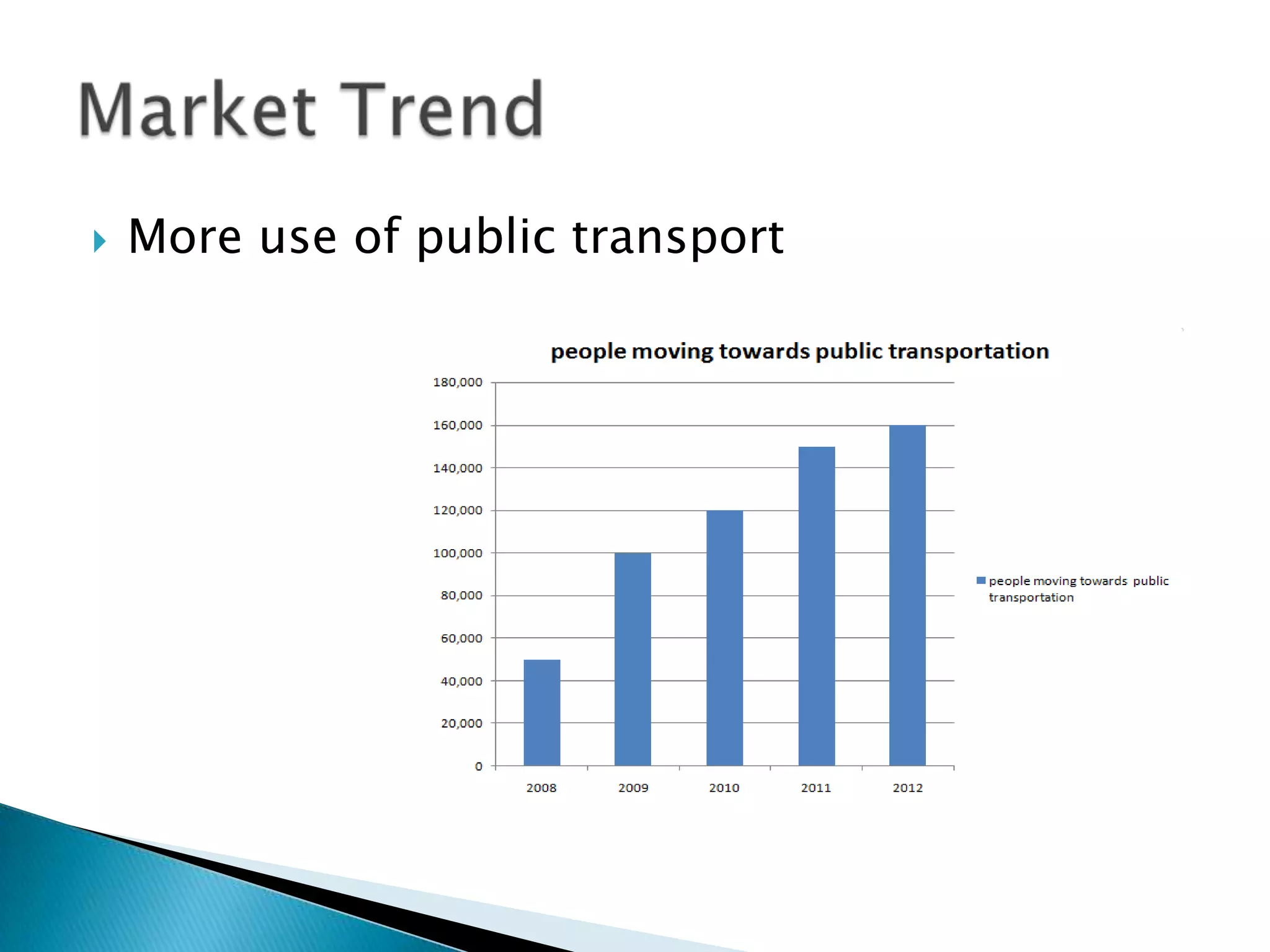
   More use of public transport
   Strengths

   Weakness

   Opportunities

   Threats
   A model for Industry analysis.

   Helps you understand

    ◦ Strength of current competitive position

    ◦ Strength of a position you're considering moving
      into.
   Threat of Entry:
    ◦ with evolution of technology and creative minds of
      people, there are always threats of new entrance in
      market.

   Bargaining Power of Customer:
    ◦ This will consume some time, in convincing
      customer
   Threat of Substitute:
    ◦ substitutes like railways, airplanes.
   Internal Rivalry:
    ◦ Different decisions of shareholders
    ◦ Internal disputes
   Bargaining Power of Supplier:
    ◦ Dealing with food serving suppliers.
    ◦ Arguments of maintenance service providers.
    ◦ Critical issue; buying new busses.
   A specific group of consumers at which a
    company aims its products and services or
    the market segments that are chosen to focus
    are called target markets.

   Your target customers are those who are
    most likely to buy from you.
   Our target customers are:

    ◦ Business travelers.

    ◦ Individuals & families.
   Positioning as professionals

   Awarding drivers for their good behavior

   Customer turning into repeat customer

   Driver acts nice and develop new customers.

   Team based actions
   Start of business

   About half year after the start of business

   in about 10 years we will be able to cover all
    the major cities of Pakistan.
   Robots introductions

   Number of terminals will be increased

   Purchasing buses with latest technology

   Providing free transport from within the city
    to the terminal
   Improving food quality
   Market share increase by building new
    terminals

   Revenue is directly proportional to the
    number of successful terminals
   Innovation

   In response to customer feedback

   The result of these terms will show overall
    target achievements.
   Transportation is very successful business

   Using past performance and forecast data for
    making new strategies

Transportation service marketing -fast travels

  • 1.
    Group Members: •Aamer Mehmood •Asadullah Ilyas •Fazeel Ashraf •Ali Haider
  • 2.
    Introduction  Situation Analysis  Marketing Plan  Market Need  Mission  Market Trend  Marketing Objective  Market Growth  Financial Objective  SWOT analysis
  • 3.
    Porter’s Five Force Model  Target market  Marketing mix  Financial and Budget Forecast  Strategies  Positioning  Future Recommendation  Conclusion
  • 4.
    Main Idea  Goals  Time Limit To achieve  Current industries  Earning probability
  • 5.
    Mission  Marketing Objective ◦ Gain market share ◦ Decrease customer acquisition cost ◦ Decrease marketing cost
  • 6.
    Increase in profit  Decrease employee training cost  Decrease maintenance cost  Operational cost
  • 7.
    Convenience  Reliability  Professionalism
  • 8.
    More use of public transport
  • 9.
    Strengths  Weakness  Opportunities  Threats
  • 10.
    A model for Industry analysis.  Helps you understand ◦ Strength of current competitive position ◦ Strength of a position you're considering moving into.
  • 11.
    Threat of Entry: ◦ with evolution of technology and creative minds of people, there are always threats of new entrance in market.  Bargaining Power of Customer: ◦ This will consume some time, in convincing customer
  • 12.
    Threat of Substitute: ◦ substitutes like railways, airplanes.  Internal Rivalry: ◦ Different decisions of shareholders ◦ Internal disputes  Bargaining Power of Supplier: ◦ Dealing with food serving suppliers. ◦ Arguments of maintenance service providers. ◦ Critical issue; buying new busses.
  • 13.
    A specific group of consumers at which a company aims its products and services or the market segments that are chosen to focus are called target markets.  Your target customers are those who are most likely to buy from you.
  • 14.
    Our target customers are: ◦ Business travelers. ◦ Individuals & families.
  • 15.
    Positioning as professionals  Awarding drivers for their good behavior  Customer turning into repeat customer  Driver acts nice and develop new customers.  Team based actions
  • 16.
    Start of business  About half year after the start of business  in about 10 years we will be able to cover all the major cities of Pakistan.
  • 18.
    Robots introductions  Number of terminals will be increased  Purchasing buses with latest technology  Providing free transport from within the city to the terminal  Improving food quality
  • 19.
    Market share increase by building new terminals  Revenue is directly proportional to the number of successful terminals
  • 20.
    Innovation  In response to customer feedback  The result of these terms will show overall target achievements.
  • 21.
    Transportation is very successful business  Using past performance and forecast data for making new strategies