TRANSFUSION
REACTIONS
DR. SARAH FARRUKH
MBBS, FCPS (HAEMATOLOGY)
WMO, PUNJAB INSTITUTE OF CARDIOLOGY
What is a transfusion reaction?
 Any adverse event which occurs during or after transfusion of whole
blood, blood components and human derived plasma products.
CLASSIFICATION
 ACUTE:
Within 24 hours of transfusion
 DELAYED
After 24 hours of transfusion
ACUTE TRANSFUSION REACTIONS
 Hemolytic transfusion reaction
 Transfusion associated sepsis
 Febrile non hemolytic transfusion reaction
 Allergic transfusion reaction
 Transfusion associated acute lung injury
 Transfusion associated circulatory overload
Presenting signs and symptoms
 PAIN: chest, abdominal, flanks,
back or infusion site.
 BP: Hypotension
 Dark colored urine / red urine
 Vascular collapse (DIC)
POSSIBLE REACTION
 HEMOLYTIC TRANSFUSION
REACTION
 Commonly seen in ABO mismatched
transfusion
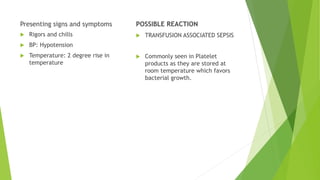
Presenting signs and symptoms
 Rigors and chills
 BP: Hypotension
 Temperature: 2 degree rise in
temperature
POSSIBLE REACTION
 TRANSFUSION ASSOCIATED SEPSIS
 Commonly seen in Platelet
products as they are stored at
room temperature which favors
bacterial growth.
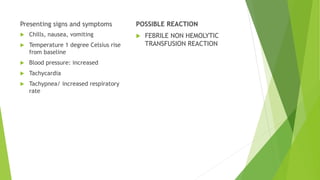
Presenting signs and symptoms
 Chills, nausea, vomiting
 Temperature 1 degree Celsius rise
from baseline
 Blood pressure: increased
 Tachycardia
 Tachypnea/ increased respiratory
rate
POSSIBLE REACTION
 FEBRILE NON HEMOLYTIC
TRANSFUSION REACTION
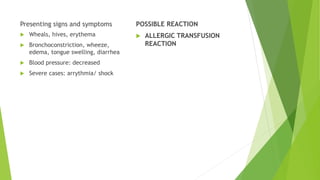
Presenting signs and symptoms
 Wheals, hives, erythema
 Bronchoconstriction, wheeze,
edema, tongue swelling, diarrhea
 Blood pressure: decreased
 Severe cases: arrythmia/ shock
POSSIBLE REACTION
 ALLERGIC TRANSFUSION
REACTION
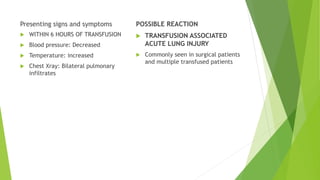
Presenting signs and symptoms
 WITHIN 6 HOURS OF TRANSFUSION
 Blood pressure: Decreased
 Temperature: increased
 Chest Xray: Bilateral pulmonary
infiltrates
POSSIBLE REACTION
 TRANSFUSION ASSOCIATED
ACUTE LUNG INJURY
 Commonly seen in surgical patients
and multiple transfused patients
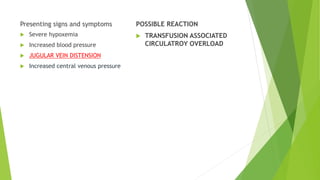
Presenting signs and symptoms
 Severe hypoxemia
 Increased blood pressure
 JUGULAR VEIN DISTENSION
 Increased central venous pressure
POSSIBLE REACTION
 TRANSFUSION ASSOCIATED
CIRCULATROY OVERLOAD
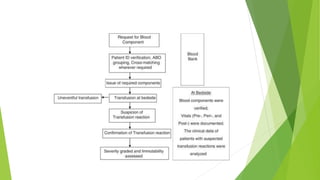
WHAT TO DO NEXT?
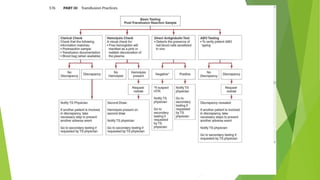
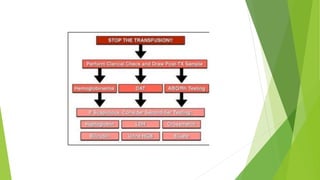
FIRST AND FOREMOST: STOP THE TRANSFUSION
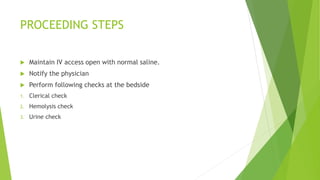
PROCEEDING STEPS
 Maintain IV access open with normal saline.
 Notify the physician
 Perform following checks at the bedside
1. Clerical check
2. Hemolysis check
3. Urine check
Samples to be sent to the laboratory
 COMPLETE BLOOD COUNTS
 COAGULATION PROFILE
 ABO GROUPING
 URINE COMPLETE EXAMINATION
 ORIGINAL BLOOD/ COMPONENRT BAG
 RENAL FUNCTION TESTS
 LDH
 COOMBS TEST ( ANTIBODY MEDIATED HEMOLYSIS)
 BLOOD CULTURES (SEPSIS)
 BRAIN NATRIURETIC PEPTIDE ( TACO)
 SERUM HAPTOGLOBIN, BILIRUBIN AND LDH ( if hemolysis is suspected)
TRANSFUSION REACTIONS

TRANSFUSION REACTIONS

  • 1.
    TRANSFUSION REACTIONS DR. SARAH FARRUKH MBBS,FCPS (HAEMATOLOGY) WMO, PUNJAB INSTITUTE OF CARDIOLOGY
  • 2.
    What is atransfusion reaction?  Any adverse event which occurs during or after transfusion of whole blood, blood components and human derived plasma products.
  • 3.
    CLASSIFICATION  ACUTE: Within 24hours of transfusion  DELAYED After 24 hours of transfusion
  • 4.
    ACUTE TRANSFUSION REACTIONS Hemolytic transfusion reaction  Transfusion associated sepsis  Febrile non hemolytic transfusion reaction  Allergic transfusion reaction  Transfusion associated acute lung injury  Transfusion associated circulatory overload
  • 5.
    Presenting signs andsymptoms  PAIN: chest, abdominal, flanks, back or infusion site.  BP: Hypotension  Dark colored urine / red urine  Vascular collapse (DIC) POSSIBLE REACTION  HEMOLYTIC TRANSFUSION REACTION  Commonly seen in ABO mismatched transfusion
  • 6.
    Presenting signs andsymptoms  Rigors and chills  BP: Hypotension  Temperature: 2 degree rise in temperature POSSIBLE REACTION  TRANSFUSION ASSOCIATED SEPSIS  Commonly seen in Platelet products as they are stored at room temperature which favors bacterial growth.
  • 7.
    Presenting signs andsymptoms  Chills, nausea, vomiting  Temperature 1 degree Celsius rise from baseline  Blood pressure: increased  Tachycardia  Tachypnea/ increased respiratory rate POSSIBLE REACTION  FEBRILE NON HEMOLYTIC TRANSFUSION REACTION
  • 8.
    Presenting signs andsymptoms  Wheals, hives, erythema  Bronchoconstriction, wheeze, edema, tongue swelling, diarrhea  Blood pressure: decreased  Severe cases: arrythmia/ shock POSSIBLE REACTION  ALLERGIC TRANSFUSION REACTION
  • 9.
    Presenting signs andsymptoms  WITHIN 6 HOURS OF TRANSFUSION  Blood pressure: Decreased  Temperature: increased  Chest Xray: Bilateral pulmonary infiltrates POSSIBLE REACTION  TRANSFUSION ASSOCIATED ACUTE LUNG INJURY  Commonly seen in surgical patients and multiple transfused patients
  • 10.
    Presenting signs andsymptoms  Severe hypoxemia  Increased blood pressure  JUGULAR VEIN DISTENSION  Increased central venous pressure POSSIBLE REACTION  TRANSFUSION ASSOCIATED CIRCULATROY OVERLOAD
  • 11.
    WHAT TO DONEXT? FIRST AND FOREMOST: STOP THE TRANSFUSION
  • 12.
    PROCEEDING STEPS  MaintainIV access open with normal saline.  Notify the physician  Perform following checks at the bedside 1. Clerical check 2. Hemolysis check 3. Urine check
  • 15.
    Samples to besent to the laboratory  COMPLETE BLOOD COUNTS  COAGULATION PROFILE  ABO GROUPING  URINE COMPLETE EXAMINATION  ORIGINAL BLOOD/ COMPONENRT BAG  RENAL FUNCTION TESTS  LDH  COOMBS TEST ( ANTIBODY MEDIATED HEMOLYSIS)  BLOOD CULTURES (SEPSIS)  BRAIN NATRIURETIC PEPTIDE ( TACO)  SERUM HAPTOGLOBIN, BILIRUBIN AND LDH ( if hemolysis is suspected)