Transforming the Ceph tests
with OpenStack
Loic Dachary
Artisan Logiciel Libre
2015/10/27
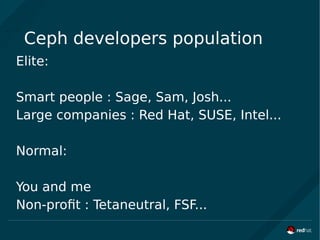
Ceph developers population
Elite:
Smart people : Sage, Sam, Josh...
Large companies : Red Hat, SUSE, Intel...
Normal:
You and me
Non-profit : Tetaneutral, FSF...
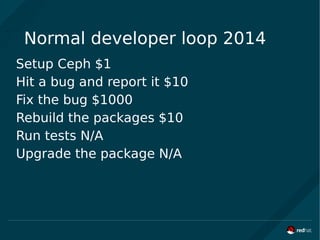
Normal developer loop 2014
Setup Ceph $1
Hit a bug and report it $10
Fix the bug $1000
Rebuild the packages $10
Run tests N/A
Upgrade the package N/A
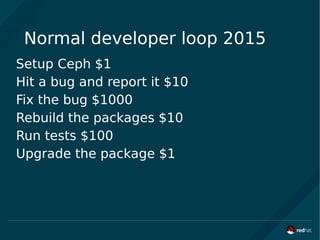
Normal developer loop 2015
Setup Ceph $1
Hit a bug and report it $10
Fix the bug $1000
Rebuild the packages $10
Run tests $100
Upgrade the package $1
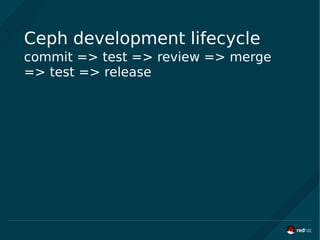
Ceph development lifecycle
commit => test => review => merge
=> test => release
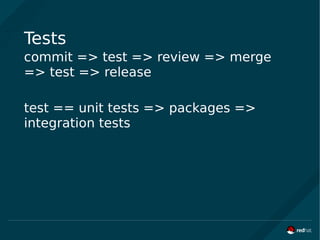
Tests
commit => test => review => merge
=> test => release
test == unit tests => packages =>
integration tests
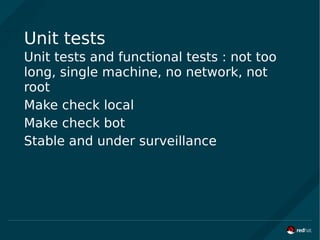
Unit tests
Unit tests and functional tests : not too
long, single machine, no network, not
root
Make check local
Make check bot
Stable and under surveillance
Debugging unit tests
make check bot fails => run locally =>
fix => push --force
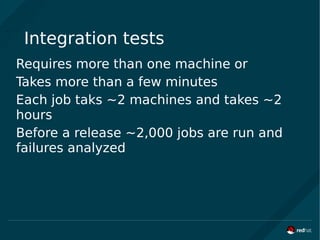
Integration tests
Requires more than one machine or
Takes more than a few minutes
Each job taks ~2 machines and takes ~2
hours
Before a release ~2,000 jobs are run and
failures analyzed
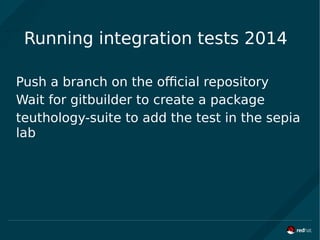
Running integration tests 2014
Push a branch on the official repository
Wait for gitbuilder to create a package
teuthology-suite to add the test in the sepia
lab
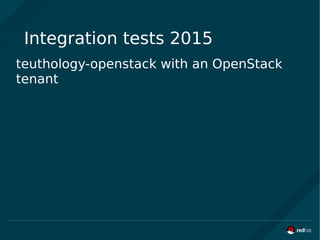
Integration tests 2015
teuthology-openstack with an OpenStack
tenant
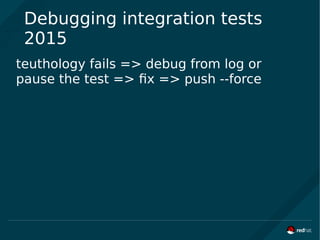
Debugging integration tests
2015
teuthology fails => debug from log or
pause the test => fix => push --force
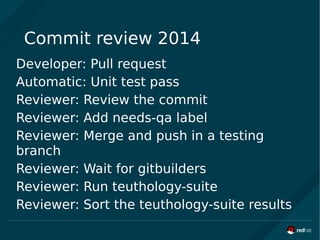
Commit review 2014
Developer: Pull request
Automatic: Unit test pass
Reviewer: Review the commit
Reviewer: Add needs-qa label
Reviewer: Merge and push in a testing
branch
Reviewer: Wait for gitbuilders
Reviewer: Run teuthology-suite
Reviewer: Sort the teuthology-suite results
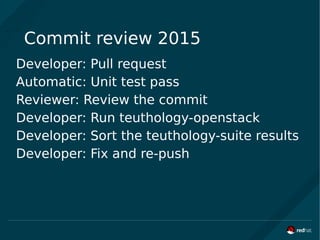
Commit review 2015
Developer: Pull request
Automatic: Unit test pass
Reviewer: Review the commit
Developer: Run teuthology-openstack
Developer: Sort the teuthology-suite results
Developer: Fix and re-push
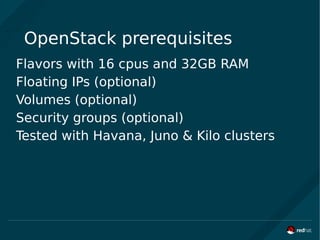
OpenStack prerequisites
Flavors with 16 cpus and 32GB RAM
Floating IPs (optional)
Volumes (optional)
Security groups (optional)
Tested with Havana, Juno & Kilo clusters
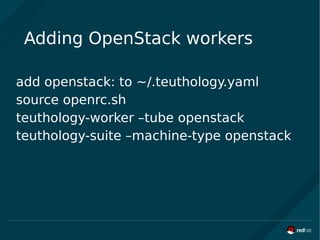
Adding OpenStack workers
add openstack: to ~/.teuthology.yaml
source openrc.sh
teuthology-worker –tube openstack
teuthology-suite –machine-type openstack
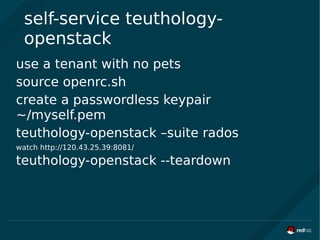
self-service teuthology-
openstack
use a tenant with no pets
source openrc.sh
create a passwordless keypair
~/myself.pem
teuthology-openstack –suite rados
watch http://120.43.25.39:8081/
teuthology-openstack --teardown
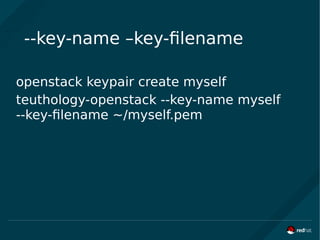
--key-name –key-filename
openstack keypair create myself
teuthology-openstack --key-name myself
--key-filename ~/myself.pem
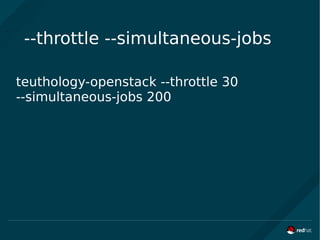
--throttle --simultaneous-jobs
teuthology-openstack --throttle 30
--simultaneous-jobs 200
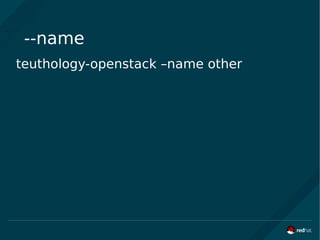
--name
teuthology-openstack –name other
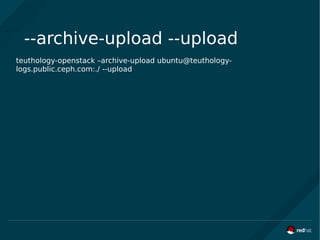
--archive-upload --upload
teuthology-openstack –archive-upload ubuntu@teuthology-
logs.public.ceph.com:./ --upload
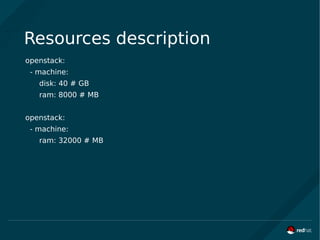
Resources description
openstack:
- machine:
disk: 40 # GB
ram: 8000 # MB
openstack:
- machine:
ram: 32000 # MB
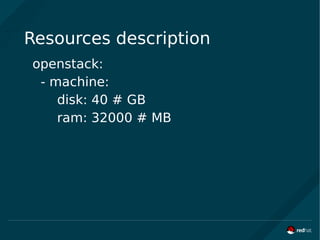
Resources description
openstack:
- machine:
disk: 40 # GB
ram: 32000 # MB
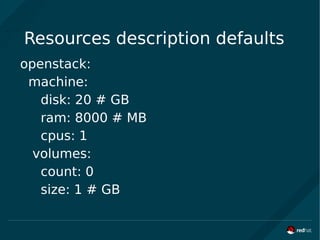
Resources description defaults
openstack:
machine:
disk: 20 # GB
ram: 8000 # MB
cpus: 1
volumes:
count: 0
size: 1 # GB
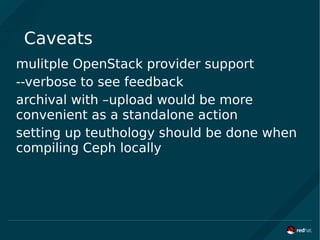
Caveats
mulitple OpenStack provider support
--verbose to see feedback
archival with –upload would be more
convenient as a standalone action
setting up teuthology should be done when
compiling Ceph locally
Commit review 20XX
Developer: Pull request
Automatic: Unit test and integration tests
pass, display coverage of the commit
modifications and cross reference the
results in the corresponding issue
Reviewer: Review the commit
THANK YOU
plus.google.com/+RedHat
linkedin.com/company/red-hat
youtube.com/user/RedHatVideos
facebook.com/redhatinc
twitter.com/RedHatNews

Transforming the Ceph Integration Tests with OpenStack