DIRECTION: FILL THE
MISSING LETTER TO FIND
THE HIDDEN WORD.
WHY DO YOU FILL ME
UP!
Why Do You Fill Me Up!
REPLICATION,
TRANSCRIPTION &
TRANSLATION
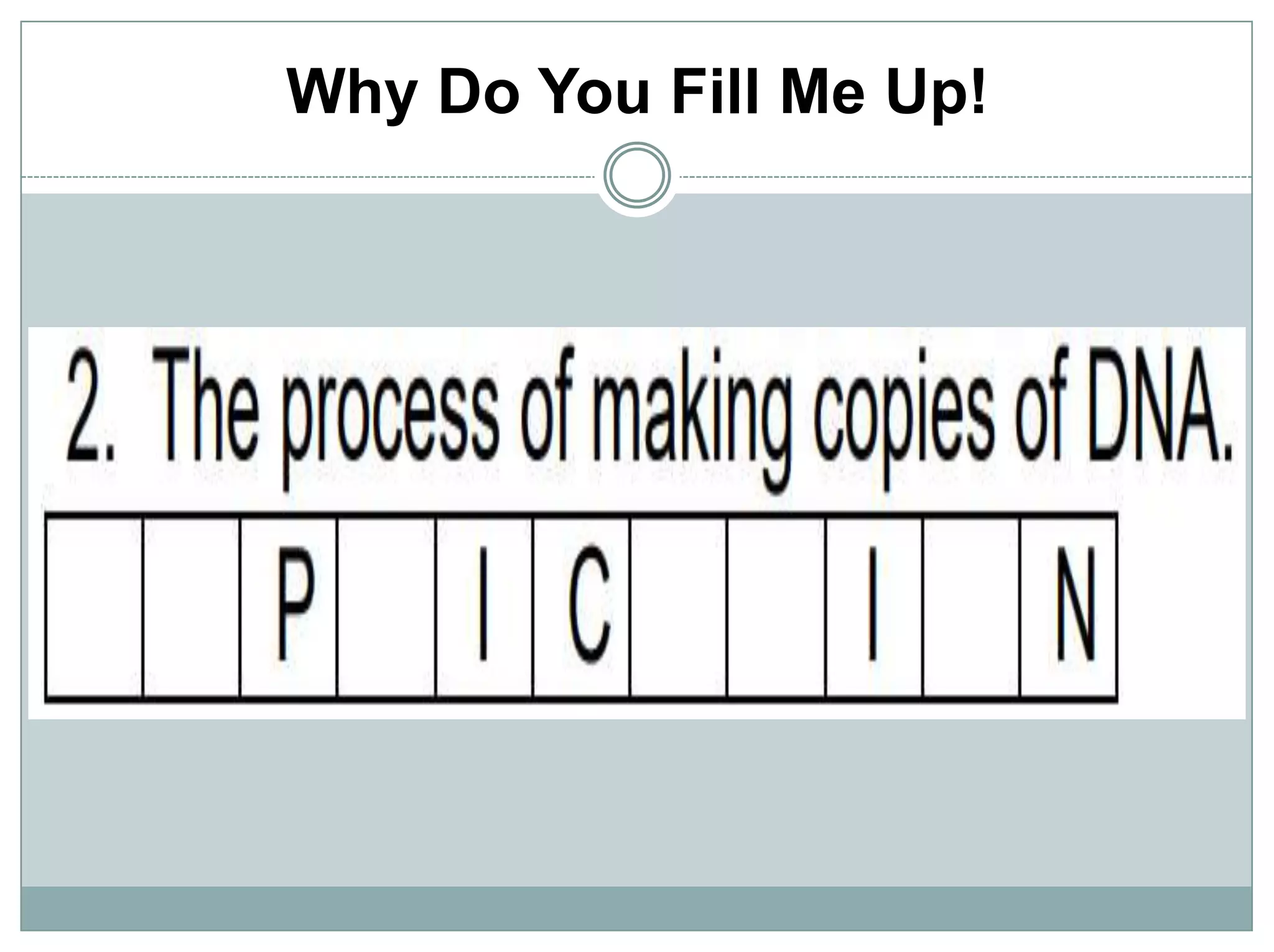
DNA Replication
Three main proteins:
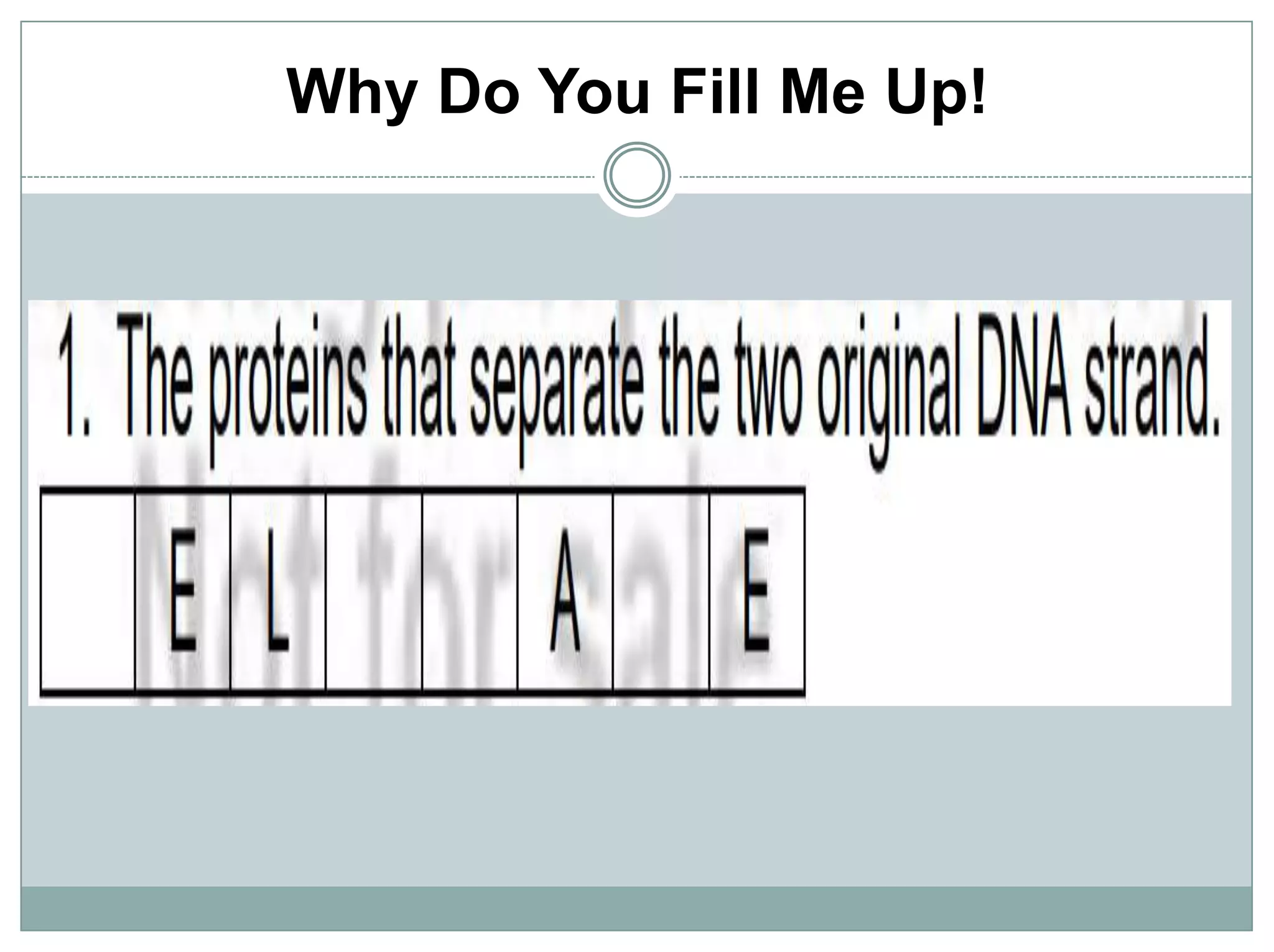
Helicase The proteins that
separate the two original DNA
strand.
Polymerase brings in new
nucleotides to form new DNA
Ligase zips the new DNA back
together
DNA Replication
Why is DNA Replication important?
 The important idea is that an exact duplication
of the DNA message is required, so that each
new cell in the body has the same set of
genetic instructions as the cells that
preceded it.
 This also insures that every new generation
of individuals has the same genetic
information as his/her parents.
In transcription the DNA
message is converted into an
RNA molecule.
In translation the RNA
message is used to assemble
amino acids into a protein
chain.
Protein synthesis involves two processes:
transcription and translation.
Central Dogma
RNA
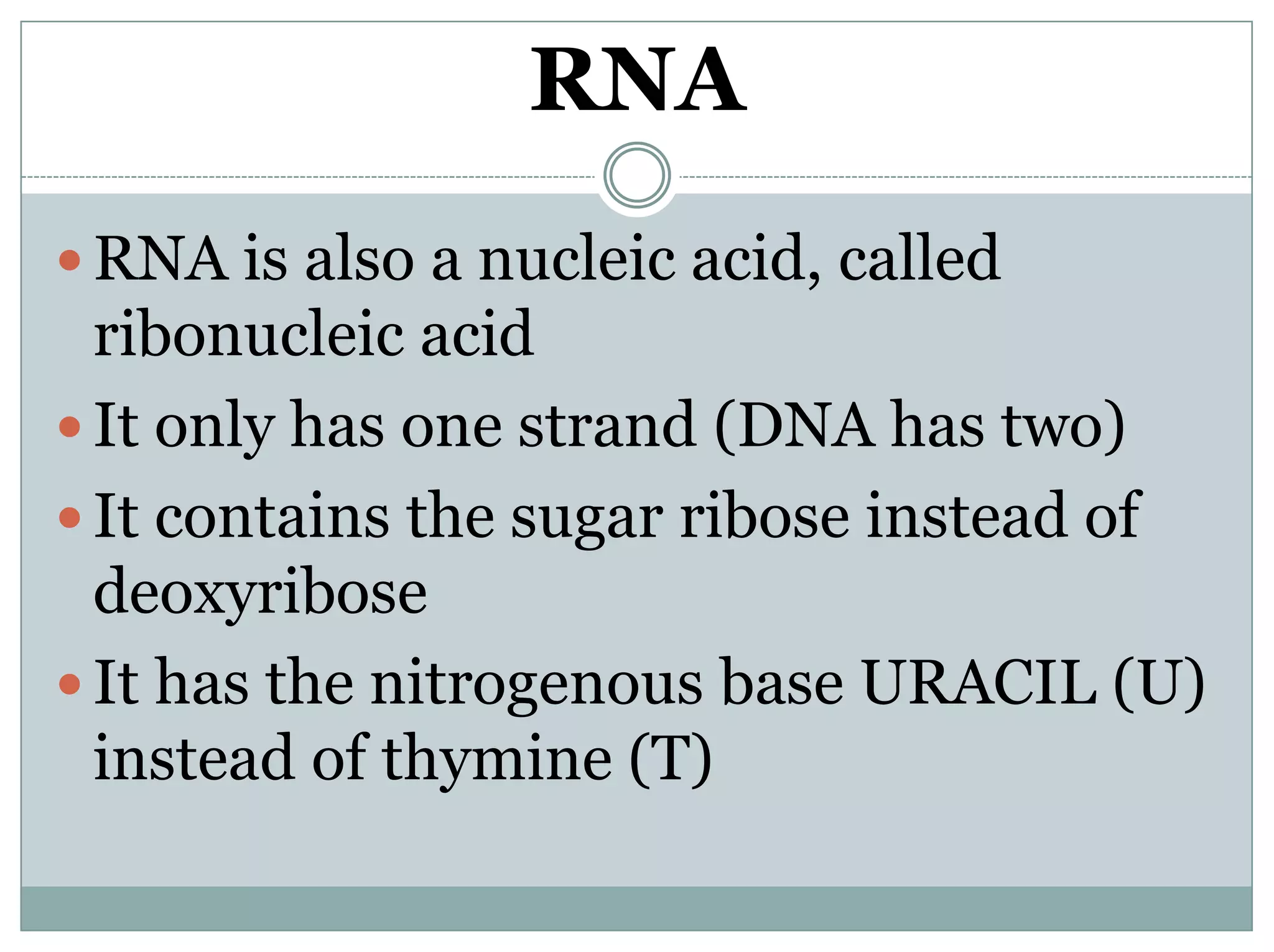
 RNA is also a nucleic acid, called
ribonucleic acid
 It only has one strand (DNA has two)
 It contains the sugar ribose instead of
deoxyribose
 It has the nitrogenous base URACIL (U)
instead of thymine (T)
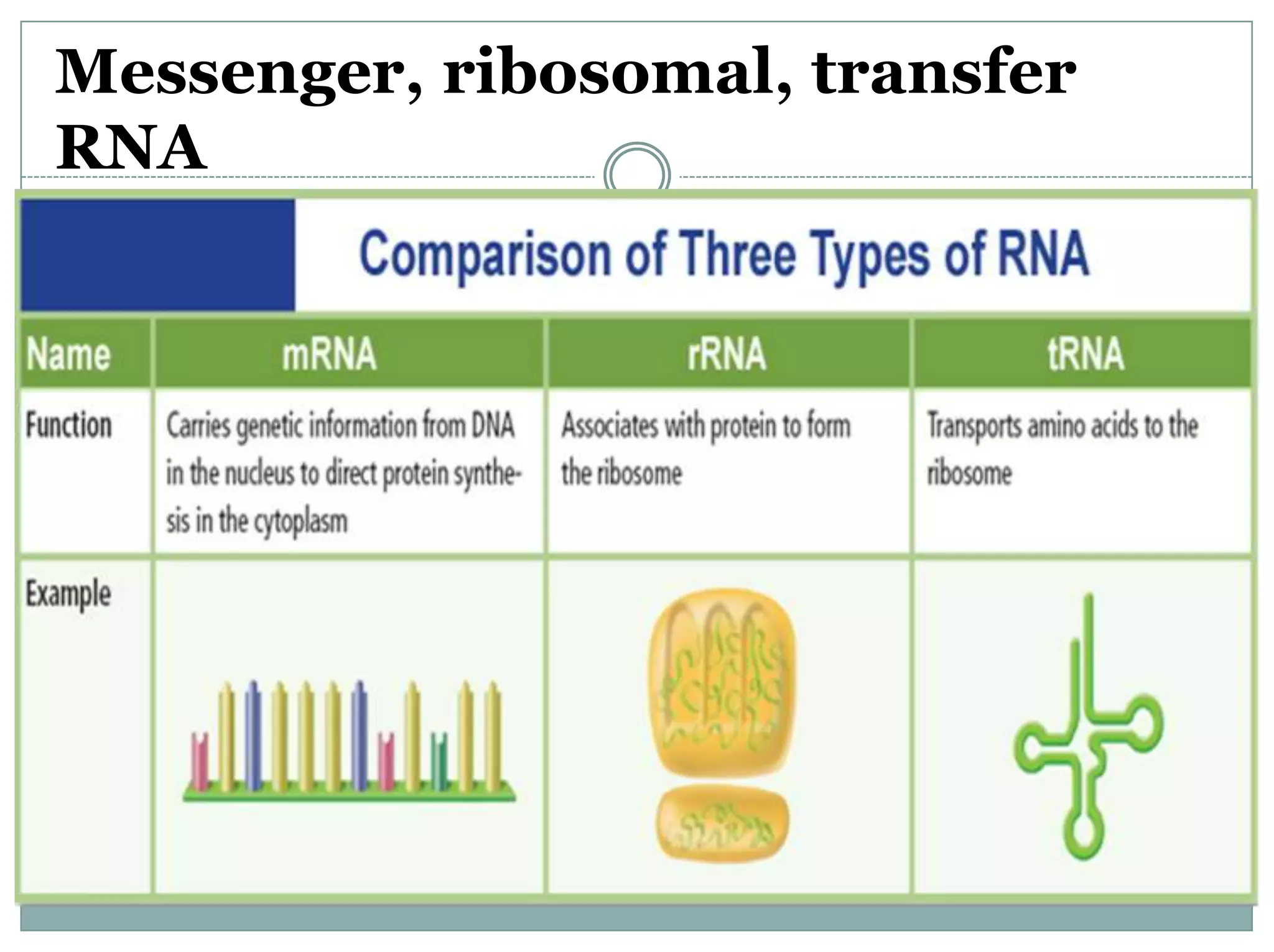
There are THREE types of RNA
 Messenger RNA (mRNA)
 Long strands of RNA nucleotides that are formed
complementary to one strand of DNA
 Transfer RNA (tRNA)
 translates the mRNA codons into the correct
amino acids
 Ribosomal RNA (rRNA)
 Associates with proteins to form ribosomes in the
cytoplasm
Messenger, ribosomal, transfer
RNA
TRANSCRIPTION (the first step in protein
synthesis)
 Through
transcription, the
DNA code is
transferred to
mRNA in the
nucleus.
 DNA is unzipped in
the nucleus and RNA
polymerase binds to a
specific section where
a mRNA will be
synthesized
Changing nucleic acids into amino
acids
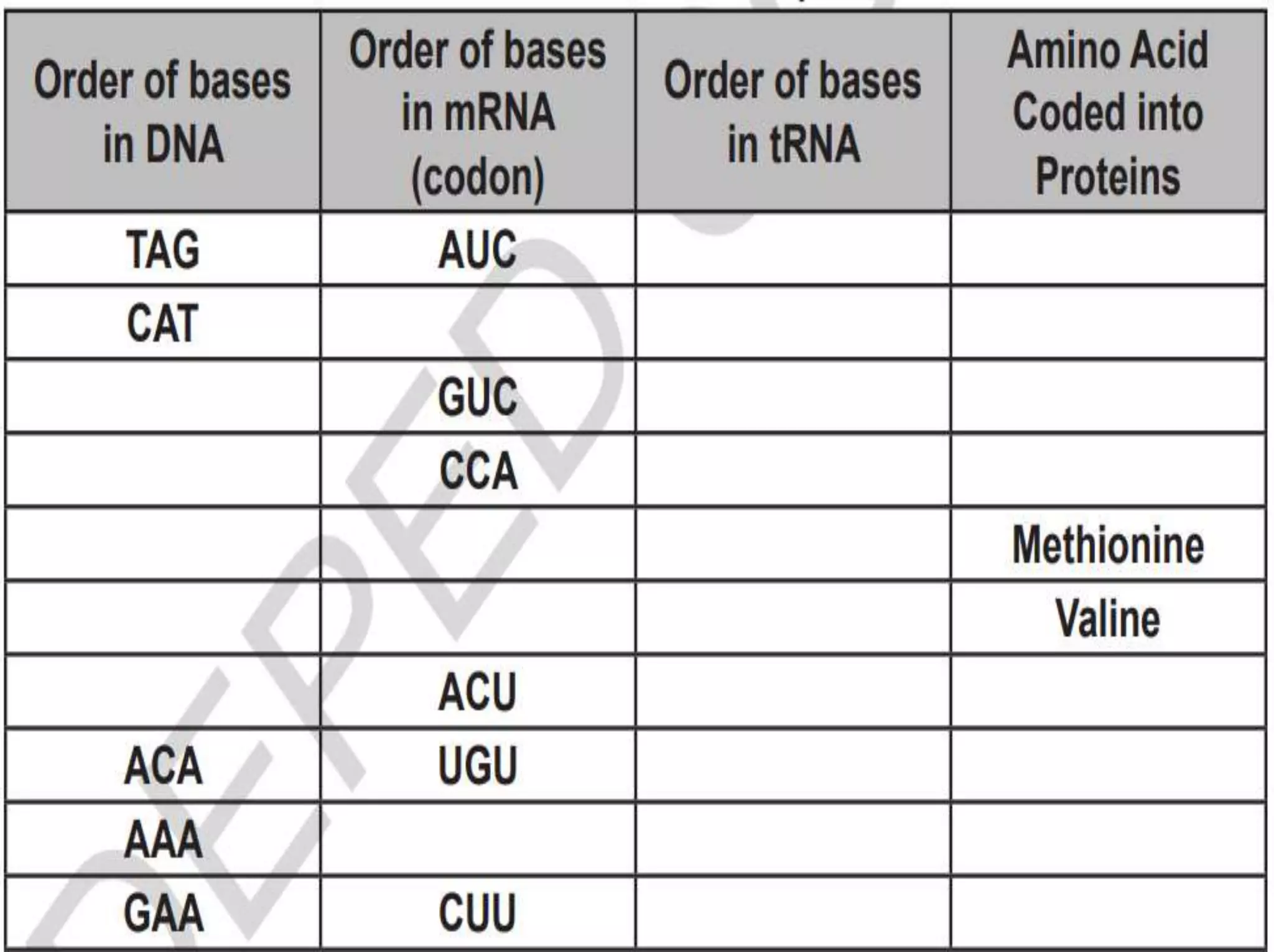
 The three-base code in DNA or
mRNA is called a codon.
 They are always coded in threes
 Each triplet code corresponds with
one amino acid
 This is where TRANSLATION
begins
TRANSLATION (the last step in protein
synthesis)
 Translation begins when mRNA binds to
the RIBOSOME in the cell.
 In translation, tRNA molecules act as the
interpreters of the mRNA codon sequence.
 At the middle of the folded strand, there is
a three-base coding sequence in the
tRNA called the anticodon.
 Each anticodon is complementary to a
codon on the mRNA.
 When the genetic message is copied to
make mRNA, the message contains
unwanted base sequences.
 The ‘junk’ sequences (called introns)
are removed from the message and the
remaining sequences (exons) are linked
together to produce a sequence of
codons that will translate into a
polypeptide.
 This process occurs before the message
leaves the nucleus.
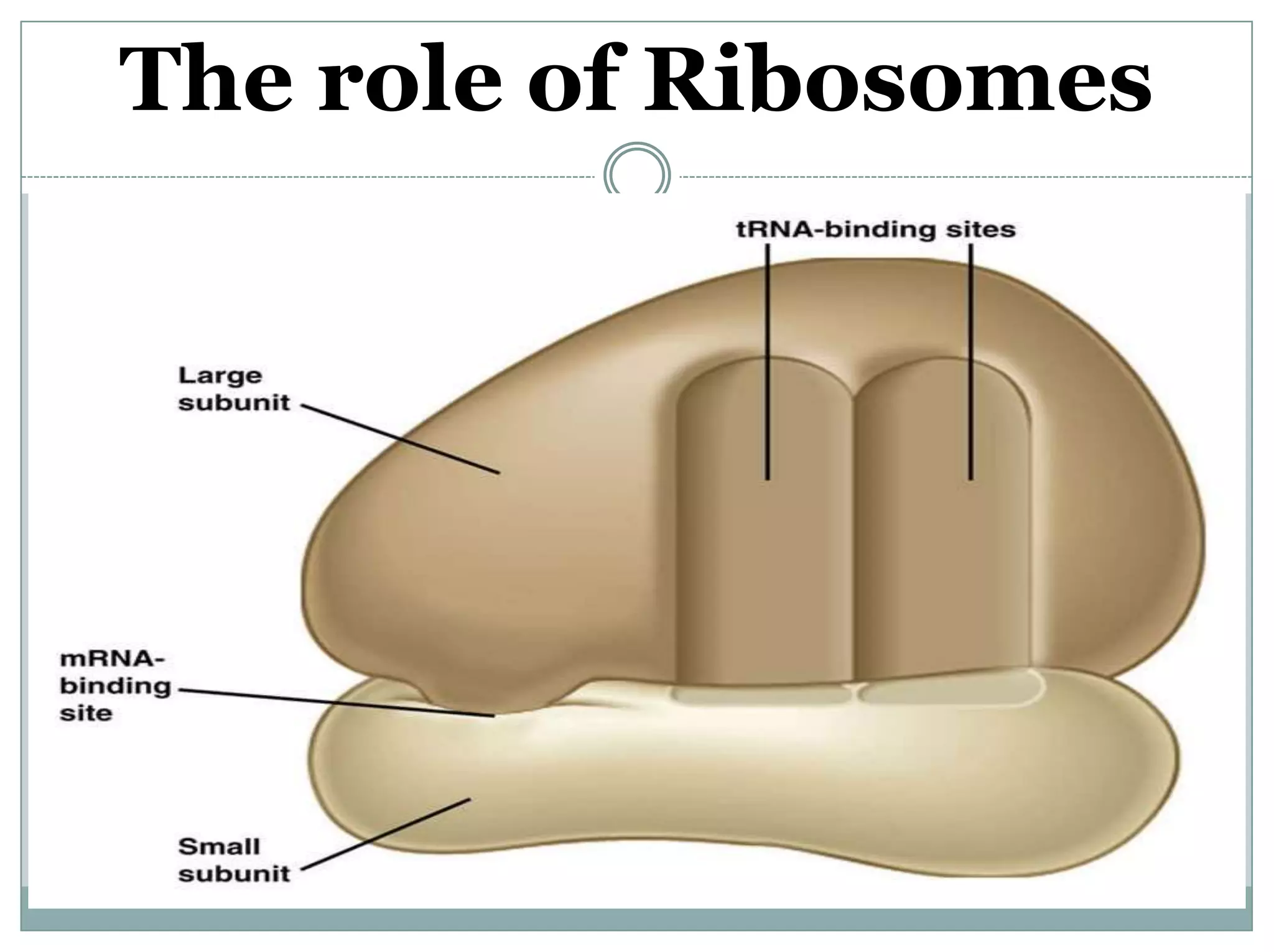
The role of Ribosomes
The Role of Ribosomes
The third type of RNA is
ribosomal RNA (rRNA).
Ribosomes are made of RNA
and PROTEIN.
They are the ‘decoding’ units of
the cell. (Sites of protein
synthesis)
The Role of Ribosomes
They are consist of two major
components — the small ribosomal
subunit which reads the RNA, and
the large subunit which joins
amino acids to form a polypeptide
chain.
They have binding sites for both
tRNA and mRNA molecules.
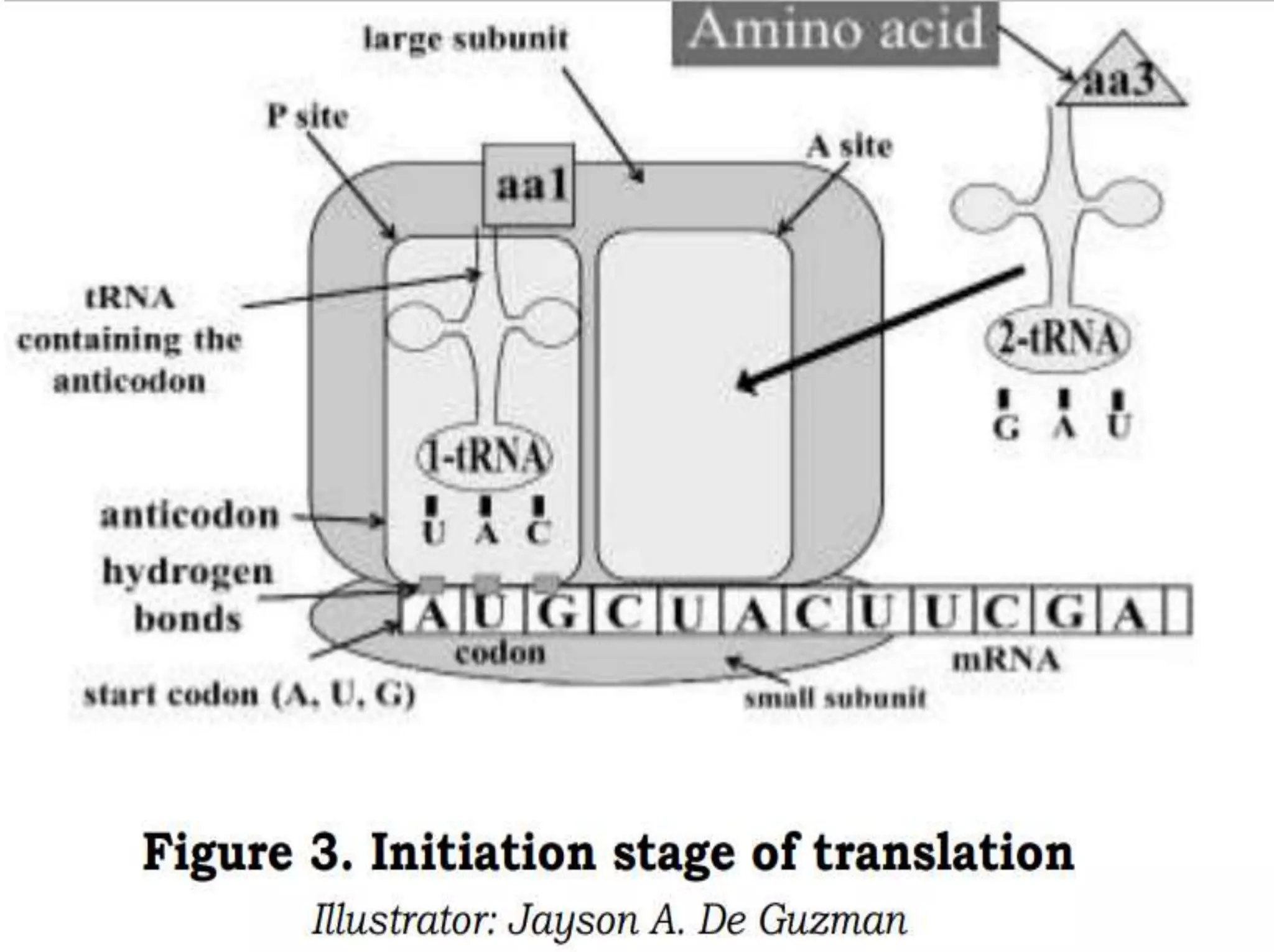
STAGES OF TRANSLATION
1. INITIATION - In this stage of
translation, the ribosome
sandwiches the mRNA between its
small and large subunit to be
translated. The first codon that will
be read is AUG that is called the
start codon, and consequently codes
for the amino acid methionine.
STAGES OF TRANSLATION
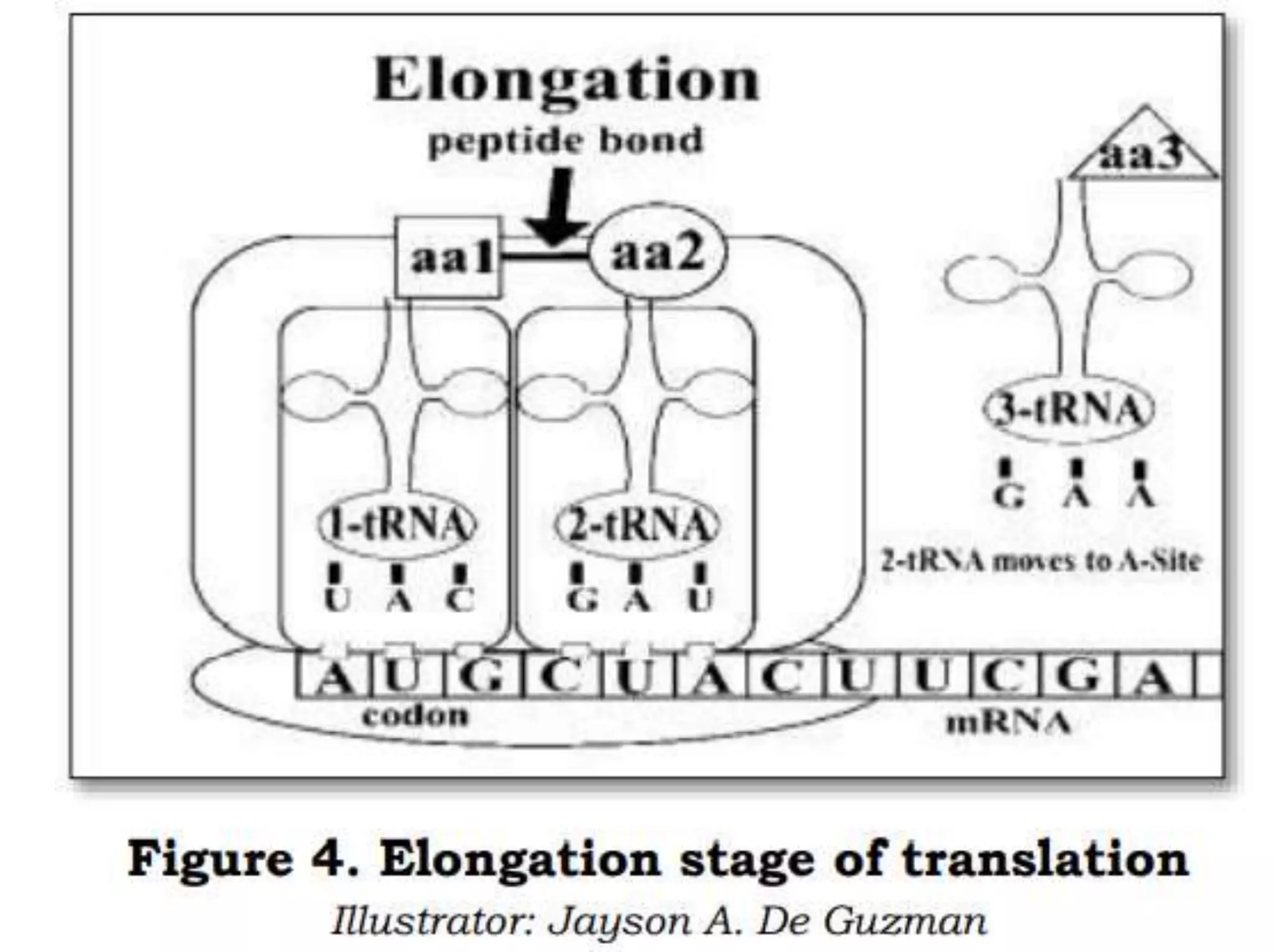
2. ELONGATION - the
second stage in translation
where the amino acid chain
gets longer. In this stage,
messenger RNA reads one
codon at a time.
STAGES OF TRANSLATION
3. Termination - the last
stage of translation. It is
where the finished
polypeptide is released.
TERMINATION starts when a
stop codon (UAG, UAA, or
UGA) is read by the ribosome,
activating a series of events that
stop translation and
disassemble the subunits of the
ribosomal RNA.
ACTIVITY
CODING RIN TAYO
SA HULI ♪♪♪
Transcription and Translation part 2.ppt

Transcription and Translation part 2.ppt

  • 1.
    DIRECTION: FILL THE MISSINGLETTER TO FIND THE HIDDEN WORD. WHY DO YOU FILL ME UP!
  • 2.
    Why Do YouFill Me Up!
  • 3.
    Why Do YouFill Me Up!
  • 4.
    Why Do YouFill Me Up!
  • 5.
  • 6.
    DNA Replication Three mainproteins: Helicase The proteins that separate the two original DNA strand. Polymerase brings in new nucleotides to form new DNA Ligase zips the new DNA back together
  • 7.
    DNA Replication Why isDNA Replication important?  The important idea is that an exact duplication of the DNA message is required, so that each new cell in the body has the same set of genetic instructions as the cells that preceded it.  This also insures that every new generation of individuals has the same genetic information as his/her parents.
  • 8.
    In transcription theDNA message is converted into an RNA molecule. In translation the RNA message is used to assemble amino acids into a protein chain. Protein synthesis involves two processes: transcription and translation.
  • 9.
  • 10.
    RNA  RNA isalso a nucleic acid, called ribonucleic acid  It only has one strand (DNA has two)  It contains the sugar ribose instead of deoxyribose  It has the nitrogenous base URACIL (U) instead of thymine (T)
  • 11.
    There are THREEtypes of RNA  Messenger RNA (mRNA)  Long strands of RNA nucleotides that are formed complementary to one strand of DNA  Transfer RNA (tRNA)  translates the mRNA codons into the correct amino acids  Ribosomal RNA (rRNA)  Associates with proteins to form ribosomes in the cytoplasm
  • 12.
  • 13.
    TRANSCRIPTION (the firststep in protein synthesis)  Through transcription, the DNA code is transferred to mRNA in the nucleus.  DNA is unzipped in the nucleus and RNA polymerase binds to a specific section where a mRNA will be synthesized
  • 14.
    Changing nucleic acidsinto amino acids  The three-base code in DNA or mRNA is called a codon.  They are always coded in threes  Each triplet code corresponds with one amino acid  This is where TRANSLATION begins
  • 15.
    TRANSLATION (the laststep in protein synthesis)  Translation begins when mRNA binds to the RIBOSOME in the cell.  In translation, tRNA molecules act as the interpreters of the mRNA codon sequence.  At the middle of the folded strand, there is a three-base coding sequence in the tRNA called the anticodon.  Each anticodon is complementary to a codon on the mRNA.
  • 16.
     When thegenetic message is copied to make mRNA, the message contains unwanted base sequences.  The ‘junk’ sequences (called introns) are removed from the message and the remaining sequences (exons) are linked together to produce a sequence of codons that will translate into a polypeptide.  This process occurs before the message leaves the nucleus.
  • 17.
    The role ofRibosomes
  • 18.
    The Role ofRibosomes The third type of RNA is ribosomal RNA (rRNA). Ribosomes are made of RNA and PROTEIN. They are the ‘decoding’ units of the cell. (Sites of protein synthesis)
  • 19.
    The Role ofRibosomes They are consist of two major components — the small ribosomal subunit which reads the RNA, and the large subunit which joins amino acids to form a polypeptide chain. They have binding sites for both tRNA and mRNA molecules.
  • 20.
    STAGES OF TRANSLATION 1.INITIATION - In this stage of translation, the ribosome sandwiches the mRNA between its small and large subunit to be translated. The first codon that will be read is AUG that is called the start codon, and consequently codes for the amino acid methionine.
  • 22.
    STAGES OF TRANSLATION 2.ELONGATION - the second stage in translation where the amino acid chain gets longer. In this stage, messenger RNA reads one codon at a time.
  • 24.
    STAGES OF TRANSLATION 3.Termination - the last stage of translation. It is where the finished polypeptide is released.
  • 25.
    TERMINATION starts whena stop codon (UAG, UAA, or UGA) is read by the ribosome, activating a series of events that stop translation and disassemble the subunits of the ribosomal RNA.
  • 27.