Introduction to Nervous
System
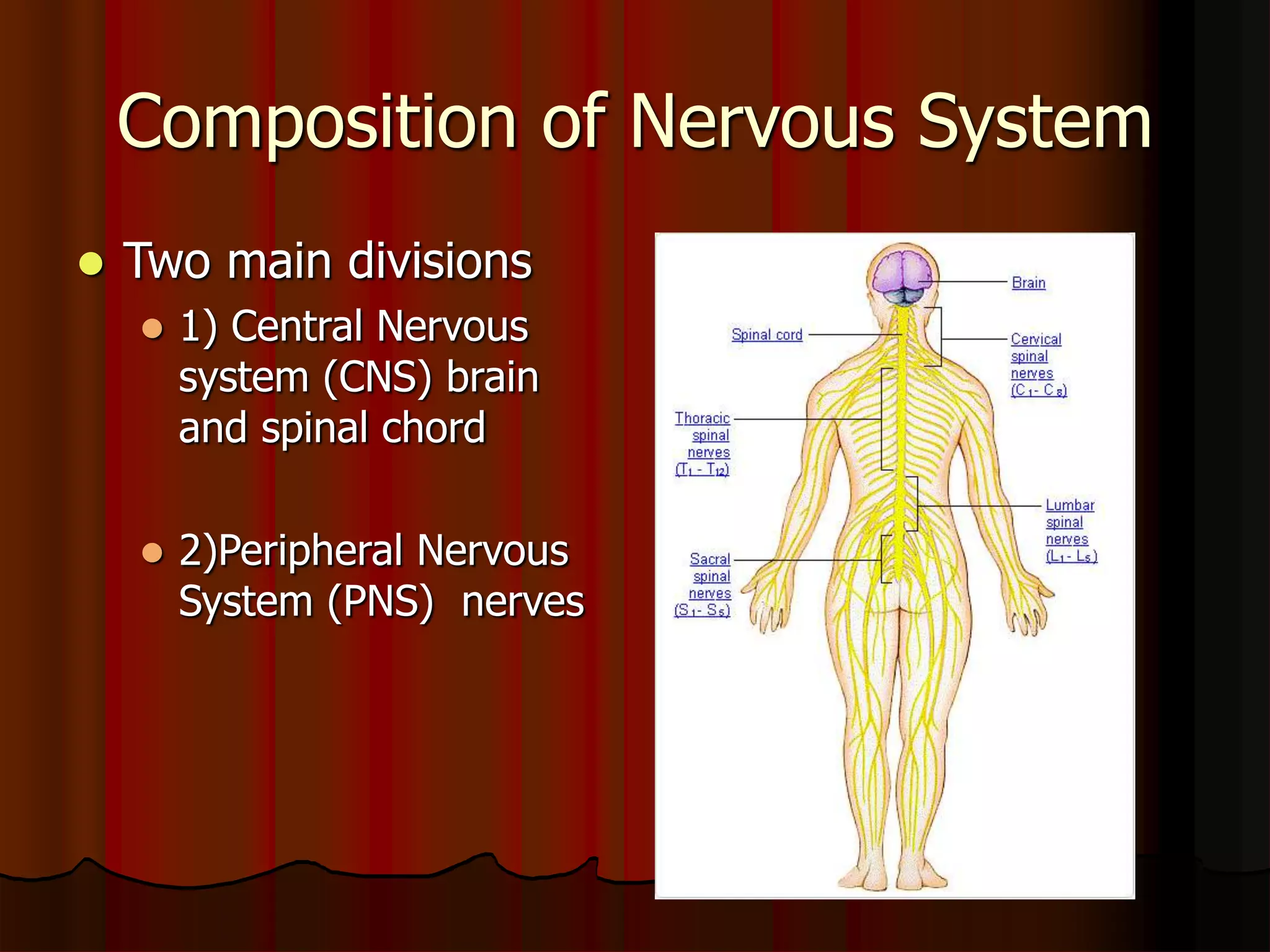
Composition of Nervous System
 Two main divisions
 1) Central Nervous
system (CNS) brain
and spinal chord
 2)Peripheral Nervous
System (PNS) nerves
Remember from Homeostasis
 Message is received from sensory
receptor along sensory neuron
(afferent pathway)
 Messages reaches brain and is
integrated (control center)
 Reaction command sent down
efferent pathway along motor neuron
(motor output)
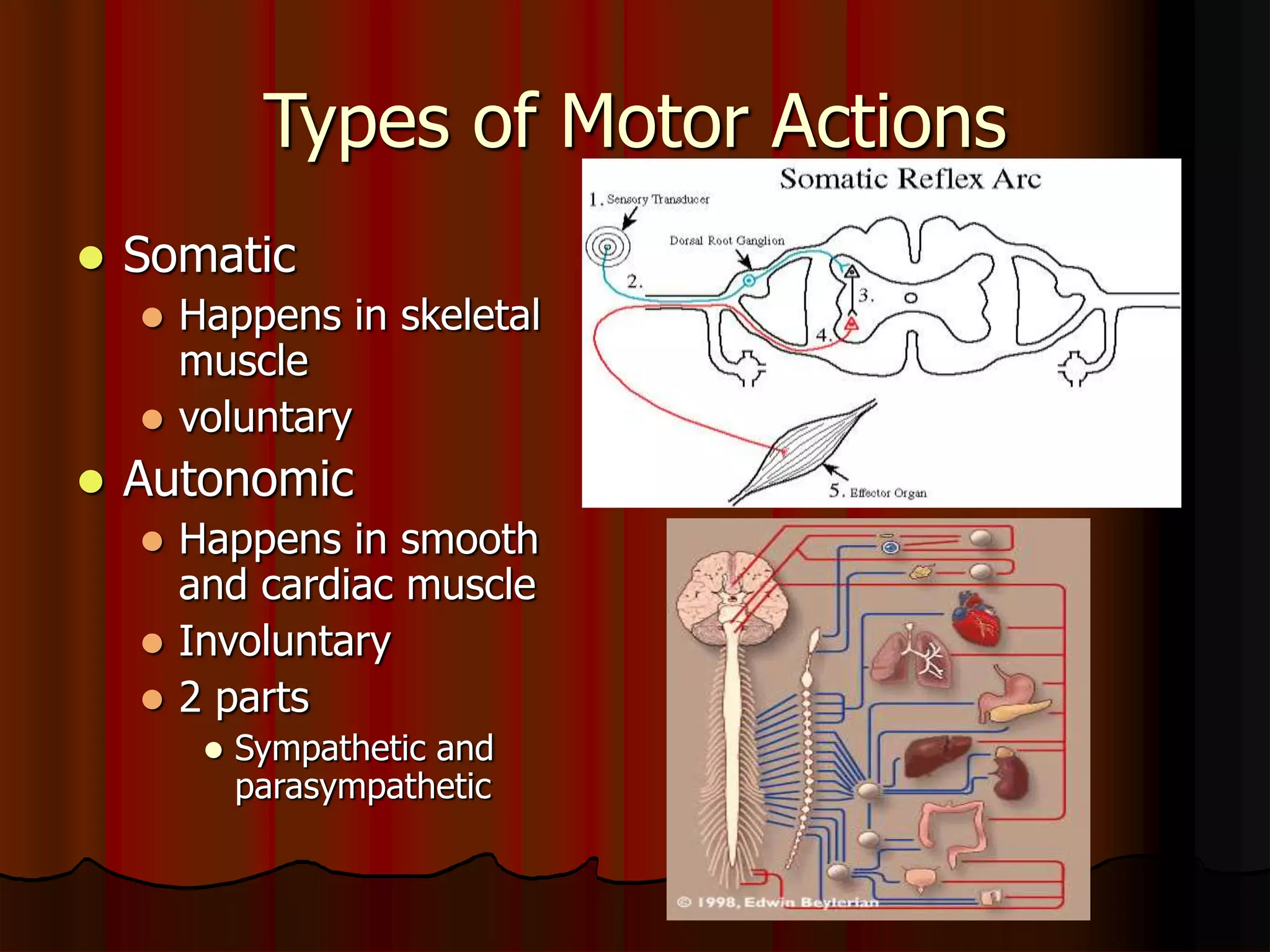
Types of Motor Actions
 Somatic
 Happens in skeletal
muscle
 voluntary
 Autonomic
 Happens in smooth
and cardiac muscle
 Involuntary
 2 parts
 Sympathetic and
parasympathetic
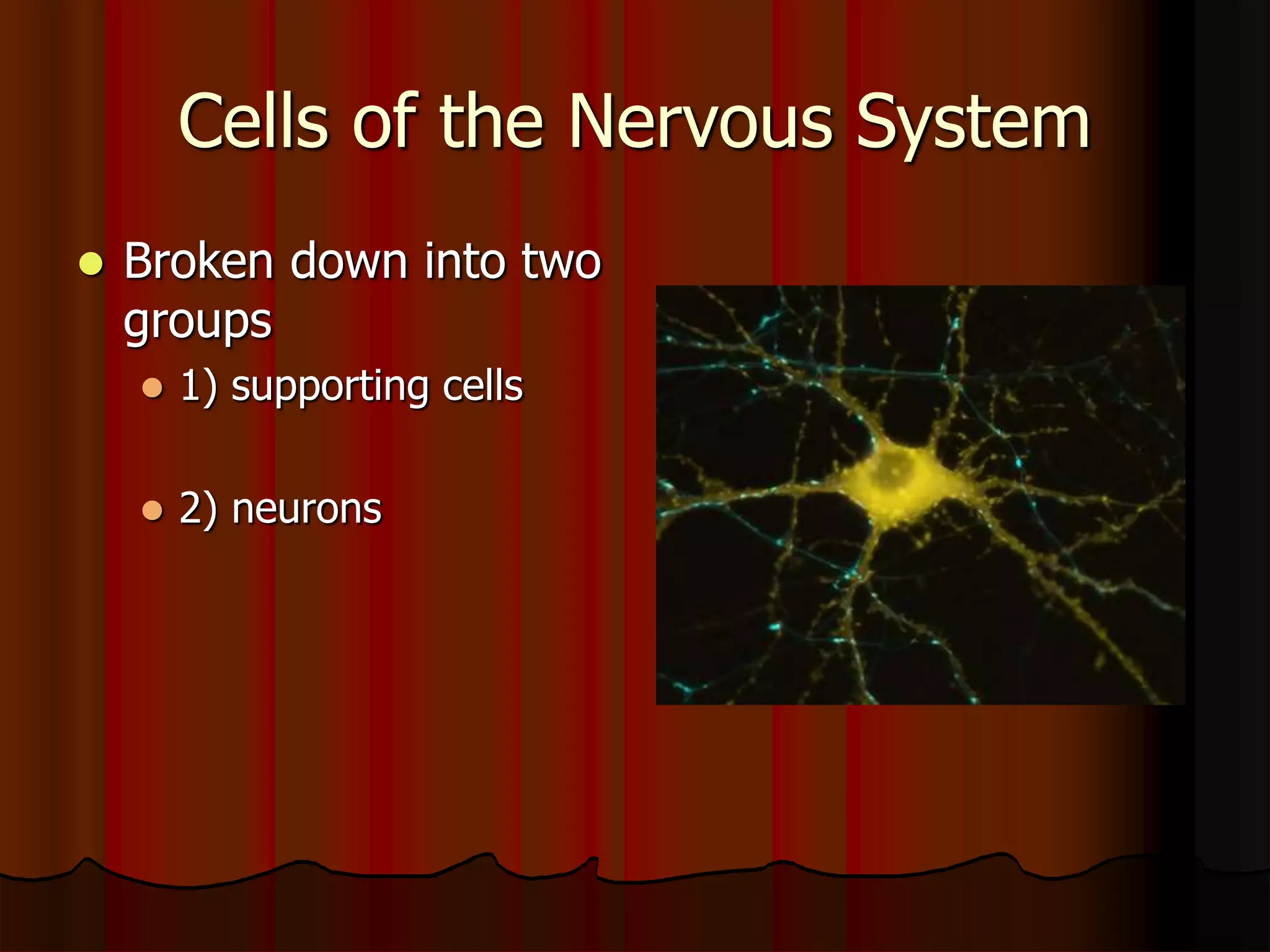
Cells of the Nervous System
 Broken down into two
groups
 1) supporting cells
 2) neurons
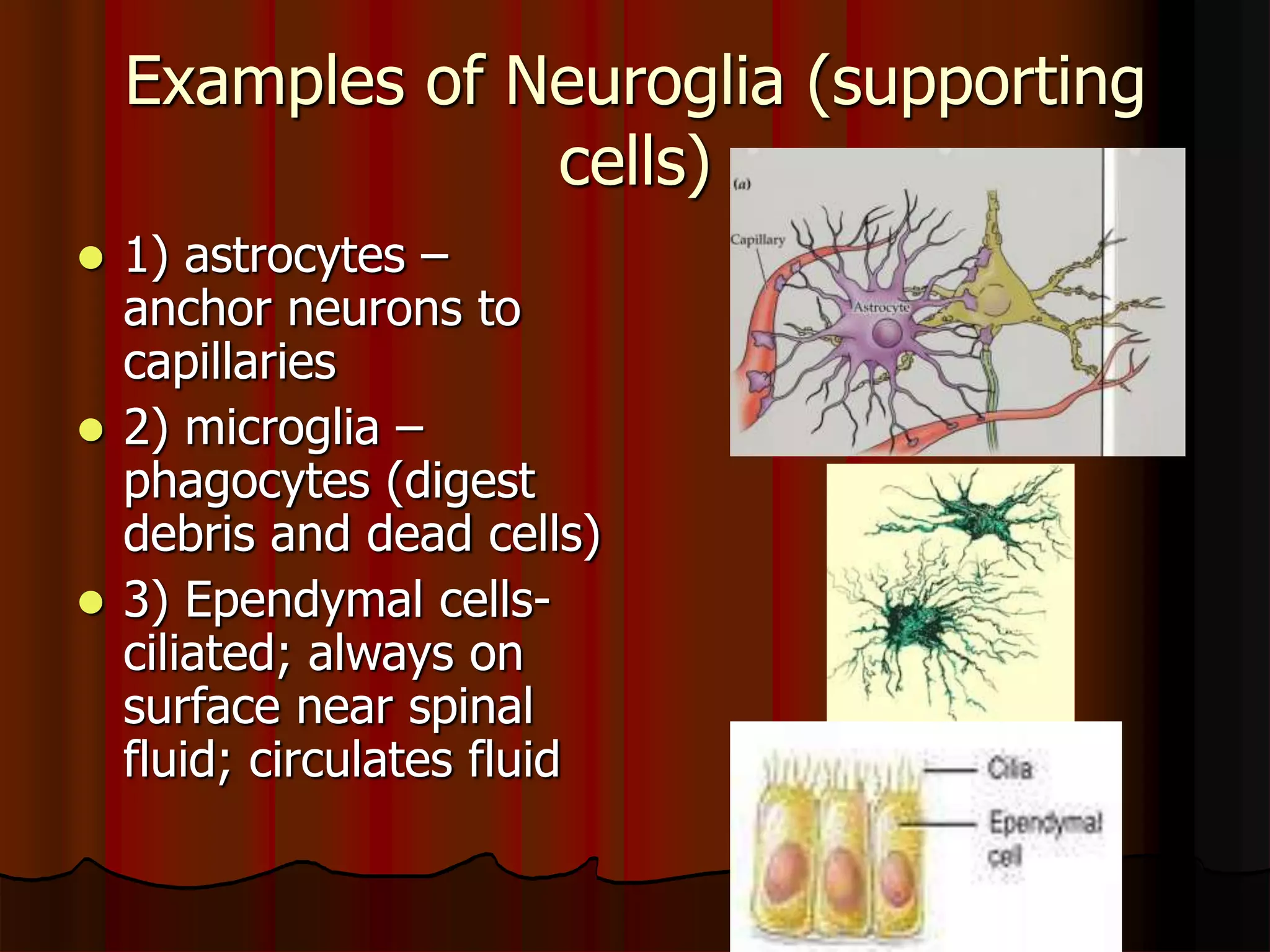
Examples of Neuroglia (supporting
cells)
 1) astrocytes –
anchor neurons to
capillaries
 2) microglia –
phagocytes (digest
debris and dead cells)
 3) Ependymal cells-
ciliated; always on
surface near spinal
fluid; circulates fluid
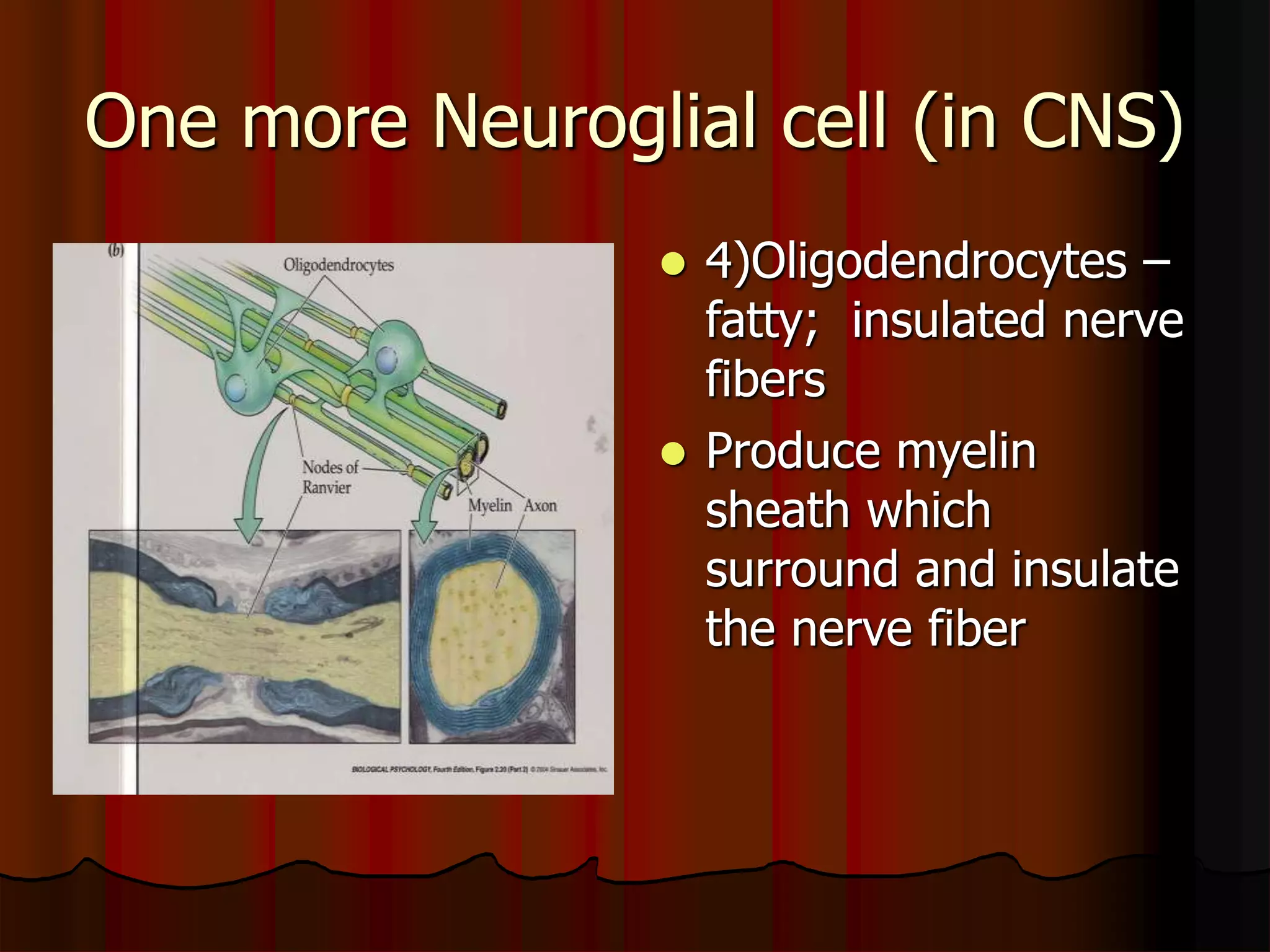
One more Neuroglial cell (in CNS)
 4)Oligodendrocytes –
fatty; insulated nerve
fibers
 Produce myelin
sheath which
surround and insulate
the nerve fiber
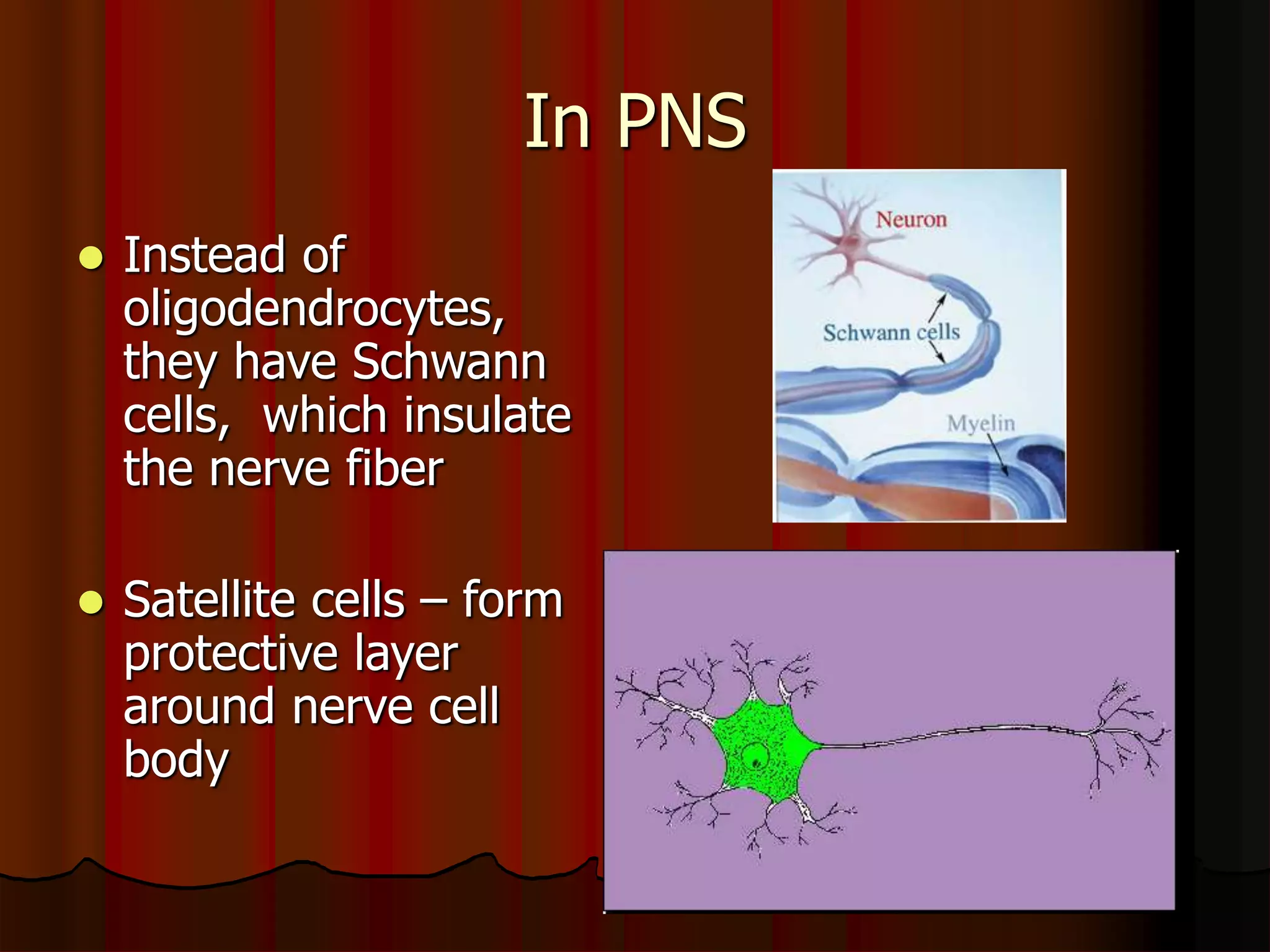
In PNS
 Instead of
oligodendrocytes,
they have Schwann
cells, which insulate
the nerve fiber
 Satellite cells – form
protective layer
around nerve cell
body
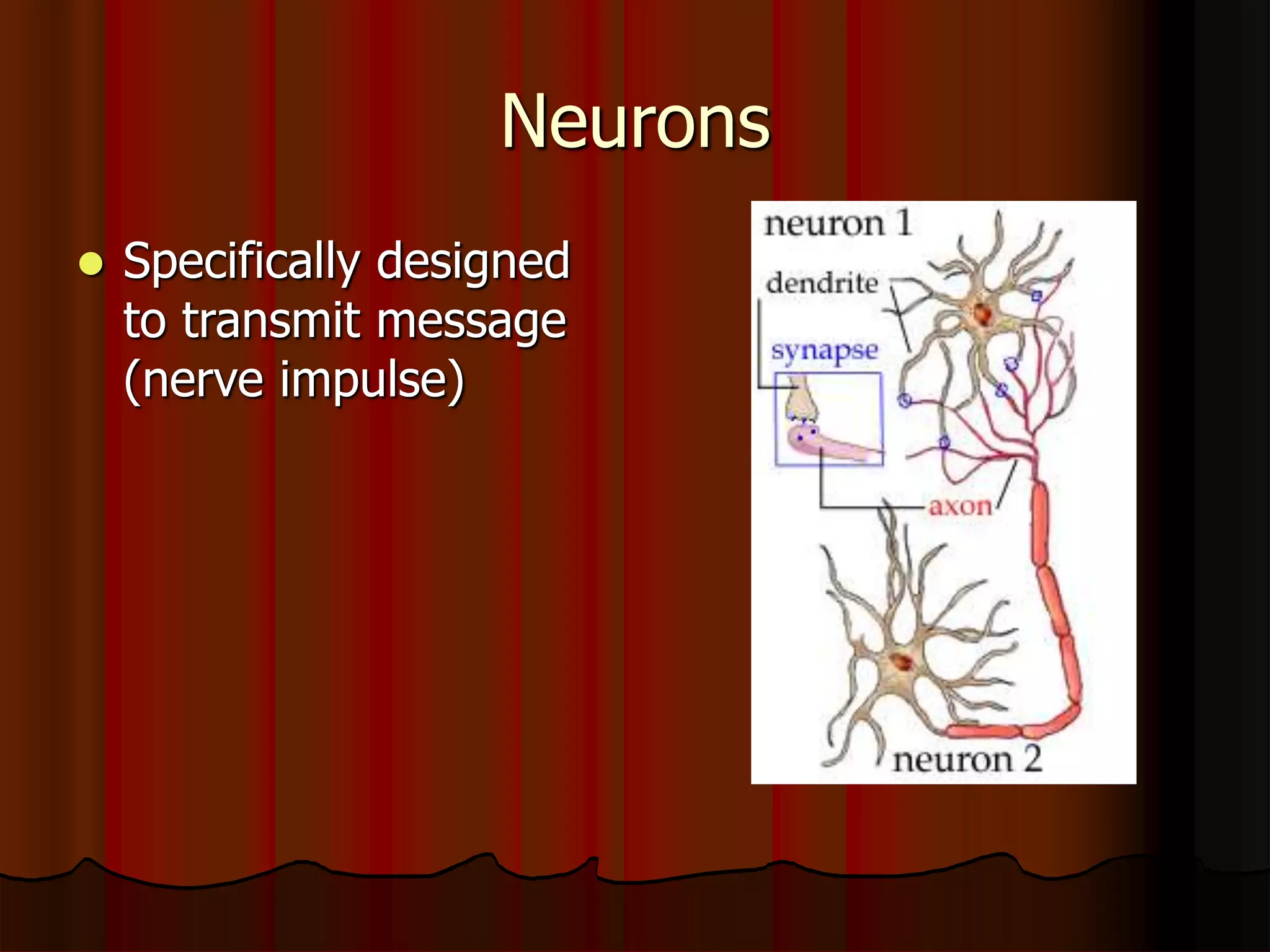
Neurons
 Specifically designed
to transmit message
(nerve impulse)
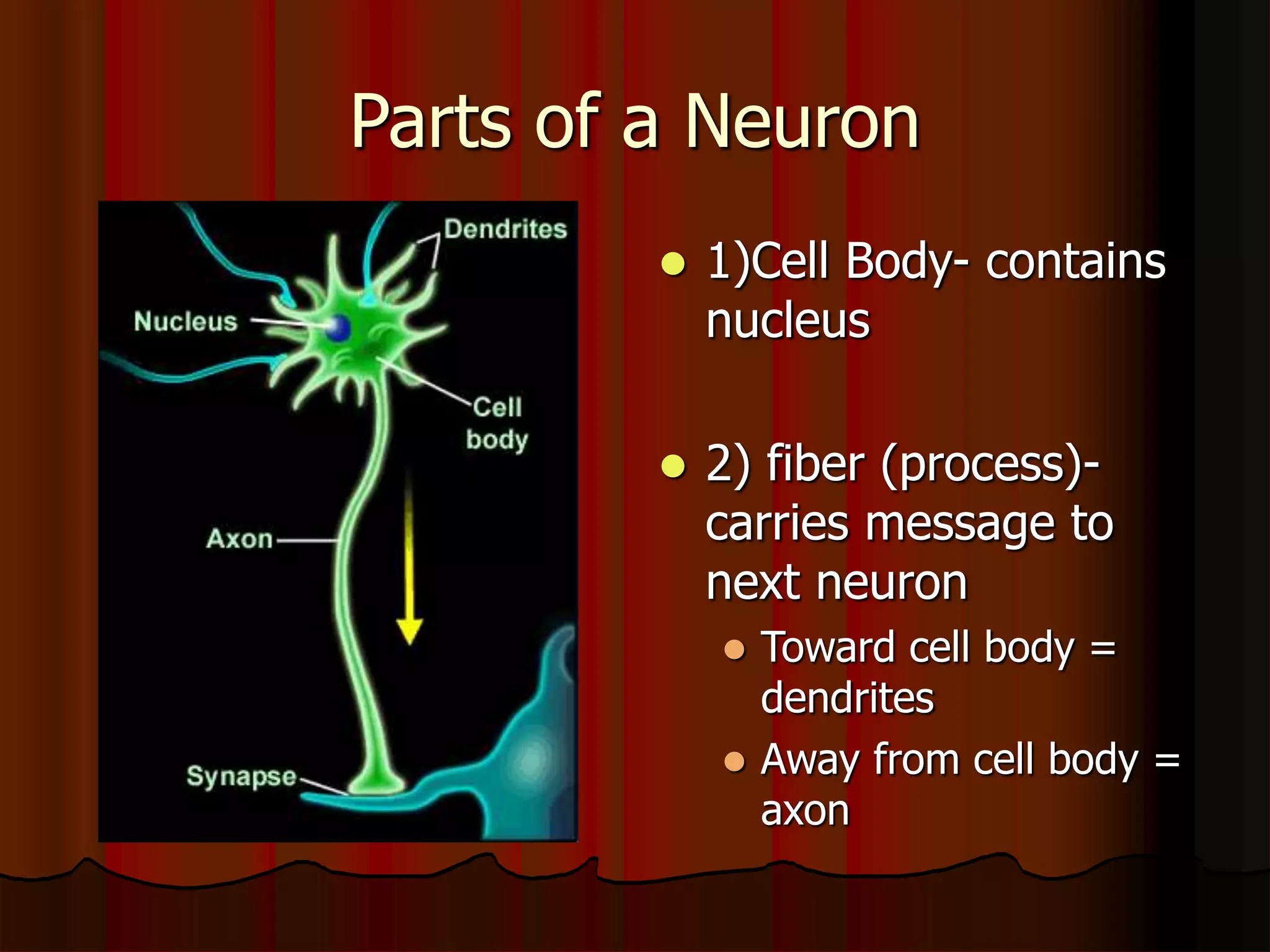
Parts of a Neuron
 1)Cell Body- contains
nucleus
 2) fiber (process)-
carries message to
next neuron
 Toward cell body =
dendrites
 Away from cell body =
axon
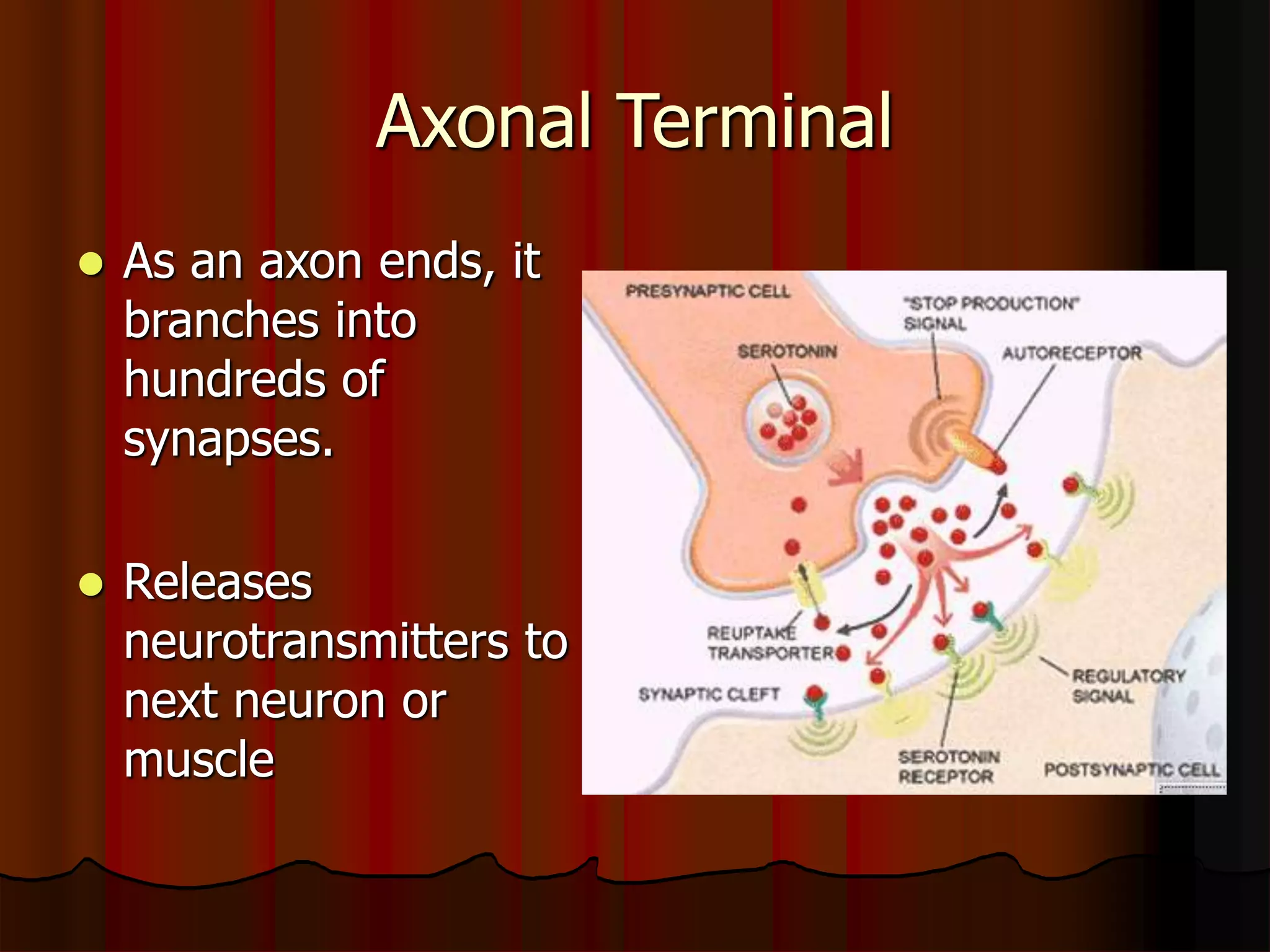
Axonal Terminal
 As an axon ends, it
branches into
hundreds of
synapses.
 Releases
neurotransmitters to
next neuron or
muscle
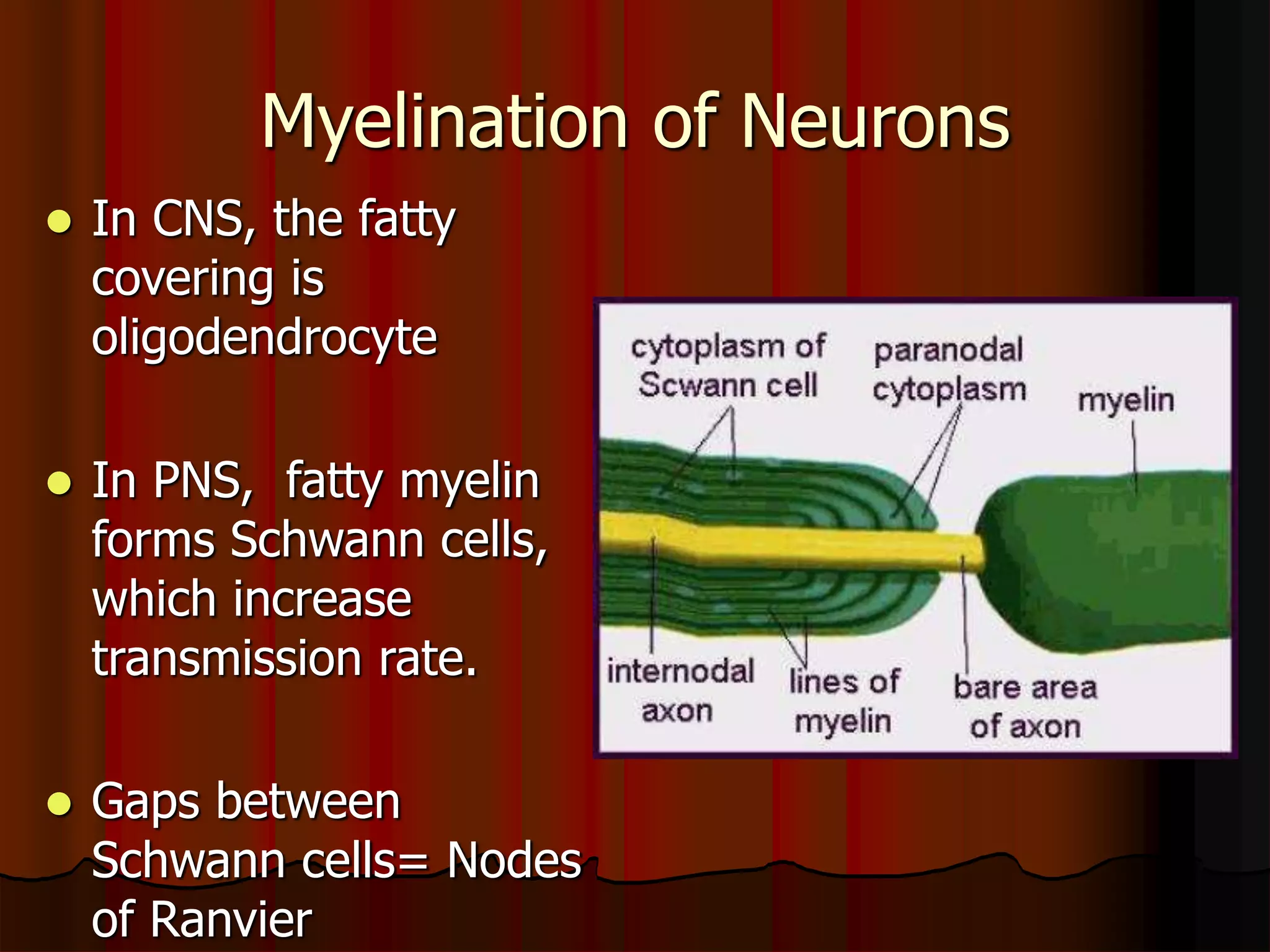
Myelination of Neurons
 In CNS, the fatty
covering is
oligodendrocyte
 In PNS, fatty myelin
forms Schwann cells,
which increase
transmission rate.
 Gaps between
Schwann cells= Nodes
of Ranvier

introduction to nervous system.ppt

  • 1.
  • 3.
    Composition of NervousSystem  Two main divisions  1) Central Nervous system (CNS) brain and spinal chord  2)Peripheral Nervous System (PNS) nerves
  • 4.
    Remember from Homeostasis Message is received from sensory receptor along sensory neuron (afferent pathway)  Messages reaches brain and is integrated (control center)  Reaction command sent down efferent pathway along motor neuron (motor output)
  • 5.
    Types of MotorActions  Somatic  Happens in skeletal muscle  voluntary  Autonomic  Happens in smooth and cardiac muscle  Involuntary  2 parts  Sympathetic and parasympathetic
  • 6.
    Cells of theNervous System  Broken down into two groups  1) supporting cells  2) neurons
  • 7.
    Examples of Neuroglia(supporting cells)  1) astrocytes – anchor neurons to capillaries  2) microglia – phagocytes (digest debris and dead cells)  3) Ependymal cells- ciliated; always on surface near spinal fluid; circulates fluid
  • 8.
    One more Neuroglialcell (in CNS)  4)Oligodendrocytes – fatty; insulated nerve fibers  Produce myelin sheath which surround and insulate the nerve fiber
  • 9.
    In PNS  Insteadof oligodendrocytes, they have Schwann cells, which insulate the nerve fiber  Satellite cells – form protective layer around nerve cell body
  • 10.
    Neurons  Specifically designed totransmit message (nerve impulse)
  • 11.
    Parts of aNeuron  1)Cell Body- contains nucleus  2) fiber (process)- carries message to next neuron  Toward cell body = dendrites  Away from cell body = axon
  • 12.
    Axonal Terminal  Asan axon ends, it branches into hundreds of synapses.  Releases neurotransmitters to next neuron or muscle
  • 13.
    Myelination of Neurons In CNS, the fatty covering is oligodendrocyte  In PNS, fatty myelin forms Schwann cells, which increase transmission rate.  Gaps between Schwann cells= Nodes of Ranvier