TRADITIONS IN THE CZECH
REPUBLIC
Origins of traditions
 Christian

traditions
Christmas, Easter
 Slavic traditions of Pagan origin
Morana, Witches burning
 Folk traditions from different regions
Vintage – Moravia
Pig slaughter, Kites, Harvest, Carnival – different regions
SPRING
Morana (Marzanna) and welcoming of spring
Easter
Burning of witches
Morana and welcoming of spring


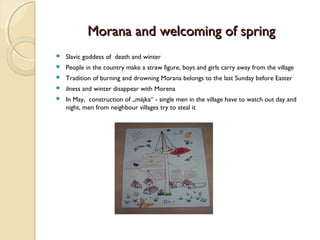
Slavic goddess of death and winter



People in the country make a straw figure, boys and girls carry away from the village



Tradition of burning and drowning Morana belongs to the last Sunday before Easter



ilness and winter disappear with Morena



In May, construction of „májka“ - single men in the village have to watch out day and
night, men from neighbour villages try to steal it
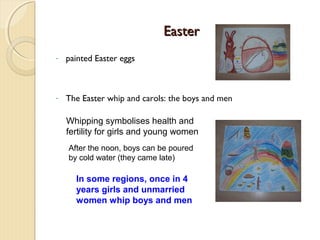
Easter
-

painted Easter eggs

-

The Easter whip and carols: the boys and men
Whipping symbolises health and
fertility for girls and young women
After the noon, boys can be poured
by cold water (they came late)

In some regions, once in 4
years girls and unmarried
women whip boys and men
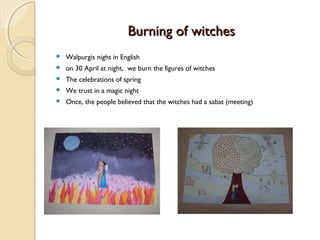
Burning of witches


Walpurgis night in English



on 30 April at night, we burn the figures of witches



The celebrations of spring



We trust in a magic night



Once, the people believed that the witches had a sabat (meeting)
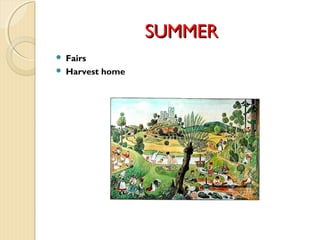
SUMMER



Fairs
Harvest home
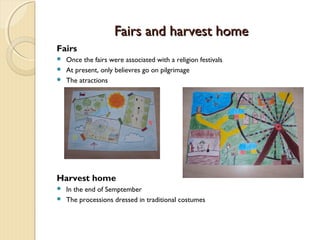
Fairs and harvest home
Fairs
Once the fairs were associated with a religion festivals
 At present, only believres go on pilgrimage
 The atractions


Harvest home
In the end of Semptember
 The processions dressed in traditional costumes

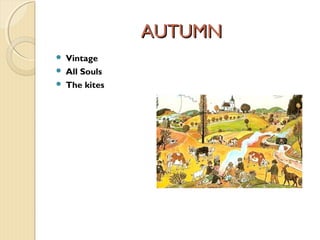
AUTUMN




Vintage
All Souls
The kites
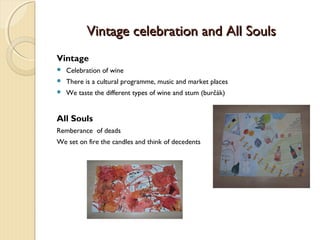
Vintage celebration and All Souls
Vintage


Celebration of wine



There is a cultural programme, music and market places



We taste the different types of wine and stum (burčák)

All Souls
Remberance of deads
We set on fire the candles and think of decedents
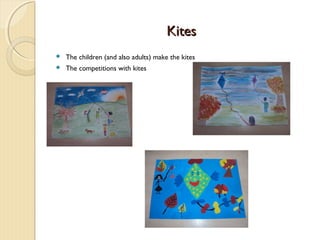
Kites


The children (and also adults) make the kites



The competitions with kites
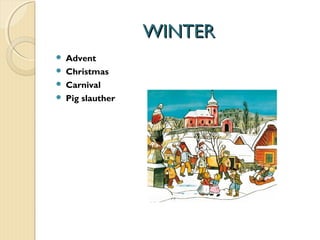
WINTER





Advent
Christmas
Carnival
Pig slauther
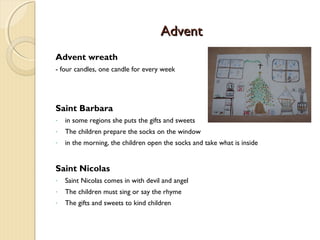
Advent
Advent wreath
- four candles, one candle for every week

Saint Barbara
-

in some regions she puts the gifts and sweets

-

The children prepare the socks on the window

-

in the morning, the children open the socks and take what is inside

Saint Nicolas
-

Saint Nicolas comes in with devil and angel

-

The children must sing or say the rhyme

-

The gifts and sweets to kind children
Christmas


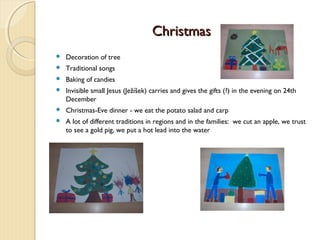
Decoration of tree



Traditional songs



Baking of candies



Invisible small Jesus (Ježíšek) carries and gives the gifts (?) in the evening on 24th
December



Christmas-Eve dinner - we eat the potato salad and carp



A lot of different traditions in regions and in the families: we cut an apple, we trust
to see a gold pig, we put a hot lead into the water
Pig slauther and carnival
Pig slauther
-

slauthering of domestic pigs at home

-

tradition in different seasons (autumn, winter)

-

guláš, soup, klobásy, jitrnice

Carnival
-

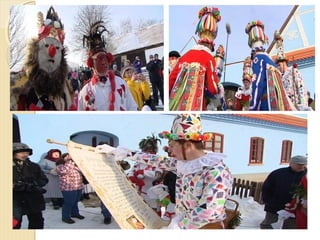
The people take the masks and they walk in procession (especially in countryside)

-

The period of Carnival is since 6 January to Ash Wednesday
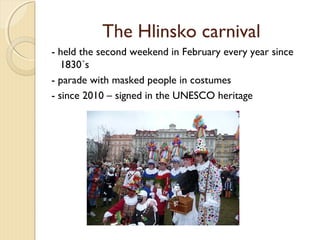
The Hlinsko carnival
- held the second weekend in February every year since
1830´s
- parade with masked people in costumes
- since 2010 – signed in the UNESCO heritage
Thank you for your
attention!
Eliška Glatzová and little Barunka
Tomáš Stehno and Lenka Špačková
Pictures
Class 7.B (teacher Blanka Bouchnerová)
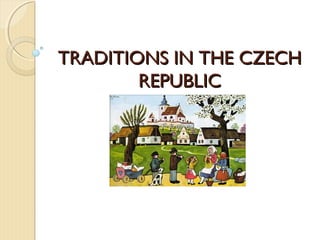
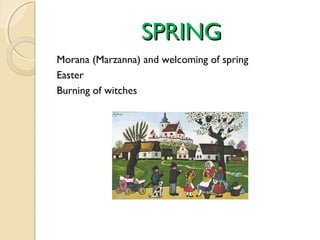
Josef Lada (famous Czech painter)

Traditions in the Czech Republic

  • 1.
    TRADITIONS IN THECZECH REPUBLIC
  • 2.
    Origins of traditions Christian traditions Christmas, Easter  Slavic traditions of Pagan origin Morana, Witches burning  Folk traditions from different regions Vintage – Moravia Pig slaughter, Kites, Harvest, Carnival – different regions
  • 3.
    SPRING Morana (Marzanna) andwelcoming of spring Easter Burning of witches
  • 4.
    Morana and welcomingof spring  Slavic goddess of death and winter  People in the country make a straw figure, boys and girls carry away from the village  Tradition of burning and drowning Morana belongs to the last Sunday before Easter  ilness and winter disappear with Morena  In May, construction of „májka“ - single men in the village have to watch out day and night, men from neighbour villages try to steal it
  • 5.
    Easter - painted Easter eggs - TheEaster whip and carols: the boys and men Whipping symbolises health and fertility for girls and young women After the noon, boys can be poured by cold water (they came late) In some regions, once in 4 years girls and unmarried women whip boys and men
  • 6.
    Burning of witches  Walpurgisnight in English  on 30 April at night, we burn the figures of witches  The celebrations of spring  We trust in a magic night  Once, the people believed that the witches had a sabat (meeting)
  • 7.
  • 8.
    Fairs and harvesthome Fairs Once the fairs were associated with a religion festivals  At present, only believres go on pilgrimage  The atractions  Harvest home In the end of Semptember  The processions dressed in traditional costumes 
  • 9.
  • 10.
    Vintage celebration andAll Souls Vintage  Celebration of wine  There is a cultural programme, music and market places  We taste the different types of wine and stum (burčák) All Souls Remberance of deads We set on fire the candles and think of decedents
  • 11.
    Kites  The children (andalso adults) make the kites  The competitions with kites
  • 12.
  • 13.
    Advent Advent wreath - fourcandles, one candle for every week Saint Barbara - in some regions she puts the gifts and sweets - The children prepare the socks on the window - in the morning, the children open the socks and take what is inside Saint Nicolas - Saint Nicolas comes in with devil and angel - The children must sing or say the rhyme - The gifts and sweets to kind children
  • 14.
    Christmas  Decoration of tree  Traditionalsongs  Baking of candies  Invisible small Jesus (Ježíšek) carries and gives the gifts (?) in the evening on 24th December  Christmas-Eve dinner - we eat the potato salad and carp  A lot of different traditions in regions and in the families: we cut an apple, we trust to see a gold pig, we put a hot lead into the water
  • 15.
    Pig slauther andcarnival Pig slauther - slauthering of domestic pigs at home - tradition in different seasons (autumn, winter) - guláš, soup, klobásy, jitrnice Carnival - The people take the masks and they walk in procession (especially in countryside) - The period of Carnival is since 6 January to Ash Wednesday
  • 16.
    The Hlinsko carnival -held the second weekend in February every year since 1830´s - parade with masked people in costumes - since 2010 – signed in the UNESCO heritage
  • 18.
    Thank you foryour attention! Eliška Glatzová and little Barunka Tomáš Stehno and Lenka Špačková Pictures Class 7.B (teacher Blanka Bouchnerová) Josef Lada (famous Czech painter)