La Navidad en México
    (Christmas in Mexico)


           ©MFL Sunderland 2006 http://www.sunderlandschools.org/mfl-sunderland
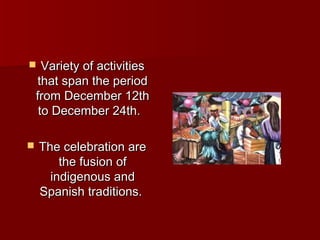
     Variety of activities
    that span the period
    from December 12th
     to December 24th.

   The celebration are
        the fusion of
      indigenous and
    Spanish traditions.
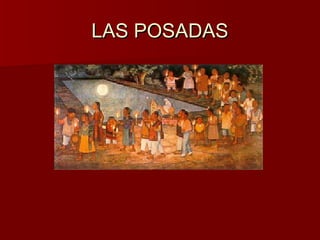
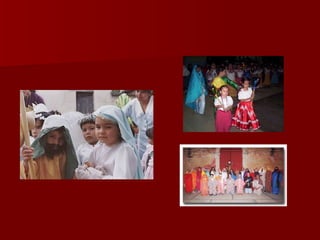
LAS POSADAS
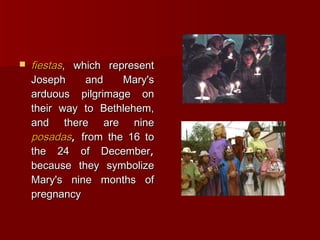
   fiestas, which represent
    Joseph     and    Mary's
    arduous pilgrimage on
    their way to Bethlehem,
    and there are nine
    posadas, from the 16 to
    the 24 of December,
    because they symbolize
    Mary's nine months of
    pregnancy
LA PIÑATA
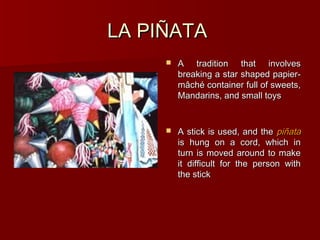
        A tradition that involves
         breaking a star shaped papier-
         mâché container full of sweets,
         Mandarins, and small toys


        A stick is used, and the piñata
         is hung on a cord, which in
         turn is moved around to make
         it difficult for the person with
         the stick
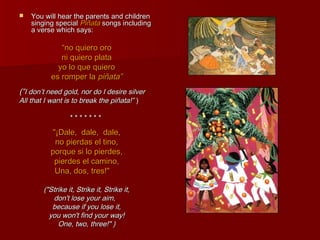
   You will hear the parents and children
    singing special Piñata songs including
    a verse which says:

              “no quiero oro
              ni quiero plata
             yo lo que quiero
           es romper la piñata”
(“I don’t need gold, nor do I desire silver
All that I want is to break the piñata!” )

                  *******

           "¡Dale,  dale,  dale,
            no pierdas el tino,
           porque si lo pierdes,
            pierdes el camino,
            Una, dos, tres!"   

        ("Strike it, Strike it, Strike it,
           don't lose your aim,  
           because if you lose it,
          you won't find your way!
             One, two, three!" )
PASTORELAS
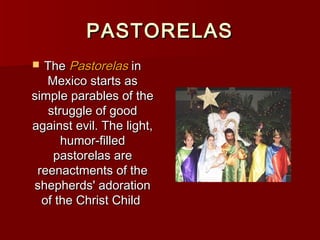
 The Pastorelas in
   Mexico starts as
simple parables of the
   struggle of good
against evil. The light,
      humor-filled
    pastorelas are
 reenactments of the
shepherds' adoration
  of the Christ Child
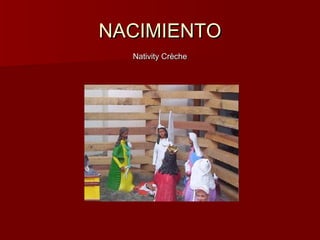
NACIMIENTO
  Nativity Crèche
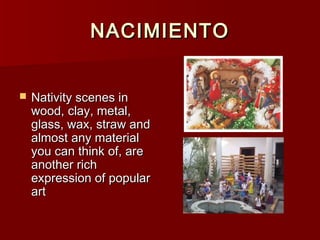
NACIMIENTO


   Nativity scenes in
    wood, clay, metal,
    glass, wax, straw and
    almost any material
    you can think of, are
    another rich
    expression of popular
    art
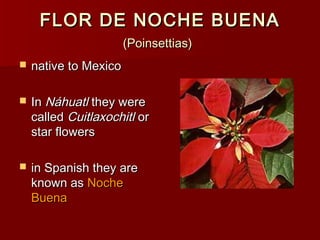
FLOR DE NOCHE BUENA
                       (Poinsettias)
   native to Mexico

   In Náhuatl they were
    called Cuitlaxochitl or
    star flowers

   in Spanish they are
    known as Noche
    Buena
NOCHE BUENA
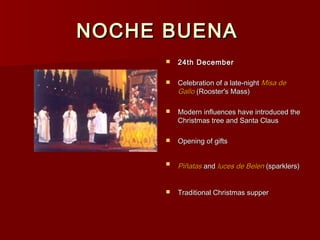
         24th December

         Celebration of a late-night Misa de
          Gallo (Rooster's Mass)

         Modern influences have introduced the
          Christmas tree and Santa Claus

         Opening of gifts


         Piñatas and luces de Belen (sparklers)


         Traditional Christmas supper
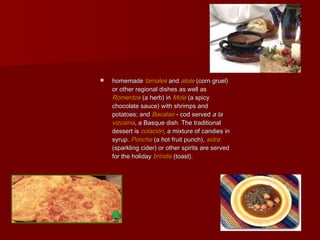
   homemade tamales and atole (corn gruel)
    or other regional dishes as well as
    Romeritos (a herb) in Mole (a spicy
    chocolate sauce) with shrimps and
    potatoes; and Bacalao - cod served a la
    vizcaina, a Basque dish. The traditional
    dessert is colación, a mixture of candies in
    syrup. Ponche (a hot fruit punch), sidra
    (sparkling cider) or other spirits are served
    for the holiday brindis (toast).
NAVIDAD
             (Christmas day)

           A large reunion


 Mean meal around three o’clock in the
     afternoon, what it is known as
 “recalentado”, because the Christmas
meal is reheated from the previous night
AÑO NUEVO
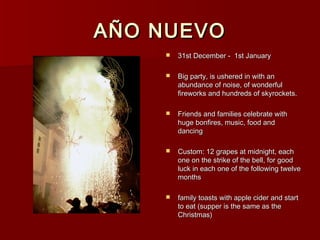
       31st December - 1st January

       Big party, is ushered in with an
        abundance of noise, of wonderful
        fireworks and hundreds of skyrockets.

       Friends and families celebrate with
        huge bonfires, music, food and
        dancing

       Custom: 12 grapes at midnight, each
        one on the strike of the bell, for good
        luck in each one of the following twelve
        months

       family toasts with apple cider and start
        to eat (supper is the same as the
        Christmas)
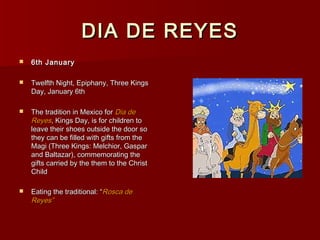
DIA DE REYES
   6th January

   Twelfth Night, Epiphany, Three Kings
    Day, January 6th

   The tradition in Mexico for Dia de
    Reyes, Kings Day, is for children to
    leave their shoes outside the door so
    they can be filled with gifts from the
    Magi (Three Kings: Melchior, Gaspar
    and Baltazar), commemorating the
    gifts carried by the them to the Christ
    Child

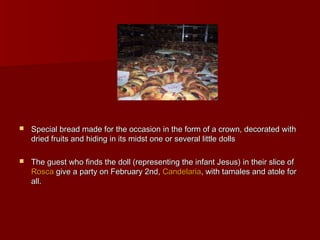
   Eating the traditional: “Rosca de
    Reyes”
   Special bread made for the occasion in the form of a crown, decorated with
    dried fruits and hiding in its midst one or several little dolls

   The guest who finds the doll (representing the infant Jesus) in their slice of
    Rosca give a party on February 2nd, Candelaria, with tamales and atole for
    all.
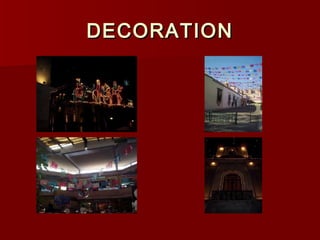
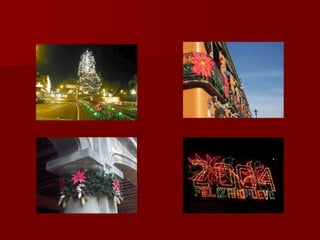
DECORATION
¡FELIZ NAVIDAD


      Y


PRÓSPERO AÑO
    NUEVO!

Navidadenmexico

  • 1.
    La Navidad enMéxico (Christmas in Mexico) ©MFL Sunderland 2006 http://www.sunderlandschools.org/mfl-sunderland
  • 2.
    Variety of activities that span the period from December 12th to December 24th.  The celebration are the fusion of indigenous and Spanish traditions.
  • 3.
  • 4.
    fiestas, which represent Joseph and Mary's arduous pilgrimage on their way to Bethlehem, and there are nine posadas, from the 16 to the 24 of December, because they symbolize Mary's nine months of pregnancy
  • 5.
    LA PIÑATA  A tradition that involves breaking a star shaped papier- mâché container full of sweets, Mandarins, and small toys  A stick is used, and the piñata is hung on a cord, which in turn is moved around to make it difficult for the person with the stick
  • 6.
    You will hear the parents and children singing special Piñata songs including a verse which says: “no quiero oro ni quiero plata yo lo que quiero es romper la piñata” (“I don’t need gold, nor do I desire silver All that I want is to break the piñata!” ) ******* "¡Dale,  dale,  dale, no pierdas el tino, porque si lo pierdes, pierdes el camino, Una, dos, tres!"    ("Strike it, Strike it, Strike it, don't lose your aim,   because if you lose it, you won't find your way! One, two, three!" )
  • 7.
    PASTORELAS  The Pastorelasin Mexico starts as simple parables of the struggle of good against evil. The light, humor-filled pastorelas are reenactments of the shepherds' adoration of the Christ Child
  • 9.
  • 10.
    NACIMIENTO  Nativity scenes in wood, clay, metal, glass, wax, straw and almost any material you can think of, are another rich expression of popular art
  • 11.
    FLOR DE NOCHEBUENA (Poinsettias)  native to Mexico  In Náhuatl they were called Cuitlaxochitl or star flowers  in Spanish they are known as Noche Buena
  • 12.
    NOCHE BUENA  24th December  Celebration of a late-night Misa de Gallo (Rooster's Mass)  Modern influences have introduced the Christmas tree and Santa Claus  Opening of gifts  Piñatas and luces de Belen (sparklers)  Traditional Christmas supper
  • 13.
    homemade tamales and atole (corn gruel) or other regional dishes as well as Romeritos (a herb) in Mole (a spicy chocolate sauce) with shrimps and potatoes; and Bacalao - cod served a la vizcaina, a Basque dish. The traditional dessert is colación, a mixture of candies in syrup. Ponche (a hot fruit punch), sidra (sparkling cider) or other spirits are served for the holiday brindis (toast).
  • 14.
    NAVIDAD (Christmas day)  A large reunion  Mean meal around three o’clock in the afternoon, what it is known as “recalentado”, because the Christmas meal is reheated from the previous night
  • 15.
    AÑO NUEVO  31st December - 1st January  Big party, is ushered in with an abundance of noise, of wonderful fireworks and hundreds of skyrockets.  Friends and families celebrate with huge bonfires, music, food and dancing  Custom: 12 grapes at midnight, each one on the strike of the bell, for good luck in each one of the following twelve months  family toasts with apple cider and start to eat (supper is the same as the Christmas)
  • 16.
    DIA DE REYES  6th January  Twelfth Night, Epiphany, Three Kings Day, January 6th  The tradition in Mexico for Dia de Reyes, Kings Day, is for children to leave their shoes outside the door so they can be filled with gifts from the Magi (Three Kings: Melchior, Gaspar and Baltazar), commemorating the gifts carried by the them to the Christ Child  Eating the traditional: “Rosca de Reyes”
  • 17.
    Special bread made for the occasion in the form of a crown, decorated with dried fruits and hiding in its midst one or several little dolls  The guest who finds the doll (representing the infant Jesus) in their slice of Rosca give a party on February 2nd, Candelaria, with tamales and atole for all.
  • 18.
  • 20.
    ¡FELIZ NAVIDAD Y PRÓSPERO AÑO NUEVO!