The Distribution Process:
Bringing Travelers and
Tourism Service
Providers Together
Introduction
 Travel necessitates a variety of services.
Goal of service suppliers is reaching, serving, and satisfying
travelers.
Serving Traveler Needs
Operating Sectors of the Tourism
Industry
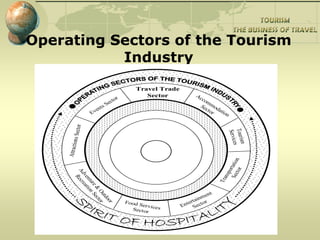
Travel Trade
Sector Accommodation
SectorEvents Sector
Transportation
Sector
Adventure&
Outdoor
RecreationSector
Food ServicesSector
AttractionsSector
Entertainment
Sector
Tourism
Services
Distribution Channel
An operating structure, system, or linkage of
various combinations of organisations
through which a producer of travel products
describes, sells, or confirms travel
arrangements to the buyer
Products get to consumer through a
distribution channel: Belikin Beer?
Tourism Services
Services are actions; goods are material
objects
Services are often accompanied by facilitating
goods which support the service
In tourism there is no physical good that can
be held in inventory and can be transferred
from one middleman to the next
Serving Traveler’s Needs
Thomas Cook is credited with being the first tourism
intermediary, packaging tourism services and then selling the
packages to tourists
To attract business, tourism suppliers must provide prospective
customers with information on which they will base tourism
choice decisions
There are many alternative ways to provide information and
services to prospective guests
Three types of distribution channels can be used
Why Use Intermediaries?
Intermediaries make information and services widely available
cost-effectively
They perform a variety of value-added functions
e.g, types of services, potential customers, packages
Intermediaries are frequently paid on commission
May also charge the customer a modest fee
Exist where they perform a necessary role more cost-effectively
than the supplier could perform the same role
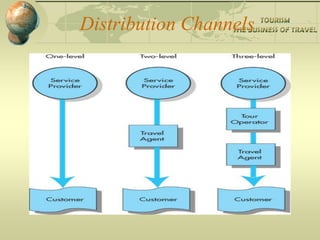
Distribution Channels
One-Level (Direct) Distribution
Channels
Simplest form of distribution, no intermediary
between supplier and customer
Most tourism suppliers utilize one-level distribution
channels
Purchase directly from the supplier
World Wide Web is increasing the direct availability of
information and purchase
Airlines encouraging the use of the Web and
ticketless travel
Advantages
Simplicity
Additional Sales Opportunity
Flexibility
Greater Profitability to Suppliers
Personal Control over the Sale
Two-Level Distribution Channels
Intermediary between tourism supplier and tourist
Most common form of tourism supplier
Travel agencies are the department stores of the
travel industry
Improving service delivery through cooperative
systems
Global distribution system (GDS)
Computer reservation system (CRS)
Improving service delivery through cooperative systems
Agencies big and small use global distribution systems (GDSs)
Via GDSs agents have on-line information about schedules, availability, and
fares, and allow booking of some reservations and printing tickets
Two airline GDSs; Sabre and TravelPort
These GDSs are also used as databases/reservation systems for many other
tourism services such as hotels and rental cars
Two important cooperative systems for airline ticketing
Airlines Reporting Corporation (ARC)
International Airline Travel Agency Network (IATAN)
Advantages
Professional Assistance
Multiple Options
Free or Low-Cost Assistance
Cumulative Group Power
Single-Charge Billing
Cost Less???
Three-Level Distribution
Channels
Add another level of intermediary such as tour
operators to low-level channel
Some travel agencies have entered tour packaging
business
Tours
A package of two or more tourism services priced together
Four primary forms of tours
Independent
Foreign/domestic independent
Hosted
Escorted
Three-Level Distribution
Channels, continued
Tour Operators
Purchase tourism services in bulk and then mark up the
price and resell in packaged form
Plan, prepare, market and often operate vacation tours
Also termed tour packager or tour wholesaler
Many financial risks in the tour packaging business
Receptive service operator is local company that handles
group’s needs while in its location
Three-Level Distribution
Channels, continued
Consolidators and Travel Clubs
Consolidators buy excess airline capacity and resell at
discounted prices
Travel clubs perform similar function for their members plus
offer discounts on other tourism services
Meeting Planners
Professionals employed by corporations, associations, etc. to
organize all the details entailed in meetings
Meeting planner must balance meeting costs with meeting
attendee desires
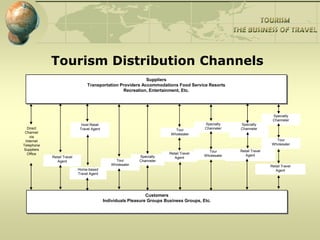
Tourism Distribution Channels
Suppliers
Transportation Providers Accommodations Food Service Resorts
Recreation, Entertainment, Etc.
Customers
Individuals Pleasure Groups Business Groups, Etc.
Tour
Wholesaler
Specialty
Channeler
Retail Travel
Agent
Specialty
Channeler
Specialty
Channeler
Specialty
Channeler
Tour
Wholesaler
Tour
Wholesaler
Tour
Wholesaler
Retail Travel
Agent
Retail Travel
Agent
Retail Travel
Agent
Direct
Channel
via
Internet
Telephone
Suppliers
Office
Host Retail
Travel Agent
Home-based
Travel Agent
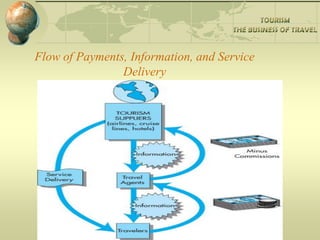
Flow of Payments, Information, and Service
Delivery
Tapping the Power of Dual
Distribution
Internet increasing the use of the direct channel
Direct channel using mall locations
Indirect channel using traditional travel agents
Indirect channel using Internet-based cruise-only
agents
Indirect channel using last-minute fire sale agencies
to fill cabins close to sailing dates
Tourism Information Sources and
Services
Tourism offices provide general information
Often operate tourist information centers
Large cities have conventions and visitors
bureaus; small cities use chamber of
commerce- both funded by local tourism
service suppliers
Selling Adds a Personal Touch
Most tourism suppliers have their own sales
force
Often conduct missionary sales activities to
supply information and brochures to aid in
sales efforts
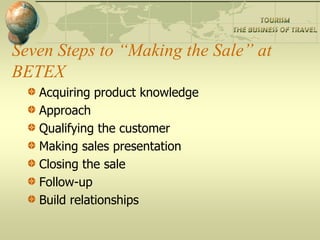
Seven Steps to “Making the Sale” at
BETEX
Acquiring product knowledge
Approach
Qualifying the customer
Making sales presentation
Closing the sale
Follow-up
Build relationships

Tourism distribution

  • 1.
    The Distribution Process: BringingTravelers and Tourism Service Providers Together
  • 2.
    Introduction  Travel necessitatesa variety of services. Goal of service suppliers is reaching, serving, and satisfying travelers. Serving Traveler Needs
  • 3.
    Operating Sectors ofthe Tourism Industry Travel Trade Sector Accommodation SectorEvents Sector Transportation Sector Adventure& Outdoor RecreationSector Food ServicesSector AttractionsSector Entertainment Sector Tourism Services
  • 4.
    Distribution Channel An operatingstructure, system, or linkage of various combinations of organisations through which a producer of travel products describes, sells, or confirms travel arrangements to the buyer Products get to consumer through a distribution channel: Belikin Beer?
  • 5.
    Tourism Services Services areactions; goods are material objects Services are often accompanied by facilitating goods which support the service In tourism there is no physical good that can be held in inventory and can be transferred from one middleman to the next
  • 6.
    Serving Traveler’s Needs ThomasCook is credited with being the first tourism intermediary, packaging tourism services and then selling the packages to tourists To attract business, tourism suppliers must provide prospective customers with information on which they will base tourism choice decisions There are many alternative ways to provide information and services to prospective guests Three types of distribution channels can be used
  • 7.
    Why Use Intermediaries? Intermediariesmake information and services widely available cost-effectively They perform a variety of value-added functions e.g, types of services, potential customers, packages Intermediaries are frequently paid on commission May also charge the customer a modest fee Exist where they perform a necessary role more cost-effectively than the supplier could perform the same role
  • 8.
  • 9.
    One-Level (Direct) Distribution Channels Simplestform of distribution, no intermediary between supplier and customer Most tourism suppliers utilize one-level distribution channels Purchase directly from the supplier World Wide Web is increasing the direct availability of information and purchase Airlines encouraging the use of the Web and ticketless travel
  • 10.
    Advantages Simplicity Additional Sales Opportunity Flexibility GreaterProfitability to Suppliers Personal Control over the Sale
  • 11.
    Two-Level Distribution Channels Intermediarybetween tourism supplier and tourist Most common form of tourism supplier Travel agencies are the department stores of the travel industry Improving service delivery through cooperative systems Global distribution system (GDS) Computer reservation system (CRS)
  • 12.
    Improving service deliverythrough cooperative systems Agencies big and small use global distribution systems (GDSs) Via GDSs agents have on-line information about schedules, availability, and fares, and allow booking of some reservations and printing tickets Two airline GDSs; Sabre and TravelPort These GDSs are also used as databases/reservation systems for many other tourism services such as hotels and rental cars Two important cooperative systems for airline ticketing Airlines Reporting Corporation (ARC) International Airline Travel Agency Network (IATAN)
  • 13.
    Advantages Professional Assistance Multiple Options Freeor Low-Cost Assistance Cumulative Group Power Single-Charge Billing Cost Less???
  • 14.
    Three-Level Distribution Channels Add anotherlevel of intermediary such as tour operators to low-level channel Some travel agencies have entered tour packaging business Tours A package of two or more tourism services priced together Four primary forms of tours Independent Foreign/domestic independent Hosted Escorted
  • 15.
    Three-Level Distribution Channels, continued TourOperators Purchase tourism services in bulk and then mark up the price and resell in packaged form Plan, prepare, market and often operate vacation tours Also termed tour packager or tour wholesaler Many financial risks in the tour packaging business Receptive service operator is local company that handles group’s needs while in its location
  • 16.
    Three-Level Distribution Channels, continued Consolidatorsand Travel Clubs Consolidators buy excess airline capacity and resell at discounted prices Travel clubs perform similar function for their members plus offer discounts on other tourism services Meeting Planners Professionals employed by corporations, associations, etc. to organize all the details entailed in meetings Meeting planner must balance meeting costs with meeting attendee desires
  • 17.
    Tourism Distribution Channels Suppliers TransportationProviders Accommodations Food Service Resorts Recreation, Entertainment, Etc. Customers Individuals Pleasure Groups Business Groups, Etc. Tour Wholesaler Specialty Channeler Retail Travel Agent Specialty Channeler Specialty Channeler Specialty Channeler Tour Wholesaler Tour Wholesaler Tour Wholesaler Retail Travel Agent Retail Travel Agent Retail Travel Agent Direct Channel via Internet Telephone Suppliers Office Host Retail Travel Agent Home-based Travel Agent
  • 18.
    Flow of Payments,Information, and Service Delivery
  • 19.
    Tapping the Powerof Dual Distribution Internet increasing the use of the direct channel Direct channel using mall locations Indirect channel using traditional travel agents Indirect channel using Internet-based cruise-only agents Indirect channel using last-minute fire sale agencies to fill cabins close to sailing dates
  • 20.
    Tourism Information Sourcesand Services Tourism offices provide general information Often operate tourist information centers Large cities have conventions and visitors bureaus; small cities use chamber of commerce- both funded by local tourism service suppliers
  • 21.
    Selling Adds aPersonal Touch Most tourism suppliers have their own sales force Often conduct missionary sales activities to supply information and brochures to aid in sales efforts
  • 22.
    Seven Steps to“Making the Sale” at BETEX Acquiring product knowledge Approach Qualifying the customer Making sales presentation Closing the sale Follow-up Build relationships